Some vocal bros sure seem to be constantly threatened by strong female heroes.
I honestly don’t get the Captain Marvel / Carol Danvers / Brie Larson hate thing, be it in comic books or the movies. I never have. It just always feels like it boils down to horrible resentment and fear of strong women who recognize themselves as such.
That observation was inspired by yet another article — “Comic Book Fans Reject Captain Marvel | Cosmic Book News“– with that theme. “Everyone hates the Captain Marvel because she sucks and she hates men and Marvel is ruining my childhood.” But I’ve been reading this kind of “analysis” for years, ever since (a) Carol got her new name and outfit and (b) she got her own MCU movie announced, too.
Brie Larson as the MCU’s Captain Marvel
And I find that outlets that actually echo those sentiments tend to be a click-baity toxic stew of such feelings, largely just amplifying a relatively small number of hating, if vocal, broflakes, who seemingly can’t stand the very concept of a superhero who can trade punches (or energy blasts) with the best of them, but is a girl, and almost certainly has girl cooties.
(I’ve taken to asking Google News to exclude those media outlets, since I rarely find myself in agreement with any of their other pronouncements, including, frequently, how Zack Snyder is a cinematic god.)
Is Captain Marvel (comic or movie) my bestest ever experience? No. I think the character (originally as Ms Marvel) has rung through too many changes over the years (female version of a male hero, early feminist icon, bathing suit-wearing flying brick, amnesiac victim, hyperpowered cosmic hero, alcoholic … then, finally, as Captain Marvel, fearless pilot and icon for girls).
Alex Ross does a nice, if incomplete, survey of Carol Danvers’ outfits over the years
That current iteration of the character in comics has gone through a series of writers and artists and, well, series, and attracted both fierce fans and fierce detractors, but only so-so readership. I’ve bought its various incarnations because I’ve enjoyed it, but I’ve never put it at top-of-stack as the best thing of the week.
(That the comic has gone through multiple volumes and directions and creative team is much hallooed by the character’s critics, as in the original article noted, without any consciousness of how many other characters and titles go through similar things without being condemned as a threat to All that is Right and Good (and, of course, Masculine).)
But I can say, “Hey, this is only good, not great” without the need to pin down a binary “best of breed” or “dirty mongrel” … perhaps because I don’t see Captain Marvel as a threat to my ego or the rest of my comic book / movie franchise experience. I can see a comic / movie starring a strong woman — one who’s not showing a whole bunch of skin, at that — and not feel like my masculinity is being threatened, let alone attacked.
Brie Larson’s Captain Marvel was supposed to be a tentpole for the next wave of Marvel movies, something that COVID-19 put into a tailspin. It’s strong but not blockbusting performance may have also led to the next installment pivoting to not being another Carol solo film, but The Marvels, which will include two other related characters: Monica Rambeau (seen getting her powers in WandaVision), who in the comics held the Captain Marvel name for a while*, and Kamala Khan (a teen who in the comics got powers and took on the moniker of Ms Marvel).
I hope that’s all setting up a whole bunch of new goodness, not a response to dudes who think Captain Marvel doesn’t fit their toxic view of womanhood.
* Short history lesson: The first superhero named Captain Marvel was originally a knock-off of Superman back in the 1930s, published by Fawcett. DC ended up suing Fawcett over it, quashing the comic, and eventually buying the rights to the character. Meanwhile Marvel decided it should have a character by that name, obviously and created its own Captain Marvel, a Kree spy who “went native” and defended Earth. Carol Danvers was a character in his book, and eventually got exposed to McGuffin technology, and became the similarly-powered Ms Marvel. DC started up its Captain Marvel comic again, though usually not as part of its mainstream universe. Marvel, who couldn’t make a huge commercial go of its Captain Marvel, killed him off with cancer (great comic), but realized it needed to keep the name in use in order to defend the trademark. So Monica Rambeau got created to be called Captain Marvel, though she later changed her hero name to Photon. Various other Captains Marvel showed up in Marvel, until someone had the obvious idea a few years back of renaming Ms Marvel to Captain Marvel, putting an end to all that. Meanwhile, DC finally agreed to rename their Captain Marvel to the name he invoked to trigger his powers, Shazam. And now you know. And knowing’s half the battle.
Captains Marvel: Marvel’s Kree Mar-Vell; Carol Danvers; and Fawcett Comics’ Billy Batson Captain Marvel, now called Shazam.
All dramatic roads keep leading back to the telepaths on B5.
A-Plot: Sheridan is herding cats, trying to get a Declaration of Principles for the Interstellar Alliance written by G’Kar while the various IA members squabble over even the need for such a thing — seeing the IA as a way to get high tech sharing (to them) without necessarily making any sort of moral commitment beyond that mere pragmatism. The Drazi, in particular, resent being told what principles they should abide by.
Things get more heated when a planet under siege by raiders manage to get word out by Ranger of their plight.
Evil raiders, who actually are evil enough (or rendered early enough) to be included in the main titles for the season.The Ranger and his shattered White Star barely make it to B5, and the Ranger dies on the Medlab table — but not before Lyta Alexander (see “B-Plot”) reveals what’s going on.
The planet has evidently been being raided for years for crops and resources. When they tried to fight back, their cities and civilization were destroyed. The raiders are coming back one last time, and fear of genocide is in the air.
Sheridan realizes this is a first make-or-break challenge to the IA, if they really do stand for the principles he thinks they must. He makes plans to send the whole White Star fleet (since a single one got pretty trashed) to intercept the raiders. He notifies the Drazi ambassador, since the system is on the edge of Drazi space; the ambassador asks that they rendezvous with a Drazi fleet first, and then they can act together.
But some overheard thoughts by Byron (see “B-Plot”) reveals the truth …
“I spy, with my mind’s eye, something that is green. And purple.”… that the raiders are actually backed by the Drazi, and the rendezvous will be an ambush by the Drazi fleet.
“Just hold still while we rendezvou with you …”That provides Sheridan with a way to put the screws to the Drazi … and to get everyone to sign off on the Declaration of Principles.
G’Kar quickly passing out copies to be signed or (with a nod toward prosthetic gloves) stamped.Everyone wins!
Except the Drazi. What could go wrong?
Nervous Drazi ambassador is nervous.
B-Plot: B5 now has telepaths. Sort of. But nobody’s quite sure what to do with them. Garibaldi wants to use them for espionage for the Interstellar Alliance, since all the other races do. Sheridan’s hinky about that, knowing that a Telepath War is coming, but eventually agrees.
Alas, Garibaldi’s manipulative pragmatism and inherent mistrust of telepaths (recalling what Bester did to him) makes him an awful representative, and Byron (after a bit of exposition about how hard it is for teeps not to read minds, and what an imposition it is to be asked not to when mundanes are so constantly busy “shouting.”
Garibaldi punts over to Lyta Alexander, B5’s here-again/gone-again sometimes-resident TP, currently there as a commercial Psi Corps telepath. She’s had a crap day, including being inside that Ranger’s mind when he died (insert exposition here about how that sort of thing steals a little bit of any TP’s soul when it happens — and the Psi Corps legend that Bester did it waaaaaay too many times, trying to learn what there was beyond).
Don’t mind me, just losing a chunk of soul to net you some important intel, I’m fine, thanks for asking …Garibaldi pretty blatantly leans on Lyta to intervene with the telepaths and she reluctantly (and kind of resentfully) agrees.
“I promise not to ask you to do something terrible ever again … until I need to ask you to do something terrible again. Deal?”
Byron’s happy to meet her — and even happier to try and recruit her to his cause, playing on her (not unwarranted) grievances of being the person that everyone else kind of ignores until they suddenly need a telepath, no matter how dangerous or awful the job. He stokes those flames, alternating between semi-abusive control behavior, and saying some not-very-nice things about mundanes, including a mocking reading from Hamlet:
What a piece of work is a man! How noble in reason! How infinite in faculty! In form and moving how express and admirable! In action how like an angel! In apprehension how like a god! The beauty of the world! The paragon of animals!
And then he notes how inhuman the “paragon of animals” has been to its own kind — and to teeps, which Byron considers a different class of being.
Ultimately he turns on the charm, lets Lyta know she’s welcome there, agrees to make a couple of his people available to the IA — and, as a favor, offers to Lyta what he read in the Drazi ambassador’s head.
Byron turns on the charm.Lyta doesn’t fall for Byron’s pitch hook, line, and sinker — and, to be fair, Sheridan thanks Lyta for passing on the info from Byron about the Drazi — but by the end of the episode she’s back to chat with Byron some more about his Telepath Collective and the Workers Revolution he’s fomenting.
“Come into my egalitarian non-mundane parlour …”Yeah, this is going to end poorly.
Other Bits and Bobs: Just a reminder that, even in the far-flung future, computer systems will have crappy UI and everyone will still need spell-check.
Even in the future, UIs are terrible.Meanwhile: The original intent, before Claudia Christian left the show, was for Ivanova to be the one who gets sucked into the telepath cause and, ultimately, into Byron’s arms. That would have had a very different dynamic, just based on Ivanova having very different TP powers, and her (having lost Marcus) deciding to not push away a possible love interest (with suitably tragic results for our Russian officer).
By being forced to shift this over to Lyta Alexander, we lose some great drama — but it actually works kind of better. Lyta really is the telepath that gets pulled on-stage (by the command crew, and by JMS) only when there’s something awful she’s going to be asked to do. She’s perfect for Byron’s manipulation because so much of what he says is true.
Lyta is a weird case. She not only has some righteous resentment, but she’s also a person lost. She’s never fit in with the Psi Corps or with the B5 community. Even Kosh went and died on her. She literally has only been wheeled out in the show, and (by extension) the B5 leadership, only when it’s time to be used in some awful way.
She’s been a tool since the pilot episode.That kind of background is going to have her not terribly rational if offered a cultgroup of friendly figures led by a romantic father figure to join.
Lochley is conspicuously absent from the episode, despite all the action going on at the station. JMS has explained that writing her into the new season, on top of everything else, esp. as he had to be writing the first few episodes before even casting Tracy Scoggins in the role, left it easier to have her just be offstage, working on stuff.
As noted above, Garibaldi is working hard to run IA’s covert intelligence. The problem is, it doesn’t quite feel right. He openly voices skepticism about Sheridan and the Alliance and all the “touch-feely,” but feels he owes a debt. He’s engaging with telepaths, despite having started off the series skeptical about them and only having had increasingly bad experiences with them. He doesn’t seem to have anything to do, despite having a corporate empire to run back on Mars. Garibaldi is a key part of B5, but he’s being stuffed into a plotline that doesn’t bear close examination.
Overall: Good, but too much feels rushed. JMS was still scrambling to get the season going, writing solo and full-time while showrunning everything else, trying to restructure the season, dealing with actors who had departed and others who had returned, recreating his notes from his lost notebook, and generally going quietly nuts.
That said, there’s some appreciable and appreciated mingling between the A- and B-Plots here. The needs of the IA drive contact with the telepaths; telepaths (Lyta and Byron, in particular) in turn push forward the resolution of the raids and the signing of the Declaration of Principles. It’s neatly done, and shows a complexity in stories that JMS will lean into in this final season.
Most Dramatic Moment: The reading of the Declaration of Principles (at least the version that everyone signed).
The Universe speaks in many languages, but only one voice.
The language is not Narn or Human or Centauri or Gaim or Minbari.
It speaks in the language of hope. It speaks in the language of trust.
It speaks in the language of strength, and the language of compassion.
It is the language of the heart and the language of the soul.
But always it is the same voice.
It is the voice of our ancestors speaking through us.
And the voice of our inheritors waiting to be born.
It is the small, still voice that says we are One.
No matter the blood, no matter the skin,
No matter the world, no matter the star,
We are One.
No matter the pain, no matter the darkness,
No matter the loss, no matter the fear.
We are One.
Here, gathered together in common cause
We agree to recognize this singular truth and this singular rule:
That we must be kind to one another.
Because each voice enriches us and ennobles us,
And each voice lost diminishes us.
We are the voice of the universe, the soul of creation,
The fire that will light the way to a better future.
We are One.
This is, not surprisingly, a lengthy piece of text that fandom has spread to any number of places — wedding ceremonies, philosophical debates, and beyond. It’s a neat piece of writing, but maybe having actually been there at the Dawn of the Declaration of Principles, I seem to treat it a bit more skeptically than others do.
It’s also not surprising that various races might be a bit hinky about signing off on it. JMS has commented that the debates here are akin to those over the US Declaration of Independence and Constitution, but this document is even more abstract — the former is a petition of grievances (wrapped in the language of principle), the latter a governmental structure (later amended to include some principles/rights). I doubt you could have gotten the 13 new “states” to have signed such a E Pluribus Unum statement, let alone various races that until recently have been in all-against-all uneasy peace, at best.
Most Amusing Moment: Any time G’Kar is getting all Writerly, such as when he shooshes away the others because his Muse is speaking to him, at which point the show editors choose to put a certain credit on screen:
“Just a moment … my Muse is speaking to me …”And, especially when he recalls all the (signed!) Declaration of Principle documents because he’s improved it in rewrite.
“I revised it again. It’s better.”JMS was having, I suspect, way too much fun poking fun at writers. Most particularly himself.
Honorable Mention to Sheridan demurring Delenn’s request he read the G’Kar’s Declaration of Principles to her, when his face makes it crystal clear he so wants her to ask him once more to do it. Sheridan is always willing to do a dramatic reading or speech.
Most Arc-ish Moment: The Declaration of Principles is quintessential JMS, and the core of his message in this show.
But it would be churlish to ignore Lyta as an arc. She’s been dragged in as needed — TP on the pilot ep, narc on Talia, escapee from the Psi Corps, punching bag for Bester and gill-recipient for Kosh and punching bag again for Ulkesh, desperate refugee back to the Psi Corps, tool for activating unliving telepaths … and always forgotten and out of mind from the core B5 crew when they didn’t need her for some desperate gamble.
People talk about Zack as being the archetypal “normal person” on B5, but I could easily argue Lyta in that role: the functionary who steps on at the whim of the protagonists, only to then be dismissed and ignored when victory arrives.
Poor Lyta. Things are about to get much worse.
Overall Rating: 3.5 of 5.0 — Entertaining with plenty of arc fodder, but vaguely annoying. The Declaration of Principles bit has good humor, but dramatically feels like it falls into place too easily. The telepath conflict has interesting drama, but hits too heavily. (Rating History)
Londo’s dying. But is it actually his heart, or a guilty conscience?
This kind of psychodrama, with a character like Londo, should hit it out of the park. Instead, things get muddied a bit too much between subplots and trying to get a little too cute on a little too small a budget with Londo’s dreamscape.
A-Plot: Londo suffers a major heart attack in the episode intro. While there’s lots of pulse-pounding (so to speak) MedLab intensity, the focus is (or should be) on Londo’s internal mindscape, as he meets with mental representations of the other major players (Delenn, Sheridan, Vir, and, ultimately, G’kar), trying to come to grips with, and then avoid, dying.
If only he can actually face the figure of G’kar, haunting him from the shadows behind.
LONDO: I can’t. I don’t know what he wants from me.
VIR: Yes, you do. The thing that has eaten away at your heart until it could not endure the pain a moment longer. You must let go of this, or you will die here, alone, now.
LONDO: Perhaps that is for the best then.
Each of the characters, Ghost of Christmas-like, adds pieces to the puzzle of Londo, but it’s the last, G’kar, that draws forth the burden of guilt the Centauri has been living under — not just what he did, but what he didn’t do, as he stood by silently as the Narn homeworld was bombarded, as well as when G’kar was nearly flogged to death.
G’KAR: One word, Mollari. One word was all that was required of you.
LONDO: It would not have mattered. It wouldn’t have changed anything! It would not have stopped!
G’KAR: You’re wrong, Mollari! Whether it was me or my world, whether it was a total stranger or your worst enemy! You were a witness! It doesn’t matter if they’d stop! It doesn’t matter if they’d listen! You had an obligation to speak out!
Words we should all live by.
Londo’s mindscape G’kar is as relentless as the real one. Facing his sins of omission is the price Londo has to pay in order to survive.
B-Plot: Meanwhile, Lennier, at the end of S.4, realized that his love for Delenn would always be unrequited, now that she was married to Sheridan. Thus he decides to leave B5 and become a Ranger. This is not a pure act on his part — it meant both to remove the ongoing pain of watching Sheridelenn canoodling, but also to try to prove to her that he’s a great hero, too (even, perhaps, to have her feel guilty about both his sacrifice and, if it happens, his death).
Delenn, for her part, realizes all this, but is unwilling to confront Lennier about it, standing by to let him go. It’s a mistake that will come back to haunt both of them in the future.
Unfortunately, for me, it haunted this episode, too, drawing too much of the emotional focus from Londo’s struggle. There are too many similar beats; if Lennier’s departure could have been shifted forward or back an episode, both plotlines would have benefitted.
Other Bits and Bobs: That’s largely it. No sign of our new station commander, Lochley. No mention of telepaths.
Franklin and Londo
Meanwhile: JMS has noted a tremendous, and sad, irony, in this ep. He usually had chats with Richard Biggs (Franklin) about anything medical, as prep, and did so over lunch on this show’s medical activity. The script was still bouncing back and forth to whether it was heart failure or poison that had struck Londo down, and Biggs favored poison, as no heart problem for Londo had been previously mentioned. Joe, in turn, argued that people could have heart troubles or defects that they never knew up, until one day it hit them, often with tragic consequences.
As, it turned out, was the case with Richard Biggs, only a few years later.
Overall: Good, but the B-plot distracts, with serious emotional notes, from the A-plot, weakening both.
Most Dramatic Moment: There are actually quite a few here (in both plots). But the biggest has to be Londo finally telling G’kar he’s sorry. Too little, too late … maybe. But it’s a good clearing of the table for him (and for G’kar) as we head into the next phase of their relationship.
Honorable Mention has to go to the recap clips from 2×20 “The Long, Twilight Struggle” of Londo watching the bombardment of Narn. That still gives me chills.
Most Amusing Moment: Vir and Lennier, sharing a last few moments as the sidekicks, discussing Vir’s drink, a “Shirley Temple.”
LENNIER: What kind of drink is that?
VIR: I’m not sure. The bartender called it a “Shirley Temple.”
LENNIER: Interesting. I’ve studied many earth religions and I don’t think I’ve ever heard of that particular temple.
VIR: Me neither. But, it’s real good.
LENNIER: Well then. I shall make a point to visit it on my next trip to earth.
Honorable Mention to another Vir scene where, thinking Londo had been poisoned, he shouts out his frustration at all the assassins that seem to keep coming to B5.
VIR: What is wrong is you people? Don’t you have anything else better to do? Why don’t you get a hobby? Read a book or something?
Most Arc-ish Moment: Way too many all in line with the flashbacks, flash-forwards, and character beats. I’m going to go with something just in passing: Londo (in his mindscape) mentioning to Sheridan that he always somehow had the weird sense that the latter was there when he, himself, died. Londo, of course, mentioned foreseeing his own death at G’kar’s hands in 1×01 “Midnight on the Firing Line,” long before Sheridan ever entered the show; we actually see it in Londo’s dream sequence in 2×09 “The Coming of Shadows,” and Sheridan’s time-jumped presence (and the outcome of the G’kar/Londo strangling match) is explained in 3×17 “War without End, Part 2”. Now that’s arc.
Honorable mention to the same conversation with mindscape Sheridan, as the latter keeps changing uniform, progressing over the past years, and into the future, finally vanishing in a flash of light. Remember that moment …
Sheridan as EA officerSheridan no longer an EA officerSheridan as rebel commanderSheridan as (future) Entil’ZhaSheridan as … what?Sheridan as a departing ball of light
And Honorable Mention to mindscape Delenn’s tarot reading (the art is dodgy, but who’d have anticipated that sort of screen capture?). In any rate, it’s a lovely summary of Londo’s life to date.
And a third Honorable Mention as well to Lennier’s departure, which sets the character on his final arc extending into the season.
Overall Rating: 3.8 of 5.0 — Good ep, with a lot of excellent constituent parts, but ultimately the Lennier bits distract from the Londo bits, and the attempt to make those Londo bits a truly surreal mindscape never quite gel. (Rating History)
And 30 months later, I’m back to the rewatch, kicking off with Season 5.
The war to liberate Earth is over. How does the new Alliance actually become a working operation? And how does an unexpected reprieve to Season 5 work after the good stuff got cannibalized for Season 4?
A-Plot: The overarching plot is the changing of the guard at B5, and the first part of this is the inauguration of John Sheridan as the first President of the Interstellar Alliance. After having been dragooned into the position, he’s accepted his role and is, in Sheridan fashion, ready to dive into the role whole-heartedly.
Unfortunately, an assassin is determined to take him out, killing a Ranger in the introductory sequence …
In case you had doubts the assassin is a stone killer, as they said in the 80s… then issuing video threats …
Stone killer!… and then offing a Gaim to infiltrate the inauguration.
Stone … cold … killer!All of which is fine, and set up in nicely creepy fashion (complete with an unexplained affection for a ballerina music box).
Alas, the assassin turns out to be a disgruntled war criminal from the Clarke administration on Earth, turning the moral conundrum of “Hey, Sheridan, you led an attack on Earth that killed loyal Earthforce military” into “Hey, I’m a fanatic who has nothing to live for any more so I’m going to kill you …”
… defusing much of the emotional conflict. Yes, assassination-by-Starfury is fun, but in the end if feels like a sideshow.
Still, we get some good characterization on the hero side of things. In the face of an assassin, Sheridan, sporting a spiffy new beard to match his new role, expresses a Quixotic impulse to still mingle with the common folk (which sounds noble, until one considers how improbable that is in an interstellar polity).
Meanwhile, he also recruits G’kar to write both an oath of office and a declaration of principles for the Interstellar Alliance. The Narn’s enthusiasm for this is amusing, even if, tragically, the whole thing get short-circuited by that wascally assassin.
B-Plot: The second biggest part of the plot is the introduction of Capt. Elizabeth Lochley (Tracey Scoggins), arriving on the Acheron …
“This is Earth Alliance Destroyer Acheron. We’ve got your package.”… and taking over B5’s operations from the absent Ivanova (see below), with both the dimension of Sheridan stepping away from the station (and planning to move to Minbar), and Lochley becoming a center of B5 action.
Lochley’s introduction is treated in a straightforward and through-line fashion. Ivanova’s “reassignment” is given lip service in passing. Lochley walks in, large and in charge.
Sheridan and Lochley … which is a bit more tense scene than first-time viewers might think.There’s some good stuff here (beyond multiple lines for fan-fave Lt. Corwin). Lochley is clearly competent, she clearly takes no shit (esp. from Garibaldi), she isn’t interested in being a mouthpiece for Sheridan (for reasons to be given further on), and she’s not afraid to speak out.
It’s a good introduction, with emphasis on her engagement with the Telepaths. It’s a bit undermined by Sheridan making his pronouncement overriding her on the Telepath Colony, but we get a bit of additional tension from the question of what side she was on during the final Battle of Earth — and the implication that she might be associated with the forces that wanted to assassinate Sheridan.
It’s also undermined by her not showing up in most of the first episodes of the season. Too many balls for JMS to juggle …
C-Plot: Much of the season will be focused on the Telepath Colony on B5, led by the Fabio-haired Byron.
He’s so DREAMY!
TPs in the B5verse have always had a mixed status. There’s clearly deep prejudice against them by the normal human population, but there’s also a sense of threat from the Psi Corps against the rest of humanity that’s been running all through B5.
In this case, we have TPs who are refugees — unwelcome on Earth, but not willing to join the Psi Corps. Though several are introduced, Byron is their head and spokesperson, which create an odd (but believable) gap between the normal humans that interact with them and the speaker vs. non-speakers.
Actors are cheaper if they don’t actually have speaking lines.There are some pretty spiffy TP effects that occur here. Telepaths’ ability to project thoughts both creates an appropriately creepy introduction between Byron and Lochley, some neatly done interaction with young Teep Simon, and ultimately a tragic foiling of the assassination attempt.
In the end, Sheridan okays the TPs building a temporary colony Downbelow, overriding Lochley’s decision against it. Yeah, that will have implications in episodes to come.
D-Plot: Whatever happened to Mr. Garibaldi? Oh, yeah, he resigned from Earthforce, which makes him superfluous to B5’s operations, despite his passion to both interfere with Zach’s security arrangements and bump heads with Lochley, who puts him in his place.
By the end of the episode, he’s been recruited by Sheridan to head up the IA’s general external security, which resolves (or aggravates) the conflict with Lochley, and gives him something to do on the show going forward.
Other Bits and Bobs: Londo has a minimal presence, but a great line, warning Sheridan about being part of a regime change.
On my world, we have learned that an inauguration is simply a signal to assassins that a new target has been set up on the firing range.
Franklin’s contribution is limited to being the Good Doctor.
Meanwhile: Season 5 (“Wheel of Fire”) labored under two huge problems.
First, we got the dilemma of “This is a 5-year saga” to “This has been truncated to 4 years, so how do I distill the most important parts into the last half of S.4” to “Oh, crap, we’ve been renewed for S.5, how do I turn the remnants of what I didn’t include in S.4 into a decent season?” issue. JMS does yeoman’s duty to make it work, and S.5 has some splendid moments, but the seams sometimes show badly. (None of this was helped by JMS losing his Master Plan Notebook to B5 at a convention before S.5 kicked off.)
On top of that, there’s the elephant in the room about the departure and absence of Ivanova. Regardless of whose narrative about how Claudia Christian ended up not coming back for the season that you believe, her absence aborts any number of threads that could have been picked up — Ivanova finally coming into command of B5, Ivanova facing her telepathic abilities, etc.
Instead, we have to shoehorn in Tracy Scoggins’ Lochley, and bring back Lyta Alexander to play the TP part. Both of those are/will be handled as well as possible, and open up their own possibilities as JMS revises stuff like mad, but it adds additional complexities to a season that was already a tottering structure, to its detriment.
(JMS did intentionally set up conflict around Lochley, knowing there would be viewer resentment over her replacing Ivanova. As the other characters. whom the viewers like, warm to her over coming episodes, the viewers should, too. Clever.)
Another drag on this episode is that, with the shift to TNT for the final season, JMS (correctly) assumed a lot of first-time viewers. This episode helps establish the setting, which, perforce, slows things down a bit, too.
Overall: A solid, if not thrilling, reintroduction to the world of B5. Not an episode anyone will point to as essential, but it does what it intends to do.
Most Dramatic Moment: Given the episode’s expository nature, there aren’t any that really stand out. Maybe the Starfury showing up in the window (which ends up in the main credits as well).
Knock-knock!Or maybe the question that everyone has about Lochley, including :
GARIBALDI: By the way, just curious, which side were you on during the big fight back home?
LOCHLEY: I was on the side of Earth, Mr. Garibaldi. Weren’t we all?
Most Amusing Moment: While not being a grim ep by any means, the humor here is subtle and in passing — a few quips, that sort of thing. If pressed, I’d point to G’Kar’s unexpectedly swift swearing-in ceremony.
Most Arc-ish Moment: With a new season comes a new main title sequence, and, in my thinking, the best of the five. We lose the “The Year Is” narration (it would have been Ivanova’s turn, at last, too late), but the montage of video and audio clips (“So it begins …”) is splendid.
While driven by the “new network, new viewers” aspect of S.5, it’s still as someone who had watched from the beginning, an awesome recap of the introductory highlights.
Although, not sure about the title card. Aside from the somewhat dated CG, flipping to a sword feels … kind of off-brand.
Though I’d never noticed the FIVE stars before. Nice touch.Honorable mention to G’kar being assigned to come up with the Presidential Oath and Declaration of Principles. S5 will be about his growing into the role of Wise Man, and his writings will be a key to all that is to come.
Overall Rating: 4.0 of 5.0 — Absolutely solid episode to kick things off for the season, but so busy building those foundations that the immediate conflict — the Evil Assassin — feels rushed and stunted. (Rating History).
Previous episode: 4×22 “The Deconstruction of Falling Stars” [Hrm. Never did get to that review.]
Next episode: 5×02 “The Very Long Night of Londo Mollari” … where we get some deep insight into our favorite Centauri before things take a decided turn for the worse …
Whoosh. A rough, exhausting book to read, yet utterly engaging; one I was eager to keep reading and get to the conclusion, and then sad to have found I’d done so.
Maybe like life, that way.
Straczynski manages here to be both epic and intimate, tragic and triumphant, gritty and philosophical, artificial in manipulating the writer’s craft and narrative into almost unbelievable shapes, yet still managing to keep it all together and so utterly real in its individual parts that the shape of the story and the nigh-implausible events that occur during it seem no more remarkable and therefore no less believable. I laughed, I cried, I rolled my eyes, I stroked my chin and went hmmmm …
Even in its very tackling of subject of suicide, JMS tries, and manages, to have it both ways — both critical and accepting of the act. He seems to come down on the position of suicide is sometimes the better outcome for an individual, but because it’s not accepted (and, in fact, condemned and fear-mongered over) by society for a variety of reasons, it leads to people inadvertently lurching into it without enough thought, without the support of others. Unnecessary suicide becomes what is mourned here, suicide committed without self-awareness or self-control. Freedom, informed freedom even, is paramount here, on both sides of the equation. That’s in part why a book that ostensibly is about a band of strangers on a bus, headed toward a group suicide for their own, individual reasons, can with a straight face include a message about the National Suicide Hotline in its final pages.
JMS does all of this heavy lifting over the course of that long bus ride from coast to coast. But because a bunch of people talking about this stuff, with others or to themselves, would be boring, he brings in all sorts of complications, from interpersonal conflicts, to lies that call the whole trip into question, to people doubting whether this is the right course for them but whether they’ve come too far to turn back, to secrets that explode (or, maybe, fizzle) out, to inevitable betrayals, to even more inevitable conflict with and pursuit by the authorities. Some of it feels narratively contrived, in the “Writing Prompt #5: Somebody walks into a room with a gun” style, but because the characters feel so real and our focus is on them and their reactions to events, it all manages to work.
Even the central story-telling conceit — having it be an epistolary novel, made up of letters and emails and blog entries and voice recordings and text messages — feels like a clever artifice, while actually letting us see more clearly how the characters are actually feeling (or are willing to share in how they are feeling), a verisimilitude that simple bouncing back and forth between 1st person PoVs wouldn’t provide. Eventually it becomes part of the novel itself: providing a sense of the chaotic, creating hints of stuff we can’t see and want to, and, eventually, setting up the question of why all this material is being gathered and what will happen to it, providing an unexpectedly (and almost, but not quite, too) neat frame around the entire picture.
Is it a book I would recommend to someone dealing with suicide, either considering it for themselves or facing the death of a loved one? That’s a question I don’t know the answer to, but I can definitely see the argument for it, as it promotes the clarity of consideration that might be of tremendous help — as well as that hotline number.
Great book. It’s not one I’m going to just casually pick up and read any time soon — but it’s a book I suspect I will, with consideration, pick up again.
This bloody take on four-color teen heroes is even better, and bloodier, on-screen.
Yeah, there are spoilers here. Sorry. TL;DR: Bloody, but good.
I was a big follower of Robert Kirkman’s Invincible from Day 1 to its conclusion, and I have a complete set of the graphic novels. So I was both looking forward to, and prepared for, the animated series airing on Amazon Prime.
Sort of.
On one level, Invincible is the tale of a high school kid who finally inherits the super-powers he expected from his dad, a Superman-type called Omni-Man. The tale is full of teen angst, learning capabilities, trying to mature, dealing with girlfriends and best friends and having to duck out (yet again) to save the world. It’s conventional in a lot of ways, but well done for all that.
It’s like Riverdale, only with super-powers
The other level is a darker story, of nothing being what it seems. The various other heroes we meet are full of egos, short tempers, and bad personalities. The Global Defense Agency, run by Cecil Stedman, is big picture enough that it engages in sketchy behavior to maintain world order. And, after a relatively idyllic first episode of Mark gaining and learning about his powers, training with his dad, and getting both a costume and a code name …
… his father, Omni-Man, ambushes and kills the Justice League-esque Guardians of the Globe.
And not in a “ha-ha, secret death gas that quietly and cleanly makes them softly collapse” kind of way. It’s a bloody, brutal, flesh-crunching, ichor-spattering, dismembering sort of battle. Superman taking out the Justice League, any way he can. Which Kirkman’s original comic did, but which has a greater impact in animation than on the still page.
Omni-Man has a bad day
That sets the tone for Invincible — a lot of “normal” comic book action, but, when violence occurs, a brutality that is hypothetically realistic (what would it look like if Superman punched someone in the face with all his strength?) but also shocking in its gore factor.
This is a comic book series not for kids. R-rated, at the very least.
That said, it all works, at least for me. The tension between that juxtaposition, the mystery of why Omni-Man killed those super-heroes, and if, and how, his guilt will be unveiled, and what that will mean for his marriage and to his son, Mark — that’s hanging over the season like a sword, and when it finally drops, it is utterly a game-changer, and about has violent as you can imagine a fight between a really pissed-off Superman and an equally angry Superboy could be.
The show all also a rare opportunity for a creator — Robert Kirkman (of Walking Dead fame) — to collaborate on redoing a major opus of his for a new medium and to clean up and improve his story. Which he actually does. As I got into the series, I went back and reread those early graphic novels. Kirkman maintains all the dramatic beats and characters and challenges, but he largely improves on them, tightens them up, makes them work as a coherent tale. Distractions get trimmed. Core development gets better focus. Time frames are accelerated/compressed. Some ethnic diversity gets introduced in some key roles (on screen and in the voice work). It’s overall a better tale in this retelling.
Mark’s sometimes-girlfriend Amber gets recast to add diversity. She’s also rewritten as a better, stronger character.
Invincible is not for everyone. My sainted wife dealt with the series gamely until the final installment. Graphic super-hero violence is on display — not gratuitously, nor incessantly, but, like real-world violence (and this is sort of the point) slamming onto the scene just when you least expect it. Kirkman wants to address what it means when someone throws a bus full of people, or demolishes a building, or what happens when an alien invasion lands downtown and those aren’t convenient “disintegrators” they’re wielding.
And not all stories have happy endings.
But he also wants to give us coming of age tales, teens with power figuring out what those abilities mean, how they should or shouldn’t use them, and why, and what sort of codes of morality they’re going to adopt as they get faced with life-and-death decisions. Mark, as Invincible, is the focus here, but there’s a large cast, and everyone has moral and ethical dilemmas they have to face.
Some of the (large) cast of Invincible. Kirkman does great names.
The animation, from Korea, is top-notch, and very much in line with the original artwork by Ryan Ottley and Cory Walker. The voice talent is good (even if some of the casting doesn’t altogether work for me), and the story fully engaged me, even knowing where things were leading.
Invincible and Atom Eve, comic artInvincible and Atom Eve, animated. They did a great job with the clean style from the comics (except that Eve’s chest logo usually looked like it was a Venus symbol with an X on it, not with an electron cloud).
Looking forward to Season 2. If you have Amazon Prime, and don’t mind some impactful (but meaningful) gore, it’s highly recommended. Rating:
For all the pain and angst, the joy Mark has while flying is always a great thing to see.
Back in the theater again, with a look at what’s coming up.
We went to Black Widow on Friday night (no spoilers review, a fine movie, glad to go see it, and in an actual movie theater no less!), and here are the trailers we saw before the show.
The Protégé– Which, as a Samuel Jackson film about assassins I thought, at first, was for the new The Hitman’s Wife’s Bodyguard film, which it kind of looks like, only with no humor. Meh.
Respect – I’m sure this biopic of Aretha Franklin will get huge plaudits and lead to greater fame for her work, all of which is fine and deserved. But I don’t expect to go see it. Not my cuppa.
Suicide Squad 2 – I’ve managed to avoid watching any trailers for this so far. What I saw looked interesting enough that I’ll certainly see it eventually, maybe even in a theater. It’s less zany than the first one pretended to be (in the trailers, at least), and I’m a long-time fan of the concept.
Old – I’m … not ready for an M Night Shyamalan film yet, sorry. This one does look creepy in a number of ways, but it’s literally warning all of us that there’s a cheap gimmick at the end that will ruin it all.
Snake Eyes – I assume someone has decided to reboot the GI Joe franchise, and they are going the Marvel route of establishing a bunch of solo movies first before getting the gang together, a la The Avengers. If I was at all invested in GI Joe, I might be interested in this film, which looks appropriately actionish. But … I’m not.
Free Guy – An interesting cross between The Truman Show and Ready Player One. Not sure I’m as interested as I am curious about it, but I am open to being swayed to go see it by the time it opens.
Shang-Chi – It’s unfortunate that two comic-booky martial arts movies are coming up a the same time (see Snake Eyes). That said, I’ll almost certainly go to see this because MCU, but, never having been deeply interested in the original character, I’m not sitting at the edge of my seat, waiting for the day. It looks like they’ve filed off the Fu Manchu serial numbers well, and the Ten Rings look like they are not the Mandarin’s Ten Rings (the connection to the group that cause Tony Stark grief remains to be revealed), so that particular bit of Orientalism seems resolved. Still, this martial arts / crime family / super-powers film looks less awesome than it should. We’ll see.
And that was pretty much it, aside from some pre-previews of Jungle Cruise,which looked to be a lot of fun. Not counting that, make it two movies I’m likely to see, one definite maybe.
Black Widow is a fine action flick and a decent (if overdue) wrap-up and send-off for Natasha Romanoff. It doesn’t pay off some of the stuff it sets up, but it’s definitely in the upper half of MCU films.
The Rev. Dr. Martin Luther King, Jr. (1929-1968), was eminently quotable (though his tendency to re-use key phrases in multiple sermons, speeches, and writings, sometimes drives a quotation collector to distraction). Here are a few thoughts from him from my quotation collection that I find germane even today, over fifty years after King’s killing.
We must come to see that peace is not merely a distant goal we seek, but it is a means by which we arrive at that goal. We must pursue peaceful ends through peaceful means.
“A Christmas Sermon on Peace,” radio broadcast, CBC (Canada) (24 Dec 1967)
King’s focus on peaceful protest and civil disobedience remains a challenge to this day.
A nation that continues year after year to spend more on military defense than on programs of social uplift is approaching spiritual doom.
“Beyond Vietnam,” speech, Clergy and Laity Concerned, Riverside Church, New York City (4 Apr 1967)
King was writing during the Vietnam War, but the issue is just as real today.
Now Jesus himself saw the power that competition holds over men. He did not ignore it. Yet he does something with the conception of competition that hadn’t been done before. He takes the conception which has been used for lower purposes and rescues it from many of its dangers, by suggesting a higher method of its use. This is how he applied the term to his disciples. He saw them in danger of using it for low purposes. They wanted to compete for reputation and position — “which of them should be accounted greatest?” Jesus says so, if you must use the power of competition, if you must compete with on another, make it as noble as you can by using it on noble things. Use it for a fine, unselfish thing. “He that is greatest among you shall serve.” Use it for human good. Who shall be the most useful. Compete with one another in humility. See which can be the truest servant. It seems that Christ says, “Use it, but use it for higher and holier purposes. Use it not to surpass one another in esteem, but use it to increase the amount of usefulness and brother-help.” Such conceptions of competition lead to the surprising and ennobling position that there can be competition without hate and jealousy. Behold! You can struggle to beat and yet rejoice to be beaten.
King had a repertoire of turning around familiar talking points — in this case, rejecting the idea of competition being necessarily bad, but noting that it depends on what one is competing for.
We must not seek to use our emerging freedom and our growing power to do the same thing to the white minority that has been done to us for so many centuries. Our aim must never be to defeat or humiliate the white man. We must not become victimized with a philosophy of black supremacy. God is not interested merely in freeing black men and brown men and yellow men, but God is interested in freeing the whole human race.
“Give Us the Ballot,” Speech, Prayer Pilgrimage for Freedom, Washington, DC (1957)
King always made it clear that the struggle for equal rights for blacks was to the benefit of all Americans, not just blacks.
In the final analysis, love is not this sentimental something that we talk about. It’s not merely an emotional something. Love is creative, understanding goodwill for all men. It is the refusal to defeat any individual. When you rise to the level of love, of its great beauty and power, you seek only to defeat evil systems. Individuals who happen to be caught up in that system, you love, but you seek to defeat the system.
“Loving Your Enemies,” Sermon, Dexter Avenue Baptist Church, Montgomery (17 Nov 1957)
King saw the power of love going beyond sentiment to actual action.
We cannot in all good conscience obey your unjust laws, because noncooperation with evil is as much a moral obligation as is cooperation with good. Throw us in jail, and we shall still love you. Bomb our homes and threaten our children, and we shall still love you. Send your hooded perpetrators of violence into our community at the midnight hour and beat us and leave us half dead, and we shall still love you. But be ye assured that we will wear you down by our capacity to suffer. One day we shall win freedom, but not only for ourselves. We shall so appeal to your heart and conscience that we shall win you in the process, and our victory will be a double victory.
“Loving Your Enemies,” sermon, Dexter Avenue Baptist Church, Montgomery (17 Nov 1957)
The summary of King’s teachings on peaceful protest and civil disobedience.
Now there is a final reason I think that Jesus says, “Love your enemies.” It is this: that love has within it a redemptive power. And there is a power there that eventually transforms individuals. That’s why Jesus says, “Love your enemies.” Because if you hate your enemies, you have no way to redeem and to transform your enemies. But if you love your enemies, you will discover that at the very root of love is the power of redemption. You just keep loving people and keep loving them, even though they’re mistreating you. Here’s the person who is a neighbor, and this person is doing something wrong to you and all of that. Just keep being friendly to that person. Keep loving them. Don’t do anything to embarrass them. Just keep loving them, and they can’t stand it too long. Oh, they react in many ways in the beginning. They react with bitterness because they’re mad because you love them like that. They react with guilt feelings, and sometimes they’ll hate you a little more at that transition period, but just keep loving them. And by the power of your love they will break down under the load. That’s love, you see. It is redemptive, and this is why Jesus says love. There’s something about love that builds up and is creative. There is something about hate that tears down and is destructive. So love your enemies.
“Loving Your Enemies,” Sermon, Dexter Avenue Baptist Church, Montgomery (17 Nov 1957)
Forgiveness does not mean ignoring what has been done or putting a false label on an evil act. It means, rather, that the evil act no longer remains as a barrier to the relationship. Forgiveness is a catalyst creating the atmosphere necessary for a fresh start and a new beginning. It is the lifting of a burden or the canceling of a debt. The words “I will forgive you, but I’ll never forget what you have done” never explain the real nature of forgiveness. Certainly one can never forget, if that means erasing it totally for his mind. But when we forgive, we forget in the sense that the evil deed is no longer a mental block impeding a new relationship. Likewise, we can never say, “I will forgive you, but I won’t have anything further to do with you.” Forgiveness means reconciliation, a coming together again. Without this, no man can love his enemies. The degree to which we are able to forgive determines the degree to which we are able to love our enemies.
“Loving Your Enemies,” Sermon, Dexter Avenue Baptist Church, Montgomery (25 Dec 1957)
Forgiveness is hard.
This simply means that there is some good in the worst of us and some evil in the best of us. When we discover this, we are less prone to hate our enemies. When we look beneath the surface, beneath the impulsive evil deed, we see within our enemy-neighbor a measure of goodness and know that the viciousness and evilness of his acts are not quite representative of all that he is. We see him in a new light. We recognize that his hate grows out of fear, pride, ignorance, prejudice, and misunderstanding, but in spite of this, we know God’s image is ineffably etched in being. Then we love our enemies by realizing that they are not totally bad and that they are not beyond the reach of God’s redemptive love.
“Loving Your Enemies,” Sermon, Dexter Avenue Baptist Church, Montgomery (25 Dec 1957)
In a time of division like today, words for thought.
Philanthropy is commendable, but it must not cause the philanthropist to overlook the circumstances of economic injustice which make philanthropy necessary.
“On Being a Good Neighbor,” sec. 2, sermon, A Gift of Love (1963)
We sometime hear that the problems of poverty should be left to private charity. But even if that were adequate to meet the need (and it never has), it merely treats the symptoms.
The most dangerous type of atheism is not theoretical atheism, but practical atheism — that’s the most dangerous type. And the world, even the church, is filled up with people who pay lip service to God and not life service. And there is always a danger that we will make it appear externally that we believe in God when internally we don’t. We say with our mouths that we believe in him, but we live with our lives like he never existed. That is the ever-present danger confronting religion. That’s a dangerous type of atheism.
“Rediscovering Lost Values,” sermon, Second Baptist Church, Detroit (28 Feb 1954)
I have more respect for considered atheists than those who claim to follow a religion but, by their actions, do not.
As long as there is poverty in the world I can never be rich, even if I possess a billion dollars. As long as millions of people are inflicted with debilitating diseases and cannot expect to live more than thirty-five years, I can never be totally healthy even if I receive a perfect bill of health from Mayo Clinic. Strangely enough, I can never be what I ought to be until you are what you ought to be.
“Remaining Awake through a Great Revolution,” Commencement Speech, Morehouse College, Atlanta (2 Jun 1959)
Empathy and compassion.
It may well be that we will have to repent in this generation. Not merely for the vitriolic words and the violent actions of the bad people, but for the appalling silence and indifference of the good people who sit around and say, “Wait on time.”
“Remaining Awake Through a Great Revolution,” sermon, National Cathedral, Washington, DC (31 Mar 1968)
Sometimes waiting is appropriate. But sometimes it’s an easy excuse for not acting.
We need leaders not in love with money but in love with justice. Not in love with publicity but in love with humanity.
“The Birth of a New Age,” speech, Alpha Phi Alpha banquet, Buffalo (11 Aug 1956)
It may well be that the greatest tragedy of this period of social transition is not the glaring noisiness of the bad people, but the appalling silence of the good people. It may be that our generation will have repent not only for the diabolical actions and vitriolic words of the children of darkness, but also for the crippling fears and tragic apathy of the children of light.
“The Christian Way of Life in Human Relations,” speech, General Assembly fo the National Council of Churches, St Louis (4 Dec 1957)
A frequent theme of King’s, nudging audiences who thought of themselves too easily as the “good guys.”
Any church that violates the “whosoever will, let him come” doctrine is a dead, cold church, and nothing but a little social club with a thin veneer of religiosity.
“The Drum Major Instinct,” sermon, Ebenezer Baptist Church, Atlanta (4 Feb 1968)
It may be true that morality cannot be legislated, but behavior can be regulated. It may be true that the law cannot change the heart but it can restrain the heartless. It may be true that the law can’t make a man love me, but it can restrain him from lynching me, and I think that’s pretty important also.
“The Other America,” speech, Stanford University (14 Apr 1967)
A riot is the language of the unheard.
“The Other America,” speech, Stanford University (14 Apr 1967)
In the end, we will remember not the words of our enemies, but the silence of our friends.
“The Trumpet of Conscience,” Steeler Lecture (Nov 1967)
I must confess, my friends, the road ahead will not always be smooth. There will be still rocky places of frustration and meandering points of bewilderment. There will be inevitable setbacks here and there. There will be those moments when the buoyancy of hope will be transformed into the fatigue of despair. Our dreams will sometimes be shattered and our ethereal hopes blasted. We may again with tear-drenched eyes have to stand before the bier of some courageous civil rights worker whose life will be snuffed out by the dastardly acts of bloodthirsty mobs. Difficult and painful as it is, we must walk on in the days ahead with an audacious faith in the future.
“Where Do We Go From Here?” Southern Christian Leadership Conference Presidential Address (16 Aug 1967)
My personal disillusionment with the church began when I was thrust into the leadership of the bus protest in Montgomery. I was confident that the white ministers, priests and rabbis of the South would prove strong allies in our just cause. But some became open adversaries, some cautiously shrank from the issue, and others hid behind silence. My optimism about help from the white church was shattered; and on too many occasions since, my hopes for the white church have been dashed. There are many signs that the judgment of God is upon the church as never before. Unless the early sacrificial spirit is recaptured, I am very much afraid that today’s Christian church will lose its authenticity, forfeit the loyalty of millions, and we will see the Christian church dismissed as a social club with no meaning or effectiveness for our time, as a form without substance, as salt without savor. The real tragedy, though, is not Martin Luther King’s disillusionment with the church — for I am sustained by its spiritual blessings as a minister of the gospel with a lifelong commitment: The tragedy is that in my travels, I meet young people of all races whose disenchantment with the church has soured into outright disgust.
Playboy interview (Jan 1965)
King’s disappointment with white Christian church response to his message came through repeatedly — and with justification.
Any religion that professes to be concerned with the souls of men and is not concerned with the slums that damn them, the economic conditions that strangle them, and the social conditions that cripple them is a dry-as-dust religion. Such a religion is the kind the Marxists like to see — an opiate of the people.
Stride Toward Freedom (1958)
King focused on civil rights, legal equality before the law. But he also was a proponent of economic rights and justice as well.
Like anybody, I would like to live a long life. Longevity has its place. But I’m not concerned about that now. I just want to do God’s will. And He’s allowed me to go up to the mountain. And I’ve looked over. And I’ve seen the Promised Land. I may not get there with you. But I want you to know tonight, that we, as a people, will get to the promised land! So I’m happy, tonight. I’m not worried about anything. I’m not fearing any man. Mine eyes have seen the glory of the coming of the Lord.
“I’ve Been To The Mountaintop,” speech, Memphis (3 Apr 1968)
King’s last public speech. He was assassinated the following day.
His take about the “crackdown” on conservatives is self-serving and inane.
Newt Gingrich, Dolt
I know I shouldn’t waste time discussing Newt Gingrich — the cut-throat GOP hack who bears a huge responsibility for the divisiveness of American politics today, almost a quarter century after he became Speaker of the House — but his commentary in Newsweek about the so-called war by the big tech giants on poor little conservatives distills down a bunch of current diatribes on the subject in a way that is, at least, illustrative.
When Twitter and Facebook decided to ban President Donald Trump, censor The New York Post and start erasing other people and institutions from their platforms, they started down a path which will have enormous consequences for them and for America.
When Google, Amazon and Apple joined in taking down Parler, a conservative social media platform, they reached critical mass in proving that an oligarchical cabal was potentially seeking to control public dialogue for all Americans.
Except it proves no such thing. It demonstrates, perhaps, that social media is largely concentrated in a few, most popular platforms — something encouraged, but not dictated, by those companies (something something free market something, isn’t that what you’re usually on about, Newt?) — but going from there to “seeking to control public dialog,” let alone “erasing people and institutions,” is a huge step.
Let’s start with a fundamental question, shall we? Or let’s make it two:
Are social media companies (and their providers) required to give me an account so that I can use their tools?
Are there any limits to what I can use that account to say?
We’ll get back to the first one shortly, because the second one is the key. And that brings us to Parler.
To be fair, it’s a nice logo.
On one level, I’m sorry to see Parler go, because I kept hoping it would drive the serious whackadoodles off of Twitter, rather than me having to block them or, when they go over the rails, report them. (Of course, what actually happened was those folk created Parler accounts, and then kept getting onto Twitter to talk about how horrible Twitter was, post their Parler account name in their profile, and continue to spew their normal nonsense.)
But nobody “took down” Parler because conservatives were “flocking” to it.
I could post, all day long, “Abortion is murder of a baby” or “Donald Trump is the greatest President ever,” and Twitter would never do a darned thing about it. I would expect to draw a lot of criticism, but those posts can be found all over Twitter (and, presumably, Facebook, a platform whose privacy policies I finally rid myself of months ago).
Here’s a page from the filing Amazon made in Parler’s lawsuit. It’s part of a list of comments Amazon presented to Parler over the course of months, complaining that Parler was in breach of the agreement with Amazon not to use its AWS servers to host violent content:
They seem nice.
Does Newt consider that “conservative speech” that needs protection?
Should Amazon be required to host it? Does Amazon’s own brand (let alone whatever corporate mission and vision it holds) take damage from such material being “powered by Amazon”?
Amazon repeatedly went back to Parler with these complaints. Parler showed an inability / unwillingness to do anything about it.
I would suggest Amazon (who was providing the virtual file servers) and Apple and Google (who were providing the optional but commonly used tools to install the Parler application) were fully within their right, under their terms of service, to no longer do business with Parler.
The same case can be made, with a bit more fuzz, in the case of Twitter and Facebook vs. Donald Trump and his enablers. In Twitter’s case, they have allowed Trump to say whatever the hell he wanted to — true, false, or outright crazy — up until after the election. When he started, post-election, started asserting as fact items that were untrue, up to and including the certification of the results of the election, they started flagging his comments as untrue.
And when he started making inflammatory comments that had already, demonstrably, led to violence — and, in fact, was defending the violence and the people who had caused it …
… they decided he had too egregiously violated their terms of service, and chose to cut off their (free) service to him. And they did the same for others who were actively plotting, or supporting plots, of violence against the nation’s political system and, in fact, politicians.
Newt considers this “seeking to control public dialogue for all Americans.”
People noticed that Facebook CEO Mark Zuckerberg and Twitter CEO Jack Dorsey had claimed the right to silence President Trump, who earned more than 74 million votes for reelection. The idea that a few oligarch billionaires could control the political discourse of America began to really worry people.
So there are two falsehoods in this statement.
First, nothing has been done to “silence President Trump.” Donald Trump remains one of the most powerful people in America. When he snaps his fingers, reporters gather, and the highest-rated cable “news” network in America hangs on and echoes his every word. His political operatives bury his potential supporters with blizzards of email sharing his opinions (and soliciting their money).
And as a private citizen, Donald Trump will remain (by his own claims) fabulously wealthy. He could buy or build whatever social media firm he put his mind to.
That two social media companies — two big ones, to be sure, but by no means the only way to communicate out there — have decided (accurately) that his actions violate the terms of using their service, they same as they would moderate any other individual, is by no means “silencing” him.
Heck, Donald — have someone rig up a server, connect it to the Internet, install WordPress on it, and build your own blog. Millions will flock to it. Zuckerberg and Dorsey aren’t obliged to do the work for you, any more than if Trump calls up Rachel Maddow during her show that she’s obliged to put him live on the air, or if Trump demands to have an opinion piece of his printed on the front page of the New York Times that they are obliged to do so.
Back when I was a kid, I can remember people saying that the Freedom of Speech didn’t mean that the government had to buy you a printing press.
(The Right has pressed forward for many years the idea that companies can have political and religious rights, and that companies with religious freedom should be able to not do business with whomever they want. Maybe if Twitter said it was about Jack Dorsey’s religious freedom, rather than about the company’s Terms of Service, Newt would back off.)
The second falsehood is that this “controls the political discourse of America.” The commentariat on the Right have long mocked the Left as being in an echo chamber on places like Twitter, and that the majority fo folk outside of Twitter think very differently. If so … then Trump not being on Twitter to give his opinion shouldn’t matter, should it?
Regardless, these take-downs were not about political opinion. Trump claiming he’s mastered China in foreign policy, or has been the best president possible about COVID-19, or that Joe Biden is a communist … none of that is what got him kicked off of Twitter.
This process of squeezing people out of the public square is inherently dangerous. As President Harry Truman warned, “Once a government is committed to the principle of silencing the voice of opposition, it has only one way to go, and that is down the path of increasingly repressive measures, until it becomes a source of terror to all its citizens and creates a country where everyone lives in fear.”
George Orwell’s 1984 (which was about a Western democracy devouring itself and its citizens in a totalitarian nightmare) captured this terrifying concept of the technological management of memory and opinion.
Except, of course, Twitter and Facebook and Google and Apple and Amazon aren’t the government. Their actions also have nothing to do with “silencing the voice of opposition,” just not being part of enabling that voice.
The cancel culture and social media erasure movements are strikingly like Orwell’s vision of a “memory hole,” in which ideas that those in power no longer deem valid are destroyed so people can no longer access them.
As an amateur historian, I certainly have concern over knowledge and history being lost. But that’s more a problem with our digital society as a whole. If the “failing” New York Times went out of business and took its archives with it, that would be a horrible loss of history and opinion — though I suspect Newt would not be as passionate about it.
But, then, invoking “cancel culture” as a bogey-man is problematic in itself. Did Newt flock to the defense of the Dixie Chicks when they were “canceled” by so many in the country music world for speaking out against George W Bush and the impending Iraq War? “Cancel culture” is, at its heart, a matter of consumer choice in a free marketplace of ideas, something one would assume Newt favors. If I find a media personality’s opinions on something (for example) particularly objectionable, I’m within my rights to avoid that personality. I’m within my rights to share my opinion about it with others. Heck, I might even feel like that the companies that continue to do business with that personality are enabling their message, and complain to them about it — and those companies may, in turn, reevaluate their relationship with that personality either on its own merit or with how it affects their bottom line, and are within their rights to act on that reevaluation.
The results may not be pleasant, or “fair,” or something that Newt (or I) would agree with, but society is messy, and there’s really nowhere in that process where you can demand that it be stopped without infringing on other, just as important rights.
And none of that involves the government, so the First Amendment has nothing to do with it.
The House Democrats’ new rules (adopted Jan. 3 with 217 Democrats voting in favor), which eliminate “mother,” “father,” “son,” “daughter” and more than a dozen other “inappropriate” gender-specific words from the Rules of the House of Representatives is another Orwellian example of retraining us to only think “appropriate” thoughts and use “appropriate” language. Truman’s fears are beginning to come true.
If the House Democrats suggested that official House business refrain from using a racial or religious epithet in reference to members of those groups, would that be Orwellian, Newt?
In this particular case, it’s even more limited than that: a single rules document has had a whole range of gendered language changed (e.g., “seafarer” for “seaman”). In the same set of changes, references to “he or she” were changed to more specific, but ungendered, language. (Was the original change from “he” to “he or she” Orwellian?). And, finally, in that one document, words like “mother” or “father” were replaced by “parent,” and “son” or “daughter” were replaced by “child.”
Eek.
It’s not that words don’t mean things — in fact, the very reason for doing it is because words mean things — but this is less prescriptive than descriptive, reflecting how language and understanding of sex and gender roles as a society is changing. That may make Newt uncomfortable, but it’s not exactly Winston Smith time.
Some have argued that the protections of Section 230 make them indirect agents of the government. The Supreme Court has ruled consistently that private corporations acting as government agents are bound by the U.S. Constitution. Cutting off free speech is a violation of the First Amendment guarantee of liberties, and therefore the companies might be subject to fines and penalties for violating the constitutional rights of their customers.
If Newt is suggesting that businesses that have specific protections under law are arguably agents of the government, that opens a can of worms far bigger than I think Newt wants to go.
That said, I’m pretty sure you could get fired from your government job by posting on a government website, “White people need to ignite their racial identity and rain down suffering and death like a hurricane upon zionists,” First Amendment or not.
The guarantee against lawsuits made sense when we passed it in 1996 (while I was speaker), because it was an effort to grow what were then tiny, fragile companies. Those guarantees no longer make sense when you are dealing with gigantic worldwide institutions of enormous power and wealth.
One can argue whether having deep pockets magically changes whether a company should be sued for doing something or not (tort reform supporters — like, I believe, Newt, have argued the contrary for years, claiming that we need to change such laws because the allow frivolous lawsuits against big companies). But Newt is, intentionally or inadvertently, suggesting making the situation worse.
Because, yeah, in theory Google and Facebook and Twitter might change some of their moderation policies if they had a flood of lawsuits coming in. But, as noted, they are not the extent of social media. Would Parler have been able to stand up to the massive wave of litigation? Would WordPress.org, which hosts an array of blogs?
Heck, if I flag as spam or trash a comment as inappropriate or unpleasant or violent on this very blog, would Newt suggest that I should be a target of a lawsuit? (I mean, yeah, he might suggest it, but would he have an intellectually coherent basis for doing so?)
Third—and the approach I most favor—conservatives should simply create alternative communications systems to provide access for everyone who disagrees with the Left.
Well, duh. I think that’s the best solution, too.
It still backs into the problems that Parler had (and which other “we’re never going to moderate our forums, so come over here, conservative type” sites have had as well): without moderation, any social media site (left, right, or center) becomes a cess pit (see the Amazon material about Parler, above), and, legally, some moderation must, by law, take place, because not all “speech” is legal. Death threats and incitement to violence is not legal. Child pornography is not legal. Conspiracy to commit crimes is not legal.
Ironically, the genius behind the rise of Fox into the dominant news channel, Roger Ailes, had been driven out of political consulting by the Left because it feared and hated him.
Now, we have the latest effort by the left to rig the game, smother dissent, and dictate what we can think, say, and believe.
Weirdly enough, attempts to “smother dissent, and dictate what we can think, say, and believe” are more associated with conservative politics and religion, due to their inherent interest in preserving the status quo. Just saying there might be a little projection going on here.
(Yes, Leftists can be authoritarian as much as Rightists.)
Competition will destroy this left-wing groupthink machine much more quickly, decisively and safely than any effort to regulate or supervise the big internet giants, which will take massive time and effort to defeat their lobbying machines.
Go for it. Though I’d suggest that Facebook and Amazon, trivial evidence to the contrary, epitomize the Right-wing, big business, profit-at-all-costs model than anything the Right is liable to put in its place. But if Newt thinks that a conservative-focused social media / hosting company can (a) compete against Facebook and Twitter and Google and Apple and Amazon, and (b) not become a “big internet giant” and “groupthink machine,” any more than Fox News did not take on the worst aspects of being a big media giant and groupthink machine … there’s nothing stopping him from plowing his money into such an investment.
It’s a free country.
More than 74 million Americans voted for President Trump. At least half of them would be a potential market for an alternative social media-web hosting system. That would be a market of 37 million Americans. If only a small share of non-conservatives came to the new system, that would give it a potential market of more than 40 million Americans.
And over 81 million Americans voted for Biden. Given that only a fraction of the US is on social media, Newt’s numbers here are kind of goofy. Twitter has 36 million active users in the US. Facebook has 190 million users (active or not) in the US — but most of them aren’t there for the politics (left, right, or center), but because their high school friends and family are there. The idea that a specifically conservative-driven social media / web hosting system would draw 40 million users seems … dubious.
But, hey, I’m not a media mogul. Again, go for it. Maybe Donald will invest, too.
I am convinced we Americans will reject domination by oligarchs and insist on our right to be free. We will not be thrown into the “memory hole” by a handful of rich liberals.
Newt never really does explain how banning violent accounts is somehow throwing Americans — even pro-Trump Americans — into the “memory hole,” but it sure sounds impressive.
But, then, Newt’s big into impressive, performative statements, like saying that 2020 is going to be a GOP blow-out like 2016, and like proclaiming he won’t accept Biden as President because, um, he’s angry about Biden. And that he and all the other people who are angry about Biden will mean a massive Republican win in 2022.
Of course, he also said that people angry about Clinton would mean a massive GOP win in 1998 — when the GOP ended up losing House seats, and Gingrich ended up losing his House Speaker job.
So NOW the GOP is sad that they didn’t “contain” Trump. Sort of.
After four years of tolerating Donald Trump’s behavior, rhetoric, and vindictive, transactional nature, in exchange for an all-you-can approve buffet of judges, tax breaks, and executive orders … suddenly GOP leadership finds it hasa case of buyer’s remorse.
Kinda-sorta.
One Republican senator who requested anonymity to discuss his conversations with GOP colleagues acknowledged GOP lawmakers should have served as a stronger check on the president over the past four years.
“We should have done more to push back, both against his rhetoric and some of the things he did legislatively,” said the lawmaker. “The mistake we made is that we always thought he was going to get better. We thought that once he got the nomination and then once he got a Cabinet, he was going to get better, he was going to be more presidential.”
Okay, that gets you up to February of 2017. Where have you been the last four years?
But now there’s a sense among a growing number of GOP lawmakers that Trump may have inflicted long-term damage on their party, an anxiety heightened by the debacle of a pro-Trump mob storming and occupying the U.S. Capitol building Wednesday as Congress was meeting to finalize Biden’s election as the nation’s 46th president.
“There’s more concern about the long-term damage to the party than losing two Senate seats in Georgia,” the GOP senator said.
Oh, so the concern isn’t the actual damage Trump has done to the nation, to minorities, to women, to LGBTQ folk, to the environment and climate, to our natural resources, to education, to our standing and alliances abroad, to the social contract, to our health care, to our health, to all these things over the past four years … it’s concern about how that might hurt the Republican party.
Cry me a freaking river.
A second Republican senator who requested anonymity said Trump had inflicted serious damage on his party.
Such concern … that it can only be passed on via anonymous Senators.
Dear Senator Whitefeather: you know how you start to heal/fix the damage to the party? By actually standing up in public and talking about it, not whispering in a parking structure to a reporter from The Hill.
“Every time you think the president has done everything he could possibly do to fuck things up, then he comes out with a tweet, like the election was invalid and the one in Georgia would be invalid,” said the lawmaker, referring to Trump’s tweets Friday declaring the runoff elections to be “illegal and invalid.”
Big talk from someone supposedly in one of the highest offices of the land … afraid to lend their name and face to their words.
The feelings of remorse are only now being expressed privately after Republican senators spent much of the past four years dodging questions about Trump’s controversial tweets, statements and decisions.
They still are dodging.
As to what actual public defiance of Trump has looked like, well, we have this sad example raised up as an exception:
There were exceptions though, such as when Sen. Susan Collins (R-Maine), said Trump appeared “unsympathetic” after peaceful protesters were pepper sprayed in front of the White House in June so the president could pose with a Bible in front of St. John’s Episcopal Church.
Oh, yes. Clucked tongues and mildly “concerned” rebukes from Susan Collins have been soooooo effective in restraining Trump.
Sen. Lindsey Graham (R-S.C.) on Thursday said Trump had “tarnished” his legacy by not condemning Wednesday’s “debacle” at the Capitol.
Graham defended his support for Trump over the past four years as being driven by constituents at home who wanted him to work with the president.
“My constituents made me do it” would be more meaningful, Lindsey, if you hadn’t not just worked with him, but become his most outspoken supporter and enabler. Or maybe reading a bit of Burke would be in order.
“The reason I’ve been close to the president is I think he’s done tremendous things for this country. I think the judges he’s nominated have been outstanding choices,” he said. But he said “it breaks my heart that my friend, a president of consequence, were to allow yesterday to happen, and it will be a major part of his presidency.”
“It was a self-inflicted wound, it was going too far,” he added.
Just note that Lindsey actually seems to love all the stuff Trump did. It was just this last froth of post-election paranoia and delusion, leading up to violence in Lindsey’s sacred workplace, that went a bit “too far” and will “tarnish” Trump’s rep.
Asked if he should have spoken out more when Trump crossed the line during his four years in office, Graham acknowledged he could have but also deflected blame on the media for not covering the president more fairly. […] “Could I have done better? Yes. The question: Could you have done better? Could those of you who cover the White House done better? You need to ask yourself that,” he told reporters.
Yes, if only the media had covered Trump “better” and more fairly, he wouldn’t have been driven to incite a riot.
Senate Republican Whip John Thune (S.D.) on Wednesday said Trump’s rhetoric created a political headwind for Sens. Kelly Loeffler (R-Ga.) and David Perdue (R-Ga.), who both lost races that GOP senators had expected them to win. […] “When your most effective argument is you’re going to be a check and balance against a Biden/Pelosi/Schumer agenda but you can’t acknowledge that Biden won, it puts you in a really difficult position,” he later explained.
Again, the regret is not anything Trump did regarding policy, but how he hurt the GOP by hurting them in the Georgia run-offs. And, indirectly, how Trump is now talking about trying to defeat Thune in his next primary.
Sen. Kevin Cramer (R-N.D.), who has been a strong Trump ally during his first term …
“First term.”
… late on Wednesday said he does “think the president bears some responsibility” for the violence and chaos on Capitol Hill, which disrupted the Electoral College vote count. “I do think the president bears some responsibility. Certainly, he bears responsibility for his own actions and his own words, and today in watching his speech, I have to admit I gasped,” Cramer said.
A tip of the hat to Sen. Kramer for speaking out loud and laying “some responsibility” on Trump.
What really seems to be frustrating Cramer is that the events at the end of Trump’s term in office will overshadow the accomplishments on tax policy, energy and agriculture regulation, and foreign policy that he’s proud to have helped the president enact. “As Republicans distance themselves from Donald Trump, the person we have to hold onto his ideas,” Cramer said.
No regrets over policy, just that Donald turned out to be, um, unstable.
Sen. James Inhofe (R-Okla.), another staunch Trump ally, said he later spoke with Pence, whom he described as furious over the president’s treatment. “I’ve known Mike Pence forever,” Inhofe told the Tulsa World. “I’ve never seen Pence as angry as he was today.”
Ah. We’re regretful and upset because … Donald was mean to his normally-fawning VP. Well, hold the presses.
Inhofe also said that Trump should have done more to stop the rioting. “He’s only put out one statement that I’m aware of,” he said. “This was really a riot. He should have shown more disdain for the rioters. I don’t want to say he should have apologized — that’s not exactly accurate — but he should have expressed more disdain.”
National Republicans interviewed by The Hill said Trump may have permanently alienated millions of center-right voters who were disgusted by Wednesday’s ugly scene.
But they acknowledged that the president retains enormous political power at the moment, a dynamic that was on full display when a majority of House Republicans voted to throw out Arizona’s Electoral College results hours after their evacuation.
“Trump has less power now, but he could still probably win a primary today, so does he really have less power?” asked former Republican National Committee chairman Michael Steele.
Yesh, they really think he could still win a primary. Which says more about the rest of the GOP political class than it does about Donald Trump. Regardless, since they think he would win a primary — their only criterion for power and, thus, permission to criticize — they are still treading lightly.
Some pointed to the president’s fervent base of supporters outside of Washington to make the case that Trump’s influence would continue to dominate the party for years to come — as well as the House votes on the Electoral College. The president reportedly received a warm reception Thursday morning when he briefly called into a Republican National Committee members meeting.
Some Republicans argued that people have short-term memories and that the transactional nature of politics would give Trump space to rebuild his image and throw his weight around either as a candidate in 2024 or as a kingmaker in GOP primaries.
So the principled thing to do is … speak off the record, keep your head down, and not publicly criticize Trump. It appears that “regret” isn’t all that strong an emotion.
But the violence in Washington, one former Trump campaign official said, “caused him to lose even loyal supporters.” “Trump is a lonely man today,” the person said.
But not so lonely the anonymous official was willing to go on the record about it.
One Republican operative said that the events drastically diminished Trump’s hold on the party, describing the current dynamic as an “emperor with no clothes” moment because GOP lawmakers are publicly pushing back on Trump at a time when he can’t even respond on social media in usual form. The person expected Republicans to be more willing to publicly push back against Trump going forward, especially if he urges primaries against sitting GOP officials.
Still, the GOP operative acknowledged the potential for Trump to split the party and characterized it as “dangerous,” observing that even if Trump only keeps a grip on 20 percent of GOP voters, Republicans who break with Trump would lose general elections even if they make inroads with independents. […] Republicans undeniably benefit from the enthusiasm Trump generates, particularly in rural parts of the country where the GOP must maximize turnout to be competitive.
So, again, even if Trump’s power plummets to only holding onto a fraction of the GOP, they are so close to losing outright against the Dems that they politically can’t afford to offend him.
Sen. Roy Blunt (R-Mo.) on Friday dismissed calls to impeach President Trump in the wake of riots inside the U.S. Capitol, signaling that the effort will ultimately fall short. […] “You don’t have the time for it to happen, even if there was a reason. So there’s no reason to debate this except just pure politics,” Blunt added. […] Blunt added in a separate interview with KSHB, another Missouri TV station, that impeaching Trump was “not going to happen.”
[…] Sen. Lindsey Graham (R-S.C.) accused Democrats of throwing politics into the aftermath of the Capitol attacks, adding that impeachment “would not only be unsuccessful in the Senate but would be a dangerous precedent for the future of the presidency.”
[…] Sen. Steve Daines (R-Mont.), who dropped his plans to support challenges to the Electoral College after the attacks, said calls for impeachment are “unhelpful.” “We’re 13 days away from inauguration. This is not the time to keep taking the temperature up. So let’s stand together and govern for the next 13 days,” Daines told a Montana TV station.
Yeah, GOP Senators might have “regrets” over how they failed to “restrain” Trump from damaging their party (if not the nation) … but they certainly have no intention of doing anything about the next few weeks of his increasingly erratic behavior, or back down over the long haul as long as they think Trump may run again, let alone if kicking him and his mob to the curb might mean (gasp) “lost” elections.
I mean, clearly, it’s too late now. If only they’d had another opportunity, even over the last year, to exercise some restraint over Trump.
Oh, well. I’m sure they’ve learned their lesson for when the next mob-darling authoritarian pops up in the party. Right?
The troubled democracy faced new challenges of terrorist violence today.
Today a radical mob proclaiming “revolution” stormed the nation’s parliament, shutting down the legislative session attempting to settle the recent elections according to constitutional norms. The crowd was incited by the embattled current chief executive, El Presidente, whose term ends in a few weeks after a serious re-election defeat two months ago.
Election observers, as well government officials, many of them from the embattled president’s own party, have validated the results of the election as fair and free of systemic fraud. Challenges by El Presidente have been rejected by the judiciary, including by the nation’s constitutional court.
The outgoing president met with protesting supporters before the attack, many of whom had traveled from outlying provinces to show their allegiance to the popular politician, who has held large rallies around the nation. El Presidente vowed to the crowd to never concede defeat, once again claimed massive fraud and conspiracy in the election, and encouraged the protesters to march on the parliament building to support his allies in that legislative body.
The mob, arriving at the parliamentary building, quickly pushed past police lines and briefly scuffled with security forces within the rotunda, as members of parliament were quickly evacuated to protected shelters. The insurrectionists broke into both legislative chambers and the offices of parliamentary leaders, sending grinning selfies as they ransacked the building, before being finally forced out of the building by late-arriving police forces.
When called upon by national leaders to call his rioting supporters off, the current president, sheltering in the executive mansion, issued video and text messages in social media expressing his love and appreciation for the
“great patriots,” and justified their actions based on his re-election being “stolen” by “evil” people. He called on his supporters to “remember this day forever!”A
Supporters of the current president immediately went to national television, asserting without evidence that the attack on parliament was actually the work of anarchists and anti-government rebels, not supporters of the defeated chief executive.
Parliament met later that evening, in defiance of the defeated insurgent mob, to confirm the results of last year’s election. It remains uncertain whether El Presidente would continue to foment domestic violence to overturn the election results, and, if so, whether the nation’s institutions would be able to address the threat to democratic processes.
A great Doctor is hampered by a mediocre writer/showrunner.
Watched the Doctor Who Christmas New Years Special last night, and was once again reminded (after the long hiatus since the previous series) how much I like the characters/actors in the current iteration, but how little I’m engaged by the plots they are written into in the Chibnall era.
(I’ll try to minimize the spoilers here, beyond what’s been clearly visible in the episode title and very available press materials.)
So, up front, I continue to love Jodie Whittaker’s Doctor — she’s bright, caring, distracted, passionate, haunted. Whittaker is doing a brilliant job with her, and I’m quite sad at the rumors she’s leaving after the next series.
The supporting cast — the Doctor’s “fam” + Cap’n Jack Harkness — are also great here. They are sometimes pushed through some clunky dialog, but it’s been a great, unconventional team.
So that’s the good news.
The bad news is that showrunner Chris Chibnall, after (with some decent justification, but with mediocre substitutes) intentionally benching the Doctor’s class rogue’s gallery during Thirteen’s first series, then completely (and audaciously, but clumsily) rewriting Time Lord and Doctor history in the second series, here gives us The Number One Most Hackneyed Plot in Doctor Who History: a Dalek invasion.
He does so with a few twists, but, ultimately, it’s too derivative and just not well executed, hampered by cartoonishly stupid human villains and too-easily-manipulated alien villains. The most interesting element — the continuing Dalek debate about purity vs. survival — gets far too short shrift, in favor of pyrotechnics and mass slaughter of Brits.
(Also, given that the Daleks have invaded Earth multiple times in the past, and are well-known in government circles — why does nobody raise an eyebrow when they are “introduced” here? Or even give a lampshading, “Here we go again” comment? Answer: lazy writing.)
It’s overall a mediocre outing, which is nigh-unforgiveable given the many months we’ve been without our Doctor fix. There are some good moments — the Doctor’s life as a prisoner of the Judoon, discussions of what being in the Doctor’s circle of friends really means, lots of good character interaction — but the present action is little more than a Monster of the Week tale, and even the character work depended on too much backstory detail that the viewers needed to be forcibly reminded of.
Ah, well — the next series is theoretically showing up sometime in 2021. I look forward to more of Thirteen while we’ve got her.
Thoughtlessly killing conveniently-labeled evil races is … dodgy.
So I came across an interesting Twitter thread from Arcanist Press that caused me to think a bit. What it brings up over the length of a dozen tweets is not new, but takes on a bit more immediacy for me at present.
As someone who’s recently taken back up D&D (and is looking to DM a game soon), this thread is a good reminder of some of the problematic issues in the game’s history that continue to haunt it to the present: racism and its interaction with systematic violence.
Working from the fantasy literature of folk like Tolkien and Howard, who baked racial tropes into their fantasy worlds (yes, they did, though the former did it with likely less intent and a more distant gentility than the latter), it’s way too easy to just throw “Other” races against our heroes (or burden them with “Other” stereotypes themselves) and then commit wanton bloodshed over it.
Well, it’s convenient to have an enemy literally labeled as intrinsically “evil,” and having a “bloodlust” for slaughter. It’s turned out so well in human history.
(Throwing in Half-orcs as a Player Character race doesn’t necessarily improve this: “Half-orcs’ … pigmentation, sloping foreheads, jutting jaws, prominent teeth, and towering builds make their … heritage plain for all to see” is, um, the sort of thing I expect to read white nationalism blog.)
And the Good vs. Evil trope (and its self-righteous assurance of any actions being justified in the fight for Our Side) creates synergies with that racism that lead to even worse ramifications.
“Some kobolds appear in the road and attack you.”
“Yay, we can kill them because they are evil! Which we know because they are clearly labeled as such in the Monster Manual, and also they look like monsters.”
That’s bad story-telling, as well as problematic ethics.
(It’s one thing to say, “Hey, we are being attacked by these people, so we need to defend ourselves.” It’s another thing to add, “But it’s okay, because they are evil and deserve to be killed, so no quarter offered, no prisoners taken.” It’s also one thing to say, “There’s been war with the orcs for generations here” and another to promote, “The only good orc is a dead orc” as a morally defensible position.)
The thread also touches on (under the disturbing Gygax link) the tangle with morality and killing that I just ran up against recently in-game (Lawful Good Paladins and the killing of prisoners). I get it that an intrinsic part of D&D is Killing The Bad Guys, but I personally need a bit more to keep from feeling like a Spree Killer with the Insane Priest whispering in my ear that It’s Okay, They’re All Bad–Trust Me, I Speak for the Gods.
(We won’t even talk about the “Murder Hobo” tropes of “Hey, let’s raid this dungeon, kill everything, and take their wealth for our personal enrichment” types of scenarios.)
Wait, I thought it was the evil Orcs who “satisfy their bloodlust by slaying any humanoids that stand against them.”
I also get it that D&D missions with a purpose (“You are sent by the king to deal with …” / “You hear rumors of villagers disappearing in the area of …” etc.) can create a violence-is-justified / take-no-prisoners situation. A commando team behind enemy lines (probably the closest analog to the typical Dungeon Crawlers With A Mission Other Than Lining Their Pockets) faces some moral decisions (which they should probably internally settle before the mission starts) that normal front-line soldiers don’t.
That said, trying to dress a necessary evil as a good is … not good.
I’m not saying that every D&D character should be suffering from PTSD and wake up every night in their bedrolls, screaming over what they had to do to that Drow village — but “Okay, we questioned him, now cut his throat” should not be an undisturbing proposition, either. I also understand that when I’m playing D&D as such, I’m looking at a dopamine shot of victory, not seeking a deep, philosophical debate before each encounter. But just as I would cavil at a game that rewarded me for raping all the opposition, or commit systematic genocide against the racially different folk living in the next valley over, I think there’s at least some room for nuance in considering the in-game justification for killing all the opposition, or treating other races as sub-human, intrinsically evil monsters that deserve to be wiped out. I think human history demonstrates how those attitudes, unchallenged and unconsidered, don’t lead to heroic results.
All that said, I don’t have any grand solutions, other than discussing the matter, and efforts from game fans to offer up alternatives (as Arcana Press says they do) to supplement some minor changes from D&D’s publisher itself. But as I go through the module I plan to DM, I do intend to consider what sort of tropes — social and ethical — I’m being handed, and consider whether there’s something I can do in this instance to make them a bit less problematic, at least for my own conscience.
For the record (and since I’ve been so lax at blogging here this year):
Well, that was sure a year.
COVID-19 dominated our lives in a dozen different ways, as it did everyone else’s. In our case, we went from Empty Nesters to a Fully Full House. First James came home from school for Spring Break … and never went back, as the school went all-remote for the rest of the semester and this fall. And, of course, all those cool summer archaeology programs and internships were canceled, so he did some remote learning classes.
Then, once he was home, Dave’s mom, Gloria’s retirement community went on indefinite lockdown, so we had her move in with us. Dave’s office closed, sending him off to Work from Home. So all four of us got to rattle around together for months until it was safer and easier for Gloria to move back to her place.
On that work front, Dave’s still busy doing chief-of-staff and program management work at [REDACTED], albeit from a laptop and spare monitor on the breakfast room table. He hit two years tenure there this December, and is quite happy about it. Margie continues as the Human Resources Data Governance & Management Lead for [REDACTED], and has been recognized for her achievements by being handed even more big high-visibility projects. She was already full-time Work from Home; the biggest difference for her has been no trips out to the corporate HQ in [REDACTED].
James’ college career at Scripps has been turned into endless Zoom sessions. Fortunately, in our connected world, he’s stayed in touch with his friends. He’s completed the first half of his junior year, and plans a semester abroad in Sweden, focusing on Viking studies. Our cats, Kunoichi and Neko, at least, have enjoyed all the extra company.
Aside from that, things have been quiet. No live theater, no restaurant visits, no vacation travel. We did fly out to Scripps for Parents Day in February, and Margie and James made an isolated drive out there in the summer to donate James’ car (which was just accumulating dust and car insurance bills in a college parking building).
Aside from that it’s been sitting at home, cutting our own hair, ordering delivery from local restaurants to help them stay afloat, having video happy hours with friends and family, and staying safe for ourselves and our loved ones. We miss traveling, having folk over for game parties, and we’ll miss our Twelfth Night party this year, but we’ve been blessed in not having anyone in our immediate circle die or face permanent health damage from COVID-19, and we intend to keep it that way.
So, all in all, not the best of years, but a memorable one — and one we lived through. As always, being together makes both the occasional bumps survivable and the good times even better. So a very Merry Christmas (and other seasonal holidays and celebrations) to you all, and a Happy New Year, too.
Goodreads, where I do my book logging, has a nifty little widget to show what reading I logged over the year. It shows I read 138 books, for a total of 33,007 pages. Which sounds much more impressive than it actually is, since it (a) includes the page count for audiobooks, and (b) includes graphic novels which, while potentially literary, read much faster. Indeed, of those 138, a little over half (76) were graphic novels.
The audiobook count was down this year. I only listen to those in the car and, working for home and not vacationing at all, my driving time has been pretty limited.
But besides audiobooks, my overall reading this year was higher than last year. Yay, pandemic!
The most popular book I read in 2020 was The Fellowship of the Ring (3.1 million other people on Goodreads have logged that one). The least popular was Nice Guys Finish Seventh by Ralph Keyes, an interesting book on misquotations (only 45 other people have logged it).
I tend to rate things high — Goodreads says my average rating is 4. Some books I gave 5-star ratings I gave to this year:
Phil Foglio, Queens and Pirates (Girl Genius, Second Journey #5) – mad science hilarity
In older stuff, series I (re)read and offer top marks to include Ed Brubaker’s Gotham Central, Joe Straczynski’s run on Thor, Jason Aaron’s Thor run, Judd Winick’s Hilo, Brian Bendis’ Jessica Jones books, and Garth Ennis’ Preacher series.
None of the above counts some fine 4-star books (of all sorts) I enjoyed this year.
We watched a lot more movies this year than usual — though only one in a movie theater. That was due to the pandemic lockdown, indirectly — that we had the Boy home with us from college after mid-March, as well as my mom living with us for a number of months early in the pandemic, meant lots of opportunities and impetus to watch stuff, whether streaming or on disc.
Looking through my Letterboxd diary, I have 57 entries for the year (compared to 33 in 2019). Of those 57, 45 were rewatches of something I’d seen before, sometimes recently. 44 were flagged with a “♥”; 13 were not.
Let’s look at the best and worst (subjective). The links are to my Letterboxd review for each flick.
Having Christmas carols in the background is part of our holiday ambience
Because why the heck not? I have almost 15 hours of music on my playlist that’s rated over 3/5 stars. I realize the idea of buying a “CD” or other album format is almost as quaint as Currier & Ives prints, but … well, get off my lawn.
Anyway, we have a lot of favorites, but here are some that sort to the top of the 4-5 star list.
Annie Lennox, A Christmas Cornucopia (2010)
Lennox belts things out with such raw passion, that hearing the former Eurythmics star with songs like “Angels from the Realms of Glory,” “God Rest Ye, Merry Gentlemen,” and the Coventry Carol is almost a painful experience.
Bruce Cockburn, Christmas (1993)
These are mostly traditional tunes, sung in a country-pop style by Cockburn. “Mary Had a Baby,” “Down in Yon Forest,” and an original, “Shepherds” are some of my faves.
Loreena McKennitt, To Drive the Cold Winter Away (1994)
McKennitt’s dulcet tones do great with older, traditional English carols (with an occasional original). High marks to the Winter Garden (1995) as well, though it has only five songs on it.
Jo-el Sonnier, et al., Cajun Christmas (2002)
Some fine Cajun / Zydeco Christmas carol instrumentals. Great renditions of “The First Noel” and “Deck the Halls”. Fresh and zingy and fun — just as a carol should be.
Vince Guaraldi Trio, A Charlie Brown Christmas (2012)
A full album of jazzy, piano-forward carols from the guy who did the Charlie Brown Christmas Special of holy name. Very mellow, enjoyable set of background music for any holiday party.
Misc., A Classic Christmas
A great collection of 1950s-60s Christmas tunes from Perry Como, Ella Fitzgerald, Dean Martin, Eartha Kitt, Bing Crosby, et al. We love the mid-century classic carol albums, and this one is a great combo of those.
This one I can’t find on Amazon any more … but, then, I picked it up in a store on a visual impulse buy. And there are plenty of compilations of favorite crooners and classic singers doing Christmas that you can find what you are looking for. That’s how we ended up with a lot of our holiday selections.
The only freedom-taking is by idjits pretending the disease doesn’t exist.
I know I really shouldn’t waste the time, but I get so tired of this whole attitude — especially in the face of folk who have voluntarily been trying to keep each other safe, let alone folk who are losing their lives over this disease, including health care workers trying to treat others.
Also, I haven’t really written a blog entry about COVID-19. Lots of tweeting, but no blog posts. So maybe this will be that, too.
-To go to church -To go to work -To go to school -To have friends in your home -To leave your home -To dance at your daughter’s wedding -To celebrate Christmas and Thanksgiving
Not to put too fine a point on it, but, no, it’s not.
Jim Jordan, Dolt
This, to me, epitomizes the self-entitled “FREEDUMB!” wing of the (mostly) Far Right, who, through paranoia or laziness or poor self-discipline or selfishness (or a combination of the above) think that anything that anything they want to do is Constitutionally and God-Given Freedom, and any limitation on it, for whatever reason, is Satanic and Un-American Tyranny.
All right, let’s start with a couple of premises.
The Science
First, there is a COVID-19 pandemic. You may have heard of it. To day, nearly a quarter million people have died. And of the roughly 11 million cases identified to date in the US, there’s no telling how many of them will suffer long-term debilitating health effects from the microclots that the disease promotes.
COVID-19 is spread primarily (though not solely) through droplets of spit and mucus expelled by humans when they talk, cough, sneeze, stuff like that. The more forceful the verbal or nasal exhalation, the more and further someone is spraying the disease, which can remain airborne for a time. Disease intensity seems to related to the amount of exposure, which is a function of both proximity and time.
To that end, public health and medical experts overwhelmingly agree that the best way to prevent the spread of the disease is to maintain a safe social distance (6-12 feet), reduce the time you are near people, and reduce the number of people you are near. Being in an environment with moving air (outside, preferably) is icing on the cake. Washing hands regularly is good. Staying primarily around people in your “bubble” is very good. Wearing a multi-ply mask is really, really good.
Not all people who get the disease show symptoms, either at the outset of the disease, or at any time. They avoid death, and most will avoid the long-term effects that have been charted. But they can still infect others, even while being asymptomatic.
The elderly and those with compromised immune symptoms seem most vulnerable. But people of all ages have gotten the disease, and died from it. There is no group that is immune.
That’s all pretty much science. If you disagree with the fundamentals there, nothing I write here is going to matter. If you think that the disease is a hoax, or is only like the flu or a cold, you’re wrong, but all I can suggest is education. And that you keep your distance from me.
The Economics
Oh, and one other item that isn’t science, but basic economics: we have a large, relatively healthy health care system in the US (hand-waving the economics of how it’s paid for). In an ordinary circumstance, we can deal with the peaks and valleys of accidents and illnesses and surgical needs, etc. There’s enough excess capacity in most of the system to deal with day-to-day problems. A hospital might have 20 ICU (Intensive Care Unit) beds, but normally only need 12 at any time; the other 8 are if there’s an emergency (a natural disaster, a mass shooting).
A certain percentage of COVID-19 victims require hospitalization, generally in ICUs. If that hospital that normally has 12 in the ICU suddenly gets an influx of 10 COVID-19 patients needing intubation and intensive care … what does the hospital do? Especially when every other hospital in town is in the same situation.
So bear in mind that a number of actions to reduce infection are not just to keep people from getting the disease, but to keep the numbers infected at any time below the maximum capacity of the ICUs in a given area. Because when ICU beds get maxxed out, people can’t get intensive care. They die. Maybe it’s the COVID victims. Maybe it’s the person with massive heart problems. Or the car accident victim. But if 22 people need ICU beds and only 20 beds are available, 2 people won’t get the needed intensive care. It’s math.
The History
Plagues and pandemics and epidemics are not new to the human race. And, in the face of them, the government has taken reasonable action to restrain their spread, the same way the government takes public safety and public health actions in other emergencies, disasters, or time of elevated danger.
So if there’s a fire, or a hurricane, or a toxic waste spill, or a landslide, I may find my personal freedoms temporarily restrained. I might not be able to drink water out of my tap for a time. I may not be able to go into my house. I may not be able to travel down a particular road.
In the case of public health and disease, quarantines and other actions have been taken in the past to help restrict the spread of disease. These haven’t always been popular, but their imposition didn’t seem to get the same fundamental “FREEDOM! LIBERTY! RESIST TYRANNY!” claptrap that this pandemic has produced. When public swimming pools were closed during the polio outbreaks in the 1900s-1950s — along with beaches, and theaters, and parks, and playgrounds — I don’t recall people saying that the Tyrants Were Stealing Our Freedom to Swim.
But, then, we’ve been living in a nation increasingly poked and prodded by fearmongers, by people telling others that you can’t trust the government. Can’t trust the media. Can’t trust the scientists. That personal freedom is the only good. That they’re all out to get you, and yours, and take it, and give it to the undeserving and dirty and outside and weird and Others.
After multiple decades of that tune, it reached a crescendo under Jim Jordan’s bestest buddy, Donald Trump, who not only used it to gather throngs to his side, cheering him on as their Messiah, but then started pooh-poohing the whole COVID-19 thing, basically because all he had to run for re-election on was a great economy, and taking steps to stop COVID-19 would depress the economy, plus it would be hard work and might not succeed, and it would be unpopular, and all those things would hurt his re-election chances.
Donald Trump still lost. And a good chunk of the reason for that was his (in)actions on COVID-19.
Which actions were egged on, and defended, and are still echoed by dolts like Jim Jordan.
So, what about those freedoms?
Let’s look at those freedoms being “taken away [by] government.” State and local governments have imposed various temporary measures restricting businesses and social contacts — all with precedent, remember — of various stringency over the last eight months. They have closed schools to in-person instruction. They have shut down in-person businesses (except “essential ones”) and other gathering places (theaters, churches). They have dialed that stuff up and down — e.g., as infection rates have dropped, allowing restaurants to re-open, but only to X% capacity and no more than Y people, distanced to 6 feet, and wearing masks except when not possible (like shoveling food in your mouth).
These seem to have been reasonable measures, and by and large they have worked to lower rates and keep hospital utilization within capacity. When they have not worked, it’s because people have ignored the restrictions (most of which, where focused on personal activity, were voluntary).
Jim Jordan disagrees.
Today your freedom:
To go to church
To go to work
To go to school
To have friends in your home
To leave your home
To dance at your daughter’s wedding
To celebrate Christmas and Thanksgiving
Is being taken away government.
Let’s examine this, piece by piece.
Your freedom to go to church
This has been the camel’s nose under the door for Right Wing resistance to COVID-19 measures, because to some anything that interferes with a person’s actions that can be associated with religion is utterly sacred and cannot be imposed upon.
Various governments have put restrictions on churchgoing in person. Because, um, not to put to fine a point on it, but a bunch of people crowding together for an hour, chanting or singing, hugging, exchanging (depending on your denomination) bread or wine, etc., sounds like an awesome way to spread a disease like COVID-19.
Yet, somehow, churches have survived. Ours moved to Zoom. Every Sunday (and at least one weeknight), plus other virtual gatherings. When things were improving in the state, we started doing distanced worship in the parking lot (since shut down as the state has trended badly again).
Was this fun? Was the the best church experience ever? Nope.
Did I feel like my freedom to worship was being taken away? Of course not, silly. I was still “there,” with my congregation, singing hymns, saying high, sharing prayer requests, etc. Communion was a problem, but God is understanding.
I mean, there are places in the world where Christians are persecuted, where worship is hidden, worshippers killed if discovered. Christianity began with persecution from the authorities, including our founder being put to death.
Having to attend church via Zoom does not qualify you for sainthood as a martyr. Restricting in-person attendance during the pandemic to X% to a maximum of Y, spaced 6 feet apart, is not throwing Christians to the lions.
I’m reluctant to tell people how to worship. I’m happy to say that people who ignore these sensible restrictions when there are reasonable alternatives do not seem to be acting in a loving or Christlike fashion.
And when you pray, do not be like the hypocrites, for they love to pray standing in the synagogues and on the street corners to be seen by others. Truly I tell you, they have received their reward in full. But when you pray, go into your room, close the door and pray to your Father, who is unseen. Then your Father, who sees what is done in secret, will reward you.
Sounds like a great fit for the pandemic.
Your freedom to go to work
A lot of businesses were shut down in the early days of the pandemic. Some are being shut down again, as rates get worse. That’s awful, and causes economic harm, at large and for individuals who are furloughed.
Not everyone’s in that boat. I’m lucky enough to work in a profession (and for a company) that’s made Work From Home work. But that doesn’t help the bar owner whose bar is shut down because a bunch of people crowding around small tables and shouting to be heard over the music are likely to spread COVID-19 to each other.
So what do we do?
The easy answer is that, in a world where the US can borrow money at 0% interest, we should pay to keep businesses closed until it is safe, and for people who cannot work from home to be paid. This is, in fact, a problem we can throw money at. And we should. If it means not having more hundreds of thousands of people die.
In an emergency, your freedom to go to your workplace may be temporarily restricted. The building is on fire. The downtown district is flooded. There’s been a toxic waste spill in the parking lot. That restriction isn’t some Government Tyranny. It’s keeping you, and others, safe.
Your freedom to go to school
School via Zoom is not great. I get that. It gets better as the student gets older, but even my college sophomore has issues with it.
Beats getting a disease and dying, though.
Hey, you know what would have been great? If the federal government, seeing the problems of remote school attendance during the spring, had also thrown money at this problem to allow kids back to school in a safe, distanced fashion. That means construction. That means rearranging things so that maybe high and middle schoolers are remote and elementary kids are distanced in classrooms spread out across the district. Things like that. Rather than Trump sitting on his tiny hands all summer and then, when the fall rolled around, insisting that schools should just open and not worry about COVID-19.
Note that most schools are closing again. Not because the government is “stealing your freedom,” but because kids were getting sick. And teachers were getting sick. And staff were getting sick.
The idea that this is a binary decision between “we shut everything down and never go to school again” and “let the plague run its course and we’ll mourn them this winter” is as doltish as framing this as a “freedom” issue.
Your freedom to have friends in your home
So, how many people have been arrested for having friends in their home. Anyone? Anyone?
Zero.
States and localities have offered guidance, suggesting that, y’know, right this moment, having only a limited number of people at your house, from maybe another single household / “bubble” would be a really good idea, along with still maintaining social distance and masks and all that.
But the Social Distancing Police aren’t kicking in doors looking for gatherings. At most, big parties that break those guidelines (when those guidelines are actually put forward as civil restrictions) that force themselves into public view are, again, at most, broken up by any police that are called to them.
And, yes, these kind of events (et al.) have spread the disease and led to deaths. Great party!
Note: we have had friends in our home. We have followed the guidelines. We have socially distanced on the back porch. We’ve limited the households visiting at a time. We’ve rearranged things in our dining room, and living room, for social distance. We’ve done masks.
And we’ve also called off all sorts of events that normally would have had a bunch of friends over. Because we don’t want to die. And we don’t want any of them to die. And it would be one thing if the government was saying, “No friends over at your house FOREVER, because we HATE FRIENDSHIP, bwah-ha-ha.” But they are not. They are saying, “During this pandemic, this behavior puts yourself and others at risk, as well as the ripples of still others that might be infected by the attendees. Don’t be a lethal jerk.”
Don’t be a lethal jerk. Doesn’t seem to be a high bar.
Your freedom to leave your home
This goes right with the previous one. I’ve seen restrictions on (a) places you might go, and (b) distances you should limit yourself to traveling — but all of these have had plenty of exceptions, and only been under the most extreme circumstances.
Which, y’know, during a pandemic, as a temporary measure, makes perfect sense. Kind of like a curfew during an emergency (which has plenty of precedent). And as I don’t see checkpoints on the interstate, pulling people over and asking for their travel papers, I really have a problem taking this fearmongering seriously.
Your freedom to dance at your daughter’s wedding
I know a lot of people who have put off weddings. Or wedding receptions. Or postponed funeral gatherings. Or major anniversary celebrations (cough). Or a dozen other social gatherings of this sort, big or small, happy or sad.
And I know others who have said, “Screw this, let’s have a big wedding, and a faboo reception, and drink and laugh and –” — ended up with the Masque of the Red Death, with attendees (or, worse, workers at the shindig) getting infected and dying.
People who are putting these gatherings off are guided by the restrictions — voluntary or (again, imposed through business restrictions) legal — aren’t just doing it because their spirits have been crushed and they feel compelled to obey the government. They’ve done it because these things aren’t safe, and people will get sick and die, and some of those people won’t even be the folk who got to enjoy themselves.
Nobody is happy about putting these things off. No bureaucrat, no petty tyrant, is chortling over imposing these disruptions. My wife and I didn’t say, “Whew! Now we have an excuse not to celebrate our 25th anniversary with all our friends and family, and then spend a few weeks in Hawaii! Thank God we dodged that bullet!”
You know what will be there next year, or even the year after that? Hawaii. And, one hopes, our friends and family. It simply wasn’t worth it having even one person die or face long term health issues, just to celebrate our anniversary. We can have a big shindig down the road. We had a satisfying personal shindig just in our household.
If your daughter decides to get married during COVID-19, there will be time to dance at a reception in 2021. Or, maybe, she had a small ceremony with just the immediate family, not two hundred of her and your closest friends, and you snuck in a dance anyway. This is an emergency. Suck it up. Guys who were serving overseas in war time didn’t get to dance with their daughters at their weddings, either, and they didn’t complain the government was stealing their freedom.
Your right to celebrate Christmas and Thanksgiving
See above, only more so.
I mean, I plan to celebrate Thanksgiving. And Christmas.
Will it be the same as the celebrations of past years? Nope. But, then, if I had broken my back, it wouldn’t be the same. If it was in the aftermath of a tornado, it wouldn’t be the same. If family loved one had died, it wouldn’t be the same.
And, guess what? It’s never the same. Things change, always.
So, yeah, we won’t have Thanksgiving dinner for 20. We won’t have our Christmas party. We’ll be restrained in gift-giving occasions.
We’ll work it out. We’ll make it meaningful because the meaning of those holidays is not in matching the guest list from last year. If it is, you’re doing it wrong.
The government isn’t canceling Thanksgiving. Or Christmas. They are asking people to be smart and responsible about it, and remember the risks of people dying because you wanted that big dinner get-together.
So why is Jim Jordan being a dolt about this?
Who knows? Maybe because he’s drunk the Trump Kool-Aid and denying the potentially harmful/lethal consequences of irresponsible behavior makes sense to him. Maybe he thinks it’s to his political advantage. Maybe he’s just a bad person.
But painting reasonable (if unpleasant) temporary measures to help slow down our edition of a global pandemic that has already killed at least a quarter million Americans (most likely far more) as some sort of government conspiracy to steal your freedoms is disingenuous at best. And to the extent that it encourages people to partake of actions that are dangerous to themselves, their friends and loved ones, and anyone else they come in contact with … it’s morally criminal.



 Brie Larson’s Captain Marvel was supposed to be a tentpole for the next wave of Marvel movies, something that COVID-19 put into a tailspin. It’s strong but not blockbusting performance may have also led to the next installment pivoting to not being another Carol solo film, but The Marvels, which will include two other related characters: Monica Rambeau (seen getting her powers in WandaVision), who in the comics held the Captain Marvel name for a while*, and Kamala Khan (a teen who in the comics got powers and took on the moniker of Ms Marvel).
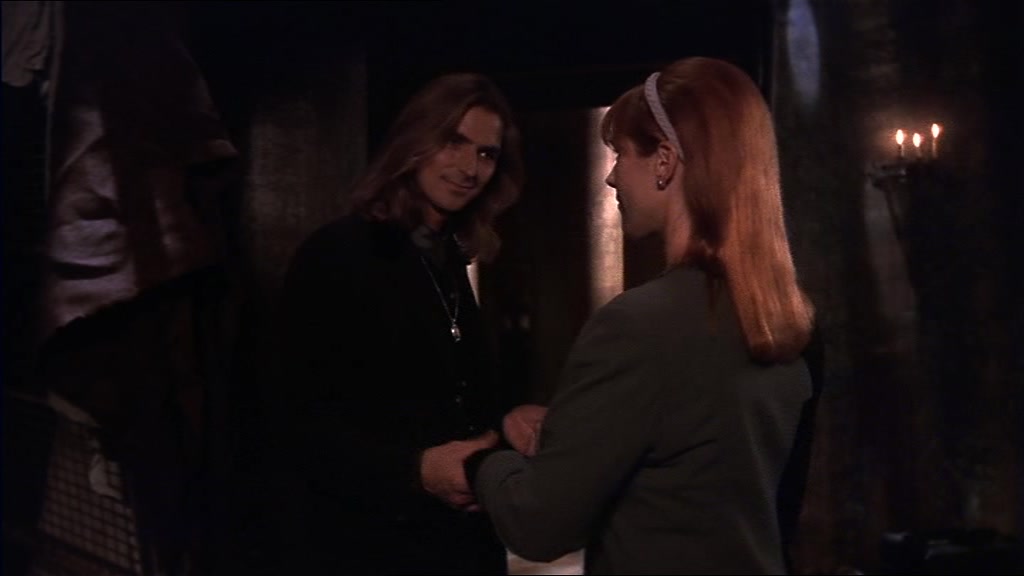
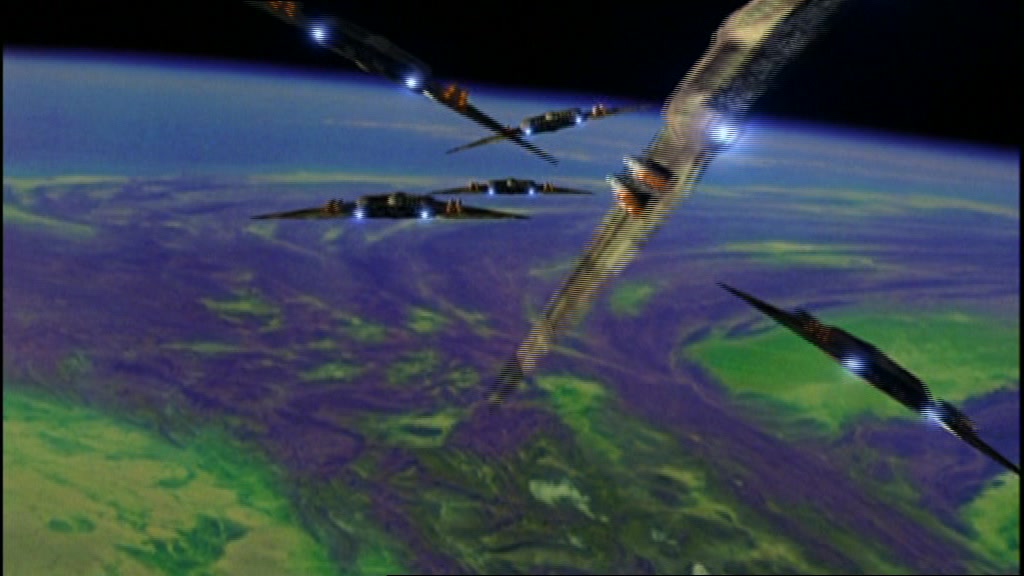


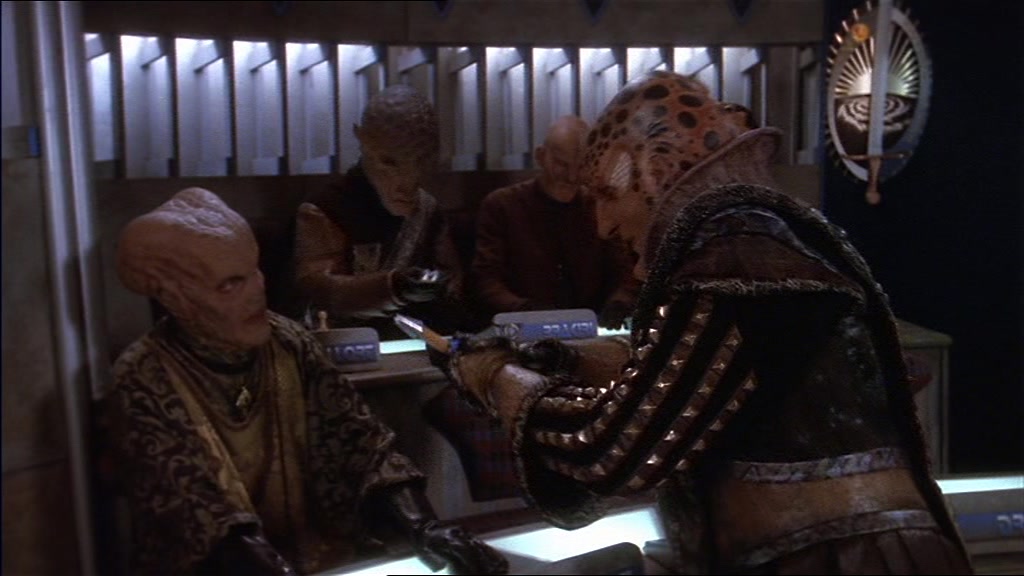


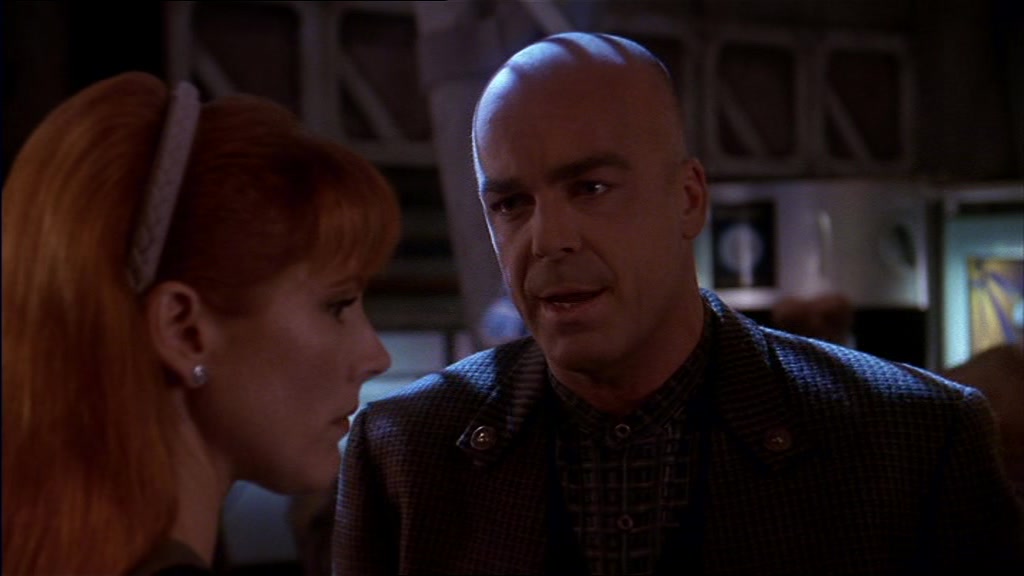
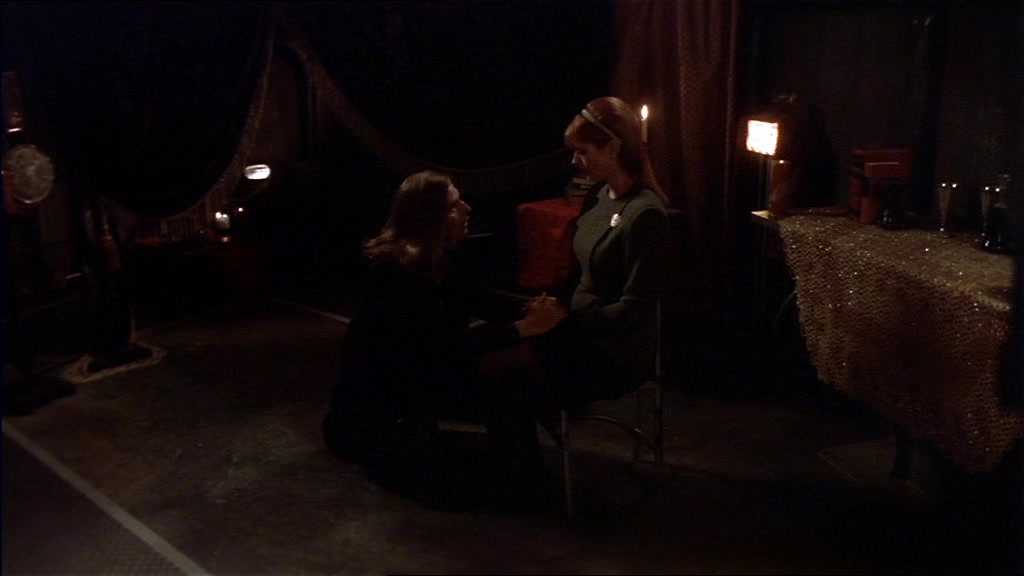




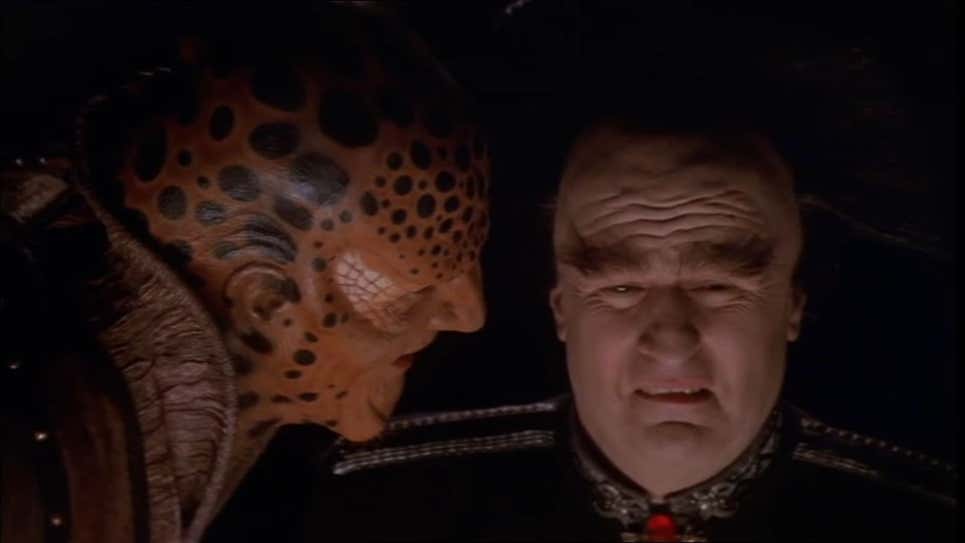
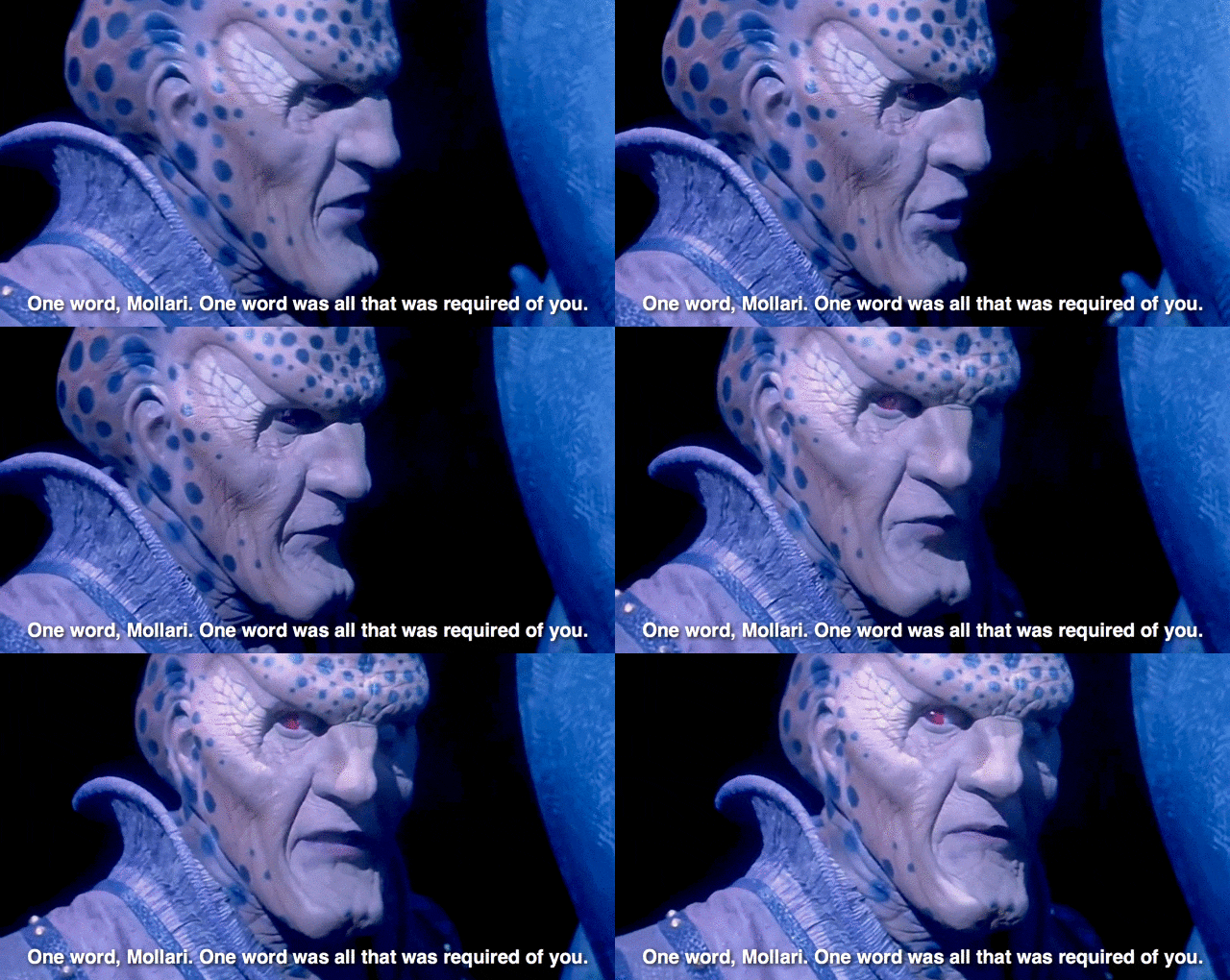
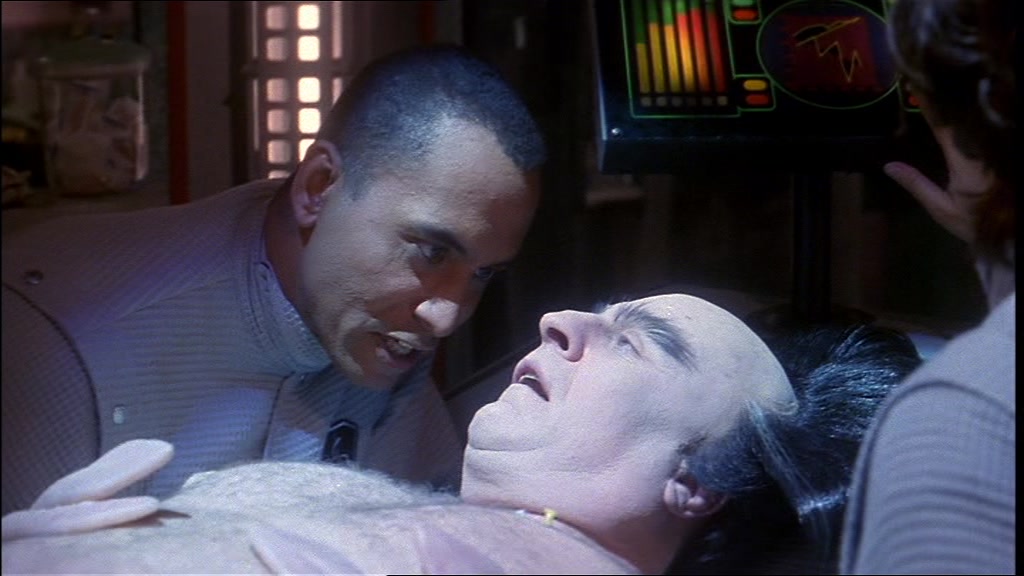
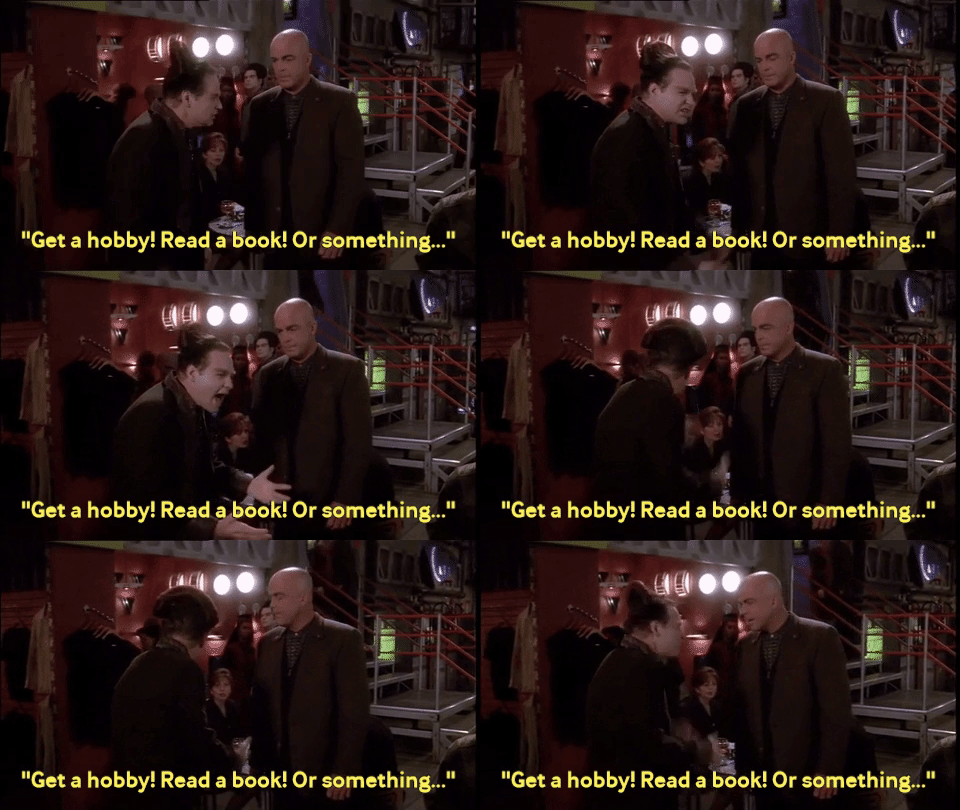
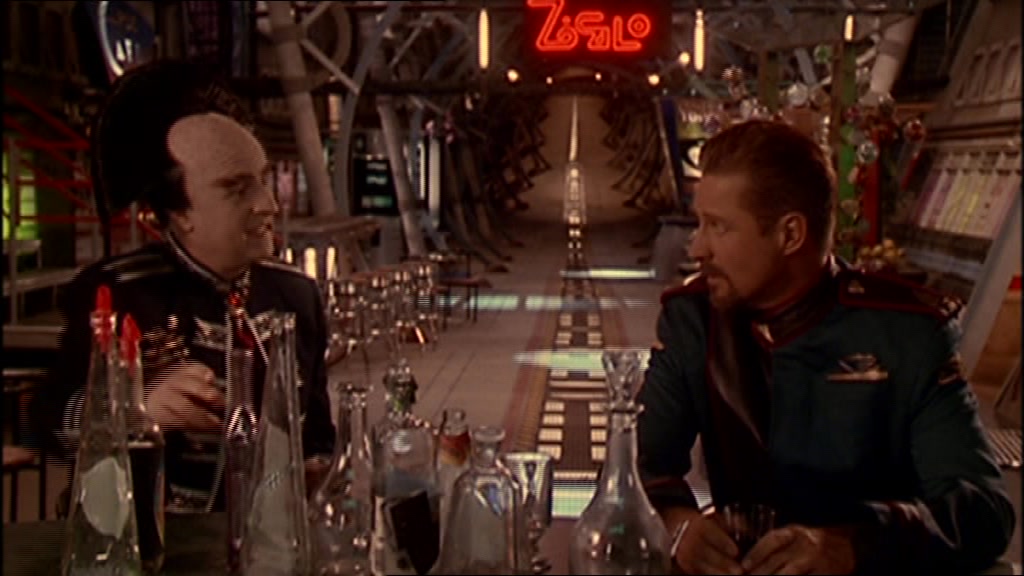

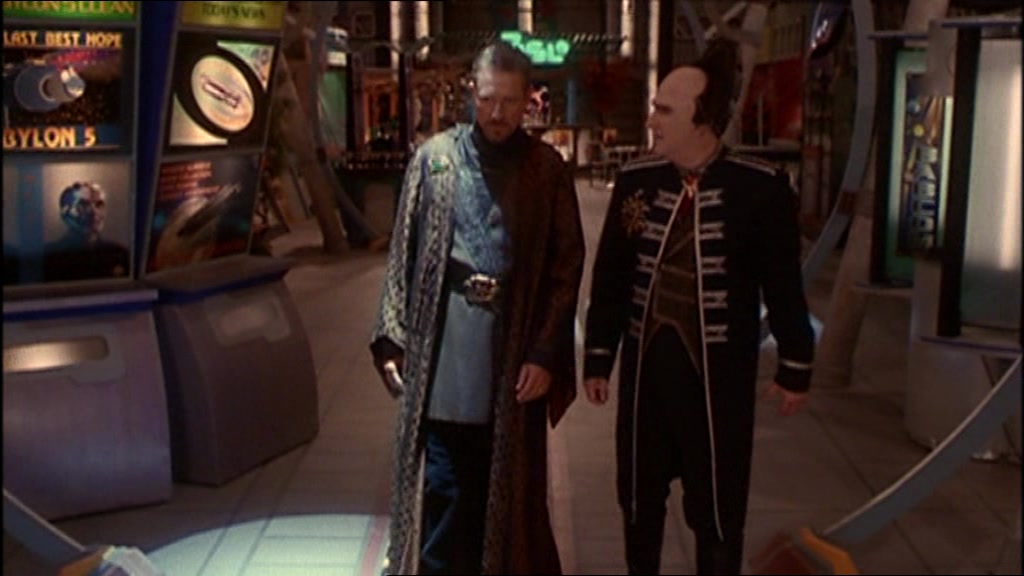


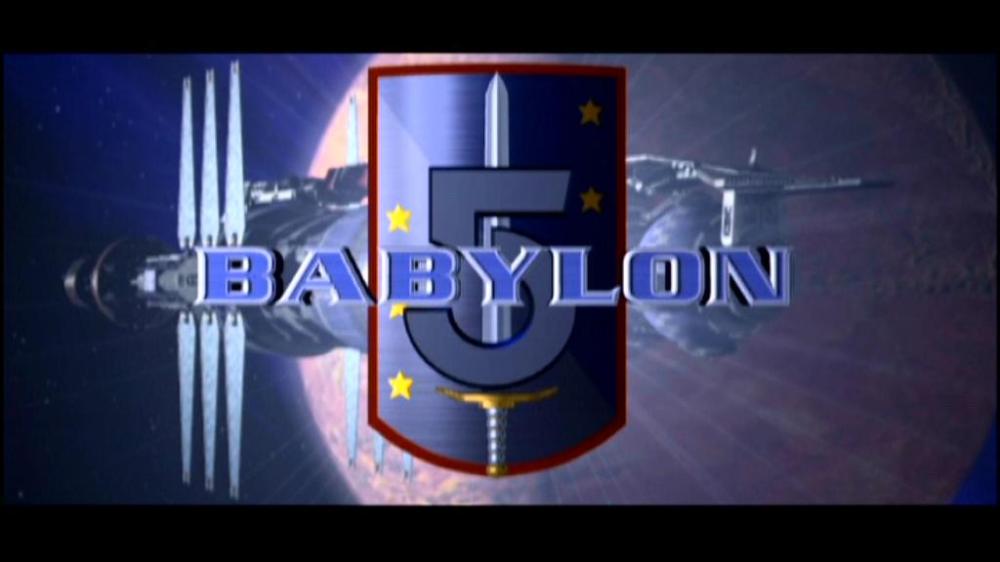

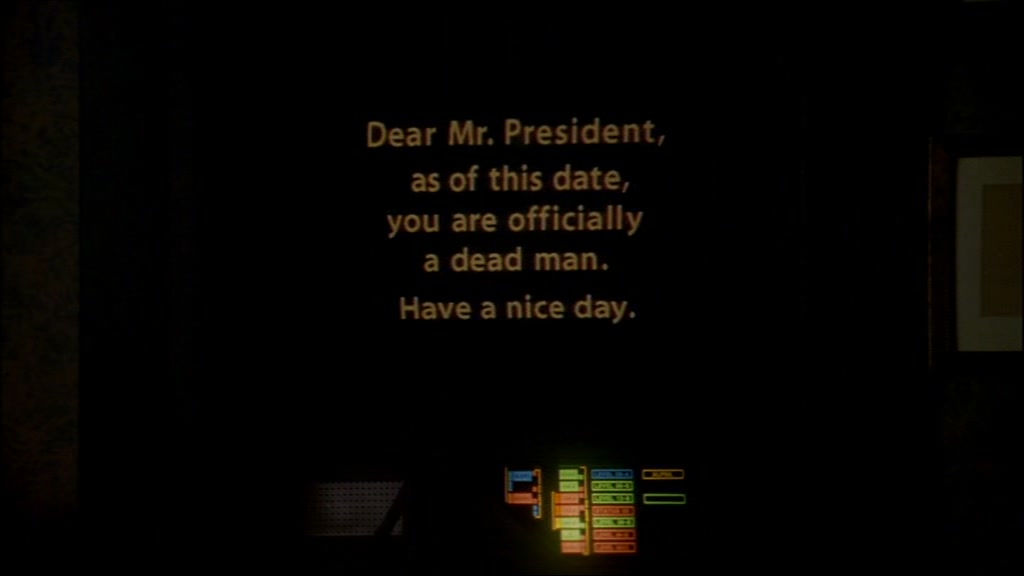

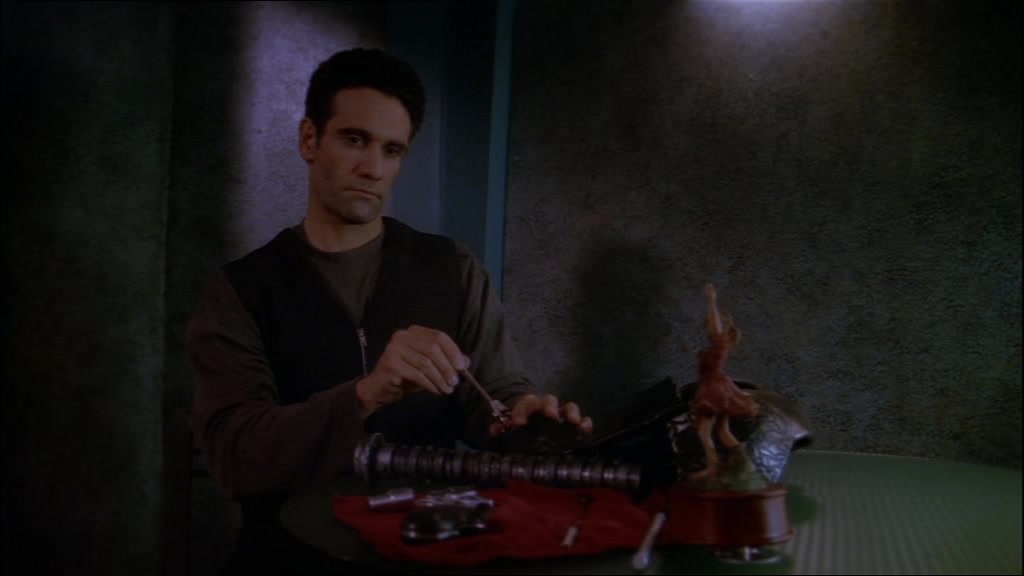



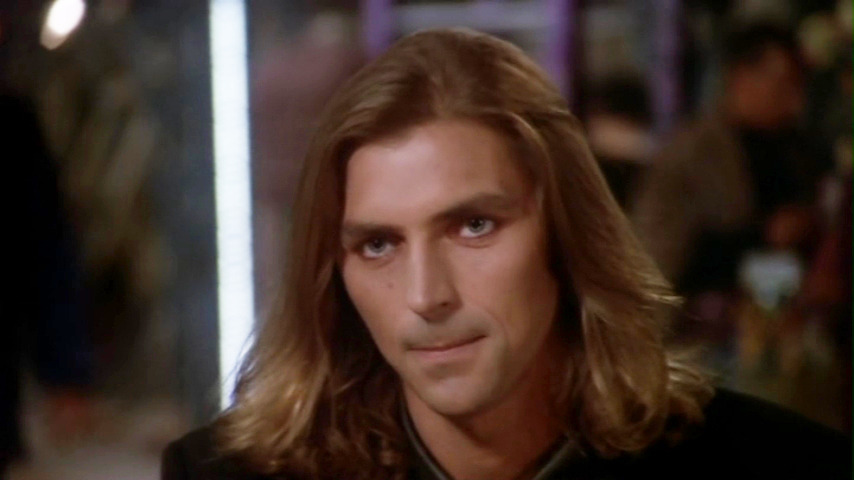




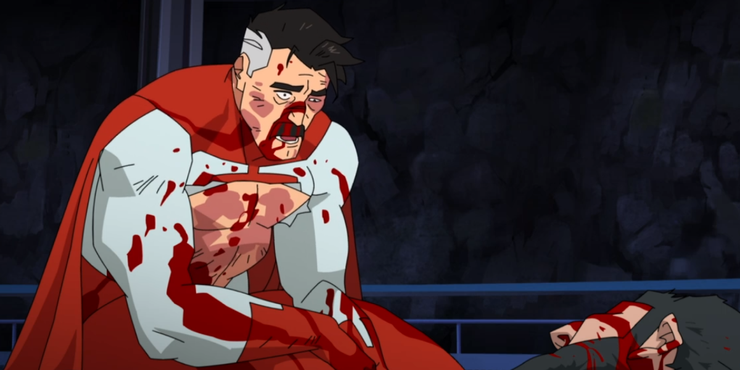

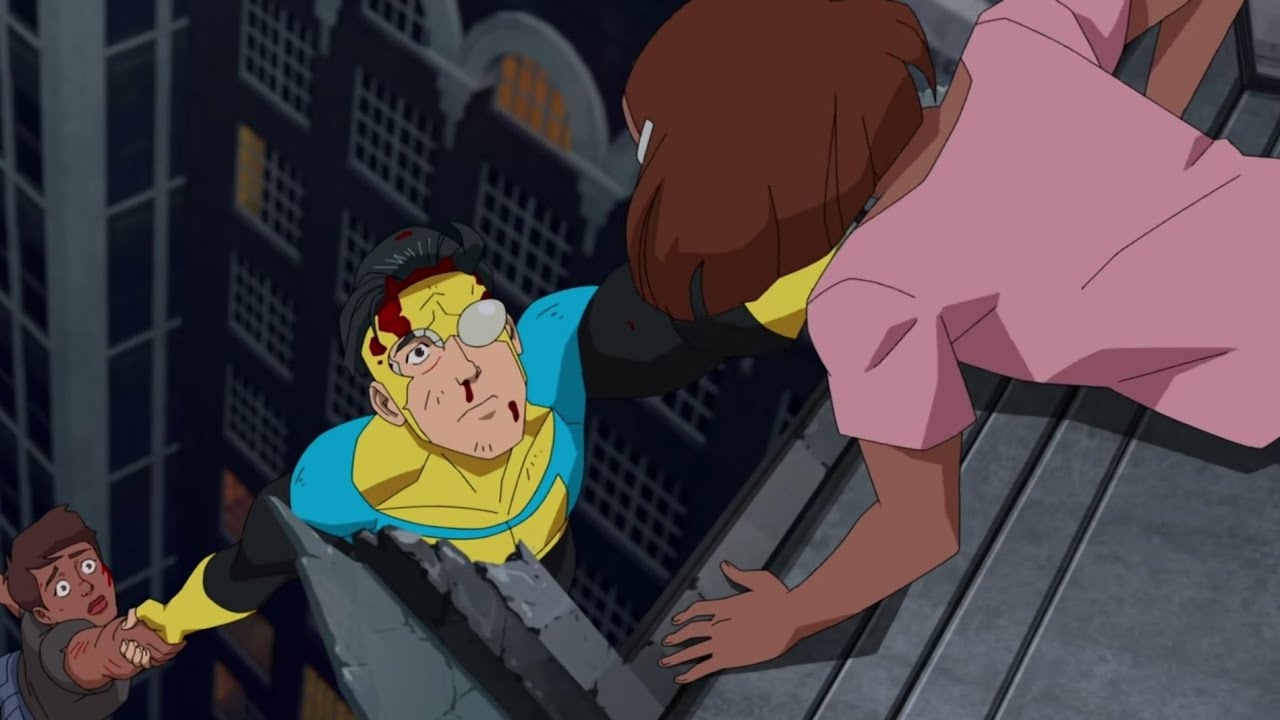



![Movie Review: “Black Widow” (2021) [no spoilers]](https://hill-kleerup.org/blog/wp/wp-content/uploads/2021/07/Black-Widow-poster.jpg)