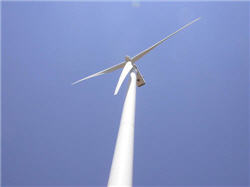
Doyce has switched his Xcel account to use the Windsource program, which means his electrical bill is paying for wind power generated electricity. The program is the largest of its sort in the country.
What would that mean to us if we did the same?
According to the Windsource page, the presently higher cost of wind power means a $1.83 per 100 Kwh usage. According to my last bill, we consumed 877 Kwh in June. That would have worked out to an extra $16.05 (which in turn, compared to an $81.43 electrical part of the bill) amounts to a 19.7% surcharge.
(Note that the $1.83 includes eliminating the Air Quality Improvement fee — which can sometimes backfire — and Energy Commodity Adjustment fee; the latter, though, I believe is a variable, depending on how Xcel has to source its power, so it may actually provide greater savings, as it has in the past),
Windsource is supported by the Center for Resource Solutions and the Sierra Club, among others.
A less happy evaluation of the program is here, and there have been some suggestions it’s outlived its usefulness and should be abolished in its current form. North Dakota recently rejected it because of the added consumer cost.
Regardless, I think it’s a good deal — or at least a good statement. Put another way, would I pay an extra $20/month to buy carbonless, waterless, transportationless energy? Yeah, I think so. Let’s see what Margie thinks (being more level-headed about such things than I am).