Kate shares a nice article on “spoiler warnings” from Tor.com.
I understand the need for spoiler warnings and dislike the necessity. I’m not quite sure who came up with the idea, but I’d like both to thank and smack them. Thank, because it’s kept me from finding out secrets I didn’t want revealed. Smack, because there’s something inherently absurd with thinking you can read a review of a book or film without something getting revealed. I mean, come on. It’s a review.
[Don’t know all there is to know about the Spoiler Game.]
It’s a simple enough thing to add a warning, and I almost always do. But there’s a part of me that, when adding it, feels like a hypocrite. I wrote something and now I’m warning you not to read it? Yeah, right.
That’s a little goofy. There are, of course, reviews (the most common occurance) and there are reviews. If I am hyper-sensitive to being spoiled on a movie, I skip all reviews. If I’m less sensive, I might take a look, and avoid those reviews that are kind enough to provide spoiler warnings. Once I’ve seen the movie, then I’m actually kind of interested in those spoiler reviews.
A while back, John Scalzi proposed a statute of limitations on spoiler warnings, as follows:
Television: One week (because it’s generally episodic, and that’s how long you have until the next episode)
Movies: One year (time enough for everyone to see it in the theaters, on DVD and on cable)
Books: Five years (because books don’t reach nearly as many people at one time)I think that’s a fine system, but it’s as arbitrary as anything else to do with spoilers. If a book has been out a hundred years and a faithful film adaptation is released this month, how much can you reveal about the film without warning?
Scalzi’s system is actually pretty good — and I say that as someone who often slips multiple weeks behind on TV (the DVR and the DVD season set are challenging this rule). And in the case of the question, the counter-question is, how likely is the person involved to know the book vs. the movie? I mean, an adaptation of Little Women, if faithful, is unlikely to hold any surprises for people (I’m presuming that most people have either read the book (or seen another adaptation) or have been acculturated to the big plot elements in passing, so far as plot goes. On the other hand, Rose in Bloom by the same author might less familiar and the big revelation in final chapter that the axe murderer is really Kindly Aunt Bess could be considered a spoiler to movie-goers.
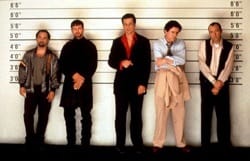
The article (there’s more in the same vein) is a nice review of the issues, though it doesn’t break any ground that people (including me) have debated on the subject for year. “Caveat lector and don’t be a jerk” sum it all up pretty well. Sort of like life — be polite, but don’t assume that others will be.
Or, as another rule of thumb, if you find yourself saying, “I can’t wait to see your reaction to seeing/reading/hearing X,” then maybe you should hesitate before telling them about X in advance (or even that there is an X), since the build-up and reveal is much the fun and impact of such a thing.
On the other hand, I’m probably oversensitive to the matter, as my friends will well-appreciate (I can hear your eyes rolling, guys).