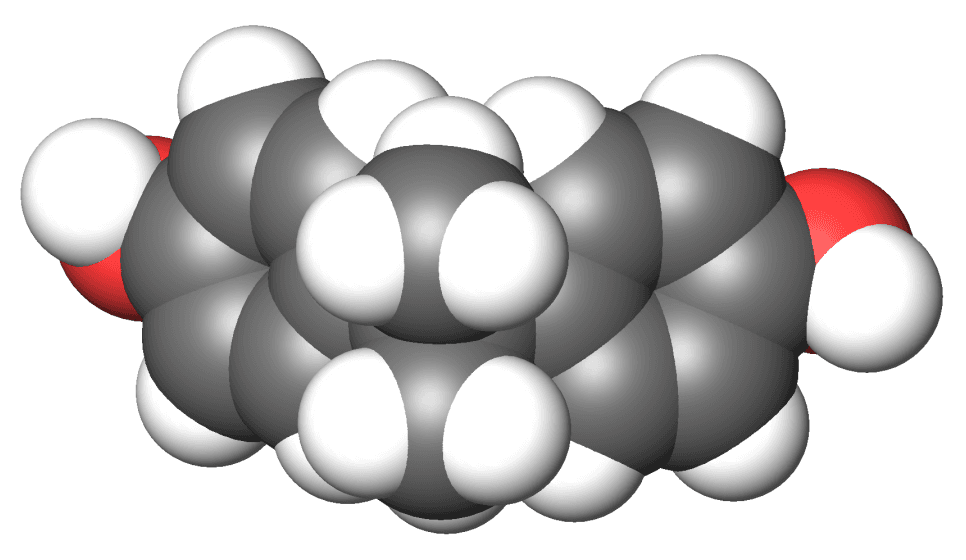
So there’s been increasing concerns over BPA (bisphenol A) over the past few years, especially in its use for food containers. Though some of this takes on the hysteria of the anti-vax crowd, I’m also not swayed by calm assurances by manufacturers or lack of action from the FDA (esp. since the manufacturers generally say, “We are always interested in customer health, but the FDA says it’s okay, so it must be okay”).
I decided I wanted to see if we had any easy sources of BPA in our house that we could get rid of. We have a lot of plastic containers that we both store and microwave food in, and I decided that if we had any that have BPA, I’d get rid of them; if they all had BPA, we’d go back to the old Corning/ceramic days.
Here’s what I found:
Glad:
Do GladWare® Containers contain BPA (Bisphenol A)?
NO. Glad food containers, wraps, and storage bags and other food contact products are not made of Polycarbonate nor is Bisphenol A (BPA) used as a raw material in their production. For more information, you can read our official statement here.
BPA has been used safely in the manufacture of thousands of products for years and its use fully complies with U.S. Food and Drug Administration and other historically stringent public health regulators in the European Union and Japan.
Even though only a fraction of Rubbermaid-branded food storage containers and water bottles contain BPA, we believe strongly in helping consumers make informed choices. It’s all part of Rubbermaid’s focus on listening to, and responding to, our valued customers.
They include pictures of all their products and what does/doesn’t have BPA (nothing we have from them does). There’s also this interesting note, which may apply to other manufacturers:
Recent news coverage has suggested that plastic containers and bottles labeled with the number “7” material identification code on the bottom contain BPA. While all polycarbonate plastics containing BPA are labeled with the number “7” identification code, not all plastics labeled with the number “7” contain BPA. The number “7” code is assigned to the “Other” category, which includes all plastics not otherwise assigned to categories #1-6. The majority of Rubbermaid food and beverage containers are assigned to category number “5”, although some non-BPA containing products are assigned to category”7” due to their unique combination of plastic types.
More on the ID codes and BPA here.
Q: Does Tupperware use polycarbonate in any of its products?
A: Yes, Tupperware’s Research and Development group has found that polycarbonate creates the highest quality and most durable products for our consumers. Consumers have consistently asked for durable, microwave-safe products, and we believe that polycarbonate is a good choice for meeting this need.
Polycarbonate is used in a small percentage of our products, primarily those intended for high heat resistance, as well as some serving lines (see listing of Tupperware products which contain polycarbonate.)
Currently in the United States and Canada we do NOT use polycarbonate in any chiladren’s products.
[…] Bisphenol A (BPA) is a key industrial chemical used to make polycarbonate, a raw material found in hundreds of plastic household goods and other products. Recent media reports have raised questions about its safety, though bisphenol-A has been deemed safe for consumer use by the U.S. Food and Drug Administration and other regulatory agencies around the world.
The breakdown of products (including recycle codes) for Tupperware is here.
SC Johnson’s food storage products, including Ziploc® brand bags and containers and Saran™ brand wraps do not contain bisphenol A (BPA).
So … we’re pretty much in good shape. I’ve looked through our cabinet of plastic containers, plus cabinet of water bottles and the like, and not found any Evil 7s. I had a question on a few Pampered Chef pitchers, but eventually found in the wild a couple of lists of the few things they make that are polycarbonates, and none of them were the pitchers.
Now I know. And knowing’s half the battle. (Doing something with the knowing is presumably the other half.)
Yes, this is good. HOWEVER, what chemical DO they use? There is, among integrative healthcare professionals, an increasing concern re: the chemicals that replace BPA. Ya can’t win. Ugh.