I suspect there are a variety of lessons here. I also suspect they will not be learned.
(h/t +Asbjørn Grandt)
Originally shared by +Linda Dee:
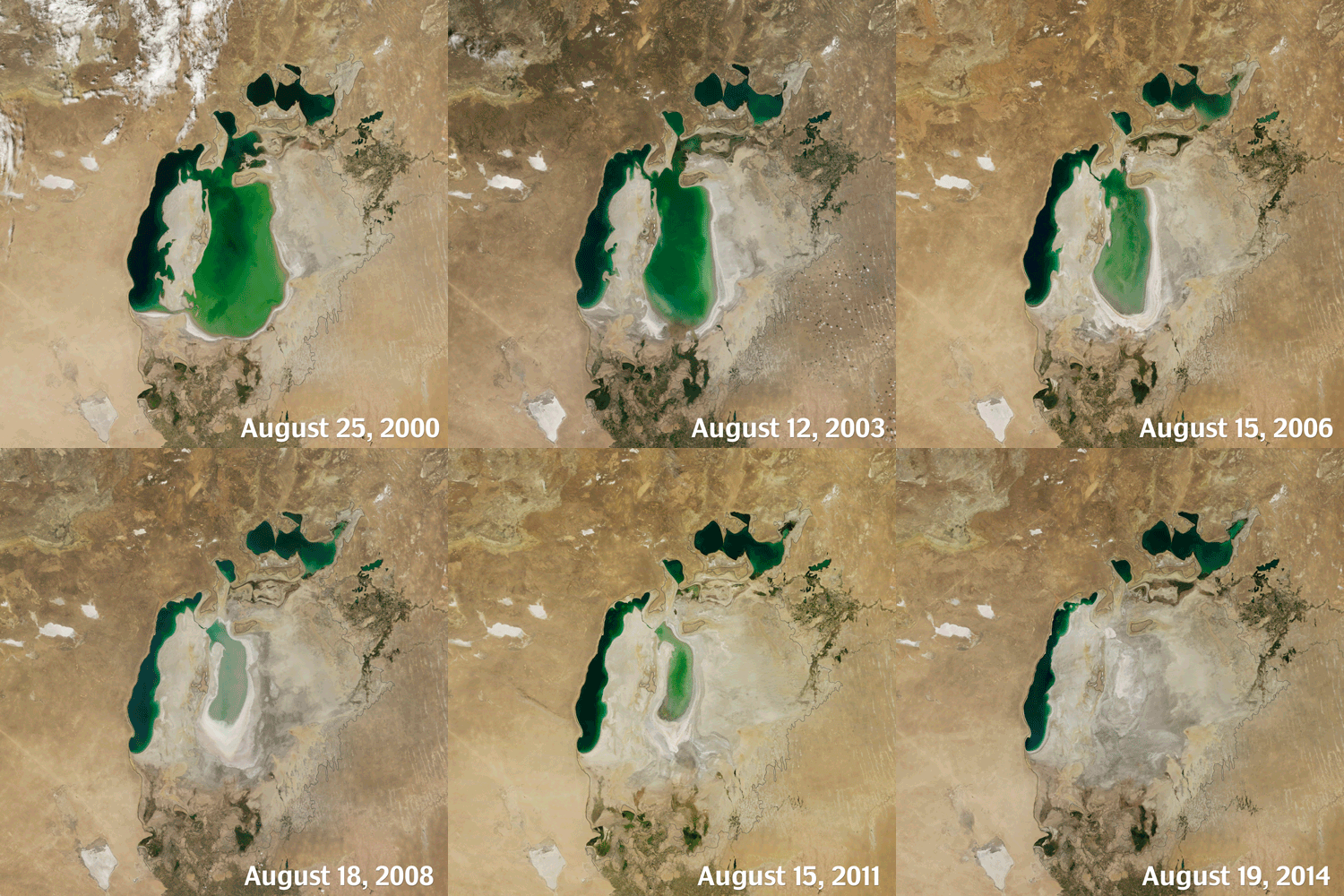
The shrinking of the Aral Sea has been called "one of the planet's worst environmental disasters
#ENVIORMENT #LAKES #SCIENCE #DISASTER #savetheplanetThe Aral Sea (Kazakh: Арал Теңізі Aral Teñizi; Uzbek: Orol Dengizi; Russian: Аральскοе Мοре Aral'skoye Morye; Tajik: Баҳри Арал Bahri Aral; older Persian: دریای خوارزم Daryâ-ye Khârazm) was a lake lying between Kazakhstan (Aktobe and Kyzylorda provinces) in the north and Karakalpakstan, an autonomous region of Uzbekistan, in the south. The name roughly translates as "Sea of Islands", referring to about 1,534 islands that once dotted its waters; in Old Turkic aral means "island" and "thicket".[3]
Formerly one of the four largest lakes in the world with an area of 68,000 km2 (26,300 sq mi), the Aral Sea has been steadily shrinking since the 1960s after the rivers that fed it were diverted by Soviet irrigation projects. By 2007, it had declined to 10% of its original size, splitting into four lakes – the North Aral Sea, the eastern and western basins of the once far larger South Aral Sea, and one smaller lake between the North and South Aral Seas.[4] By 2009, the southeastern lake had disappeared and the southwestern lake had retreated to a thin strip at the extreme west of the former southern sea; in subsequent years, occasional water flows have led to the southeastern lake sometimes being replenished to a small degree.[5] The maximum depth of the North Aral Sea is 42 m (138 ft) (as of 2008).[1]
time lapse below
Drying of the Aral Sea: Timelapse

I believe the solution is to reintroduce wolves, who will eat the Soviet farmers, and… wait, no. That might not be the solution.
–Seriously, that's very scary. I'm afraid one of the lessons that won't be learned is to think about what we're doing with our aquifers over here. So much more comfortable to just say, "Those silly Soviets, what were they thinking?"
True, +Kingsley Lintz — lots of individual freedom-loving idiots don't necessarily make better decisions than a single autocratic idiot.