 The eye and brain do something very strange with animation.
This is most apparent when you see three-dimentional representations of animated figures. Some animated figures when turned into statues, or large figures at amusement parks, work just fine.
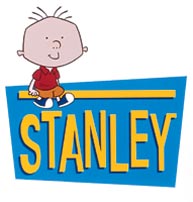
Others are just — weird. Playhouse Disney’s Stanley is one of these. I was just watching an ad for the PHD stage show and parade at Walt Disney World, and Stanley looked — very strange. His head was a very strange, unnatural shape.
Then they showed some Stanley animated clips. And, y’know … they were right. Because the animation style used in Stanley is very stylized. As a cartoon, we accept that, and translate it into beliavable representations. When faced in the flesh with actually seeing it in 3-D, though, it jars.
I wonder this is why pre-representational art, or art before the development of perspective, didn’t seem just weird and unnatural to them.
Yes, it is similar to the phenonmenon that small children actually prefer stylized animation to live action. It seems “more real” to them because there are fewer unfamiliar details to interpret and distract. It’s why a chariacture of a very familiar face can consist of just a few well placed lines. As we mature we learn to automatically edit out extraneous material. When faced with a jarring shift of medium, such as a 2d character jumping into the 3d world we take some time to adjust. Though going the other way doesn’t seem as jarring–I prefer Anna Nicole Smith as an animation. 🙂 Probably the same awkwardness we momentarily feel when meeting an e-pal for the first time IRL. A very fascinating thing.
Andi
Good points all. Part of the interesting black boxes that are our brains.
I am Looking for video clips to place in one of my movies.
I haven’t seen any video clips of Playhouse Disney stuff online. There are a number of commercially available video tapes, though.