https://buy-zithromax.online buy kamagra usa https://antibiotics.top buy stromectol online https://deutschland-doxycycline.com https://ivermectin-apotheke.com kaufen cialis https://2-pharmaceuticals.com buy antibiotics online Online Pharmacy vermectin apotheke buy stromectol europe buy zithromax online https://kaufen-cialis.com levitra usa https://stromectol-apotheke.com buy doxycycline online https://buy-ivermectin.online https://stromectol-europe.com stromectol apotheke https://buyamoxil24x7.online deutschland doxycycline https://buy-stromectol.online https://doxycycline365.online https://levitra-usa.com buy ivermectin online buy amoxil online https://buykamagrausa.net

The fabulous excuse of TERROR!

Is anyone particularly surprised by this?

'Section 213 was included in the Patriot Act over the protests of privacy advocates and granted law enforcement the power to conduct a search while delaying notice to the suspect of the search. Known as a “sneak and peek” warrant, law enforcement was adamant Section 213 was needed to protect against terrorism. But the latest government report detailing the numbers of “sneak and peek” warrants reveals that out of a total of over 11,000 sneak and peek requests, only 51 were used for terrorism.'

[https://www.eff.org/deeplinks/2014/10/peekaboo-i-see-you-government-uses-authority-meant-terrorism-other-uses]

The "War on Terror" (called that or not) has been a fabulous justification for law enforcement and national security groups to get all the powers they ever wanted to get, trumping the previously restraining protests with the threat of TERROR! and the consequences thereof.

I don't see that changing any time soon. And, of course, the longer it goes that way, the more "invaluable" such tools and practices will e considered, and the more normalized their use will become.


View on Google+

The fight against secrets lost a key fighter last night

While Mark Udall's name came up in the news the last several years because of his being a US Senator for my state, where I often also ran across him was dealing with the NSA, CIA, and other "too many secrets" organizations, in his role on the Senate Intelligence Community. Where there were noises being made to reveal the extent of surveillance programs, determine the justifications the government had made for various monitoring practices, or releasing classified-to-save-face information, Udall was almost always at the forefront.

His loss, as well as the shift of the Senate Intelligence Committee to the likely chairmanship of someone who thinks secret intelligence activities are nothing to worry about, move along, will have unfortunate implications for probably decades to come.


Mark Udall’s loss is a blow for privacy, but he can go out with a bang: ‘leak’ the CIA torture report | Trevor Timm
Trevor Timm: The outgoing Senator and champion of civil liberties has one last chance to read the truth about American atrocities out loud, for the world to see – before it’s too late

View on Google+

So here's another good reason to not use fingerprint recognition

Because at least one judge thinks (with reasons I suspect will be sustained) that the police can make you use your fingerprint to unlock things, even if they can't force you to enter a PIN or password.

Originally shared by +Al Hunt:

Ohhhhhhhhh…. Kay.


Cops can make you unlock your smartphone with fingerprint, says judge
Cops can force you to unlock your smartphone with your fingerprint, but can’t force you to unlock it with your passcode, according to a judge in Virginia.

View on Google+

So for those who think I'm simply a partisan hack

… I'm more than willing to say that the actions of the Kentucky state Democratic Party here were absolutely wrong. (As were those of the local police who provided an unredacted arrest record.)

Originally shared by +Boing Boing:

Hey! Did you hear the one about the political mailer that includes opponent's SSN and driver’s license number? Sorry to say, there’s no punch line here! It happened! Oops!


Political mailer includes opponent’s SSN and driver’s license number
Did you hear the one about the Kentucky GOP candidate who asked his attorney general to investigate the state Democratic Party for allegedly sending out the Republican’s Social Security number and more personal information to thousands of constituents? Sorry to say, there’s no punch line here, because according to recent reports, it actually happened. By Adam Levin.

View on Google+

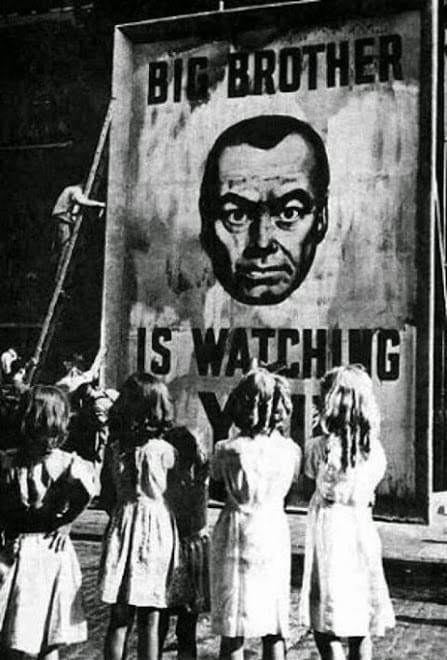
If Big Brother Can't Watch You, The Bad Guys Win

The head of the FBI is very, very worried that people will start using technology — like phone encryption and, presumably, wall safes, or window blinds — that will keep them from watching what you're doing — which, of course, he pinky-swears will only happen if they are investigating Very Serious Stuff, which they would never, ever do incorrectly, inappropriately, abusively, or against you personally, just against all those bad, evil people that they are investigating to keep you safe.

http://arstechnica.com/security/2014/10/fbi-director-to-citizens-let-us-spy-on-you/

And who knows — if the FBI can easily track everything going on with your phone, maybe they can use it to exonerate you of a crime you committed were accused of. It's happened once!

At any rate, compliance will be greatly appreciated. Lack of compliance will be presumed complicity with narco-terrorists, tax dodgers, ISIL, Ebola smugglers, and pedophiles. Because, of course, only the guilty have anything to hide.


View on Google+

When Drones [are] Attack[d]!

Well played, Mr. Hawk.

(h/t +Scott Randel)

View on Google+

What's the alternative to going public on intelligence wrongdoing?

Telling folk working in intelligence and national security positions that they should use internal channels to report problems only works if the internal channels actually work effectively. But in an environment where the guilty are never punished, but the CIA feels free to spy on investigators and discover who's whistleblowing "through channels," the system is doing anything but working effectively. Which seems to leave either staying mum or going public.

'I believe history will judge Manning and Snowden as wrongly persecuted patriots, like Ellsberg. The notion that they should've raised their concerns internally won't be taken seriously, because a dispassionate look at the evidence points to a single conclusion: The United States neither adequately protects whistleblowers nor keeps lawbreaking national-security agencies accountable through internal channels.'


Why Intelligence Whistleblowers Can’t Use Internal Channels

Even the director of national intelligence admits there aren’t adequate safeguards for officials who see wrongdoing.

View on Google+

The variations of privacy and the closet

An fascinating story, as well as some tangential interesting comments by +Yonatan Zunger above it. We're undergoing a mass shift in privacy and society in terms of the Internet and social media.  The anonymity of the big city, and the selective blindness of the small town, are both models that are falling by the wayside as we become both neighbors of one another in terms of (electronic) access, and yet not connected by physical or traditional proximity.

Reshared post from +Yonatan Zunger

There's an interesting review here of a recent book by Rachel Hope Cleves about a case of two women who married each other in the town of Weybridge, Vermont, in the early 1800's. What I find interesting here isn't the case itself, or any particular conclusions one can draw from it: instead, I wanted to note two interesting things that I spotted here which are worth thinking about some more.

The first comes from this quote from the book, which talks about the way that "the closet" works in small towns as being fundamentally different from the way it works in cities:

"Although it is commonly assumed that the “closet” is an opaque space, meaning that people who are in the closet keep others in total ignorance about their sexuality, often the closet is really an open secret… The closet depends on people strategically choosing to remain ignorant of inconvenient facts… The open closet is an especially critical strategy in small towns, where every person serves a role, and which would cease to function if all moral transgressors were ostracized. Small communities can maintain the fiction of ignorance in order to preserve social arrangements that work for the general benefit. Queer history has often focused on the modern city as the most potent site of gay liberation, since its anonymity and living arrangements for single people permitted same-sex-desiring men and women to form innovative communities. More recognition needs to be given to the distinctive opportunities that rural towns allowed for the expression of same-sex sexuality."

This is a subject I've mentioned before, in the context of different social models of the meaning of "privacy" in small versus large communities: generally, complete lack of knowledge of other people's personal lives (enforced by custom prohibiting such inquiry) is workable in cities, which have evolved this as a cultural solution to the problem of a large number of very different people living in close proximity, with the possibility of true anonymity. On the other hand, in a small town it's impossible to keep secrets in such a fashion; instead, there the pressure is for people to find some way to work with each other, as everyone's joint efforts will likely be required to keep the town alive. There, we instead find a system of "open secrets," where things are generally known but never discussed, and a pressure for people to maintain an outward demeanor of conformance to the town's norms.

I note this with interest as we are presently entering a situation in which neither of these two adaptations works: our modern society gives us the proximity to very different people of cities, but the pervasive information of small towns, and so neither the solution of true anonymity nor the solution of conformity plus open secrets can adequately resolve people's needs to simply not be like their neighbors. As we watch the US and Europe, in particular, try to independently develop very different solutions to these questions, it's worth thinking about these historical examples in more depth to see what we can learn from them.

The second interesting item I found in this article was what the contemporary sources (on which this book is based) considered to be highly normative about Charity and Sylvia's relationship, which allowed them to fit it into their world as "just another marriage:" 

"One reason people viewed Charity and Sylvia’s relationship as marital was that the women divided their domestic and public roles according to the familiar pattern of husband and wife."

I find this interesting by comparison to this article by Tiffany Wayne, titled "Same-Sex Marriage Does Threaten 'Traditional' Marriage." (http://nursingclio.org/2013/04/02/same-sex-marriage-does-threaten-traditional-marriage/) Wayne's article argues that the reason that same-sex marriage is so controversial today is not the gender of the participants, but that the construction fundamentally threatens the concept of the gender-role-based marriage. I'm not certain that Wayne's thesis is correct, but this case provides an interesting connection to it: Cleves argues that this marriage was accepted, in no small part, because it was structured in a fashion which so closely paralleled the common gender-role-based marriage in its area that people could easily fit it into that picture, and Wayne argues that it's marriages which don't fit that model which are actually the source of contention today.

So while I can't offer you any firm conclusions whatsoever from this, I can at least offer you two interesting ideas to ponder.

h/t +Jennifer Ouellette for the link.
Charity and Sylvia: The Remarkable Story of How Two Women Married Each Other in Early America
“For 40 years… they have shared each other’s occupations and pleasures and works of charity while in health, and watched over each other

Where everybody (for a brief period) knows your name

So … people have a Right To Be Forgotten, but not a Right To Be Not Known in the First Place? That's … interesting.

Reshared post from +Electronic Frontier Foundation

Britain's House of Lords is considering requiring websites to demand your identity before you can post online.  Here's why that won't work — and how an EU court decision might be pushing European websites that way already.

UK’s Lords and EU Take Aim at Online Anonymity
Last week, the UK’s House of Lords Select Committee on Communications released a report on “social media and criminal offences.” Britain has faced a number of high-profile cases of online harassment this year, which has prompted demands for new laws, and better enforcement of existing laws.

Using Winston Smith as a court recorder

But of course we must let the US Government secretly edit transcripts of open court testimony, because otherwise the terrorists will have won!

Yeesh.

This is one reason, by the way, I support the EFF.

Reshared post from +Electronic Frontier Foundation

UNSEALED: the US asked for permission to secretly alter public record of a court hearing in our case against NSA.

UNSEALED: The US Sought Permission To Change The Historical Record Of A Public Court Proceeding
A few weeks ago we fought a battle for transparency in our flagship NSA spying case, Jewel v. NSA. But, ironically, we weren’t able to tell you anything about it until now.

More "Right To Be Forgotten" silliness

Google offers some pertinent notes on issues around the European "Right To Be Forgotten" discussion:

'We generally have to rely on the requester for information, without assurance beyond the requester’s own assertions as to its accuracy. Some requests turn out to have been made with false and inaccurate information. Even if requesters provide us with accurate information, they understandably may avoid presenting facts that are not in their favour. As such, we may not become aware of relevant context that would speak in favour of preserving the accessibility of a search result. An example would be a request to remove an old article about a person being convicted of a number of crimes in their teenage years, which omits that the old article has its relevance renewed due to a recent article about that person being convicted for similar crimes as an adult. Or a requester may not disclose a role they play in public life, for which their previous reported activities or political positions are highly relevant. We have also seen examples of data subjects who indiscriminately submit many URLs that are displayed as search results for their name, even though some URLs are actually about another person with the same name.'

Determining the justification (and scope) of such a request is a labor-intensive effort.  If Google is simply handed such requests (over 90K of them, regarding 300K pages) en masse, then either it need to devote substantial time to each one, or reject them if the verification seems sketchy (except that the verification would be coming from the requester), or just accept them and let the results fall where they may. None of these seems reasonable. If Europe thinks this is a fundamental right, they need to provide a more substantive process to give Google (and Microsoft and other search vendors) verified data.

And even that's goofy, because, as the request to omit an editable Wikipedia page suggests, the issue is not about search indexing, but about the content being indexed. If the EU wants a true Right To Be Forgotten, then they need to have a process to take down the offending content, and then request Google recrawl it.

Embedded Link

Google Struggling To Deal With Right To Be Forgotten Requests — Will Now Delete Wikipedia Page From Search Results | Techdirt
Late last week, Google responded to the concerns raised by some EU regulators regarding how it is implementing the new “right to be forgotten” rules. Google’s full response is well worth reading going into a fair bit of detail…

And always watch the skies!

I will be curious to see if police departments manage to wangle a "privacy" exception for police stations and the like, while increasing use of drones to surveil "ordinary" citizens.

Don’t fly camera-equipped drones over our police stations, LAPD says
Cops tell pilot he’s trespassing for filming station; video posted to YouTube.

On the systemic problem of the NSA

It has a purpose, one that is arguably laudable. But it lacks the effective checks and balances and oversight that keep any other government functions in check. It's a system that invites overreach, both conceptually and empirically.

I want effective signals intelligence. But an unrestrained and undermonitored agency can't even be judged on whether it's doing a good job, let alone whether it's doing other damage.

Reshared post from +Andreas Schou

I don't think the NSA is full of terrible people. I think it's full of decent people* trying to do their jobs well. I don't think that matters.

The NSA's job is to protect Americans from foreign threats. Virtually everyone in the NSA is promoted based on their progress toward this goal, and virtually everyone who works there — including those in the inspector general's office and general counsel — comes form a background where they have only had adversarial exposure to people who are at all concerned with privacy. 

Winning wars while minimizing the loss of life, saving lives, solving crimes, and advancing American diplomatic interests are all worthwhile goals. But those goals are monitored systemically, and privacy is monitored personally. Even in a system where every individual person cares deeply about a particular objective, that objective will be set aside whenever it conflicts with a systemic objective. 

Insofar as governments have systems that work, they recognize those tensions: if police violate the rules for gathering evidence, then they cannot make their case; if corporations collude against their competitors or customers, they will face steep fines; if prosecutors cannot prove their case, then they cannot imprison the guilty. When I see objectives in tension, I expect to see some system that balances those objectives.

I do not see that here. 

In this case, we have a secret agency which is never exposed to public scrutiny and which does not reward respect for privacy. At the judicial level, it's overseen by a secret court staffed by tractable judges lacking adversarial procedures. At the legislative level, it's overseen by secret Congressional panels filled with intelligence-friendly Congressmen. There are no independent audits of things like data retention.

It doesn't matter how good or competent the judges, intelligence officers, and Congressmen are individually: closed systems are vulnerable to overreach and corruption, and the opportunities for oversight are so narrow as to be meaningless. Communications can be kept for five years unless they are demonstrably useless for traffic analysis.* Encrypted communications can be kept forever. 

I might be willing to consent to this system if it were demonstrated that it was necessary. But dragnet surveillance was invented by executive fiat, ratified by closed Congressional sessions, extended on the basis of secret interpretations of federal law, and overseen by a secret court whose decisions, even in their broad outlines, had to be leaked illegally. If this is the way the world has to be now, then it needs to be the subject of normal debate and oversight, and until that occurs — it has not occurred yet — there should be a strong presumption that the objections of those that were not consulted (viz., anyone outside the intelligence community) will not have their interests represented.

(1) That is: I believe that the average person, put in the position of an average intelligence officer, would do exactly what the average intelligence officer is now doing.

(2) I am not sure that "demonstrably useless for traffic analysis" is a category with any members.

I'm shocked, shocked to find surveillance overreach going on here

Remember how FISA and all of that was put in so that things like the FBI spying on civil rights lawyers and activists couldn't happen in secret?  Guess what … 

Reshared post from +Andreas Schou

In totally unsurprising news, the US citizens under surveillance include politicians, activists, journalists, and lawyers representing people accused of terrorism, none of whom have been accused or even suspected of crimes. 

It's almost as though vast dragnet surveillance carries some risk of abuse.

Meet the Muslim-American Leaders the FBI and NSA Have Been Spying On – The Intercept
The National Security Agency and FBI have covertly monitored the emails of prominent Muslim-Americans—including a political candidate and several civil rights activists, academics, and lawyers—under secretive procedures intended to target terrorists and foreign spies. According to documents provided by NSA whistleblower Edward Snowden, the list of Americans monitored by their own government includes: • Faisal Read more

SCOTUS – No cell phone searches without a warrant

Wow. You don't get a lot of unanimous rulings from the Supreme Court these days, but here's one of them.

'Cellphones are unlike anything else police may find on someone they arrest, Chief Justice John Roberts wrote for the court. They are "not just another technological convenience," he said, but ubiquitous, increasingly powerful computers that contain vast quantities of personal, sensitive information. "With all they contain and all they may reveal, they hold for many Americans the privacies of life," Roberts declared. So the message to police about what they should do before rummaging through a cellphone's contents following an arrest is simple: "Get a warrant."'

California and the US had asserted that cell phones were no different from anything else in an arrested person's pockets.  Wisely, the justices disagreed.  

And it's not like the information there is unsearchable — the cops just need to convince a judge that there is "probable cause" to search the phone (just like a car or a house), usually for particular information related to an accused crime, and it can be done.  It just can't be done willy-nilly, looking for something "interesting."

‘Get a warrant’ to search cellphones, Justices say
WASHINGTON (AP) — In an emphatic defense of privacy in the digital age, a unanimous Supreme Court ruled Wednesday that police generally may not search the cellphones of people they arrest without first getting search warrants.

To Protect, Serve, and Lie To

Yeah, yeah, I'm sure there are all sorts of pragmatic reasons one can think of why the use of Stingray cell phone location devices might have been kept secret for some period of time.

But the secret's out. People — including (gasp) criminals know they exist.

So why are local law enforcement agencies still working with the US Marshals to try to hide when they have been used (scrubbing references to them from reports, claiming accused criminals were located by receiving information from "confidential sources," etc.)?

The ACLU has a pretty good guess: 'Concealing the use of stingrays deprives defendants of their right to challenge unconstitutional surveillance and keeps the public in the dark about invasive monitoring by local police.'

In other words, it doesn't look good, and it may not have been legally done, so let's just keep it our little secret.  Just the way you want your police to behave.

Internal Police Emails Show Efforts to Hide Use of Cell Phone Tracking
As we suspected, local law enforcement officials are borrowing cell phone tracking devices known as “stingrays” from the U.S. Marshals Service—and police are deliberately concealing the use of stingrays in court documents submitted to judges in criminal investigations.
The ACLU of …

Yanking the NSA's domestic spying funds

Hmmmm.

On the one hand, I'm generally opposed to the "We can't muster up the will or smarts to actually pass legislation restricting something, so we'll just remove the money from it" kinds of tactics. It seems weaselly and sloppy, leaving something legal but unfunded.

(Also, one assumes that the CIA and NSA both have black budgets that are either not on the books or not open to full scrutiny; it's unclear that this amendment would effectively block that funding, too.)

On the other hand, this seems a distinct setback against the NSA and CIA willy-nilly electronically spying on Americans (or whatever the definition of the odd term "a United States person" is), at least.  So bravo to the House, and here's hoping that the Senate goes along.

Reshared post from +Les Jenkins

Wow. That's an unexpected development. 

Embedded Link

House votes 293-123 to cut funding for NSA spying on Americans
The amendment would also stop “backdoors” from being built into tech products.

All your search result are belong to us

Really? A Canadian court can not only control what Canadians can find on Google, but what I can, too?  Because it's "just or convenient that the order should be made"?

Y'know, Canada, there's a lot I love about you, and glass houses and all that, but that's just wrong.

Reshared post from +The Verge

A Canadian court has ruled that Google must globally take down the search results for a company

Google will be forced to make a company disappear
A group of people just won the “right to be forgotten” from Google. Now a company is been spirited away, too.

Google must remove search results from every one of its sites, Google.com included

The Eyes in the Sky are getting better vision

Net-net, the enabling of 33cm resolution images vs 50cm resolution is probably a good thing. Mapping and observation has a lot of valuable applications, and it's not like they can turn around and do a CSI-style "digital enhancement" to see what that book is you're reading. And it's not like US (et al?) spy satellites can't drill down a lot deeper.

That said, the incremental increase (as a side benefit of more private company access, more frequency, and more uses being found) in overhead observation will have some privacy ramifications — ones we will probably just have to live with, but ones we should consider and be aware of.

Embedded Link

Sharper satellite images now allowed

Jane! We Can't Stop This Crazy Thing!

The NSA is being sued in Jewel v. NSA that it collects information about Americans' telephone and Internet activities (in particular, for standing, a set of individuals has filed the suit, supported by the EFF). It's been ordered by the courts to preserve any data to help demonstrate (or disprove) that such illegal collection is going on.

Now the NSA is claiming that the amount of data is so huge, and distributed in such a complex fashion between systems, that it cannot retain for discovery the data in question because its computers would burst into flames and sparks would shoot across the room (to use an old SF trope). The only alternative would be to shut down all such surveillance activity, which would mean, of course, the terrorists win.

It's either a wildly convenient excuse ("the dog had to eat my homework") or a sign that the NSA is sucking in waaaaaay too much data for it to manage effectively.  Or, of course, both.  

As someone whose auto-archive/purge was turned on of his email for several months because of company legal matter discovery, and whose system slowed to a crawl because of the size of the message store … I should have a lot more sympathy for the NSA than I do. But if they'd be willing to posit that, yes, the plaintiff's data was, in fact, part of the data that has since been deleted, I'm sure everyone would be satisfied …

Reshared post from +Andreas Schou

That's a fascinating defense: the NSA is arguing, too late, that the taps operated pursuant to Section 702 are so complex that they cannot shut down the deletion cycle. 

This is almost certainly not the case. The more likely reason is that they are operating a several-day buffer of all communications traffic over the lines they monitor, and the intake rate would choke their storage if they tried to retain the data for any longer. At a rate of (say) tens of petabytes per day, they couldn't even write the data they're storing to tape: the data transfer rate to tape would almost certainly bottleneck.

"But we would have to shut down the taps because we're collecting all American communications traffic!" is not a particularly compelling whine. If they are collecting all American communications traffic, then what they are doing is almost certainly unconstitutional, and they should shut it down for that reason instead.

NSA: Our systems are so complex we can’t stop them from deleting data wanted for lawsuit
The latest from the Electronic Frontier Foundation’s Jewel v. NSA suit.