Probably a bit of an over-simplification (after all, the idea that sin leads to temporal punishment is hardly the clear message of the Bible, e.g., John 9:1-3 http://goo.gl/eF65Fx), but as a broad theme, yes, events like this (and the fact that the continent could know about them so quickly) had a profound effect on the thinking of disasters being a punishment from God. Though it's still a theme that can be found in some Christian circles today …
Originally shared by +Susanne Ramharter:
☆Good Morning Google+ ☆ your daily story about art: 12.08
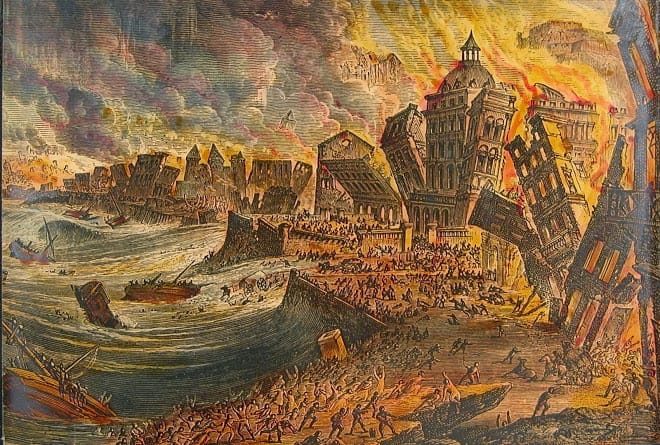
Today is the Feast of the Immaculate Conception, a Catholic Holiday that is celebrated in many countries, such as Austria. This has nothing whatsoever to do with today's artwork, a woodcut of the Lisbon Earthquake of 1755, by an anonymous artist, shown below. However, apart from the fact that the image is fascinating, strangely modern in its execution, there is a (tenuous) link between a Catholic holiday and the subject of the work, which I am shamelessly utilizing.
The Earthquake of Lisbon occurred on November 1st in 1755. November the 1st is also a traditional Catholic Holiday, All Saints Day. It occurred in a wealthy, strongly Catholic city and country with strong cosmopolitan elements, after all, at that time the harbor of Lisbon was a kind of gateway to the rest of the world for Europe. So the horrific effects of this earthquake, with anywhere between 20.000 and 50.000 deaths, fires destroying much of the city as well as a tsunami that killed just about all life at the harbor were noted throughout Europe.
While there have been all kinds of unbelievable natural catastrophes all throughout history, what makes this one stand out until today is the effect it had on European (i.e. Western) thought and philosophy, especially as it pertains to the concept of Evil. Until the Age of Enlightenment, Leibnitz's idea of this being the "Best of All Possible Worlds", in which sin (moral evil) was linked to suffering (natural evil such as disasters) had reigned supreme.
But this natural disaster caused the destruction of so many lives on All Saints Day no less, and destroyed most of the Churches while leaving the red-light district virtually untouched. The explanations of theologians that it must have been punishment for sin were no longer acceptable. A number of philosophers, writers such as Voltaire and Rousseau opposed the idea of this being just punishment for anything. And so was born a new foundation for the explanation of evil, but that's a story for another day.
Finally: it is both amusing and frustrating to see that the ideas about evil which were rejected more than 200 years ago are making a comeback now – just think of all those "Aids is a punishment for…" and "natural disasters are sign of the End Times" instead of climate change, that ever more people (want to?) believe.
Enjoy a disaster free day and tread lightly
Image from here: http://goo.gl/ygwrjb
#art #treadlightly #artandclassontheplus #EuropeanHistory #europeanpainting #yourdailyartstory #arthistory #evil

Not to mention more than a few Congrescritters…