Ran across an article on Twitter the other day that Daniel Craig approves of the idea of James Bond being played by a woman next time out.
Daniel, 51, says he’ll be hanging up his slimline tuxedo after his fifth Bond movie is released next year. And after 13 years in the iconic role the actor says it should be open to everyone regardless of gender, race and sexual orientation.
He said: “I think that everybody should be considered. Also for women and for African-Americans, there should be great parts anyway, across the board.”
What was more, um, “interesting,” was the reaction of the Twitterati comments on that thread about the idea of a woman playing Bond, largely aligned around either “That’s the most absurd thing I’ve ever heard” or “Oh, look, the Social Justice Warriors are ruining everything some more.”
I’d like to examine this question a bit, to figure out what I think about it, but to do so based on, well, reason vs. knee-jerk testosterone poisoning.
Who, what, is James Bond?
My rule of thumb on expanding casting of traditionally white, male, straight characters into other categories is, does doing so make so significant a change in the character as to render it unrecognizable from the original?
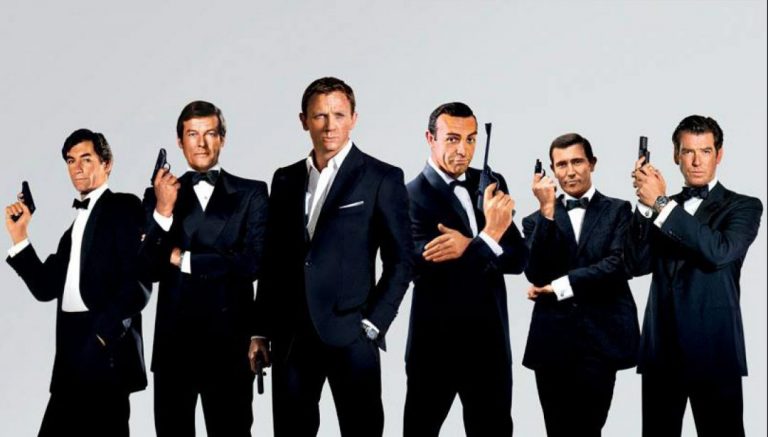
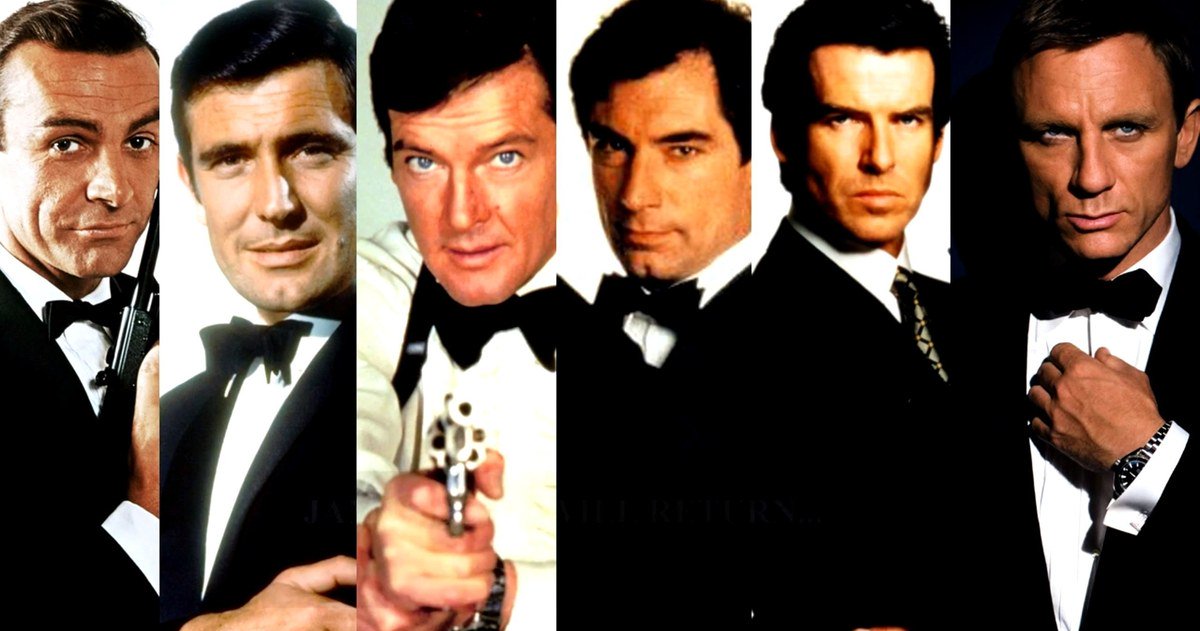
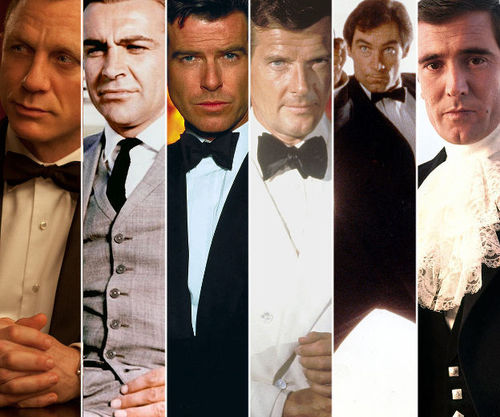
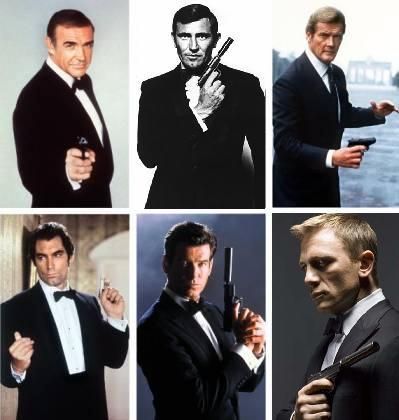
It’s useful to remember that the James Bond movie franchise has been going on for over fifty years now. As someone who’s watched the entire series multiple times, and who’s actually read the Ian Fleming books fergoshsakes, I can tell you that “Who is James Bond?” has changed answers multiple times. Even the 60s grit of Sean Connery made Bond out to be a nicer, more heroic fellow than the damaged goods, self-destructive assassin and brute that Fleming wrote of. George Lazenby’s french cuffs made for a softer Bond in his one abortive outing. Roger Moore, in keeping with his times, pivoted the character around past the playboy of The Saint to almost a self-lampoon or urbane spydom (particularly as he aged out of the role). Timothy Dalton, Pierce Brosnan, and especially Daniel Craig, have all shifted the role back to something harder and more gritty, but each have been product of their time and the targeted movie audience demographic. Suggesting that there is a unitary “Bond” to test against for gender characteristics is a dubious idea to begin with.
But, heck, let’s go ahead and hypothesize that there’s some ur-Bond that we can use as a touchstone, something the collective race consciousness would recognize as the Platonic ideal of Bondness. What are that character’s characteristics?
- Bond is a Spy
- Bond is a Killer
- Bond has Class
- Bond is a Thrill-Seeker
- Bond is a Womanizer
- Bond is English
Those seem to be the general attributes that go into James Bond. Now, does making Bond a woman break any of those?
Bond is a Spy: Whether it’s breaking into a mad criminal genius lair, obtaining material from (or sabotaging) a geopolitical enemy, or otherwise serving the covert missions of Her Majesty’s Secret Service in defense of the West, the World, or just that Sceptered Isle, Bond is the most famous movie franchise spy on record (Jason Bourne doesn’t even come close).
Can a woman do that? I don’t see why not, just as one might answer to the next one …
Bond is a Killer: While it’s sometimes played down a bit, ultimately that “double-0” agent nomenclature represents a “license to kill”. Bond is an assassin (in some movies, very clearly portrayed as such), and even when killing someone is not the specific mission, Bond has explicit permission from HMG to kill anyone who gets in the way of that mission.
Can a woman do that? Brute violence, getting one’s hands dirty with blood, often aren’t seen as traditional female courses of action, but we certainly have any number of models where it’s been done, from Black Widow to La Femme Nikita to Helen Mirren’s Victoria in RED, there’s plenty of precedent.
Bond has Class: Oh, that vodka martini, shaken-not-stirred. The tuxedos and the baccarat. The ability to flip back and forth from hobnobbing with the rich and royal to snapping the necks of their bodyguards (with appropriate bon mots for each). The discernment as to vintages of wine or points of origin for caviar.
Again, I don’t see anything there that a woman could not do, even is coolly assertive behavior from a man around these things might be reflexively labeled as being “pushy” or “snobby” from a woman. We’re going to touch on that in a bit.
Bond is a Thrill-Seeker: Fast cars. High-stakes gambling. Even his profession. It’s been noted (all the way back to the books) that Bond is an adrenaline junky, a thrill-seeker. “The world is not enough,” goes the translation of his family motto (and a later movie title). And there are times — in the movies and the books — where this appears taken to extremes, to the point where it seems that Bond has a death wish (to complement occasional PTSD).
Those are attributes that are not generally associated with female characters, though I’m not sure why they couldn’t be. The perception of a woman who’s an adrenaline junky, though, is that of a woman with a defect, someone out of control. When it’s a man, it’s usually seen as an admirable (if possibly foolhardy) trait.
Addressing that perception sounds like a challenge to me.
Bond is a Womanizer: This is where people usually get the most indigestion over gender-swapping Bond. What about the Bond Girls?
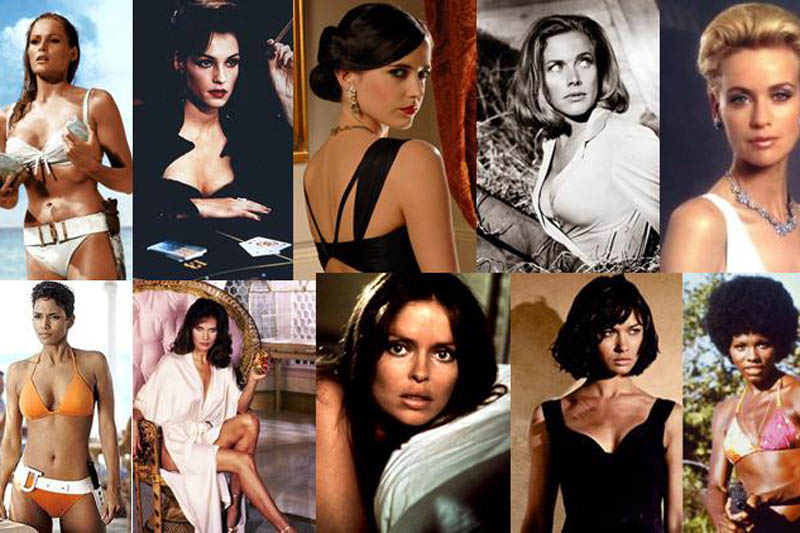
It goes largely without saying that Bond sleeps around. A lot. Keeping score during the movies is a hobby for some people. While this trait has mellowed out a bit in recent years, it’s still one of the key attributes people associate with the character. And, as we “know,” a guy who sleeps with a lot of women is seen as, well, especially manly. A gal who sleeps with a lot of men is seen as, well, a slut.
Even in a less promiscuous Bond world, as we’ve had under Craig, where there’s been some attempt to add personal depth to (usually doomed) relationships, there’s still a distinction that gets drawn between a spy who has sex with the enemy in order to achieve the mission when the spy is a man vs. a woman. The man is assumed to be a stud, acting with agency (and having fun at the same time). The woman, on the other hand, is letting her body be used, giving her all for England (and not with a wry wink). (Alternatively, she’s some sort of unnatural sexual predator who’s to be feared, if not pitied.)
I’m more than happy to say that’s a very sexist attitude, and one that I suspect a lot of people would not explicit cop to these days — but I’ll also confess I think it would stand in the way of directly mapping the traditional Bond model onto a woman. Jane Bond sleeping with a series of well-oiled “Bond Boys” is probably not going to cut it. (Nor, for different reasons, Jane Bond sleeping with a series of bikini-clad Bond Girls.)
Of all the problems here, this is the one that’s the most difficult.
Can you have a Bond who’s not a “womanizer”? Going back to the books is no help here — the Bond there would be thrown in jail for his treatment of women, certainly not lauded as a hero. The layers of societal expectations and prejudices about sex and romance for women vs. men seems difficult to work around. Heck, the occasional mooning by Bond for a long-term relationship, perhaps retirement and a family, sounds very different coming from a man than from a woman.
It would be the biggest challenge for any casting decision of this sort.
Bond is English: Yes, there are women in England, too. I think that would be fine.
(We’ll also handwave aside that Bond’s been played by some non-English actors, or that as a result of Connery playing Bond in Doctor No, Fleming actually gave the character a Scottish heritage.)
* * *
It occurs to me that there’s a further categorization that folds in a number of the above, and is part of what makes gender-swapping Bond so problematic: Bond is the quintessential alpha male.
He’s a stone killer. He is the ravisher of usually-cooperative women. He owns any room. He follows his instincts (successfully!), even in defiance of his stodgy bosses. He dares all. He wins all. Even when there is tragedy in his life, he bounces back. He lives well, even when (especially when) on the job. He doesn’t quite swagger, but he’d be justified in doing so. Men are jealous, intimidated, dominated by him. Women are eagerly (or fearfully) attracted, seduced, dominated by him.
He’s James Fucking Bond.
Can a woman be that?
On one level, there’s really no reason why not. But culturally, that’s really difficult to pull off. The quiet self-confidence and oozing of power that comes with all that window dressing is seen as quintessentially male, to the point where women who act that way get labeled in negative ways, the male virtues being portrayed as female vices. Women who dominate are called pushy and bossy. Women who strive to win conversational gambits are called bitchy. Women who are aggressive are abrasive. Women like the above “alpha male” are considered undisciplined, sexpots, man-eaters, irrational if emotional and frigid if not, judgmental, strident, vain, ball-busting …
(Insert any number of descriptions of Hillary Clinton vs. any number of male politicians from whom she acted no differently.)
It’s unfair and irrational, but it’s hard to argue that it would be an uphill challenge among a lot of the audience to have those Bondian traits applied, with that name, to a woman.
On the other hand, maybe that’s a challenge worth taking. Agent 007, after all, never backs down from something like that.
A few added notes:
- Nobody in 1962 would have thought that “M,” the head of MI6, could ever be a woman, either. Dame Judi Dench begs to differ.
- This is not a question about whether there are differences between men and women, as a broadly generalized binary whole. And, to my own aesthetic and orientation, vive la difference, as they say. But going from physical differences (in a broad range) to mental and emotional and behavioral differences, especially if you try to strip out the thick layers of expectations and stereotypes and biases and acculturation that our society assumes, still, about how “men” and “women” should be, is rightfully subject to a lot of debate.
And, of course, a character like Bond is an outlier, regardless of gender.
- Craig (and others who have chimed in on this) also mentioned some other categories for cross-casting. While most of my awareness of British society comes from the media, I have the sense that the the idea of a contemporary black James Bond (Idris Elba is the perennial favorite here) would seem less jarring in the UK than in some circles in the US, and would not seriously conflict with any of the items above. (I have no doubt that some US racists would be outraged at the thought, however, even as they denied racism as the basis for their outrage.)
I suspect strongly, if sadly, that a gay James Bond would be even more fraught than a female one, with as little justification.
- “But why would you want to do it? Why would you want to put a woman in as James Bond, except for some sort of SJW feminazi social mind control reason?” Two reasons come to mind.
First, why would you not choose the best actor to portray a character? To get back to my original point, if gender, or race, or whatever doesn’t affect the core story any more than hair color or eye color or handedness, then why not choose someone who can bring something interesting to the story?
Second, though franchises are about continuity, in the course of a fifty-year franchise, taking new looks and spins on the story of a British spy/assassin is not only inevitable, but necessary … and has already happened. Why not play with something that is attuned to the same vibe, but offers a fresh perspective? If you can go from Sean Connery (with an intervening step) to Roger Moore, why can’t you go from Daniel Craig to Emily Blunt?
- “Can’t you just create another movie series about a British spy/assassin and cast a woman in it without desecrating the holy figure of James Bond?” Sure. Of course you can. Except that any movie that is part of the 007 franchise automatically gets a huge audience, at least for opening weekend. If you’re telling substantially the same story, why forego that profitable advantage? Or, rather, why would a movie studio choose to do so?
- None of this is to say that the franchise must put in a woman in the title role, or even that they should, just that, perhaps, they can without radically changing what it means to be Agent 007, only giving it a new look.
Me, I say live and let live….I thought it was a good use on a title. But, I do say leave well enough alone. Maybe start a new series 008. I do believe any actor today when asked about a woman playing the leading role that has been a male one for decades, would say “yes” or “it should be considered”. Who’d want the left #metomovement on their case.
But, I refer to what Einstein said when asked about if a woman should play a James Bond role, to told Oppenheimer, Dr., no.
I know, don’t quit my day job.