https://buy-zithromax.online buy kamagra usa https://antibiotics.top buy stromectol online https://deutschland-doxycycline.com https://ivermectin-apotheke.com kaufen cialis https://2-pharmaceuticals.com buy antibiotics online Online Pharmacy vermectin apotheke buy stromectol europe buy zithromax online https://kaufen-cialis.com levitra usa https://stromectol-apotheke.com buy doxycycline online https://buy-ivermectin.online https://stromectol-europe.com stromectol apotheke https://buyamoxil24x7.online deutschland doxycycline https://buy-stromectol.online https://doxycycline365.online https://levitra-usa.com buy ivermectin online buy amoxil online https://buykamagrausa.net

Antifa and the problem of short headline-driven news cycles

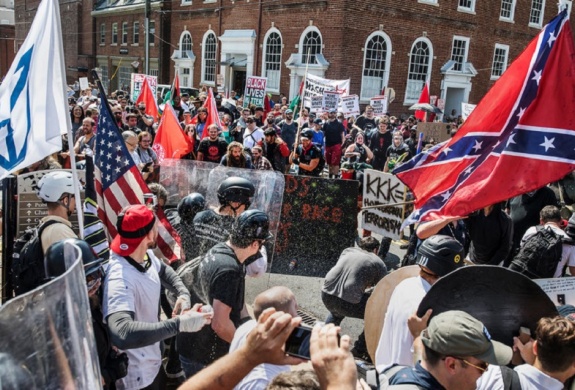
An interesting video looking at how press coverage of antifa protesters (themselves hardly anything resembling a coherent organization) is misleading in terms of outlier bias (extremity is always more interesting than mainstream; violence is always more interesting than peaceful protest) and in terms of distracting from the message of protest to the practices of a tiny fraction of the protesters.

There’s a fascinating stat early on comparing violence at various anti-alt-Right, anti-White Supremacy, anti-Nazi protests to something much more mundane (and far less covered in the press).

One element left out of the video’s mix is that for much of the mainstream media, the need for catchy headlines and “if it bleeds it leads” journalistic practices are one thing. But there are those (Fox News being the most benign) for whom such coverage focus is actively pursued because of the misleading message it presents, a message they can actively, rather than passively, use to discredit what’s being protested in the first place.

It occurs to me, incidentally, that media coverage of pro Nazi / White Nationalist / White Supremacist / etc. protests, and the violence inflicted there, can similarly be misleading. I can certainly argue that the message of those protests is inherently violent, the rhetoric and culture intentionally aggressive, and the fascist ideologies profoundly dangerous on their own, but it’s still possible to aware that what one sees in a thirty-second blurb on CNN about such gatherings is going to be the most extreme and eyeball-grabbing, whether it’s a grotesque outlier or just the worst of the worse.

This doesn’t mean that one should actively mistrust the media, just that it should not get an automatic pass for what it does, and anything that seems particularly outrageous or troublesome is worth further digging into. Being aware of the bias toward blood that the media (and, honestly, the consumers of the media, i.e., ourselves) has is simply a good thing to remember in updating one’s view of the world.

View on Google+

Political speech cannot be compelled by the state

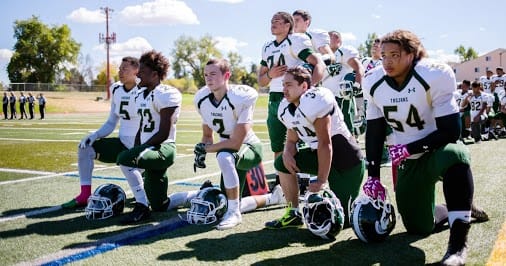
And that includes some publc school districts levying punishment to student athletes who take a knee during the national anthem.

You cannot force someone by law or other threat of state punishment to express (or not express) political sentiment. That includes patriotic displays. It would be as wrong (and illegal) to tell someone they must say or do something patriotic as to tell them they must not.

The Supreme Court has been very clear on this, dating back to the pretty-hyper-patriotic days of the Second World War. They ruled in Virginia State Board of Education v. Barnette that students could not be compelled to pledge allegiance to the flag (emphasis mine), as it would be a violation of the First Amendment’s freedom of speech:

If there is any fixed star in our constitutional constellation, it is that no official, high or petty, can prescribe what shall be orthodox in politics, nationalism, religion, or other matters of opinion, or force citizens to confess by word or act their faith therein. If there are any circumstances which permit an exception, they do not now occur to us.

It that’s so for an explicit expression like the Pledge of Allegiance, how much more so for standing or hand-over-hearting for a patriotic tune? And calling something a “tradition” or saying that such protest must be done “respectfully” (i.e., out of sight) is no way to dodge around it, either.

Regardless of how one feels about the merits of such national anthem protests, they are in their own way more attuned to what the flag and the nation behind it stand for than “officials, high or petty” demanding behavioral orthodoxy and expressions of patriotism under threat of penalty.


What the Supreme Court Says About Sitting Out the National Anthem
Some public schools are telling student athletes they can’t kneel during the anthem – but that’s unconstitutional.

View on Google+

Happy Hispanic-Latino-Latinx-History Heritage Kinda-Month!

An amusing video looking at the mid-month to mid-month celebration of Hispanic History (or maybe Heritage), or maybe it’s Latino History, unless one is being gender neutral with Latinx, or has a US regional preference for Hispanic vs Latino, or is being pedantically proper about the difference between “Hispanic” (of Spanish heritage) and “Latino” (of Latin American heritage).

Anyway, funny and educational.

Theoretically, I have Hispanic background, as my paternal grandfather’s mother was of “noble Spanish blood” (as an obit put it) whose family migrated to the US from Mexico (but wasn’t Mexican, we are firmly assured) as one of the early settlers (in some accounts) of Phoenix, Arizona. I don’t personally identify as Hispanic, because that’s a pretty thin slice of my mutt-ness, but I do enjoy Mexican food, so Happy Label-of-Your-Choice History Month!

View on Google+

Why you can’t get Kinder Eggs in the United States

And why you’ll be able to sorta-kinda next year.

I already knew much of this from a recent encounter with the confection. In Spring 2016 +Kay Hill‘s high school band and orchestra went on a very fun trip to Austria and Germany (with an array of family and friends along with). On our last day, in Germany, the tour guide presented the kids with Kinder Eggs, which led to the discussion of why they are illegal in the US.

There were no problems with any of the kids bringing them through customs, as the eggs were consumed within about thirty seconds. Because teenagers.

Anyway, a lengthy video, but some interesting history.

View on Google+

AD/BC and CE/BCE

Interesting video looking at the development and adoption of the AD/BC system of counting what year it is, as well as when and how CE/BCE came in to gradually supplant it (particularly in academic circles).

I think it’s more an historian and traditionalist than as a Christian that I find the transition to CE/BCE vaguely annoying, slapping a different label while keeping the same numeric origin point. It feels like political correctness, of the silly variety. Of course, I also don’t buy that the Founders using “A.D.” and “In the Year of Our Lord” on their document dates proves that they were devout Christians. It’s just a traditional label (and a fun retention of Latin in our culture), so it doesn’t particularly bug me.

Of course in a century we may be using the Chinese calendar (or be huddled in the ruins around our lizard dinners, counting the years since the Great Collapse), which will settle that debate in a Gordian fashion.

View on Google+

When people start talking about “getting tough on sexual predators”

Nobody likes sexual predators. That’s perfectly appropriate and praiseworthy. Nobody likes the subset of that group, child pornographers, either. I’m completely behind that sentiment.

But as Inigo Montoya famously noted about certain terms, “I don’t think it means what you think it means.” As in this case, where a 17-year-old sexted a picture of himself to an adult, and was tried, convicted, and lost his appeal before the Washington State Supreme Court as a child pornographer and sex offender.

Yes, the “victim” and “perpetrator” in this case are the same individual.

Now, I’m not saying that what the minor in question did was a good, appropriate, or laudable act. But I really don’t think most people think “child pornographer” and “troubled teen sending pictures of his own privates to an adult” in the same mental image. Nevertheless, he will be incarcerated and, behind bars and after release, treated, by state and federal law, as generic sex offender, lumped right in with actual molesters and actual rapists and actual purveyors of child pornography. And that’s not going help his life — or society — at all.

These sorts of laws tend to sweep with a wide brush, because no legislator ever lost votes for being too tough on sexual predators. But the results can be as unjust or daffy (or, most likely, both) in hurting people innocent of actual crimes as letting folk go who very certainly should be behind bars.


Teen sends dick pic to 22-year-old woman, now he’s a child pornographer
Washington Supreme Court: Child porn laws apply even if perp, victim are the same.

View on Google+

The Sheer Terror of “Little Dances”

[UPDATE: Apparently when I type quickly my fingers mistake Cory Gardner for Cory Booker. Both are US Senators. The resemblance ends about there. My apologies for the confusion.]

US Senator Cory Gardner (R-Colorado) canceled a private lunch meeting he had scheduled with some folk who had supported him last year. Apparently word got out and a peaceful protest was quickly organized outside Carl's Tavern in Steamboat Springs, where the meeting was to be held.

Routt Co. Republican Chair Don Mathis said the meeting was called off because "his security staff feels that due to the current threat assessment and current events" it was too dangerous for him to outside his bunker and anywhere near people who hadn't previously donated money to him.

Mathis seemed to think that was justified, given that the protest (which occurred anyway) wasn't all that peaceful.

"A lady in her 50s or older, blocked me with her sign," Mathis said. "The protesters were also putting their signs up on the windows of Carl's, tapping on the glass and doing a little dance. It's all kind of like mild terrorism."

Mild Terrorism! Quick, call Department of Homeland Security! Call the FBI! Call the National Guard! Just look at those Antifa thugs in the photo! Micro-aggressions! Micro-aggressions! There's a lady tapping on the window!

Yeesh.

[h/t +Stan Pedzick]


Protests prompt Senator Cory Gardner to cancel Steamboat meeting, says county GOP chair | SteamboatToday.com
An email from the chair of the Routt County Republicans confirms U.S. Senator Cory Gardner’s office canceled his private lunch with a small group of local supporters in Steamboat Springs Friday because of a protest that was taking place outside of Carl’s Tavern where the meeting was to be held. “I just talked to Cory’s…

View on Google+

Liquor Laws

Hey, look! Colorado's one of the "8 States with the Strangest Liquor Laws". Sigh.

And it's not been all that many years since liquor stores weren't allowed to open on Sundays. And who were the major force that opposed changing that law, and also now opposes lifting restrictions on liquor and wine sales at grocery stores? Some pious religious organization? Nope. An association of independent liquor stores.

Of course, all liquor stores in Colorado are independent. The main reason grocery stores can't sell booze is that the law actually says that a given corporate entity can only have a single liquor license for a single location. So there's just one WalMart in the state that sells booze, one CostCo, one Safeway supermarket that does so, etc., and liquor and wine stores are all single-outlet operations, not chains.

Which means you actually get some awfully nice liquor stores, and which actually helps smaller produces of wine and beer find a successful outlet for their wares, but does make grabbing a quick bottle of wine while shopping for dinner a separate stop.


8 States With The Strangest Alcohol Laws
What’s the first thing you do to prepare for a trip to another state? After finalizing your packing list, looking up the law of the land should be on your list — especially if you’re planning on d…

View on Google+

And They'll Know We Are Christians By Our Love (Texas Ag Edition)

Sid Miller, the Texas Agriculture Commissioner, has had it with people insulting him.

"If one more person says Happy Holidays to me I just might slap them. Either tell me Merry Christmas or just don't say anything."

Yes! This! Exactly the message that Christ Himself preached! Amirite?

Happy Holidays, Sid. Try not to let the variety of Reasons for the Season, or the idea that not everyone is in your religious tribe, or the concept of politeness and civility, get you down.


Texas Ag Commish Sid Miller yearns to slap holiday well-wishers
Texas Agriculture Commission Sid Miller can be a jolly fellow.

View on Google+

Amending Art

I am fully behind updating and amending the descriptions of artwork to modern terminology, including wording that reflects contemporary sensibilities about language.

I'm a lot more leery about changing the titles that artists gave to their works, even if said titles including language that people today find offensive. That's a lesson of history, as much as the art itself. And to make some amendments is a slippery slope, as it justifies all sorts of retitling shenanigans based religious, patriotic, or political "sensitivity".

So, for example, the illustration below is by Simon Maris, c. 1900. The old title was "Young Negro-Girl". The Rijksmuseum is retitling it to “Young Girl Holding a Fan”. That strikes me as taking away from the history of the piece for the sake of avoiding offense to people who might not want to know that currently objectionable terms were once used a century-plus ago.

(Note: if the title is not the artist's, but one given to the work by a museum or initial owner at the time, I have no objections to changing it, though keeping a record of the change, both for provenance and for that historical perspective, should be a part of that process.)


Rijksmuseum Removing Racially Charged Terms From Artworks’ Titles and Descriptions
The Rijksmuseum in Amstersdam is in the process of removing language that could be considered offensive from digitized titles and descriptions of some 220,000 artworks in its collection.

View on Google+

The Pervasive Temptations (and Freedoms) of the Internet

A fascinating look here at Hasidic Jews and their increasingly futile attempts to tightly control Internet usage amongst their community. Balancing the need to do business with the desire to keep outside influences and corruption and the like away from their people is proving to be impossible.

How are you going to keep them down on the shtetl …?


Ultra-orthodox Jews are using WhatsApp to defy their rabbis’ internet ban
Like most people, Moshe spends a lot of his time messaging friends on his smartphone. Unlike most people, he can’t openly talk about it.

As a Hasidic Jew living in Brooklyn, Moshe’s online…

View on Google+

"Smut! Give me smut, and nothing but!"

As Stephen Colbert has fun discussing the vagaries around what can, and what cannot, be shown on network TV, prompted by the sale for $170MM of Modigliani's painting Nu Couché.

Which calls to mind the Victorian Era Pre-Raphaelite artists who got away with painting plenty of un- (or diaphonously_ clothed women by choosing Greek and Roman classical, or pseudo-classical, subjects. "It's not porn — it's art!"

(Title via Tom Lehrer: https://youtu.be/iaHDBL7dVgs)

View on Google+

Everyone's got "must-have" ideas for the next Star Trek

Given that so little info was given from the CBS announcement (aside from the zany "streaming video only" aspect of its distribution, it's not surprising that everyone's jumping on what the show should be about and, more importantly, what the characters should be like.

A lot of that has been (on a number of sites) about inclusiveness, which the attached article focuses on, specifically looking for the next show to have:

– A female captain
– Openly gay character(s)
– Multi-racial characters
– Committed relationships
– Openly trans character(s) (played by trans actors)
– A non-human captain

Part of this, it seems to me (from my own ethnic / racial / gender / orientation privileged perspective) searching for a couple of different things:

A. An interesting cast of characters that will lend itself to interesting stories.

B. A desire for representation, either in the abstract (the future should look like X), the professional (more Y people should be employed in Hollywood), or the personal (I want a Z character that I can better identify with).

Those are all laudable goals — and, honestly, there's a lot of overlap there (especially with a good writing team). The problem, creatively, is making sure that (A) comes first. If there's a perception that (B) is given priority, that there is box-checking for maximum diversity for the sake of maximum diversity, that bodes poorly, especially if it further has the sense of Kumbaya / "the future is pleasant and progressive and diverse and everyone lives in harmony" about it that so hampered S.1 of TNG.

On the other hand, if there's a perception that the producers are playing it safe and going for a mostly-white / male / straight / cis cast for fear of alienating audience members and/or sponsors, that's sacrificing (A) as well.

Some other issues to consider are:

– Core vs recurring characters and crew
– Under-representing vs over-representing
– Inclusion vs tokenism

One question that comes up is how to fit in diversity without making the show about diversity that, in the Star Trek future, is presumably not even seen as a diversity issue, the same way that nobody comments on the eye color of that new ensign that just beamed on board. Is it enough, for example, to have a chief engineer who is gay (and, presumably, has same-gender romantic involvements), or does that character's gayness need to be the centerpiece of some stories (imprisoned on the planet of Throwback Puritans or whatever)?

I'd add into the mix as well consideration about some other minorities and how they fit into the world of the 2Nth Century. Body form / weight / attractiveness. Age. Religion. Disability. There's some representation there which could make for some interesting plot hooks (or even just be part of the background for the characters, the way Picard's Frenchness was, with a couple of notable exceptions, part of his background, not foreground).

I think the last item the writer suggests — the idea of increase alien representation — is potentially the most exciting as hooks for plots and interesting characters within them. Some of the best Star Trek characters (especially in terms of how they then reflect upon humanity) have been (primarily) non-human (Spock, Data, Dax, Odo, arguably Seven of Nine, the EMH). Humans (or humanoids) with a non-mainstream-Earth cultural backgrounds (the Bajorans, the Maquis) also carried a lot of interesting ideas (both realized and not) that have potential. Greater representation there, including some aliens that are not just nose/forehead/ear-appliance aliens, makes a lot of sense for a Star Trek series. The question then becomes how to make sure that your core crew that has one human and five non-humans don't (a) turn into a bunch of "really are just humans who have different makeup demands" but (b) remain relateable to an audience that is, in fact, mostly human.

But, then, writing about the human condition is what good drama, and good Star Trek is all about, whatever alien or Earthly demographic we're talking about.


6 Things We Need the New Star Trek TV Series to Do With Its Characters

View on Google+
Words Mean Things (Civil War Edition)

Language evolves and changes. Words get worn down over time, or drift and find new meanings. Old word stop meaning what they used to. Or sometimes our understanding of words changes, and what was acceptable becomes fraught, for reasons serious or silly.

That said, I'm always a bit leery of intentional efforts to change the language. And when someone suggests it as reflecting a less biased way of using the language, even as they are changing the emotional content of the words to something that conveys an intentionally different (and more vivid) message … red flags start waving in my brain.

Prof. Landis' proposals here may be where the historic / academic language is headed, but I'm not sure I buy it at this point.

For example, I don't find "slave-owner" to be "legitimizing" anything; swapping it out for "enslaver" feels like it is describing something different — a more active role in something that may have been simply a horrid status quo. Passively owning and profiting from slaves may not be any more morally defensible than actively managing and acquiring them, but there seems to me to be a difference between someone who purchases — directly or indirectly — a human being who is already a slave, and someone who brings someone into slavery, the latter of which is what properly an "enslaver" (or even just "slaver") is.

One could argue that turning the newborn of slaves into slaves themselves was active enslavement. But I think it makes the horrifying institution of human chattel slavery into something different than what it was.

Similarly, calling plantations "slave labor camps" doesn't feel like precisely the same thing as, say, the slave labor camps of the Third Reich (where the labor was rented out to a variety of owners but still retained in centralized prisons, as opposed to being owned and housed and used to purpose by a particular owner). That doesn't mean they were any better, to be sure, but the distinction seems a worthwhile one. If "plantation" has associations that feel dismayingly romantic and innocent, perhaps it's better to remind folk of the foulness that underlay the stately colonnaded mansions, like vermin under a rock, not to change the word being used.

Indeed, it seems to me that rather than simply discarding the words through some sort of academic diktat, it would be better to draw comparisons and change the imagery associated with the disapproved words. What did it mean to be a slave-owner, and how did that role contribute to the perpetuation of human misery and torment? What comparisons can properly be made between the lives of the slaves of the antebellum southern plantations and what we would call their circumstances today? Use the words that were given at the time (and have been carried forward), but improve the accuracy of the factual and emotional implications of them, rather than seek out new and intentionally emotion-laden terms in their stead.

Changing language intentionally sometimes results in greater accuracy, but too often is used ideologically to advance an agenda. Better to illuminate and educate and let the implications of the truth behind the words come out, rather than roughshod try and mandate the correctly nuanced words to use. That may be a more difficult and less controllable process, but it avoids Orwellian implications that academics should, frankly, shun rather than embrace.


These Are Words Scholars Should No Longer Use to Describe Slavery and the Civil War

View on Google+

Retail chains push (again) for Colorado wine and beer sales

Colorado limits grocery stores to 3.2 beer, and liquor licenses to a single location. Supermarkets and big box retailers are looking to change that. They've been stymied in the past by independent liquor stores and, interestingly, craft brewers, but the plan is to, if need be, put it up to ballot initiative.

If that happens, I suspect it will pass. And, as much as I like the major independent liquor stores (which will be hurt most), I'm not sure that's a bad thing.


Grocers may take beer, wine sales question to Colorado voters
Colorado’s largest grocers and Walmart are throwing their weight behind the latest effort to have the state’s food stores carry craft beer and wine.

View on Google+

Looking at Native American mascots in Colorado high schools

The state is getting carefully — too carefully, according to some — into the discussion of high schools in the state that have Native American mascots. Though some, like +Kay Hill's Arapahoe HS Warriors, have relationships with (and approval from) Native American tribes, others do not (see http://goo.gl/OBbMga about the Lamar HS Savages).

It's an interesting situation, paralleled on the national level with Washington's pro football team. The people involved in many of these schools have absorbed the "tribal" symbols and/or names as their own, and, feeling pride in them, are hardpressed to understand why other folk who also associate with those symbols and/or names might take offense.

There's a certain degree to which i can understand people wanting to "grandfather in" these names when they've been used so long (in Lamar's case going on a century at least), but one has to wonder whether they would understand the concern if non-Indian mascots were in question — the Spear-Chuckers, or the Banditos or the Fighting Kamikaze.

I can't think of another still-extant group that faces this kind of thing (thinking nationally) with the possible exception of the Irish, who get both the Celtics and the Fighting Irish of Notre Dame. But, then, historic anti-Irish prejudice and the social and economic impact of it is long since died out in the US. The same can't be said for that against the Native Americans, and if there's a discomfort (or more there) about being associated as "Savages" and the like without their blessing, I tend to think that should be respected.


Colorado governor creates task force on American Indian mascots
Gov. John Hickenlooper signed an executive order for a task force made up of tribes, state agencies and school community leaders to discuss American India

View on Google+

Looking for a gender-neutral "unmanned" alternative for space flight

Since we've culturally decided that "man" no longer serves as a contemporary synonym for "humanity," the term "unmanned" almost certainly needs to be retired — but apparently that's kind of complicated.

The best, most accurate alternative I see from this article is "uncrewed," which is precise, non-gendered, and similar enough to "unmanned" to sound correct. The problem is that NASA won't use it because it "isn't in the dictionary."

Which is an odd restriction for an agency dedicated to exploring the unknown, if you think about it.

Hey, NASA, to paraphrase another aspirational source, "If you use it, the dictionaries will come." Words don't get put into the dictionary through a permission process. They get put in because they are being used. Use "uncrewed" and the dictionaries will pick it up quickly. Problem solved.

(I do fully agree with +J. Steven York that we should avoid "unstaffed".)


Finding new language for space missions that fly without humans
Historically, human spaceflight was described using the words

View on Google+

Don't Tread on Me (or My Bacon)

So this is a UK thing, I guess. I hope. Unfortunately, the Sunday Times article underlying this (http://www.thesundaytimes.co.uk/sto/news/uk_news/article1615171.ece) is mostly behind a firewall, as the Yahoo summary seems a bit too summary. But …

An organization called CoExist House (http://www.coexisthouse.org.uk/), which seeks inter-faith harmony, seems to be behind some proposals for promoting religious harmony in the workplace. Which is fine, until "harmony" is read as "compliance with the Least Offensive Denominator". To wit, no ham sandwiches stored in the office fridge because some people are "offended" by pork products.

Now, the suggestion that you might not want to stock an office lunch platter with kosher, hallal, and "ordinary" food next to each other makes a certain measure of sense. People with religious dietary restrictions might find that a bit much (ditto, I would suppose for religious-style Vegans and their alternate foods). That would seem simple politeness.

But that strikes me as different from saying, "Hey, because we have an observant Jew / Muslim / Hindu /Jain / Vegan working here, you can no longer keep bacon / ham / beef / flesh / animal products in the office fridge because it's disrespectful."

No. Insisting on everyone abiding by your dietary rules is disrespectful. I won't insist on you consuming what I choose to; you should not insist on restricting me to consuming what you choose to.

The irony here is that the guidelines will also call for workspaces to be tolerant of religious emblems and garb amongst workers. Never mind that some religious folk might claim offense at the religious insignia of other faiths. In this instance, everyone is being called to tolerate each other's practices; in the fridge instance, everyone is being told they must conform with the practices of others.

The guideline suggest that "alcohol should not be served at corporate events in case it upsets members of certain faiths." I can see arguing against alcohol because it opens up a company for liability in case of intoxication and subsequent unfortunate events. But because some might be "upset"? As long as there are what my college used to call EANABs (Equally Attractive Non-Alcoholic Beverages) available, your moral disdain for my drinking should not trump my desire to do so.

A number of years ago, when I was still an observant Catholic, I happened to travel to visit a friend during Lent. It was a Friday night, and the friend and me and bunch of others went out to a nice Middle Eastern restaurant. They all had shish-kebab and lamb and this and that. I had chickpeas, because there was no fish and I was eschewing meat on Fridays for religious reasons.

I was very jealous — the lamb looked great — but I would never have dreamed of insisting that we go to someplace where only fish and vegetarian dishes were available, or suggesting that people ordering beef skewers at the same table as I was at were disrespecting me and my faith. That would be absurd.

If I'm serving you a meal, I'll try and ask about dietary restrictions (religious or otherwise) and respect those. If I'm eating at your house, I'll be happy to abide by the house rules. That all polite and respectful. Dictating what food can or should be stored in the office fridge based on your or others' beliefs about what food is proper — is not.

(h/t +Marty Shaw)


Ham Sandwiches And Sausage Rolls May Be Banned From Office Kitchens For Being ‘Offensive’
Kitchens that are shared between office workers may soon be banned from storing pork products like sausage rolls over fears that they are “offensive”. Andy Dinham, professor of faith and public policy at Goldsmiths, University of London, is writing up the guidelines that will be put forward to employers this week.

View on Google+

We have nothing to fear but fear itself

And the fear is winning.

Originally shared by +Les Jenkins:

If the goal of Osama bin Laden was to leave the U.S. in a constant state of fear then mission accomplished.


Texas High School Student Shows Off Homemade Clock, Gets Handcuffed
An aspiring engineer, 14-year-old Ahmed Mohamed repeatedly said that his clock was not, in fact, a bomb. But a teacher and the principal of MacArthur High School called the police.

View on Google+

Of anti-abortion flyers, religious freedom, and copy machines

An Office Depot in Illinois is facing a possible religious freedom complaint after it refused to copy an anti-abortion flyer.

http://www.startribune.com/illinois-woman-accuses-office-depot-of-discrimination/326705421/

'The prayer was composed by the Rev. Frank Pavone, national director of the anti-abortion group Priest for Life. It calls on God to "Bring an end to the killing of children in the womb, and bring an end to the sale of their body parts. Bring conversion to all who do this, and enlightenment to all who advocate it." The prayer also includes statistics about abortion in the U.S. and decries "the evil that has been exposed in Planned Parenthood and in the entire abortion industry."'

Office Depot says they have a policy against "the copying of any type of material that advocates any form of racial or religious discrimination or the persecution of certain groups of people," and that the prayer "contained material that advocates the persecution of people who support abortion rights." The complainant says that praying for conversion is not persecution.

So, honestly, I don't think Office Depot has much to stand on here. Praying for someone's conversion may be obnoxious, but it's not persecution. And, yes, the lady could have used the self-service copy machines there (and, in fact, was encouraged to do so), but that's a separate-but-equal argument. And, yes, the whole Planned Parenthood "selling body parts" thang is bogus, but religious expression can't be discriminated against based on claims to objective facts.

The irony here is that this is precisely the opposite of the religious freedom cases that have been making their way through the courts. And, yes, that cuts both ways. Conservatives who have been arguing that businesses should not be forced to do something they find morally objectionable should be (but, I suspect, are not) supporting Office Depot in this. And, conversely, liberals who have been arguing that businesses must be religion-agnostic in such matters and simply provide services to all comers should look long and hard before backing Office Depot's position.

The flyer is here: https://goo.gl/XITTof — it doesn't strike me as religious persecution, even though I'd only take one if i needed some scratch paper. Office Depot's further claim that this constitutes "hate material" to a level that legitimizes refusing to copy it seems hyperbolic as well, especially since they were willing to let the complainant use the self-service copiers.

[UPDATE: As I was writing this and looking up some sources, as of this evening Office Depot has backed down. I'm not thrilled that such material will be out there, but I think it was the right thing to do.]


View on Google+