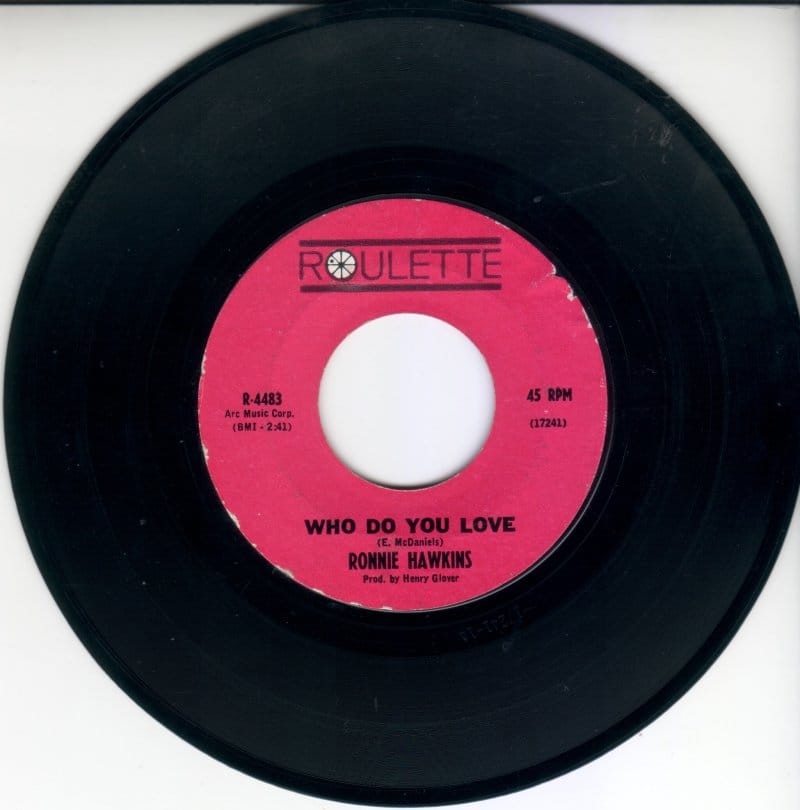
In a discussion with Margie and Mary this evening …
Once upon a time — with the 45 — music was all about the singles (and, secondarily, the flip-side, but that wasn’t important). When the 45 gave way to the 33 … and then to the cassette … and then to the CD … the album became God.
And with the introduction of digital music, and the iTunes store, and so forth, suddenly we can now easily acquire singles again, and the album is quickly fading into commercial obscurity.
Some folks think that’s a Good Thing. “At last! We don’t have to buy music we don’t want in order to get the single track by this artist that we do want! We can just buy the big hit, and not be forced to get an album of fill-in dreck.”
Me? As much as I enjoy the Big Hits, I’ve found that, with familiarity, in many cases my favorite tunes on a given CD are not what hit the Top 40. And if I hadn’t been “forced” to buy the whole album, I would never have listened to them, let alone bought them. Serendipity is a wonderful thing …
When I was growing up, a lot of the SF I read was collections of short stories, most of them from various SF magazines past and present.
SF magazines have been in a lot of trouble over the past (mumble mumble) decades, and collections of SF shorts have grown less and less popular (as measured by shelf space at the local Buns & Noodle). Instead, we get full-length novels. And, in fact, not just full-length novels, but trilogies and longer series. Everything is about buy-in to tales that max out the form.
But now we have a publishing revolution in the electronic form … and everyone is looking at marketing their works through the eRealm — to formal readers like Kindle or Nook, or through PDFs and other open forms.
So …
When will we see the resurgence of the short story and novella?
If a novel by Hot Author X is worth $9.99 on Kindle, would folks be interested in seeing a short story by Hot Author X for $1? How about trying out a short story by Unknown Author Z for $1? How about for 50 cents?
I’m trying to map music to lit here. We had collections of short stories, based on magazine formats, for many years, paralleling 78 then 45 singles. Then, once the the publishing industry stabilized, we had novels and longer series at the fore, analogous to albums (whether linked by concept or not).
So if the music industry has shifted again to the cheap single, stripping acceptance of creations down to the single, short, digestible, most popular creative act … wny not a resurgence of the short story for peanuts?
I’m not arguing that’s necessarily a good thing (I enjoy novels, novel series, and, as noted, albums). But it seems a logical progression to me.
(It is altogether likely that I am about the 25,000th person to think of this. But I don’t recall reading anyone saying it, so I offer it as my own uninformed bit of industry speculation. Those with more wisdom as to such things, feel free to take pot shots.)
Bun & Noodles, heh. We’ve always called that place (somewhat grimly) Burning Chernobyl.
On the future of publishing. Wow, there’s a gaping abyss in front of the publishing industry and they’ve refused to acknowledge that the train they’re riding has already started plunging over the edge.
Doyce talks a lot about standard publishing taking a cue from game publishers, making PDFs available. I like your comparison to the music industry, but I’m not sure if it holds true, because a book in a greater investment in initial time, but has less repeatability. I’m not sure how that will affect the value, but I do think it will.
Moving forward, I foresee the paper book becoming a luxury item, that even the large publishers won’t be able to afford mass editions of. Rather I hope to see an ‘on demand’ publishing model come to the fore.
In this model to go the bookwebsite.com, here you’ll find reviews, can search by your favorite authors, genre, user and professional reviews. If a book looks interesting you can read, say, the first page, or even the first chapter on-line. IF you like it you can buy it for say @$5 for the PDF which you can read immediately on your computer or download to the e-reader of your choice. For an additional, say $10, you can have a paper copy printed and shipped to your address. This would be a paperback copy (hard covers would be a VERY special order), you could choose regular or large print (slight additional charge) and even choose the typeface.
So, you purchase the RIGHT to read the book with the PDF purchase of $5 and everything above and beyond is, to steal from the on-line gaming lexicon, a microtransaction.
There would have to be some retooling of physical publishing, but on-demand printing is certainly possible, and could adopt to this model very quickly.
I can see book stores being afraid of this model, but here’s the catch: there’s nothing keeping the book stores from arranging a discount for volume purchasing and ordering a few copies of a ‘hot’ book to keep on hand for the folks who need a hard copy, but can’t wait the 2-3 days for delivery. I’d also see the book stores becoming a delivery hub for your book order, some of the larger stores even having print on demand capability in-store.
Much more complicated than that, there were attempts at CD singles, but they were poorly implamented. Also, the big record companies got into a very short sighted business model in the Post Disco years, combined with the bad business model of the pre disco year that they are still trying to cling to.
NPR actually had a really good piece on this the other day.
Bah, player was blocked. 🙁
Story here.
The reason why we have a place like iTunes (which I hate for the most part and prefer Amazon since it doesn’t have the stupid DRM crap), is because of copyright breaking technology of Napster, which allowed people to share music for free, and, brought about the concept of the Single back.
So, for that kind of revolution to occur in the printing industry, we will need to have someone go and start a sight to allow people to digital copies of books and again breaking the stupid copyright and DRM laws like was done with Napster and Music, and Bit Torrent and Movies.
Or, music and book publishers could realize that their business model is 20 years out of date, ditch the stupid copyright and DRM laws and use the business model that third world countries have adapted to when it comes to music; no royalties, an upfront one time payment and be done with it.
I owe “Buns & Noodle” to Alison Bechdel.
I agree that over the long haul, mass-market printing is going away — the economics just don’t make sense except for rare or significant volumes. The path there is strewn with eReaders and DRM glitches and people trying to maintain a profit the old-fashioned way, whether it’s possible or not.
Yeah, BD, I restrict the HTML tags you can use here in comments. Just as soon not have folks embedding bad stuff. The allowed tags are, um, listed right under the comment box …
Certainly there were CD singles, but they made no practical sense (form factor / convenience-wise) and were still priced too high.
I almost never use the iTunes story, since it’s DRMed (until you convert to MP3) and is annoying as all hell to maneuver in. Amazon is much better. I don’t expect — if DRM becomes a serious problem for eBooks — that DRM will hold up there any more than it did for music.
I go back to my original question: will a “single” model in publishing mean an economic drive back to the short story / article form, rather than full “books”?
Like Napster forcing the issue with the music industry in regards to music and singles, there is going to need to be some sort event to force the issue, otherwise the industry won’t be willing to change what they see to be a profitable model.
Just like the current battle of writers vs the publishing houses over who owns the digital rights to books is going to take years to sort out, what will be the shake out of the digital publishing kerfuffle will be a long time in coming.
One of the other issues is that this is all tied into what is going on with news papers vs digital content, so there is a whole bunch of things going on right now in the print world, and no one really seems to have come up with a solution, simply becsue they are still trying to force the digital realm to fit their dead business model.