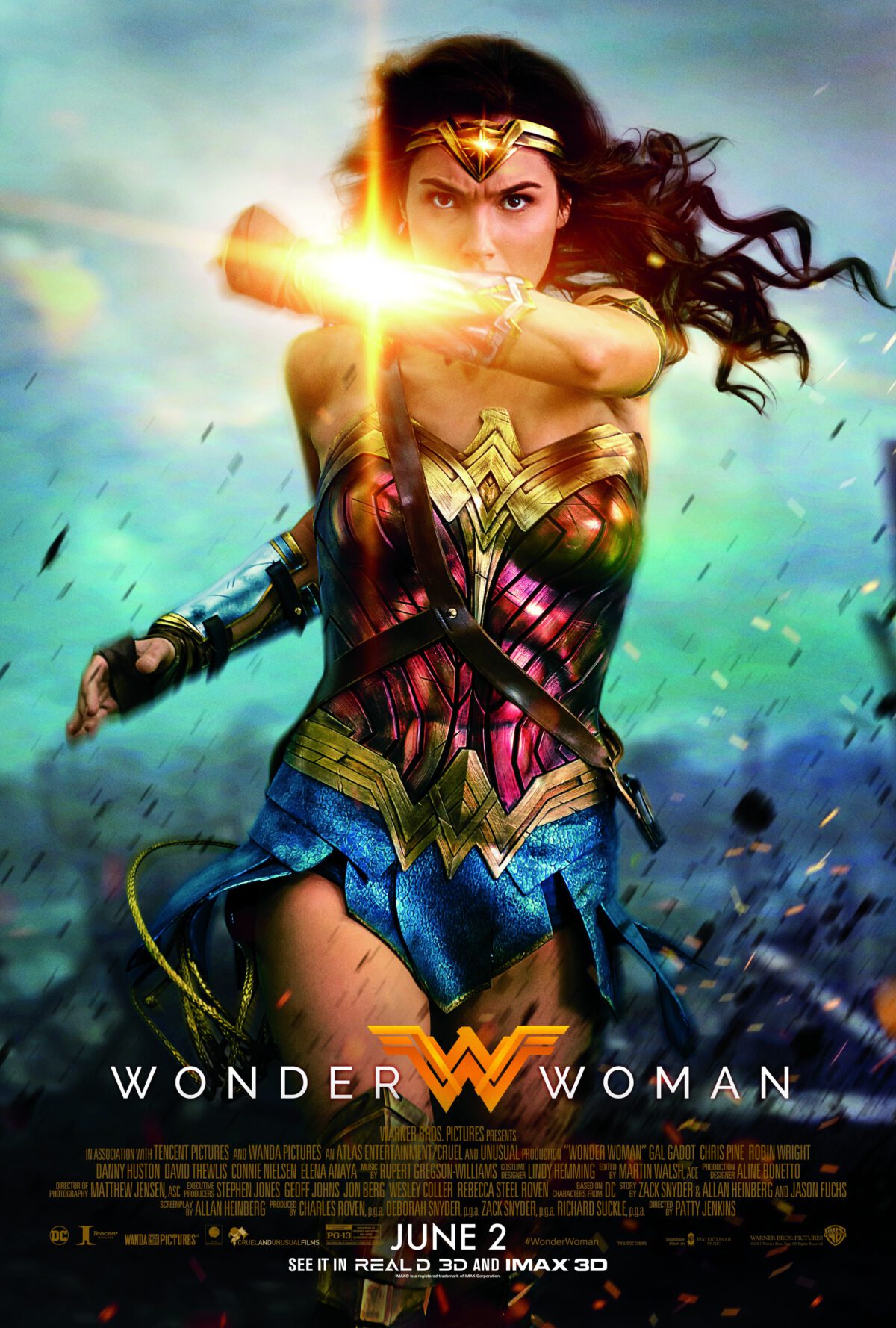
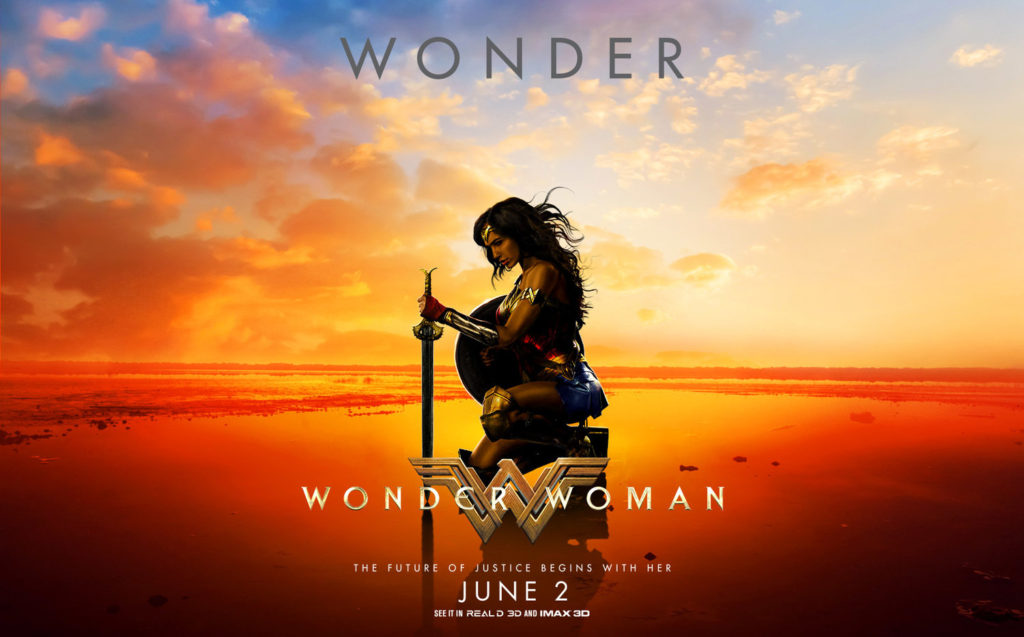
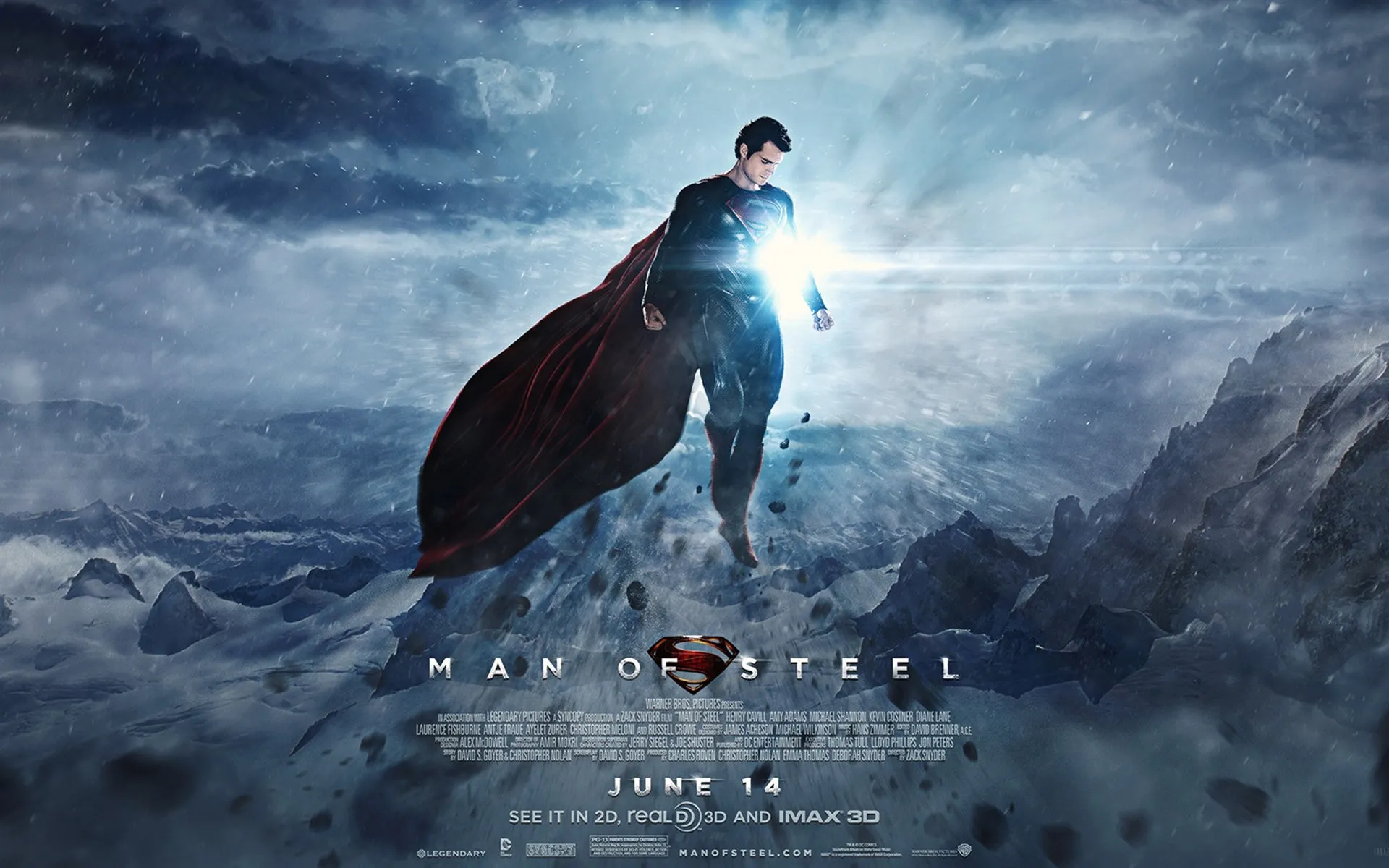
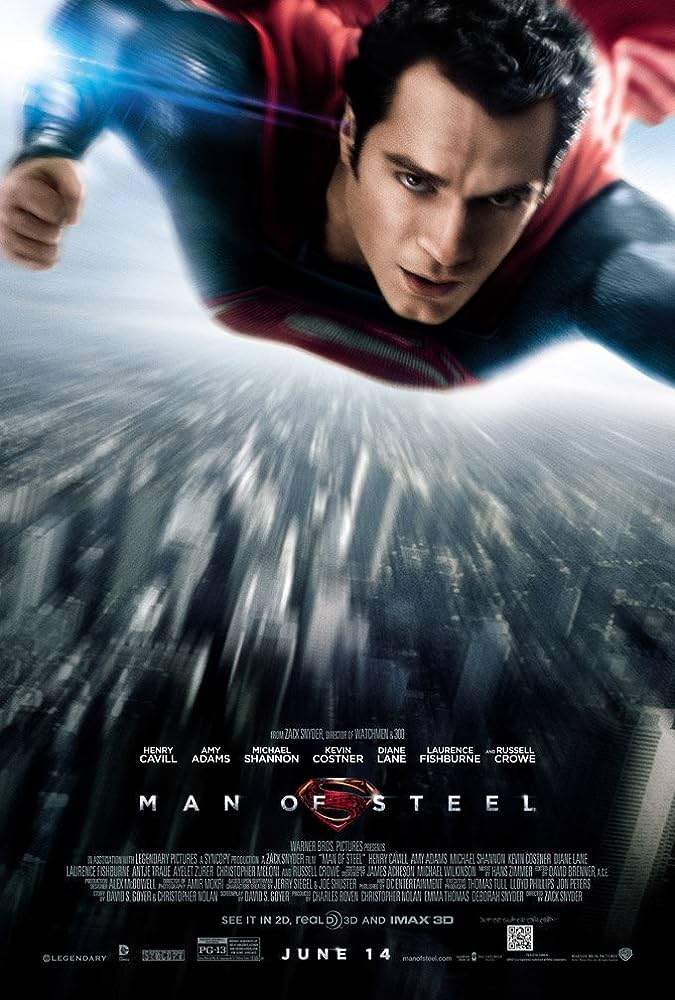
4.0 Acting 4.5 Production 4.0 Story 4.5 OVERALL (with a ♥)
Wonder Woman remains a delightful movie — hopeful and brave where Man of Steel is fearful and reserved, graceful and loving where Batman vs Superman is brutal and distrusting.
It’s not without flaws. The battle with the BBEG feels too unreal, and reuses too many moves, and ultimately David Thewlis makes a much better Sir Patrick than CGI-enhanced Ares.
But that said, there’s very fine stuff going on. Gail Godot nails Diana’s passion, confidence, determination, and strange blend of sophistication and naivete. She is a warrior — but, ultimately, like the Amazons, she is even more a protector. She punches, she stabs, but even more she shields. The more she learns that, the greater she becomes.
Sameer, Steve, Diana, the Chief, and Charlie
But we also get a great supporting cast for Diana: an overprotective Mom (no, really, lying about stuff to shield your child from what is inevitably going to come rarely works out well) and a so-very-buff extended family; Chris Pine’s noble, knowing, naïve (complementing these traits in Diana) Steve Trevor; the three amigos, demonstrating men aren’t all bad (and can be, in fact, victims as well); and indeed pretty much everyone in the cast who, with good writing by Allan Heinberg and excellent direction from Patty Jenkins, make for a much richer and enjoyable experience than any of its DCEU predecessors.
The fight choreography is amazing (except when it gets a scosh too CG), the period placement is excellent, and the Horror of War aspect is properly played. This is one of the only DCEU films I’d put in the Top Ten of super-hero flicks I’ve seen to date.
Do you want to know more?
This review was in an earlier form posted on LetterBoxd.
Also on LetterBoxd, my previoustwo viewing reviews.
That looks like a fun, exciting, kinda zany movie! Looking forward to it!
I don’t have a lot more to say about “Suicide Squad” (the 2016 edition) that I haven’t previously said on previous watches. It keeps dragging me back though, out of love for the concept and for at least some of the characters — and then leaves me to wake up the next morning, in a bathtub full of ice, missing a kidney.
I will confess that it gets a bit better with rewatching, turning into a sort of popcorn movie you can enjoy / groan at with friends. Once you expect the erratic editing of two or three “creative” visions blerged together, and the subsequent oddities of character development and herky-jerky plotline, it stops being quite as bothersome.
Acting-wise, this thing is all over the map. There are some good points — Viola Davis’ Amanda Waller is properly sociopathic, even if the denouement with her feels way out of character. Margot Robbie’s Harley Quinn is delightful even if the story sexualizes her to a ridonculous degree. Jay Hernandez’ Diablo is lovely, if underserved.
On the other hand Jai Courtney’s Boomerang, Adam Beech’s Slipknot, Joel Kinnaman’s Rick Flag, and Cara Delevingne’s Enchantress are evidence of something profoundly wrong in the casting, acting, writing, and/or directing.
Will Smith plays Will Smith, as always. He does a decent job of it here, even with the tonal chaos.
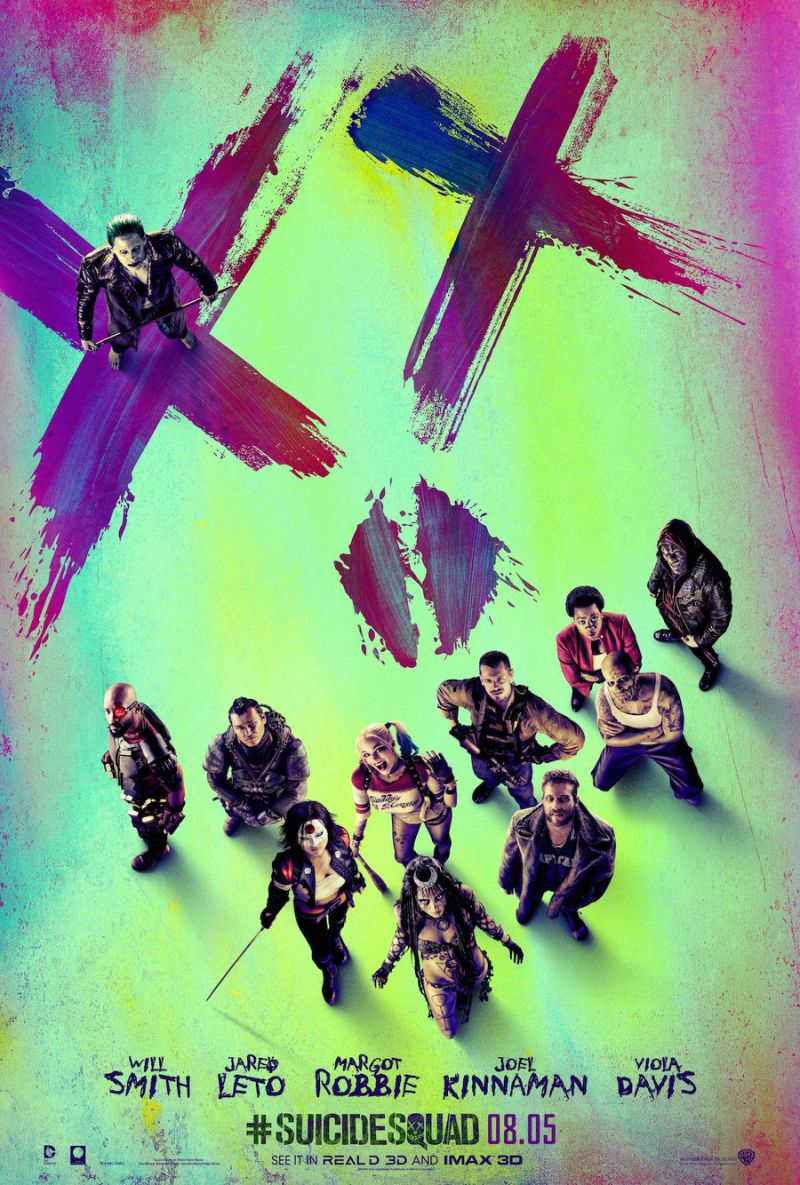
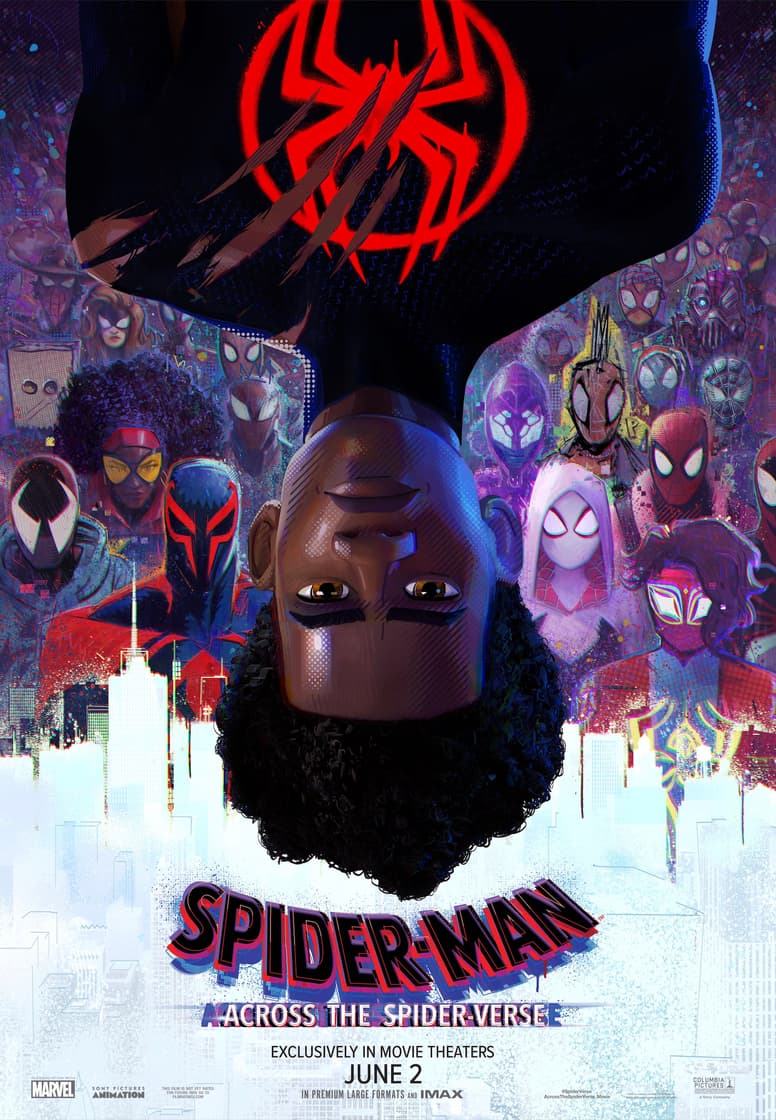
Oooh, fun and pretty and light and artsy. Looks like a great movie!
I actually don’t mind Jared Leto’s Joker (method acting shenanigans aside). I don’t think it’s my favorite Joker of all time, but it’s a legit interpretation. Unfortunately, a whole bunch of it got left on the cutting room floor, rendering a good third of the movie’s narrative interest kaput. They either needed to make this a Joker/Harley movie, or cut the Joker/Harley stuff way back; they instead made decisions with a machete (very Joker-like) and duct tape, ending up with the worst of both worlds.
The other actors are simply reading from Tropes for Dummies, and we’ll leave it there.
Muddied stakes, plot threads that come up then disappear, dizzying tonal shifts, FX that range from fairly cool to conventional to just plain bad … it just all ranges from somewhat interesting (the introductory backstories, while they last) to teeth-grindingly frustrating.
As a reminder, this is what we were promised in the trailer:
I really wish we’d gotten to see that movie. Instead, we got the (supposedly grimdark) movie WB already had in the can from Ayer, lots of panicky meetings by WB execs about the critical drubbing that BvSDoJ got, reshoots and re-edits and fun adverts like this, all to give us something that shows the coherency of mood and tempo and narrative dependability of … well, of the Joker.
Ah, well. Nothing that more bourbon can’t fix.
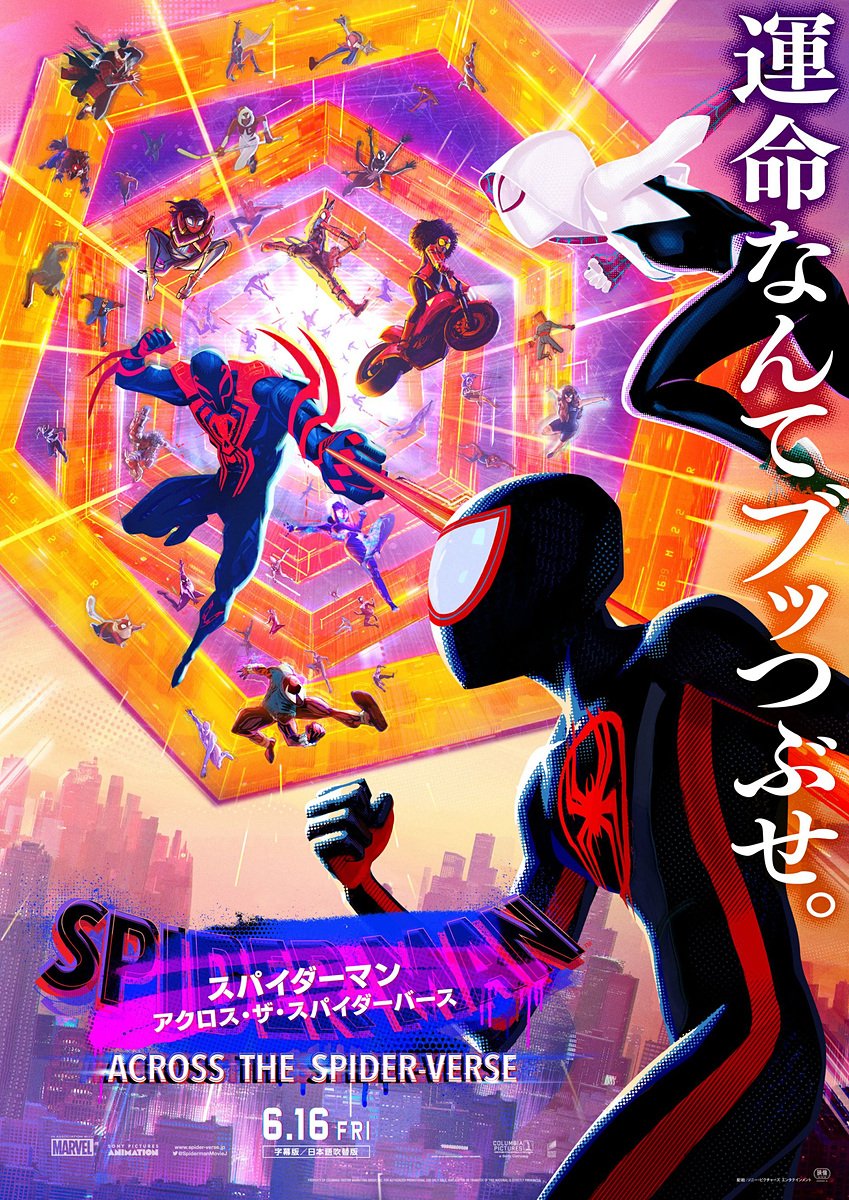
Again, looks like brightly colored fun! I want to see that movie!
UPDATE: With that perverse sense of timing that the universe sometimes has, rumors are once again a-swirl that we might get the “Ayer Cut” of SS16 released by WB, the version Ayer had put together before all the studio interference made it into the dog’s breakfast it ended up as. Will that actually happen? Will it produce a more coherent (if more relentlessly gritty) film? Who knows?
If “Man of Steel” was a gorgeous movie with some deep flaws, BvSDoJ is a movie with a bundle of flaws and a few gorgeous moments. Originally meant to be a Batman movie, then retooled to introduce and unite the Trinity of the Justice League (Get it? “Dawn of Justice”? Yeah, I know …), the whole thing is a muddled mess, focused on a very old trope: “What if the bad guy got the good guys to fight each other, but then they have to get together to fight an even bigger bad guy?”
Which is like Issue 1 or 2 of every comic book ever.
As MoS gave us a Superman haunted with fear of rejection, BvSDoJ gives us a Batman haunted with terrible, terrible anger. Ben Affleck’s Bats lives in/under a shell of a manor, perpetually reminded (by himself) of, apparently, Robin’s death at the hands of the Joker. He’s become a “Watchmen”-style character, raging and brutal, branding villains with his insignia.
He’s also full of anger at Superman for the damage and killing done during the Zod battle in Metropolis, esp. how it impacted the people in his large Metropolis office.
Not surprisingly, Jesse Eisenberg’s Lex Luthor (quite nicely played, for my money) plays the two of them off against each other — Supes looking to stop a violent, savage vigilante, Bats looking to stop a god-monster-in-waiting.
Luthor overplays his hand (of course) and kidnaps the only surviving parent in the cast, Martha Kent, and uses that as the final lever to force Superman into a lethal battle with Batman, who is now in powered armor and armed with a Kryptonite-tipped spear. Big, violent battle ensues, which ends only when we all (characters included) realize the coincidence of both Bats and Supes’ mothers being named “Martha,” which stops the battle, still-weirdly enough.
Which is okay, because it’s time for them to shrug off their dire injuries and bitter feuding and join their new BFF Wonder Woman in fighting Doomsday, a Kryptonian revenant resurrected by Lex using General Zod’s body and some of his own blood. Go figure.
At least we still have that Kryptonite-tipped spear! Bet that will come in handy!
Oh, and Superman dies. Bravely. Very sad. The world mourns. We get to escape from the theater.
A few more thoughts:
¶ Zack Snyder has some mordant, if facile, things to say about celebrity.
In fact, this is a far less thoughtful, far more shallow film than MoS. And while the former was (of course) mostly fought in bright daylight, this one is (of course) mostly fought in claustrophobic night darkness, which ends up highlighting the exploding cars, etc., far more. It is a film lit by flames, and just as ephemeral.
¶ “No one stays good in this world.” (eyeroll)
¶ “Bruce Wayne / Batman is a law & order fascist” was bold and interesting and fresh when Frank Miller did it in “The Dark Knight Returns” in 1986. Affleck’s Batman comes across thirty years later as less a hero, more someone to be scared of (whether you are innocent or not).
¶ The “Martha!” reveal is … so bad. So cheesy.
¶ Cavill is so frowny, so, so frowny, so much of the time. Much more so than in Man of Steel. Result: he looks like an angry god. Way to play into the type you’re trying not to be, Clark.
¶ Yay for the Wonder Woman music.
That said, Diana’s presence here is never fleshed out quite enough. I mean, her name’s not on the movie, but she plays a pretty prominent role. I could just ask for a bit of clarification as to what she’s doing, even if this was before her own solo effort.
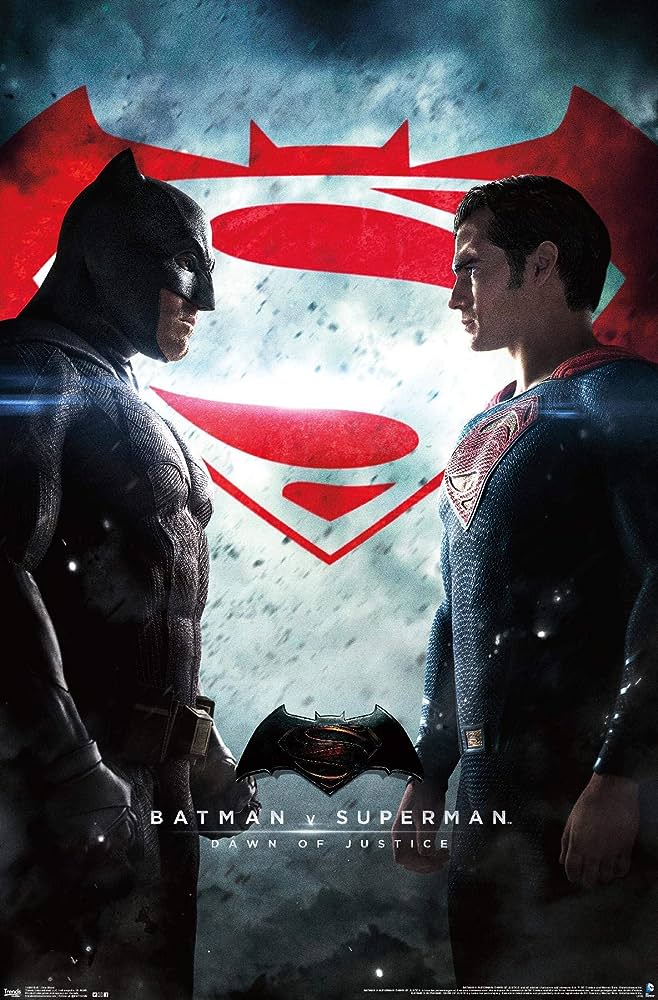
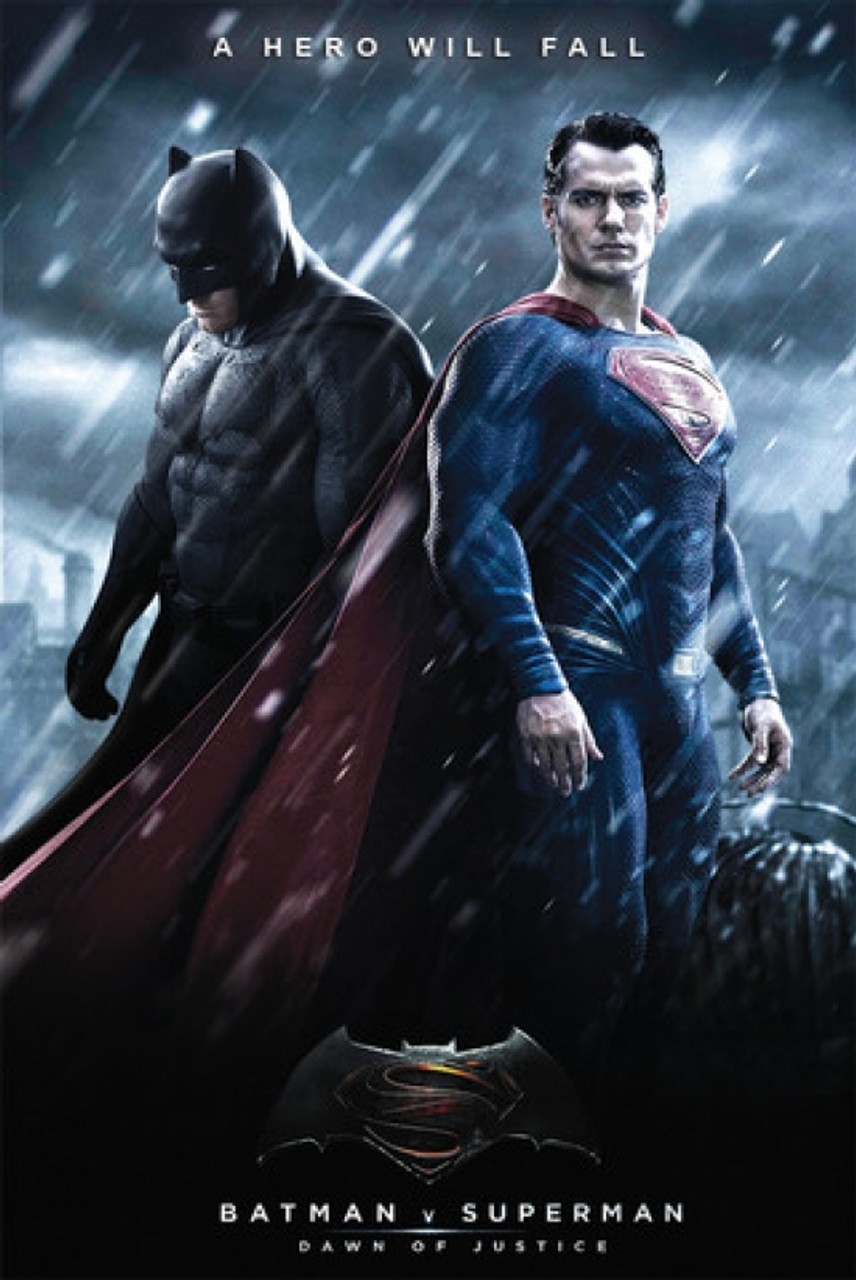
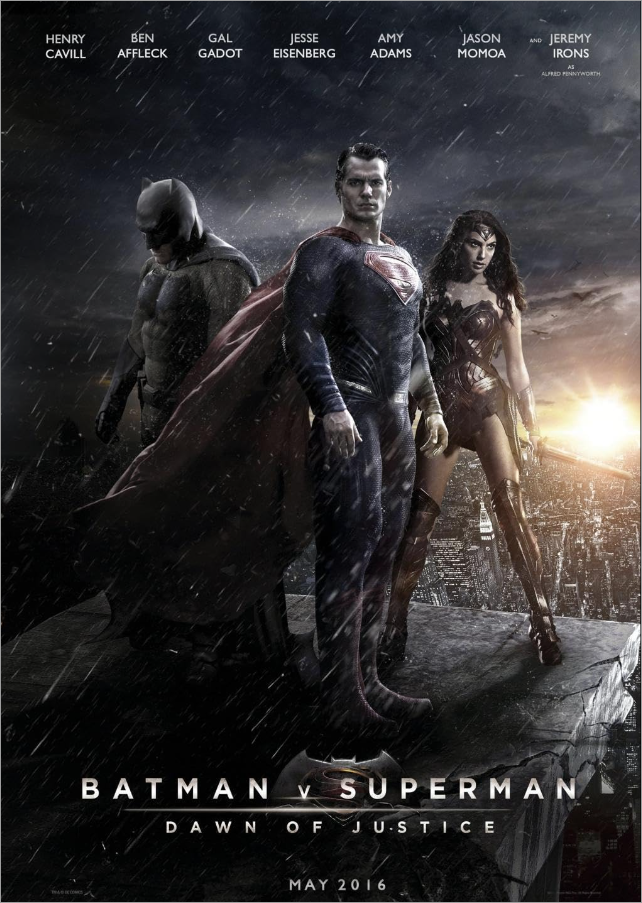
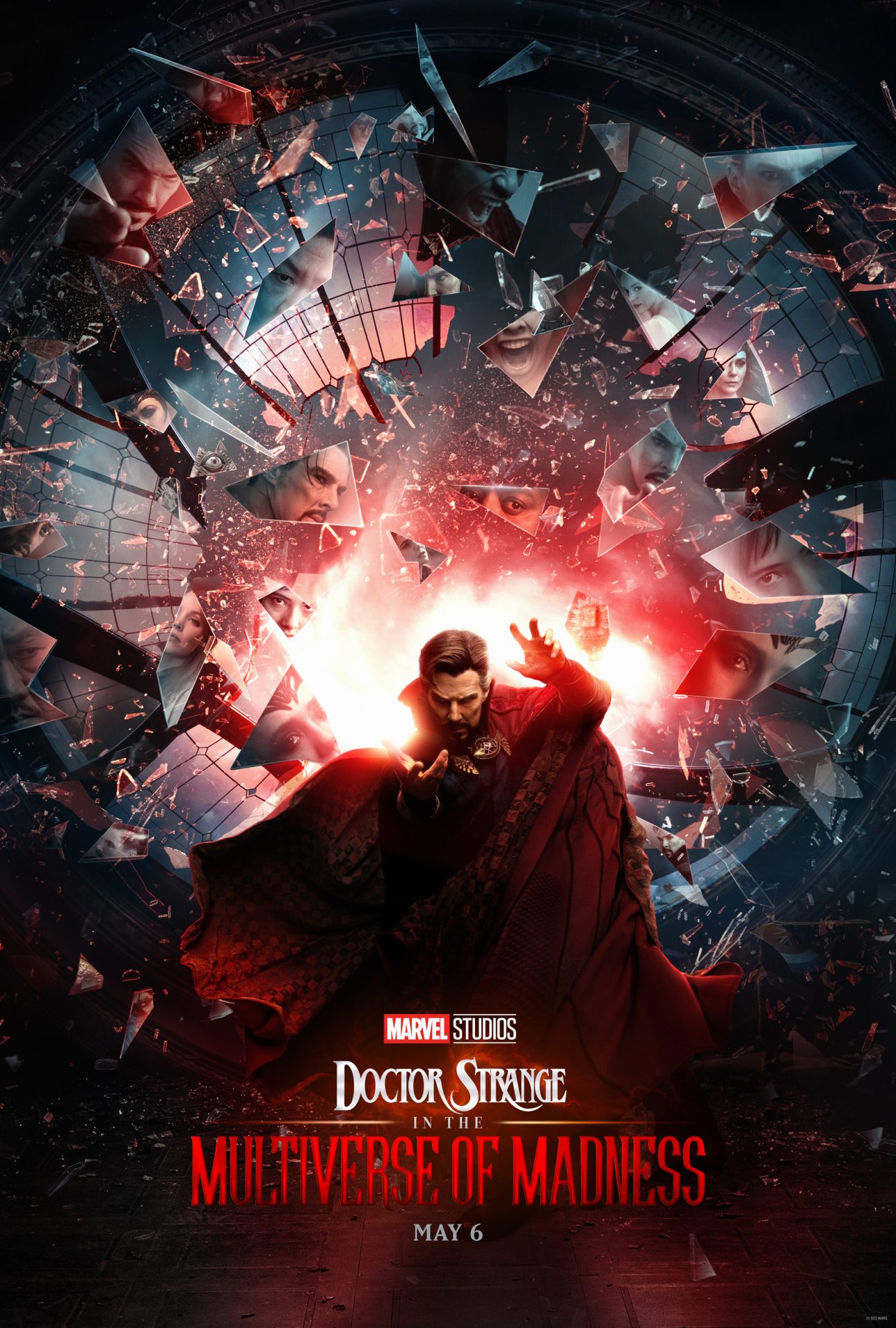
“Oh, crap, all these posters are too depressing! We better paste Wonder Woman and some sunlight into one of them!”
¶ Again with the zillions of dollars of “Disaster Porn” damage. Yeesh. Maybe Bruce Wayne will appreciate it more this time, since he’s in the middle of causing it.
¶ Superman’s nigh-instantaneous transition from “super-powered guy that we’re a bit unsure about because he’s an alien and was part of a battle that nearly destroyed a city” to being the subject of a state funeral feels a bit weird. I realize it’s part of Snyder’s Superman-as-Christ thing, but it needed more build-up. I mean — how do the people of Metropolis feel about the guy who was recently involved in demolishing half of the city on two different occasions getting a big fancy-dancy send-off?
This is a film that could really need a “Two Years Later” caption.
¶ I already mentioned I was cool with Eisenberg’s variation on how we normally see Luthor, even if he’s channeling the Joker a bit much. But having Luthor blood be part of the “mix” to create Doomsday was silly — though not as silly as trying to tie it to all into Apokalipsian hi-jinx via Steppenwolf as yet another “Hey, wait until you see the really cool Justice League movie coming real soon” forced promo.
Net-net, someone took the “Two superheroes meet for the first time, so of course they fight” dial and cranked it up to 11. Snyder does try to give some rationale for the hostilities — unfortunately, 90% of it boils down to Batman being a big, violent asshole, which ends up meaning that when it comes down to Batman v. Superman, the audience is going to have a favorite.
(Wonder Woman, of course. Which is why more recent posters for the movie highlight her prominently.)
This was my second watch of BvSDoJ. I don’t anticipate a third time.
In Color! (Which is pretty desaturated most of the time in the actual film.)
Do you want to know more?
This review was, in a previous revision, posted on Letterboxd.
My first-viewing of Batman vs Superman is reviewed here.
Good Lord. It’s been a decade since this film came out. That feels … way too long (it was just yesterday! or the day before!) and way too short (this movie has been one of the definitions of super-hero films forever).
A brief digression
So … the infamous Zack Snyder flick that started the whole … Zack Snyder DC thing. Stray thoughts scribbled during viewing.
So here’s my 30-second Zack Snyder thing. I loved Watchmen. I enjoyed and appreciated 300. I’ve had problems with all of the DCEU stuff he’s done that I’ve seen because it’s been relentlessly grim — or, when hopeful, it’s been about hope in a sea of grimness and human frailty. Administered with a bunch of (truly beautiful) explosions.
I would rather not watch a DCEU that Zack Snyder was running. That’s an aesthetic choice, not a moral judgment.
I’m also of the opinion that an activist core of Snyder fans (in the most fanatical meaning of the term) did more to bring down the DCEU than either Snyder or people who had creative visions different from Snyder.
Aside from that, Mrs. Lincoln, how did you enjoy the movie?
¶ The whole thing sets up life-as-struggle, starting with Lara-El suffering through the first childbirth in centuries on Krypton, alongside her husband, Russell Crowe as Jor-El, Action Scientist!
(To be fair, Russell Crowe makes for a great Action Scientist. It’s just that Superman’s origin tale is usually more talky-shouty than punchy-kicky.)
The presentation of Krypton and Kal’s origin is nicely re-imagined, with some new bits to add to the standard narrative.
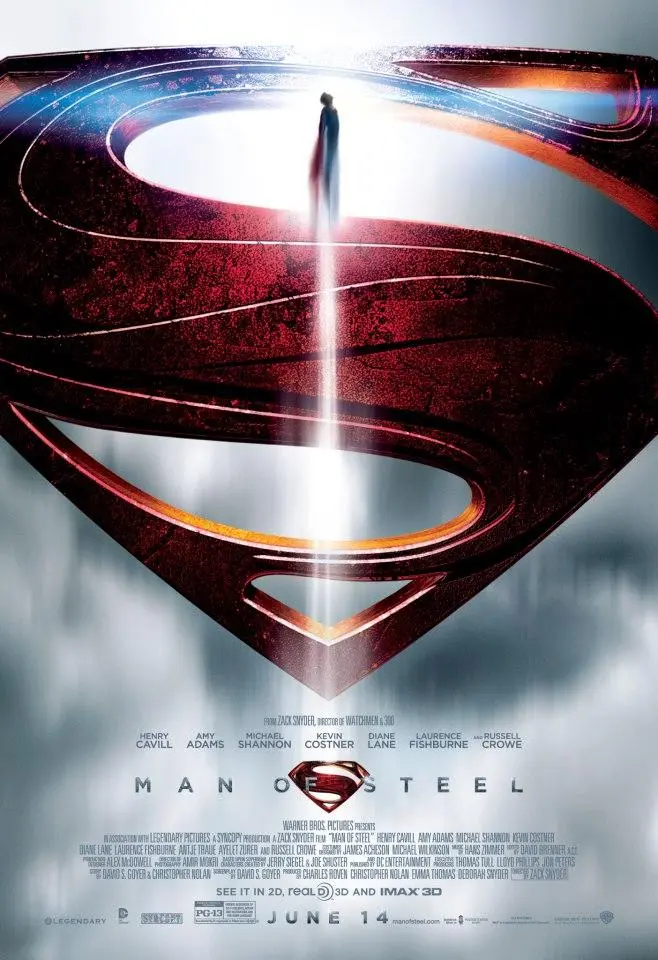
¶ “He’ll be a god to him.” The movie tees up its conflict of Clark-as-alien-monster vs Clark-as-Christ vs Clark-as-human early. And often.
¶ Kevin Costner does a decent job as a Jonathan Kent who is … a man driven by fear, but love, but fear. Scared for his kid (based on how bad humanity is), to the point of being willing to sacrifice his own life to keep his son’s identity from being exposed.
This was a red flag for me. Jonathan Kent should be inspirational. What he’s inspiring here is Clark staying in the closet.
¶ Trademark Snyder serious HDR-level contrast, with dimmed/tinted light, deep shadow, and suppressed color.
¶ I mean, bottom line, this movie is like a Superman story, but one framed to be sad, depressing, cynical, and unhappy. Yes, it all ends (mostly) well. The accusations that Zack Snyder doesn’t believe in super-heroes is wrong. But he also doesn’t love myth, and wants to complicate every tale with shadows and disappointment and flaws and cynicism and fear.
This is an Elseworlds tale of Clark Kent’s life as a tragedy.
¶ Clark is meant to be a force for good. But here he’s been raised in isolation, alone, fearful. He spends the first part of the movie as much in hiding as anything else. His dad really did a number on him.
Henry Cavill as Superman
¶ Given the film, Cavil really does a hell of a job. Big bravo there.
¶ And, for what it’s worth, the movie is beautifully crafted. The visualizations, the FX, all of it is done with a dear love for portraying the worlds that are encompassed. Big bravos there, too.
¶ “If the world figures out who you are, they will reject you.” Thanks, Dad.
¶ “I’m worried they’ll take you away from me.” Oh, Martha …
¶ The very powerfully visual connection between Jesus (in stained glass) and Kal-El in the pew is … a bit on the nose.
¶ Mad props to Edna Mode: the capes in this film look … dorky. It’s all so hyper-focused, high-contrast, gritty-reality feeling of a film, that someone wearing a cape (esp. when it’s not blowing in slow motion) looks goofy.
¶ The one FX shot that looked unreal: the CGI Kryptonian ship jets away from the human military defenders, blowing sand and dust in their face in a reverse shot … and nobody told the extras to flinch.
Michael Shannon as General Zod
¶ Michael Shannon really does a fine job as Zod. He’s a bad guy, clearly, but he very much fits that “Everyone is a hero in their own head” mold, and his speech about being existentially, genetically tasked to protect Krypton, and how that’s now been taken from him, is beautifully done (and beautifully chilling).
But why, WHY, if we have Zod, do we not have as the female and big male Kryptonians who get into prominent duke-outs, Ursa and Non. WHY?
¶ While the movie is criticized (not without justification) for the Disaster Porn of the Kryptonian attack and the El/Zod fight in Metropolis, it’s worth noting that it’s the US military that fires the first cityscape-destroying shot in Smallville.
¶ Best human touch of the film: MAGNETIC PHOTO ALBUMS from the Kent farm for the win.
¶ With all due respect to the Daily Planet, I’ve visited New York City: nobody has a vista that shows everything going on in the city like the offices of the Planet.
¶ Nice parallel struggle between Kal El vs the World Machine and Perry White trying to save his intern.
¶ As mentioned above, Disaster Porn. The visual destruction and implied multi-thousand body count in Metropolis is beautifully crafted, fits with the story, and is very, very real, except for the lack of bodies and the weeks of sifting the rubble to find them.
¶ Sorry. Spidey failing to save Gwen has made me very sensitive to the physics and physiological impact of Superman rescuing a lot of people laterally at super-sonic speed.
¶ “They say it’s all down-hill after the first kiss.” This move is, if not actually deeply cynical, set in a deeply cynical world. Also, after the mass destruction, Clark smooching Lois just calls to mind Niven’s classic essay, “Man of Steel, Woman of Kleenex.”
¶ Superman kills Zod. That was the breaking point for a lot of people, and with reason. It violates the mythic role of Superman. The point of which is not that Superman would never kill anyone, but that no writer would ever put Superman in a position that to kill someone is the only solution.
Yes, yes, we want “impact.” We want this to be burned indelibly into Clark’s mind as the most horrible moment of his life (the mass casualties around him notwithstanding). Which might make more sense if we got him moping around with guilt for the rest of this and the next few movies he was in. Except that doesn’t happen, so … I guess it wasn’t the most horrible moment in his life.
¶ After all that disaster porn, plus some murder, the denouement moment with the US military feels … unjustifiably glib and light-hearted.
Net-net, a thoughtfully and beautifully crafted film that fails to satisfy me because I simply don’t accept the tone, the message, the forced narrative. “Man of Steel” is a gorgeous diamond with deep, value-draining flaws.
Do you want to know more?
An earlier version of this review appeared on LetterBoxd.
My review from my first viewing is also on LetterBoxd.
A last look before the DCEU goes off to the recycle bin of movie history
To be fair, I’ve never been a big fan of DC’s movie-driven logo, either.
UPDATES BELOW
Given it’s slow, tottering, if self-inflicted, demise, and with a fresh DC Universe coming on line (which I face with both anticipation and dread), I thought I would take the opportunity while my wife is away this week to watch (in a few cases rewatch) the DCEU.
I’ll kick that off by asking, once again, what the heck this is:
While the initial appearance of a standard DCEU intro clip for all its movies got me excited peering at the fuzzy images in the final tableau to figure out who they were, I very quickly got kind of ticked off that they weren’t actually making use of the characters in the form they were making movies of them.
That’s not Henry Cavill as Superman. That’s certainly not Superman’s suit. (What is with those gauntlets, people?) That’s definitely not Jason Momoa’s Aquaman. Nor is it Ryan Reynolds’ Green Lantern (own it, DC!).
This is, in fact, your father’s Aquaman.
Now, obviously, they are meant to be generic versions of these super-heroes, perhaps alluding to DC’s rumored liberality with how their characters are visually represented in comics. But why introduce an Aquaman movie — heck, an Aquaman sequel movie — with an image of Aquaman that doesn’t align with the movie the audience is about to see? Especially when only a small percent of that audience has ever seen or read the comic book version of Aquaman?
Branding, people! That’s why you have this universe in the first place!
(Marvel, for all its sins, understands this. It’s studio intro is, itself, too long, but there’s never any doubt that it’s focused on the MCU, complete with scripts, and, more brilliantly, it evolves with time as new movies come out.)
Anyway, with that off my chest for likely the last time, on with the movies!
Update!
And, eleven movie (re)watches later, I am done.
Here’s an index to the reviews here on the blog, linked to the individual entries. Due to time constraints, I did not rewatch Aquaman (2018) or the first Shazam! (2019); I have included links to my previos Letterboxd review to them.
* 4-hour event; ** Did not rewatch; numbers from previous viewing
Do I have any conclusions from all this?
¶ The above judgments are my own; your mileage almost certainly varies.
It is ironic (and wholly unintended) that the top two and bottom two are Wonder Woman and Suicide Squad films.
I was surprised by how much I enjoyed some movies I hadn’t seen before, and also by how much I disliked some of the movies I hadn’t seen before.
¶ The DCEU ultimately failed because there wasn’t a strong leader guiding the creative and meta-creative process, creating an actual shared world, analogous to a Kevin Feige on the Marvel side of things. They had Zack Snyder, who wanted that role, and de facto sort of held it (but never officially, in WB’s eyes), but whose vision was not shared by a majority of the viewing audience (just a very vocal and dedicated fraction of it).
As a result, the DCEU became more about creative wrangling, toxic fandom, and nameless suits in the studio trying to micromanage creativity in the worst possible way: as a reaction to the previous film released, not in pursuit of a coherent narrative. “Order, counter-order, disorder” became the DCEU way, and the desire to create movies people would want to watch was thrown overboard in trying to avoid more losses.
¶ Executive turnover at WB didn’t help things any. Some of these movies went through three different regimes at the studio, each with its own priority, budgeting, and desire to tinker. Creativity and good movie-making is not improved by all that.
¶ The impact of the COVID-19 pandemic — in terms of delaying movies, delaying the release date of movies (surely the plague will be over then and people will want to go out to the movies!), and the mish-mosh of theatrical and streaming releases certainly hurt any creative momentum and net profits.
¶ Ironically, just as I do my (re)watch, one of the ultimate DCEU films is finally dropping into theaters, Blue Beetle, and its predecessor, the much lambasted The Flash, falls into streaming in a week. Aquaman 2, assuming it is ever released and isn’t simply written off for taxes by WB, comes out later this year.
A more-than-worthy successor to the first film, full of fun, drama, and spectacle.
I won’t talk specifics, but this is a sequel that is at least an equal of the first film, possibly its superior.
By having a commitment to a third film, the creative team could lean into richness of characterization, and creating a cast with depth and texture. Presumably the production was all of a continuum (the third film comes out next year), and that allowed some powerful development to be teed up and fulfilled.
Visually, the film is stunning, playing with color, texture, medium, style, focus and orientation. The animation is amazing in its variety and quality, truly cinematic in everything from quiet dialogue scenes to crazy four-dimensional action sequences.
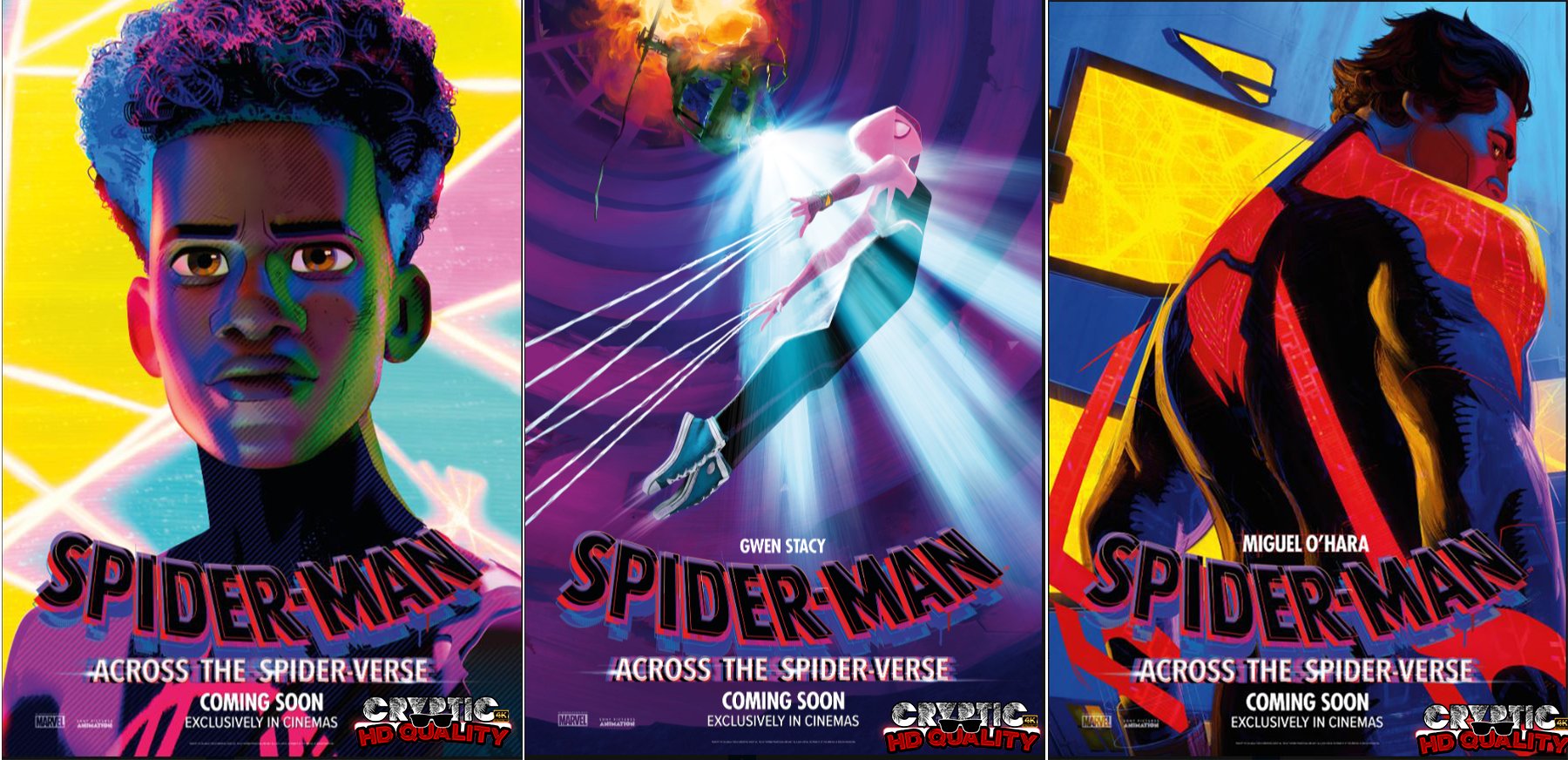
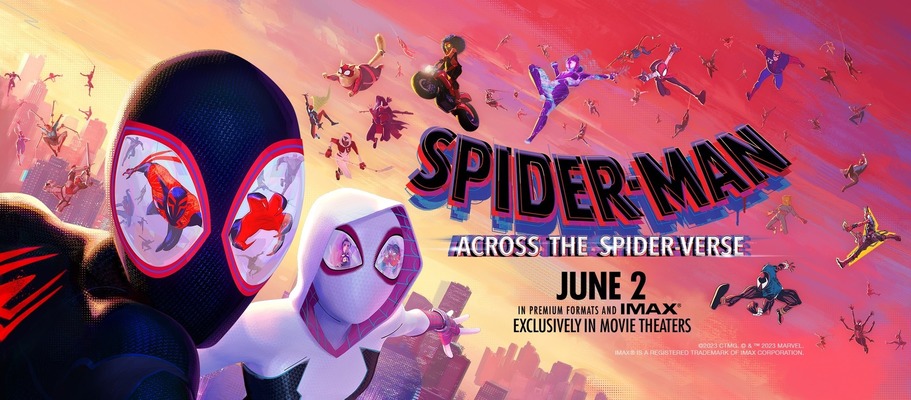
Writing-wise, the story arguably more complex than Spider-Man: Into the Spider-Verse — again, leaning into having two films to follow up from that first film. But the through-lines are strong — growth, autonomy, destiny, truth, lies, identity. All the primary characters (and there are several) face challenges and conflicts, sometimes with each other. The dive into Spider-Man lore and creating a meta-narrative out of is brilliant.
At the same time, as serious as things get (and they do get damned serious), there is also a tremendous amount of fun, playing with a vast array of Spider-folk (many from canon, many invented for the purpose), as well as others people and places. That contrast between fun and wonder and gut-wrenching drama makes this a pretty special movie, even without its merits as animation or as a super-hero tale.
The music isn’t necessarily my personal cuppa, but it works with the imagery and the action. The voice talent, as with the first film, is top-notch.
All in all, I couldn’t ask for anything better, other than that “To Be Continued” at the end.
This review first appeared, in an earlier form, on Dropbox.
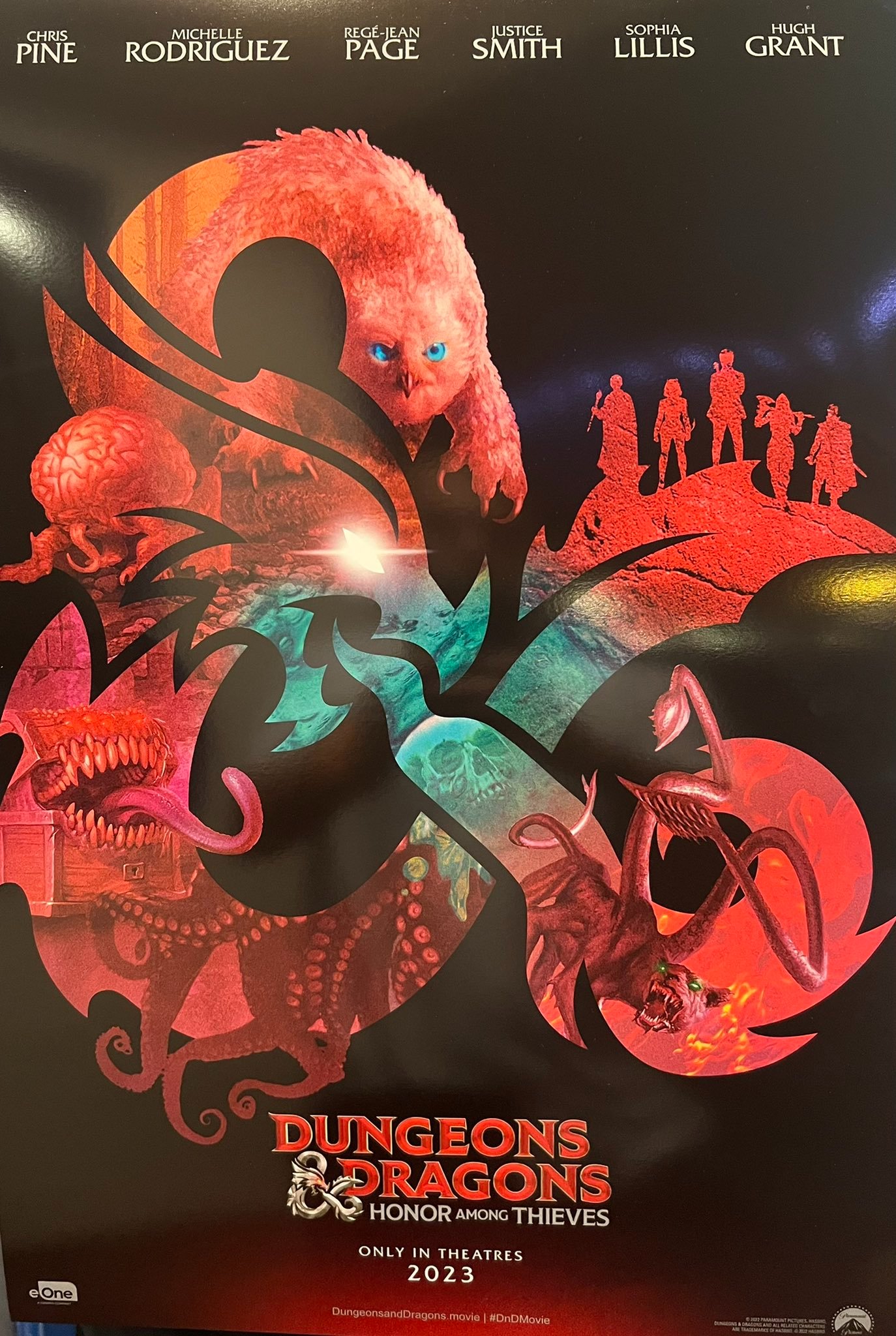
As a D&D player, I had a lot of fun. But this was not a great movie.
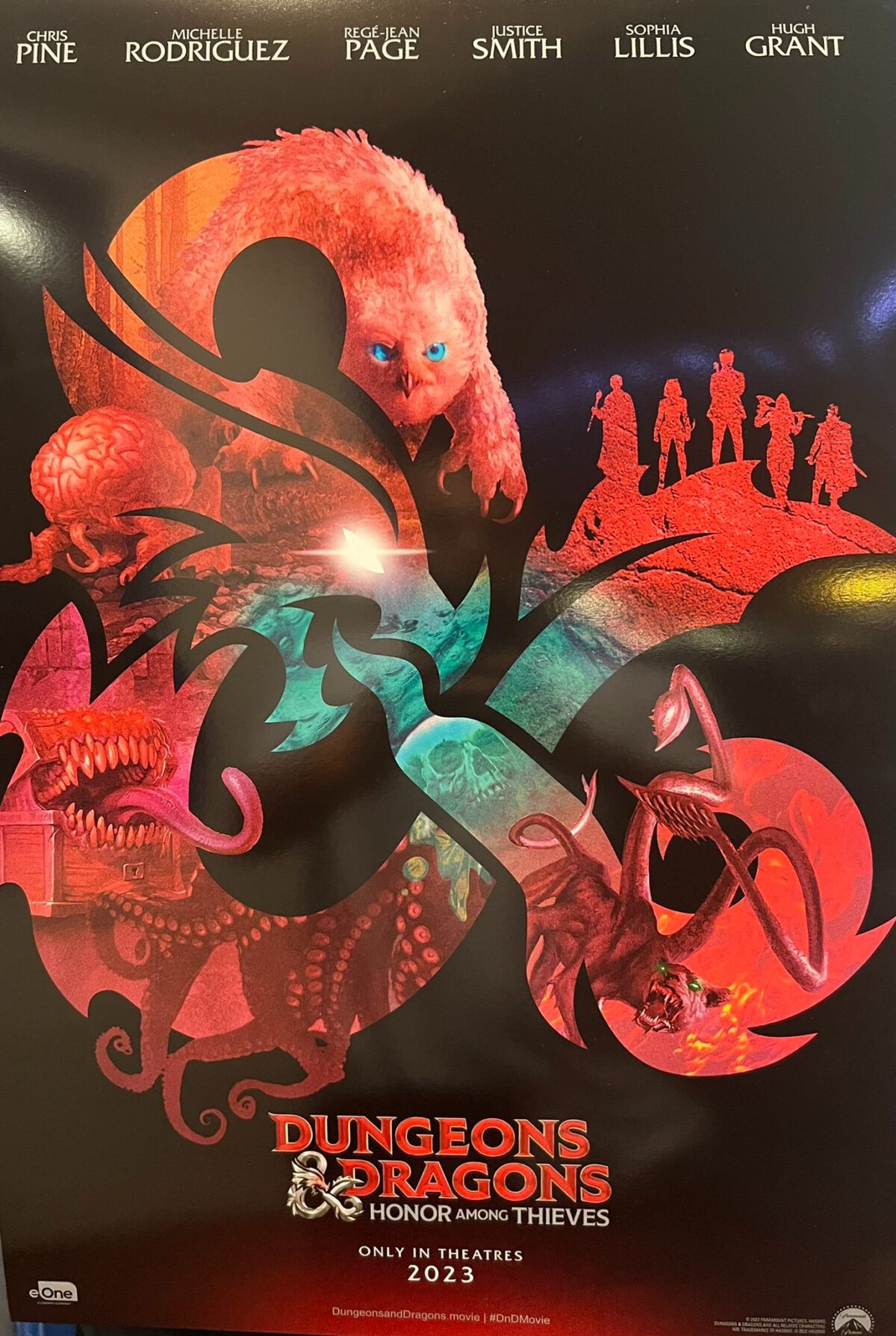
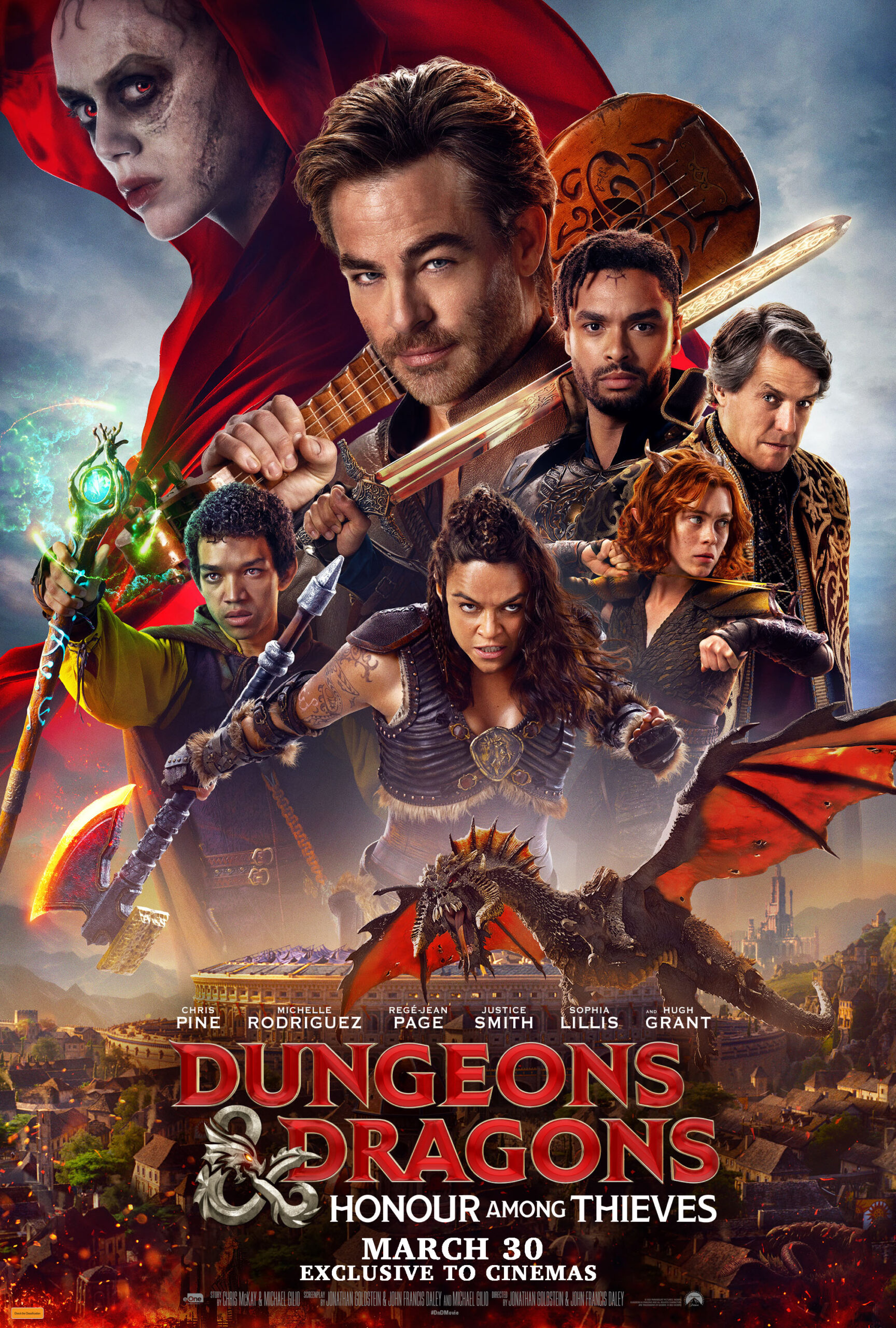
I’d heard that Dungeons & Dragons: Honor Among Thieves was a brilliant homage to the classic Fantasy Role-Playing Game, full of easter eggs and fun and great action and lovely bits and bobs.
I’d also heard that Dungeons & Dragons: Honor Among Thieves was a scattershot fantasy action that had some nice minutes but awful quarter-hours, with an incoherent plot, poorly sketched characters, and little for a non-player of the game to latch onto.
Which have I learned is the truth here?
Yes.
For someone who’s been immersed in D&D since the early 80s, D&DHAT is so steeped in lore and in-jokes and setting that it all begins to precipitate out like a passing, meaningless shot of rust monsters arguing over a scrap of metal. From funny spells to dire threats to factions to cities to name-drops of famous figures throughout the history of Faerun, D&DHAT tries to out-LotR LotR in its eye to detail and endless, endless fan service.
And, heck, I’d love to make it a table requirement that every player in a new game of mine watch that movie as a means of setting tone for the sort of game I want to run.
At the same time, desperately taking a step or three back, the movie is something of a narrative mess, from flashing back in sometimes confusing fashion, to throwing new obstacles and perils in just because they are cool, not because they are needed or pay off. Things happen, jokes are japed, battles ensue, banter is banted, the heroes win by the skin of their teeth, and we move on without any meaningful consideration of what it all meant. In a very real way, that’s the worst part of D&D, an endless series of Random Encounter Table rolls, with only the most threadbare plot to go with.
Alongside that threadbare plot are characters whom we root for because they are the characters we are clearly meant to root for, and who have backstories that, with maybe one exception, are simply sketched in, hand-waved, and thrown into the action. It’s less the stereotypical “Let me share with you my novella about my character’s origins (the index is on the last five pages)” and more a Pick-Up Group’s depth.
Even the main character — Chris Pine’s Edgin — who gets more backstory time than all the other characters combined, is such a fast-talking nobody that all the dramatic beats that the movie pretends to provide — love, loss, self-sacrifice, parenting, oath-breaking, regret, redemption — feel rushed and shallow in order to get to the next incredibly geeky-cool action moment.
The acting is all fine for the roles (one of these days, Hugh Grant is going to wake up and realize he’s been a laundry list of character actors over the decades), the SFX are quite good, the attention to lore is astounding (see your reviewer squealing “OMG IT’S GRASSY FIELDS OF THE DESSARIN VALLEY!!!!!”), and I had a tremendous amount of fun watching it. The Rotten Tomatoes scores for critics and viewers were both highly respectable.
But this is not a great movie. This is not even a great fantasy movie (compared to, say the Lord of the Rings trilogy — indeed, one might easily argue it’s a bit more The Hobbit trilogy in tone and content). I enjoyed it, and it’s arguably the best D&D movie I’ve watched since Conan the Destroyer (1982). But the folk who were surprised that it didn’t do better in theaters shouldn’t be: I strongly expect that, were I not someone steeped in D&D myself, I’d not be nearly as likely to have watched it, nor to want to watch it again.
Because the trailers are sometimes half the fun. (Though the movie was definitely a lot of fun.)
Trailers that were showing before our Friday-of-opening-weekend showing of GotG3.
Elemental – A charming-looking Disney film about anthropomorphic figures who live in a fascinating city and society that resembles our own, but cunningly adapted to the traits of its denizens, who must learn to live in harmony and perhaps, even, love. Which, if it sounds a lot like Zootopia, that’s the reaction I have every time I see the trailer, which is cute, but not enough to really motivate me.
The Flash– You might be confused if you thought this was a Batman movie at first. Or … multiple Batmans. Batmen. Or maybe Superman, er, Superwoman. Fighting Zod. Oh, yeah, the Flash is in there, too, and supposedly it’s his movie. Oh, and there’s a bunch of Flashpoint stuff in here, too, the series that really screwed up the DCU and the Flash, and which Warner Bros. hopes will unscrew-up the DCEU, or whatever they are calling their movies these days. Also, Flashpoint was done on the Flash TV series, and a number of DC animated movies, and can we please move on from this storyline? Unlikely to go to this, even without considering the Ezra Miller drama.
Hunger Games: The Ballad of Songbirds and Snakes – I’m not sure who thought the idea of a HG prequel was a good one, and whether they are any more clueless than whoever thought this was a title that would attract an audience. This is the movie I am least likely to see this year.
Fast X – If this were a series I watched, I would probably be highly interested in it. As it is not, I am not. At all.
Dune, Part 2 – I have heard plenty of admiring things about the first one, except that it all seemed to be a setup for the second one. So maybe once the dust settles on the second one, I’ll do a Dune-a-thon weekend with the two new movies, the classic Lynch, and the Syfy mini-series. Or maybe not.
Indiana Jones and the Dial of Destiny – I am seriously jonesing (ha!) to see this. Yes, I was burned by the The Kingdom of the Glass Skull (which, to be fair, had a much better title than this one), but the Indy series is clearly in a “odd movies good, even movies bad” cycle, so we should be due for a final hit.
The Marvels – The most predictable trailer for the set (hello, MCU!), but, y’know, I am so there for this. I like the three title characters, I like the quantum entanglement that gives them an immediate problem to resolve, and I like that we don’t know much more than that right now. Plus I want this to succeed to spite the fanboiz who hate these three characters for a variety of disturbing reasons.
(NO SPOILERS) A fun, frenetic, somewhat frightening finish to the GotG saga.
The Series in Review
GotG 1 was about a band of misfits thrown together by chance to form a family. There was humor, and there was banter, and there was some crazy space stuff, and there were some dark moments, too, but it was a great intro.
GotG 2 was about challenging that family, re-defining it, expanding it. But it was also about cranking up the already-high level of humor to 12, and going bananas with the special effects. It had some serious threads, too (salute to Yondu), but it was overall pretty frothy.
(Insert a few other appearances here and there — holiday specials, cameos in other MCU movies, and so forth. Fun, but relatively shallow, leaning into the tropes, music, the mayhem, and the humor. )
GotG 3 … brings us back to the first installment in a good blend of tone. It’s dark in a lot of places, especially toward the beginning, to the point of being sort of even grim in tone. I would hesitate to bring a kid to this one, and people sensitive to body horror should probably steer clear.
Repeating that note: this is NOT kid-friendly.
The violence, suffering, and (I’ll use the word with consideration) atrocities that are shown or hinted at, and the level of (cartoon) violence in some of the battles, are very intense for an MCU film.
But it’s not gratuitously not-kid-friendly
A lot of the more gut-wrenching stuff is setting the stakes, teeing up the villain and one of our hero’s reactions toward him. That ties into a theme here: paying off past outstanding threads, some going all the way back to the beginning of Vol. 1 (Quill’s flight from his Earth family, and the tight-lipped secrets of Rocket’s origins), others being shaped neatly for the other characters.
It’s not always comfortable to watch, but it serves the narrative.
By the end, after trial, travail, confronting old ghosts and getting ready to confront new ones, we reach a satisfying set of reasons as to why this is the final volume of the Guardians, at least as we know them. Stories are wrapped up — or, if not wrapped up, set on new courses, some of which we may never see, others of which … who knows?
Heroes need a villain
The MCU hasn’t always done well with villains, and GotG as a series is an example of that. Vol. 1’s Ronan (Lee Pace) was a grim non-entity (and a lackey at that). Vol. 2’s Ego was, with the rest of the movie, equal parts humor and jerk.
The main heavy here is (I doubt this is a spoiler) the High Evolutionary, a self-created mad genius of great power and greater ambition to produce perfection in living things. What that looks like, what he’s willing to do, re-do, discard, try again, etc., makes him in his own way a deeper, darker adversary than your Thanos or your Ultron (or Ego, for that matter), perhaps because in some ways his motivation reverberates off of too many of humanity’s own darker moments.
But it also tees up a bunch of Marvel backstory fun, including places and groups that the High Evolutionary of the comics is associated with (i.e., Easter Eggs a-plenty here). The HE of Marvel Comics has always been a mix as a villain — very much the “everyone is a hero of his own story” and more of a bad guy because of his dispassionate pursuit of perfection than because of twirling mustachios. The HE here (Chukwudi Iwuji) plays up the zeal and ego a lot more, and it works pretty darned well.
Indeed, all the actors play their roles well, in parts great and small. There are no real weak links in this ensemble. And I have to give a big shout-out to Bradley Cooper, whose voice work for Rocket is a key to so much here, and carries so much of the (superbly animated) character.
The Special Effects
Fun and detailed and much more transparent, in many ways, than in Vol. 1 and 2. Practical, makeup (a world record in prosthetics), and CGI all blend together delightfully and such that I really stopped noticing it, even with creatures and characters that were a mixture or were all-CG.
We watched in the theater in 2D. There was stuff that I’m sure was very cool in 3D, but it wasn’t necessary to pay the extra money or headache.
The Music
The film score was done by John Murphy, replacing Tyler Bates from Vol. 1-2. The ever-present pop songs seem to have trended a bit more modern (though there are still some good rock classics in there).
Openings and Closings
The Marvel Studios opening sequence is a tribute to the GotG, rather than the current standard. It’s nicely done.
There are two credits scenes, at the usual spots. Both are worth watching for their own reasons (esp. since the credits themselves are a nicely done scrap book of photos — from the movies and not — of the characters we’ve come to know and love over the series.
A few minor bits of glee
1. After getting just a passing glimpse in the Collector’s collection, I am so glad to see Cosmo the Space Dog getting some decent screen time.
2. Rocket learning his secret origin — not just the origin that he remembered but never wanted to talk about (and with reason), but the origin behind that — was delightful, esp. in its payoff.
A few minor quibbles
1. I’ve follow Adam Warlock’s career from the beginning (as the cosmic “HIM”) to his Roy Thomas Counter-Earth Christ-figure days, to becoming another Jim Starlin cosmically wise / clever / menacing type. Will Poulter’s rendition here is pretty much nothing like any of those, which is kind of a pity — but the character does line up well both with his Vol. 2 origins and with the general theme of the Guardians.
2. I love the Guardians comic-style uniforms, and to the extent that they have been trying to be an organized force to protect the galaxy, sure, makes sense. That said, they do seem to come out of nowhere during the film.
Overall
I was a bit worried about Vol. 3 continuing the trends from Vol. 2 (make it louder! make it funnier! make it more psychodelic!), but James Gunn has made a movie that is both a great wrap for the saga, send-off for our characters, and a good film in its own right. Bravo.
Time for another review of movie adverts at the movies
So, what sorts of movies do Big Media think will attract possible customers who are there for Ant-Man and the Wasp: Quantumania? Here are the trailers we saw this evening:
Super Mario Bros.: The Movie— This just looks plain silly, but neatly crafted in its silliness. A moderate chance we’ll see it when it comes out (if my son has any say in the matter).
Air — (a) Who would have thought that the decision of a struggling Nike shoe company to back untried rookie Michael Jordan would lead to so much money being made? (b) Who wants to see a movie about it? (c) So, which is a bigger number, (a) or (b)? (d) Who cares?
John Wick 4 — I saw the first JW film and decided that, while it was fun, it was about all the John Wick I needed for a lifetime.
Flash — I’m more and more convinced that the only reasons this movie is finally being released are (1) it’s already complete and probably fully depreciated by WB, and (2) James Gunn is too much of a geek to miss the chance to provide a canonical excuse for the DCEU timeline being changed. I have no interest in seeing this in the theaters, but I might stream it some time.
Fast & Furious 10 — I’m sure the trailer will excite F&F enthusiasts. I just see a franchise that’s both winding down and is becoming its own self-referential parody.
Elemental — A new Disney/Pixar flick about a world just like ours, except everyone is made of earth, air, water, and fire. Amusing hi-jinx and a heart-warming forbidden love ensue. Um … for whatever reason this just didn’t do it for me.
Guardians of the Galaxy 3 — This trailer has been out for a little bit, but it’s nice to see on the big screen. Another sub-franchise winding down to an exit (along with its writer-director), and I am very interested in how it turns out.
We also saw two different segments in the pre-show and an ad during the trailers tied into Creed 3, which I have utterly no interest in.
There was also some pre-show chatter for Shazam 2, which I would be a bit more interested in if they had actually pulled in some of Capt. Marvel’s Shazam’s classic villains for, rather than … “the Daughters of Atlas”? Which, even with Lucy Liu and Helen Mirren, doesn’t get me excited.
So, net-net, only one real win for me (GotG 3), though some mild interest in a couple of others.
So here’s the bad news: Ant-Man and the Wasp: Quantumania (AMWQ) is not one of the best Marvel movies of all time.
But, and unlike the early press and folk who are beginning to enjoy piling on Marvel, it is not one of the worse.
Instead, it falls pretty square in the middle: entertaining without influencing the genre; pretty but sometimes too in love with its own prettiness; some humor that works, some that doesn’t quite; too much of some things, too little of others; decent integration with the MCU; a great villain but too many faceless mooks getting killed; some nice personality moments but a rocky plot; etc.
If I had to compare it, I’d say Guardians of the Galaxy 2, or Shang-Chi, or maybe Captain Marvel. Good, not great. But not bad.
Plot
So take first a reminder that the Ant-Man franchise has always been — well, not lighter, but not pompous or overly serious. Drama occurs, but plenty of humorous moments, too. AMWQ doesn’t balance this quite as neatly as the earlier two installments, but it has its moments, and it helps explain why the aside vignettes during action scenes feel to me like they largely work here, where they would have to be a lot fewer and shorter in a more conventional MCU film.
There’s a lot going on in this film: The Lang/Pym extended family is five all by itself, and that doesn’t account for a ton of secondary players, a major villain with lots of backstory, a significant side villain, multiple rescue missions and guilt trips, a big battle, and a gorgeous world to explore.
There’s about 15% too much stuff here, which ends up somewhat short-changing some of the characters and some of the “family matters” arc that it starts out with. As it stands, there are some occurrences in the film that seem to reference stuff that isn’t there in the release any more. It makes matters a bit rocky in places when you try to catch a breath and consider what’s going on.
Further, from a suspension-of-disbelief stance, there are odd scaling issues. Kang has amassed a massive army, sure, but nothing he could actually conquer the universe with, given his opposition (and, well, the sheer size of the universe). Conversely, it does seem like he has an army in at least the hundreds of thousands, given the size of his fortress complex — and there’s no indication that the doughty refugee / rebel alliance has anywhere near the numbers to take that on, even with the assistance they receive. Kang’s forces are simultaneously too small and too large to be believable (ironic in a tale of super-heroes who shrink or grow huge).
In short, the plotline for AMWQ does not hold up under close scrutiny any more than the physics and biology do. Just go with the flow.
Acting
We saw it in 2D and it was fine.
The main players all do a decent job amidst the flurry. Michael Douglas feels a bit more relaxed, having gotten all the shoutiness out of his system in the previous two films. Michelle Pfeiffer makes up for it by being positively grim and driven. Paul Rudd is his normal amiable self, still the grounded, sane guy amidst a bunch of zanies (though, sadly, we get no more of his San Francisco buddies). He’s become a bit more of a parent/worry-wart than before, but it feels in character.
Kathryn Newton, taking over as Scott’s daughter Cassie, fills the role well, and the movie provides support for what one hopes will be an eventual Young Avengers movie. Evangeline Lilly gets something of the short end of the stick here — she’s present, and she does stuff, but her character arc is pretty flat.
Everyone is express rave reviews for Jonathan Majors as Kang the Conqueror, and they are well-deserved. Majors plays the alternately world-weary, egomaniacal, manipulative, and frustrated-beyond-all-understanding super-villain in a way that makes him a top-tier MCU antagonist. He picks up and seamlessly expands on the multiversal metaplot of the MCU from his variant in the first season of “Loki” without dropping a beat. Majors makes us mostly hate, kind of fear, but also occasionally sympathize with Kang, no easy feat.
I applaud the job he’s done here. He’s a great catch for Marvel, and a great lynchpin for the whole “Kang Legacy” focus of the upcoming MCU phase(s).
Beyond all that, there are, as you may have heard, some unexpected cameos. They worked well, even the one I most worried about.
Production
AMWQ is visually stunning, and that’s almost a problem. The early time in the Quantum Realm harkened back strongly to Disney’s unjustly lambasted Strange World, only a lot more photo-realistic and, therefore, a lot more distracting. When everything looks amazing, nothing looks amazing, if you will.
But besides that, the imagination and execution of the alien wonders of the Quantum Realm (and a coherent look for the dark blot that is Kang’s presence) are impeccably done, as are the shrinking/growing being done by Team Lang/Pym.
A nit to pick: everyone who had one of those quick-deploy helmets (Scott, Hope, Cassie, Kang, and MODOK) spends way too much time with it off when it should just stay on (complete with zippy deployment / undeployment). Yes, I realize that’s a conscious decision to let the actors’ faces be visible to emote but the masks on to more easily stunt / CG the action, and perhaps it was even the right decision, but it also happened with such frequency as to create a distraction.
Comic Bookiness
Underutilized helmets
Most of the focus here has to go on Kang, whose costuming and make-up are as exquisite as Jonathan Majors’ portrayal. The only thing missing are his gigantic inter-changeable super-future-guns.
Tip of the hat to the renditions of other Kang-related characters, recast into the framework of the MCU from their original form.
Another tip to the way the MCU has pulled in elements of Marvel’s Microverse to make its Quantum Realm, both conceptually and in the form of characters like Jantorra.
The MODOK character looked pretty cool, though almost entirely divorced, besides his final appearance, from the comic book version in identity and personality. Still, it was a better revision than, say, “Black Widow”‘s Taskmaster, and infinitely superior to choosing a near-nameless mook to be the obligatory lieutenant / hatchet man.
In Sum
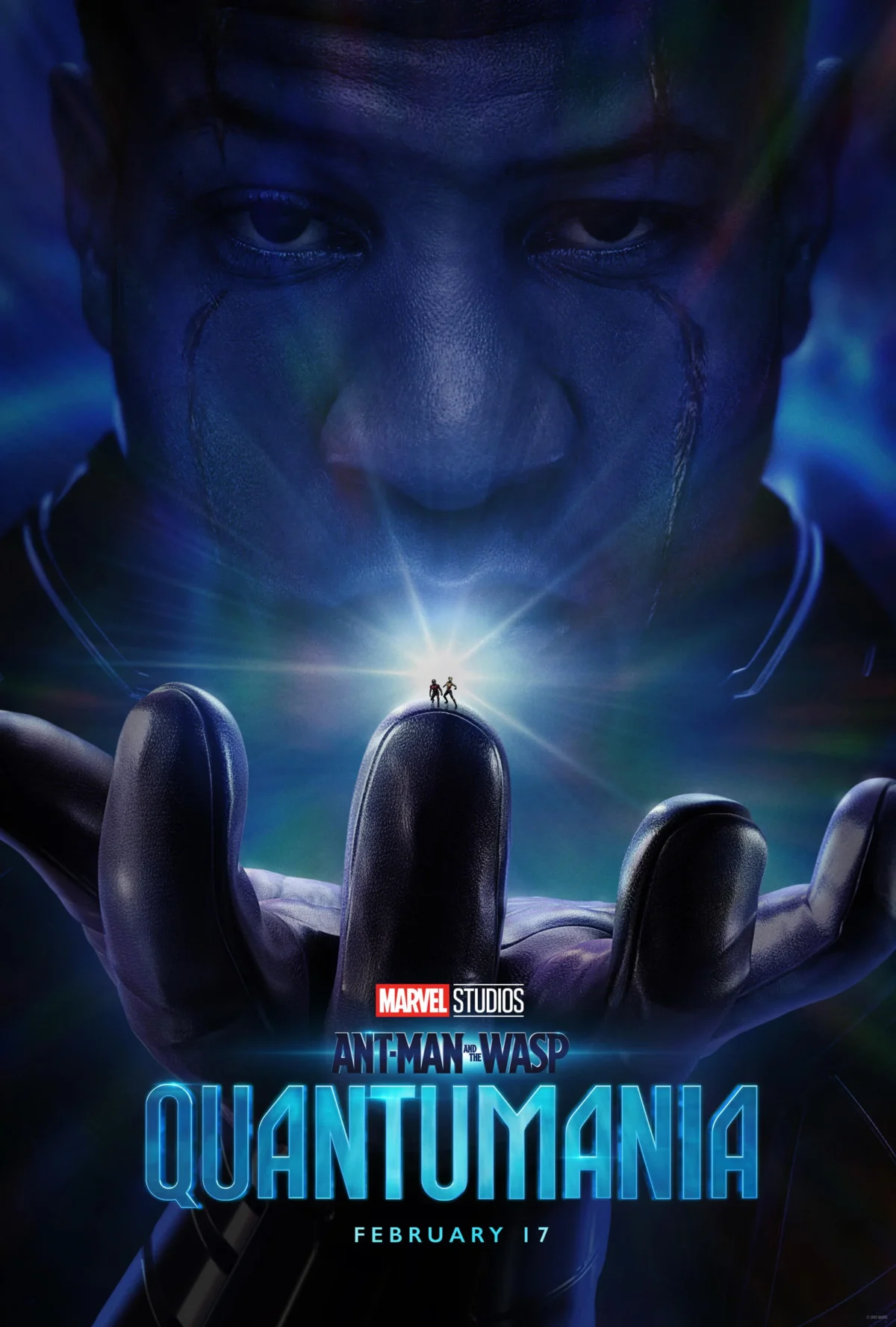
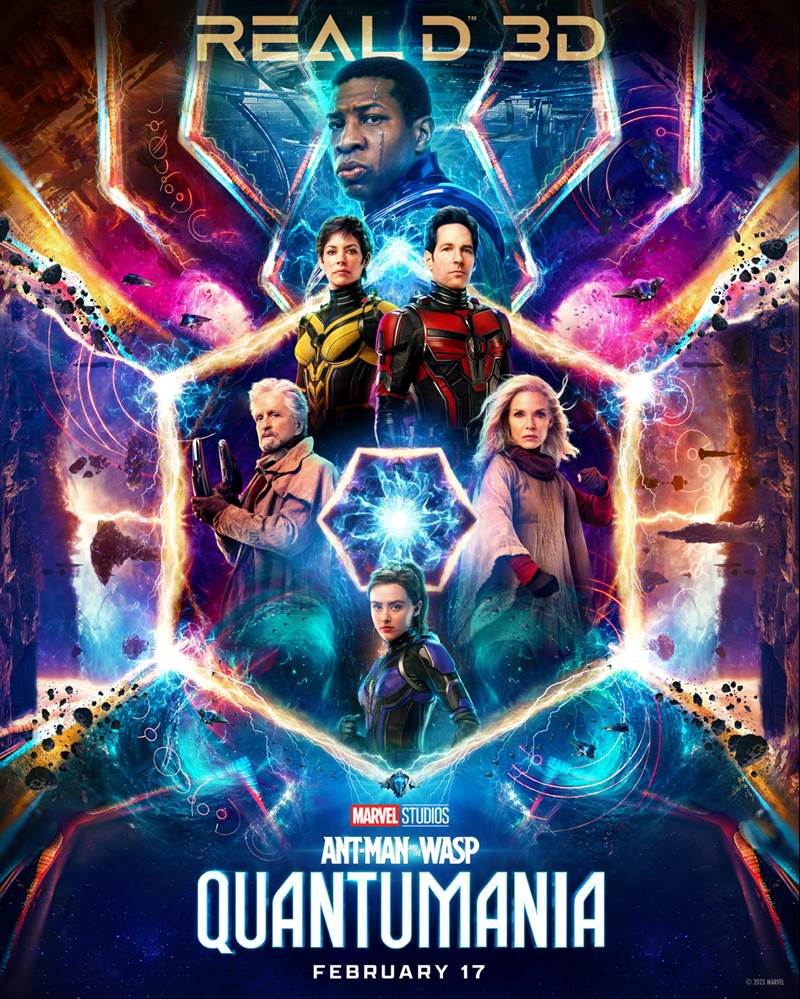
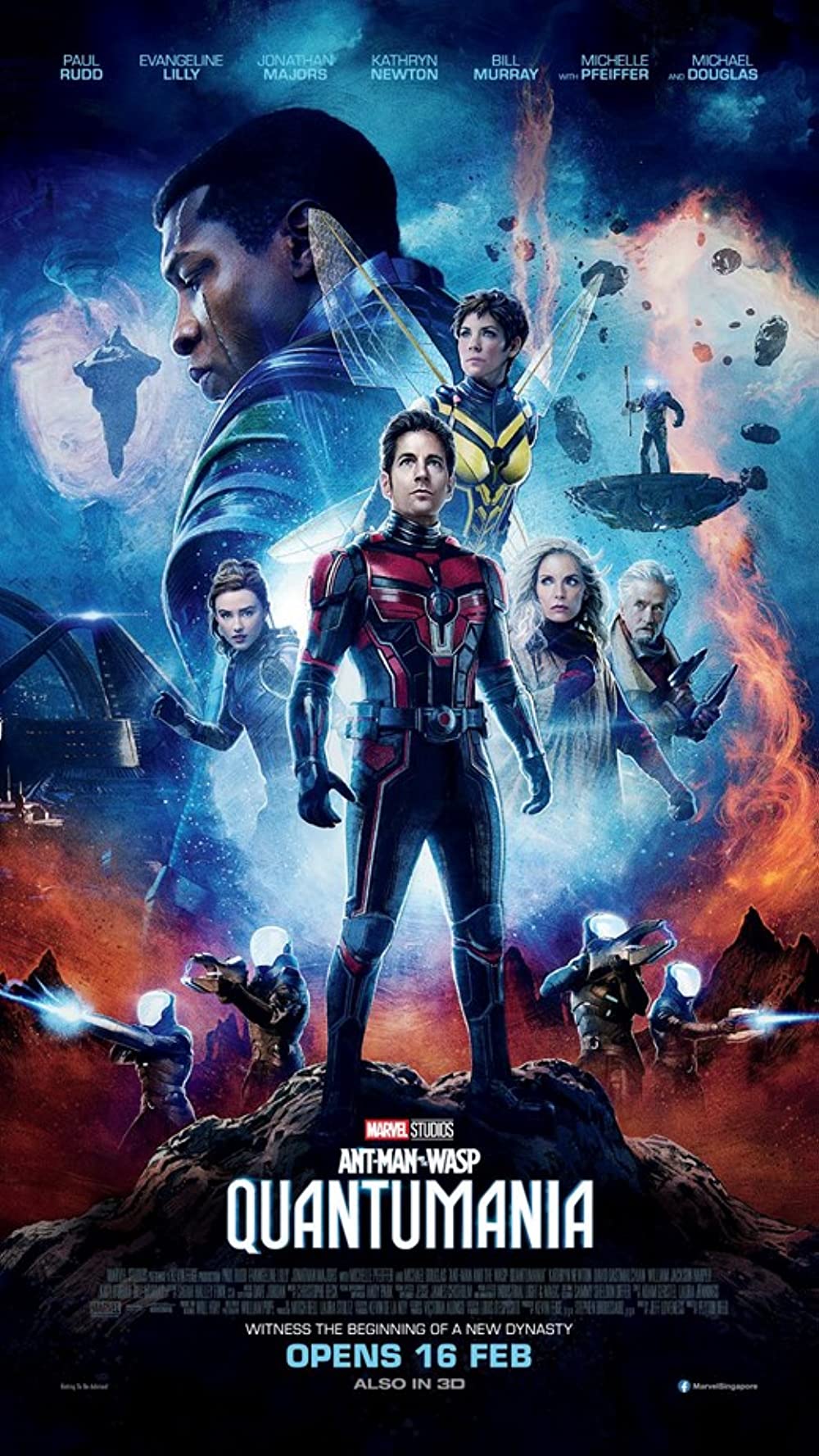
Ant-Man and the Wasp: Quantumania poster – the kitchen sink visual approach, which you could accuse the movie of taking, too.
I’ve no regrets springing for movie tickets. I’m not sure if it’s in 3-D anywhere; 2-D was just fine.
There are the standard mid-credits and post-credit scenes. They are worth staying for, just for their MCU tie-ins.
The headlines for early reviews of the movie have been brutal, but if you look at them carefully, they are largely coming from critics who think anything superheroic of coming from Disney/Marvel is commercial hackery from the get-go, and are therefore happy to point out every cinematic flaw in detail without going into the basic popcorn enjoyment of the thing.
For viewer ratings, we’re getting a grade of “B,” which isn’t a sign to me of “Marvel fatigue” or the demise of super-hero films, but of the end of the amazing 15-year cinematic honeymoon the public has had with the MCU. A “B” is an accurate, but quite respectable grade. That this is somehow a wildly embarrassing flop seems greatly exaggerated.
I enjoyed going to AMWQ. I expect I will this film again at home. ‘Nuff said.
Taika Waititi continues his droll, irreverent take on gods and super-heroes. Which is kind of a problem.
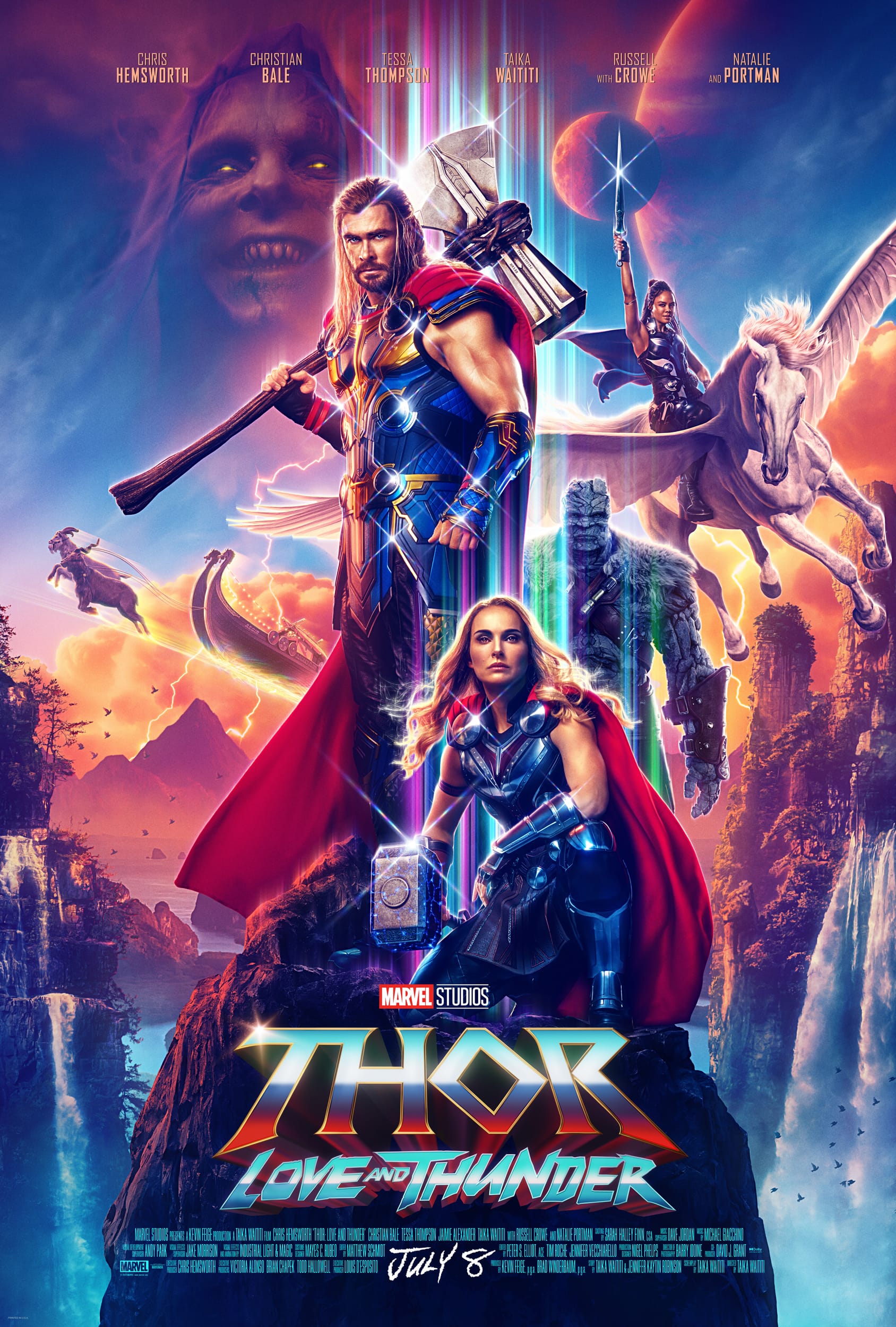
There’s much to enjoy in Taika Waititi’s new MCU movie, Thor: Blood & Thunder (a/k/a Thor 4). It’s visually brilliant, at the very least, and Waititi carries on with some success his droll fun-poking of the literary realm of gods and superheroes from the previous installment, Thor: Ragnarok (a/k/a Thor 3).
That is part of my problem with this film. While Waititi has mostly avoided the most common sin of sequels (taking what worked the first time and focusing solely on that, dialed up to 12), he isn’t completely immune to it. Thor 4 is too in love with its titular character being an unaware parody of a hero, bold and brash and unaware of any of the people around him or the consequences of his actions, juggling ex-girlfriends and ex-weapons with equal ineptness.
My wife — who was not enthused about going to “another Jane Foster movie” — pointed out something important afterward. Thor, as a character, is always about growth and maturity. In Thor 1, Thor learns to be worthy as a leader, not a selfish little boy. In Thor 2, he figures out how to be in a relationship. In Thor 3 (by Waititi!), he learns to be a king. In the Avengers films, he learns about teamwork and, ultimately, about accepting his own limitations.
The problem is that few of those lessons are allowed to take and carry on to the next film. The Thor of Thor 3 spends much of his time being a self-centered oaf, but the death of his father, and of his comrades, and the need to save the people of Asgard, drive him to new heights. Even the traumas of the Infinity War saga on the Avengers side of things, and the goofiness of his time with the Guardians, don’t explain the irresponsible dolt that he starts out as in Thor 4 and, for the most part, remains.
Thor 4 is centered on two sagas from the comics. The first — created by Jason Aaron and artist Esad Ribic — is the saga of Gorr, the God Butcher, a man who is let down by his people’s gods and who gets the power to punish them — and, as a new cause, all the layabout deities who take and take but never actually come through when asked for help in return. This is a remarkably dark saga in the comics, touching on personal relationships with the divine and theodicy, the profound question of why bad things happen to good people in a cosmos supposedly ruled by all-good, all-power divine power.
For the most part, though, Waititi plays it for wry laughs, and for what kind of cool special effects battles can be devised around Gorr’s use of the necrosword and shadows. Gorr ends up with sort of a Tim Burton style of scariness, a bogey-man rather than an existential terror, but the tragedy of his life, and of the actions he takes, and even of Thor facing the idea of times when he didn’t live up to the needs of his own followers — it’s all largely lost for the vast majority of the movie, book-ended by the introduction sequence and the sweet but too-late what-you-really-want message at the end.
The other original storyline here (also created by Jason Aaron) is the saga of Jane Foster as Thor–how she takes up that mantle, and what it means to be splitting her life between uber-powerful god-hero and chemo-weakened mortal cancer patient — especially when it becomes clear that all the Asgardian hi-jinx are neutralizing the chemo (but not the cancer), meaning that, at length, Jane Foster the human will be no more, leaving only Jane Foster the Thor — and what does that actually mean for her?
Jane’s story gets a bit more play here than Gorr’s — modified for the much different situation in the MCU — but it’s again blunted by the need to keep everything quirky and amusing, for Jane to be trying to figure out her catch phrase, for Jane to deal with her ex-boyfriend, the other Thor. The cancer, for most of the center of the movie, is merely a convenient way for her to be weakened at inopportune times. And Natalie Portman’s make-up never makes her look more than a little bit ill.
We end up spending far too much time in this film in humorous set pieces, all of them fun, but all of them consuming ruinous amounts of run time. The stage players of New Asgard (now become a cruise line stop), giving us minutes of recap of just a portion of Thor 3. Endless exposition or commentary by Korg (voiced by Waititi). The Gorr-justifying insouciance of Omnipotence City. Thor doing something or another in an oafish, thoughtless, laughable fashion.
It’s almost all of it funny and played successfully for laughs, but in the end it feels more like a series of really successful SNL skits poking fun at Thor than at a movie actually about him (and Jane, and Valkyrie, and Korg, and a bunch of kids, and Gorr, too). The film spends too much time not taking its subject seriously, aside from those bookend scenes, and so it’s hard to take it seriously when it actually does try to engage our sympathies at the end, with Jane making decisions about her fate, and Gorr doing the same, and Thor learning what’s really important in life (until, one presumes, next movie, when he’ll quite possibly be back to being a goofball).
With goats, of course.
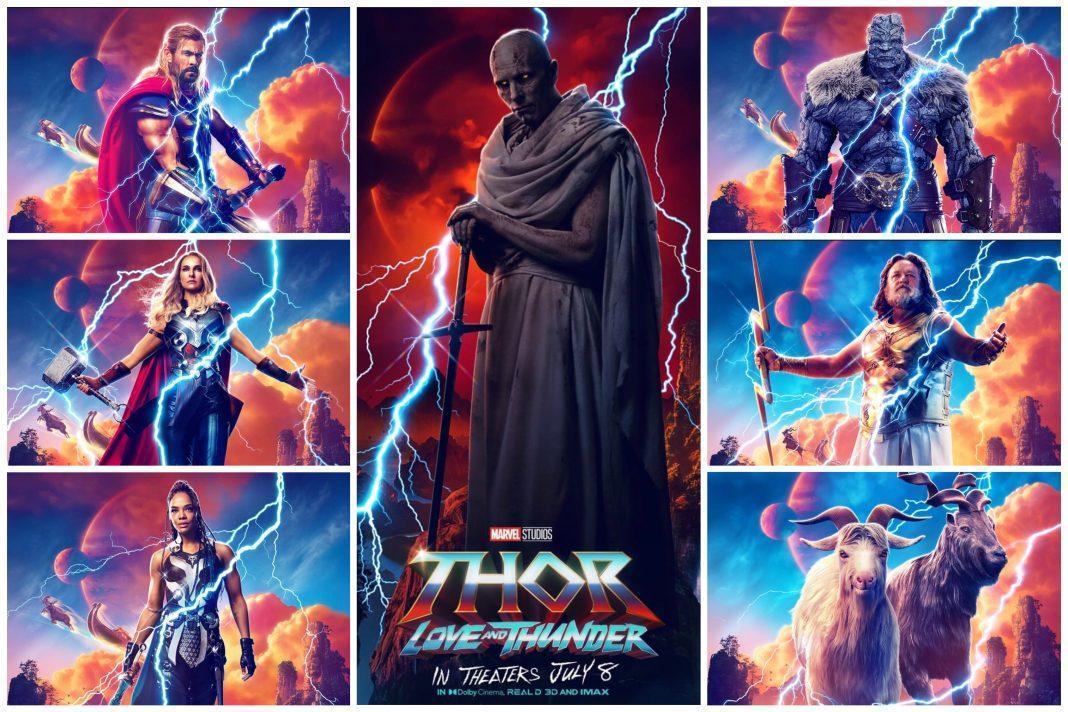
Chris Hemsworth plays Thor well as far as he’s given to do so. He has the heroic and the goofy down pat (and should, after nine film outings), and I just wish he got to do more of the dramatic moments we’ve seen him in from the beginning of the saga. Natalie Portman’s more a mixed bag. Her rom-com moments feel weird and awkward, but she makes a fine hero. Christian Bale’s Gorr does well with what he’s given, shining in both his initial and final scenes, but hampered too much in-between, relegated to a kinda-scary action villain living in the shadows.
To be fair, it’s not all — or even mostly — actually bad. The make-up is amazing. There are some stunning set pieces (Omnipotence City and the small moon they battle on stand out), visually rich and gorgeous, and (while we didn’t) possibly worth the cost of a 3D showing. And, honestly, the very ending of the film was one of the most satisfying MCU endings in quite a while. (The two mid/end credit scenes weren’t bad, either.) Beyond that, like I said, Waititi’s irreverent humor, and how it translates to the screen, aided by some decent acting talent, works on its own terms.
And, just to say it, we loved the goats.
The goats are GOATs
And, net-net, I enjoyed Thor 4, especially scene by scene. It’s in its overall tone and structure that things didn’t quite gel for me. I will absolutely watch it again in the future, but for the moment I’m left feeling a bit unsatisfied, as if a promised banquet turned out to be all beautifully-baked sweets, and I had been hoping for some juicy steak.
A distinctively comic-booky film, in mostly good ways.
(No significant spoilers.)
When I got out of this movie, I tweeted, “This is the comic-bookiest movie I have ever seen. Both in (mostly) good and bad ways.” And, the next day, that’s still true.
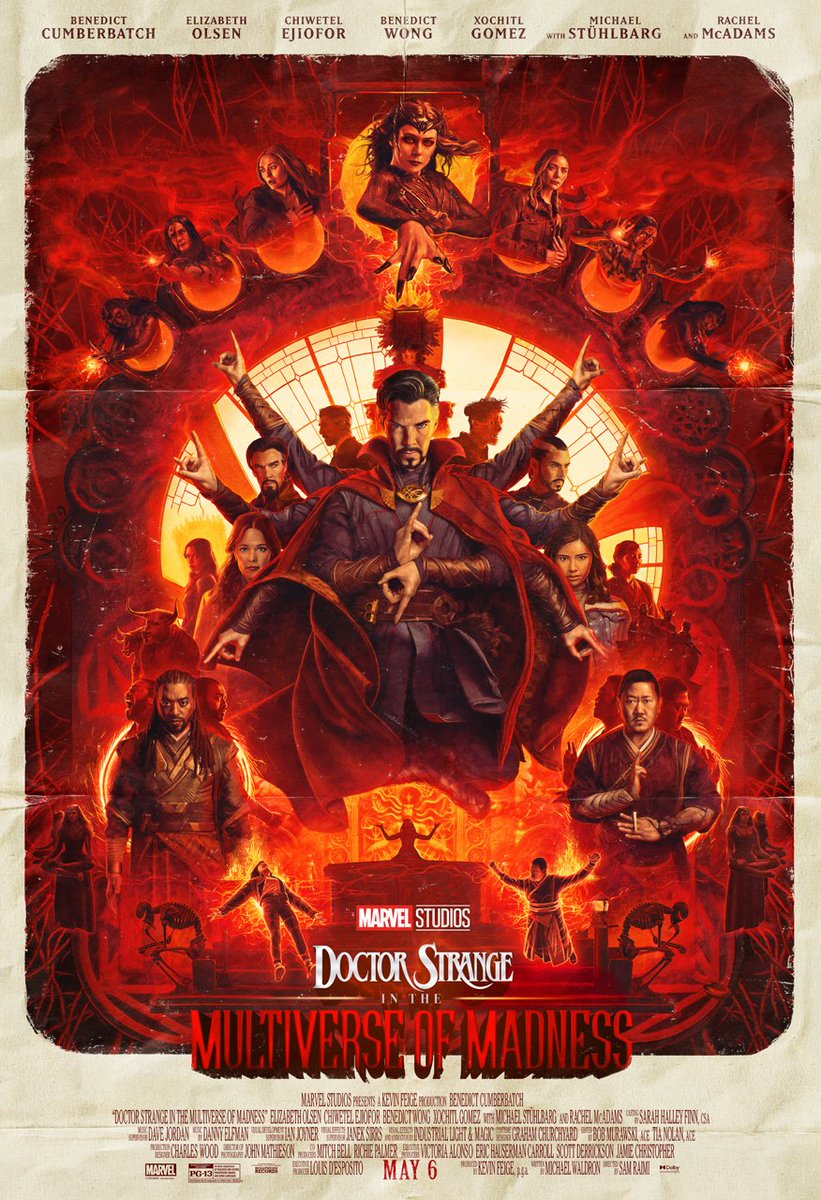
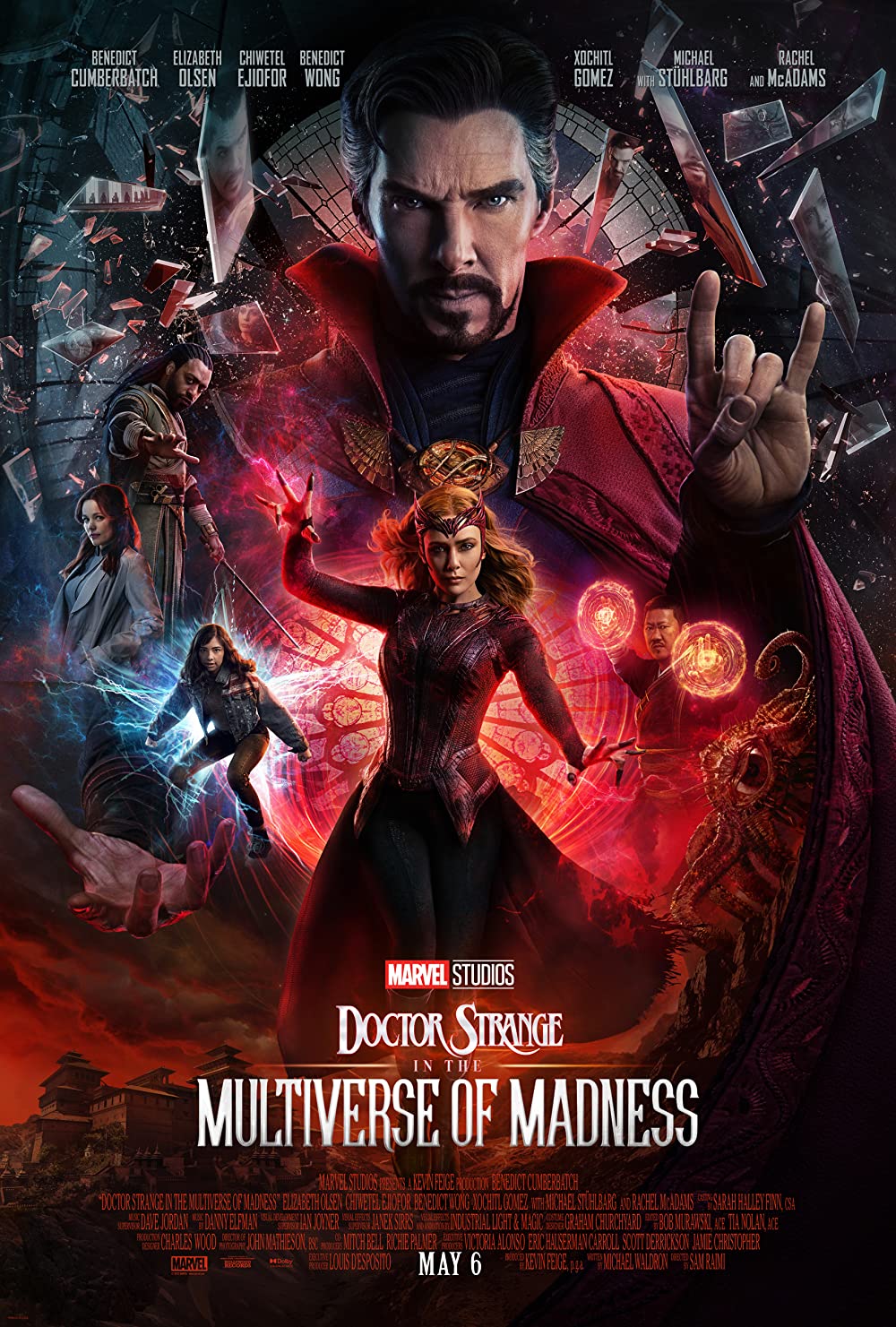
Doctor Strange in the Multiverse of Madness is a very (shall we say) strange movie. It is filled with arguably too many characters, but the important ones all get a fair amount of screen time and agency. It is filled with horror (none of it too horrific), and mind-altering multidimensional madness (which is all delightful), but remains at heart a super-hero film. It is filled with cameos and fan service, but those are present as lovely icing on a rich cake, less a distraction and more of the overall flavor.
Benedict Cumberbatch is back as Doctor Strange, who’s casually mastered magic enough since his 2016 movie to use it for casual costume changes, and to tie his tie. Cumberbatch actually gets to play multidimensional variants of himself — all very nicely done, and all leading to the character learning something about himself and having a nice, if not profound, character arc to go with it tale.
Elizabeth Olson is back as Wanda Maximoff, the Scarlet Witch (the actress pretty much flew from the set of “WandaVision” to begin shooting the movie). The character fits a bit awkwardly into role of super-villain, being driven by tragic circumstances, dreams of alternate universes where she actually has her kids, and, of course, temptations from the fell magic of the Darkhold. It’s kind of hard to feel sorry for her when she acts so violently and callously as time goes by. The final confrontation with her is fitting, but doesn’t quite make the whole thing work as a needed redemption arc.
So you could have had a fine film with just those two having at it, but there are three other major characters vying for useful screen time and making good use of it. Benedict Wong gets a solid work-out as Sorcerer Supreme Wong. He’s not the star of the movie (I would totally watch a Wong movie), but he gets a lot of screen time and great action sequences, and his banter is top notch. Rachel McAdams returns as Christine Palmer, a stronger far more successful second act for an MCU hero’s love interest than most others we’ve gotten.
And, of course, Xochitl Gomez plays neophyte power-house America Chavez, and deftly manages to dodge most of the snarky teen tropes, avoiding being too much of a damsel in distress, but also not instantly rising up as a super-hero. The movie is all around her, but not necessarily about her, and I want that latter movie as a follow-up. Nicely done, even if Saudi Arabia had the vapors over some very innocuous references to the comics canon background that she has two mothers (and wears an LGBTQ flag pin on her jacket).
And even after that we could point to significant appearances by folk like Chiwetel Ejiofor as Mordo (playing a Mordo in very different circumstances but very true to the character’s previous portrayal), and a host of cameos that will get any fanboi squeeing (my personal favorite being Rintrah, but that’s just me).
The plot is non-linear to the point of, well, madness, with the party being split (and the various splits given plenty of air time) multiple times. And while there are cast-of-zillions CG battles in places, a lot of that gets done in odd places in the movie, leaving the finale to be a much more nicely integrated combo of super-slugfest and very personal conflict.
The movie also wraps up on some very satisfying but unexpected notes. The Stephen-Christine thing is resolved, but not in an overly obvious way. The fate of America Chavez is left in a neat holding pattern for future MCU use. And, for that matter, so is Wanda’s fate; the multiverse being, of course, vast.
As well, we also tee up another (huzzah) DS movie, with some quick final-scene + mid-credits fun. (Yes, there are two credits shots, as usual for MCU movies. I’m not sure the final one is worth busting your bladder for, but if you can wait for it, it’s amusing, and quite appropriate for a Sam Raimi-directed effort.)
Danny Elfman’s music is fine, and perhaps even appropriate for such a tripped-out film. He does reference a few times (too few, for my taste) Michael Giacchino’s DS theme (I do love leitmotifs and musical continuity), but his original contributions fit the tone.
As to the overall film, written by Michael Waldron and directed by Sam Raimi … well, the “Multiverse of Madness” epithet is correct. Things get zany, and there are plenty of references back to old horror movie tropes to keep things tonally shaken up. There’s a real effort to keep the magic battle bits from too much like standard super-hero energy blast work. That includes one battle relatively late in the film that is delightful, different, and really very weird.
The end result is something phantasmagorical, as much mood piece as story, and that makes it both distinctive amongst its fellow super-hero films and, perhaps, a bit weaker. A movie like this could be approached with “What cool Doctor Strange story could we tell?” or with “How do we show off the multiverse?” The film tends to tip a bit toward the latter, though it does a decent job all-around, better than I might have expected.
Even though it was executed with technical excellence (as one expects from the MCU), it’s not just about that excellence. The difference in what it does, the seriousness with which it take its multiversal venues, and the quirky aspects of everything it gives us and how it directorially goes about it, will make it a much more memorable outing than some other technically excellent but more conventional super-flicks. I think it will end up a cult classic in the genre.
Because it is, in fact, the comic-bookiest film I’ve ever seen. It sacrifices some depth and story for visual and conceptual effects and craziness. But it does so in a way that stands out. Steve Ditko, who originated the visuals of Doctor Strange, would, I think, be very pleased. Overall, I like, and will absolutely be watching it again.
Tom Holland SM films have been about growing up. This one’s even more so.
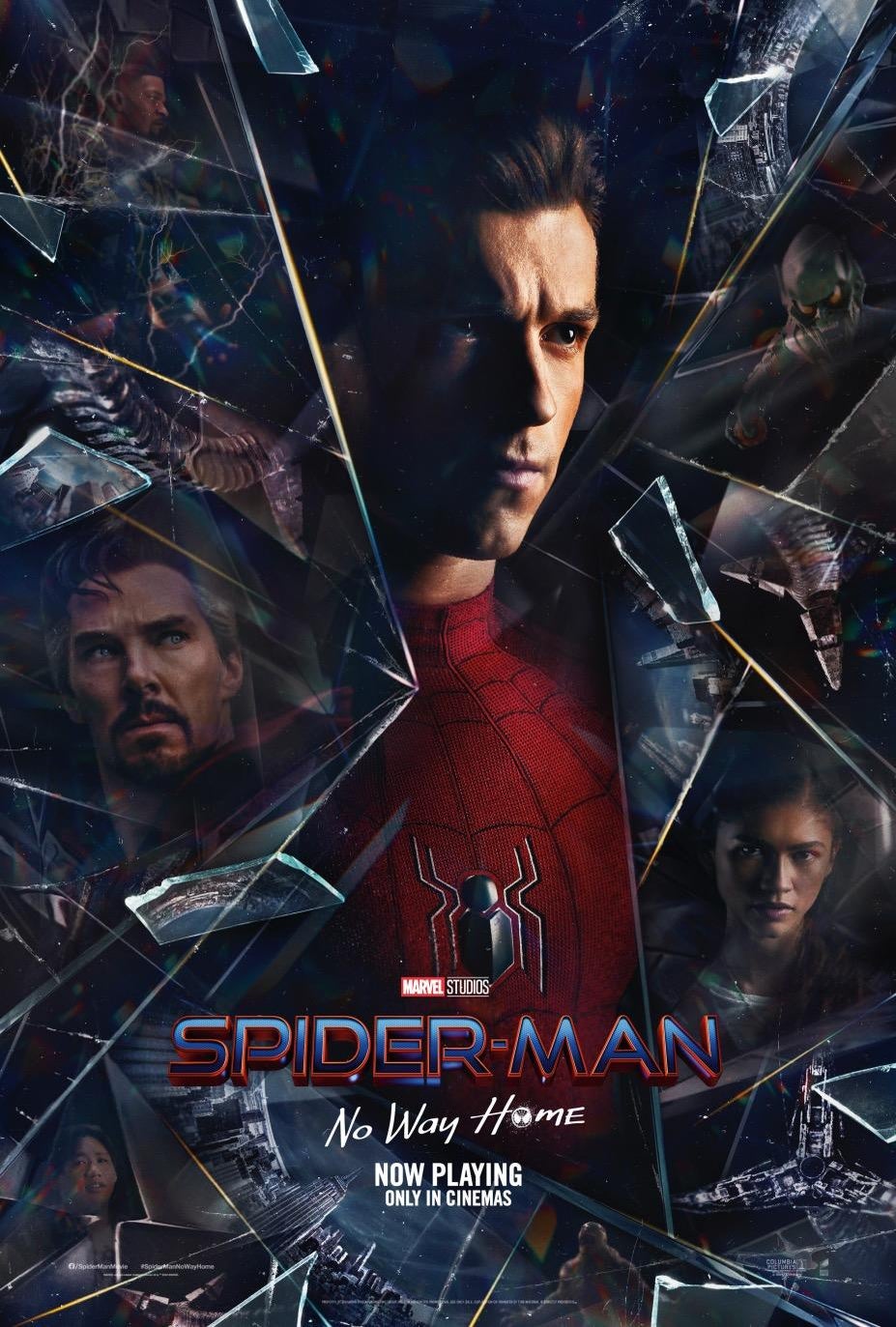
Spider-Man: No Way Home is a complicated film, on one level. There are multiple fight sequences, as well as a lot of talking sequences, some big passages of time, some thorny conundrums that get handwaved aside, and some others that last until the bitter end.
The last SM movie ended with Peter Parker being outed by Alex Jones fill-in J Jonah Jameson both as Spider-Man and (thanks to villainous shenanigans) as the murderer of Mysterio and the wreaker of havoc across London.
The movie manages to quickly get past that, but it also has impacts through the entire film. Even though the cliche of “wanted by the police” isn’t lingered over, the repercussions of the event continue to last, leaving Peter’s life a never-ending media circus. But, as we’ve had hammered home over the years since the last SM film, public belief doesn’t necessarily align with truth, meaning that even when Peter is exonerated, he remains under attack by JJJ and by a substantial portion of the general population.
Worse, the biggest villain fought against by our her for the first quarter of the movie is the college admission process, and MIT decides that all the excitement means they will take a pass not just on Peter’s application, but on his girlfriend MJ’s and his bestie Ned’s. Which in turn leads Peter to go to Doctor Strange to see if the Sorcerer Supreme can set things aright.
He does not, but in the process the universe is broken, and beings from other worlds start to shift into ours, in particular some arch-enemies of previous Sony Spiderverse films.
It’s all a glorious muddle, yet the narrative through-line is maintained amidst various super-battles, with Peter trying to take care of his friends and family … and learning that great Spider-Man lesson not yet uttered in this go-around.
Ultimately, SMNWH is a story about growing up, of coming of age — not solely because Tom Holland is becoming a more mature actor in appearance, but also (to not be meta) not just in personal courage and heroism (Peter has already demonstrated that). This is a movie about that moment of maturity when one learns to extend the application of one’s virtue beyond just a circle of friends and family. That includes the willingness to lose everything in order to save others, even those who might not deserve it.
Throw in a great soundtrack by Michael Giacchino, some really nicely done SFX (including battles of CG figures that look more and more realistic), a variety of cameos from elsewhere in the Multiverse, and a ton of witty banter and general geekery, and it’s a delightful capstone to the Tom Holland trilogy of Spider-Man films.
(So, of course, they’ve announced a fourth film. We’ll see what they do with it.)
P.S. There are two post-credit scenes, one to placate Sony, one to placate Marvel. Neither are great, but worth waiting for unless you really, really need to pee.
Not a lot of theater-going, but an MCU rewatch helped the numbers
While I managed to get back into the theaters for part of 2020, overall film watching still took a hit from normal. This was the year that we got much more into streaming, though we still maintain a healthy DVD/Blu-Ray collection. For 2021, I recorded in Letterboxd:
44 movies watched.
14 movies watched for the first time.
3 movies watched in a movie theater.
30 movies rewatched.
40 movies liked. ❤
24 movies (re)watched from the Marvel Cinematic Universe
So MCU flicks made up over half the movies watched, both rewatches and new releases.
Highest Ranking movies watched:
5.0 – Fellowship of the Ring
4.5 – Howl’s Moving Castle
4.5 – The Avengers
4.5 – Captain America: Winter Soldier
4.5 – The Death of Stalin
4.5 – Sneakers
4.5 – Black Panther
4.5 – Ant-Man and the Wasp
4.5 – Ice Station Zebra
Lowest Ranking:
3.0 – Iron Man 3
3.0 – Thunder Force
3.0 – Aquaman
3.0 – Conan the Barbarian
Month with the Most Movies Seen: April (8)
Months without Movies: February, August
Twenty years later, I still love these movies, especially the first one.
Twenty years ago started three of the greatest Christmases ever. Yeah, there was family, and food, and presents. But there was also, year after year, a new Lord of the Rings movie.
Holiday planning in that era always sounded like (from my perspective), “Okay, we arrive in California on Thursday … Christmas is Saturday … so can we sneak off to a matinee of the next LotR movie on Friday, or do we have to wait all the way to Sunday?”
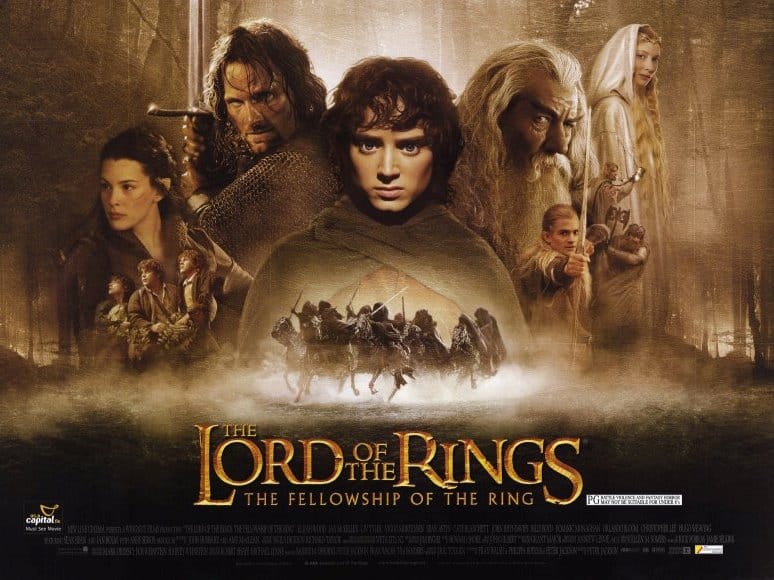
This year marks the 20th Anniversary of Peter Jackson’s Fellowship of the Ring, the best, for my money, of the LotR trilogy. I mean, all three of them are good, but FotR hews closest to the original, and tells the best story.
I’ve reviewed the movie six times, but I want to highlight my latest thoughts, twenty years on. I love so much about this film — the visualization of Middle-Earth, Howard Shore’s stunning soundtrack, the faithfulness of the adaptation (with trade-offs to keep the movie flowing forward yet stay within the three hour range — a sad wave to both Tom Bombadil and the Barrow Downs). This particular review, I wanted to focus on one particular aspect: the second bananas.
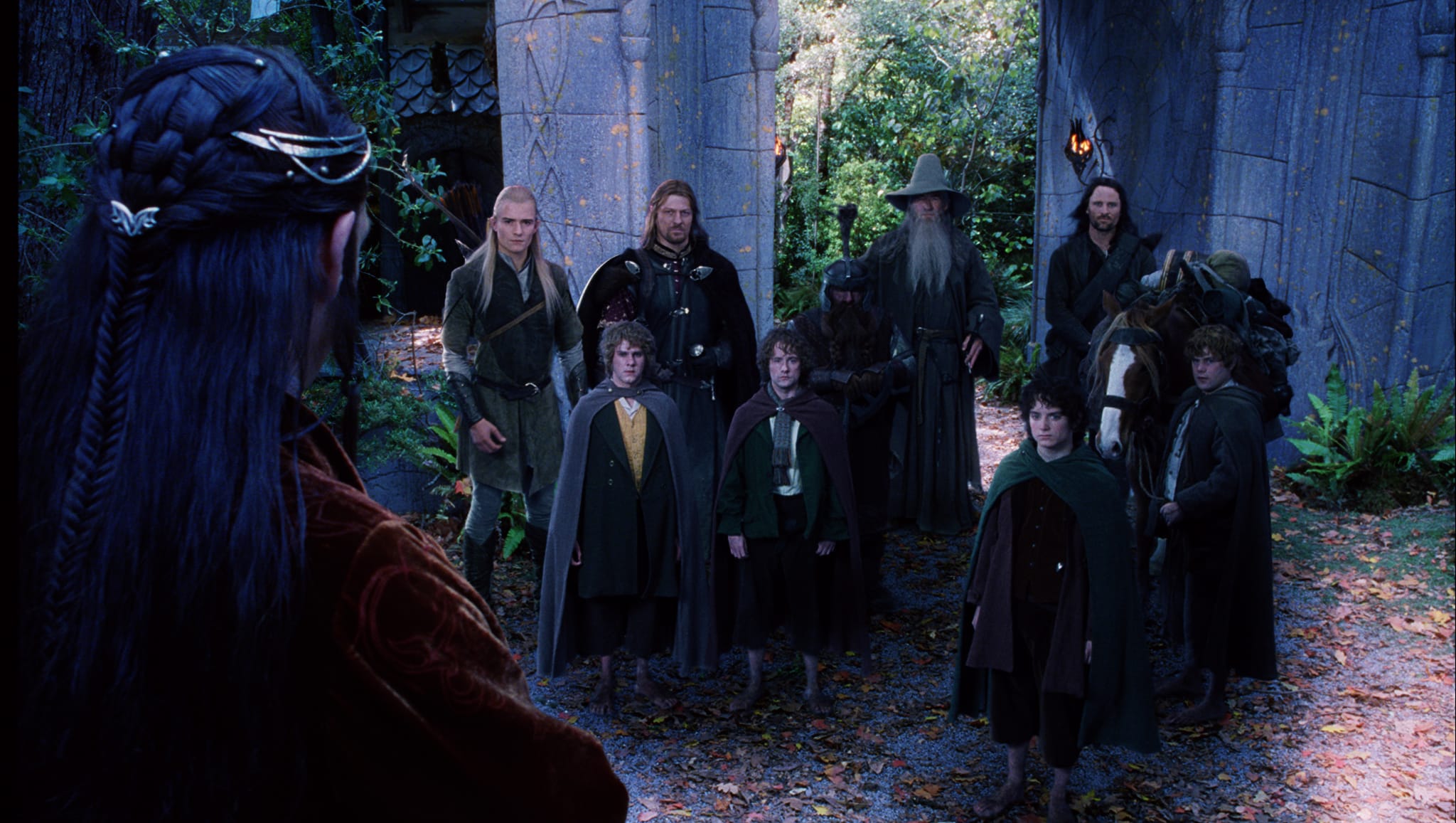
The LotR trilogy has a remarkably solid core cast. Elijah Wood gives us a Christ-like Frodo, evolving from care-free hobbit teenager (equivalent) to increasingly tormented Ring-bearer, to post-war vet who can’t find his place back in the Real World (but fortunately has another world he can move to). Ian McKellen’s Gandalf is equal parts avuncular uncle, force of nature, and leader who’s read too many prophecies and knows too much of what’s really going on to be honest or comfortable. Viggo Mortenson’s Aragorn is the surprisingly reluctant hero with an inferiority complex (likely after having had his foster father rag on him for decade about how weak humans are). Orlando Bloom’s otherworldly Legolas, John Rhys-Davies unfortunately humorous Gimli, Sean Astin’s stalwart Samwise, Dominic Monaghan’s semi-responsible Merry, Billy Boyd’s utterly irresponsible Pippin — all are an excellent core that carry the trilogy forward movie by movie.
The Fellowship
But one of the real powers of the trilogy, as seen in this first film, is the quality of the supporting cast, the next tier who aren’t the focus of the story, but who bring a powerful richness to it.
Ian Holm (Bilbo) has such great moments as doddering fool, twisted Ring-bearer, and ingratiating friend. He adds backstory texture to the tale, demonstrates early on the corrupting power of the Ring, and foreshadows the tragedy that Frodo will face. Thank God Jackson didn’t do a Lucas and try to CG-retrofit Martin Freeman (also a great Bilbo in the The Hobbit films) into the original films.
Ian Holm as Bilbo Baggins, careening between charming and very scary.
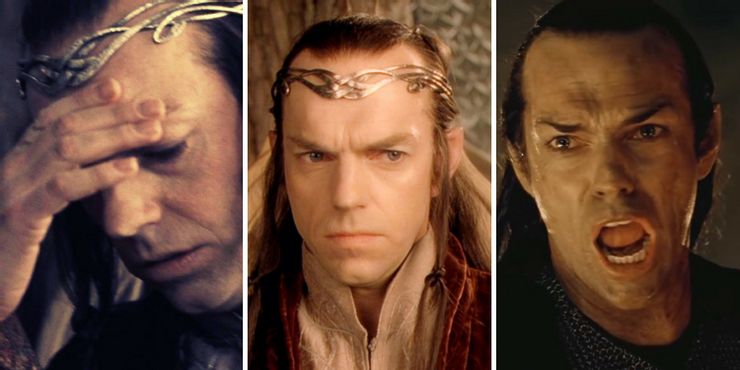
Hugo Weaving (Elrond) has the tragic pathos and elvish ego to be utterly believable as a leader who bears the bittersweet realization the strength of the elves to stand down their ancient foe Sauron is passed, and in being the SOB/sympathy parent toward Arwen in her doomed relationship with that feckless human, Aragorn.
Hugo Weaving as Elrond, who always looks like he has a terrible headache.
Cate Blanchett (Galadriel) is equal parts tragedy, wisdom, and spookiness as the greatest of elves remaining in the mortal lands of Middle Earth. As the narrator of the film (not the original concept, surprisingly enough), she provides a perspective and insight and sorrow to the whole proceeding. A lot of it is camera angle, slow-mo, and background music, but Blanchett’s distinctive, earthy beauty and smile play such a role.
Cate Blanchett as Galadriel, mysterious, charming, tragic
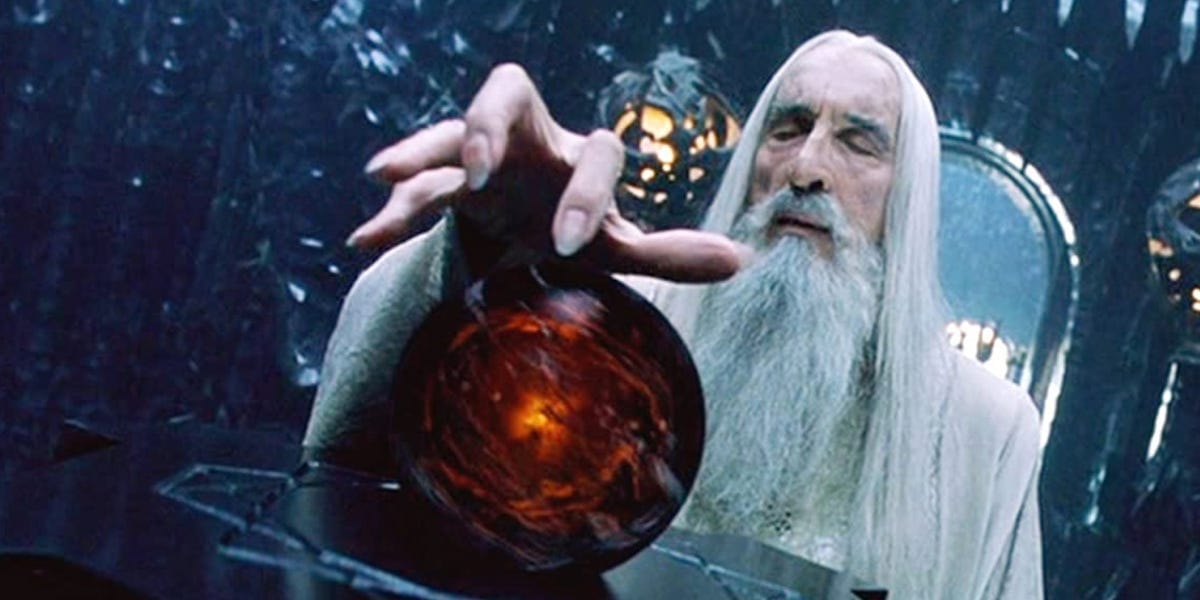
Christopher Lee (Saruman) is certainly a villain. But he’s a whole-hearted one, and you can see where he’s been corrupted/seduced by Saruman, with the threat that if the most powerful wizard in Middle Earth can be so turned, what chance does anyone else have. Given that the other opponents in the film are scary, voiceless creations (Sauron, the Nazgul, the Balrog), Saruman becomes the able spokesperson for the bad guys. I regret losing his “I want to be a Third Power” subplot from the books, but Lee’s scenery-chewing largely makes up for it.
(Lee apparently really wanted to play Gandalf, and I’d love to visit that alternate reality — but I’m glad I live in this one.)
Christopher Lee as Saruman, who “delved too deeply” into the Palantir of Orthanc
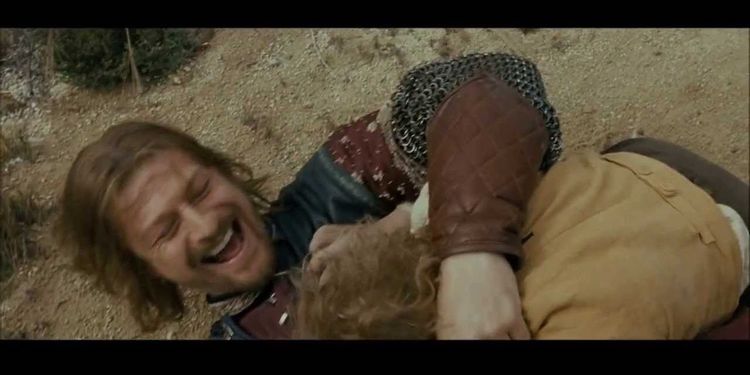
But best of all, as I always conclude, is Sean Bean (Boromir), given a role much more sympathetic, less egotistical, than Tolkien provided his character. Boromir’s vice is his virtue: his caring for others, his willingness to sacrifice all in a monomania to protect those in his charge. He’s mentor and protector of Merry & Pippin, drilling them in combat, advocating for them on the ascent of Caradhras. He’s the man of action and protection, running to the door at Balin’s tomb, to see the approaching orcs (and cave troll), and grabbing Frodo when he’d run back to Gandalf at the Bridge of Khazad-Dum, and restraining Gimli from re-entering the Mines. He’s the voice of compassion as everyone mourns Gandalf’s death. Time and again, he’s the hero always at the fore, less cerebral and strategic than Aragorn, dealing with the immediate needs of his people and his cause … and, ultimately, he cares too much to not fall into the Ring’s seductive trap of power, or — once he needs to redeem himself — to survive the experience.
Tolkien’s Boromir is kind of a dick, if ultimately valorous. Jackson/Bean’s Boromir is the guy who really should be the hero of the story, and falls just short of the goal.
Sean Bean as Boromir, wrassling with Merry and Pippin, because he’s a cool guy and wants to protect the weak.
A 20th Anniversary view of FotR is a splendid way to spend an evening. To my son’s dismay, I’m willing to wait a year (as I did in 2001-2002) to rewatch The Two Towers.
A couple of things I’m interested in, plus an annoying non-movie advert.
I always fine fascinating the question of what’s advertising before which film.
House of Gucci — Gee, a shame they couldn’t find any decent names for this film. But seriously, this is definitely a movie I will not be seeing, but I very much look forward to reading all the articles about it and the story behind it.
Clifford the Big Red Dog — I will likely not go because it is waaaaay too cute, but it looks like a great film for the kids. Even if it doesn’t have The Song.
Morbius — Never one of my go-tos in Spider-Man’s rogues gallery, but this looks nicely dark and creepy. Unlikely to go, as it’s not my wife’s cuppa, but it’s definitely a fresh, horror-tinged leaning into that tormented anti-hero vibe. Better than, alas …
The Batman — I confess I am sooooooo tired of Batman as tormented, anti-hero, insane, vengeance machine, out-grim-grittying-teeth-grinding each previous version in some weird attempt to turn him into an actual villain. Frankly, I think the trend has been out of control since Batman: The Animated Series wrapped up. So, no, I don’t think I’ll be going.
Sing 2 — I did not see the first one, but, damn, if this ad doesn’t make me want to see this one.
[Regal Theaters … why the hell is there a freaking crypto.com commercial in the middle of my movie previews? Also, “Fortune Favors the Brave” is not an investment strategy, no matter how buff Matt Damon looks.]
The King’s Man — Same ad as we saw last going. Looks fun, more so than the original Millar outing.
Encanto — I feel a bit like I am seeing the entire movie, bit by bit, as Disney keeps revising the commercials. But … I will still probably go, because it looks soooooo good.
While imperfect, the questions raised and the focus on people, not powers, impressed me
No Spoilers, Sweetie
So, bottom line: I liked Eternals.
Not get-the-tatoo loved it, though there there were parts that I loved. But I had a very fine time for my money in the theater, and have no regrets over time or money.
The Good
For my money, this is one of the most thoughtful, and thought-provoking, films in the MCU. While other super-hero tales have given us moral quandaries, they’ve often been pretty binary “hero’s choices” — do I save X or Y; do I meet my date or stop the bank robbery; do I stomp the bad guy or save the falling plane?
The issues the Eternals deal with are existential ones, with questions of loyalty and love, of purpose, of destiny and pre-destiny, duty, of sacrifice, of service to God, service to humanity, service to family (or families).
While there are structural and other aspects of the film that blunt some of those questions, they are very real, and they get dealt with in different (sometimes very different) ways by different characters.
Remember how Captain America: Civil War felt a bit facile in how it teed up the superhero vs superhero conflict? This movie doesn’t. The decisions made (and sometimes regretted) are organic to the characters and their situations. This movie will always have a special place for me because of that.
This film has plenty of action and adventure, but for the most part it avoids two overdone cliches in MCU movies:
disaster porn of cities turned into rubble in the course of super-hero villain battles
giant climactic battles of Our Hero(es) vs hordes of CGI villains.
Or, y’know, both
While there is a Major Threat to Humanity that gets dealt with, ultimately the final conflicts in the film are driven not how many CGI baddies can we pew-pew to pieces, but by those moral questions above, and how the characters reacted to them.
This is a movie primarily about people, not a movie about powers.
The movie is visually lovely, both in terms of a global span of settings, and regarding some set pieces that were truly awe-inspiring.
Also on the visual side of things, given their common origins (if differing specialties), I appreciated the common motifs in their powers and technology. There was sufficient commonality to understand the ties between the characters, but enough distinction to appreciate their differences.
Thena gets all the flashy stuff, but all the Eternals’ tech / power expresses in these gold threads and circles
“I did not see that coming,” I thought to myself a good half-dozen times in the film. There are a lot of unexpected twists, most of them quite good. It is a much less linear film than a lot of the MCU.
People emote in this film. People emote a lot. Strong men cry. So do strong women. I am sure that really bugged some of the folk decrying this film, but, again, people not powers.
The Not-So-Good
This movie ramps up very slowly, and ramps down very slowly.
We get a lot of exposition starting off, lots and lots, with tons of flashbacks spanning human history, and then, once we start getting some stakes going, it takes a loooong time to get the band back together.
The individual pieces are done well, and it’s understandable the amount of time things take, given the scope of what we’re addressing, but it feels slow; I was really wondering at points how they were going to end all this, given the time they were taking setting it up. (That they were able to run to 2:37 is a big reason for this — and, since I usually complain about films being cut too short, I suppose I shouldn’t complain much here.)
(My wife, on the other hand, thought it was all well-handled to provide info on all the characters involved. So there’s that.)
On the tail end, we have a long set of denouements, many of them very talkie, some of them very hand-wavy in terms of addressing loose ends. I don’t know what I would necessarily cut there, but I was feeling a bit impatient.
In-between, being something brand-new in the MCU (and, honestly, brand-new in general, as much of this doesn’t follow anything related to Jack Kirby’s Eternals) ends up requiring several pallets of exposition to be dropped in at various times, especially as the protagonists learn things that have been hidden from them or that contrast with earlier infodumps. While interesting, and individually handled decently, it sometimes made things drag.
There are two mid/post-credit scenes, for those wondering if you need to run to the bathroom. Unfortunately, those feel very tacked on, and introduce three MCU characters for future consumption. I was not a fan of any of the introductions, to be honest. I’ll talk more about them in post-spoilers days.
While the Eternals cast is more diverse, the Celestials all kind of looked alike.
Kirby’s Celestials
As a side note, my wife noted that it was really awkward when the various Eternals hug each other, because their shoulder pads always get in the way.
The Okay
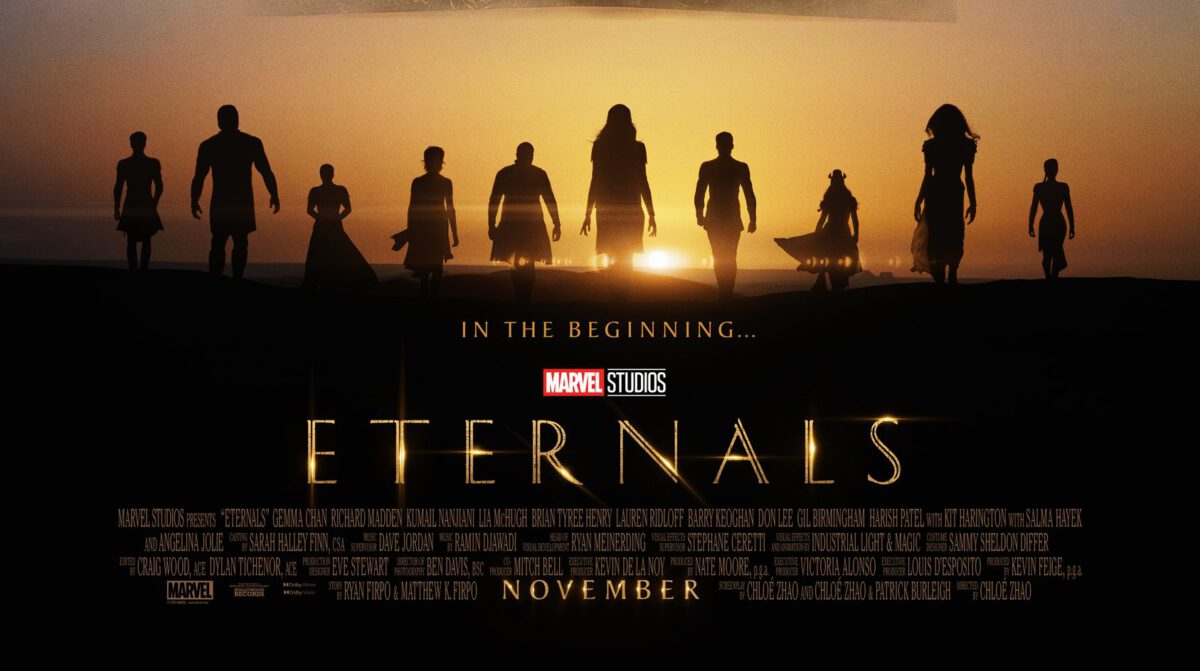
This movie has a huge ensemble — ten members of the Eternals, plus supporting players. It’s impossible to give them all equal time, let alone the time each deserves.
That said, the movie does a decent job of it. There’s a distinct narrative focus on Sersi, with narrative rings circling around her, getting their various turns. While I could use a lot more of practically everyone, most of the characters do get moments in the sun that help us to know them and appreciate them.
Rather understated, don’t you think?
As noted, this is not Jack Kirby’s Eternals, but core themes — the Van Danikenesque space gods and super-heroic basis for myths, the names and themes of the individuals, etc. — remain in place. Frankly, I’m fine with that. Kirby’s imagination was amazing, but his writing was full of bombast makes Shakespeare feel subdued.
FWIW, I don’t think Kirby would have had a problem with this film. Indeed, I think it would have inspired him to write a dozen new crazy comics.
The actual origins of the Eternals was significantly shifted from the comics, something I felt disappointment about when it got shoved in my face during the initial screen text. But what was devised in its place successfully drove the rest of the plot, so I’m good with it..
Another non-Kirby aspect I’m fine with is the diversity of the cast. As reference, here’s how they looked back in the day:
Makkari, Thena, Kro, Sersi, Ikarus’ girlfriend Margo, and Ikarus.
Lots of pasty-white (except for the one Deviant there). The same was true for pretty much all the main Eternals cast in Kirby’s day. Most of them men, too, except Thena and Sersi.
Whereas the movie gives us lots of strong women who aren’t dressed in bathing suits. Lots of races and ethnicities, as would be appropriate for beings set forth to interact with the breadth of humanity. Even (gasp) non-het sexual orientation.
None of it felt forced, or weird, or clashing with the original in context of the story. Yet sooooo many fanbois are outraged by these changes. Wonder why?
(In my opinion, if it pisses off Russia and the Middle East, that’s probably a good thing.)
This is the true kick-off of the Cosmic phase of the MCU, as show in both the very nature of this film and its tales of the Celestials and their shenanigans, and in how things wrap up at the end (esp. that first in-credits sequence). We’ve touched a bit on that theme previously, with Captain Marvel and the Guardians of the Galaxy film, but I expect to see a lot more starscapes in the MCU future.
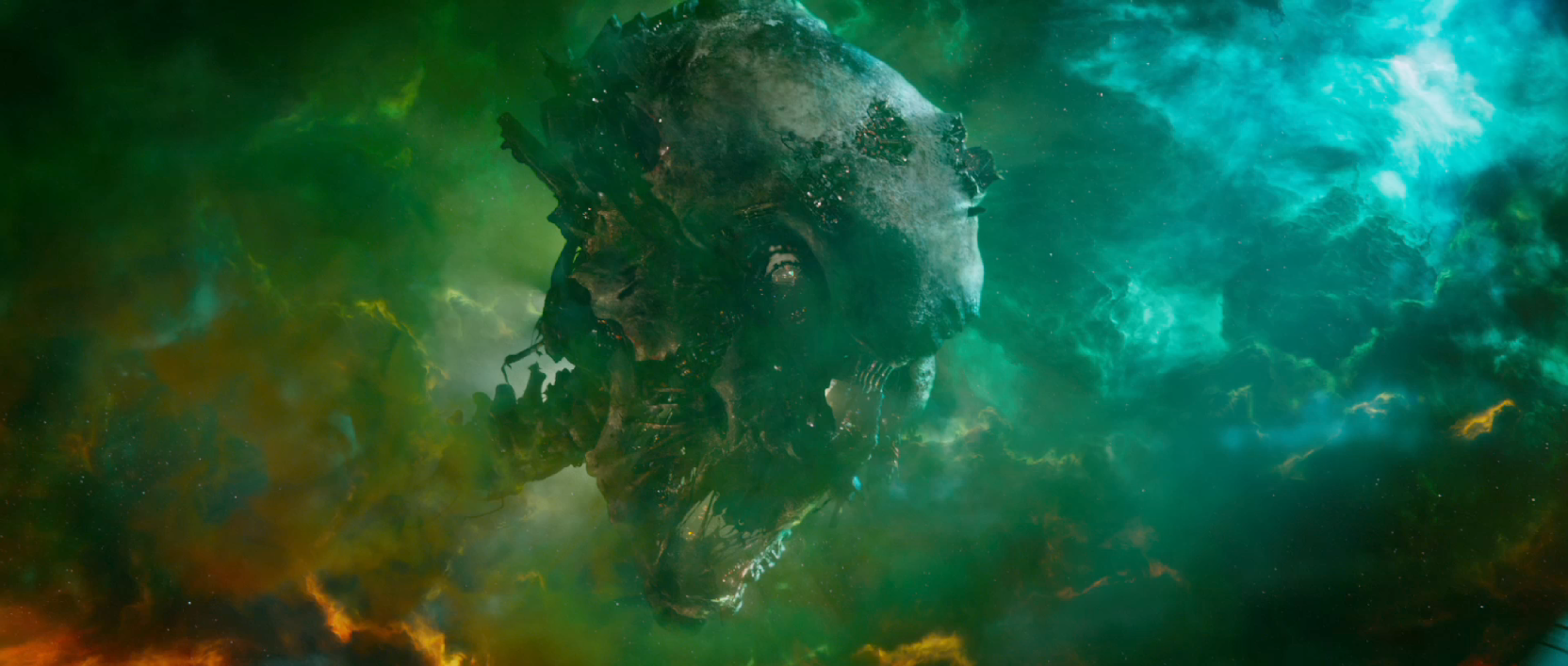
Just a reminder that the “Knowhere” space outpost in GotG is the *head of a Celestial* that is being *mined from within.* Yeesh.
That said, this movie felt oddly detached from the MCU, and its few connections felt a bit forced. It really was very much a stand-alone film, with a couple of exceptions (one of which ended up a significant feature of someone’s motivations). To be sure, my wife, not a Marvel fan, thought that was fine, eliminating the “Oh, you won’t get this if you don’t read the comics or rewatch the movies a dozen times.”
That occurring-in-a vacuum did feel a little strange to me at times, but I also largely didn’t miss it.
Net-Net
I think this movie got a lot of early dumping upon for a few reasons:
Too many film critics dislike the popularity of super-hero films in general, and the MCU (egads! Disney!) in particular. Throw in an Academy-award winning director “slumming,” and their reaction is going to be particularly harsh.
For the fanboi crowd, Eternals is too feeling, too morally complex, and too willing to resolve problems in ways that don’t involve fisticuffs and pew-pews. (It may also have too many strong women and too much diversity for some of their tastes.)
For me, I found those all to be strengths. I mean, I like a good rock-em sock-em, comics-faithful, simplistic-redemption-arc film as much as the next person (I maintain that the original Iron Man is one of the best supers films ever).
But this film was also refreshing, in not providing easy answers, or even easy-to-judge characters. Each of the Eternals faces difficult decisions in the movie, makes (or chooses to dodge, or changes their mind on) those decisions, and doesn’t always get it right, because big, difficult, moral decisions rarely end up with a big red or green light next to them to immediately let you know you made the right one.
It sometimes takes a long time to learn you picked a Zonk behind Curtain Number 3.
Eternals is by no means a perfect move. It is (if unavoidably) verbose in its setup, and dragging in its wrap-up. It handles some elements clumsily. Some characters got a short shrift. Some of it feels melodramatic at times (though Kirby would probably smile at those elements).
But it’s a good film, a great kickoff to bigger things in the MCU and maybe some more sophisticated directions, and I’m really curious as to what happens next.
Too many critics find the MCU not to their taste, and just can’t wait for it to fail.
I haven’t read more than a paragraph (spoilers, sweetie!) of this article lamenting the “Disaster” of Marvel’s new Eternals , but I really didn’t have to, not with this headline:
There are soooooo many Serious Critics who want Marvel (and Disney) to suffer a serious failure. It’s evident here from the very beginning of the piece.
However you may feel about the place superhero blockbusters have occupied in the cultural landscape for the past dozen-plus years …
But you know how you should feel.
… there is something ineluctably sad about the way directing one has become the primary marker of success for a gifted emerging filmmaker. Distinguish yourself in your field, as Chloé Zhao did when she won the Best Director and Best Picture Oscars last year for her contemplative indie road movie Nomadland, and you are ceremoniously handed the keys to the Marvel car—a gigantic CGI-enhanced vehicle that can navigate black holes and shoot rays of plasma out of its headlights, but that always moves in the same direction to arrive at the same predetermined spot.
Or, to sum up the underlying sentiment, “It’s ineluctably (!) sad that brilliant indie movie creators aren’t allowed to endlessly create brilliant indie movies for the brilliant indie movie lovers. Then everyone would become a brilliant (or at least moderately intelligent) indie movie lover like we are. O tempora! O mores!”
O filmcrit snobbery. Because when you start a movie review, not with observations about the film itself, but with bewailing that a great director has been somehow lost to the Inhuman Unartistic Evil Hollywood Marvel Movie-Making Track, you’re not here to criticize the movie — you’re here to criticize the entire genre and its leading production house. For reasons.
Yes, it’s time for another screed about Everything That’s Wrong In The Movie Industry Today.
The idea that a director is only being pure and true to the Muse if they produce brilliant, thoughtful, low-budget, award-winning cinematic masterpieces is … well, yeah, snobbery. It makes assumptions about what is worthwhile, what is pure, what is right.
If a great, award-winning chef is offered the opportunity to make a lot of money creating a family-friendly tuna casserole — no tuna eyeballs floating in sauce, no molecular gastronomic crystalline noodle essence, just tuna casserole using what’s in the pantry — I’m betting it’s going to be a kick-ass meal regardless. Maybe not a once-in-a-lifetime culinary masterpiece that people will weep that they missed in the decades that follow, but something filling and enjoyable and probably with a bit of unexpected dazzle.
Mmmm. Tuna casserole.Is Eternals any good? Is it a tasty tuna casserole? A hearty and multi-faceted stew? Macaroni and Processed Cheez Whiz ? I dunno. I tend to enjoy MCU movies despite the chorus from one side (as above), or the chorus from the other side (“Zack Snyder would have made it even better!”). I have tickets for next Saturday, so I’ll let you know then.
I do have reasonably good expectations, based on the MCU track record, the source material, and what I’ve seen so far. Heck, that the director won Best Director and Best Picture for her “contemplative indie road movie” seems like a good sign that it could be something really good.
As I said, I have not read the full review by Dana Stevens (I’ll save that for after seeing the film). But I suspect, just from that first paragraph, that she fundamentally dislikes the entire genre, and its conventions, and its style of story-telling, especially as packaged within a corporate franchise that isn’t going to do anything too radical or profit-endangering in its various outings. And so Zhao’s outing in Eternals gets framed as a tremendous waste of time and talent when we could have had Nomadland 2 or something.
(Stevens admits she has a bad “record” on “comic book blockbusters,” and that she really doesn’t understand the appeal of the genre, though the original Wonder Woman movie made her cry. She also brags, re Wonder Woman 1984, “Look at me over here, liking a comic book movie! Never let it be said every film on my Top 10 list is a harsh Eastern European documentary!”)
Stevens is not the only person who has expressed literary eye-rolling at the hoi polloi popularity of super-hero flicks in general, or Marvel’s installments specifically. It’s been standard fare since the earliest MCU movies came out, and went into overdrive when Marvel was bought by that other cultural bugbear, Disney — especially as such movies showed an inexplicable tendency to attract lots and lots of viewers and make lots and lots of money. That’s like red meat to some film / book / cultural critics.
“Eternals” is not “Nomadland.” There I said it. Wait, should it have been?
Of course, all this begs the issue of what a “good” movie is. I don’t expect Eternals to be a brilliant “contemplative indie road movie.” In fact, that’s not the entertainment I’m looking for from it. And I can say that without maligning those who enjoyed Nomadland as out-of-touch pointy-headed intellectuals who want to tempt up-and-coming directors with low-budget, contemplative film-making.
Aside from enjoying the genre, I’m intrigued with Eternals because of some of the creative challenges it has to face, with its out-of-nowhere large cast that it has to introduce and get the audience engaged with, let alone the mythos behind it. In some ways, it’s the most ambitious MCU film yet, bypassing the slow build-up of solo films before group gatherings for a much bigger chunk of story-telling. Some few bits of feedback I’ve heard from early viewings are mixed as to whether the film pulls that off.
Beyond that, as a dyed-in-wool Marvel comics fan, I’m at least as interested in the bigger picture of how the movie, and the characters, fit into the larger MCU and the future. And I’m sure there are other folk who just want a pew-pew blow-em-up spandex Saturnalia of good-looking people fighting CGI baddies. I don’t think there’s anything wrong with that.
Just like that hack Shakespeare and his inevitable crowd-pandering sword fights.
Rise the chorus of folk like Stevens, who cry out, “But it’s such a waste of talent! Chloé Zhao! And money! Millions of dollars of money that could have gone to something much more important and memorable and artistic!”
But, honestly, would not have. Nomadland won Best Picture, but if every movie produced was another Nomadland, would we have a movie industry as we know it? Would Disney (would anybody) have created forty Nomadlands for the price of Eternals? It seems unlikely. Nomadland had a box office of $39M in the US, very respectable for a $5M budget. But Shang-Chi made $90M in the US in just its first weekend; Black Widow made $80M (plus another $60M streaming).
There’s more to the cinema than money, and there should be. But there’s very little without money.
Do we need to issue an amber alert for Chloe Zhao?
And it’s not like Disney kidnapped Chloé Zhao and locked her in a room and forced her to make Eternals. Or is the implication that she was unfairly (and “ineluctably sadly”) tempted by filthy lucre to sell out her Muse by directing such a thing? Hey, little girl — climb into the Mickey Mouse van. We have candy!
That’s actually kind of insulting to Zhao.
Not that I think she’s not at least partially into movie-making for the money, but I can’t imagine that there wasn’t something about this project that intrigued her beyond the paycheck, just as other Marvel projects have intrigued folk like Brannagh or the Russo Brothers or Coogler or Waititi.
Eternals’ cinematography incorporates a little more natural light and open landscape than your average Marvel joint, but the demands of a $200 million corporate enterprise ultimately prevail over any aspirations to auteurship. That’s OK—a filmmaker of Zhao’s gifts has earned the right to try her hand at what, like it or not, is one of the dominant genres of the 21st century.
Yes, “like it or not,” but also we’ve somehow flipped from Zhao being sucked into an ineluctably sad Hollywood money-making machine to her having the “right” to try her hand at it. I guess that’s … progress.
For myself, I’m going to engage with Eternals as a contemporary super-hero movie, a genre I generally enjoy, rather than demanding it to be something hitting the 2050 Top 100 Bestest Films of All Time list. Indeed, I’ll see it, not as a stand-alone one-off art film, but as a chapter in a longer (if open-ended) saga. I expect I’ll enjoy it, too, even if it’s just “predetermined” to be tuna casserole.
Because if they’re going to chew up a half hour of your life, it’s worth making a note of them.
Weirdly, there was a trend in these trailers … the longer it went on, the better / less-reprehensible they became. Not sure if that was a coincidence or not.
Jackass Forever — The Jackass franchise is egregious enough. Coming up with something pretty clearly scripted for the Jackass franchise is unforgivable. The trailer almost made me want to leave the theater.
Venom: Let There Be Carnage — The only good thing to come out of the Sony purchase of Spider-Man rights from Marvel is that the whole Venom / Carnage piece of the Marvel Universe has been shoved into a completely different set of movies that I can ignore. Really.
King Richard— You would think a movie about Venus and Serena Williams would actually be about those tennis stars. Instead, this seems more focused on (given the name and the Will Smith star-power) their father, which is … kinda weird.
No Time to Die— The Daniel Craig era of Bond has been a very good one, but having a trailer for the last Craig film present itself as half-nostalgia, half-this-is-the-final-Bond-movie-ever is … also kinda weird.
Sing 2— A heartwarming musical performer anthropomorphic animal song performance sequel to a movie I never watched and don’t regret not doing so.
The King’s Man — I watched The Kingsmen because I knew the Mark Millar comic book. Which meant I had little desire to watch the sequel. But this is an Edwardian Era prequel, which could be kind of amusing.
Eternals — Same trailer as seen before. I am definitely so there. But I’m also a bit worried about an ensemble movie for the MCU where none of the characters are pre-established in solo efforts. I worry about how this will fare, commercially, even while everything about it looks very cool.
Net-net? I see us going to Eternals, The King’s Man (Margie was intrigued), and maybe No Time to Die. The rest are not our cuppa.