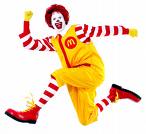
McDonald’s advertises a lot, so they’re probably pleased as punch by some current studies showing that, for kids, the branding on McFood is more important than the food itself. Almost…
McDonald’s advertises a lot, so they’re probably pleased as punch by some current studies showing that, for kids, the branding on McFood is more important than the food itself.
Almost 77 percent, for example, thought that McDonald’s french fries served in a McDonald’s bag tasted better, compared with 13 percent who liked the fries in a plain white bag. Apparently carrots, too, taste better if they are served on paper with the McDonald’s name on it. More than 54 percent preferred them, compared with 23 percent each for those who liked the unbranded carrots and those who thought they tasted the same.
Interestingly, there’s very little difference in preference for the burgers.
McD’s responds by noting that they’re doing a positive public service by branding/pushing milk and fruit and veggies — which, I suppose, is true. And Katherine definitely enjoys getting apples sometimes instead of fries.
Now, is this brainwashing? Are kids being turned into McZombies? Well, that’s part of the point of advertising. But a couple of thoughts:
- Kids may also like the other associations of the brand — e.g., associating McFood with a Play Place. Katherine, for example, likes McDs “better” than some other fast food because of just that factor.
- Adults associate certain situational, non-substantive factors in eating, too. The same meal served at the chi-chi bistro down the street will “taste” different than if served on plain paper plates in a white lab room.
Of course, some Food Nannies suggest that Something Must Be Done:
But Dr. Thomas N. Robinson, an associate professor of pediatrics at Stanford and the lead researcher on the study, was not impressed. “The best response the fast-food industry could make to this information,” he said, “is to alter their menus to include a majority of healthful foods instead of encouraging consumption of high-fat, high-calorie foods.”
Except that’s what people want.
And note, of course, the study is for kids ages 3-5. Note that these kids aren’t going to McDonald’s on their own, but are being brought by parents or guardians. If you don’t think kids should be eating the stuff, don’t take them there. Parents should be more responsible, right?
“We often hear that parents are the ones responsible for their kids’ nutrition,” Dr. Robinson said, “but in reality there are these other factors, created by a tremendous amount of advertising effort, that undermine parents’ ability to make healthy choices.”
Riiiight. Okay, I have a kid. I know the temptations of giving in when she begs and yells for McDonald’s … or candy … or something else not as healthy as I’d like.
But do I consider McDonald’s undermining me? Is it reducing my ability to make “healthy choices?” Feh. If I can’t resist a Katherine begging me for all the french fries she can eat from McD’s, I shouldn’t have had her in the first place.
This study is interesting — heck, it should even be something that parents should know about. But let’s be sure we’re clear here — what food is bought for a kid is the ultimate responsibility of the parents. It’s certainly a responsibility I feel with my own daughter.
(via Les)

 (Straczynski / Coipel): Don Blake settles down to small town life — and recreates Asgard on the prairie. Lovely art, intriguing story, but not yet 100% engaging — too much Mysterious Big Cosmic Grandeur to make me care … yet.
  (Willingham / Alexovich): The Fables are seroiusly preparing and training for war. Boy Blue and Rose Red make some preliminary goo-goo eyes. Meanwhile, it’s the Wolf Cubs’ birthday — and they get to learn the deepest family secret. Snappy dialog, cartoony art. Always a bottom-of-the-stack.
 (Pfeifer / Woods) World’s goofiest, least necessary Big Summer Crossover. At least this one features Grace of the Outsiders — who learns a Huge Secret of Her Past. Psych! Bleah.
  (Willingham / Derenick) Last time, Doc Gotham erupted a volcano in downtown Chicago. This time they defeat him and save most of the civvies. Some great dialog, fun action, and some non-magic guest stars. The Pact show they’re not just low-powered cut-ups, but it all feels a bit rushed.