This is the eulogy I gave for Dad at his funeral mass on 13 May (that little time ago?). I've been meaning to get it posted, and Mom's gentle (cough) reminders that she wants a copy have made it happen — appropriate for a Memorial Day weekend.———-
I had a great dad.
I write pretty well, or so I’m told. I do a lot of writing for a living, memos, email, documentation, web pages. I write stories, I've written novels (none published). I have a fine liberal arts education that taught me how to write, to organize my thoughts, to best use language to convey an idea, a feeling, a belief, a truth.
This eulogy was incredibly difficult to write. In part, of course, because I didn't want to face the reality of writing it, and what it meant to have to be writing it. But also in part because everything I wanted to write about Dad sounded cliche, hokey, trite, like something out of a Hallmark card.
People, when writing eulogies, often focus on great achievements. But Dad wasn't a CEO. He wasn't a rock star. He wasn't a Senator, or a Poet Laureate or a Pope or a General. He wasn't a Pulitzer Prize or Nobel Prize or Publishers Clearinghouse Prize winner. He wasn't on the cover of People, or Time, or Rolling Stone, or Forbes.
In other words, he wasn't anything the world at large would consider interesting, or exciting, or noteworthy.
He was “just” a normal, loving, dutiful, man, husband, father, friend. So the words that describe him can only “just” come across as prosaic, ordinary; yes, even cliche.
Let me try anyway.
When I think of my dad, I think of three things:
First, he was a man of strength. Dad was a strong man, physically. He loved the out of doors. He loved to hike. He served in the Navy. He studied, for a time, to be a forest ranger or some other naturalist profession, and he always loved going up into the mountains, driving to interesting places and walking around there, going out for round of golf, or even just working in the garden.
He was a very physical man. And physically strong, too. Even to the end, when you hugged him, you could feel the strength in in his body, tense, taut under the skin.
He came from a difficult childhood, one that could make a man scared, and angry, and abusive during his life. But he pulled himself up from that to be successful and acknowledged and loved by — well, by the people who met him, who worked with him, who knew him.
He was often quiet and reserved. He wasn't a dynamic, charismatic leader, the type that everyone writes about. But he was strong, supportive, working behind the scenes to get things done, and to make what was right and proper a reality.
Second, he was a man of devotion — of duty, of faith, and of love to his family.
My dad was an incredibly hard worker. After putting in long hours at the bank or at the office, he’d come home with his briefcase, change his clothes, practice his cello with my mom — and then sit down in his easy chair, pull out a clown car’s worth of stacks of paper from his brief case, and spend a few hours before dinner doing still more work. And maybe after that he’d pull out his dress shoes and polish them.
If he fell asleep in front of the TV rather than making it through a movie — well, he could be forgiven for that, because he’d be right back hard at work the next morning.
He served his country, and had a deep, patriotic belief in it. He was in the Navy ROTC in college, and then did his two year tour on the USS Toledo, a heavy cruiser in the Pacific. He was proud of his service, but it was never how he defined himself, and he quietly retired when his active reserve time was complete.
He was more devoted to his love of music. He was playing the cello when he entered Stanford, and it was in the Stanford Orchestra that he met my mom, first violin and concert mistress. I grew up in a house full of classical music, from the radio playing in the morning on the weekends (and in the weekend afternoons as he detailed the cars), to my folks practicing chamber music each night, and getting together on a monthly basis with friends to play classical string quartets and quintets.
He was devoted to the faith and to his church. He saw service to his parish, and adoration of Jesus, Mary, and the saints as a high calling, a vocation even. He wasn't always as enamored of the church hierarchy, but he was able to let a recognition of the frailty of humanity, even in the church, not get in the way of his devout piety and his close ties to and care for the people in the pews with him.
As a result, he long gave of himself musically to the services where he worshiped, he served as a Eucharistic minister, he volunteered at the diocese at the marriage tribunal, he was on the board at the St Vincent dePaul Society, and belonged to the Los Angeles Newman Club. Most notably, after his retirement from banking, took on what was literally a second career as parish administrator here at St Dorothy for 15 years, and, then, adviser to the parish priests for another 6.
So maybe here’s the part where I can talk about recognition of the sort that people might put in headlines or photo captions. For his service to the church, in 2005 he received a Benemerenti award from Pope Benedict XVI, which was an honor he treasured.
But even more treasured — the statue of Christ you see above the altar here, which long stood out front and will again, was dedicated by Monsignor Acton to my Dad for his long service; that Fr. Ahn Tuan saw fit to have it cleaned and brought in as part of the Easter season here at St Dorothy was, in its own way, a remarkably timely tribute to my dad as well. For those who attend here, I hope when you see it in the future, it will remind you in some small way of my dad’s presence.
I haven’t mentioned much about family, but both the elements I've talked about so far were hallmarks of his being a father to John and me. Strength and devotion. He put in long hours to keep us fed, and to set us out on the right road. He was the final court of discipline in the household — if punishment had to escalate from Mom to Dad, you knew you were in trouble. He planned our family activities (with copious help from Mom), from vacations to hikes to weekend drive-abouts (back when gas was 35 cents a gallon), to, most of the time, what yard maintenance needed to be done. He maintained order and discipline. And heaven help you if you were all sleeping together in the same hotel room while on vacation and he had to instruct you in the middle of the night to “Stop gyrating around!”
So far, he sounds like a quiet, driven, even dour man. Strength and devotion. Pretty darned serious, right? And he could be quiet, and serious.
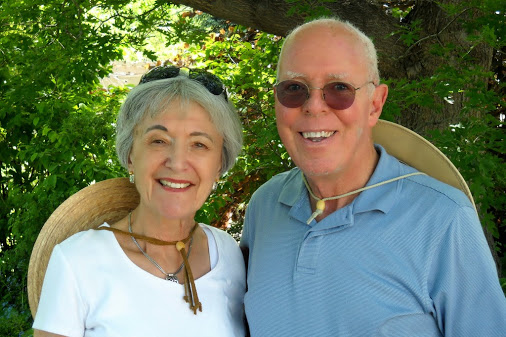
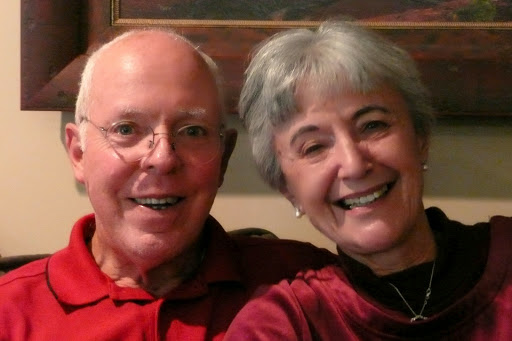
But I remember with as much fondness, a third thing about him. his smile. His jokes. His sense of humor, creeping out at the most unexpected time. He was more than a bit mischievous, my dad. You could see a twinkle in his eye, and know something was coming.
– It might be a bit of teasing. It might be a joke.
– It might be doing something that would drive Mom up the wall, some "instigating," like teaching the grandkids to tap out a rhythm on the dining room table.
– It might be his complicated multi-part handshake that he’d do with my brother and me, faster and faster, competitive but fun.
– It might be saying one of the family tag lines — “Hungry? Whizins!” — that always drew a smile and a laugh from everyone else.
-Or maybe breaking into some old drinking songs from Stanford to wile the miles away during a long car trip, always capped off with a huge grin.
Dad’s smile could be contagious. And it was always there when his love for us was the most apparent.
Those were the three things I think of, when I think of Dad. Strength. Devotion. A Smile. Maybe a personalized version of Paul’s Hope, Faith, and Love.
The disease that took him, the Parkinsons, tried to rob him from us in pieces.
It tried to take his strength, his coordination, making it difficult for him to walk or manipulate things.
It tried to take his devotion, sapping his memory, his ability to communicate and make connections, his functionality to do what he wanted to see done.
It succeeded in much of that, to all our grief, though the works of his life in those areas still remained — his family, the security he brought us, the examples of his faith, his friends and the lives he touched.
But for all that it took from him, it never quite managed to steal his smile. That still popped out, even when you didn't expect it any more.
I saw it a few weeks ago when his sister and I visited him at the nursing facility he was in. A smile when he recognized her. A smile when I talked with him.
And my mom will tell you that, even in his final hour, as we were praying with him and singing to him and talking to him, he smiled.
That much of him was still there, before he passed.
Faith, hope, and love abide, these three; and the greatest of these is love.
Dad’s strength, his devotion, and his smile will always have a continuing presence in our lives. But the one I’ll treasure most is his smile.
Thanks, Dad.