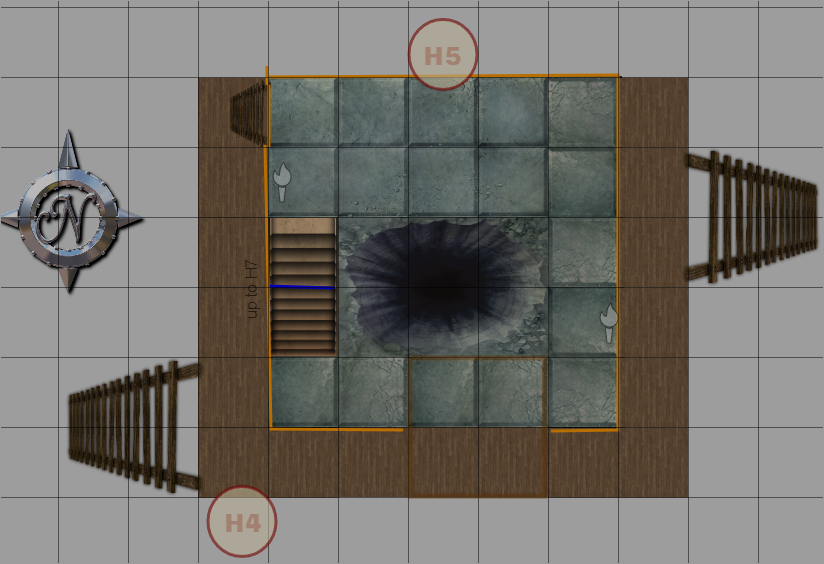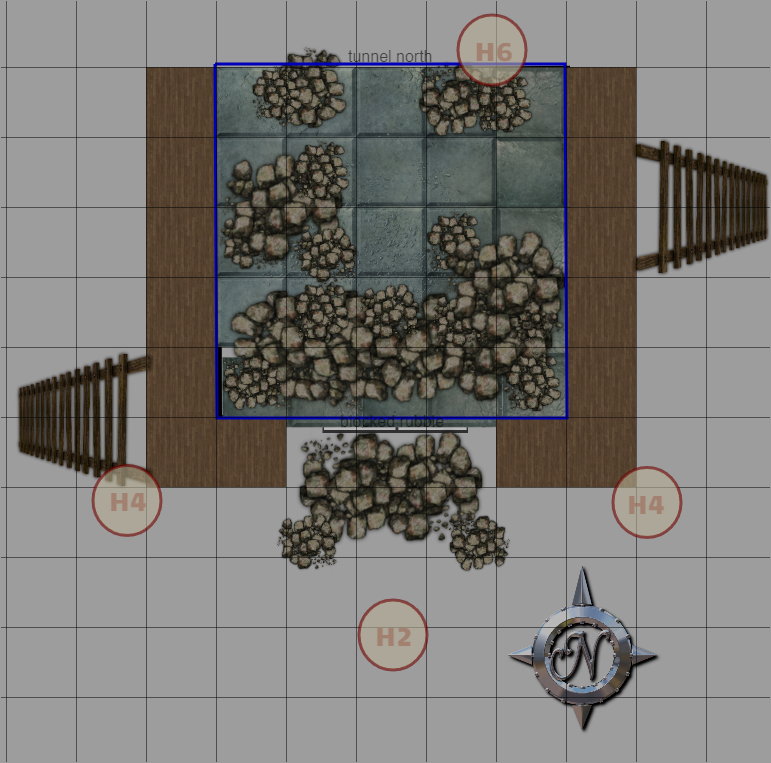
Princes of the Apocalypse, Session 33: “Air Apparent, Part 2”

The party delves deeper into the Temple of Howling Hatred …

Princes of the ApocalypseThis is part of a series about my DMing Princes of the Apocalypse, a D&D 5e adventure by and copyright Wizards of the Coast.

Table of ContentsThe Party

There will be SPOILERS. If you are playing in a PotA game, please don’t read this. If you are DMing a PotA game, or are a DM who wants to see what the ride was like … read on!


GM Recap

Session 33 (Day 34) 

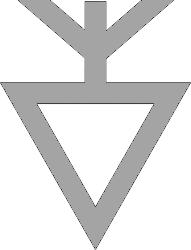
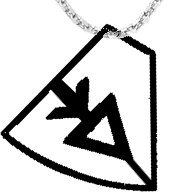
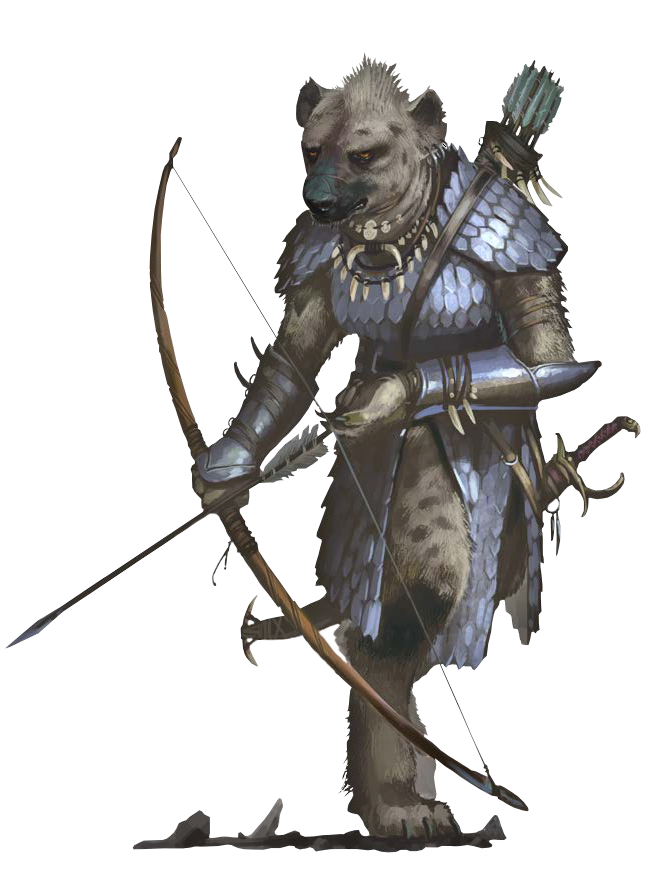
  1. Howling Hatred symbol
    Howling Hatred symbol

    The party fought the two priests in the stone wheel room — as well as the commoner captives who all seemed devoted to the cause of Aerisi Kalinoth and Yan-C-Bin. Aldrik, who was there, broke his golden shackles and joined in the melee. Afterward, he determined after examination and odd insight that the wheels were controls for … water level? Faith armed Aldrik with the Hammer of the Azer.

  2. They went through a series of quarters — one of which had a kenku — before running into a large band of Initiates, who were quickly dispatched. In that southeast quarter of the complex, they found a passage labeled with the Crushing Wave symbol sandblasted in the floor.
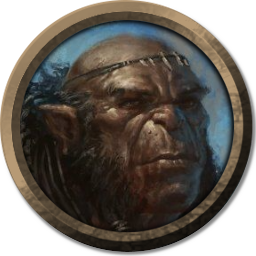
  3. Ahtayir token
    Ahtayir

    They encountered the great blue figure (a djinn?) Ahtayir, who spoke of being tied to the endless task of maintaining, recovering, expanding the city of Tyar-Besil, at the command of one long ago, as well as its present “usurper” Aerisi Kalinoth. He seemed interested in their intent to overthrow Aerisi, and encouraged them to do so.

  4. On a causeway over an underground river, going toward the step pyramid in the center of the Temple of Howling Hatred, they were confronted by a wyvern and rider, both of whom they slew.
  5. They prepared to enter the pyramid, where Ahtayir had assured them Aerisi dwelt.

Player Recap

Where The Party Finds Their Wayward Dwarf

Aldrik looks down at his manacles and the bar that he is pushing. His vision clears slightly and he can now see that the chains are made of gold. reality returns and Aldrik doesn’t like it. He enters into a rage and breaks his chains. The commoners charge the group and yell, “Yan-C-bin comes”. When the room is cleared, Faith heals Aldrik and hands him her new war hammer. They remove the gold shackles and chains from Aldrick. Faith notes that golden shackles are most often used on royalty. 

The group explores the rooms around the stone wheel room. It is mostly empty accommodation with nothing much of interest. A group of guards attack as they are leaving a room. The party members pull back and make the guards come through the doorway. The battle is short and the party victorious.

Continuing through the halls Moony spies an impressive air being working on destroying the wall and stacking the rubble. While they discuss what is to do, Ahtayir of the Third Wind calls out and invites them to join him. He is a Djinn who is bound to the service of the temple. He has been given the endless task of maintaining, recovering, expanding the city of Tyar-Besil, at the command of one long ago, as well as its present “usurper” Aerisi Kalinoth. He seemed interested in their intent to overthrow Aerisi, and encouraged them to do so. He waves and creates food and drink for the group. If you are going after Aerisi Kalinoth, you must attack her and cause her to react to her.

Ko walks up to the genie. “You are not a squirrel. How do you do that?” “You are a curious little one, but until you can ride the winds you are of little interest to me. The food and water is bland. They thank the djinn. He promises a great reward if they can free him. 

Stone pillars line like majestic trees. Names of ancient dwarves engraved on the pillars. It crosses a deep moat that leads towards the pyramid. There is a figure at the top of the pyramid that is riding a draconic creature. When it takes off and approaches, the group can see that it is a Wyvern. The figure on the back of the Wyvern says, “Who are you? What are you doing here? Who is your master?” Faith replies, Tyr. That was not the answer that she was looking for.

Kax Hanar yells “Intruders!” Theren drops a fireball on them and Moony makes a sneak attack. Ko roars and Kax drops from the saddle. Heavy fighting ensues. Kax is defeated and William tries to get the Wyvern to run away. When he doesn’t leave, they have to destroy him. While some of the group does a quick survey of Kax and William and Moony remove the poison sack from the Wyvern.

Game Notes

On a roll

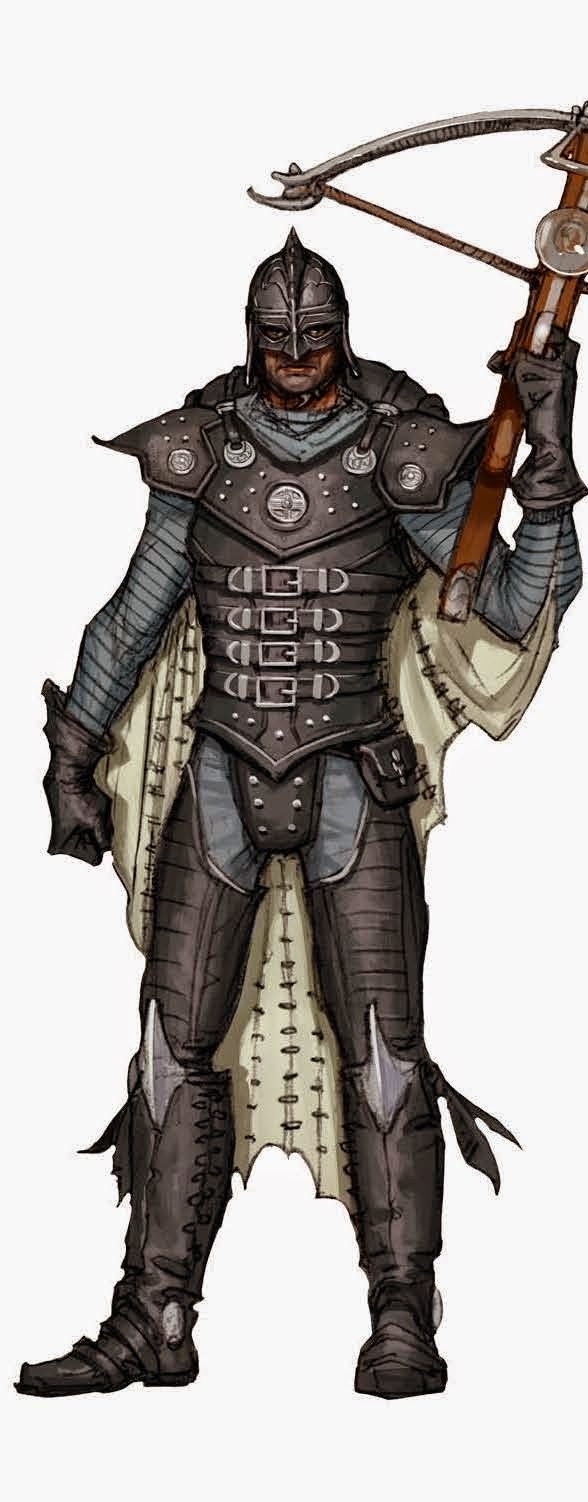
cultist
Generic Cultist icon, used as mooks for all the different elemental cults.

It’s becoming clear to the party that low level mooks aren’t much of a threat and, unless in huge numbers (in which case they become AoE fodder), that’s true. The story continues sending them, though, as part of the window dressing — evil priests, fanatical cult initiates, commoners who have been corrupted, etc. In most case, it’s color text, but important color text, and I didn’t want to tweak the threat and have it turn out unbalanced and killing someone in the party.

(That said, I’m also aware the party was benefitting here by (a) having six members in it, and (b) with being a level up from what the dungeon was designed for. So I was also willing in a given battle to maybe throw in a few extra baddies, or tweak a few rolls for dramatic effect.)

Mooks create a perception of risk, and an actuality of cost (spell slots and other abilities that need to be renewed). They aren’t designed, narratively, to stop the party — just to wear it down so that the conflict with the boss will be that much more hazardous.

Wending paths
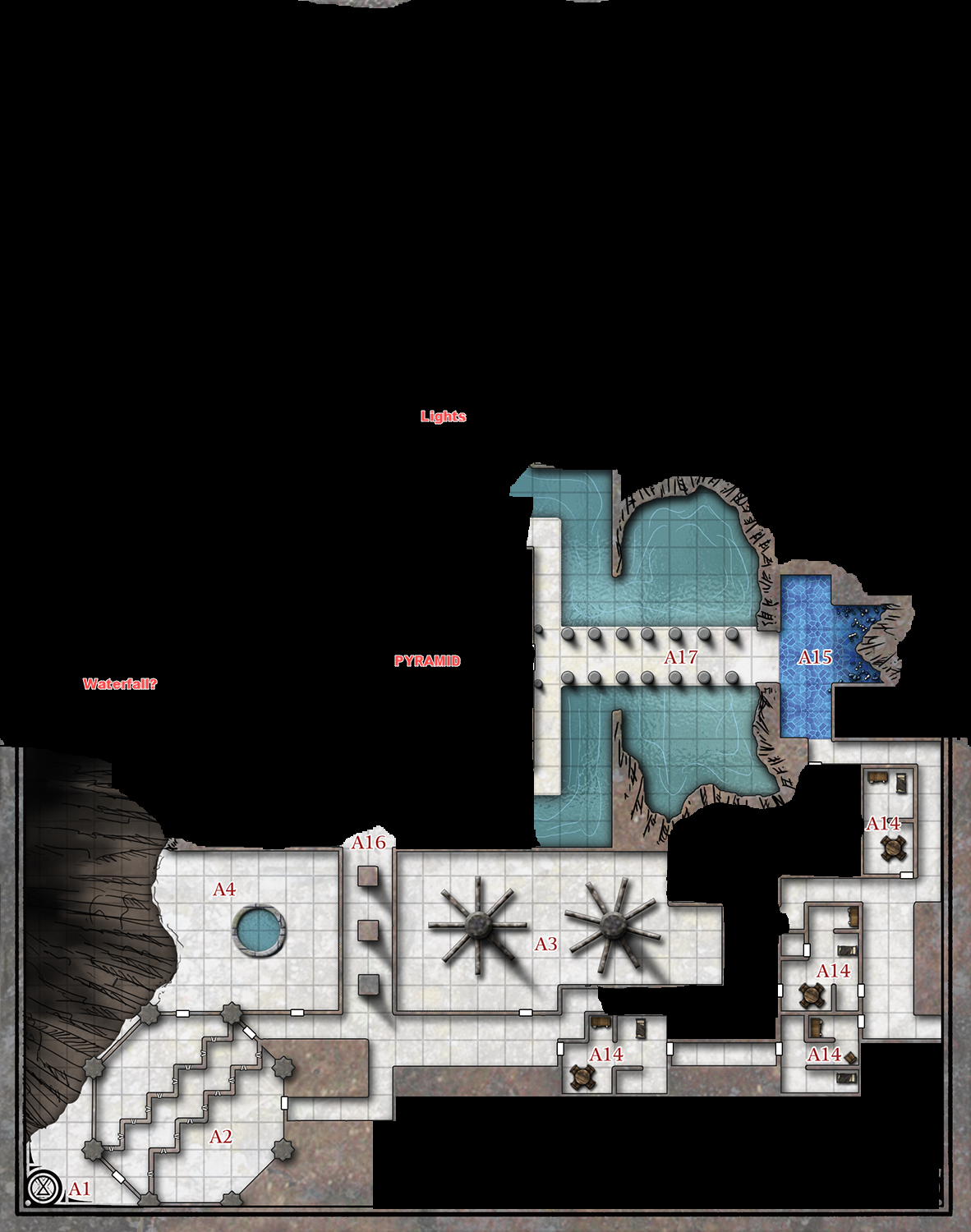
temple of howling hatred (post-2)
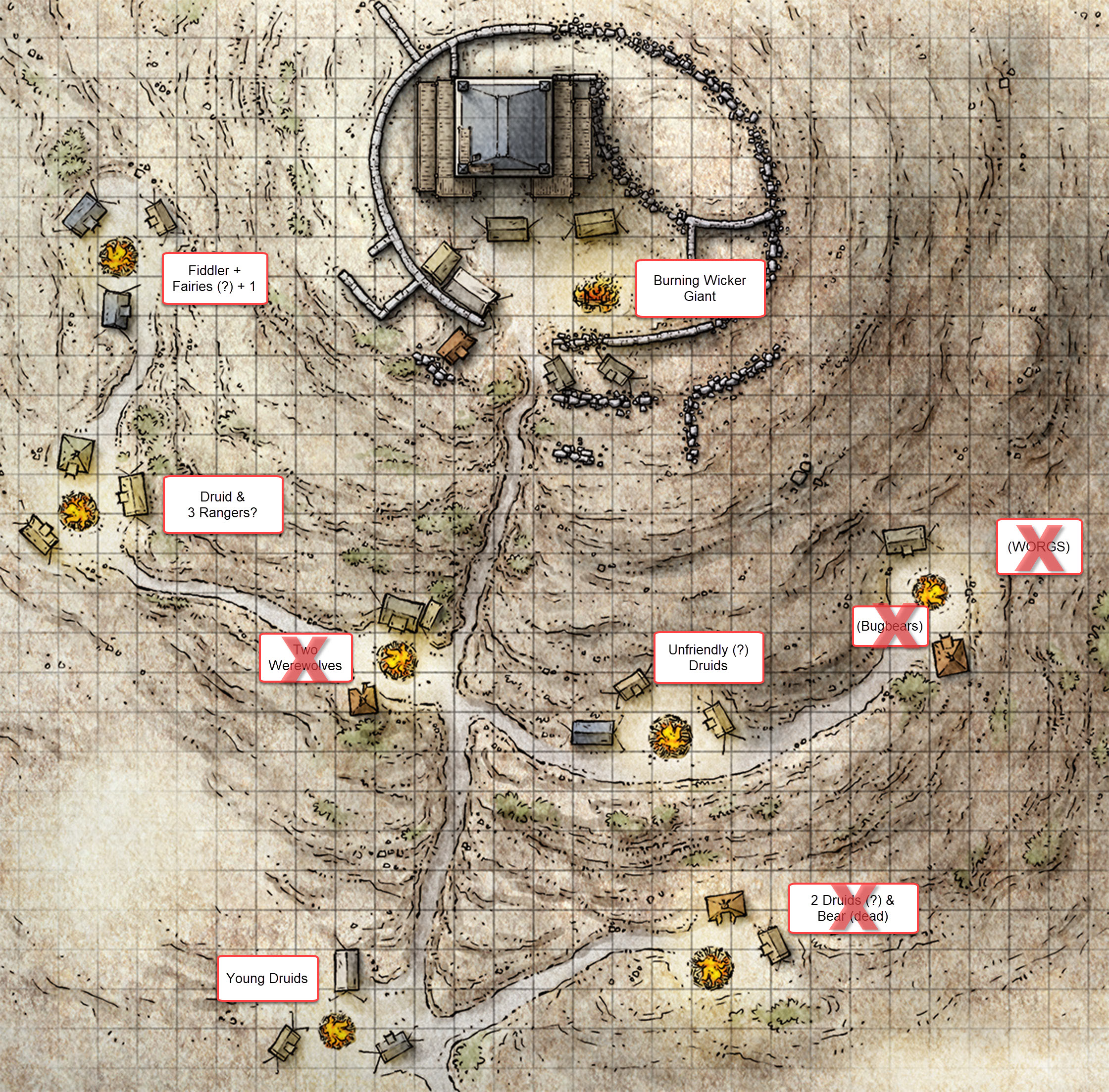
Area in the Air Temple cleared by the party by the end of the game, on a map I shared with them.
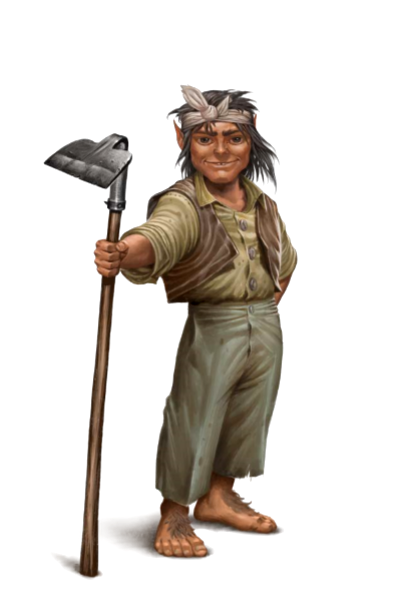
Bero Gladham
Bero Gladham, captive of the Air Cult, whose wife was taken “below” (art source unknown)

The quarters area allows a couple of paths through it, which meant the party bypassed the temple room where there are honest-to-gosh hostages, including a halfling farmer whose wife was taken “below” with some other prisoners. Two things here: one of missing is Deseyna, one of the Mirabar Delegation, which remains a weak motivator narratively, but our party has bought into it. Second, it was not until I was doing much later review of the Howling Caverns (the Air node) and had come up with a picture and token for the missing wife that I realized I’d create a mixed-species marriage, halfling and human. Vive le difference and all that. I wondered if anyone would notice or make note of it.

(When the party eventually got there, they did in fact remember this dude, for a variety of reasons we’ll get to shortly.)

I’ll say it again: add life to NPCs, especially ones who will connect the tissue of the campaign together. They make it become about so much more than capturing / preventing capture of the Mystical MacGuffin, and give the players people to root for and serve on behalf of.

Anyway, they missed these guys, though I blacked out that area of the map when I gave them a review of what they’d explored so far, and Ahtayir spoke of other “slaves,” so there was a decent chance they’d be back through again.

I Dream of Genie
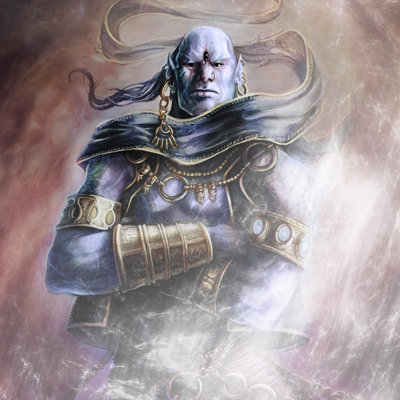
Ahtayir, as I portrayed him (source unknown)

(I picked an alternative image for Ahtayir than the out-of-the-box djinn image the game provides. In part it was because I didn’t want to be that completely obvious. In part it was because I liked this image.)

I was worried about Ahtayir for quite some time. He’s tremendously powerful, and can be used as a weapon against the players that might end up killing one or more of them.

I did have him snarl at Aldrik (since it was the king of dwarves here that enslaved and failed to free him, and that’s one of Aldrik’s ancestors, though the party including Aldrik doesn’t know that). 

That said, Aerisi, by refusing to blow the horn and give him another order, has perpetuated his slavery. Ahtayir’s smart enough to realize that the party can upend the situation here, so he’s happy to give them info as to where Aerisi is, since nobody has commanded him not to.

Ultimately, I decided that while Ahtayir had a serious mad-on for Aerisi, he wasn’t going to be too fond of the PCs. In part, that’s because of whatever jiggery-pokery was going on with Aldrik. In bigger part, though, he was a djinn, an angry djinn, and the concerns of mortal-kind were going to be pretty low on his list. I was sure, though a creature of Elemental Air, he was no fan of Yan-C-Bin, and would be happy to see that Prince get a metaphysical bloody nose, but if the whole party died in the process, that would be little not-actually-skin off of his nose.

Some dialog I worked up for Ahtayir:

To the others: The Endless Task Continues. She Who Orders It must be obeyed, as was he before her. To maintain the city, to free it from the crushing rock, to repair that which passes and craft that which was planned. So he spoke the words, never rescinding them, so she continues to speak them, so I obey.

To Aldrik: You! You, son of the foulest slime, smoking flame, weakest of gravel! You dare to — oh … ah … not you. Apologies. You are of his blood, but not him. Ha. Of course. Your race is like fireflies on a summer day.

In general: If you speak to She Who Orders It, perhaps you could persuade her to free me from my toils, I would richly repay any such a favor.
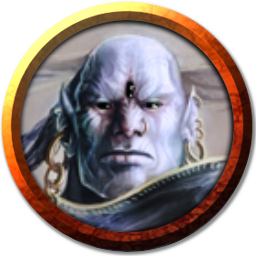
Ahtayir token
Ahtayir token

Ahtayir is actually a fascinating character. Imagine being a djinn of nearly unlimited power. He has the option, if pressed, to bargain with Wish spells, though the players were daunted enough not to try that. But because of the rules of summoned djinni, he must serve. And the service he was placed under by the King of Besilmer, thousands of years ago, was to keep Tyar-Besil under repair.

Honestly, he’s kind of slacking off, some, given the disrepair of some areas. But the only one giving him guidance these days is Aerisi, so his remit isn’t going to expand beyond the Air Temple area, and she’s not going to be focused enough to realize that he could theoretically have the whole place covered in gold and shining in the blink of an eye.

Ultimately, the relationship between Ahtayir and the party was, and could only be, transactional. You promise to help free me, I’ll tell you where to go. Anything more than that would get into dangerous territory for the players, and I was just as glad that they didn’t press the matter.

(The players were actually pretty smart in being nicely deferential to him. It made a nice contrast to their increasing contempt for cultist mooks.)

At least that’s how I played it. I could see a deeply embittered and mistrusting djinn who might not treat the party well. Or one who felt himself a loyalist to his current master, Aerisi. My Ahtayir was, effectively, helpful (out of self-interest). Figuring out, in advance, the motivation of such a creature can send the game in a variety of directions.

Bits and Bobs

Yan-C-Bin
Yan-C-Bin

Part of peeling back the onion-like layers of elemental evil in this campaign is learning about names. They had already heard of Aerisi (though only some dreamscapes had given them any hints as to who that was), and now they started hearing about Yan-C-Bin, the Prince of Evil Elemental Air (and there’s a business card for you).

As this kind of information was slowly revealed, it helped create an atmosphere where the players felt like they knew more about what was coming — but also had more to worry about. Win-win.

It took me going through this temple four or five times to realize that the water level controls that Aldrik was hooked to let the party hypothetically drain the river and get to the treasure (stone golem notwithstanding). It will be interesting to see if anyone remembers that. I might have to nudge them a bit if they pass by.

(They never do, and I never really give it further consideration.)

We were a little early in the evening, ending at the door of the pyramid (after the party not only quickly dispatched the wyvern and its spell-casting rider — the latter before her turn in the initiative even came up, and former quickly harvested for its poison sac), but that seemed the best spot to wrap with the combats coming up inside the pyramid.


<< Session 32 | Session 34 >>

D&D 5e Rules – Spells: Stinking Cloud!

So, how does Tear Gas work in D&D?

Know the RulesPart of an ongoing series of 5e (2014) Rules notes.  See the end of the post for notes on 5.5e (2024) rules.

The first time I DMed this, I did it wrong. Which, given it was an NPC I had thought I had well in hand, is not a cool move on my part.

So here it is, done right.

Tear Gas Effects: Symptoms, Complications, Treatment & Prevention

Here’s the core of the spell’s effect:

Each creature that is completely within the cloud at the start of its turn must make a Constitution Saving Throw against Poison. On a failed save, the creature spends its Action that turn retching and reeling.

When I first played with this, I ruled that this still allowed Movement (since that isn’t mentioned), but, just as anything that takes away your Action also takes way your Bonus Action, the only thing you could do was retching and reeling.

But that’s not what it says. The Stinking Cloud doesn’t take away your Action, it dictates your Action (retching and reeling). I.e., your Action is set, but you still have your Bonus Action (and Reaction, for that matter).

Or, as the Sage Advice Compendium puts it:

The stinking cloud spell says that a creature wastes its Action on a failed Save. So can it still use a Move or a Bonus Action or a Reaction?

Correct. The gas doesn’t immobilize a creature or prevent it from acting altogether, but the effect of the spell does limit what it can accomplish while the cloud lingers.

Movement is a bit problematic, of course. The area covered by Stinking Cloud  is Heavily Obscured.

heavily obscured area–such as darkness, opaque fog, or dense foliage–blocks vision entirely. A creature effectively suffers from the blinded condition when trying to see something in that area.

Or, presumably, out of that area. Blinded, in turn:

A blinded creature can’t see and automatically fails any Ability check that requires sight.

Attack rolls against the creature have Advantage, and the creature’s attack rolls have Disadvantage.

Note the offsetting penalties — trying to Attack someone inside the cloud has to deal with Heavily Obscured conditions, and so is at Disadvantage (as though Blinded). But the target is, themselves, Blind to the attack, putting them at a Disadvantage. That makes, even without all the loud retching sounds, attacks on a figure within a Stinking Cloud even money. (A figure inside the cloud can’t Attack if they fail their Save, except through a Bonus Action, but with that Bonus Action, or if they make the Save, theoretically, they are also a wash to attack a target outside the cloud, unless that target is using Stealth or a Dodge or something of that sort.)

I might House Rule that, combined with the Retching and Reeling, being Blinded in such a circumstance would lead to disorientation — perhaps another Save (Intelligence?) to move in a desired direction?

As a final note, the rules say “completely within the cloud” for the nausea effect. So if you are playing on a grid, and are using a true circle for your template (physically or on a VTT), any one in a partially covered circle isn’t affected. Which is why I prefer to have a template that fills in complete boxes on the grid, to avoid the ambiguity.

dnd 5.5/2024Any changes here in 5.5e?

The rules in 5.5e (2024) contain several changes to Stinking Cloud:

You create a 20-foot-radius Sphere of yellow, nauseating gas centered on a point within range. The cloud is Heavily Obscured. The cloud lingers in the air for the duration or until a strong wind (such as the one created by Gust of Wind) disperses it.

Two changes here: first, there’s no mention of the cloud spreading around corners (though that seems like something still to naturally consider; a cloud of gas doesn’t respect cover). Second, only a “strong wind” now disperses it, but apparently that’s instantly, not after a number of rounds.

Each creature that starts its turn in the Sphere must succeed on a Constitution Saving Throw or have the Poisoned condition until the end of the current turn. While Poisoned in this way, the creature can’t take an Action or a Bonus Action.

The requirement to be completely within the cloud to be affected is gone, which increases the radius a bit and also helps with Large creatures. The “retching and reeling” color text is, alas, gone, but we now have the Poisoned condition explicitly called out and Bonus Actions have now been sealed off, too.

Also, there’s no mention of the 5e “creatures that don’t need to breathe or are immune to poison” auto-saving. The latter would still (kind of by definition) be immune (suffering only from the Heavy Obscurement and effective Blindness), but the former are, like tear gas victims, deemed Poisoned (if they fail their Save) by contact with the gas, not just inhalation.

Overall, an increase in impact for using the spell.

Princes of the Apocalypse, Session 32: “Air Apparent, Part 1”

A shift from Chapter 3 to Chapter 4 of the campaign, and beginning a very long dungeon crawl.

Princes of the ApocalypseThis is part of a series about my DMing Princes of the Apocalypse, a D&D 5e adventure by and copyright Wizards of the Coast.

Table of ContentsThe Party

There will be SPOILERS. If you are playing in a PotA game, please don’t read this. If you are DMing a PotA game, or are a DM who wants to see what the ride was like … read on!


GM Recap

Session 32 (Days 33-34)

  1. Howling Hatred symbol
    Howling Hatred symbol

    The party the next day traveled to the Sighing Valley, passing the apparently deserted Feathergale Spire, to the passage in Knifepoint Gully. Moony took the four necklaces of the Fifth Key and, despite the vision of a terrible Eye watching him, caused the mystic barrier before them to become passable.

  2. The party descended several miles to the edge of an underground dwarven city — Tyar-Besil — a place of ruined buildings, statues, a step pyramid, strange lights … and to what they came to realize was the Temple of Howling Hatred.
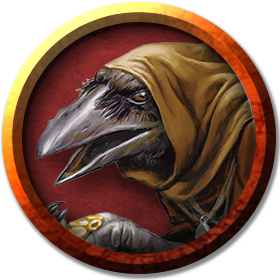
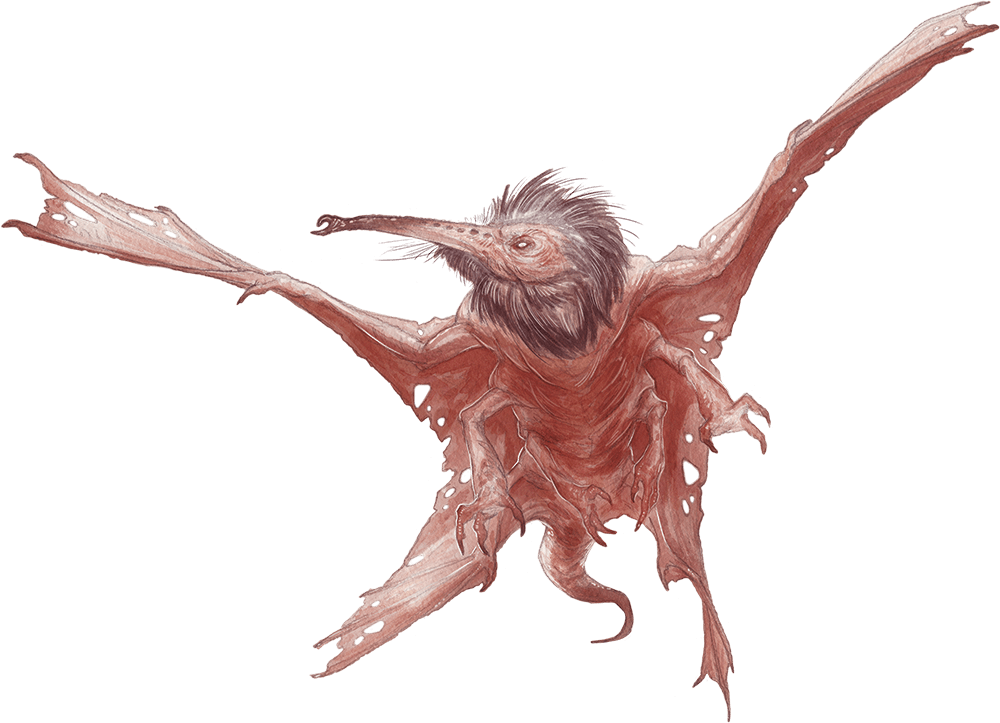
  3. Kenku
    Official Kenku Token

    The first barrier was a gatehouse, centered on a passage lined with arrow slits. Through them, the party was attacked by kenku — but that spread to an adjoining room where cultists were playing horrible music on humanoid bone flutes, led by a very handsome (but cranky at being interrupted) half-elf. Theren’s fireball took out the wind orchestra, and the half-elf magically transported himself away.

  4. In an adjoining corridor, they found cultists starving to death, tied to great dwarvish obelisks. When questioned, they were apparently there to be taught how to survive on air alone — and insisted on their lessons. They party left the wretched creatures there.
  5. A cracking whip and scream nearby brought the party to a room with two great stone capstans, one of which was manned by apparently enslaved commoners … and the chained form of their lost comrade, Aldrik Oakhide!

Player Recap

But They Were All Bad

The groups have dreams. Mostly prophetic and bad. 

As the party wakes and has breakfast, the other groups stop by to say goodbye. The young druids will be heading to Summit Hall and the cranky druids will stay here to bury the dead and purify the site and then explore the valley. Sauruki surprises Urshnora by asking to join the young druids. 

It is very warm and only gets hotter. Moony begins to pant and they break for a rest. William feels called to check out the tree with the arrow. William is being watched, there is a dark clad figure in a copse of trees he laughs and then disappears into the darkness of the trees. 

He feels a movement in his pocket. It is his raven token. It launches from his head and circles his head three times and flies off Northeast. He calls to the others and takes off after it. He comes upon a startling scene. There is another copse of trees. It looks like an animal has gotten caught in it. Small dog size but with bright colors with a bit of green smoke. 

Nala comes down the hill and talks to him in Draconic. Help Help! Stuck, squirrel! 

Smell something acrid. Nala introduces herself and asks it to not use its breath weapon. He shuffles a bit, but the smoke dies down. They move the logs and he is free. “Not Stuck” Other than a bit of bruised pride, he is unhurt. 

They make Red Larch hot and sticky. They check into the inn and then head to the bath house. Haeleeya greets them. She is in the midst of packing. With her daughter dead, there is nothing keeping her in Red Larch. Theren, Faith, and Moony check out a new store, Magister’s Market. It has taken over the old barbershop Gaelkur’s. They pick up some potions and Moony buys a new magic bow. Rations are purchased. Plans are made. Sleep is had.

Early in the morning, the party heads to the canyon near the Feathergale Spire. The air cultist’s camp is still abandoned. A short ways down the tunnel the group comes to a large boulder blocking the path. Like the entrances in the earth and water temples, there is an elemental mark on the  rock. Moony collects the keys from the party members and activates the entrance. The boulder is both there and not there, but the group can pass through. 

Faint sound of discordant flute music. Two large dwarf statues form an arch into the dwarven city below. After looking around, they set off down the path through the arc. The path is 10 feet wide and zig-zags towards a closed door at the other end. There are arrow slits along the wall. When the party is half way through, some of the arrow slits open up and the kenkus attack

William hops the wall to the left. Nala does the same on the right. Mooney follows Nala.

Theren opens the door at the end of the hall and sees a large group of initiates around a pool. A handsome elf stands and says, “What the hell are you doing here?” Theren’s immediate reaction is to drop a fireball on the group. The initiates are all dropped by the fireball and the elf is singed. “Well, shit!” he says and disappears.

William continues after the remaining kenku from the room and steps through the door. He is just in time to see the remains of Theren’s attack. Faith comes into the room from the middle door. The figures on the floor were wearing elaborate feathered costumes and bone flutes.

Moony and Nala come through the right hand door and notice an individual in initiate robes chained to an obelisk. It looks like they are starving to death. There are more obelisks that might also have people chained to them. The initiate explains that they are being trained to live on air. 

While they are deciding what to do next, there is a crack of a whip and a woman’s scream. They move down the hall and enter a larger room with two stone wheels with large spokes. Prisoners are pushing the wheel as air priests stand over them with whips. There is a loud grinding noise deep below.

Game Notes

The Mystery of Aldrik’s Return!

This episode was the first run after my son was back from college. The timing seemed really good — the party was most likely headed down to the Temple of Howling Hatred where, all the clues indicated, his character Aldrik had been taken when the party was last at Feathergale Spire (back in Session 21). 

Why had he been taken?

Bwah-ha-ha.

Initially, it was just kind of a hand-waving “I’ll think of a reason” why Aerisi Kalinoth’s voice was heard from within an air elemental, knocking everyone around (including the Feathergale Knight leader, Thurl) and claiming Aldrik as a “prize.”

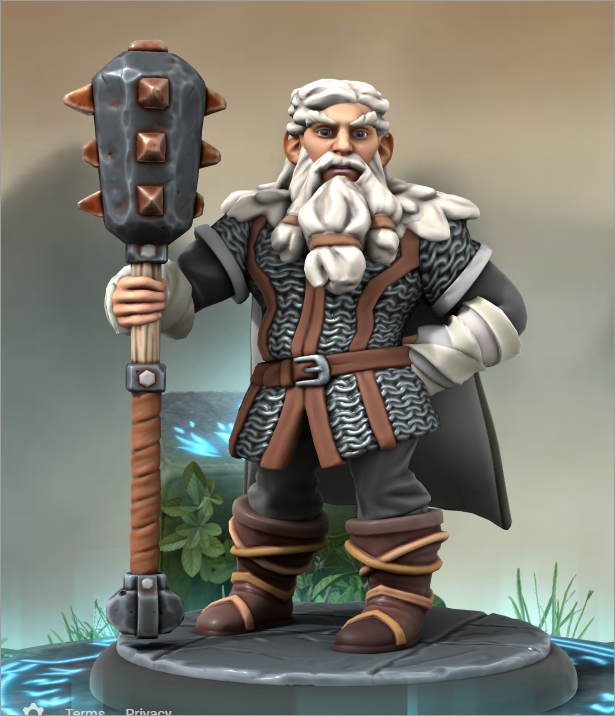
Aldrik
Aldrik, before he got snatched.

Ultimately, I decided he was the last descendent of the royal line that ruled Besilmer and its capital, Tyar-Bessil — the underground Dwarvish fastness that represented the next level of the adventure. (There was also, at this point, the idea that he might actually be the reincarnation of the king of Besilmer, Torhild Flametongue.)  The idea was that, as heir / reincarnation, Aldrik would have certain powers over the city itself, which each prophet would want on their side in their internecine warfare to be the top dog and their master the top elemental prince.

Thus, by the way, the double pun in the episode title.

So it was really great having the son sit in as we started up the session …

Wrapping Up Scarlet Moon Hall

Leading into this episode, I went sort of hog-wild with dreams for the different characters. This was a tool I (probably over)used a lot to drop clues and hints in laps, both to guide the PCs and party, and to promote engagement as, hopefully, they would then either fret about what they’d seen or, when the dreams started gelling with reality, freak out.

(I also had handed Aldrik’s player two pages of fragmented memories of what had been going on with him for the last two weeks of game time. He rolled his eyes at me.)

A last word (ha!) on Urshnora

Urshnora token
Urshnora

This wraps up Chapter 3 of the book (the four keeps) and begins the transition to Chapter 4 (the four temples). As such, I decided it was time for Urshnora to bow out, at least for the moment. She’d been a great prod, foil, and potential threat for the characters, and literally until the last moment in the previous episode I wasn’t sure if she was going to try for the four necklaces or not.

In the end, I decided to make it a bit of a redemption story, and have her decline the temptation. On the other hands, she was heading off with the Young Druids, who had sort of become her pets, and I could see her starting her own cult with them. 

(I also had some ideas about their returning to Summit Hall — their avowed destination to warn them about what had been going on — and her being slapped in irons as one of the Rivergard crew, something the players might have to deal with later.)

The Cranky Druids

Having lost their chance (lucky for them) for the Rite of the Wicker Giant, they make the decision to stick around for a few days and try to ritually purify the campground and hilltop of the death and destruction and evil fire magic that has seeped into it. Good on them!

(I liked coming up with wrap-ups for these folk — NPCs need an end to their story on stage, too.)

Sauruki
Sauruki, of the Cranky Druids

The only exception there was Sauruki, who volunteered to go with Urshnora and the Young Druids. That’s because he’s a spy there, sent by the Water Cult (presumably from Rivergard Keep, though he could have been down in the Temple). He’s recognized Urshnora (I don’t recall if she’d recognized him), and so it seems like a good chance for him to get out of the current spy business.

Some Druidic Amusement

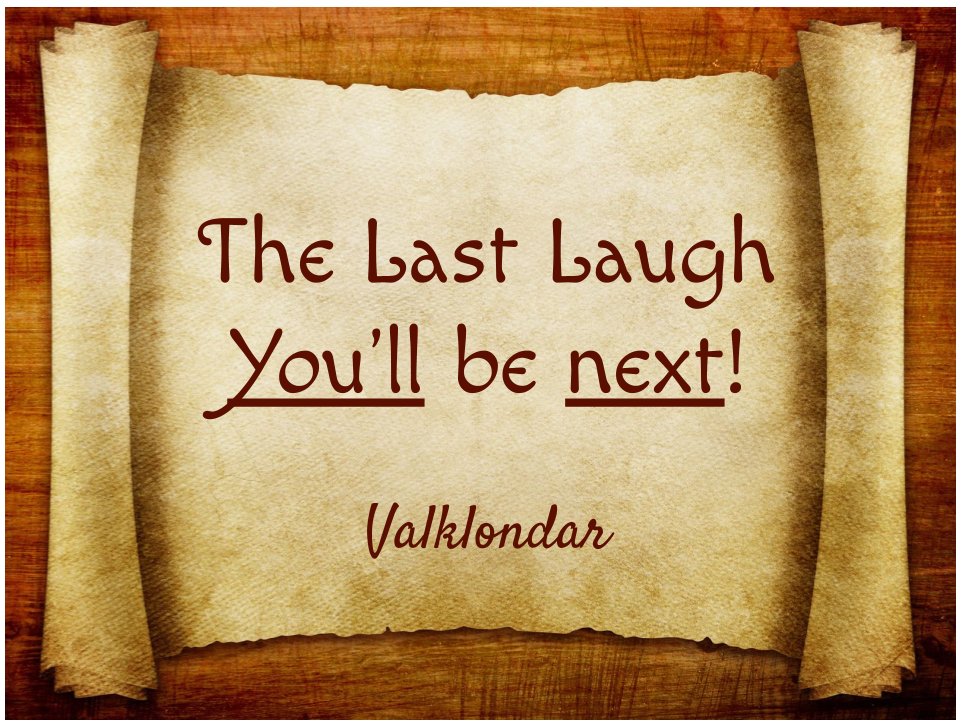
As part of dinging to 7, William the Druid had taken on the Drakewarden subclass, which entitled him to a magic Drake Companion, which tied into a dream he had about a dragon-like creature in trouble. That allowed for a side trip to the “Last Laugh” location again. 

As a figure in dreams, and possibly in reality, I dug up a figure (and made a token, of course) for Valklondar.

Last Laugh” was, of course, supposed to be a Level 1-2 side adventure out of Red Larch, and if done in proper sequence, it would play nicely with the “Lord of Lance Rock” thing (featuring Oreioth the Necromancer). That they had come to it at Level 6 instead made it amusing and gave me the opportunity to play with the PCs a bit: in this case, William, who had taken on the blessing/curse of the arrow. He was having “Last Laugh” dreams each night, mostly hinting at Valklondar the Hunter of Undead wanting to (a) find Oreioth and hill him and, further, (b) find Renwick the Lich and kill him. 

Checking out the Last Laugh tree gave an opportunity to find and rescue the little Drake, who was very cute and fun and all fine, except it took up about 45 minutes of play time.

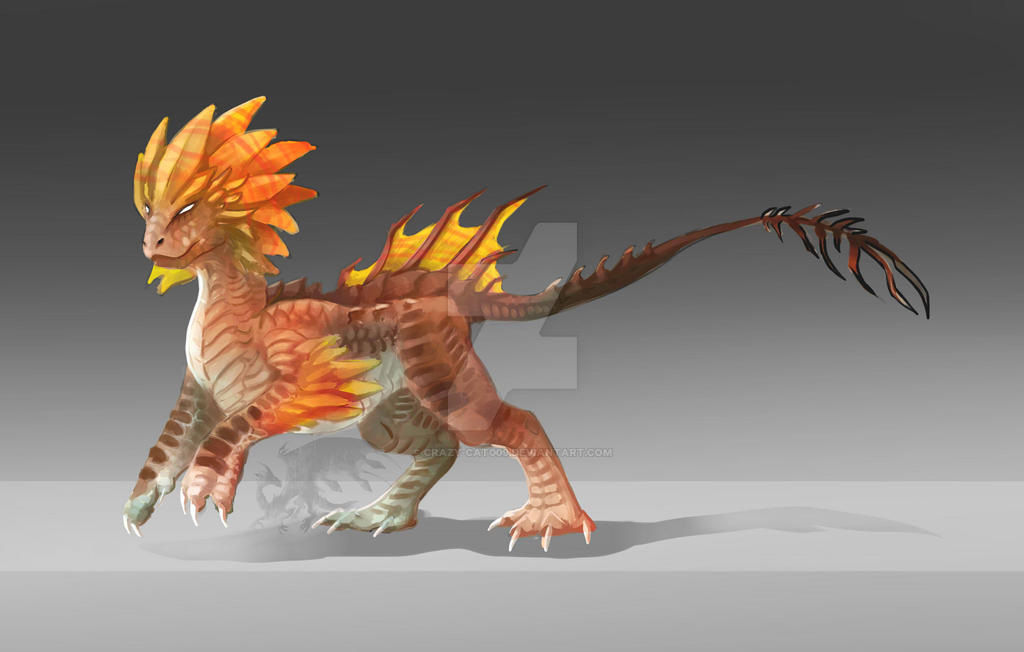
Lion Drake
Lion Drake (by crazy-cat009)

A Brief Side Trip to Red Larch

Shopkeeper
The Mysterious Shopkeeper

The party naturally headed back to Red Larch to sleep and restock, which was also fine, because I decided to set a proper magic store there for their supply needs — one operated by the minor deity Azuth, known here as the Shopkeeper. He’d been involved in the sorcerer’s origin story (as I realized I really hadn’t done a lot with that), and I saw this as an opportunity to give that character some plotty things to do. (Which didn’t really work out, but, hey, I tried.)

Plus, frankly, I wanted the party to be able to spend some of the massive amounts of loot they’d gotten, in a way that didn’t actually involve a trip back to Waterdeep. Yes, magic stuff was still rare and dear, but there’s a difference between that and inaccessible unless actually planted in a treasure chest.

The shop — located in Gaelkur’s now-unoccupied digs — was called “Magister’s Market” (a clue as to Azuth’s identity, as he’s also known as the First Magister).

Haeleeya Hanadroum
Haeleeya Hanadroum

It was also a moment for me to be inspired and give them a chance to follow up with Haeleeya Hamadroum — their friend from the bathhouse in Red Larch, and mother of Savra, who’d died kinda-tragically at Feathergale Spire protecting Thurl. They’d broken the news of Savra’s death last time in town, and, on returning this time, found Haeleeya packing up her shop to move back to the south where she still had family, with no ties keeping her in Red Larch.  Some nice little drama there.

The Temple of Howling Hatred

Oreioth's vision of the Evil Elemental Eye
Oreioth’s vision of the Evil Elemental Eye

The next day was a quick (in real time) hike back to Feathergale Spire, the Sighing Valley, Knife Edge Gully, and the mystic door that would take them down to the Temple of Howling Hatred. Throw in some warning visions of the Evil Elemental Eye when the Rogue was using all four necklaces as the Fifth Key, and it was good stuff.

Okay, so here’s a problem I didn’t realize was a problem — even in working through this dungeon ahead of time.

Oh, say, can you see?

They are entering the underground Dwarvish city-fortress of Tyar-Besil, which has been divided into four parts, one for each of the cults. 

The part they were entering, under Feathergale Spire, was the Temple of Howling Hatred, the location of the Air Prophet Aerisi Kalinoth. All good enough.

While the Earth and Fire temples are very dungeonesque — tunnels through rock — and the Water temple, despite some open areas, is similar, the Air temple is kind of a weird mess. The flavor text speaks of being able to see the high vaulted ceiling and a dwarvish city built beneath it. There’s no real provision for the players to start sketching a map at this point, and you really don’t want them to, because it’s unclear in the extreme what they can actually see beyond the step pyramid of the central throne room. 

There are some areas (rooms, especially on the south and northeast) that are clearly meant to connect floor to roof, and other areas which are building under the open vault, and others which are open courtyards surrounded by walls. But what is what is not obvious, and the implications for non-linear PC movement (“We climb onto the wall — what do we see?”) are poorly considered or described.

A panorama of the interior might have been nice, but none is provided, dagnabbit.

The very first encounter is a good example of this. The party, descending a great underground ravine/cavern, along a dodgy path, catches a glimpse of the city in the distance (despite most of it being dark), the great pyramid, buildings … 

a lost dwarven city lays in ruins beneath the glittering cavern vault. Broken statues stand in the midst of empty plazas, staring sightlessly into the darkness. A huge step pyramid rises at the edge of the precipice, and from the moat that surrounds it a misty waterfall whispers over the chasm’s ledge.

… and then descend to a gatehouse anchored in the walls of the cavern on the right, a deep cleft to the left. 

(Description just given aside, there’s no indication once inside the quadrant’s rooms that any of that stuff off to the left, like the waterfall, or even some of the high views described, should be visible to the players coming in. I shooshed them quickly to the gate, and nobody seemed to mind.)

The cavern roof here is 15 feet high. The gatehouse — a weird octagonal building with a zig-zag passage down the middle full of arrow slits — rises up 12 feet. So clearly there’s a gap at the top of three whole feet, which is kinda weird because that’s easy for 6th level players to scale and so bypass the gatehouse.

But wait, does the gatehouse have a rooftop? If so, any rogue (heck, most characters) could climb up and crawl over it. But if it doesn’t have a rooftop, then while inside the PCs can confront the arrow slit traps by climbing over the interior walls and taking out the Kenku on the other side (or even stand on the wall and shoot down at them). 

It’s goofy and makes little sense, and made the initial encounter kind of weird and clumsy, though it did end up splitting the party into three pieces, which is always good for mischief-making.

A few more encounters

Windharrow token
I gave Windharrow a picture token, because he just had a name token, which is goofy.

There’s also a fun set piece near the entrance, a room full of (very bad) flute players, training to entertain Aerisi, under the tutelage of the bard Windharrow. The text’s goal is some fun chit-chat, mistaken identities, perhaps the party using the situation to get a bunch of costumes/uniforms to further infiltrate the temple.

Instead, the sorcerer Fireballed the lot of them, killing all the Initiates and injuring Windharrow, who teleported away (per the book) to tell Aerisi about it. Why she doesn’t react isn’t spelled out … I assumed that she had some nefarious plan about using the party or sucking them in and taking vengeance for Thurl’s death or something.

Aldrik
Aldrik, back in his loincloth, having had all his armor and weapons taken.

A (cough) convenient scream at the end pulled the party over to the Water Level Capstan Room, where they found a pair of Air Priests overseeing a bunch of commoners pushing the Wheel of Pain … which included, in golden chains, Aldrik!

(Yup, the son had been in the game all night, and that’s how long it took them to find him. Sigh.)

Maps and maps and maps

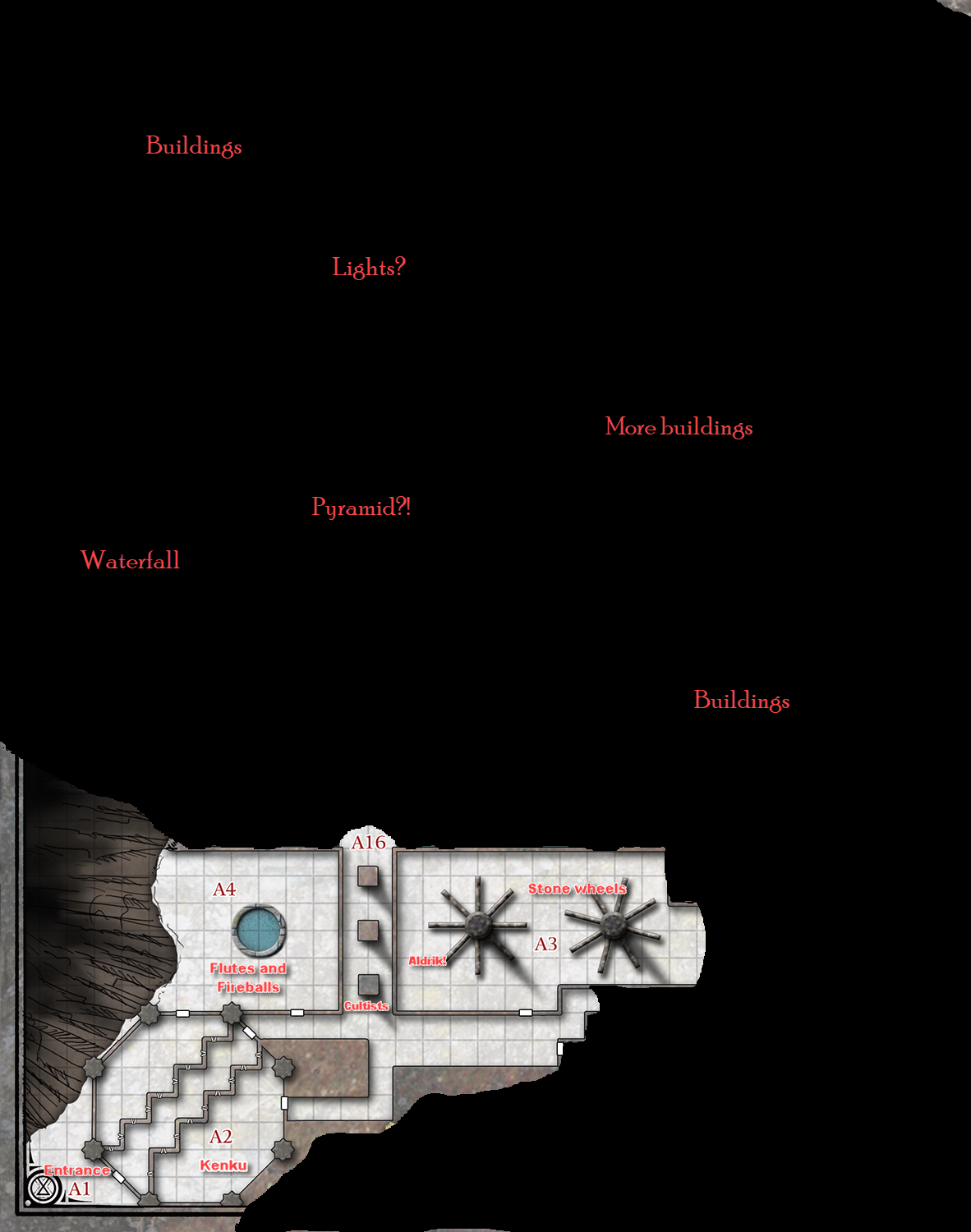
I continued to refine the “what you’ve seen” maps for the players. I posted these in Roll20 on the Landing Page, and as part of the “Temple of Howling Hatred” hand-out (updated each session).

temple of howling hatred (post-1)
What the party had found by the end of the session (with distant glances of what’s further into the massive cavern).

Yeah, that crazy guardhouse …

Bits and Bobs

It’s kind of weird that my GM Recap skipped over the whole first half of the game. I don’t recall why, unless it was one of those rare instances when I didn’t do my recap notes right after the game wrapped.

As of this episode I kind of changed how I was titling each session. Rather than come up with a new pun for each week (because, honestly, even I was starting to run low on elemental puns), I came up with a title for each of the Temples, and then (gilding the lily) a subtitle for the episode.

It’s a work in progress.

Worth noting in passing that, with the Haunted Keeps taken down, by definition the weather problems are accelerated. Indeed, they party had to deal with a brief Heat Wave going from Scarlet Moon Hall to Red Larch, leading to some Exhaustion being doled out.

Another brief encounter were some truly creepy initiates starving themselves to death whilst shackled to pillars. The cult stuff is all kind of weird (DMs should definitely play up the creepifying aspects), but the Air cultists (above and below) kind of take the cake. Which cake they then refuse to eat, wanting to learn to subsist only on air. 🙄


<< Session 31 | Session 33 >>

D&D 5e Rules – Spells: Spiritual Weapon!

It’s a spirit! It’s a weapon! It’s a dessert topping! It’s … kind of a messy spell that people make bad assumptions about.

Know the RulesPart of an ongoing series of 5e Rules notes.

Since I’ve had players pick this, because it sounds very cool (and it can be), I had to do some digging into some of the aspects of Spiritual Weapon that are not completely obvious.

Spiritual Weapon is weird

No, seriously. But that’s because people see “weapon” and try to (incorrectly) apply all sorts of melee combat weapon rules and assumptions to it. It’s not:

Spiritual Weapon is a multi-round melee attack spell
that looks like a weapon because that’s really cool. 

If you just keep that in mind, you can ignore the whole rest of this post.

The Nuts and Bolts

Base spell:

Casting Time: 1 Bonus Action
Range: 60 feet

Spiritual Weapon token

You create a floating, spectral weapon within range that lasts for the Duration or until you cast this spell again. When you cast the spell, you can make a melee spell attack⁠⁠ against a creature within 5 feet of the weapon. On a hit, the target takes force damage equal to 1d8 + your Spellcasting Ability modifier.

As a Bonus Action on your turn⁠, you can move the weapon up to 20 feet and repeat the attack⁠ against a creature within 5 feet of it.

The first confusion comes when wondering whether on Round 1 you simply cast it as your BA, and then need to take a regular Attack action to wield it, or not. The consensus wisdom out there is “or not”:  the attack is also part of the Bonus Action (as it is in subsequent rounds), which  means the following “what can you do with it when?”:

Round 1: As a Bonus Action: cast up to 60 feet away + attack.

Rounds 2ff: As a Bonus Action: move it up to 20 feet + attack.

And that lasts either until you dispel it or 1 minute (10 rounds).

These Are Not the Weapons You’re Looking For

“But! But!” people sputter, “It’s a weapon attacking! That has to happen during a normal Action as an attack! You can’t have a spell doing a weapon attack and then do a different weapon attack or even a spell-cast, on the same turn!”

Yes. Yes you can. Because what you see isn’t what’s really happening. It’s not actually a weapon, not matter what it says in the name.

these are not the weapons you are looking for

Think of the Spiritual Weapon as a deconstructed magical attack spell. Nobody would question the ability to manifest a magical zap spell and attack with it that very same Bonus Action. Which is what you’re actually doing with Spiritual Weapon, but the magical zap spell looks and moves like a weapon, which confuses the heck out of people, because they want to treat it as a glowing animated physical weapon that does physical damage.

But it’s not. It is, quite literally “a floating, spectral weapon” that does “force damage” — and the likelihood of hitting with it has nothing to do with your physical melee abilities (Strength and Dexterity), but your melee spell abilities.

So while you’re doing Spiritual Weapon, what else can you do?

Well, on the round you cast it, that only burns your Bonus Action. So you have your full normal Movement and an Action to work with.

Except, regarding casting multiple spells in a turn, remember …

If you want to Cast a Spell that has a casting time of 1 Bonus Action, remember that you can’t cast any other Spells before or after it on the same turn, except for Cantrips with a Casting Time of 1 Action.

So on that initial round when you cast the Spiritual Weapon, you can’t do any other spells except a 1-Action casting time Cantrip. You can still move around, shoot your bow, swing your sword, Hide, etc.

On subsequent rounds, though, you can be casting spells during your normal Action, because the move-and-attack of the Spiritual Weapon is not a casting of a spell. As noted in the Sage Advice  Compendium (p. 12)

Until Spiritual Weapon ends, it gives you the option of controlling its  spectral weapon as a Bonus Action. That Bonus Action does not involve casting a spell, despite the fact that it’s granted by a spell, so you can control the weapon and cast whatever spell you like on the same turn.

In that same context, also note that Spiritual Weapon is not a Concentration spell. So even if the caster is attacked or otherwise distracted, that does not affect the spell, and casting the Spiritual Weapon does not interfere with other Concentration spells you already have up. (One could even argue that, should the caster go unconscious, the Spiritual Weapon would simply remain there, floating — it can’t attack without command — until the caster was revived if within the 1 minute spell duration.)

There Are No Stupid Questions About Spiritual Weapon

Well, maybe a few.

Does moving away from a Spiritual Weapon trigger an Opportunity Attack?

No. The Spiritual Weapon is not a creature of itself (it has no volition or reaction).  And it only attacks during a Bonus Action: Opportunity Attacks are a Reaction.

Is this a magical weapon I see before me?

No, because it’s not a physical object, thus not actually a weapon.

Again, from the spell text:

Clerics of deities who are associated with a particular weapon (as St. Cuthbert is known for his mace and Thor for his hammer) make this spell’s effect resemble that weapon.

Spiritual Weapon token
Another Spiritual Weapon token

“Effect resemble.” The shape and appearance of the SW is a “spell effect,” not actual substance.

Also, it’s an Evocation spell, one to “manipulate magical energy to produce a desired effect”; it is not a Conjuration which “involve the transportation of objects” or a Transmutation which can “change the properties of a … object.” Again, no object, just effect.

Remember that deconstruction mantra? If this was summoning a magical zap bolt that flitted about the field of combat, it would clearly not be thought of as a magical weapon. That’s basically what Spiritual Weapon is, a spell that resembles an actual weapon because that’s cool.

Can someone hold onto the Spiritual Weapon as it’s moved and essentially fly like Thor?

(People have actually asked this question.)

No. As just noted, the SW is a spectral weapon. It has no substance to grasp or hold onto. It invokes Force damage, but you can’t grab onto that.

Can a person move through the square occupied by a Spiritual Weapon?

Yes. The rules about moving through squares occupied by other creatures only apply to creatures. The Spiritual Weapon is not a creature. It has no substance to block someone, only doing Force damage when it attacks (which, to make it worse, it can’t do during the part of a round when someone would be moving through its square).

Now, that said, a lot of people would be naturally hesitant to do such a thing, even if they knew the spell. So there’s some role-playing involved here, and I’d suggest the average peasant / Kobold / etc. would just sort of naturally avoid running through a square occupied by a mystical floating weapon (or a spectral appearance of same) unless they had no other choice.

For that matter, there’s nothing to stop a person (friend or enemy) from ending or pausing movement in the same square as the weapon, nor from the caster from moving it into an occupied square (again, either by a friend or an enemy). It would not make attacks by the Spiritual Weapon any more likely or powerful, though it might be kind of distracting.

Princes of the Apocalypse, Session 31: “Bats in His Hellfry”

Wherein the party finally, FINALLY, wraps up the fighting at Scarlet Moon Hall.

Princes of the ApocalypseThis is part of a series about my DMing Princes of the Apocalypse, a D&D 5e adventure by and copyright Wizards of the Coast.

Table of ContentsThe Party

There will be SPOILERS. If you are playing in a PotA game, please don’t read this. If you are DMing a PotA game, or are a DM who wants to see what the ride was like … read on!


GM Recap

Session 31 (Day 32) 

  1. The party charged upstairs — first Moony, then Faith — to face the defenses of Elizar Dryflagon. A Flame Wall, then a Stinking Cloud, plus smoke mephits from Elizar’s pipe — held the party in check for a while, but eventually they defeated Elizar and took from his body the Fifth Key.
  2. They found Grund upstairs in the giant-bat-ridden belfry of the hall. He’d been defended by Flix, the sprite.
  3. They rejoined the others down on ground level, where the Guardian who had been pushed off the scaffold had been being interrogated by Urshnora and the various druids. 
  4. They decided to take the rest of the afternoon off to clean up, research the items found, and relax. Urshnora approached Faith and said she was leaving the group, going with the young druids, rather than betraying the party and trying to steal the Fifth Key.
  5. Long Rest. DING! Level 7!

Player Recap

Where there is smoke

Faith finds that the Azer had a finely crafted war hammer and claims it. Below on the ground floor are a couple of injured guards, previously on the third floor, and a handful of magmin. The guards are trying to stay out of site of the hole in the ceiling and the magmin are concentrated on the side near the tunnel, casually burn any wood around. 

The voice we heard outside calls to the group. Are you sure you want to come up hear and beard the lion in his den. I’m sure that William knows the foolishness of that. Moony explores the next floor up. There are several bedrolls but it is otherwise empty. The floor creaks and feels very unstable. As he debates whether to continue up to the next floor, a figure appears at the top of the stairs leading up. Elizar is happy to see Moony and with a wave of his hand a wall of fire springs up between them on the stairs.

Moony comes racing back down the stairs, well-singed. Faith races up the stairs to confront Elizar. She dodges the wall of fire and then decides to charge through it. Elizar is surprised at her appearance and loses concentration of his spell when she attacks him. He back away from her, taking another hit from Faith. He puffs wildly on his pipe and 4 smoke mephits appear around Faith. The Spirit Guardians attack both Elizar and the imps. The imps attack back and blind Faith with burning embers. A Stinking Cloud fills the room and the stairway. The group slowly makes their way into the room and through the cloud. The only clear space is on top of the desk and book case. The group takes aim at Elizar from their elevated perch. The imps and Elizar take damage from the Spirit Guardians until eventually, Elizar dispels it the smoke. Once the bulk of the party can see Elizar, he goes down quickly. 

Loot is recovered and the 5th key is found. A couple of thumps come from above. Faith moves up the ladder to see what is there. As she lifts the trap door a creature streaks bye. The sprite Flix says They’re here! They’re here! and rushes back up. Faith and William follows them back up the ladder. They find a damaged Grund in the corner. As Faith calls out to Grund, the giant bats attack. They are dealt with swiftly and come around unscathed except for the reek of guano.

Everyone returns to the courtyard. The other have captured the guard that was thrown off the scaffolding and questioned him extensively. Gariena has awakened and tell her tale of being kidnapped and imprisoned as sacrifice for the Wicker Man. There is some debate on what to do with the guard; when no one takes a firm stand, Urshnora steps up and kills him.

The questions wind down and the various groups leave the courtyard and returns to their camps. The party and the young druids celebrate for a while and have some quiet conversations. Urshnora tells Faith that she will travel with the young druids to keep them safe and see where life brings her. 

The party awakes feeling much stronger!

Game Notes

The Battle of Scarlet Moon Hall

Scarlet Moon Hall
Scarlet Moon Hall

This started last session, of course, with the party turning a big chunk of the side of the tower into mud — fortunately (DM handwaves) not collapsing the tower itself (with the party on its scaffolding), just opening a big honking hole into the main room of the tower. In the ensuing battle, not only were the Eternal Flame mooks on the main floor taken out, but any strays sleeping on the floor above.

(All of this laid out on my own map of the Hall, as previously described, harrumph.)

Elizar token
Elizar

That left just Elizar up in his office, once the rogue had deftly avoided the fragile floor on the next level. I enjoyed playing Elizar as annoyingly self-confident, even after I realized I had not played him quite as well / deadly as I might have. Still, Action Economy would have doomed him sooner or later, so I enjoyed my little victories (Wall of Flames, blinding from Mephits, Stinking Cloud) where I could get them.

After that, it was pretty much just aftermath.

Elizar, in some ways, represents one of the bigger problems with PotA (and not just that campaign):  cool characters that it would be fun to do more with, but aren’t written to easily do so without a lot of serious change to the plot.

It might have been interesting, in retrospect, to have him be the common “recruiter” that people mention having invited them to the Rite of the Wicker Giant (“A tall man, he was, with a pipe. To hear his voice, you’d follow him anywhere …”). It might also have been interesting (to maybe snitch a bit from Tolkien) to have a vision of him walking the campground at night, observing and picking and choosing (or rejecting) his new recruits.

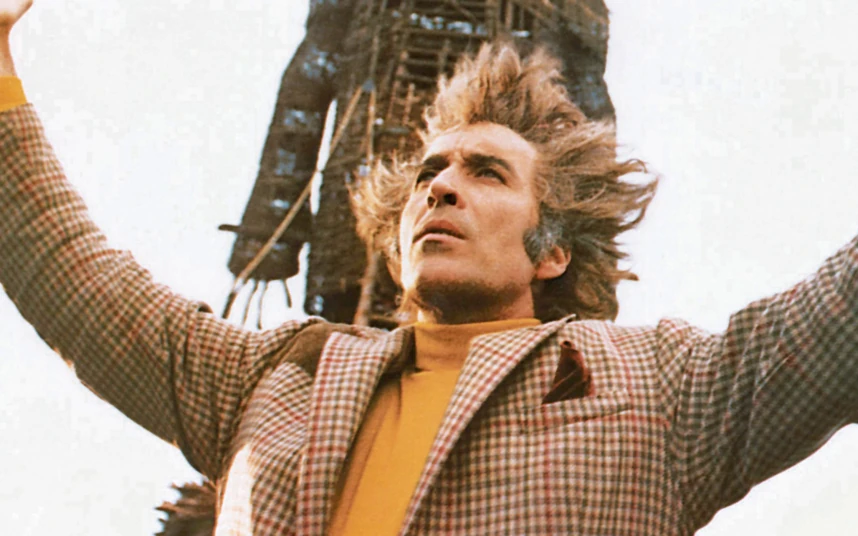
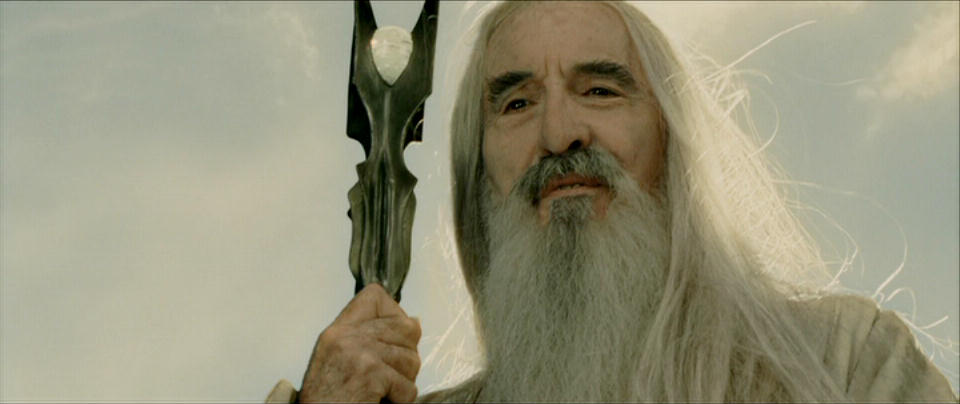
Lord Summerisle
Christopher Lee as Lord Summerisle (in “The Wicker Man”)

Riffing off of Christopher Lee both as Saruman and Lord Summerisle works well, given the obvious borrows the module provides. A good DM should figure out ways to better use him while still leaving some mystery for the players.

The Return (and Departure) of the Guest Stars

This episode largely wrapped up (save for some farewells next time) a lot of the plot threads that had been hanging around. Part of that was ending an overly long dungeon, but part of it was realizing this was the last of the Haunted Keeps, which meant the party was about to do some actual dungeon-diving into Tyar-Besil.  The only question would be where.

Gariena
Gariena
Grund
Grund

At any rate, we finally learned about how the Eternal Flame folk the night before had captured Gariena, her pixies, and Grund, then made it to look like she’s simply packed up and left the campground. One of the pixies, Flix, had escaped, and tried to warn the party, but hadn’t been understood; they couldn’t get to Gariena and the other pixie (who died of its injuries), so instead went up to the attic/belfrey of the Hall, and protected the injured Grund from the giant bats there.

Urshnora
Would you trust your Young Druids with this woman?

Urshnora, meanwhile, has been busy with the Young Druids, sufficient to bring her to a narrative decision point, choosing to go off with them as their mentor, continuing (one hopes) her redemption arc along the way. She announced it to Faith, the cleric who had been trying to sway her toward good (whilst dealing with her own alignment issues).

That she participates in the questioning of one of the fire cultist guards, and then offs him when he’s answered what he could — well, the party might have done that, too, and she did say she wanted to revenge herself on the Eternal Flame cult for the destruction of Rivergard Keep (and that whole water-vs-fire thing).

I enjoyed having Urshnora along, both as a potential threat (the casual way she mentions she had intended to steal the Fifth Key from the party) and as a voice for the DM. It was time for her to move on (I decided not to level her up with them, at least not overtly), but I’d miss her …

… until, of course, I brought her back again.

Bits and Bobs

Necklace of Elizar Dryflagon

So, yeah, the party picked up the Necklace of Elizar Dryflagon, and, presumably, the ability to use the four necklaces to form the Fifth Key.

We’ll see how — and where — that works out for them.

Ding!
I used this as my “level-up” graphic in the game.

And, yes, I finally leveled the players again, to 7, and to bring them in milestone sync with having taken down all the Haunted Keeps. This represents a sea change in the campaign, as we’ll see, and one appropriate for a level.

Or so I thought. In reality, I’d bumped them a level high (The Temple of Howling Hatred, their probable next stop, was designed for Level 6). Ah, well …


<< Session 30 | Session 32 >>

D&D 5e/5.5e Rules – Spells: Spirit Guardians!

Also known as the “Faerie Buzz Saw of Death.”

Know the RulesPart of an ongoing series of 5e (2014) Rules notes.  See the end of the post for notes on 5.5e (2024) rules.

This was another player favorite in my Princes of the Apocalypse campaign, for very good reasons: it’s pretty damned deadly.

So what does it do?

The spell says:

You call forth spirits to protect you. They flit around you to a distance of 15 feet for the duration. If you are good or neutral, their spectral form appears angelic or fey (your choice). If you are evil, they appear fiendish.

Okay, that’s nice color text. I also played with it a bit in the campaign: when the player of the cleric started being affected by a magic item she was carrying, it had an impact on the appearance of her spectral spirits.

When you cast this spell, you can designate any number of creatures you can see to be unaffected by it. An affected creature’s speed is halved in the area, and when the creature enters the area for the first time on a turn or starts its turn there, it must make a Wisdom Saving Throw.

On a failed Save, the creature takes 3d8 Radiant damage (if you are good or neutral) or 3d8 Necrotic damage (if you are evil).

So when does it actually do damage?

One question that immediately comes up about SG is when it actually attacks. It’s easy to mistakenly assume the answer is “right away,” but … nope.

The trigger is the potential target either

  • entering into the AoE (voluntarily or involuntarily), or
  • being within the AoE when their turn starts.

This is similar to Moonbeam, along with a number of other spells.

You don’t take immediately damage if the spell is cast on you (i.e., with you in the area of its casting) or if it is moved over you (if the spellcaster runs up to you).  As Crawford says, “creating an area of effect on a creature’s space isn’t the same as the creature entering it.”

But you do take damage if you enter the spell while it is in place, or are inside of it when your turn starts. And “entering the spell” does not have to be voluntary — a Shove or a Thunderwave can push you into the zone, and that’s considered not only legal, but, “We consider that clever play, not an imbalance, so hurl away!” Indeed, such a maneuver would lead to the target being hit twice by Spirit Guardians: once when pushed in, then again when their turn starts (unless someone yoinks them out again in the interim).

What about Line of Sight?

Spirit Guardians respects Line-of-Sight and Total Cover rule. I.e., if the circle extends through a wall, or any other cover, it is blocked.

Unlike Fireball or Stinking Cloud, which specifically call it out, Spirit Guardians will not go around a corner: they are not actual creatures flying around (which is why they can’t be attacked), but a magical effect emanating from a point (one of the corners the caster chooses). Anything not visible from that point is protected. If a potential target has only partial cover, though, they are affected (and the cover does not improve the saving throw).

Reference: dnd 5e – Can Spirit Guardians affect enemies through walls? – Role-playing Games Stack Exchange

Any changes here in 5.5e?

dnd 5.5/2024There are some revisions, akin to Moonbeam, in this spell in 5.5e (2024).

Protective spirits flit around you in a 15-foot Emanation for the duration. If you are good or neutral, their spectral form appears angelic or fey (your choice). If you are evil, they appear fiendish.

This is pretty much the same, though using the new Emanation terminology.

When you cast this spell, you can designate creatures to be unaffected by it. Any other creature’s Speed is halved in the Emanation, and whenever the Emanation enters a creature’s space and whenever a creature enters the Emanation or ends its turn there, the creature must make a Wisdom Saving Throw. On a failed Save, the creature takes 3d8 Radiant damage (if you are good or neutral) or 3d8 Necrotic damage (if you are evil). On a successful Save, the creature takes half as much damage. A creature makes this Save only once per turn.

So some changes here:

First, designating unaffected creatures no longer has the restriction of being able to see them. If you fire this spell off inside a room before all of your team has entered, you can now exempt them. That’s helpful.

Second and more important, the trigger for a Save (and therefore damage) has changed. Before it was (1) entering the area or (2) starting a turn in the area. Now it’s (1) entering the area, (2) ending a turn in the area, or (3) being in a space where the area enters.

This is a major change, as it means the caster can simply run through the field doing damage to everyone they get within 15 feet of (and if they keep their distance, there’s no Opportunity of Attack worries) in addition to any other spells or attacks they want to make. True, targets only Save / take the damage once per turn (but, with Shove and Thorn Whips and the like, they could be moved into, out of, and back into the area on different characters’ turns during a round), but the number of targets has just climbed substantially.

So, overall, this spell, like Moonbeam,has gotten significantly more powerful. DMs beware!

Princes of the Apocalypse, Session 30: “I’ve Seen Fire, and I’ve Seen Pain”

Wherein the party is very … deliberate … in how they enter Scarlet Moon Hall.

Princes of the ApocalypseThis is part of a series about my DMing Princes of the Apocalypse, a D&D 5e adventure by and copyright Wizards of the Coast.

Table of ContentsThe Party

There will be SPOILERS. If you are playing in a PotA game, please don’t read this. If you are DMing a PotA game, or are a DM who wants to see what the ride was like … read on!


GM Recap

Session 30 (Day 32) 

Scarlet Moon Hall
Scarlet Moon Hall
  1. The party assuaged the suspicions of the Cranky Druids, even as Urshnora and the Young Druids joined them at the hilltop.
  2. The voice of Elizar Dryflagon resonated from the hall, regretting that they had not chosen to use the power of fire to help cleanse the darksome forces arising over the Sumber Hills.
  3. Moony was attacked by a giant bat on the rooftop, where there was gap being repaired.
  4. While the main doors into the keep were blocked by rubble, there was an entrance along the western scaffolding, thirty feet up, that was apparently the way in … guarded by crossbowmen. The party used a Transmute Rock scroll from Sacred Stone Monastery to breach the walls on the south side, letting them attack the awaiting forces within. None of them had the Fifth Key component, but the fallen Azer had a beautiful war hammer that Faith took. 
  5. In the ground level below a hole in the floor, rubble, the odor of burned and rotting meat, and an assemblage of capering Magmin burning the fallen timbers was visible … as the party prepared to storm the upper levels of the Hall. 

Player Recap

The unexpected approach

The Dwarf druid Comnall and his group appear at the gate and approach the party. They are clearly angry about the destruction of Wicker Man and the fire initiates. William steps forward to try and explain what happened. He presents it honestly and does a reasonable job of convincing them of his belief in the telling, if not exactly believing the tell. He also explains that Gariena is missing and we are trying to find here and her companions. 

During the discussion with Comnall, the Young Druids approach along with their elk. They are concerned. The group gives them a short synopsis of what went down. 

A voice fills the courtyard. “Oh, my friends. The fire and blood rise up, exerting their influence upon the darksome forces enshrouding the Dessarin Hills. If only you could have drawn on the power of the flames to empower such a thing. Now the effort must begin afresh … if anyone is left.

While the discussion is paused, Urshnora notices an entrance into the tower on the West roof. William says “We are going into the tower. You may join us if you like, but we are going in.” Urshnora plans on staying outside of the tower. Hope asks her to keep watch over the Young Druids. Muldoon calls out. “Oh, look!” They have found in a tent a dead sprite and a bound and unconscious Gariena. She has been beaten but is not in danger of dying. The druids will take care of her. 

The group moves to the West side to climb up the ladders to the scaffolding. On the top layer of scaffolding there is an opening into the tower, but something blocks their view. Moony explores the hole in the roof. It smells a lot like guano only worse. A giant bat attacks Moony, coming through the hole in the roof. After defeating the bat Moony climbs down and the party climbs up. Moony takes a peek behind the canvas that is serving as a door to the tower. He catches a glance of a single room filling this level of the tower. He doesn’t see much before a crossbow bolts slams into the canvas. Moony sees a few people including a guy with his face on fire. 

Much discussion ensues about approaches. Giant Badger digging under the rubble. Using Stone to Mud scroll to collapse the roof, floor, wall, or other. Enter through the roof with the giant bats, or other route. 

They decide to use the transmute rock to mud to create a new door on the south side. The villains are completely surprised. Faith uses her Spirit Guardian spell to good effect. William pulls a couple into the pit and Nala pushes one off of the scaffold. The advisories go down quickly. Some literally go down through a hole in the floor. When the dust settles, a somewhat hidden tunnel is revealed off the ground floor.

Game Notes

The Gang’s All Here

The defeat of the (open) forces atop the hill seemed an appropriate moment for the various surviving parties to come to the hilltop as well — the Cranky Druids, sincerely concerned over what the hell the party was doing, and the Young Druids, led by Urshnora (!), trying to figure out what was going on.

In the course of searching the tents on the hill, they found an unconscious Gariena — teed up to be a sacrifice to the Wicker Giant / Fire Elemental — and a dead pixie (which still left one pixie unaccounted for). The party was duly unhappy.

Breaching the Hall

Scarlet Moon Hall is surrounded by scaffolding as part of the reconstruction. Despite the ground floor being out of commission, there are a couple of ways in — into the roof (where, apparently, Giant Bats were an issue), and through an entrance on the third floor (where, apparently, Fire Cultists were an issue).

The party spend … an inordinate amount of time (I mean, really) trying to figure out what to do next.

Time Passing GIFs | Tenor

The scenario seems to assume a frontal assault through one entrance or another. The party was in its depressive part of its manic-depressive approach to danger, so was reluctant to do such an assault. So they took (after much deliberation) a Stone to Mud scroll (which they’d picked up as loot along the way) and blew a hole in the wall of the third floor from an unexpected direction.

Which was … unexpected.

Both for the bad guys, and for the DM, who had to very quickly improvise a hole in the wall in Roll20, and how that impacted the combat inside. Yikes.

I mean, great out-of-the-box thinking, but … yikes.

Oh, About That Hall …

Okay, here’s one of my biggest bitches about Scarlet Moon Hall. More than that, my biggest bitches about Princes of the Apocalypse.

The game-provided map sucks.

No, really, this is what you are given to work with for the assault on Scarlet Moon Hall.

Scarlet Moon Hall (as provided)
Scarlet Moon Hall (as provided by the module). Yup, that’s it.

What The Actual Frell are you supposed to do with that?

I mean, sure, if you are playing Theatre of the Mind, you will improvise something, right?

If you are playing on a tactical battle map, this is utterly worthless for figuring out how to deal with combat. Which, since the tower is full of Eternal Flame cultists, along with Elizar Dryflagon, the master of this Haunted Keep, is kinda problematic.

My eyes cannot roll hard enough.

Over It Eyeroll GIF by Paul Scheer

Fine.

Instead, I crafted myself a level-by-level map of the tower.

smh attic
Attic


Floors 3-4
smh floor 2
Floor 2 – note the block of wall that the party took out in their attack.
Ground Level

Apologies for not-better copies — can’t find the originals. But, honestly, though a PitA, it took me only a couple of hours to kitbash this together with a drawing program and art I could find online.

This is the map (or something like it) that should come in the game, both on paper and virtually. That WotC did not do so is DM Malpractice.

Note: I have seen there are websites that sell their own battle maps for this scenario. I was quite happy with what I put together, which you are free to copy and use as you can. But that folk on Etsy and other locales are selling supplements like this should make WotC hang their heads in shame.

Bits and Bobs

I had a vision of Elizar speaking out to the folk who have essentially defeated him in finest Christopher Lee / Saruman voice, post-devastation of Isengard.

Saruman speaking down from Orthanc

Which is oddly appropriate, given Christopher Lee’s roll in The Wicker Man.

Elizar Dryflagon
Elizar Dryflagon and His Dancing Druidettes!

And, that said, I couldn’t believe the party was still at this “dungeon.”

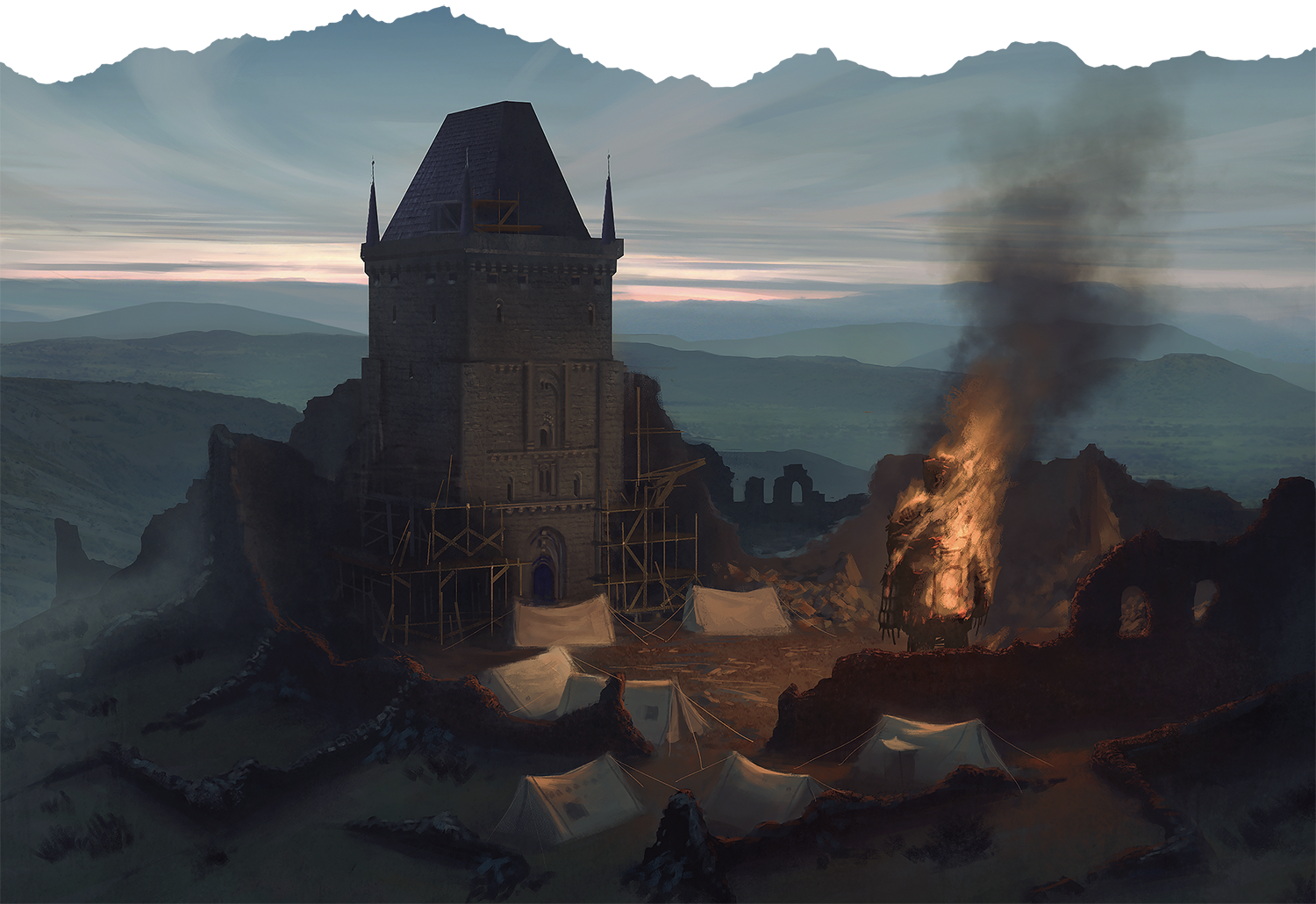
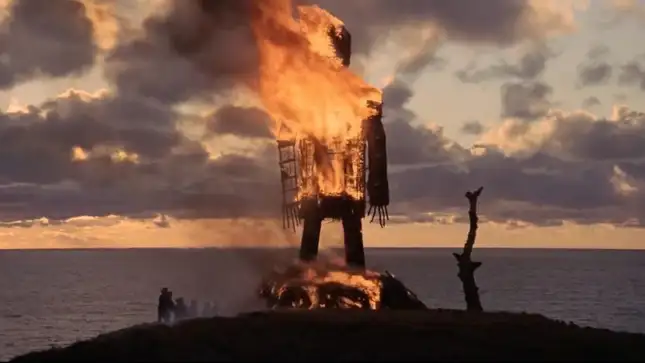
The Wicker Man
Isn’t this all burnt to embers yet?


<< Session 29 | Session 31 >>

Princes of the Apocalypse, Session 29: “Arson-io Hall”

Wherein our party takes their complaints about the campground to the top.

Princes of the ApocalypseThis is part of a series about my DMing Princes of the Apocalypse, a D&D 5e adventure by and copyright Wizards of the Coast.

Table of ContentsThe Party

There will be SPOILERS. If you are playing in a PotA game, please don’t read this. If you are DMing a PotA game, or are a DM who wants to see what the ride was like … read on!


GM Recap

Session 29 (Day 32) 

  1. Hell Hounds and a guard! Spiky Growth! More guards on the scaffolds with crossbows! Alarums!
  2. Druid Attendants invoking something and/or hurling fireballs. Huh. Hit Point problems.
  3. Fire Elemental
    Holy Crap!

    Crap! Big Fire Elemental. Big Fire Elemental … is setting tents and scaffolding on fire and killing their own people. Oh, now coming over and killing us. Run!

  4. Moony climbing walls! William orbital death laser! Theren grasping rock hand! Faith thunderwaving the elemental that was from the orbital death laser! Nala taking down guards and jumping around burning scaffolding!
  5. Fire Elemental stomps on Theren and sets him on fire, then stalks after Faith. Theren stops, drops, rolls, metamagics, metamagics more, lightning bolts the Fire Elemental to death.
  6. Heals! Many, many heals!
  7. The cranky druids from down the hill show up. “What have you done?!”

Player Recap

Are you ready to rumble?

Two Hell Hounds and a guard race to attack the party. Moony opens the battle by spreading out and plunks the first Hell Hound. Nala moves up using her ice breath and sword. William casts Spike Growth on the area around them. Theren adds to the damage on a Hell Hound with Ray of Frost. The tide quickly turns and the Hell Hounds are rapidly defeated.

The guard flees south sounding the alarm. Before the group can react, a second guard appears on the scaffolding above William and fires a flaming crossbow bolt at him. William returns the favor by using Thorn Whip to pull him down from the top to the lower level of the scaffolding. He is damaged and prone. Bootsteps sound on the scaffolding on the far side of the manor. A second shooter takes a shot at Theren. 

Insert Additional Fight Details Here

Guards come and are defeated. Eternal Flame initiates come and release the Fire Elemental contained in the Wicker Man and are defeated. Said Fire Elemental is defeated. 

In the end the courtyard is devoid of enemies and the group debates their next move.

Game Notes

Big Battle

Scarlet Moon Hall
Scarlet Moon Hall

After multiple sessions of small battles and talkity-talkity, the big battle at Scarlet Moon Hall was quite a palate cleanser.  The approach to the hilltop ended up spreading the bad guys a bit, but the complexity of the battlefield — walls, tents, building, scaffolding — still kept things pretty interesting, and the party scattered in different directions.

And then, of course, there was the Wicker Giant …

The Wicker Man - burning
Elementary!

… who was, of course, an ever-burning Fire Elemental. Who managed to do a fair amount of damage amongst the various combatants until the Action Economy inevitably caught up with it.

Overall, it was one of the most fun battles to date in the campaign (from my perspective), with lots of complications, maneuvering, spell-casting, combat, and times when it wasn’t altogether clear who was going to win this thing.

So now what?

cranky druids
The Cranky Druids

The most immediate problem is that, as far as the Cranky Druids know, Our Heroes just disrupted and murder-hoboed the whole Rite of the Wicker Giant that would restore balance yadda-yadda. Will there be further conflict about that?

More importantly, there’s the elephant Scarlet Moon Hall in the room hilltop.  Yes, it’s under partial reconstruction (with the scaffolding still on fire).  But secrets definitely lie within … and an unexpected challenge that not only faces the players, but the DM of anyone running this particular campaign ….


<< Session 28 | Session 30 >>

D&D 5e/5.5e Rules – Spells: Moonbeam!

A pale-glowing cylinder of DOOM!

Know the RulesPart of an ongoing series of 5e (2014) Rules notes.  See the end of the post for notes on 5.5e (2024) rules.

In my most recent campaign, the Druid’s Moonbeam was colloquially known (well, at least by me) as the Orbital Death Laser of Doom.

It’s really not an exaggeration.

orbital death laser

Let’s talk about Moonbeam

This is another one that has had some revising done on it since the original 5e release — so if you’re looking up material about it, make sure it’s referring to the “same” spell.

Here’s the official description for this Level 2 spell.

A silvery beam of pale light shines down in a 5-foot-radius, 40-foot-high Cylinder centered on a point within range [120 feet]. Until the spell ends, dim light fills the cylinder.

When a creature enters the spell’s area for the first time on a turn or starts its turn there, it is engulfed in ghostly flames that cause searing pain, and it must make a Constitution Saving Throw. It takes 2d10 radiant damage on a failed save, or half as much damage on a successful one.

A Shapechanger makes its Saving Throw with Disadvantage. If it fails, it also instantly reverts to its original form and can’t assume a different form until it leaves the spell’s light.

On each of your turns after you cast this spell, you can use an action to move the beam up to 60 feet in any direction.

Moonbeam, like Lightning

This one has some similarities to Call Lightning, but some significant differences.

Moonbeam (5' radius) AoE token
Moonbeam (5′ radius) AoE token for grid combat.

Like CL, the effect is a 5-foot radius centered on a grid intersection (i.e., 4 squares). The cylinder involved is 40 feet high, but there’s no verbiage (as in CL) to indicate that if you are not in a 40-foot tall room, you can’t cast it; the height seems primarily oriented toward cases of dealing with flying creatures.

While CL allows the target radius to be moved anywhere under the cloud on the caster’s turn, Moonbeam‘s cylinder can be moved by the caster (as an Action) in any direction 60 feet, as long as it remains within the 120 foot range from the caster on that turn. So while someone can run out from under CL‘s cloud (which is immobile), the Moonbeam caster could run after someone who was trying to get outside of that 120 range and move the beam on top of them again.

Moonbeam and damage

This is a little more difficult to glean from the spell description, and had to be more fully explained in an official Sage Advice CompendiumDamage is done to victims within the radius on their turn, not on the spell-caster’s turn, i.e.:

  • When a target begins their turn inside the cylinder.
  • When a target enters the cylinder during their turn (if they did not already start there).

But targets do not take damage when:

  • The cylinder is cast or moved onto the area where a target is standing.
  • The spell is moved across a target on its way to a different location.

Looked at another way, you’d generally see Moonbeam’s use as such:

  1. The caster drops the Moonbeam on an opponent. The opponent takes no damage at that time.
  2. The opponent’s next turn begins … and they take their 2d10 radiant damage (or Save). They presumably move away …
  3. The caster’s next turn starts — and they move the Moonbeam atop the same target. Who doesn’t take damage right then, but …

Laser, move, repeat.

Note that targets can be involuntarily moved into the cylinder by some effect (a shove, a Thunderous Blast), and this does actually count as “enters the spell’s area for the first time on a turn.”.

Entering such an area of effect needn’t be voluntary, unless a spell says otherwise.

This same arrangement holds true for a number of other AoE hazards, e.g., Blade Barrier. If it moves onto you, you don’t take immediate damage. If you move into it (even against your will), you do. And, in such a case, you’ll end up taking damage twice — when shoved in, and then at the beginning of your turn.

Note that this, too, is a Concentration spell. Between that and having to use your Action to move the Moonbeam, use of this spell is pretty much a full-time job. But the orbital death laser’s damage potential, especially against mooks, or round-over-round against bigger targets, makes all that worth it.

dnd 5.5/2024Any changes in 5.5e?

This spell has some significant differences in 5.5e (2024), though in principle it is much the same.

A silvery beam of pale light shines down in a 5-foot-radius, 40-foot-high Cylinder centered on a point within range. Until the spell ends, Dim Light fills the Cylinder, and you can take a Magic action on later turns to move the Cylinder up to 60 feet.

So this part is much the same, just edited a bit and with the Magic action used for the targeting movement.

When the Cylinder appears, each creature in it makes a Constitution Saving Throw. On a failed Save, a creature takes 2d10 Radiant damage, and if the creature is shape-shifted (as a result of the Polymorph spell, for example), it reverts to its true form and can’t shape-shift until it leaves the Cylinder. On a successful Save, a creature takes half as much damage only. A creature also makes this Save when the spell’s area moves into its space and when it enters the spell’s area or ends its turn there. A creature makes this Save only once per turn.

So there are some significant differences here:

  1. As you would intuitively assume (but was not the case in 5e), Save and damage rolls take place when the spell is first cast.
  2. It also seems you can drag this spell across bad guys (“when the spell’s area moves into its space”), which is pretty nasty.  You can only do it once (per turn), though, as damage is only taken when the Save is rolled, and the Save is only rolled once per turn. (A target could still be damaged multiple times a round if shoved into and out of the beam by different people on their turns.)
  3. People in the beam take damage if they end their turn there (not start it).
  4. Any sort of shape-shifted creature, is affected, though there is no mention of Disadvantage on the Save.

So before, Moonbeam lagged on causing damage until the start of a target’s turn. Now in 5.5e, it causes damage as soon as they enter the beam or the beam is cast/moved onto them, and if they remain standing in the beam, they take damage at the end of their turn.

This would seem to make Moonbeam a bit more powerful than in 5e, and the ability to march the Moonbeam down a row of bad guys on a turn potentially makes it much more powerful. 

Princes of the Apocalypse, Session 28: “We Didn’t Start the Fire”

Wherein the party continues to explore their campground, and meet an old friend.

Princes of the ApocalypseThis is part of a series about my DMing Princes of the Apocalypse, a D&D 5e adventure by and copyright Wizards of the Coast.

Table of ContentsThe Party

There will be SPOILERS. If you are playing in a PotA game, please don’t read this. If you are DMing a PotA game, or are a DM who wants to see what the ride was like … read on!


GM Recap

Session 28 (Day 31-32)

  1. Bridalveil Creek CampgroundThe party debated the next best course. Circling the hill and ascending from the north side was a popular choice, but William’s Augury indicated woe for that course.
  2. They ultimately decided to climb the hill up to the next camp on the left. They chatted with a druidess and her three ranger pals for a bit, with increasing tension. When the party passed through the camp toward the next, the people there attacked. The party succeeded but, again, taking two fireball attacks nearly killed Nala and sent everyone back down the hill for healing.
  3. campsiteThey tried it again, going to the fiddler’s camp on the left. There they met the halfling druid Gariena, her two sprites Flix and Afid, and her guest, the Red Larch pickle master and hapless tool, Grund. Grund was thrilled to see Mr Kitty again, but was afraid because he was told anyone from Red Larch would have him “put in irons.”
  4. Another night down camp, noteworthy for (a) William dreaming of zombie and skeletal bears, and (b) Theren being nearly assaulted by one of the sprites, who then flew off north to one of the towers. 
  5. In the morning, the party explored Gariena’s campsite, finding it struck and empty. They did find strangers’ tracks leading toward the Scarlet Moon Hall at the hill’s summit.
  6. campsite 2The party tried to recruit the young druids to assist, but Urshnora, who has been spending time with them, discouraged the effort. On the other hand, they also, as a group, refused to leave, despite Faith’s attempt to persuade, then intimidate. Theren, though, told them to flee if the party didn’t return within four hours.
  7. The party tracked the trail toward the front opening to the Hall’s boundary wall. They circled around to the north and northwest, before the wall was found to be in a relatively easily crossable state … and right where William had augered woe for attacking. They chose a position more northerly and crossed over, only to do so in an unstealthy fashion, which led the Hell Hounds to attack …

Player Recap

Moony and William get into trouble and then Faith makes it worse
Sauruki
Sauruki, of the Cranky Druids

A “druid” from another campsite comes to the group, keeping his distance from them. Sauriki asks their intentions and the group explains that they were attacked and have no ill will against the innocent. They are concerned that things are not what they appear. He heads back to his campsite warily.

After discussing the next steps, William cast Augury to see if circling east and approaching the keep from the north is a good idea – Woe!

Lytin
Lytin (artist unknown)

After more discussion they decide to visit the other active camps up the road. They reach the first camp and are approached by the druid Lytin, with three rangers. She greets them and asks if they are fellow pilgrims. William returns the greeting and introduces himself, stating that they are there to here to witness the events. The sound of a fiddle wafts into the camp. Lytin rolls her eyes and complains of the noise. They briefly talk about the halflings and the other camp.

William has heard this type of music before, from a traveler, perhaps a bard. Faith senses that it might be magic. 

“When the great rite is performed it will be the first step in the purification and will begin the rebalancing of nature,” Lytin assures them. She is a bit nervous or uncomfortable. She lets them know that Elizar doesn’t want people up near the site while they are preparing for the ritual.

They don’t look hungry and the party doesn’t see signs of hunting supplies. As the group moves through the camp, Lytin yells, “Take them”. Strong battle. Lytin cast Fireball twice on herself and her party.

Return to campsite with the young druids. Short rest. After healing up, Urshnora suggests that they visit the last camp before resting for the night. On reaching the camp, a large presence yells “Mr Kitty” and Grund races to hug Moony. He then races away in terror. The halfling Gariena invites the group to the camp. When things settle, the group convinces Grund that they wish him no ill will. Moony even offers him some of his dried fish. They have a peaceful talk, with the exception of the sprites filching some of Moony’s fish. The party says their goodnights and heads back to the young druids’ camp. 

During Theren’s watch a sprite appears and yells at him before flying off north. 

campfire ashesNext day the halfling’s camp is empty. William finds some tracks leading toward the Scarlet Moon Hall. The group walks towards the manor and then works their way around the wall. 

Cross at the crumbled down wall. William and Faith make too much noise crossing the rubble. Two hell hounds and a guard race towards them.

Game Notes

A Long Holiday Weekend at the Campground

Campground Full signI can’t believe how many in-game days (or real-life game sessions) this all took. The problem was I was unwilling to upset the overall top-of-the-hill plans, which meant that no matter how much time the characters took, or how many group of undercover Fire Cultists were killed, there were no plot implications, even when the party would retreat back to camp to heal and sleep (again) overnight.

Probably my least-good DMing during the campaign.

At least the apparent kidnapping of Gariena by the Eternal Flame got them moving on the summit, albeit pretty much directly on the path that their own druid’s Augury indicated would lead to WOE.

Supporting Cast

Gariena
Gariena

Gariena, the halfling druid with a pair of sprites as familiars / companions is very much part of the campaign-as-written. Her taking Grund under her wing is not, but she seemed like the kind of person who would both attract and help a half-witted half-orc on the lam from the law.

Grund
Grund

Of course, nobody’s actually after Grund — that’s just what the Believers back in Red Larch told him (that he would be captured and “put in irons” for what he had done for him), in order to get him to flee town and never come back. Easiest way to keep him quiet (easier than trying to kill him, at least).

The whole party, especially the Tabaxi rogue, had been quite taken by Grund, whose true happiness in life was brining pickles for sale on market day. So it was fun to bring him back in — and to add his disappearance to the stakes when the campsite was found empty the next day (despite one of the sprites trying to alert the party’s sorcerer in the middle of the night when it happened).

Urshnora token
Urshnora

There was some discussion about recruiting the Young Druids on the presumed assault on Scarlet Moon Hall. Urshnora — who had actually sort of started taking them under her wing, as part of her redemption arc — thought that was a bad idea (and it probably would have been). On the other hand, the kids weren’t cowed by danger and refused to flee.

In the end, had the party gotten into real trouble (something I thought possible), the Young Druids would have come to the rescue, whatever Urshnora thought. Which would have been pretty cool.

Bits and Bobs

fireball memeThe Fire Cultists all seemed more than happy to cast point-blank Fireballs at the party, even though they themselves had fewer hit points and no fire resistance. That’s dedication. Also, it was the only decent offensive spell they had, and it really caused a lot of player consternation.

The Cranky Druids continue to be cranky, especially when every time they turn around, the party is busy killing another campsite full of  druids. “But they were all bad” doesn’t seem to mollify them, strangely enough.

Lytin
Lytin

The problem with coming up with tokens for all the important folk is that you end up having to come up with tokens for all the unimportant folk, so that the players can’t surmise that only the folk with tokens are important. So even though the “druid” and “three rangers” were disguised Fire Cultists who would die quickly after encounter, I still had to come up with tokens and names so that they would at least seem a bit interesting.

And, okay, it was fun doing so.


<< Session 27 | Session 29 >>

Princes of the Apocalypse, Session 27: “Bad Moon Rising”

Wherein our party wonders what to do about a smoky campground.

Princes of the ApocalypseThis is part of a series about my DMing Princes of the Apocalypse, a D&D 5e adventure by and copyright Wizards of the Coast.

Table of ContentsThe Party

There will be SPOILERS. If you are playing in a PotA game, please don’t read this. If you are DMing a PotA game, or are a DM who wants to see what the ride was like … read on!


GM Recap

Session 27 (Day 31) 

  1. Dreams!
  2. It was a frigidly cold day at Scarlet Moon Hall. Not just the smoke, but ground effect fog made vision no better than at night.
  3. Moony and William scouted up the hill. At the first camp, they run across old, scruffy acquaintances, Storol and Wiglaf, whom they met shortly after their departure from Sacred Stone Monastery (S.17). The pair were apparently really bored here, waiting for something to happen, and grew increasingly belligerent, eventually revealing themselves as werewolves and attacking the two heroes. Moony ran for help, while William tried to fend them off. The rest of the party caught up, and eventually killed the werewolves (made a bit easier by their having their hybrid form ripped from them by William’s Moonbeam.
  4. The violence did not sit well with the quartet of cranky druids the next camp over, who seemed ready to defend themselves if attacked. The party quietly backed down, and returned downhill.
  5. They then visited (all together!) the camp immediately east, Faith determined to raise, then free, the dead bear. This plan outraged the “druids” there (Ingulf and Aylbrith), who then attacked. Ingulf was taken down quickly, but Aylbrith let loose two fireballs — the second killing himself and, nearly, Faith.
  6. All this took place under the watchful eyes of that already-defensive quartet of grumpy druids. 
  7. Individual and group heals, along with a Short Rest, left the party with the question of what to do next.
    • Can they just take over the camp of the last pair they killed defended themselves from?
    • Are the remaining camps druids or fakes?
    • Can/should they get a group of allies from the other camps to go with them to the top?
    • Should they stroll in the front opening, or sneak in from the broken walls around the side?

Player Recap

Moony and William get into trouble and then Faith makes it worse

That night, the watch is uneventful but the groups dreams

William … It’s dark. It’s stuffy. It’s everything you don’t get, walking upon the earth, feeling the breeze, smelling the rich smells of loam and wood and water. Instead, you’re constrained, not bound, but in a tight space, stone-edged, standing upright, the air almost gone, barely able to … <<what do you do>> [William shifts into star form] The stone door before you swings wide — and you’re battered by hard, round objects … falling on you from above, flooding the space, clattering lightly, each a bit of weight, a slight of hardness, but in aggregate … Skulls! You’re buried alive under hundreds, thousands, tens of thousands of skulls, all of them grinning at you, all of them laughing. “The last laugh,” says a man’s voice, cool, deep, dry. “Where is he, the Lord of the Stone? Where are they, of Stone and Earth and the breaking of the highest laws of life and death?”

Another man’s voice, aggrieved. “She took him, not me. Him, not me!” But there’s light! Beyond the skulls, you capture a glimpse of light, then more, then still more, as men in leather garb and masks shovel away the skulls, and beyond them a woman, pale as death, slender as a reed, wrapped in silks and silver and her ears and face show her to be of the elves, and she laughs, and says, “Ah. A new prize. I shall collect the set, even if this one is but a bishop to my king.”

And a cold wind whips up and blows away the remaining skulls, clattering and rolling like crockery before it, and a madwoman laughs somewhere, and the wind is chill and biting and … very real.

Theren: You’re sitting at a table in a tavern. It’s quite warm, perhaps because of the roaring fire in the fireplace. Perhaps because the tables around you are ablaze. Perhaps because of the massive figure sitting opposite of you, himself ablaze and smoking a pipe the billows sparks and smoke. “We’ve been waiting for you,” the figure says. [Theren asks “Who are you?] The temperature continues to rise. “You look tense. You’ve not had much of a chance to let go of late, have you?” 

It’s becoming difficult to breathe. “You’re among friends here. Go ahead. Let go. Release that which you keep pent up in yourself all day, and all night. BRING THE FIRE.” All all around, the flames rising from the tables look at you with as fierce a gaze as the burning man opposite.

Moony: You don’t remember much of your dreams, except that there are huge dogs chasing you and they have William’s eyes.

Nala: You are standing on a barren plain, upon sand that ripples and moves in the flickers of cold breeze about you. You see no hills, no rivers, no trees … only endless sand under a pale blue sky. The wind whispers to you, in a deep, aged voice … “Those of the Eternal Flame are full of pride. They see only their own glory. They bathe in violence, wear it as a ruddy glow. They are useful tools, the best of a bad lot, sometimes creative in intuitive leaps, and firm in their intent once their fury takes them. You can trust them to do what they say they will do, and trust them to turn on you once that time is past. Trust your cold heart to defeat their burning ones.” And it occurs to you that you are, in fact, damned cold …

Faith: For once Faith has a dreamless sleep.

It is a very cold morning and the smoke and smoke. The young druids are up. Muldoon and Varigo are tending the elk. Fariya outside Iniri’s tent arguing about how cold it is. Varigo is optimistic that today will be the day that Elizar will begin the ritual. The two group pool their resource for breakfast. Hope step slightly outside the camp circle to do her morning prayers. William and Moony as the druids about the ceremony and camp. Urshnora suggests that the couple with the bear are evil and need to be dealt with. The Elk interrupt Hope, probably looking for a treat. 

Moony and William take a torch and explore the camp some. At the first camp up from the druids they come across Wiglaf and Storol. William, “Ah, the strangers from the road, I see you found your way.” Storol, “You said that you didn’t know the way but here you are” William, “But we didn’t know until we went to Red Larch.” The conversation gets confusing and Storol is contrary on all avenues. Moony indicates that it is time to move on and Storol says, “Hey the cat is rabbiting” and begins to change. They are both werewolves, taking on hybrid form. A bloody battle ensues and William takes the brunt of the damage. He calls up Moonbeam, which forces the lycanthropes to return to their original form. Moony and the rest of the group takes care of them while Faith heals William. 

There are some druids from a nearby camp that are watching the group. A Dwarf (Comnall) demands “What is your intention” William explains that they were just trying to find out more about the ceremony and the werewolves attached as they left their camp. I was just fighting for my life.”  Sauruki comments “We have been here a while but we don’t know what the schedule, so you are visitors? William answers “I have heard that there is a great druid ceremony that will restore balance” Murcadh says “Violence like this does not help restore balance.” They all agree, but point out that there was no other choice. The druids are uneasy and watch them carefully as the group goes back down the hill.

After getting cleaned up Faith insists that they all go to the camp with the bear. Ingulf and Aylbrith stand to meet them. Faith offers to resurrect the bear but requests that he be set free. Ingulf begins to protest and then Aylbrith says “Ingulf, enough, take her.” Aylbrith open things out with a fireball on the party. Ingulf goes down quickly and in the end Aylbrith kills himself with a second fireball, trying to take the party with him.

Moony explains to the druids from up the hill that Faith had a disagreement with the campers about resurrecting the bear. Theren tells the young druids that “The priest we travel with is crazy.” The young druids appear to mostly accept the description of the battle but are concerned.

The group takes a short rest to recover hit points and then discuss plans. They also discuss the other camps on the hill and what the young druids know about the wicker man and the main hall.

Game Notes

Pacing at Scarlet Moon Hall

The book sort of assumes that the party will engage the whole campsite (or bypass it) in one concerted set of activity. There’s no provision made for “we took out some bad guys, and now we’re going to rest until nightfall, and we took out some more, and now we Long Rest and get ready for the morrow, and …”

Which is what the players ended up doing, tackling the hill bit by bit, with full evenings in-between. And, honestly, short of Elizar sending his (not numerous) troops down to deal with the problem, and breaking all the fun at the top of the hill, I wasn’t sure what to do about it. I suppose I could have had more druids show up, or more covert troops, or something, until they felt they needed to tackle things more directly.

Anyway, that’s on me, though it would have been nice for the campaign to consider it, as they did in other locations.

Dreams

Yes, back to the dream channel.

In William’s case, I’ve got the Valklondar bits from the Last Laugh tying in (as they should have) to Oreioth, with a bit of mysterious Aerisi thrown in.

Theren gets more temptation by the spirit of Fire present in this place.

And Nala, a Silver Dragonborn, sort of gets the opposite, her unconscious affinity for cold coming to the fore.

Unhappy Campers

By the end of the session, the party is full of doubts whether there are any real druids on hillside at all except for their William, and (maybe?) the Young Druids.

Wiglaf token
Wiglaf

We’d already met Wiglaf and Storol back right after the party took down Sacred Stone Monastery, with their thinking that William was the druid they had heard tell of.

Storol token
Storol

That intro not only started the sequence of “ne’er-do-wells are being drawn to the Sumber Hills” bit for the players, but introduced some new folk for here at Scarlet Moon Hall. Which meant a little more meaningful interaction, at least until they discovered the pair were werewolves.

Which would have been a scosh dire, except for William’s favorite damned spell, Moonbeam, which is not only a kickass attack, but forces shapeshifters back to their human form.

Sigh.

cranky druids
The Cranky Druids, at camp, with individual tokens

And then there were the Cranky Druids. Not everyone on the hill is a bad guy, and Comnall, Murcadh, Ragnad, and Sauruki were actual druids (well, Sauruki was a Water Cult spy, but that aside), interested in seeing the Rite performed and “restoring balance.” They’re suspicious (not without cause) of some of the folk in the camp, which means discovering, multiple times, that Our Heroes are actually attacking and killing people … doesn’t go over well.

This builds off the the brief descriptions in the book, which is fine. It created some competent antagonists for the party who weren’t actually bad guys, included some complications for Urshnora (also from the Water Cult), and overall made the situation that much more rich.

They aren’t referred to as the Cranky Druids by the campaign, but that’s the title that stuck by the end, particularly when they kept yelling for the party to stop all that (combat-related) racket.

Bits and Bobs

The book doesn’t say anything about ground effect fog, but I figured the smoke needed some reinforcement during the daylight hours. Or maybe it was an added reaction to some unexpectedly frigid weather that blew through.

The party was in fact trying to figure out what to do, but could come to no consensus, and I refused to put my thumb on the scales through the NPCs they were with. Part of me didn’t want them to bypass the various conflicts and discoveries on the hill. Part of me wanted them to get on with it.

Scarlet Moon Hall Player overview 3


<< Session 26 | Session 28 >>

Princes of the Apocalypse, Session 26: “Under the Scarlet Moon”

Wherein the party checks in at a smoky campground, and decide to stay there multiple sessions.

Princes of the ApocalypseThis is part of a series about my DMing Princes of the Apocalypse, a D&D 5e adventure by and copyright Wizards of the Coast.

Table of ContentsThe Party

There will be SPOILERS. If you are playing in a PotA game, please don’t read this. If you are DMing a PotA game, or are a DM who wants to see what the ride was like … read on!


GM Recap

Session 26 (Day 30) 

  1. Faith dreamed of flying, of a city under assault by a great wind, of Deneir whispering to her that she had lost something, of howls of Aldrik’s rage, the laughter of a madwoman, and the crashing of a wave of rain.
  2. Faith invited Urshnora to the chapel; she demurred, but … politely. The party also offered her a chance to part ways; she seemed surprised they would let her go, but offered to accompany them to their next destination.
  3. The party traveled out the Larch Path to find the passing clues they’d been given back in S.23 … a Cave of Treasure (which turned out to be full only of stirges), and a mysterious Skull Pinned To A Tree By A Black Arrow Wrapped In A Human Skin Scroll With A Mysterious Message (The Last Laugh Parchment) on it (which would have seemed just trivial, if not for a mysterious vision William had when he first touched it).
  4. They turned at the described point and climbed into the hills, eventually finding, as night descended, Scarlet Moon Hall and the smoke-shrouded encampments about it. They chatted, at the first encampment, with the young druids they’d met in S.20 at Summit Hall, who mostly seemed greatly enthused about the prospects of Elizar leading the Ritual of the Wicker Giant.
  5. They decided to camp out with their druid friends, which gave Moony a chance to scout out to the west up the hill (rangers (?) sitting around a campfire; another campfire with a fiddler, someone clapping, and faeries (?) flitting about). He came back down and scouted east (a camp with a couple of figures and a chained bear which sensed his passage; a camp with some hooded and indistinct figures …)
  6. … And a pair of Worgs, which chased him down the hill, snapping at him the entire way … and followed by (apparently) that camp’s denizens, a trio of Bugbears. Things were looking grim for Moony until he was saved by both his own friends plunging into the darkness to save him (Theren Fireball for the win!), and the druids of the nearest camp (Ingulf and Aylbrith) who attacked the “abominations.”
  7. That celebration was cut short by the chained bear breaking free and attacking one of the druids with a singleness of purpose, until it was killed. Faith offered to raise it to life the next day, and the party had a series of … suspicious but not conclusive discussions with those neighboring “druids.” After which they returned to their camp and went to sleep.
  8. What you know of the area: Scarlet Moon Hall (Map) [See below]

Player Recap

Nobody Likes Worgs

Faith Dream: You’re flying again, a sky of dark clouds behind you. Your hear the roar of wind, buffeting you, making it hard to stay on course. <what do you do?> Below is a great city. Everyone is inside, hiding from the winds. Torches are flickering, going out in the gale. Dirt and sand are whipped into the air, to fall back, and even the stones of the walls you can see seem to sway in the gale. “You have lost something,” Deneir whispers in your ear. Below is a great pyramid, from which you can hear two things: a deep male voice roaring with rage, and a woman laughing with madness. Then the clouds crash down with rain, and you can see or hear nothing except the light creeping through the window at the Swinging Sword … and the bitterly cold wind outside battering at the shutters..

Breakfast is Ham and porridge cooked in house, so there is no question of poisoning.

They leave town via the Larch Path. It is less than a road, but more than a trail. About 7 miles out of town, there is a pile of stones that they recall is reported to lead to a cave full of treasure. Turns out is is full of Stirges. After they clear the cave of pests, they recall, Albaeri Mellikho and Elak Dornen told them about the cave.

As they continue along, William notices that there is a giant vulture struggling in a against the chill wind. It doesn’t have a rider.

After about 10 miles there is a tree that looks like a large chicken reaching up into the air. There is a decaying skull with a large black arrow through it’s eye socket. William decides to recover the parchment that’s attached to the arrow. As he goes to dislodge the arrow his mind is filled with an image of a skull rushing toward him. The others gather closer to try and determine what is might be. Eventually Moony determines that it is likely human skin. After some discussion, Moony removes the scroll from the arrow. Inside the scroll is a more natural tone  “The Last Laugh – You’ll be next! Valklondar.” Theran crushes the skull with a rock and William casts a Bonfire to burn the skull and scroll. 

A few more miles along the wind begins to die down. They pass the old abandoned quarry and at mile 16 there is a short stone plinth that is charred.  This is the marker to indicate where to turn east to find the circle of the red moon. The trail quickly opens up into a path that is wide enough for a cart to pass. Moony notices that the entrance to the path is disguised to look smaller. Moony and William both notice that there has been traffic other than goats along the path.

About four miles along the path the group starts looking for a place to camp. There is the scent of smoke hangs in the air. The group decides to continue along towards the site. A steep hill rises up in the darkness. Visible through a smoky haze that covers the hill is a square tower ringed by ruined walls. In front of the tower burns a bonfire shaped like a fiery giant. Scattered on the slope below the tower are several bonfires with tents clustered around them. Indistinct humanoid figures, obscured by smoke, huddle near these closer fires. A trail leads up to these hillside encampments.

Standing before the bonfire at the bottom of the hill, four robed humans—two male, two female—chant and laugh. On the periphery of the firelight are two massive elk, placidly chewing. The chanter are the Muldoon, Varigo, Inir, and Fariya. William approaches the druids and greets them. They are happy to see him and glad that he has come to the red circle druids. Your timing is great, the wicker giant burns but is not consumed. The ceremony shall begin the next night or the next day. It looks like they have been celebrating. They talk of Elizar who has inspired them (Inari more than Fariya) 

After talking some more the heroes drift off to “sleep”. William chats some more Fariya. She is less certain than the other druids, but is hopeful.

Urshnora is very unhappy. She dislikes the fire and oppressive magic. Faith agrees and promises to keep a sharp watch through the night.

Moony heads off to skulk around the camp. Swinging wide and creeping in to check out each fire circle. He takes a misstep at the far northeast camp. Two Worgs spot Moony and give chase. When he gets closer to the camp the ruckus draws the rest of the group and they go rushing off into the dark. The Worgs have caught up to Moony and several Bugbears are running after them. With a blind shot, William dropped a bonfire on one of the Worgs and Theran followed up with a spectacular Fireball. A couple of followers came from a nearby camp site and joined the battle. In the end, the remaining Bugbear runs off.

After the fight, the bear chained near the campsite breaks loose and attacks Ingulf. Nala and William move to protect her, but not kill the bear. After the initial attack, Ingulf throws scorching rays at the bear, killing it. It is right about then that Inari and the other druids arrive at the campfire.

In the end, none of the followers had seen the Worg before and they assumed that they had come from outside the encampment. Ingulf sheds crocodile tears for the dead bear, but the party can’t quite decipher her motivation. Faith casts Gentle Repose on the bear and William heals Ingulf. She flirts with William in a distracting and not entirely pleasant way. When the conversation dies down, the group goes back to the campsite with Inari and the druids. Everyone agrees that killing the bear was very undruidic.

Game Notes

Old Red Herring Week

stirge
Stirges have gotten progressively creepier over the years.

There’s a ton of side quests along the Larch Road, which get brought up when the party first arrives at Red Larch and talks to various people. The party had wildly outleveled them at this point, which meant that when they went into the stirge cavern  (which I’d had to create and populate myself some months prior, dagnabbit) it was no threat to them — but they remembered the Believers still back at Red Larch who had suggested they check it out when they were still 1st level.

Last Laugh warning
The “Last Laugh” warning I put together

The Last Laugh scroll thing was a weird, one-off thing that would give the person affected by it a partial protection from (more like an aversion by) the undead for a tenday.

That’s awesome … but the only undead in this campaign are at Lance Rock. It would have been very cool then, not so much now.

It did give me an idea this Valklondar (undefined in the campaign) being some sort of undead adventurer, himself hunting the undead, and haunting William while he’s still under the influence of the “blessing.”

The Return of the Young Druids

Druid Fariya token
Fariya
Druid Muldoon token
Muldoon

Back in the late 60s/early 70s, there was a minor herd of “Young” TV shows, trying to merge the standard TV series formulae with a “young” cast to grab the attention of “young” (late teens, early 20s) audience with “hip” characters who wore their hair slightly longer. So you had The Young Lawyers and The Young Doctors and The Rookies, etc.

Druid Iniri token
Iniri
Druid Varigo token
Varigo

Every time I referred to the Young Druids, I flashed back on those TV shows.

The book simply gives their number, gender, their elk, the fact that they are partying, and that they are “good” enough that Elizar has decided that they will eventually be sacrifices. But I’d already teed them up as individual characters back in Session 20, at Summit Hall, as they followed (one of their member’s) dreams to come to Scarlet Moon Hall.

That meant the players had folk they could talk with more freely, felt the stakes for their friends more deeply, and tied together the saga as a whole.  It also gave them a campsite they could doss down at.

The Madness of Scarlet Moon Hall

One thing I will say for Princes of the Apocalypse: the four Haunted Keeps are all very different sorts of “dungeons.”  Feathergale Spire is a narrow circular tower, with nearby stuff to investigate if you choose. Rivergard Keep is a standard castle. Sacred Stone Monastery is a more traditional dungeon, above (the monastery) and below (the caves).

Scarlet Moon Hall is just … weird. That’s both good and bad. There’s the hall at the top, proper, which has its own interesting issues we’ll explore when appropriate. But the hill up to the hall consists of several interlocking campsites of various groups that have been drawn here for their own reasons. They’re all outdoors, but all shrouded by the smoke from the bonfires and ever-burning wicker giant. And they are all close enough by each other that a disturbance at one draws the attention of others (as carefully laid out in the book.

Scarlet Moon Hall Player overview
Like this, but in the world’s worst smog bank.

That takes up the front of the hill. The back of the hill? As you can see, it’s (a) not really on the map, and (b) described in the book as pretty featureless, but a possible approach to things. Oooookay.

A party that comes here could, if they chose, and just march up to the front “gate” and confront Elizar, his troops, and, possibly, a bunch of other folk from the campground, not happy about their Circle and Rite being threatened. Or they could circle around and do it from behind, and avoid most of the unhappy campers.

Or they could spend a lot of time, and multiple sessions, engaging with each camp and trying to figure out what was going on. Which is what this group did.

It’s a weird situation, and I had not expected the atmospherics to actually make the various campfires into quasi-separate “rooms.”

I also had not expected, for some unknown reason, that the Rogue would scout out a bunch of the camps — hampered by (a) Dark Vision only gives dim light with Disadvantage on Perception Rolls, especially when (b) people are sitting around big bonfires and (c) the hillside is covered in smoke, further hampering vision.

Anyway, in his scouting, the Tabaxi Rogue was able to at least see what the camps were presenting themselves as, but not what each of their Deep, Dark Secrets were. Until he failed his Stealth roll against some highly Perceptive Worgs.

After the session (i.e., as prep for the next session), I crafted the map below to show what they could see and where things were, based on what he saw / encountered.

Scarlet Moon Hall Player overview 2
Scarlet Moon Hall Player Handout after this session.

What the map doesn’t give an idea is that smoke and haze (and, at night, darkness) over everything. I believe that, from a Roll20 perspective, I turned all the lighting off, just having the bonfires visible and, as they explored, the terrain slowly revealed.

Exit, Pursued by Worgs

Indy and the Hovitos
Dogs Chasing the Cat

So one of the camps is inhabited by some Bugbears and Worgs, who took over the site from some druids who were sacrificed by Elizar & Co. Why are the Bugbears there? What do they want? How do they hope to avoid being found out? What happens if they are found out by Elizar & Co.? Who knows? Certainly not the campaign book.

Worg
Worg (source)

Ah well. It made for some excitement, especially in the smoky darkness, which hampered the party from knowing what was going on, whether Moony was actually in trouble, where he was, what they could see getting there, etc., especially if they weren’t going to haul light sources along and make themselves targets of those in the other campsites.

All’s well that eventually ended well, but it did give an introduction-in-battle to a neighboring camp that was actually a pair of Fire Cultists pretending to be druids and subtly grilling any newcomers. That then provided a chance for their chained (!) bear (named ohmygoshwedidn’tthinktoname him “Bear-Bear”) to break free and attack, requiring the bear to be killed, raising even deeper suspicions …

Can you actually do a Quiet Repose and then a raising of the dead … on a bear?  Or does it require an ensouled / sapient creature? I decided to go along with the cleric’s impulse.

Bits and Bobs

Faith dreams of Aerisi, the Air Temple, Aldrik, etc. No real clues here, but a reminder of an outstanding major plot thread or two.

Urshnora token
Urshnora

The NPC Urshnora is offered a chance to go free — kind of a big deal from the party, and unexpected. That she chooses to come along is a surprise to them — but, no matter how she’s feeling more kindly about the party, she’s also out to get vengeance on the Fire Cult, and that’s right where they’re going.


<< Session 25 | Session 27 >>

D&D 5e Rules – Spells: Call Lightning!

Summoning lightning sounds really cool. And it is. Under the right circumstances.

Know the RulesPart of an ongoing series of 5e (2014) Rules notes.  See the end of the post for notes on 5.5e (2024) rules.

I won’t say that Call Lightning is an overrated spell, but it’s a spell that sounds a lot more cool and flexible and awe-inspiring than it actually turns out to be when you try to play with it (properly). It comes across as an alternative to Fireball for Druids, also a 3rd Level Conjuration, but it most certainly is not.

Let’s start with the description.

Range: 120 feet

A storm cloud appears in the shape of a Cylinder that is 10 feet tall with a 60-foot radius, centered on a point you can see within range directly above you. The spell fails if you can’t see a point in the air where the storm cloud could appear (for example, if you are in a room that can’t accommodate the cloud).

When you cast the spell, choose a point you can see under the cloud. A bolt of lightning flashes down from the cloud to that point. Each creature within 5 feet of that point must make a Dexterity saving throw. A creature takes 3d10 lightning damage on a failed save, or half as much damage on a successful one. On each of your turns until the spell ends, you can use your action to call down lightning in this way again, targeting the same point or a different one.

If you are outdoors in stormy conditions when you cast this spell, the spell gives you control over the existing storm instead of creating a new one. Under such Conditions, the spell’s damage increases by 1d10.

This one is a bit more complex than it seems, and it “suffers” by having had its text significantly updated some time into the 5e era; a lot of websites discussing the spell (from when 5e first launched) do not have the spell described correctly . The original text got confusing about the height of the cloud.

So, you need to be in a room or area that has at least ten feet of clearance (to accommodate the height of the cloud). As an example, my kitchen/family room ceiling is only 8 feet high. So this will be most useful out of doors, in tall caverns, or in Intentionally Impressive Rooms (throne rooms, cathedrals, etc.).

(I have seen suggests that if the room is only 10 feet high then the area concerned is all in cloud and thus can’t be seen into. That effect is not explicitly called out, and, frankly, gets into complications I’d rather avoid. If I were to do it, rather than blocking vision I’d make the area into a Dim situation, impacting Perception checks in and out, but not much more).

You don’t need quite this much space, but almost.

The rules indicate the room/space must accommodate the cloud. That means an interior room has to be not just tall enough, but wide enough to accommodate a 60-foot radius, i.e., 120 feet wide.

The cloud gets centered on a point no more than 120 feet away (a grid intersection, not a square, if you are playing on a grid), and as noted, has a radius of 60 feet.

Impress your friends!

On each turn, the caster can choose a point (again, a grid intersection, not a square), and everyone in a 5-foot radius of that point (i.e., the four squares around that intersection) get zorched. The point can be anywhere under that 60-foot radius cloud, and can be moved around (as an Action) each turn. (I would rule that any area to be zorched must be under the cloud.)

It’s a Concentration spell, so you can keep it going for up to 10 minutes, or until someone figures out you’re the one doing it and starts trying to break your concentration.

Call Lightning vs. Fireball

I mean, this doesn’t have to be a competition … but, frankly, the subject is going to come up.

Advantages of Call Lightning
  • Lasts for 10 minutes (of Concentration)
  • You can hit the same target every. single. round. That’s a lot of 3d10s over 10 minutes.
  • Works anywhere under a 60 foot radius
  • Range is only 120 feet, but with a 60 foot radius from that point.
  • Lightning damage is less resisted than fire.
Advantages of Fireball
  • 8d6 beats 3d10 (the first time).
  • Can be cast anywhere, not just in a space that will fit a cloud 10 feet high and 120 feet across.
  • Hits its entire area upon casting.
  • Range is 150 feet (but only a 20 foot radius from that point).
  • LoS not necessary for effect; can affect targets around a corner.
  • Can set stuff on fire.

Call it anecdata, but during a 2½ year weekly campaign, our Druid had an opportunity to cast Call Lightning maybe … twice? Whereas our Sorcerer let loose with a Fireball at least every second or third session.

That said, if the opportunity does arise, and if it’s thematically proper to the character, Call Lightning can be a ton of fun to cast.

Any changes in 5.5e?

dnd 5.5/2024Maybe.

The basic language of the spell is fairly similar in 5.5e (2024):

The storm cloud:

A storm cloud appears at a point within range that you can see above yourself. It takes the shape of a Cylinder that is 10 feet tall with a 60-foot radius.

Here’s the main difference: there’s no longer any language about the spell failing if the room is not large enough to accommodate such a cylinder. Does it? Better ask your DM first to make a ruling before you assume it does (or doesn’t). If the limitation has actually been eliminated, this is a much more useful spell.

The zorching:

When you cast the spell, choose a point you can see under the cloud. A lightning bolt shoots from the cloud to that point. Each creature within 5 feet of that point makes a Dexterity saving throw, taking 3d10 Lightning damage on a failed save or half as much damage on a successful one.

Until the spell ends, you can take a Magic action to call down lightning in that way again, targeting the same point or a different one.

While edited a bit from the 5e text (and calling in the new Magic action), everything else here is the same. The spell also has the added language for using a natural storm out of doors.

So, is there a change? There’s probably someplace in the 5.5e rules I haven’t run across about how AoEs that don’t fit in the space work. Barring that (and not seeing any commentary online), I would, again, discuss it with your DM about whether they want to allow you to blanket any 60-foot radius area with four-squares-at-a-time lightning bolts for ten minutes. As far as I can tell, 

D&D 5e Rules – Spells: Fireball!

“Ka-boom?”
“Yes, Rico. Ka-boom.”

Know the RulesPart of an ongoing series of 5e (2014) Rules notes.  See the end of the post for notes on 5.5e (2024) rules.

It’s a classic, so much so that it’s inspired a dozen memes. It’s every magic-user’s favorite 3rd Level spell: Fireball!

So, what does that bad boy look like?

A bright streak flashes from your pointing finger to a point you choose within range and then blossoms with a low roar into an explosion of flame.

Each creature in a 20-foot-radius sphere centered on that point must make a Dexterity saving throw. A target takes 8d6 fire damage on a failed save, or half as much damage on a successful one.

The fire spreads around corners.

It ignites flammable objects in the area that aren’t being worn or carried.

Fire Ball Gif GIFs | TenorFrom PHB 241.

What’s not to like? Hitting everyone in a large radius with 8d6 of fire damage?  It is Teh Awesome.

Of course, Fire is one of the most commonly resisted damage types (largely “thanks” to Fireball), and the save is on DEXterity, which is something a lot of bad guys have in abundance.

But, still, it’s pretty damned amazing. No wonder all the spellcasters cannot wait to get it, and then to use it.

So let’s talk about the rules.

The Rules of Fireball

Fireball has, traditionally in D&D, been a debate about physics, calculating the volume of the fireball, then the volume of the room, then figuring out the blowback if the latter is smaller than the former, etc.

5e has simplified this. Though the spell talks about an “explosion of flame,” the consensus is that, RAW, it acts more like a volume that is suddenly filled with roiling flame, as long as there is an open channel within range.

There’s no ka-boom that roars down the hallway like in Backdraft. 

Walls and doors, etc., block the effect.

All this does mean that Fireball can affect folk out of line of sight. The following picture (source unknown) illustrates:

The magic user on the steps casts Fireball in the middle of the corridor ahead. (Properly speaking, spells should anchor on an intersection, not in the middle of a square or an edge. But I digress.)

The lady around the corner gets hit, even though she’s out of Line of Sight from both the caster and the center of the spell, because the fireball spreads around the corner — within the 20 foot radius.

The figure in the room, though, is not hit because the doors are all closed. If the upper door by the lady was open, though, that figure would get hit, even if it’s a lot longer to walk from the center of the spell to that figure than 20 feet.

AoE 20ft radius orange
Fireball AoE template

(I’ve seen some suggestion that the line-of-explosion has to go through full squares; that seems to be a DM call, though. Under that suggestion, the figure in the room would not get hit if the upper door was open, because the effect has to go through half-squares. This gets solved, though, by using a squares template, especially on a VTT, rather than drawing a circle.)

(And, no, we’re not going to worry, for purpose of area of effect, whether the doors catch on fire and burn through.)

fireball meme

References: 1 2 3 4 5 6

dnd 5.5/2024So how about in 5.5e?

There’s been a significant change in how Fireball works in 5.5e (2024).  Fireball now respects cover.  

Here’s the write-up:

A bright streak flashes from you to a point you choose within range and then blossoms with a low roar into a fiery explosion. Each creature in a 20-foot-radius Sphere centered on that point makes a Dexterity saving throw, taking 8d6 Fire damage on a failed save or half as much damage on a successful one.

Flammable objects in the area that aren’t being worn or carried start burning.

This is almost precisely the language 5e uses, but leaving out the very significant “the fire spreads around corners” verbiage. The implication is that total cover from the point of the explosion (not the PoV of the caster) shields the target. It’s no longer an instantly roiling sphere of flames; it’s an explosion (as the text has always implied).

Fireball remains a very nifty spell, don’t get me wrong. But 5.5e gives it a small nerf for cover.


Princes of the Apocalypse, Session 25: “A Quiet Little Town”

Wherein the party returns to Red Larch and discovers what’s been going on there since they last left.

Princes of the ApocalypseThis is part of a series about my DMing Princes of the Apocalypse, a D&D 5e adventure by and copyright Wizards of the Coast.

Table of ContentsThe Party

There will be SPOILERS. If you are playing in a PotA game, please don’t read this. If you are DMing a PotA game, or are a DM who wants to see what the ride was like … read on!


GM Recap

Session 25 (Day 28-29) 

  1. Hell Hound ADnD
    AD&D Hell Hound

    As the party approached Red Larch, an unexpected cold snap and snow hit … followed, on the outskirts, by an attack by Hell Hounds which the party barely fended off; Urshnora nearly died, but was saved by Faith, much to her apparent surprise.

  2. In town they stayed at the Swinging Sword, where they learned from discussions with Kaylessa Irkell and Harburk Tuthmarillar and Imdarr Relvaunder …
    • The Believers had been socially hurt, but, with no bodies, nothing legal had been done to them.
    • Marlandro token
      Marlandro

      All sorts of folk had vanished — Marlandro Gaelkur (which the party already knew, having run into him in Beliard; Grund the Half-Orc (on whom some blamed any violence that had occurred); Baragustas Harbuckler (who had apparently fled town for a variety of speculated-upon reasons); Braelen Hatherhand (who had been recovered by Imdarr, and who would be given an opportunity for an education down in Waterdeep).

    • People were acting strange.
    • Eternal Flame symbol (red trans)
      The Eternal Flame

      A recruiter for the “Rite of the Wicker Giant” to be held by Circle of the Scarlet Moon had been in town, though any local impulse to join up had been fought by Imdarr. They also learned that a merchant had been through town recently headed there with supplies marked with the Eternal Flame symbol.

  3. Cart and horse were sold; armor and caltrops (but not ball bearings) were bought.
  4. Theren figured out all the magic items they had picked up, including the Greatsword of Thurl Merosska.
  5. Nala got a message from Imdarr that Brex Gelvain had contacted him, and he offered her any help he could provide, or to bring a message back to Waterdeep.
  6. Nala broke the news to Haeleeya Hanadroum about Savra Hanadroum’s fate. Tears were shed.
  7. Endrith
    Endrith

    Endrith Vallivoe provided Theren with a dwarvish genealogical book that he’d bought from a peddler, who had in turn bought it from a shady keelboat skipper in Womford, who had several others. This looked to be part of Bruldenthar’s lost library.

  8. Nala was poisoned by Justran Daehl, who apparently was the person who had fed Jolliver Grimjaw info about the party and goings-on in Red Larch. Theren had braced him at the Helm at Highsun about it earlier that evening, causing him to flee. But the previous night Justran had given Kaylessa’s maid, Ghileeda (who fed Justran information from visitors at the Sword) some (ineptly) poisoned ale for the party, after Ghileeda passed on what the party had told Kaylessa about their exploits.
  9. The party got a good night sleep before heading out early the next morning to the Circle of the Scarlet Moon’s ceremony.

Player Recap

Hell Hounds Bite

As the group approaches Red Larch, the clouds thicken and the temperatures drop. Soon the snow starts falling and a chill wind blows through the explorers. By the time they reach the outlying farms the road is deserted and the snow has started accumulating in the shady areas. Suddenly Urshnora screams as a large group of hell hounds come from behind. A terrifying battle ensues where Urshnora is incapacitated and several party members dip into single digits, before pulling through.

On arriving in Red Larch, the streets are deserted. Kaylessa greats them at the Swinging Sword. She cares for them well and sends Ghileeda to prepare their room and start a bath. When they are fed and warmed by the fire, Kaylessa sits down for a good chat.

Since the left town, the “Believers” are not showing there face much and Baragustas, Grund, Braelen Hatherhand, and Marlandro have all left town. The party tells the tale of their adventures as a fireside story, not dwelling on the larger elemental plot. when fires burn low and the yawns start, they head to there room.

They wake up after a long rest. The storm has blown through, but there is about 3 feet of snow on the ground. The sun is already melting the snow. Nala and William visit Haeleeya Hanadroum to tell her about Savra’s death. She is obviously distressed. The pair leaves her to her sorrow. Faith visits the All-Faiths Shrine and visits Imdarr. He has fostered Braelen with an outlying farmer and plans to take him to Waterdeep when his replacement arrives. When she returns to the Inn, Urshnora begs to be interrogated. Faith declines and suggest that they head outside and walk through town. Moony picks up Buttercup and the cart and heads to the Thelorn’s Safe Journeys to try and sell them. When that is done, he continues shopping around town. Theren stays at the Inn deciphering scrolls and tasting potions. William and Nala go to the butcher to talk to Harburk the Constable. They give his the good news and bad news of their travels. Harburk doesn’t have much useful to add to their intelligence, but does mention that a druid had been through town trying to talk the town’s folk into joining the Circle of the Red Moon.

They all head to the Helm at Highsun for a meal and gossip.

Urshnora is surprised when Moony asks about Rivergard keep. Theren interrogates Justran and ends up intimidating him. Justran tries to flee, but Theren grapples him. There is a commotion and it becomes obvious that Justran is likely the informant. Theren returns to the party’s table and Garlen the proprietor

Overheard in the bar: The Rite of the Wicker Giant. Haunted Keep, Quarry in the hills that was abandoned because of the haunts. Some merchant was planning on going up in the hills to sell trinkets. “Weird thing too, the crates were all marked with the symbol the Eternal Flame. People believing they could fly, kids playing with fire, farmer walked into town naked, covered in mud.

Vallivoe stops Theren and conveys to him that he has a rare book for him. It is a beautiful book written in Dwarvish. Vallivoe says he got it from a trader who got it from a shady keelboat captain from Womford. Nala reads it and discovers that it is the Clans of Mirabar, a genealogy.

Nala is poisoned and the remainder of the group arrives in time to help her battle the poison. After the crisis passes, it is the determined that the poison was in the wine. The group interrogates Ghileeda who confesses that the wine came from Justran last night when she reported the group’s arrival. With Justran on the run, the group cuts Ghileeda some slack, as it is obvious that she did not know the wine was poisoned.

Game Notes

Hell Hounds

Hell Hound 5e
Hell Hound (official 5e portrait)

The campaign as written has some fun, escalating bits that occur as the party progresses (generally speaking, when they defeat a keep, a temple, or a node). This is usually along the line of “MOAR MONSTERS!” and so we get the Hell Hounds attacking this time in revenge for the defeat of Feathergale Spire (the retributions do not have to align with the elemental faction being hurt).

The battle was a lot closer than expected, which gave the party something to think about. Urshnora, their Crushing Wave companion / informant / fifth columnist also got something to think about when Faith, the cleric, saved her life. That act of kindness, of good, would start to turn her life around.

Tales of the Town

The campaign also gives some advice as to what sorts of things go on in Red Larch after the original brouhaha, and they lay a pretty good foundation of what to work with, especially combined with what stories I had set up before.

Believers
“The Conspirators” by William Strang

The Believers are still around, though no longer nearly as dominant over the town as they had been, their credibility having taken a serious dip after it turned out they’d been screwing around with hidden shrines and a Black Earth priest.

But, as noted, there were no bodies in the aftermath. The party’s Long Rest and over-eagerness to hand over Baragustas to one of the lead conspirators had tied up loose ends. Some folk, like Marlandro and Grund, had fled. Others had hunkered down a bit. Most of the Believers are still (relative to the town) rich and powerful; they can play the long game.

Justran token
Justran token

Justran Daehl is the loose end here. As originally set up, most of the cults have a spy in Red Larch, reporting back to them on goings-on there and along the Long Road’s trade routes. The Black Earth has the biggest presence, but Justran makes some extra money by reporting back to Jolliver at Rivergard Keep, as the note they found there hinted at.

Between learning of the fall of the Keep, as well as the return of the trouble-makers who have learned his secret, Justran uses his (already established) relationship with the young housekeeper at the Inn to try and poison the party. It’s ineptly done (Justran is not a super-spy), and he’s now foiled, to the everlasting thanks of the guy who runs the tavern.

Things are going a bit cray-cray in the Dessarin Valley. There’s the escalating weather problems, of course. There’s wild elemental magic being manifested. Some locals are leaning into weird, cultish behavior … and into the middle of this comes a “druid,” recruiting for some magical goings-on up in the Sumber Hillls. Strange times.

Haeleeya Hanadroum
Haeleeya Hanadroum

On a more tender note, some of the party had actually developed something of a relationship with Haeleeya Hanadroum, keeper of a dress shop and public baths. So they got the responsibility of telling her that her estranged daughter, Savra, was dead, and at their hands.

It was an emotional moment, and, to my mind, some great story pay-off.  People get into D&D for a variety of reasons, and for some this kind of story element is what they are after. For others … well, there was a nasty Hell Hound fight at the beginning.

Custom Magic

As a DM, I try to look for gaps in the party’s repertoire, places where they are struggling a bit, and magic items that will make them happy. Why give a party a +2 Whip of Nifty Magical SFX when nobody in the party can use a whip?

Thurl Merosska's greatsword
Thurl Merosska’s greatsword

As written, Thurl’s sword is just a sword. But I thought he needed a little boost against the party and the party’s lead fighter needed a combat boost as well (and a magic weapon to replace her bog-standard one).  Thus she took from his body the Greatsword of Thurl Merosska, generally a +1 weapon, but no bonus against creatures of Elemental Air, and +2 vs creatures of Elemental Earth (as seemed very thematically fitting).

Our fighter was happy (and that much more effective), and, not being a fan of Thurl, redubbed it the Greatsword of Savra Hanadroum, as a tribute to her tragic loyalty. Nice!

(For that matter, if I have a player with a weapon that means a lot to them — picked up in the campaign, or pre-dating it — I would much rather find a way of enhancing it on the fly than just hand out new magical stuff. It’s not good story-writing when forcing a player to give up their family’s heirloom blade in order to pick up a generic +1 longsword. Better to give them a ring of +1 Attacks and let them keep the weapon that is part of their tale.)

Elementary Approaches

Cult Interrelationships
Cults, their nature, and their interrelationships

Each of the cults has its own personality, its own way of doing things. That’s well-established (if a bit scattered, of course) in the campaign book.

That applies to recruitment, too.

  • Air (Feathergale Spire):  We only recruit frat bros as the top dogs. You want to join? You start at the bottom as silent pledges, taking care of the frat bros as part of a multi-year initiation.
  • Water (Rivergard Keep):  We’ll take anyone looking for profit, preferably with some bloodshed involved. Share and share alike, except the boss gets the biggest cut.
  • Earth (Sacred Stone Monastery):  Seekers find us. Then they learn what we teach them. We have no need to recruit.
  • Fire (Scarlet Moon Hall):  Interested in “restoring the balance?” Come on up to join the Circle of the Scarlet Moon, a bunch of zany druids about to cast the Rite of the Wicker Giant. One night only! Come one, come all! If we think you’re good material, you can join the festivities! If we think you’re not, you’ll be the festivities!

As you can imagine, I loved that the party kept encountering word of “recruiters” advertising for the Rite.

Bits and Bobs

Book Chest
Medieval Book Chest (for real)

Bruldenthar‘s chests of books were taken by the Black Earth raiders that attacked the Mirabar Delegation.  A good chunk of them were used to pay Shoalar Quanderil, the genasi pirate, to get the raiders across the river. He, in turn, went down to Womford and sold some of his stock (you can’t eat books), and a trader who bought some traveled up to Red Larch and sold one to Endrith, who mentioned it to the party sorcerer. It’s all connected.

The Rogue desperately wanted another package of 1000 Ball Bearings, after their great effect at Feathergale Spire. I deemed it utterly unlikely that he would find ball bearings in a farming town (pre-technology). Sorry, Moony.

Imdarr token
Imdarr

Imdarr was one of the two clerics established in the book as being on rotation at the All-Faiths Shrine. He had established himself on the previous visit as a stand-up ally, passing on information, hiding the abused kid from the tunnels from his parents, etc. He’s about to be (I decided) rotated back to Waterdeep, so it was a good time to have him get in touch with the party about any messages they wanted to send.

I really liked being able to draw on previously established relationships for the party, as well as backstory that had not yet been revealed. It makes the mutually-told tale that much stronger.


<< Session 24 | Session 26 >>

Princes of the Apocalypse, Session 24: “Feathers and Ash”

Wherein our party gets a lot of information dumped to them, and learn that the Air Cult was really Not Very Nice.

Princes of the ApocalypseThis is part of a series about my DMing Princes of the Apocalypse, a D&D 5e adventure by and copyright Wizards of the Coast.

Table of ContentsThe Party

There will be SPOILERS. If you are playing in a PotA game, please don’t read this. If you are DMing a PotA game, or are a DM who wants to see what the ride was like … read on!


GM Recap

Session 24 (Day 28) 

  1. Each of the party members (and Urshnora) had very interesting dreams of an elemental and threatening nature.
  2. The party searched the Spire, garnering treasure, some magical gewgaws from Thurl’s room, and an amulet that Savra Hanadroum wore.
  3. The party found a secret passage from the stables level of Feathergale Spire down to the ground level of the Sighing Valley.
  4. Giant Vulture
    Giant Vulture

    Giant Vultures there were worrying away at human remains — one the body of the Initiate who threw himself off the spire the previous evening. The other were the older remains — among many in the area — of the Black Earth captives who had turned back to Red Larch. Further down the path to Knifepoint Gulley (the focus of the telescope atop the Spire), they found the body of the Feathergale Knight Sir Bale, killed by a gnoll arrow (another of which was fired at them).

  5. In the gulley, past where the Lost River issued, the party found a camp occupied by Howling Hatred Ascetics guarding a tunnel entrance. The Ascetics were dispatched, and the well-dressed tunnel explored, ending in yet another impassable barrier marked with the Howling Hatred symbol.
  6. The party questioned Urshnora at length about the Elemental Cults and the gates, and were told about the Fifth Key.
  7. They decided that they would travel to Red Larch to deal with Savra’s death and resupply (probably with ball bearings), before pursuing the Circle of the Scarlet Moon.

Player Recap

Revelations

Wee hours of the morning …

Theren and Faith have watches left. 

During his watch Theren attunes to the ring while standing guard. It is a Ring of Climbing. The others are not sleeping peacefully.

Nala – [vengeance of Earth.] Walking across a featureless plain, all about you jagged black stones, dull in the heat beating down from overhead. Suddenly, the ground begins to tremble, and shake, hard to stand, and chasms opening up, fissures in the earth, but they look more like mouths, gaping, trying to swallow you, and talking … YOU KILLED US … WE KILL YOU … ALL DEAD … DEAD NOT DEAD … WE KILL YOU …

(what do you do?) run

A gap opens up under you and your feet give way.  You pull the sword from your back, stabbing and the rock, and the mouth screams at the wounds you are inflicting on it, which begin to bleed, black and fetid … but you’re sinking faster, pain in your feet and legs as you’re consumed,  and your roars and screams mingle with those of the bleeding earth as you …

… wake up.

Faith – [vengeance of Air.] Floating on the fog outside, supported by great, glittering wings on your back, slowly beating, beating … diving into the  and suddenly all is light … looking out on a plaza, in the center of which is a pyramid, columns around it, strange lights, water … but you can’t fly up any higher because the fog above you has turned to jagged stone, and your wings, your wings brush against it and shatter in thousand shards of light. And from the pyramid you hear a voice … a woman’s voice, foreign, lilting. “I have taken something from you, and you have from me. I think I have the better of the bargain, when the master calls. And since you can’t give me back what you’ve stolen, NEITHER SHALL I. (Laughs) and you wake up …

… even as Urshnora starts awake, shouting “Aerisi!”

William – [vengeance of Water] You’re back down on the underground river landing at Rivergard, as your friends get into the boats without you. You know what’s going to happen next, but you can’t speak, only watch, as the boats are overturned, and undead arms pull your friends down into the water … from which rises Urshnora, as you first saw her in her outfit in Rivergard on the first visit. She smiles and gestures you forward, which is a horrible, horrible idea, because you don’t want to be pulled under, but you can fix that, you can turn into a fish, but you’re still on the landing, on dry land, flipping and thrashing about, and you realize you never finished your studies and don’t know how to change back, but Urshinora is turning into a great white snake made of water and her maw opens wide and …

Theren – It’s your dream again from the other night … a giant, massive, burning figure, flames wreathing its form, looking at you with interest. You fireball it, and it eats the flames and blows them back at you. Your skin blisters, your lungs are flame — but you don’t die. “Come,” says the figure. “We can use such as you, those who are not afraid to BURN … 

what do you do?  Wait to see if he says anything else.

Moony – Running … running … always running … but it knows you’re there. You are not the hunter, but the hunted. You hurl yourself into a small cave, hoping to escape the gaze, but you can see the eye in the darkness, watching.  You flee there, dive into a pool of water below crashing falls, but patterns in the water, in the sand at the bottom of the pool, the rocks, the fish — eyes, all of them, watching you. You break the surface again, gasping for air, and the air itself is eyes, narrow and slit, formed in the clouds again, the leaves blown by the wind, you realize you will never escape, that you, yourself, are eyes, in the patterns of fur, the buttons of your clothing, a thousand eyes, a million eyes, …

… and one who watches, as you stumble not away, but toward them …

That morning, William volunteers to fix breakfast and replenish supplies. Faith agrees to keep an eye on Urshnora. They and the others go to the roof to begin a more thorough search.

On the roof, Moony look to see if the telescope from the mount. It is still pointed to the crevice in the wall of the valley. Nala takes a closer look and thinks that it may be part of the original tower. They look over the parapets and see some large vultures 

There is a rather torn and bedraggled dress (Urshnora’s) She would prefer to leave it there. When asked, she declines to talk about it.

On the desk, there are some papers for supplies and other office items. The most interesting item is a leather cylindrical case. It is a not to Thurl.

Merosska,

We are pleased to hear about the outcome of your altercation with the Black Earth cult, and we praise you for the capture of one of their prisoners. This noblewoman from Waterdeep has an interesting tale to tell, and we shall enjoy interrogating her further. Keep a close watch on the Sacred Stone Monastery. I want to know what our enemy is planning next.

Your beloved queen,
Aerisi Kalinoth

When asked Urshnora says “You cannot trust one of the Cult of the Howling Hatred. They are impulsive, unreliable, and mad. They are subject to flights of fancy, claiming to seek freedom while binding themselves to their horrid cult, claiming to be liberated from the world while still surrounding themselves with illusion and cruelty. They are led by a mad prophet, Aerisi Kalinoth, an elf princess whose insanity led her into the arms of Yan-C-Bin, the Evil God of the Air. She bears the spear Windvane. Fear it.”

(Moon elves are the most common of the elves. More tolerant of humans than other elves, moon elves were the ancestors of most half-elves. They were considered high elves, sometimes also called Eladrin.)

They finish with Thurl’s room and continue to the other rooms on the floor. There is not much of interest in these rooms. One half room belonged to Savra. There is nothing personal to bring back to her family.

The dinning room has not improved overnight. Urshnora steps over to Thurl’s body. Her eyes narrow and she gives his neck a good boot stump. Nala searches Savra’s body. Of interest is a small silver locket, darkly tarnished. Inside is a small note that says “Please come home”. Nala carefully replaces the note and puts the locket into her pouch for safe keeping. 

On the first floor, they meet William in the kitchen. He greets them with breakfast and supplies for their packs. The kitchen, solarium, armory and entry have nothing of interest. 

The stable floor in no different that before with the exception of a dead body in the cell that held Urshnora. It takes a while to go through the stalls, but they are all unremarkable. Moony does find is what looks like a door at the base of the stairs. It looks very old and unused. There is a switch near by that releases the catch. They gather there gear and supply Urshnora with basic gear, then head down the dark stairs. A short while later, the group emerges onto the floor of the Sighing Valley.

The vultures are still near the Spire with their meal. The group debates where to set out next. They decide to quickly explore the cavern across the ravine. The first vulture is definitely feeding on something. The bones are definitely from a humanoid creature with scraps of cloth. One looks like the shawl from the trio who went south to Red Larch. Moony notices that there are a lot of bones here. It is not a pleasant sight. They continue on and approach the lost river. There is a noticeable trail for the group to follow. As they pass through the meadow near the river, they come across another body. It looks like one of the Feathergale Knights. It is Bale who was fleeing the battle. His feet and ankles are bloody from the spike thorn spell. His death, however, was caused by the arrow in his skull. The arrow is likely from a Gnoll. As they realize this, another arrow lands near Moony’s feet. There is a high laughter from across the river. Bale’s pouch and sword are missing.

The reach Knife Point Gully. They find the spot where the Lost River emerges from a spring. The gully beyond is dry. Moony stealth’s ahead and signals the group when he sees a group of miner. The nine ascetics each yells, “Unclean” and do a thunder attack when they first strike. 

Dressed stone, like an entrance to an underground space. When they explore the path is blocked by a stone with an air cult symbol on the surface. Moony investigates and tells the group that it feels like the other elemental doors. 

To Urshnora: What do you know about the history of this area. Several thousand years ago, the Dwarvish kingdom of Besilmer was created across the area of the Dessarin Valley.  Its capital was the underground stronghold of Tyar-Besil, delved under the Sumber Hills. The Dwarves created many great works, shrines and temples and other efforts such as the Stone Bridge. In far too short a time, though, Besilmer fell to the ogres and giants after only a century or two, weakened from within.

600-odd years ago, a group of adventurers calling themselves the Knights of the Silver Horn discovered the ruins of Tyar-Besil, and over time made many raids into them, encountering both the abandoned treasures of the Dwarves and the monsters that had taken up residence there. At length, wealthy and powerful, they established a realm of their own, building fortresses at each of the known entrances to the underground realm. After a few generations, they were wiped out by an Orc horde invasion, and those fortresses were abandoned and became known as the Haunted Keeps. 

The prophet of each element took up residence in the ruins of Tyar-Besil and each had a key for the soul gates. There is a fifth key that was broken in to four pieces and the were given to each of the elemental cults. 

Game Notes

It’s Infodump Time!

Urshnora token
Urshnora token

I honestly had no idea if or when the party was going to cut Urshnora‘s throat — and, to be fair, neither did Urshnora. As a water cultist, she’s used to playing the long game, and right the party’s interests kinda-sorta aligned with hers (learn more about what’s going on; take vengeance on the Howling Hatred; take even more vengeance on the Eternal Flame).

So I had her play things fairly straight with the party — providing useful information as need be, even participating in the battle against the air ascetics by the passageway to Tyar-Besil.

Necklace of Thurl Merosska
Necklace of Thurl Merosska, now with More Howling Hatred!

That useful information include telling all about the Fifth Key, and backstory about Besilmer and the Sumber Hills. They’d heard some of this before, and gleaned other parts, enough that doing a level set on their knowledge made sense to me.

(The note from Aerisi to Thurl also added a few more pieces, especially about the Mirabar Delegation member the Air Cult had stolen.)

They’re not called the Howling Hatred for nothing

Howling Hatred symbol

I mean, the party already knew Thurl and his gang of frat boys weren’t up for any humanitarian awards, nor very tightly strung. That said, learning that they indulged in human sacrifice (or at least disposing of bodies, alive or dead, over the top of the spire), as well as the implication that Urshnora had been tortured and likely raped by Thurl (something I did not dwell on) made the hospitality offered to the party previously seem even skeevy. Indeed, that prisoners they had freed from the Earth Cult were then captured and killed by the Air Cult was … not pleasant to contemplate.

Some of this (dumping bodies down to the rocks below to serve as Vulture Chow) came from the game. The other bits just extended naturally from the story as I saw it. Bottom line: this was not just a theological dispute, or a matter of which powers one chose to go to church and worship. Innocents were at stake here.

Dream Time Is The Meme Time

Yeah, yeah, I spend a lot of time on dreams.

Aerisi Kalinoth
Aerisi Kalinoth, Official Book Cover Portrait

In this case, though, I ironically picked well, as Faith, the Cleric, would tie in to Aerisi‘s tale in some unexpected ways. So giving her a winged-elf’s-eyed view of the Royal Quarter of Tyar-Besil, where the Air Cult hangs out, made for a nice moment, especially with Urshnora somehow impacted by the same dream.

(Note that the book notes big dreams happening if folk stay overnight in the Keeps, so I have a certain amount of cover there, especially if the Air influence is greater here in Feathergale Spire. I did choose, though, not to get bogged down with more cultists coming to the keep and attacking them.)

Bits and Bobs

Savra token
Savra token

I liked that the party felt bad about Savra, and wanted to bring her mother something. I realized afterward that I’d already played the “I kept a piece of a note I was sent from home” card back at Sacred Stone Monastery, but it works even better for Savra and her estranged mother.

Gnoll with a Bow
Gnoll with a Bow

The party had outleveled the Gnolls in the Sighing Valley, but no need to tell them that. Just an occasional arrow lobbed their direction to keep them honest.

Fun Fact: the Lost River that starts up in the Sighing Valley (and is, in fact, a major driver of the landscape there) lives up to its name, as it shows up on no map once you pull back to the Dessarin Valley as a whole. (Mutter mutter.)

So the party is going to head back to Red Larch? Time for a lot of prep work to discuss what’s been going on there …


<< Session 23 | Session 25 >>

D&D 5e/5.5e Rules – Spells: Augury!

It’s the Poor Man’s Prophecy … but that doesn’t make it easy to adjudicate.

Know the RulesPart of an ongoing series of 5e Rules notes.

As a DM, I really dislike prophecy / fortune-telling / prognostication spells. Letting the players know something about what’s coming, when something is coming, feels like a horrible idea. And if I have to decided on the fly if something is going to be coming … then it’s even worse.

River Song - spoilers
… sweetie.

Don’t make me Augury. You wouldn’t like me when I’m Augury.

In the case of my most recent campaign, it was about our druid and his Augury spell (PHB 215-16):

By casting […]  you receive an omen from an otherworldly entity about the results of a specific course of action that you plan to take within the next 30 minutes. The DM chooses from the following possible omens:

  • Weal, for good results
  • Woe, for bad results
  • Weal and woe, for both good and bad results
  • Nothing, for results that aren’t especially good or bad

The spell doesn’t take into account any possible circumstances that might change the outcome, such as the casting of additional Spells or the loss or gain of a companion.

We dithered a bit over whether this spell was focused on actions taken in the near term (or started in the near term?), the results in the near term, or both. A lot of people also have this problem, because it’s, honestly, a poorly worded spell.

Other groups have had questions come up around, say, results for whom (the caster? the party? an identified individual?). If going down this path is going to help the caster get their reward from the sheriff, but also lead to another party member’s arch-nemesis getting a shot at them, what should the results be?

Or results from the perspective of whom (the caster? the spell’s otherworldly entity?). If the party is thinking of attacking the, oh, let’s say a lich, a goal a LG deity might wholly support, even if it’s certain death for the players … how should Augury turn out?

There’s a lot of interesting meta discussion out there about Augury (for those who find such things interesting), but here’s where I fall:

Timing

The spell is about “the results of a specific course of action that you plan to take within the next 30 minutes“.

While some interpret this as “only things you are doing and have results in the next 30 minutes,” I think there is room there for not just actions, but a course of actions which is initiated within that 30 minutes. The course may not be completed in 30 minutes. The results may not be achieved or clear in the next 30 minutes. But Augury can, with increasing vagueness, deal with things beyond a half hour.

An (ironic) look to the past

Some folk note that the 3.5 rules were a lot more clear on this:

The augury can see into the future only about half an hour, so anything that might happen after that does not affect the result. Thus, the result might not take into account the long-term consequences of a contemplated action.

The rules lawyers then argue whether (a) that should help inform how to treat the 5e rules, or (b) the lack of such language in 5e means this restriction is no longer true. I would probably lean into the latter interpretation, as the rules are evolutionary, not de novo each edition. I think it also makes better story sense.

Some hypotheticals

For the otherworldly being (i.e., the DM), the more specific and bounded the course of action and timeframe are, the clearer the results. So, “Should we go through these doors and into the dungeon beyond?” is kind of open-ended … and the augury will be more approximate.

Dungeon Door
Dungeon Door

On consideration, the DM (the otherworldly entity) knows that

  • The dungeon is likely to take several hours.
  • The first room, even the first 30 minutes of rooms, are easy-peasy.
  • The dragon at the end will be hard, even dangerous, but the treasure is pretty awesome.

The Augury would probably show Weal, for that treasure that lies at the foreseeable end of the course of action you are beginning in the next thirty minutes, even if the road may be bumpy to get there.

But … if the dragon was knowably (by the otherworldly being) of a CR that would quite likely lead to a partial or total party kill, then even if the path to it was some hours long, an Augury should show Woe.

In other words, it’s not just a “am I safe for the next 30 minutes?” spell, but “are my plans being initiated right now leading to significant benefit or harm going forward.” The further forward, the more hazy. And it’s not open-ended: “Yes, if you set off on this quest in the next 30 minutes then, at the end of your life in fifty years, you will look back on this day in pride, and your deity will reward you in the afterlife” is beyond the spell’s scope.

So let me frame the generic question this way: “Will this specific course of action I am taking lead most proximately to my being benefited or harmed?” That proximity may be beyond the thirty minutes. And the coupling of the dragon and the treasure she sits on may lead to a Weal and Woe answer. But it won’t be a “Yes, you will get through rooms 1-5 of the dungeon and find 50gp there, so definitely Weal, but, whoa, room 6 is gonna be a hot mess for you, but that’s more than 30 minutes out, so further deponent sayeth not!”

ThiefAnother example: “Should I pick up this idol?” The idol is secretly cursed to draw attacking undead to you at the next New Moon, which is a week away. What should the Augury say?

I’d have it say Woe, even if the results aren’t within the next 30 minutes. On the other hand, if the idol was necessary to get into the Castle Arrgh, the next big step on the quest, then I’d give a Weal and Woe result; I might even do that if the curse drew attackers right now, because the proximate Woe is balanced by a greater later Weal. (I might also phrase it as “Woe and Weal,” to give some sense of the sequence.)

D20What about results that depend on die rolls? That one gets (ha!) dicier. Some folk argue that the spell assumes success (“We are going to sneak past the guards and find the plans in the leader’s tent — Weal or Woe?”), but if the DM thinks that highly unlikely due to the factors unknown to the players (a guard with a really high Perception), what to do?

In that case the DM should press to frame this into the specific questions, either (a) “We are going to sneak past the guards” → Woe) or (b) “We are going to look for the plans in the leader’s tent” → Weal.

In some cases, where everything hinges on a particular die roll (specifics good!), I might let the player make that roll in advance and so determine Weal or Woe. But in general, the spell itself demurs from “possible circumstances that might change the outcome”. The DM usually has to go with the probability curves. And if the players question it later when the Weal result turns pear-shaped?  Well, even an otherworldly entity isn’t omniscient.

Lord Of The Rings Gandalf GIF - Lord Of The Rings Gandalf Indeed GIFs

Maybe a metaphor will help

Here’s a final metaphor: Weal or Woe is like an elevation rise on a road. “Will this road climb higher?”

The clearest answer is how the roadway is right now (you’re on a flat patch, on an upslope, on a downslope) … but there might be a hill in the near distance that’s visible, or a vale … and a taller mountain, seen hazily, beyond that.

The more explicit the question, the closer the proximity, the clearer the answer; the further away, the hazier the answer, so that specifics become generalities, and the chance of Weal and Woe (“you will go uphill, and you will also go downhill”) becomes greater.

So whose Augury is it, anyway?

Is the Augury from the perspective of the caster, the party, the otherworldly entity (patron? deity?) of the caster, or what? What determines a “good” vs “bad” result?

It seems to me that it’s from the perspective of the person casting the Augury. And it’s how they will feel about it at the time of the result, not some sort of objective measure (HP left, gold pieces in pocket, etc.). Maybe Weal means the player losing at a gambling bet, but learning that the loss goes to feed some orphans, evocative of the player’s origin story. Or maybe Weal means returning the artifact to their deity’s temple, even if they lost one of the party members along the way. Or Woe means losing that party member only to gain a treasure, and contemplating on the meaninglessness of gold against their value of friendship. (Or maybe those are a blend of Weal and Woe.)

Those are complex activities to fit in the scope of an Augury, but they are offered as edge cases.

That all requires a bit of understanding about the character. Do they value their deity’s goals above their own comfort, or even survival? How do they feel about loyalty to the party, vs personal gain? Ultimately, it’s about what they value.

So, yes, it’s more difficult than a simple XP/HP vs GP comparison, but that’s also life.

A couple more hypotheticals

Example. “Should we camp here where it’s safe, rather than keep going?”

Effects: The party is saved from a dangerous encounter down the road with orcs, but without the party’s intervention, the orcs kill their hostages, whose bodies will be found on the road the next day by the party.

Augury result: I would argue Weal and Woe … probably. If it’s an easy encounter, then it would be just Woe (the character was never in real danger, and something they would value, innocent lives, was lost). If it was a convention of liches, not orcs, and the hostages were dead regardless, it would be Weal (you’re alive, buddy, and can potentially do something about the bad guys later). A particularly Good-aligned caster might get results leaning to Woe (personal survival is less important than saving lives), while Neutral or Evil one might be focused on Weal.

Example: “Should the Rogue go into town to find out whether the caravan has come through?”

Effects: The Rogue is likely to be arrested upon setting foot in town for shenanigans the last time there, and be thrown into the clink overnight. The caster has previously opined that the Rogue needs a comeuppance. Also, in jail, the Rogue will find out about the caravan, before being released the next day.

Augury resultWeal. Yeah, the Rogue is going to be pissed at the outcome (“Even the bedbugs had bedbugs!”), but the caster is happy about both the poetic justice and the intel being gathered.

Does any of this become clearer in 5.5e?

No, not really. The language of the spell is pretty much the same in 5.5e (2024) as in 5e.


D&D 5e/5.5e Rules – Spells – Spellcasting per Turn!

So how many spells can you actually cast in a turn, or a round?

Know the RulesPart of an ongoing series of 5e (2014) Rules notes.  See the end of the post for notes on 5.5e (2024) rules.

So how many spells can you cast in a turn?

The answer? Everyone say it together: It depends!

But first, a minor digression (that isn’t)

Terminology:

Round:  A cycle round the table, ordered by Initiative, during which each PC/NPC takes a turn.

Turn: A PC/NPC’s spot, ordered by Initiative, when the PC/NPC can move and take actions. Each PC/NPC gets one turn per round.

So, each round, your character gets to take their turn. There are parts of the round that are not your turn (but during which you may React).

This is important in understanding the below.

Okay, let’s answer the question

Let’s start with the Sage Advice Compendium:

Is there a limit on the number of spells you can cast on your turn? There’s no rule that says you can cast only X number of spells on your turn, but there are some practical limits. The main limiting factor is your Action. Most spells require an Action to cast, and unless you use a feature like the Fighter’s Action Surge, you have only one action on your turn.

By default, you can, pragmatically, cast one normal spell per turn, using the Cast a Spell Action. Most spells have a casting time of 1 Action. Easy peasy, right?

But what about spells that you can cast as a Bonus Action? There aren’t many, but they say it right in the spell timing. (It’s worth noting “Action” and “Bonus Action” are not interchangeable; if something is one, it cannot be done as the other.) So if you cast a Bonus Action spell, can you then cast a regular Action spell?

Yyyyeah, but it creates some limitations:

Bonus Action
A spell cast with a Bonus Action is especially swift. You must use a Bonus Action on your turn to cast the spell, provided that you haven’t already taken a Bonus Action this turn. You can’t cast another spell during the same turn, except for a cantrip with a casting time of 1 Action.

and

If you want to Cast a Spell that has a casting time of 1 Bonus Action, remember that you can’t cast any other spells before or after it on the same turn, except for cantrips with a casting time of 1 Action.

So, if you cast a spell, such as Healing Word, with a Bonus Action timing, you can cast another spell with your Action, but that other spell must be a cantrip, not a levelled spell.

But what about Sorcerers?

Sorcerers have a metamagic tool, though, called Quickened Spell

Quickened Spell
When you Cast a Spell that has a casting time of 1 Action, you can spend 2 Sorcery Points to change the casting time to 1 Bonus Action for this casting.

So that lets you cast a levelled spell of 1 Action casting as a Bonus Action instead. But that doesn’t get rid of the limitation above: “If you want to Cast a Spell that has a casting time of 1 Bonus Action, remember that you can’t cast any other Spells before or after it on the same turn, except for cantrips with a casting time of 1 action.”

Again, this is confirmed in the most recent Sage Advice Compendium:

Does Quickened Spell allow a sorcerer to cast two spells a round of 1st level or higher?
No, the sorcerer must follow the rule for casting a spell as a Bonus Action and casting another spell on the same turn; the other spell must be a cantrip with a casting time of 1 Action.

Along this line, there is an Epic Boon that allows a spell you know to be turned into a Bonus Action spell permanently. But we needn’t delve into that right now …

To sum up …

So, what are valid combos?

  • YES: Cantrip @ 1 Action + Spell @ 1 Bonus Action
  • YES: Cantrip @ 1 Action + Cantrip @ 1 Bonus Action
  • NO: Spell @ 1 Action + Spell @ 1 Bonus Action
  • NO: Spell @ 1 Action + Cantrip @ 1 Bonus Action

Unless noted otherwise, the Bonus Action can go before or after the Action, but remember that you can only cast something as a Bonus Action if that’s its timing in the spell book, or if you use Quickened Spell to cast it.

But what about spells that give Bonus Actions?

If a spell gives you a Bonus Action, using that Bonus Action does not trigger this limitation effect (because you aren’t casting the spell in the Bonus Action). For example.

The rule on casting a spell as a Bonus Action (see PH, 202) applies only on the turn you cast the spell. For example, Spiritual Weapon can be cast as a Bonus Action, and it lasts for 1 minute. On the turn you cast it, you can’t cast another spell before or after it, unless that spell is a cantrip with a casting time of 1 Action.

Until Spiritual Weapon ends, it gives you the option of controlling its spectral weapon as a Bonus Action. That Bonus Action does not involve casting a spell, despite the fact that it’s granted by a spell, so you can control the weapon and cast whatever spell you like on the same turn.

But what about Action Surge?

One further edge exception to this is if you are a spellcaster who’s taken a couple of levels of Fighter (or are doing the Eldritch Knight fighter subclass).

Action Surge
Starting at 2nd Level, you can push yourself beyond your normal limits for a moment. On your turn, you can take one additional Action.

As noted by the Sage Advice column, using Action Surge would give you two Actions on that turn, and both of them could be Cast a Spell. And that wouldn’t be limited to cantrips:

If you cast a second spell using Action Surge, you aren’t limited to casting a cantrip with it.

If you also cast a Bonus Action spell of some sort, though, those regular Action spells would be limited to cantrips (both of them). Because, again,

If you want to Cast a Spell that has a casting time of 1 Bonus Action, remember that you can’t cast any other spells before or after it on the same turn, except for cantrips with a casting time of 1 Action.

Well, then, what about Reaction Spells?

The rules about spellcasting actions also get bumped about by Reaction spells. Some spells (such as Shield) can be cast as a Reaction. You only get one Reaction per round, and Reactions (to others’ actions) usually take place outside of your turn. But … not always.

Reaction Timing
Certain game features let you take a special action, called a Reaction, in response to some event. Making Opportunity Attacks and casting the Shield spell are two typical uses of Reactions. If you’re unsure when a Reaction occurs in relation to its trigger, here’s the rule: the Reaction happens after its trigger completes, unless the description of the Reaction explicitly says otherwise.

Once you take a Reaction, you can’t take another one until the start of your next turn.

and

Reactions
Some spells can be cast as Reactions. These spells take a fraction of a second to bring about and are cast in response to some event. If a spell can be cast as a Reaction, the spell description tells you exactly when you can do so.

There are some weird edge cases where you might end up using a Reaction spell on your own turn. E.g., on my turn …

  1. I Cast a Spell Fireball at the orcs.
  2. I take a step forward, coming into range of the enemy wizard.
  3. The enemy wizard fires off his Readied action of “Cast a Spell Magic Missile If I Step Within Range.”
  4. I React with a Shield spell.

I react on my own turn, and that’s fine. And there’s no problem with effectively my casting two spells (my Action and my Reaction) because there’s no limitation on that; none of the conditions discussed above come into play because this doesn’t involve a Bonus Action.

But consider this case:

  1. I use a Bonus Action to cast a Shillelagh cantrip.
  2. I Cast a Spell Flame Bolt cantrip at the orcs (since I have already cast as a Bonus Action, I can only do a cantrip as my Cast a Spell action).
  3. I take a step forward, coming into range of that enemy wizard.
  4. The enemy wizard fires off his Readied action of “Cast Magic Missile If I Step Within Range.”
  5. I React with a Shield spell … but I can’t.

Because Shield is not a cantrip and because I cast a Bonus Action spell and I can’t cast another leveled spell on my turn once I’ve done that. Again, as the rules say, once you’ve cast a spell as your Bonus Action, “You can’t cast another spell during the same turn, except for a cantrip with a casting time of 1 action.” That includes Reactions on my turn, just like it includes the second Action in an Action Surge.

If the enemy wizard acted right after my turn and fired the Magic Missile, then the Shield could be cast as a Reaction just fine, because I would not be Reacting on the same turn as when I cast a Bonus Action spell. Zany, but true.

As a further note, I am not sure if there are any Reaction Cantrips. As of 2014, at least, Jeremy Crawford was able to say:

Casting a Bonus Action spell does preclude casting a Reaction spell on the same turn.

In short …

So the answer to “How many spells can I cast on a turn?” seems to be:

  • Three levelled spells (Cast a Spell, Action Surge+Cast a Spell, Reaction) or
  • Three spells (Cast a Spell cantrip, Action Surge+Cast a Spell cantrip, Bonus Action)

If you don’t want to get into Action Surge, it looks like the number is two.

Bonus Action spells are really powerful in the flexibility they provide (more than one spell in a turn!), but they also gum up what else you can do, spellcasting-wise. Caveat incantor.

Any changes in this with 5.5e?

dnd 5.5/2024In theory, 5.5e (2024) has the same basic restrictions. In actuality, some wording alterations may (or may not) fundamentally changed things.  (Remember, when in doubt, The Rule of Cool as well as The DM can dictate how they want rules to work.)

One terminology change:  there is now a Magic Action for players to use, which combines casting spells with using magical items. Such things usually will note that they require a Magic Action.

One other terminology change. Instead of referring to “levelled spells” (for any spells with a level number, or over a Cantrip), 5.5e works off of “spell slots” or refers to spells that require a spell slot to use. That sounds similar, but there’s one key difference.

In the 5.5e PHB (p. 236) the rules note:

One spell with a Spell Slot per Turn
On a turn, you can expend only one spell slot to cast a spell. This rule means you can’t, for example, cast a spell with a spell slot using the Magic action and another one using a Bonus Action on the same turn.

Which sounds like the 5e rules, except that it doesn’t take into account spellcasting that doesn’t use spell slots, like using magic items, including scrolls, or species magic features or class magic features. All of those are tracked and expended in a different way (e.g., species X can cast spell Y once per day).  But they still don’t use spell slots — so are they legal to be stacked as a Bonus Action with a spell-slotted spell in the Magic action?  Or to use as a Magic action spell alongside a Bonus Action slotted spell?

More importantly, was this change intentional, or an inadvertent result of the terminology change?

For the moment, consult with your DM.

Note that 5.5e’s Sage Advice Compendium includes the following:

Is there a limit on the number of spells you can cast on your turn?

There’s no rule that states you can cast only X number of spells on your turn, but there are some practical limitations. The main limiting factor is your action. Many spells require an Action to cast, and unless a feature says otherwise, you only have one Action on your turn. You also must abide by the rule of only expending one spell slot to cast a spell on your turn.

So, for example, if you take your Bonus Action to cast Healing Word using a spell slot, you can also take the Magic action to cast Vicious Mockery—a cantrip which doesn’t require a spell slot.

Princes of the Apocalypse, Session 23: “Blown Away”

Wherein the party demonstrates they are pretty major bad-asses. Or at least know good tactics.

Princes of the Apocalypse

This is part of a series about my DMing Princes of the Apocalypse, a D&D 5e adventure by and copyright Wizards of the Coast.

Table of ContentsThe Party.

There will be SPOILERS. If you are playing in a PotA game, please don’t read this. If you are DMing a PotA game, or are a DM who wants to see what the ride was like … read on!


GM Recap

Session 23 (Day 28) 

  1. The massed forces of Feathergale Spire attempted to storm the room where the party was sleeping. A bloody, intimate, and AoE battle later, the party was thoroughly victorious. Savra Hanadroum died trying to protect Thurl Merosska, who in turn was cut down.
  2. Howling Hatred symbol
    Howling Hatred symbol

    Thurl seemed to be revived by some sort of Air Magic, muttering about proving himself and defying fear. Faith put an end to that by Dispelling Magic. On searching him, getting past the cultic self-cutting and scarification (in Yet Another Symbol), they found an interesting ring and the Necklace of Thurl Merosska.

  3. The party investigated the tower in a cursory fashion to confirm who might still be about. An Initiate on the rooftop leapt to his death. Heading downward, they encountered The Captive that William (and Moony) had encountered. They shortly recognized her as a figure from Rivergard Keep, a member of Jolliver Grimjaw‘s band of pirates, a magic-user named Urshnora.
  4. The party hunkered down on the first floor of the Spire for the rest of the night, hoping desperately for an uninterrupted Long Rest.

Player Recap

Epic Battles and Power Outages
Feathergale Knight
Feathergale Knight (or a concept drawing of one, which is as refined as we got)

During Moony’s watch he hears movement outside the room’s door. He wakes William up before the noise escalates into a bounding at the door. Thurl bashes open the door. “It’s morning” he bellow.

An epic battle occurs. The Feathergale Knights have numbers on their side, but the party is more skilled, has a good position, and makes use of area of affect spells and weapons to their advantage. There were thorn spikes, ball bearings, fire balls and ice breath creating destruction outside the room and heals, air/storm magic, smiting and thwacking inside the room. Multiple crits and some truly awful DEX saves assured the party’s victory.

More of the battle would be written down and sung by the bards, but the power went out and the notes were not saved. 

Game Notes

It’s the Action Economy, stupid. Except when it’s not.

In an open field, the party would have been in big trouble. The FKs had them by sheer numbers, with some contender-worthy opponents as well (Thurl, Savra, the Ascetics). The sheer number of attacks they could have managed would have been overwhelming.

Thurl Merroska
Thurl Merroska (artist unknown)

So, really, Thurl’s best opportunity would have been to wait until everyone was sitting down for breakfast, then launch an attack from all sides.

Thurl wasn’t really thinking straight on this one.

Instead, the party was concentrated in the quarters they had been given (and in just one of the two rooms), guarding the doorway, dealing with any individuals who slipped in (or teleported in, like Thurl), and the rest of the outside could become an AoE killing ground.

Which is essentially what happened. The druid dropped a Spike Growth that slowed and did steady damage to the (relatively low-level) bad guys. The rogue threw down their ball bearings, to further great effect. And a Fireball from the Sorcerer and a breath weapon from the dragonborn fighter both did their jobs, too.

Basically, 80-90% of the foes were defeated without ever being able to bring weapons to bear on the player characters.

Amazing.

The End of the Triangle

Savra
Savra

Poor Savra. She charged into the room and gave her life to save a guy who really didn’t care for her. The party tried, even in mid-battle, to talk her down, but when it came to it, the party cleric chose (rightly) between friends and foes.

Thurl’s “clever” tactic to breach their lines from inside turned the Action Economy upside down for him, letting party members concentrate on him. Bad idea.

Thurl’s mini-resurrection was something I’d come up with (an enchantment to pump AIR into his lungs) to let him say a few final words … which were cut short by the cleric Dispelling Magic. So be it.

Urshnora

Urshnora
Urshnora (once she finds her clothes again) (artist Nataliia [Meonika] Travnikova)
So the backstory here:

  1. Urshnora is a Fathomer, one of the named baddies at Rivergard Keep, and Jolliver’s top lieutenant (in her own mind, at least). She was there when the party first arrived and fast-talked their way with Jolliver, and was on the periphery when Drosnin called out an all-out attack on the party, driving them to escape.
  2. Drosnin took her along with the ambush party, knowing the characters were planning on going to Sacred Stone Monastery. Seeing the plan go pear-shaped before she even had a chance to get involved in the attack, she stayed invisible and slipped away.
  3. By the time she made it back to Rivergard Keep, it had been wiped out by the Fire Cult.
  4. Heading for Scarlet Moon Hall to take her revenge on the Eternal Flame cult, she’d been captured in the Sumber Hills by the Feathergale Knights … and tortured by those Howling Hatred cultists to reveal the secrets of the Crushing Wave. She was willing to play the long game to get back at Thurl — but guessing the player characters will have things well in hand, kills her guard (which she could have done a while back) and lets herself be “captured” by them. Her interest will be further piqued as she learns more about them.
Necklace of Thurl Merosska
Necklace of Thurl Merosska (accept no substitutes!)

The only part that didn’t go according to her plan was the party recognizing where they had encountered her before. She offered her help in return for them having freed her (or, at least, taken down Thurl), and, for reasons I don’t really recall, they didn’t just kill her, but invited her along (perhaps because she said she had info about the Necklace of Thurl Merosska, et al.).

Urshnora’s role in all of this was completely my own doing. I hadn’t yet made up my mind what her story arc would be, but I thought she might make for useful complications down the line, and someone who could occasionally voice things for the DM.

Favorite Moments

I shared these with the players later.

  • Moony – The Keystone Kops scene that nobody could see outside the door after he threw down his ball bearings.
  • Theren – Shooting a Fireball through a narrow corner of the door and trusting that it was a target-rich environment outside … which it was, but not afterward.
  • Faith – Using Dispel Magic to “pull the plug” on Thurl.
  • William – Best. Thorny. Floor. Thing. Ever. Not only screwed up the bad guys’ tactics, but weakened, trapped, or (in one case) killed people.
  • Nala – Inadvertently stepping on the Thorny Floor thing (and taking damage), before taking out the Knight there with a puff of cold air.
  • Savra – Charging in like an avenging angel to save Thurl. And refusing to be talked down while people were still stabbing him.
  • Thurl – Deciding, “screw it, I’m not gonna walk through this Spike Growth thing I’m in the center of” and Wind Walking / teleporting into the room.
  • UrshnoraWatching the whole battle through her scrying pool and planning how best to Running into everyone on the stairs.

Bits and Bobs

The boffo success of the ball bearings had the rogue jonesing for more. Alas, it’s not something you’re going to find at the five-and-dime in little rural Dessarin Valley towns. The player never quite forgave me for that one.

The battle actually took most of the session, which worked out fine in terms of the party finding a place to hole up and rest (down in the ground floor barracks). Enough time to ransack things tomorrow …


<< Session 22 | Session 24 >>
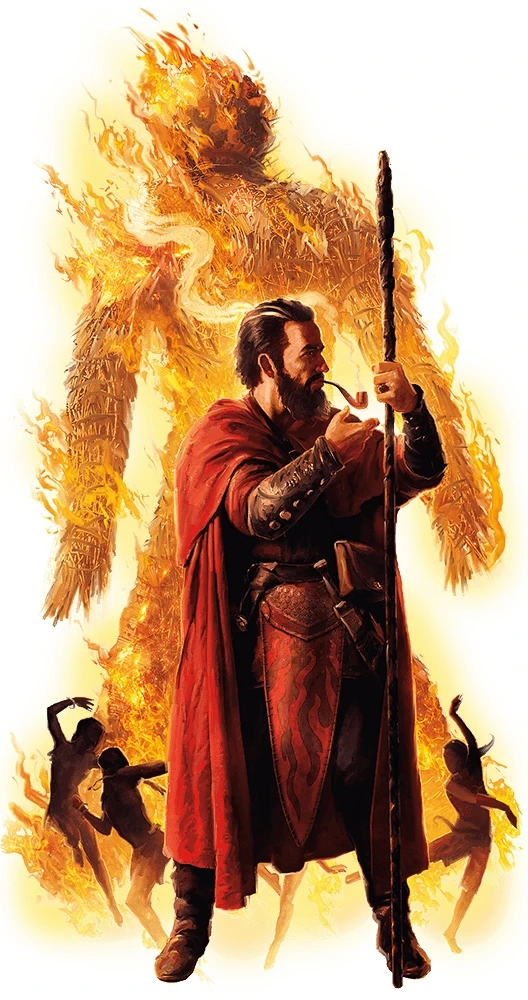
D&D 5e/5.5e Rules – Spell Scrolls!

Spells Scrolls aren’t spells, but they aren’t magic items, but they are actually both, which, yes, is sometimes confusing.

Know the RulesPart of an ongoing series of 5e (2014) Rules notes.  See the end of the post for notes on 5.5e (2024) rules.

The basic rule: you can only use a spell scroll if you are in a class that has the spell on its spell list.

Things seem pretty simple if you just look at the DMG’s description of Magic Items: Scrolls (DMG 139):

The most prevalent type of scroll is the spell scroll, a spell stored in written form …. A scroll is a consumable magic item. Unleashing the magic in a scroll requires the user to read the scroll. When its magic has been invoked, the scroll can’t be used again. Its words fade, or it crumbles into dust.

Unless the scroll’s description says otherwise, any creature that can understand a written language can read the arcane script on a scroll and attempt to activate it.

However, under Spell Scroll (DMG 200), the process is much more elaborate and restrictive (and in D&D, specific beats general):

spell scroll bears the words of a single spell, written in a mystical cipher.

If the spell is on your class’s spell list, you can read the scroll and cast its spell without providing any material components. Otherwise, the scroll is unintelligible.

Casting the spell by reading the scroll requires the spell’s normal casting time. Once the spell is cast, the words on the scroll fade, and it crumbles to dust. If the casting is interrupted, the scroll is not lost.

If the spell is on your class’s spell list but of a higher level than you can normally cast, you must make an ability check using your spellcasting ability to determine whether you cast it successfully. The DC equals 10 + the spell’s level. On a failed check, the spell disappears from the scroll with no other effect.

That page also includes a table for determining the saving throw DC and attack bonus:

Spell Level Rarity Save DC Attack Bonus
Cantrip Common 13 +5
1st Common 13 +5
2nd Uncommon 13 +5
3rd Uncommon 15 +7
4th Rare 15 +7
5th Rare 17 +9
6th Very rare 17 +9
7th Very rare 18 +10
8th Very rare 18 +10
9th Legendary 19 +11

Spell scrolls can also serve as fodder for a spell book.

A wizard spell on a spell scroll can be copied just as spells in spellbooks can be copied. When a spell is copied from a spell scroll, the copier must succeed on an Intelligence (Arcana) check with a DC equal to 10 + the spell’s level. If the check succeeds, the spell is successfully copied. Whether the check succeeds or fails, the spell scroll is destroyed.

If you want to read a discussion of whether Spell Scrolls need to actually be scrolls, check here.

What if I just want to know what is on the scroll, just not cast it (yet)?

Since we don’t have Read Magic any more in D&D, how do we know what is on a scroll? That’s actually … a question without a very clear answer.

The Identify spell will do it. But short of that, the answer is, “It depends.”

If the spell scroll is just a recipe for the spell, then the normal rules of (1) reading scrolls and (2) identifying what it does apply:

  • you need to be able to read
  • you need to be able to cast the spell in order to read it (i.e., it has to be in your class spell list)
  • and you need to spend a Short Rest trying to puzzle it out, just like any other magic item.

A beneficent, organized, communicative spellcaster, in forming the scroll, might have put a label on it (“Spell of Fireball” in plaintext). In which case you’d have a pretty big clue as to what it is and does, assuming you could find a beneficent, organized, communicative spellcaster’s works. And that you could actually trust that was what it does.

In theory, you could just cast the spell by reading it for the first time, without actually knowing what it does until the very end. A charitable GM might even let you make some sort of roll (e.g., Intelligence (Arcana) vs 10 + spell level) if, as you realize at the last moment what it does, you wanted to abort casting it. (It would still suck up a turn’s Action, though, as a minimum cost.)

I would also be willing to entertain the idea that, if you simply spend a Short Rest focusing on a scroll, you should be able to get an impression of what it does even if you could not use it and/or read it. A sense of the type of magic (necromantic, evocation), aspects of it (heat, cold, water, steel), colors, a usable class (choirs singing, the smell of damp earth), that sort of thing.

Or maybe not. Since you cannot actually read the scroll without being able to cast it, it sort of plays like “language” (“Crap, this thing is in German. Anyone know German?”) … but it’s definitely not a language. I mean, it’s possible to have a scroll that is usable (intelligible) to a druid and a sorcerer,  and second one to a sorcerer and a wizard, and a third to a wizard and a druid, and language simply doesn’t work like that. Instead, it’s as though the words and formulae tie into some sort of internal mindframe, some perception of reality, that is shared within some magic-using classes in some ways, but not non-magic-using classes (except, sorta, Rogues).

So more like, “Crap, this one is giving me a migraine looking at it, someone else want to give it a go?” Which might be the quickest way to deal with spell scrolls when found during an adventure, just having the various magic-users in the party pass each of them around until someone can read it. That is, you can quickly (if maybe painfully) tell if your class can use the spell, though you’ll need to spend that Short Rest to determine what precisely it is.

(Some interesting discussion here about this whole sub-question.)

What about Thieves?

Thieves are (in some cases) a weird exception to the above. At 13th level, Thief Rogues get “Use Magic Device” ability (PHB 97), giving them access to magical devices they would not be able to otherwise access.

By 13th level, you have learned enough about the workings of magic that you can improvise the use of items even when they are not intended for you. You ignore all class, race, and level requirements on the use of Magic Items.

This includes spell scrolls, per the Sage Advice Compendium:

Does the Thief’s Use Magic Device feature allow them to use spell scrolls? Yes. The intent is that a Thief can use spell scrolls with Use Magic Device

The thief would still have to make the ability check to actually cast the spell successfully, with the spellcasting ability = 0 (vs a DC of 10 + spell level), and without any proficiency bonus added in (basically a straight d20). If the spell requires a further spell attack roll, again the spellcasting ability is 0, but proficiency bonus does apply.

Do I have to Concentrate if I use a Spell Scroll to cast a spell that requires Concentration?

Yes. As the basic rules say (emphasis mine):

Some magic items [such as spell scrolls] allow the user to cast a spell from the item. The spell is cast at the lowest possible spell level, doesn’t expend any of the user’s spell slots, and requires no components, unless the item’s description says otherwise. The spell uses its normal casting time, range, and duration, and the user of the item must concentrate if the spell requires Concentration. Many items, such as potions, bypass the casting of a spell and confer the spell’s effects, with their usual duration. Certain items make exceptions to these rules, changing the casting time, duration, or other parts of a spell.

So scrolls give you the advantage of no components and no spell slots required. But you still have to concentrate/control the spells they cast.

Does any of this change in 5.5e?

dnd 5.5/2024The 5.5e (2024) edition rules do change some of the above.

Scrolls are now cast using the Magic Action in combat (which lets you cast a spell, or use a feature or magic item that requires a Magic action to activate).

The DMG (216) defines magical scrolls (beyond their physical description) as:

The most prevalent scroll is the Spell Scroll, a spell stored in written form. However, some scrolls, like the Scroll of Protection, bear an incantation that isn’t a spell. 

Great.

Just like in 5e, when reading the scroll to unleash its power, the scroll itself (or the writing on it) is destroyed.  The section concludes (on DMG 217; emphasis mine):

Any creature that can understand a written language can read a scroll and attempt to activate it unless its description says otherwise.

That sounds like the wide-open-reading clause in the 5e DMG.  However, if you look up Spell Scroll in the 5.5e PHB under (ch. 6) Equipment > Adventuring Gear, you find …
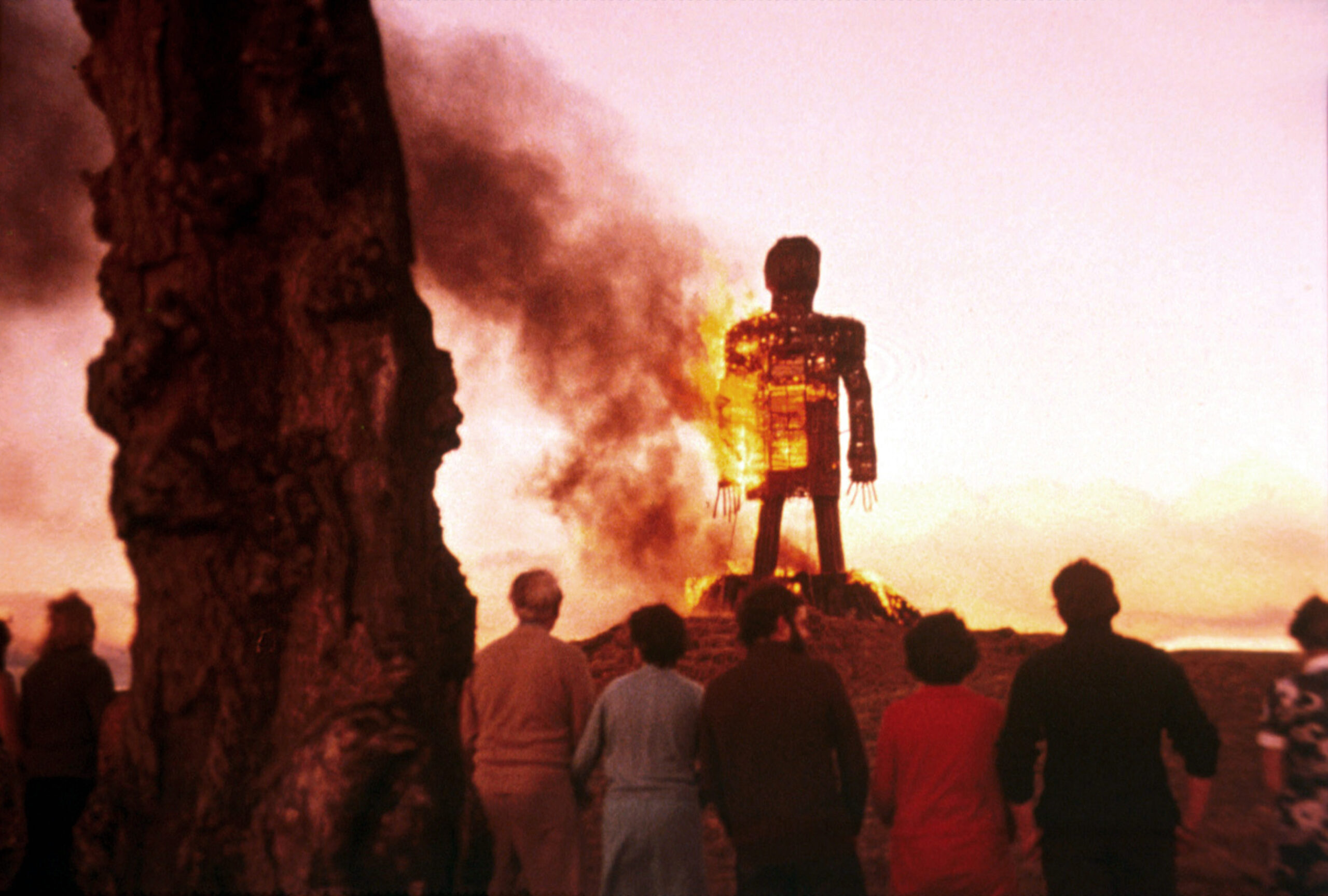
If the spell is on your class’s spell list, you can read the scroll and cast the scroll using its normal casting time and without providing any Material components. If the spell requires a saving throw or attack roll, the spell save DC is 13, and the attack bonus is +5.

There’s nothing about spell scrolls in the Magic Items section of the PHB (p. 233), but in the Crafting rules right afterwards, it does talk about creating spell scrolls, much more clearly than 5e did. 

  • A table is provided showing the time and cost of doing so (based on the spell level).
  • The scribe has to have Proficiency in Intelligence (Arcana) or in Calligrapher’s Tools, and must prep the spell each day while they are writing the scroll. 
  • Any material items are consumed when the scroll is completed.
  • For leveled spells, the Scroll’s spell uses Spell Save DC and Spell Attack Bonus of the scribe. For cantrips, the Scroll’s spell works as though the caster were the scribe’s level.

Spell Scrolls also come up in the Wizard class description [PHB 167], talking about expanding a Wizard’s Spellbook:

You could discover a Wizard spell on a Spell Scroll, for example, and then copy it into your spellbook. […]  When you find a level 1+ Wizard spell, you can copy it into your spellbook if it’s of a level you can prepare and if you have time to copy it. For each level of the spell, the transcription takes 2 hours and costs 50 GP. Afterward you can prepare the spell like the other spells in your spellbook.

Unlike in 5e, so far as I can tell, no Arcana roll is needed, nor is the Spell Scroll destroyed by doing so.

Thief and Use Magic Device

For this completely reworked Level 13 subclass feature, it notes (among other things):

You can use any Spell Scroll, using Intelligence as your spellcasting ability for the spell. If the spell is a cantrip or Level 1 spell, you can cast it reliably. If the scroll contains a higher-level spell, you must first succeed on an Intelligence (Arcana) check (DC 10 plus the spell’s level). On a successful check, you cast the spell from the scroll. On a failed check, the scroll disintegrates.