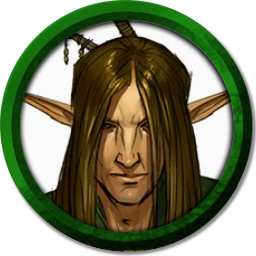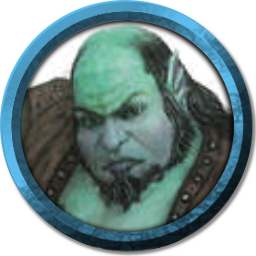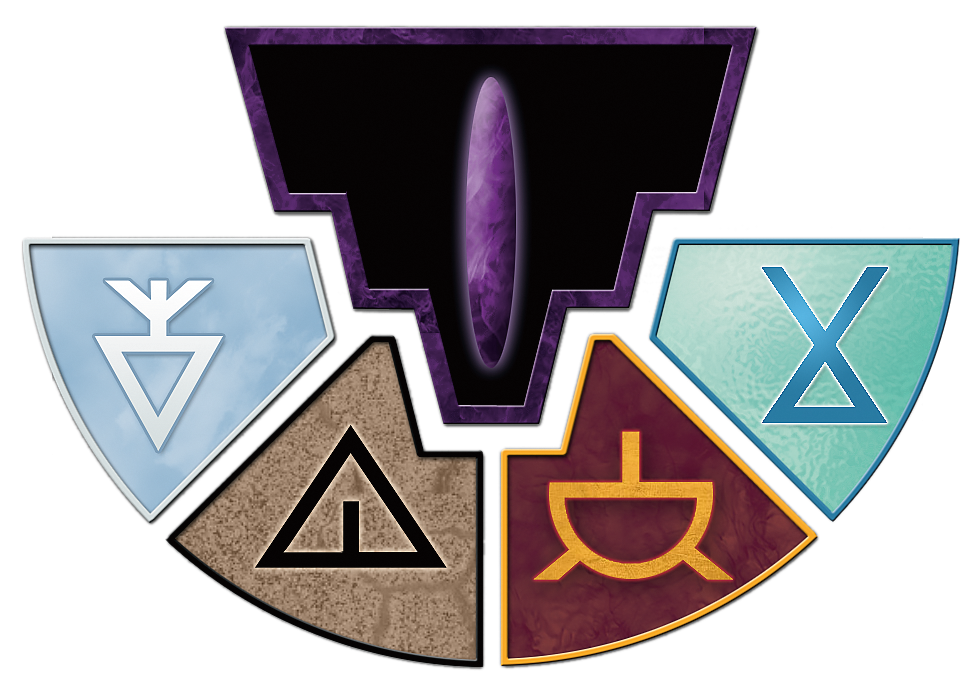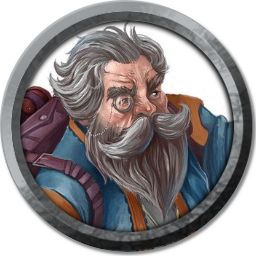
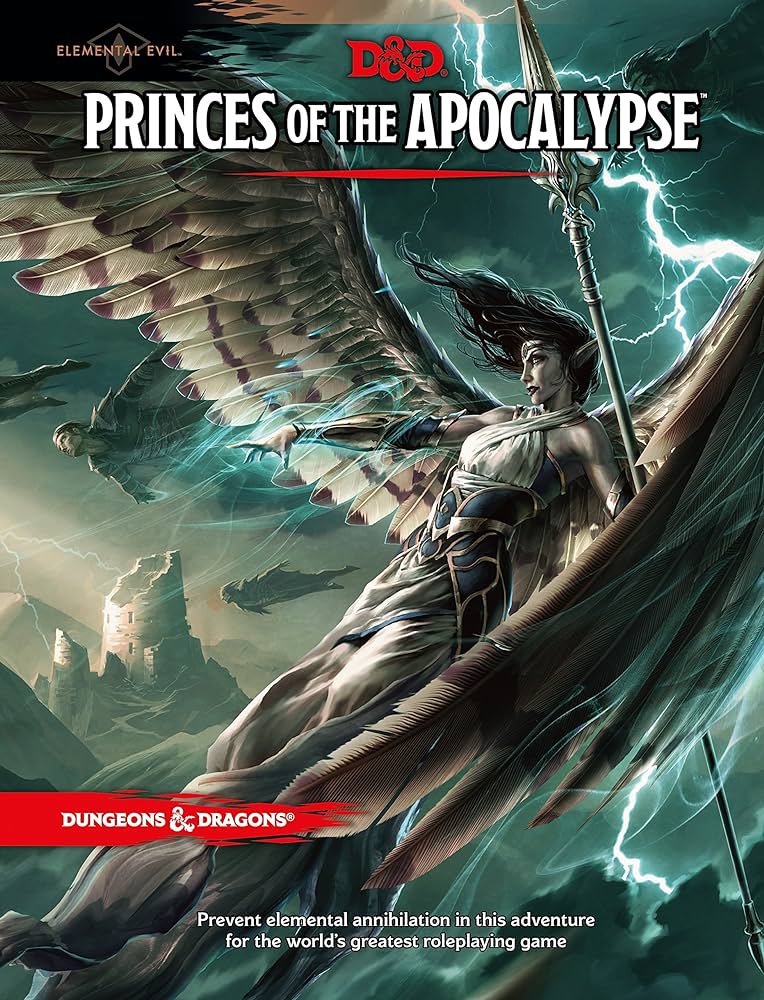
Princes of the Apocalypse, Session 21: “Gather at the River”

Wherein our party concludes its time at Rivergard Keep, and head onward to Feathergale Spire

Princes of the Apocalypse

This is part of a series about my DMing Princes of the Apocalypse, a D&D 5e adventure by and copyright Wizards of the Coast.

Table of Contents. The Party.

There will be SPOILERS. If you are playing in a PotA game, please don’t read this. If you are DMing a PotA game, or are a DM who wants to see what the ride was like … read on!


GM Recap

Session 21 (Days 26-27) 

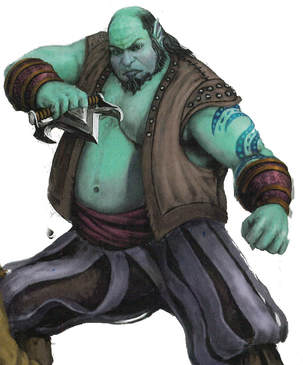
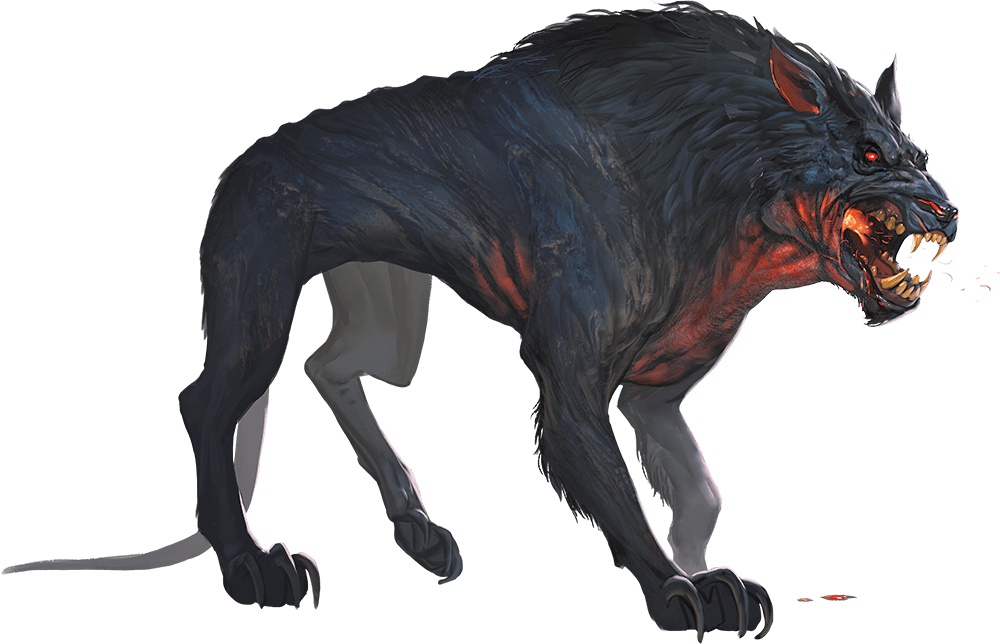
  1. Jolliver Grimjaw railed at them for the misfortune of Rivergard Keep, then offered them jobs. They offered not to kill him, and battle was joined. He turned out to be a wereboar and, in hybrid form, fought the team until finally taken down. He had on him the Necklace of Jolliver Grimjaw to match the Necklace of Hellenrae.
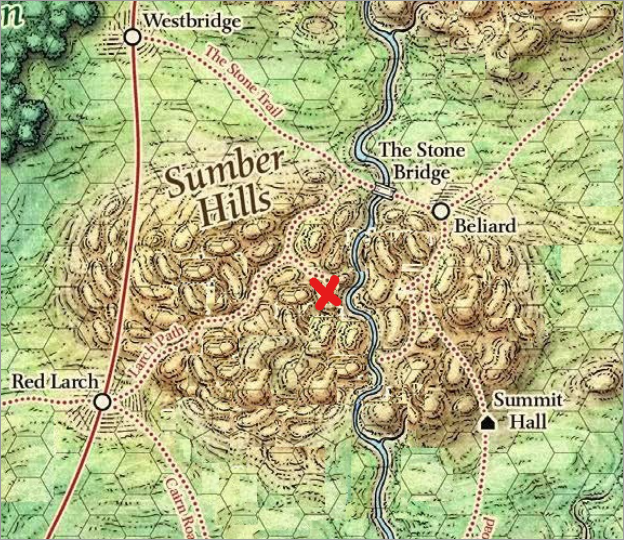
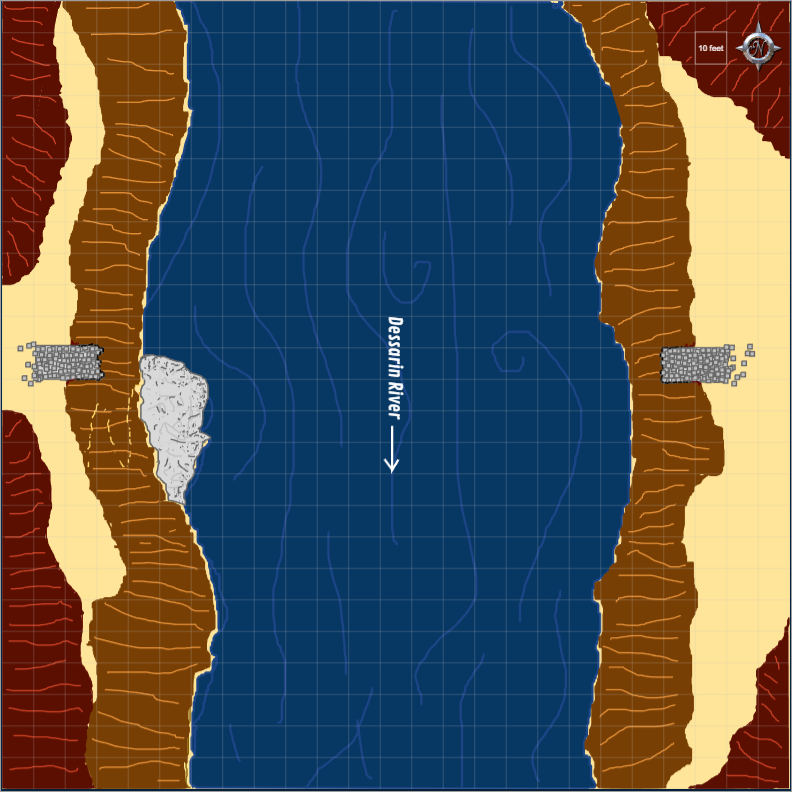
  2. An inspection of the castle found various bodies (both bandit and civilian) and charred destruction. They also found a secret door that led to a landing on an underground river, that flowed from the darkness into the castle’s harbor.
  3. There was concern, esp. after a dream he had, that Moony had become cursed with lycanthropy, being the only one to have taken a personal attack from Jolliver. Fortunately, Faith had Remove Curse.
  4. After an uneventful night (other than a dire dream for Faith), the party tried the boats at the underground landing, only to be attacked by ghouls rising up out of the water. After getting very wet, they defeated them and proceeded upstream, William as a shark. The stream was blocked by an impassable door Crushing Wave symbol on it. The twin necklaces definitely resonated with the door but … not completely.
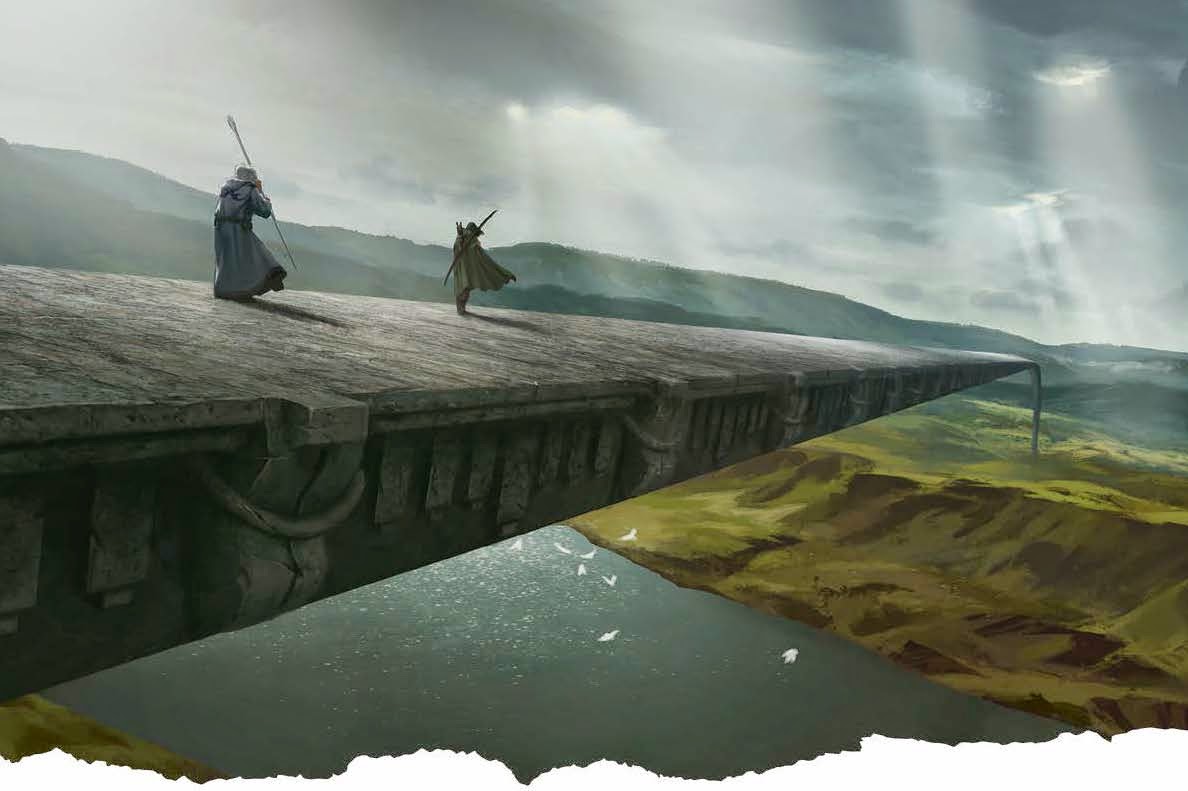
  5. The party set forth for Feathergale Spire to “report in.” They were greeted with open arms by Savra Hanadroum and Thurl Merosska, who offered them a place in the Feathergale Knights. He was then introduced to the new member of the group, Aldrik — at which point an Air Elemental landed atop the spire, in the middle of the group, battering them and throwing them all twenty feet distant, Savra over the railing, and Thurl crashing into a Giant Vulture. A woman’s voice said in elvish, “Now the prize is mine!” and the elemental carried Aldrik off to the east and out of sight …

Player Recap

Swoop There He Goes
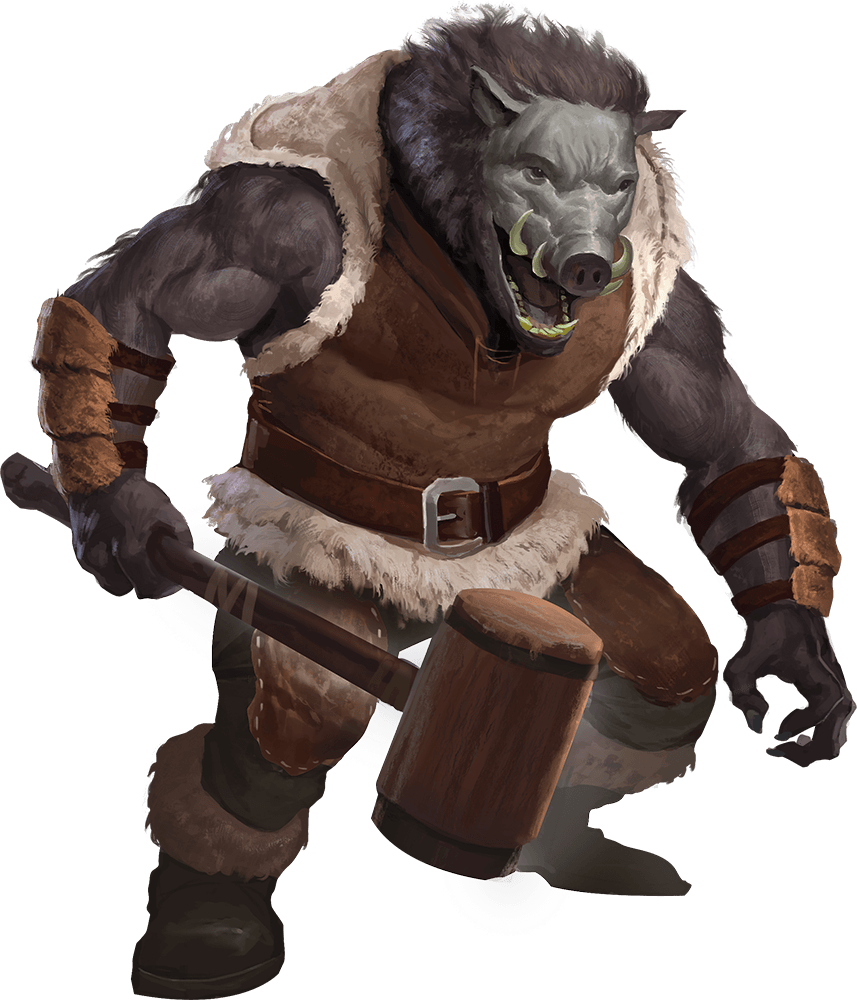
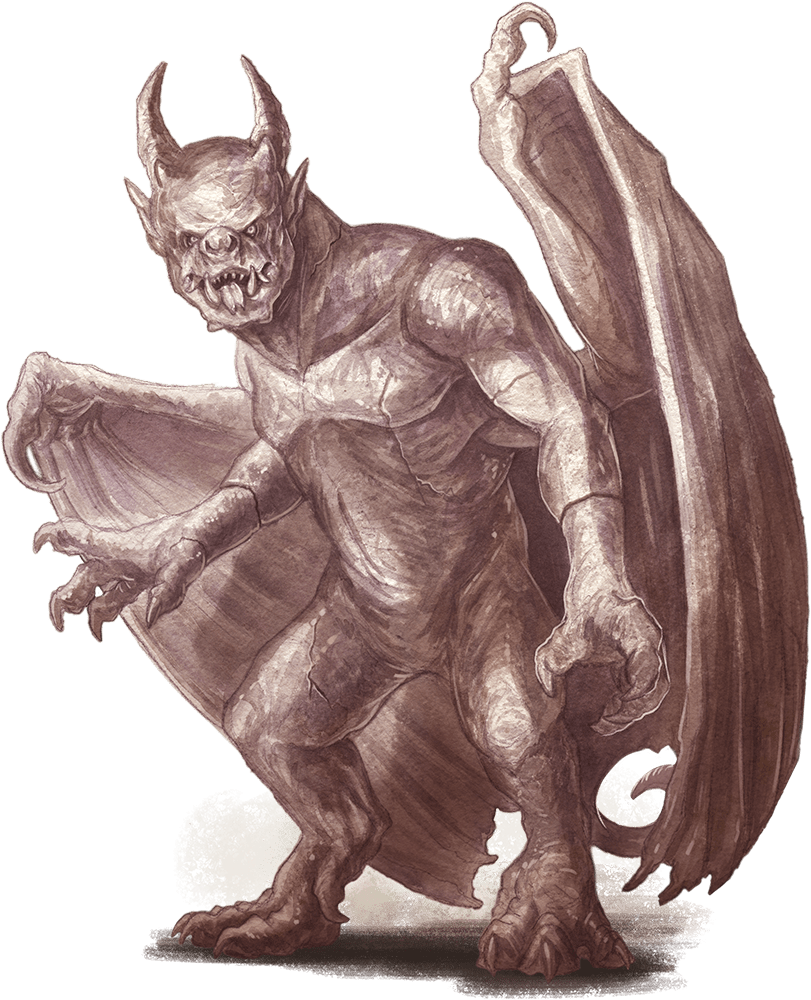
wereboar transitional form
Wereboar transitional form

Jolliver first blames the party for the destruction of Rivergard and then asks us to join him. When the party stops laughing. Moony suggest that Jolliver surrender and show them around the keep. There is more to Jolliver Grimjaw than initially meets the eye. He appears in a were-boar hybrid shape. The group soon discovers that he only takes damage when attacked with magic (or silver), but manage to do a number on him anyways. As the tide turns against Jolliver, he leaps from the balcony as he tries to escape. This does not end well for him. 

Jolliver has the Necklace with the Water Symbol, which a match to the Earth Necklace of Hellenrae. There is also a small carved stone shaped into a tiger. Nala finds a semi-hidden door leading out of the main hall. A quick search of the main hall reveals only dead bodies and stacks of papers. There is a staircase down to a dock alone on an underground river.

Theren and Faith stay in the keep to investigate the papers. The other explore the rest of the keep. 
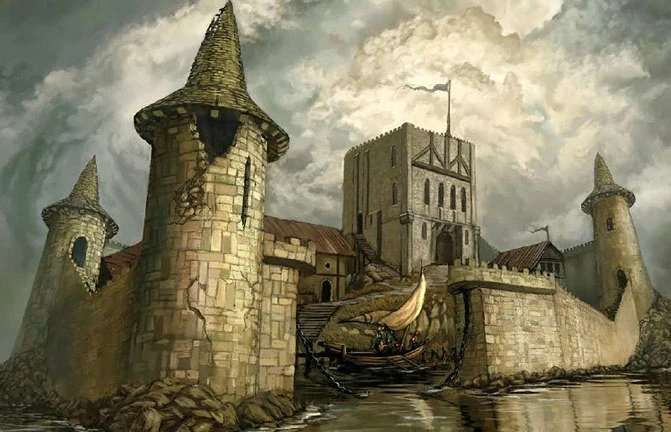
Rivergard Keep
Rivergard Keep is actually a nifty little castle, and could be repurposed for other campaigns.

Paper Chase: There are a lot of reports about loot acquired and gang movements. There is one note in distinctive handwriting about a “Group of Troublemakers” in Red Larch. It sounds a lot like the party. 

Room Rumpus: These rooms were previously locked, but are all broken into. There is a small library with charred furniture and a few burned scrolls. Moony collects the books together and William puts them in the duffle Bag of Holding. William looks around the rest of the library and discovers what looks like a hidden door in the corner, which leads into Jolliver’s room, which had been spiked but blown apart. There are multiple chests there, but all have been largely emptied out.

The remaining rooms have little else of notice. A guard barracks, a raided kitchen, servants quarters with wash tubs. A number of bodies, both guards and in civilian drudgery wear.

The chapel is in ruins. The barracks and wooden towers are mostly destroyed. It is getting towards late afternoon. The groups explores the keep for about an hour and a half. They find more destruction, dead bodies, and not much else. When it’s dark they have dinner and hunker down in Jolliver’s room. William reads some of the books from the library. They do not appear to be Bruldenthar’s books. They are mostly nautical in nature and include logs from the Savage Tusk.

Faith has a dream: She is walking through a storm wind whipping up all around her and grit striking. She can see the eye of the storm above her, but in the center of the eye is a triangular iris. Deneir.”Heads. Trophies. Do you know that in some faiths (wink), humanoids take the heads of their enemies and keep them as trophies? In other faiths (wink), they build stone heads of their heroes — their gods — their demons — and bow down in worship to them. In either case, to steal such a head is to gain power. Finding it will be most urgent, lest that power tip a very delicate balance, where an errant gust of wind can spell ruin for all.”

Moony has a dream: He is used to dreaming of hunting but there is something wrong about this dream. There is a puddle ahead of him. When Moony looks into it he see Jolliver.

In the morning Faith collects the heads of Reash and Jolliver. William insists on putting them in a chest or pot before they go into the bag of holding. William is attuned to the tiger fetish has a one use a day Jump spell on it. He gives it to Nala. Moony attunes to the water and earth pendants and determines that they still the other pieces. Faith casts a Remove Curse on Moony, just in case he was infected by lycanthropy, as he’s the only one who took physical (tusk) damage from Jolliver.

Going down the stairs to the underground river again, they take two of the row boats. Moony, Theren, William in one and Nala, Faith, Aldrik in the other. Nala spots a creature in the water near her boat. Faith casts Spirit Guardian calling forth angelic forms to protect the party. The ghouls tip over the boats, dumping everyone into the dark water. Despite that, the fight ends quickly with only minor damage to the party.

William changes into a reef shark and accompanies the boats up stream. The water ends in a stone wall with the Crushing Wave symbol on it. The water is flowing through the stone. The necklaces from Helenrae and Jolliver seem to resonate with the wall, with a sense that something more is needed. 

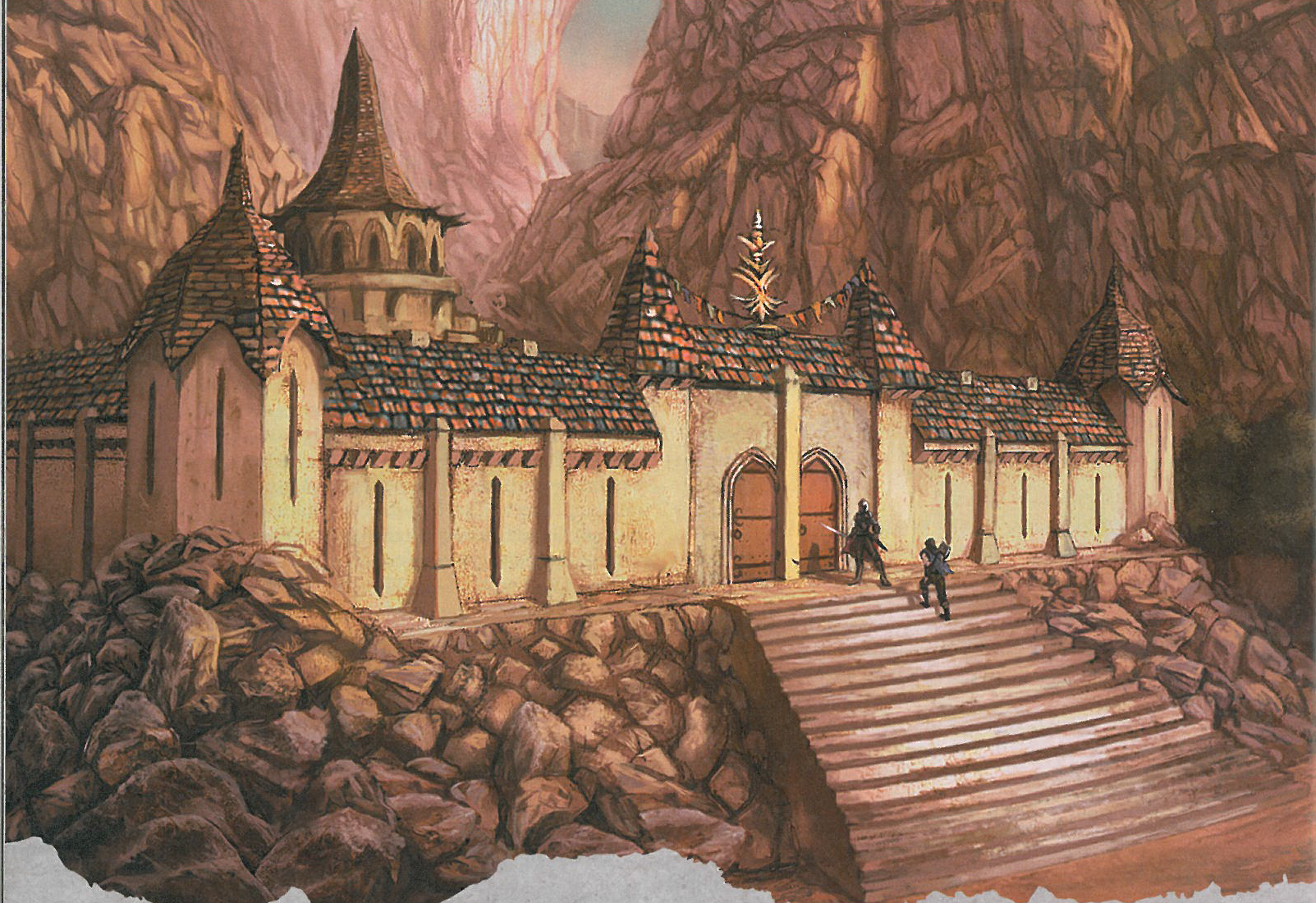
Feathergale Spire
Feathergale Spire.

It is late morning when they head out to Feathergale Spire. They soon see a giant vulture tracking them from high above. Shortly before they arrive, the vulture leaves and heads toward the spire. 

The Feathergale Knight Savra Hanadroum greets them warmly. William introduces Aldrik and explain that he was a captive of the monastery. She is thrilled that the group has succeeded in destroying the cultist in the monastery. She leads them into the castle and up to the roof to see Thurl Merosska.

“My friend you have accomplished so much in less than a ten day. What should I offer you as a reward. I offer you freedom … and membership in the Feathergale Knights.” Nala demurs because she has not fulfilled her original task of finding the delegation. Thurl asks after the new party member and when introduced he says, “Aldrik, Aldrik, that name sounds familiar.”

There is an abrupt, sudden, sheer force of air, a whirlwind lands centered on the group. Everyone on the roof get thrown back. Savra tumbles off of the parapet. Aldrik is swooped up by the air elemental and a female voice says in Elvish “Now the prize is mine! The air elemental heads towards the East / South-East, leaving everyone stunned.

Game Notes

Bon voyage, Jolliver
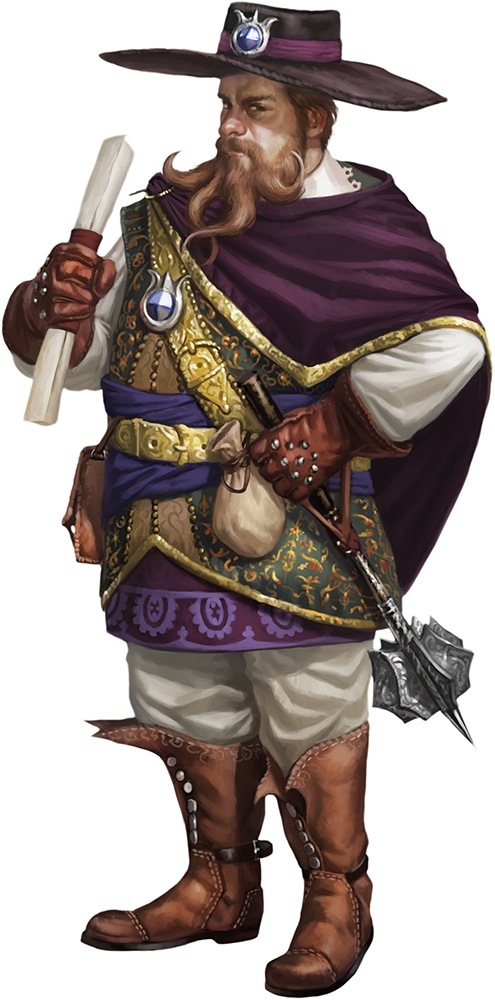
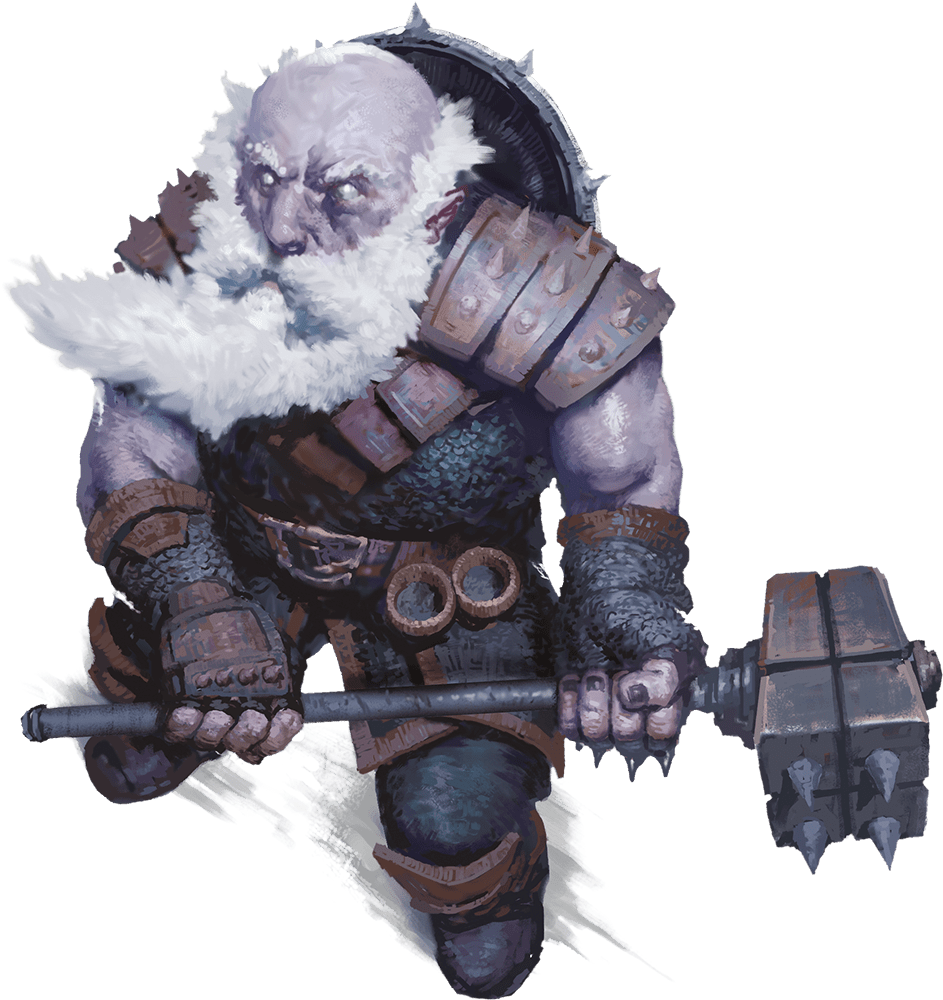
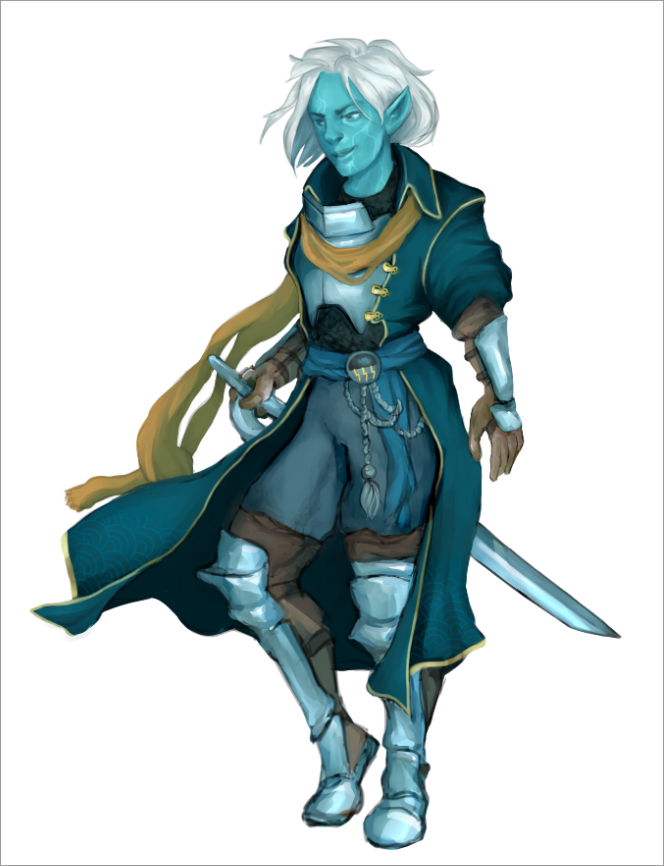
Jolliver Grimjaw
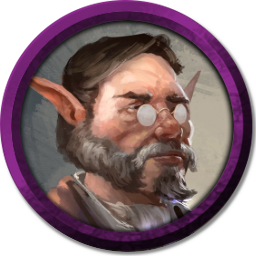
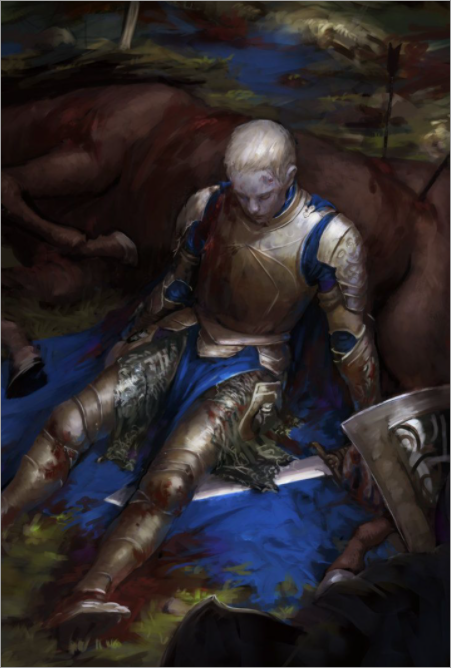
Jolliver Grimjaw, as I pictured him (artist unknown)

After a chance to vent his considerable spleen over the setup of a lifetime — being the pirate king of the Dessarin River while seeming to be its protector — he takes a very pragmatic, piratical approach: Would y’care t’join me crew? When they say no, he gets Action Economied to death …

… but not before wounding Moony, and, by gosh, I rolled all the right stuff to infect the Tabaxi as a were-boar … and then discovered how freaking easy it was for the party cleric to cast a Remove Curse. Darn.

The keep had already been ransacked by the Eternal Flame attackers — no big treasure windfall for the party, since they didn’t take the place down. But they got a few good things out of the mix, and that Jump trinket would be tactically helpful almost all the way to the end of the campaign.

The Underwater River

The whole setup with the underground river heading into the Water Temple portion of Tyar-Besil was kind of cool. Alas, the water ghouls didn’t turn out to be very much of a threat, in part due to level, in part due to that ridonculous Spirit Guardians spell (or “The Fairy Buzz Saw of Death,” as I tended to call it), which the cleric used to great effect for the rest of the campaign.

It was also my first real opportunity to dive (see what I did there) into how kind of goofy the 5e water combat rules are.
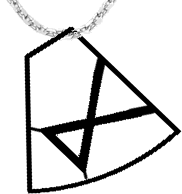
The Necklace of Jollier Grimjaw

The river — which fits into the keep very neatly once you get to it — is supposed to lead into the Water Temple — which would have been a very dangerous adventure for the party at this point. As mentioned previously, I’d blocked all these entrances until all the “key” necklaces were collected — including the one they picked up this session, the Necklace of Jolliver Grimjaw.

Up, up, and away!

What the hell is going on with Aldrik at the very end?

Aerisi token
Aerisi token

Well, for one, thing, my son was headed back to college, so I had to do something with his character while he was away. Having him kidnapped by an Air Elemental, and having everyone hear Aerisi Kalinoth’s voice say something ambiguous but threatening, seemed perfect.

(Nobody knows it’s Aerisi, of course, except for Thurl … which will have implications next time.)

But the idea that there was more mystery to Aldrik, such that Aerisi would want to kidnap him … started to build some campaign lore and plotting on my part that would play off in several ways in future sessions. Once the son was back, of course.

Bits and Bobs

The letter in Jolliver’s office (information about which letter is scattered in multiple places in the book) is from Justran Daehl, the cellarkeeper of the Highsun Tavern back in Red Larch. Yes, it is referring to the party; Justran is Jolliver’s spy in Red Larch and on the Long Road.

Strangely enough, it’s one of the few documents of that sort which is not actually spelled out, so I never did a facsimile of it as a hand-out.
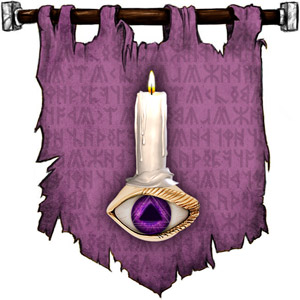
Symbol of Deneir
Symbol of Deneir

In retrospect, I have no idea what Faith’s dream was about. I’m sure it was very clever and foreshadowing. It might be a warning to about finding Aldrik after gets kidnapped later, but I’m afraid Deneir is smarter and more cryptic than I am.

I actually played the knockback from the Air Elemental’s landing Whirlwind attack completely legit. All the players legitimately ran into stuff along the Spire’s parapet (or made a save and didn’t get thrown back). Thurl really did get knocked into a Giant Vulture, and Savra really did get knocked over the edge …


<< Session 20 | Session 22 >>

D&D 5e/5.5e Rules – Swimming! And Drowning! And Water Combat!

Sooner or later, you end up fighting in the water. Or swimming. Or being held under the surface. So how does that work in 5e?

Know the RulesPart of an ongoing series of 5e (2014) Rules notes.  See the end of the post for notes on 5.5e (2024) rules.

5e has very much simplified (perhaps oversimplified, some argue) the issue of dealing with water as an obstacle, a location for fighting, and a danger. Always remember, D&D is not a physics simulator (or, as some have countered, it is a horrendously and hilariously bad physics simulator).

Note that there are a lot of exceptions below for creatures that have a Swimming speed in their stat block.

Movement in the Water

Water is basically considered Difficult terrain if you don’t have a native Swimming speed. That is, each foot moved costs two feet of movement. If the terrain within the swim is itself Difficult (e.g., a strong current, a kelp bed, etc.), this might increase to each foot moved costs three feet of movement.

You can, however, use any other movement speed (e.g., walking, flying) to swim with.

If the water is “rough,” making any progress swimming might require a Strength (Athletics) check.

There is (remarkably) no distinction in speed between swimming underwater or swimming on the surface.

Don’t forget the Dash action, if you are doing nothing but movement.

Long-Distance Movement in the Water

swimming
Long-distance swimming

If you have a Swimming speed, you can swim all day without penalty; use Forced March rules from the PHB.

Otherwise (per DMG 116), you need to roll a CON Save vs DC 10 for each hour swimming. Failure means +1 level of Exhaustion. Beyond that, there is a cap on 8 hours of swimming per day.

Deep Water

The pressures and temperatures of deep water take their toll. Per DMG 116, for creatures lacking a Swimming speed:

  • if swimming over 100 feet deep, makes every hour count as two for Exhaustion checks and limits.
  • if swimming over 200 feet deep, makes every hour count as four for Exhaustion checks and limits.

Vision in the Water

  • Clear water, bright light — 60 foot visibility to notice an encounter
  • Clear water, dim light — 30 foot visibility to notice an encounter (Disadvantage to Perception).
  • Murky water / no light — 10 foot visibility to notice an encounter (Disadvantage to Perception).

The above presume light sources or Darkvision.

Doing Stuff in the Water

By which we mean, of course, combat and magic.

Combat in the Water

Underwater Knight
Note: breathing gear is cheating.

When fighting underwater, again unless you have a native Swimming speed:

  • Melee weapon attacks are at a Disadvantage (as you and/or your weapons are slowed by the drag of the water) …
    • … except for a thrusting/piercing weapon like a dagger, javelin, shortsword, spear, or trident.

This melee weapon restriction Rule-As-Written would seem to apply to fighting while on the surface (swimming), or even while partially immersed (imagine fighting in waist-deep water); I’m not sure that last makes sense, and an appeal to the DM might be possible. (I can see any sort of melee weapon attack being at Disadvantage when standing in, but not under, water, as you are partially Restrained.)

  • Ranged weapon attacks are possible underwater, but they are at a Disadvantage …
    • except when using a crossbow, net, or a weapon thrown like a javelin, spear, trident, or dart.
    • They are an automatic miss if beyond normal range.

Magic in the Water

Back to the Future - Enchantment under the Sea
Also known as …

You can cast spells underwater.

  • But if they have a Verbal componentyou have stopped holding your breath and have gone into step 2 of Drowning (below).
  • Material components may be difficult to manipulate while swimming or immersed in water. Arcane/Spiritual Foci are your friends!
  • Somatic components aren’t a problem, as only a single hand is needed for them.

Spells that require a to-hit roll do so at a Disadvantage (if above water, because of aiming while trying to stay afloat; if underwater, because of the murk and visual distortion underwater, and drag on your body).

True Lies swimming under water fire
Great way to resist Fire damage, Harry!

When you are fully immersed in water, you have Resistance to Fire damage.

But aside from that, spells don’t do anything tricky. For example, lightning does not electrify the whole area. (Remember (a) Bad Physics Simulator, and (b) it’s not actual lightning, it’s magic acting like lightning (handwaves)).

Going “Prone” underwater

If something should knock you Prone while in the water, you are instead tumbling/floundering … but suffering the same status effects as being Prone condition (including slowed movement, Disadvantage to attack, Advantage to adjacent attackers) until you “stand up” / regain control with half your movement. (References 123).

Drowning

DrowningThe rules here are essentially the same as suffocation rules:

  1. You can hold your breath for (CON mod + 1) minutes (with a minimum of 30 seconds or five rounds).
  2. After that you survive (CON mod) rounds (minimum of 1) without needing more air.
  3. After that, you are at 0 hp and are unconscious and dying. You can’t stabilize or heal until you can breathe — even if you make your three successful Death Saves, you only erase any unsuccessful ones and start the process over. You can be magically healed, but that can only get you back up to Step 2 unless you are out of the water by then.

Example: A creature with CON = 14 (CON mod = 2) can hold their breath for 3 minutes (30 rounds). After that, they start drowning/suffocating, and have 2 rounds (12 seconds) to reach air before dropping to 0 hp.

Note that 3 minutes (or even 1 minute) is a ridiculous amount of time in the game. People tend to be terrified of their character running out of air … the first time they get into underwater combat.  (It’s still a real danger, but not a present one.)

Workarounds

  • Various races can either breathe underwater, or (such as Lizardfolk and Tortles) can hold their breath for longer, as defined in their stat blocks.
  • Wild Shape and Polymorph can change folk into creatures that can swim or breathe in water.
  • Anything that magically gives you a Swimming speed will be useful in the above.
  • Water Breathing is a spell that literally lets you breathe underwater for 8 hours. It’s a 3rd level for Druids, Rangers, Sorcerers, and Wizards, can affect up to ten people, doesn’t require concentration, and can be done as a ritual. Alternately, Water Walk (same parameters) lets you walk on water and not worry about having to breathe it.

Wait, that’s it?

But aren’t there some classic tropes that these rule ignore?

Yes.

Drowning in armor
“A Drowning Viking, possibly Olav Trygvason (968-1000) of Norway at the Battle of Svold on 9th September 1000”
  1. There’s no provision for heavy armor or a full backpack dragging you to the bottom, etc.; if you are strong enough to wear it, you are strong enough to swim in it (handwaves) … which is good, because it takes 5 minutes to remove heavy armor.
  2. There are no provisions for using up breath faster if you are (slowly) flailing about with your greatsword instead sitting still and preserving oxygen.

Again, largely this is because D&D is a crappy physics (and biology) simulator, and intentionally so. The game design thought seems to be “Does this complication take away from the fun? Does it mean extra calculations, rolls, and otherwise bogging-down of the game? Then simplify or eliminate it.”

(Note to self: if I ever decide this is too simplified, this site has some interesting homebrewed additions.)

Any changes here with 5.5e?

dnd 5.5/2024The rules in 5.5e (2024) for swimming (and drowning) aren’t changed too much from 5e (2014).

One place there is more clarification seems to be with when these swimming rules come into play for movement and combat.  The Difficult Terrain definition notes it applies in water between shin-deep and waist-deep. Water any deeper than that you are arguably either swimming (feet off the bottom) or most of your body is underwater and your movement (for moves and combat) are hampered enough that the swimming rules start to apply.

Swimming is defined in 5.5e:

While you’re swimming, each foot of movement costs 1 extra foot (2 extra feet in Difficult Terrain). You ignore this extra cost if you have a Swim Speed and use it to swim. At the DM’s option, moving any distance in rough water might require a successful DC 15 STRength (Athletics) check.

That’s pretty close to 5e, if a bit more simplified. 

The drowning rules are a little different (though, as before, they come up under Suffocation as a Hazard): 

A creature can hold its breath for a number of minutes equal to 1 plus its CONstitution modifier (minimum of 30 seconds) before suffocation begins.

So far, so same.

When a creature runs out of breath or is choking, it gains 1 Exhaustion level at the end of each of its turns. When a creature can breathe again, it removes all levels of Exhaustion it gained from suffocating.

Here’s where things get interesting (and simpler in a useful way) in 5.5e. Rather than have a final CON-based seconds to get to air and then dropping to 0 hp, you “simply” start accruing Exhaustion each round, i.e.,

  • Your D20 Test rolls are reduced by (2 x Exhaustion level)
  • Your Speed is reduced by (5′ x Exhaustion level)

This is fully reversable, instantly, upon being able to breathe again. 

But, if it goes on 6 rounds (6 levels of Exhaustion), you are dead. Not dying. Dead. No Death Saves or Stabilizing. 

Simpler. Not necessarily more or less dangerous.

The rules on combat underwater remain the same as far as disadvantages and weapon / range limitations if you don’t have a Swim Speed. I could not find any commentary on spellcasting underwater, but presumably it is much the same.

There is still no distinction made for hauling around massive weight or armor  and how well you can swim (or sink). There is also still no modification in the drowning rules for minimizing activity.

Deep Water swimming has been modified (DMG 68). Only a 100 foot level is specified; after swimming an hour at that depth or below, creatures without a Swim speed need to succeed on a DC 10 CONstitution Save or take a level of Exhaustion.

If water is particularly “frigid” (DMG 68), then creatures can be immersed in it up to CON minutes; after that, each minute requires a DC 10 CONstitution Save or take a level of Exhaustion.


Princes of the Apocalypse, Session 20: “Halls, Keeps, and Spires”

Wherein our party travels to various places, and both encounter and bid farewell to diverse folk.

Princes of the ApocalypseThis is part of a series about my DMing Princes of the Apocalypse, a D&D 5e adventure by and copyright Wizards of the Coast.

Table of Contents. The Party.

There will be SPOILERS. If you are playing in a PotA game, please don’t read this. If you are DMing a PotA game, or are a DM who wants to see what the ride was like … read on!


GM Recap

Session 20 (Day 25-26) 

  1. The party looted the bodies, which included a Bag of Holding with 3750gp of loot, and a water-element person’s head. They interrogated the prisoner Ven Delaar, learned about Fire/Water rivalry, and his devotion to his high priestess, Vanifer, the servant of  Imix. Theren gacked  him once all the questioning was done.
  2. Bruldenthar was very unhappy there was no sign of his books. 
  3. They arrived at Summit Hall, where Narl Elrok was whisked away for interment in a private ceremony overnight, and Oreioth was put in gaol, awaiting either word from Red Larch or the order’s leader, Ushien Stormbanner, deciding his fate.
  4. They brought Ushien up on their adventures. She was dismayed to learn that Renwick was operating out of Sacred Stone Monastery, and skeptical of what he had told them of Samular Caradoon‘s role in his metamorphosis.
  5. They Spoke with Dead to the head, one Reash the Fathomer. He spoke of the conflict against Fire, of the attack on Rivergard Keep where he died, and of the goals of the Crushing Wave to envelop all. He also mentioned following someone/thing named “Shatterkeel“.
  6. A quartet of young druidsVarigo, Muldoon, Iniri, and Fariya  were at Summit Hall, traveling to the mysterious Circle of the Scarlet Moon rite in the Sumber Hills, inspired by a vision of Iniri’s. They didn’t take well to the suggestion that it was some sort of evil magical gathering.
  7. The next day, the party decided their next stop should be Rivergard Keep, which it seemed the Eternal Flame forces had attacked (Ushien mentioned smoke from its direction a day or two before). They traveled overland to where they had stashed their boat, which, remarkably, was still there, hidden. They traveled upriver to the keep, which they finding it a smouldering wreck. They slowly entered, made their way to gutted Great Hall, and encountered both the headless body of Reash … and the very much alive Jolliver Grimjaw. “So. You’re back,”

Player Recap

Of bodies and questions
Eternal Flame symbol (red trans)
Symbol of the Eternal Flame

The group ties up the hostage and begins searching the bodies. All of them have a burns on them in various states of healing. The leader also has a large fire symbol on his chest. It looks like there are multiple layers of scars on his chest.

There is a stack of leather bag to one side that contain ration, camping supplies, and small travel items. There is one larger duffle bag the is different from the others. Moony checks it over and when he opens it up it is very odd. It is very cold in the bag. there appears to be a wooden chest inside that doesn’t match the shape outside. Moony brings it over to Theren who sizes it up. He immediately identifies it as a Bag of Holding. As they empty it they find two chests and bundle wrapped in cloth. Moony investigates the bundle. It has a green stain on the side. It is a green head. Probably dead for about a day. Faith casts Gentle Repose. It looks aquatic, but is different from the Genasi captain Shoanderil Quanderil. They return it to the bag of holding.

Moony moves onto the two chests. The smaller chest has a gold chain with a platinum disc that looks like the crushing wave water symbol, some gems and a stash of coins. The larger chest has about 2000 gold pieces. William will hold onto the bag. 

When Bruldenthar sees that the larger chest contains gold, he speaks a harsh curse in Dwarvish and goes to the two remaining crates. When he finds them empty, he is clearly upset. “Where are my books?” Faith heals the captive to allow Theren to interrogate him. The fire and the flame, the great war — they seek to pull us down into the cold depths … Vanifer and her weapon Tinderstrike. Imix, the prince of evil fire, himself offers his power to her as he engulf the world in flames. Moony shows him the head. It is a prize for Vanifer. We got it from the dark and fetid pit. “I know that you will kill me. It is okay. I would do the same.” 

William determines that they came up the ancient road from the direction of the river. Faith recognizes the name Imix. Imix – evil destructive, but prefers to destroy that which is crafted or cherished by others. 

Ushien token
Ushien token

The group returns to the main road and arrives at the Summit Hall before night fall. Lady Ushien Stormbanner welcomes them but is surprised to see them so soon. She looks at the coffin with concern. She relaxes slightly when learns that it is Narl. The order will celebrate his life tonight and stand watch over him that night. There will be a private ceremony in the morning. 

Nala explains the presence of Oreioth the necromancer and their dilemma of what to do with him. Lady Stormbanner agrees to keep him and if required judge him. Over dinner they share their story. Ushien knows that Renwick is a lich, but bristles at the suggestion that their founder Samular had anything to do with his creation. The remainder of the conversation continues the story of their travels. Ushien is also troubled by the rise of the elemental cultists. When William mentions the ceremony of the Scarlet Moon, she let out that there are some guests staying in one of the cottages who are heading to the event. 

After dinner, the group is at loose ends. Nala examines a small shrine to Samular is in the hall with relics of the knight’s founder. William and Faith spend some time in the library while others relax in their room before they all retire for a long rest. Faith enjoys the first dreamless rest since the left Summit Hall. 

Moony and William going down to the other guests in the morning when the hall brings breakfast down to the cottage. There are some caravan wagons within the palisade. Sitting on some wooden benches outside one of the cottages is a quartet of individuals. Varigo, Muldoon, Fariya, and Iniri are all druids. They have travelled from the South Woods. Iniri heard of the ceremony and was called in a dream. Was told to come to the North to the great hill to control and end the elemental energy 

Interview with a dead man

Reash
Reash has lost some weight.

Who are you? I am Reash the Fathomer 

Who did this to you? So fleeting, so unsubtle. Ones of the Fflame.

Why did they seek you out? Fire hates waters. We quench it and smother it. They struck in our weakness, which you know of. His eye’s flicker to Nala. 

What are you trying to accomplish? We seek to arouse the wellspring of life to cover all things. We serve the Shatterkeel and will bring all down into the darkness. 

Where were you murdered? In the hall I’d sworn to defend. In the hall of Jolliver. 

Bruldenthar bids the group farewell and plans to continue to Waterdeep to tell of the delegation. Leave going south on the road from Summit Keep and back towards the river where their boat is amazingly still there. Travel up river to Rivergard Keep.

The once partially-repaired keep is a smoking ruin again. The chain across the harbor is fused tight. Pulling up on the riverside south of the dock-harbor they head to the Western entrance. The iron bound wooden gate is burned through. Some dead bodies. The chapel is rubble. Boat sunk in the harbor. The doors to the hall are also burned away. In Jolliver’s hall there are more bodies and roof is destroyed. As we walk towards the headless body belonging to Reash.

Jolliver Grimjaw: “So, you are back.”

Game Notes

Sic transit gloria Rivergard Keep

Since the party had sort of gone the long way around with the Haunted Keeps — leaving Feathergale Spire intact, leaving Rivergard Keep intact, then taking out Sacred Stone Monastery — I needed to figure out how they would work backwards, especially as it was clear they were headed back that way.

I mean, I could let them try to sneak in — something the party was rarely good about trying. Or I could try a full frontal assault, which seemed a bit much even for this group, as the Keep is, literally, a fortress.

Or …

I considered what I’d done to Rivergard. The party had some small amount of damage on their way through the first time. But subsequent to that, Drosin, the Easily Offended Crushing Wave Priestess, had taken most of the keep’s forces with her to an ambush of the party later, on the road to Sacred Stone Monastery. That had gone … poorly, meaning most of the Keep’s defenders had been wiped out.

And given the internecine warfare between the different elements, it makes perfect sense that the Eternal Flame would have launched a preemptive strike on the Crushing Wave’s surface fortification. And so they had,  wiping it out nearly to a man.

Jolliver token
Jolliver token I had to actually create.

Jolliver Grimjaw is, of course, a survivor. And just the sort of guy to hold a grudge. His grumpy greeting is meant to mirror his grumpy greeting when the party first arrived.

Planting the seeds of what happened with Reash’s head / war trophy that the Fire Cultists were carrying (ew), suitable for Speak with Dead extraction, was icing on the cake.

Encumbrance and the Bag of Holding

I hate Encumbrance rules. I really do. They are emblematic of everything wrong and dull and boring and grindy about D&D and, usually, any other game. Don’t get me started on LotRO …

From my perspective as either DM or Player, Encumbrance rules add nothing to the story and everything to annoying paperwork.

They are of value only in two occasions:

  1. Things have gotten desperate, and the party sheds all but its weapons to make the final push across the wilderness.
  2. The party has hit the jackpot and is seriously trying to think of how they can transport that twenty-foot-tall, ten ton golden statue of Asmodeus back to town.

Anything besides that should depend on the DM saying, “You’re beginning to be weighed down quite a bit — might be time to head back to town.”

Or, you can just give them a Bag of Holding. Like I did.

Duffel Bag of Holding
More like a Duffel Bag of Holding

And, honestly, I was not a hard-ass about the Bag of Holding, and didn’t get picky about its rules. I did eventually say, at one point, “You know, that Bag of Holding is beginning to get a bit full — might be time to head back to town.”

And that was it. The players didn’t abuse it. It got rid of a bunch of record keeping. Win-win for everyone.

The Young Druids

Elizar token
Official Elizar token, though I wish I’d instead tokenized Christopher Lee.

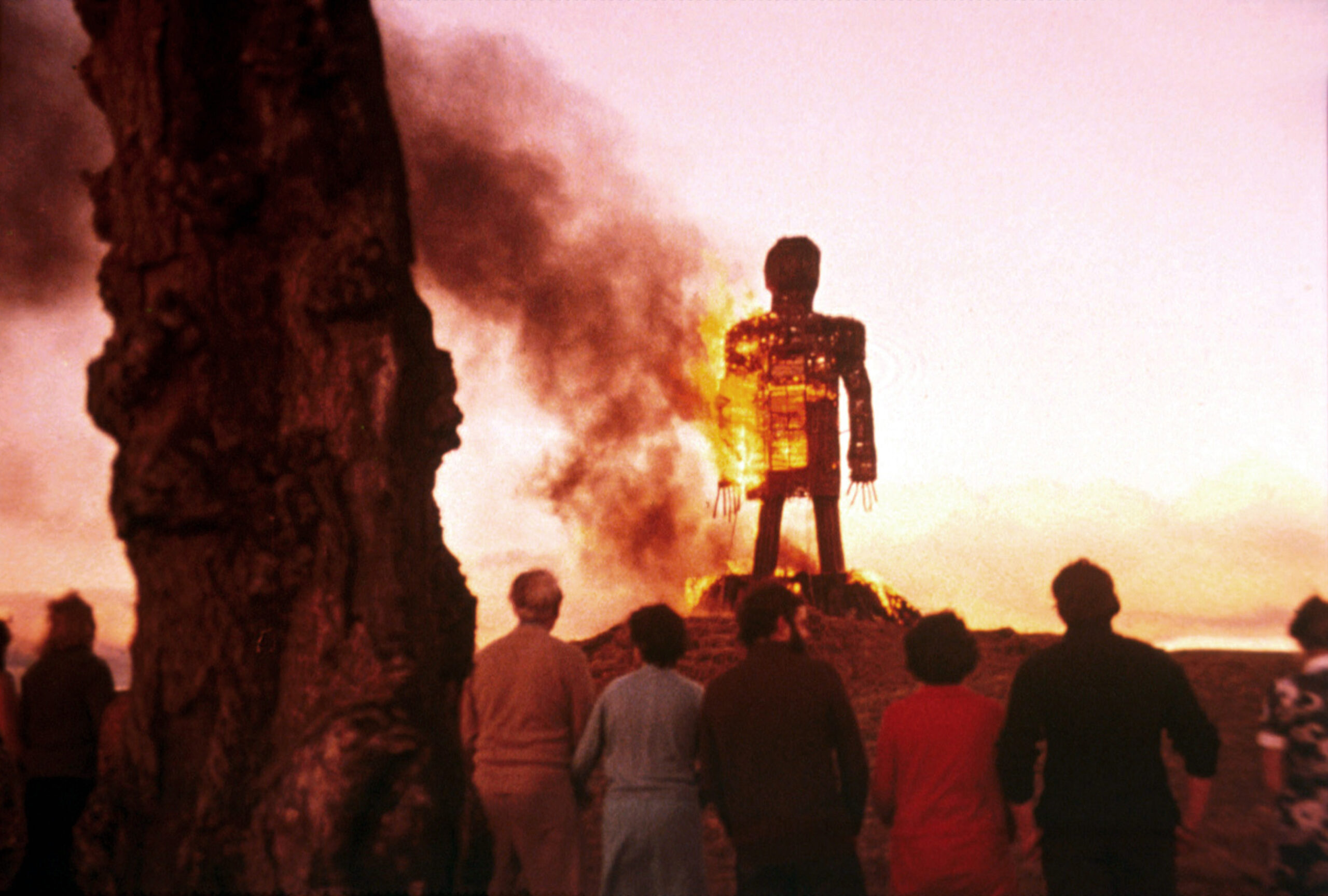
I loved the conceit that Elizar was actually recruiting people to come to Scarlet Moon Hall to participate in (as worshippers or, um, kindling) the Rite of the Wicker Giant. It’s one thing to recruit ne’er-do-wells and the psychotic who are drawn to the darkness of the Evil Elemental Eye; it’s another to put up hand-bills in pubs and the like.

The Wicker Man - burning
Seem legit.
Varigo token

The four druids named –Varigo, Muldoon, Iniri, and Fariya — are actually in the game, as one of the camps at Scarlet Moon Hall, with a couple of elk companions. They’re noted as good guys that Elizar has already decided can’t be recruited and so will be sacrificed.

Druid Fariya token
Fariya token

But that’s it. And, as recall, they just had generic druid tokens. Bah. So, when I decided that I would have some folks who had heard (in a dream) about this big gathering show up at Summit Hall at the same time as the party, they seemed a good set to flesh out as, kinda-sorta flower children, devoted to their causes, and each other, but both too trusting and too rebellious for their own good.

Young Druids
Of course they live on a druidic commune. Or plan to, some day.
  • Druid Iniri token
    Iniri token

    Varigo – human, ostensible leader, protective of “his people,” romantically involved with Muldoon.

  • Muldoon – elf, quiet, friendly, romantically involved with Varigo.
  • Iniri – human, passionate, saw the visions that sent them questing for the Circle of the Scarlet Moon.
  • Fariya – human, practical, a bit less idealistic than her friends, but deeply supportive of them.
Druid Muldoon token
Muldoon token

(Their elk had names, too, but I didn’t write them down for some reason.)

Anyway, these guys became recurring characters, introduced here, early, showing up at Scarlet Moon Hall, and being referenced after that. I liked them a lot, certainly more than just some generic plot bait as they were drawn up. I have no idea how the players liked them, but they made things more fun for me.

Bits and Bobs

Reash token
Reash, at this point just a head. A dead head, in fact.

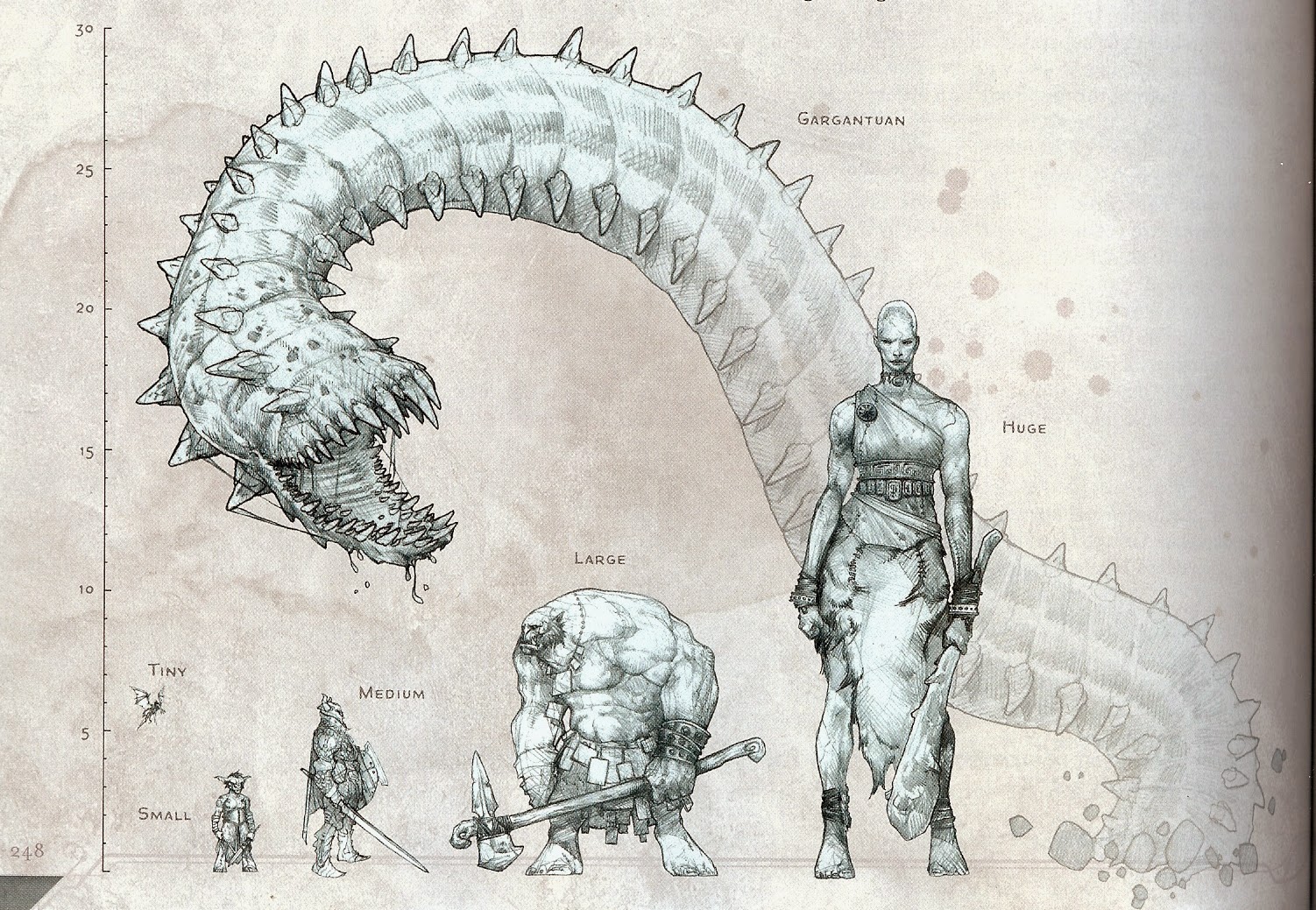
The party had actually encountered  Reash in the past, before his severed head was discovered here. The Fathomer had morphed into the giant white water snake that attacked their boat when last they fled Rivergard.

Oreioth didn’t get a lot of great lines this time around, either because the party had gagged him, or at the very least threatened to. The former, I think, because it was impossible for Oreioth not to make crazy pronouncements.

How did the Fire Cultists who attacked Rivergard Keep end up (at least in part) back over the river at the Ambush Site? Hush.

(Oh, fine. Just because they’re Fire Cultists doesn’t mean they can’t use a boat to cross the river. Or that they can’t use magic to fly across in some fashion. I wave my hand at you.)

Elemental Evil
The Elemental Evil symbols

So I decided all the cults had their own way of marking themselves. The ascetic jocks of the Feathergale Knights / Howling Hatred, scarrified themselves with their cult symbol. The watery Crushing Wave sorts used tattoos (some of which moved magically, as if flowing in water under the skin). The Sacred Stone folk used external symbols, necklaces, rings, that sort of thing, stone and metal drawn from the earth. And the Eternal Flame cultists sort of imitated the Howling Hatred, except they used fire for their scars, not blades.

I was mildly disturbed by the party (well, to be fair, the Neutral Neutral Sorcerer) gacking the prisoner after questioning. It was a fully pragmatic act — there were a number of reasons why not to let him go, and he had just been trying to kill them — but, on the other hand, they were already taking one murderous prisoner down to Summit Hall for safekeeping; one more wouldn’t have been a big deal.

Bruldenthar token
Bruldenthar token

Still surprised it didn’t engender more debate.

And exeunt Bruldenthar, at least for now. His quest southward to Womford will overlap with some other cataclysmic events coming up soon. For the moment, though, his veering off was appropriate for the game.


<< Session 19 | Session 21 >>

D&D 5e Rules – Skills – Group Checks!

Everyone wants to roll their own Skill check. Sometimes, that’s not the best idea.

Know the RulesPart of an ongoing series of 5e (2014) Rules notes.  See the end of the post for notes on 5.5e (2024) rules.

This is actually an interesting and (at my table) rarely used game mechanic: dealing with skill checks as a group, rather than as individuals. It not only can save time, but it can get around some of the problematic aspects of Skill checks.

Group Skill Checks

The rock chimney needs to be ascended — not by an individual, but by the whole party.

The goblin encampment needs to be snuck past — not just by the rogue, but by that jingling oaf of a fighter, too.

The suspicious guard is eyeballing everyone who passes — and the whole party has cultist robes, hoping they can slip by.

5e includes a method for groups, as a whole, to make an Ability or Skill check.  As laid out in PHB 175:

To make a group Ability Check, everyone in the group makes the Ability Check. If at least half the group succeeds, the whole group succeeds. Otherwise, the group fails.

The idea here is that more experienced or skillful players are helping the less experienced or skillful ones to succeed.

“Put your feet right where I put mine … there you go, that’s it, great!”

“Watch out for that stick there — don’t step in it because it will snap and make a loud nose and ruin our chance to sneak by.”

“I wish you peace, diligent guardian of the temple, as do all my friends, riiiiiight?”

Group checks are useful where all the characters are

doing the same thing,
against
a challenge with a single DC value
and will
succeed or fail as a group.

Some examples:

  • Does the group get through a swamp without running into quicksand or a similar hazard?  Roll as a group on Wisdom (Survival) vs a DC.
  • Does the group sneak by the observation post without being heard?  Roll as a group on Dexterity (Stealth) vs a standard passive Perception value.

This mechanic works less well when there are multiple values in the challenge/opposition, and where an individual can potentially shine.

As well, the mechanic’s applicability is limited. You could use it, in theory, for spotting traps, for example, but it makes a lot more sense that the rogue is looking for traps and that their Perception is what makes or breaks the deal, rather than have them succeed personally, but then have the group fail as a whole because presumably a bunch of people did poorly and distracted the rogue from a trap they should have found.

Helping someone else

This is related, but similar. Note that someone can do a Help action in combat to give a person making the Skill or Ability Check do so with Advantage (if the helper can explain how it is they are helping, of course).  That’s how this all functions tactically in a battle.

The Ranger’s background gives her a lockpicking ability to Help with — not as good as the Rogue’s, who’s frantically working with his tools against the lock, while the other party members fend off the guards, but good enough to offer useful advice, hand the correct next pick to the Rogue, and overall give the Rogue an Advantage in trying to get the door open.

In theory, it works that way for other activities. So, under the rules for Working Together:

Sometimes two or more characters team up to attempt a task. The character who’s leading the effort—or the one with the highest Ability Modifier—can make an Ability Check with Advantage, reflecting the help provided by the other characters. In combat, this requires the Help action (see chapter 9).

A character can only provide help if the task is one that he or she could attempt alone. For example, trying to open a lock requires proficiency with thieves’ tools, so a character who lacks that proficiency can’t help another character in that task.

Moreover, a character can help only when two or more individuals working together would actually be productive. Some tasks, such as threading a needle, are no easier with help.

So, for example, when searching the room for something, a pair is actually better off with the best-Perception person doing the search, and someone else assisting them (for Advantage) than both people doing the search roll (because rolling with the highest Skill twice gives you a better chance than rolling once with a high Skill and once with a lower one).

Notes:

So does any of this change under 5.5e?

dnd 5.5/2024Not really. The new half-edition, 5.5e (2024) still has the Group Check mechanism, but it’s in the DMG (p. 28), and more examples are given for its use.

One note: the everyone-sneaking-past-the-guard scenario I suggested above is explicitly called out as not a good time to be using this mechanic.

Group checks aren’t appropriate when one character’s failure would spell disaster for the whole group.

So, it notes, one character being noisy would get the guard’s attention, no matter what the sneakier people in the group did.

It also notes that  when a single check is sufficient (e.g., finding a hidden compartment with a WISdom (Perception) check; only one person needs to be successful, not everyone.

Other examples given (my titles):

Group Research:  Everyone does an INTelligence (Investgation) roll in the library to see if everyone fanning out and skimming through books (once the Wizard has told them what to look for) successfully finds the information being sought.

Mountain Climbing:  The group is roped together climbing a dangerous mountain. One person failing a STRength (Athletics) check is okay — they have other team members to brace themselves as the rope draws taut. But if over half the party slips …

The Big Party:  Someone in the group insulted a noble as a big to-do, and he’s demanding the whole party gets kicked out. Doing a group CHArisma (Persuasion) check might make more sense than just relying on the Bard.

Helping Someone Else

This is talked about more in the Help article, but not much has changed in 5.5e, except that helping (in or out of combat) requires some sort of applicable Proficiency, not just arguable backstory as to how you are helping.

(By implication, if you are using the Help Action in combat, you must be using a skill or ability or tool/weapon that you have Proficiency in, like, say, a weapon.  Just shouting and waving your arms doesn’t do anything to distract if you don’t have Intimidation or Performance or something.)

Princes of the Apocalypse, Session 19: “The Hills Have Eye”

Wherein the party spends the day Beliard, takes custody of a necromancer, and heads south.

Princes of the ApocalypseThis is part of a series about my DMing Princes of the Apocalypse, a D&D 5e adventure by and copyright Wizards of the Coast.

Table of Contents. The Party.

There will be SPOILERS. If you are playing in a PotA game, please don’t read this. If you are DMing a PotA game, or are a DM who wants to see what the ride was like … read on!


GM Recap

Session 19 (Day 24-25) 

  1. The party awoke to unusually cold and blustery weather
  2. Faith raised the dead sailor, to the interest of Feffel Quintex.
  3. Moony and William bought a cart and mules. Later on, there was a flurry of pricing and armor/weapon and healing potion upgrades.
  4. The rest of the party interrogated Oreioth, who seemed peculiarly rational in the morning. He wanted his books, he wanted to know more about the druidic ritual in the hills, and he seemed both attracted and repulsed by the power growing up there.
  5. The lawkeeper, Halrud Ponden, tried to recruit the party to help settle the disorder in and around Beliard. He also noted that, if they wanted Oreioth confined, they needed to take him with them.
  6. The barkeep, Neshor Fleurdin, granted that a recruiter for the Circle of the Scarlet Moon ritual in the hills had provided him with directions to pass on to those who asked about them, and he gave them to the party.
  7. The next day they headed south toward Summit Hall. Bruldenthar expressed an interest in visiting the site where the Mirabar Delegation was ambushed. When they reached the site, it was being investigated by (presumed) Fire element soldiers and a priest. A battle ensued, which the party was ultimately successful in.

Player Recap

Fire and Lightening

Disturbed by the nights events, the group decides to post a watch overnight. Faith takes the opportunity to read more of Marlos Urnrayle texts. She comes across some notes on the Temple of Black Earth that might have been useful a few days previous, but nothing surprising.

The winds pick up and rattle the windows waking the remaining party.

William joins Faith at the temple of all gods for morning prayer. They are greeted by Feffel Quintex with a nod and continues his own prayers. Faith manages to not bump into Feffel as she completes her own prayers. Moving to the back room, Feffel asks if he may observe. Faith invites him in and she begins her prayers. Sailor sits up and screams in terror. He is disoriented and his throat parched (and at 1hp). William can’t find anything stronger than water in the room, so brings the sailor a cup. Eventually, they manage to calm him, but he is clearly disturbed by their presence. Feffel offers to look after him and suggest that Faith get in touch with his companion. 

The remaining campaigners head down for breakfast. The bar has been restored to order. The rescued refugees once again offer their thanks and gratitude. They plan on staying in Beliard for a few days before seeking a caravan heading home. The locals are quiet and glance at the party nervously. As the group enjoys their full English breakfast they listen to the buzz around the room.

Other strangers have previously come to town. Rumors of a Druid ritual that will occur in the hills. The barkeep Neshor’s name comes up occasionally. 

Some are looking at Aldrik and are obviously wondering if he is the same dwarf that was here earlier.

Faith and William fight against the wind to return to the Watchful Knight Inn. The sailor’s friend is just coming down the stairs as they step through the door. He walks straight up to Faith and asks after his friend. Faith is able to reassure him that the victim is recovering in the temple and would like to see him.

William grabs some breakfast and goes with Moony to look for a mule and cart. They get a reasonable deal and take Bruno and Bonny to the stable at the inn.

Faith, Nala, Theren and Aldrik leave to check on Oreioth. The constable greets them at the jail and says that Oreioth has been no trouble. Oreioth greets them politely and apologizes for the previous evening. “Things got a bit out of hand.” He asks for his books. He indicates that they are not necromantic books.

They discuss the purpose of reading and what he is currently pursuing. He finally admits that he is looking for the source of the power in the Sumber Hills. “They say that they have managed to join the power of the elements and necromancy.” “Your friend the druid, has he joined them? No I suppose not.” “If you do go into the hills, take me with you. That kind of power should not be with them and the living. It’s so messy.”

They continue on to the Lawkeeper’s house. The servant shows them in to the study. There are several well ordered stacks on the desk and other surfaces. Halrud welcomes them and after giving Theren a slight look, he invites them to tell of their adventures.

He pauses them when they mention the delegation. He is disappointed the hear that his important mail has probably gone astray. He is very concerned about the lack of order and offers that there are certain matters that the town elders would like the party to undertake. Large increases of drifters and ne’er do wells coming through town, fortunately drifting out of town towards the South or West.

He also requested that they take Oreioth with them, if they want him confined, as he has not broken any laws in Beliard. 

Theren and Aldrik go shopping for armor, but don’t find any Dwarf Scale. Aldrik decides to trade in the Duergar armor for a shield and battle axe. Moony finds some studded leather armor behind some barrels. He also gets some arrows. Nala amazingly finds a +1 sword. Reequipped the group returns to the inn.

The bar is slowly returning to normal. Moony spends time to telling tells to the bar tender, the local drunk, and the bar maid. He is surprised when Senya swirls and throws a punch at Moony. He ducks and finds the whole thing terribly funny. Faith finds a small stone outside, casts a light spell on it and tosses it in front of Moony for distraction.

A humble man approaches the tables and I need to tell you something. The story comes out haltingly.  “When he –” He points to Aldrik. “– and the other fancy folks came through. Just after, these folk, they were in the sky riding on big birds all in blue and white. Flew overhead and then south (Translation: The Feathergale Knights were seen following the delegates leaving Beliard.) William gives him an ale and praises his bravery and strength of observation.

Faith goes to the temple for evening prays through the blustery night. She discerns that it, like most of the other weather events they’ve experienced are not natural.

In the temple, Feffel wants to know if Faith had inquired of the sailor and sees it as an important opportunity to learn more about death. He then shifts to his studies of the elemental manifestations and trying to determine an equation for their appearances. He is sure he can figure it out if only he had his equipment and books from the great library in Yartar. The rise in energy has been uneven in this area and the South. “If one could measure such things I am sure that it would be an amazing publication.”

He is also interested in Faith’s travels through the hills and the manifestations. He won’t speak to the weather because field studies are not all that accurate. “In the time I’ve been keeping my records that in the last 2-5 years there has been a rise in the elemental activities.” Natter Natter … Need Equipment … Research … Bugger …

[Side note: Hoard of the Dragon Queen and Rise of Tiamat was 3 years ago,  1489 DRl. In 1491 DR Princes of the Apocalypse adventure takes place.]

Faith maintains her plastic smile until she can politely leave. Just outside the inn door, a gust tosses Faith into a puddle. She goes straight up to the rooms for a bath.

Back at the table William starts carving on his mug. He asks Senya about the ritual in the hills. She says it’s just lots of big talk about heading into the hills, especially after that druid visited town a moon or so ago. She doesn’t know more, but points out Neshor as having more info.

When the barkeep stops by, William asks about the “druid.” He is evasive or absent-minded. “Oh, the Circle of the Scarlet Moon — he asked that I give directions to folks who are looking to join.” More delaying but eventually he come back with a small scroll with written instructions.

William orders more beer to make him and Aldrik feel better. When the rock goes out Moony leaves it on the table and heads up stairs. Later Nala adds a coin under the rock and goes upstairs. When William heads up he leaves behind a beautifully carved mug with flowers and vines.

During the watch that night, they look over the books from Oreioth: 1) Large tome of the anatomy of humanoid creatures from 1000 years ago. 2) Hard-bound brochure encouraging people to move to the valley from ~500 years ago and the (un-haunted) Keeps. 3) The poetry of some goth poet – very bleak.

Next next morning Faith starts early with prayers. The party breakfasts at the inn, picks up Oreioth and Bruldenthar, then heads out of town. 

Dessarin Road, Dessarin Hills
Dessarin Road, Dessarin Hills (or so I envisioned)

A winding road departs southward from Beliard, rising into the sere eastern end of the Sumber Hills. At length it descends again, passing the keep of Summit Hall, dropping down in parallel to the Dessarin River, eventually reaching Womford at the southern end of the valley. The road is moderately well traveled, as footprints and mule droppings testify, but is also dangerous.

The party found the site where it appeared the Mirabar Delegation was ambushed, about 8 miles south of Beliard.

Bruldenthar says “I would wish to see the site of the ambush.” They turn off the road towards the site.

William (eventually) notices something red and yellow ahead just off the past. He calls out to the party and as the crest the ridge they see a group of people in red at the old ambush site.

Eternal Flame symbol (red trans)
Symbol of the Eternal Flame

A mighty battle ensues with dueling fireballs and flaming swords. Lightning from Faith and Theren decimated the fire “guardians”. Chaos struck Theren, causing a Confusion spell to land on Moony and himself. Faith saved them from self-harm and the battle progresses to the inevitable victory for the adventurers. One remaining fire guardian was left alive but incapacitated.

NEXT SESSION:

Loot the bodies, interrogate the prisoner, explore the site, rest, ask Bruldenthar why he really wanted to come here and what the fire folk might want to look for.

Game Notes

Bring Out Your Dead!

So raising folk from the dead is not common in 5e, but it’s not that improbable, and any party worth its salt will have a cleric who can do it by 5th level (or paladins, druids, etc., at other variances). It’s not cheap (the lowest, Revivify, costs a 300gp diamond), but I still would expect that good clerics would be begged and bothered wherever they went for that service.

Regardless, having accidentally killed a townie yesterday, the party felt obliged to make good, which in turn made for some interesting scenes, most of them driven by the players, which is a good thing.

It also let me flesh out the gnomish cleric I’d (made up and) assigned on rotation to the local All-Faiths Shrine in Beliard. I’d already established back in Red Larch that the holy folk at those shrines in small town around the valley were staffed by agreement between the temples of the surrounding larger cities — Waterdeep, Yartar, Triboar. I’d also established that many of these folk weren’t necessarily spell-casting clerics, or, if so, were 1st to 3rd level, tops — enough for some light healing, etc., but mostly chosen for their pastoral abilities. So no rezzes for the locals without going to the Big City (and selling a several really nice horses to pay for it).

Feffel token
Feffel token

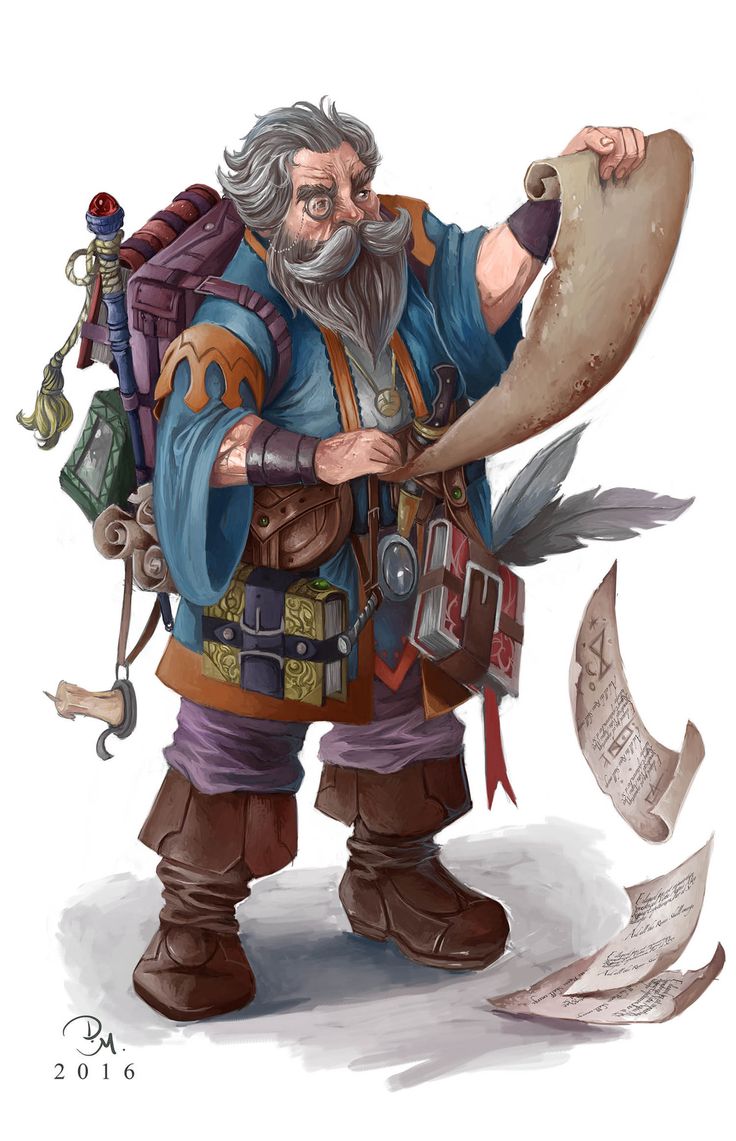
I saw Feffel Quintex, the gnome, as being as much an academic as a priest — enjoying his rotations to the hinterland as a chance to work on his manuscripts, even as he longed to get back to being in easy reach of his library at home. This gave me a chance to add some additional information and speculation about the growing rise of elemental events and energies around the Sumber Hills over the past few years.

As a side note, I loved how the players dealt with getting side-eyes from the locals after one of their own got fried in a combat — and what the party did to try and make up for that, from raising the poor dude who got made collateral damage, to leaving tips and treats for the bar staff and owner.

No local Walmart

The Forgotten Realms, especially under 5e, is a relatively low-wealth proposition, especially when it comes to magic items. If the party were adventuring in Waterdeep or Neverwinter, they would have access to a variety of armorers and smithies and magic shoppes to spend their hard-earned cash on.

Walmart South Dakota
Okay, to be fair, there are actually Walmarts in South Dakota.

But out in the middle of the rural Dessarin Valley? There’s not a lot of call for armor, or swords, let alone Rods of Lordly Might in the middle of Nowhere, South Dakota, or some little burg in the San Joaquin Valley, California, especially with quasi-medieval trade routes such as they are. Indeed, if there’s anything there, it’s usually been sold as treasure or as “well, if I’m buying my +1 Plate, might as well sell my +1 Chain.”

Coins on the desk
Insufficient capitalization means an inability to move to secure potentially valuable assets.

The problem is, the cost of high-end, magic, and/or powerful stuff is way too high for Bob’s Local Feed Store to carry. Indeed, a +2 Longsword might cost as much as the entire store, and the land it’s on, and the adjoining shops as well (consider Gandalf’s comment about Bilbo’s mithril chain shirt being worth more than the Shire). A shop in Beliard simply doesn’t have the capital to buy such a thing, second-hand or not, let alone hold onto it for any length of time.

I used (and highly recommend) the shop/item/availability table explained here. It did a really nice job of helping me figure out … well, is there likely to be a set of +1 Chain in the local market?

Rule of Cool does dictate that the players should be able to do some upgrades. But my preference was, unless they were willing to take several weeks off to travel back to Waterdeep, most of their upgrades would come from dungeon loot.

The mules and cart, by the way, were for the carrying of Narl’s body.

Beliard and Bureaucracy

So back in Red Larch we had sort of a “Council of Important Folk” and a part-time constable.

Halrud token
Halrud token

Beliard is richer and more sophisticated than that. It has a Mayor / “Lawkeeper,” who has a nice house on the town square, and a city council,  and a full-time constable with his own constabulary (nothing much, but better than being shut up in a root cellar).

The party sort of runs full tilt into that this time. There’s the, um, embarrassing aspects of having killed a local, but the party’s making good on that, and get a certain amount of lee-way for having rescued folk from the Monastery.

Oreioth token
Oreioth token (official)

But Oreioth is a different matter. The necromancer hasn’t committed any crimes in Beliard, and, to be honest, hadn’t really done so back in Red Larch, aside from necromancy (which, since it’s real, is probably illegal in most neighborhoods). I mean, sure those bodies came from somewhere … But that is a Red Larch concern, nothing to do with the good people of Beliard. We have laws and rules, don’t you know? Sure you must appreciate that.

Buuut … if you feel strongly enough about it … you’re welcome to take him into custody and take him back to Red Larch … and, unspoken, get him out of their fair town.

And that, kids, is how you avoid spending a lot of money feeding prisoners in your constabulary cell.

Bits and Bobs

The Hills Have EyesThe episode title was meant to be a blend of “The Hills Have Eyes” and the threat of the Evil Elemental Eye. Meh. They can’t all be winners, folks (esp. since I was coming up with titles before the episode in most cases).

I would eventually move on to something more pedestrian (promise!), but for the time being I was okay with the puns and pastiches.

More bad weather, to the point where it knocked a player down.

Since the core of this campaign involved people who had played in a previous Rise of Tiamat game, knowing this took place a few years after that was a useful question.

Beliard is meant to be a repository of clues. Since they spent a few days there, it gave me plenty of organic opportunity to bring them up, including the seemingly innocuous recruitment of folk, through “druids” sent down by Elizar Dryflagon, to come join the Ritual of the Wicker Giant and restore “balance” to the Sumber Hills.

The Wicker Man (1973)

Yes, of course, the wicker man clues did not at all worry the players …

That Oreioth is a remarkably well-read guy. Wonder who he stole those reading materials from?

Theren, our Sorcerer, suffered from the possibility of Wild Chaos Magic every time he cast a spell. This session it cropped up again, casting Confusion on a couple of the party during the battle with the Fire Cultists. Which wasn’t enough to save the out-of-their-league Fire Cultists.

(One thing I learned early: I was, myself, no match for the combined tactical imagination of the whole party. Ah, well.)


<< Session 18 | Session 20 >>

D&D 5e/5.5e Rules – Skills – Abilities, and Mixing and Matching!

Understanding how Abilities connect to Skills is important. Understanding how you can change that connection is priceless.

Know the RulesPart of an ongoing series of 5e (2014) Rules notes.  See the end of the post for notes on 5.5e (2024) rules.

5e has a system that interestingly modular, providing for a lot of flexibility, and occasional confusion.

5e has also given terminology a big stir, so sometimes folk (especially those coming from earlier editions, homebrews, or variant systems) get a little mixed up as to what’s being referred to as what. So forgive me if I digress a bit first …

Everything starts with Abilities

Abilities from a character sheet

Abilities are your five primary statistics (and some people still refer to them as your stats):

  • STRength, measuring physical power
  • DEXterity, measuring agility
  • CONstitution, measuring endurance
  • INTelligence, measuring reasoning and memory
  • WISdom, measuring perception and insight
  • CHArisma, measuring force of personality

Everything you as a character can do stems from or is primarily influenced by these stats. (And, just to start there, I remember back in the good old days when they were a bit more nonsensically ordered STR, INT, WIS, DEX, CON, and CHA — so D&D has shown a bit of rational evolution there.)

Your level as a Player Character in each of these Abilities is from 3-20, though, depending on how you build them at character creation, it’s rare you’ll start off above 18.

(And, yes, I am also old enough to remember when stats capped at 18 — or, rather, went to 18 plus a fraction. Strange days.)

Based on the level of the Ability, you get an Ability Modifier:

Score Modifier
1 -5
2-3 -4
4-5 -3
6-7 -2
8-9 -1
10-11 +0
12-13 +1
14-15 +2
16-17 +3
18-19 +4
20-21 +5

In many ways, the actual Ability Score is meaningless; it’s the resulting Modifier that ultimately impacts the game mechanics, as modifying D20 die rolls associated with that Ability. Indeed, many character sheets emphasize the Modifier vs the Score (which begs the issue of why, aside from legacy / nostalgia reasons, we still need the Ability Score itself any more … but that’s a change for the next edition).

You could (and some systems can) run quite neatly with just these Abilities dividing up all your capability into six buckets. But since the golden days of D&D, people have wanted a bit more.

Skills!

Skills from a Character Sheet

Those Abilities are a bit broad for the level of tactical and adventuring crunchiness that D&D players consider the sweet spot.  So long ago, lists of skills were developed that people could specialize in through some mechanic, influenced primarily by the Ability they are associated with.

So, for example, Sleight of Hand is a very different skill than, say, Acrobatics. Both are clearly associated with the Dexterity (“measuring agility”), but you can easily think of someone who would be mediocre at one but dazzling in the other.

The normal 5e Skill list is alphabetical, but you can also break it out by the Abilities they traditionally align with:

Strength
  • Athletics
Dexterity
  • Acrobatics
  • Sleight of Hand
  • Stealth
Intelligence
  • Arcana
  • History
  • Investigation
  • Nature
  • Religion
Wisdom
  • Animal Handling
  • Insight
  • Medicine
  • Perception
  • Survival
Charisma
  • Deception
  • Intimidation
  • Performance
  • Persuasion

(There are no Skills based on CONstitution.)

The modifier on the D20 roll for any given skill starts with the modifier for the Ability it’s associated with. You can also have special Proficiency in a given skill (usually from your Class, or from a Feat, or even from a Race), which means you add your Proficiency Bonus in.

So with the character in question, when they make an Acrobatics roll, they roll a D20, add in their DEXterity Ability Modify (+1), and then (because it’s checked off as a Proficiency), their Proficiency Bonus (+2) — 1d20+3.

Mixing and Matching Abilities and Skills

You will almost never see a Skill written in official material like this:

Athletics

Instead, it will be written as

Strength (Athletics)

But why? Doesn’t Athletics imply Strength?

Not necessarily.

There are a couple of ways of looking at this. You are actually always rolling these checks on an Ability — this is a STRength check, this is a CONstitution check, this is an INTelligence check, etc. The Skills listed are only to help you narrow down which Ability you are rolling (“Oh, I’m trying Sleight of Hand, so this is going to be a DEX-based roll) or to indicate a specific proficiency in the technical aspects of what is essentially a Sub-ability, a Skill.

swimming
What is the pertinent Ability here?

But sometimes that technical training and experience of a Skill can be applied to different Ability at its base. Let’s say you have been thrown overboard from a ship by pirates, and you need to swim to an island you can barely see in the distance.

Okay, well, clearly, Athletics is going to be the technical Skill set. But what the Ability is is what actually matters. This isn’t a race across the pool where STRength is the deciding factor. This is going to be all about endurance … so you’re going to be using CONstitution as the active Ability.

So, yes, you will be rolling Constitution (Athletics). 

To use the character sheet bits above, you’ll make a roll of 1d20 + 3 (CON modifier) + 2 (Proficiency Bonus for Athletics), for a 1d20 + 5.

(Yes, yes, the character in question has the same STRength and CONstitution, which means the die roll is the same in this one particular case, but I hope you see the point.)

So, yeah, sure, STRength normally powers Athletics, and WISdom makes sense with Perception … but it doesn’t have to be that way. The rules treat those as the default. If you can make a cogent argument for it to the DM, you can use any ability to power a skill, such that the skill roll becomes:

1d20 + (the chosen Ability modifier) + (your Skill Proficiency Bonus)

(If you are not using a VTT like Roll20, you’ll have to calculate this manually, but it’s pretty easy.)

This is both good story-tellilng — using the appropriate Ability for a given test — but it’s also something the the Players can use to their advantage (leaning into their stronger Abilities) or the DM can use to mix things up a bit.

Tear phone book in half
Using Strength for Intimidation

As another example, from the PHB, you usually use CHArisma as the basis for your Intimidation rolls — bringing your force of personality to play in beating down their resistance. But if you’re some savagely-strong looking barbarian, maybe you just show your target how you can snap them in half as easily as this thick log waiting to go into the fireplace, with a Strength (Intimidation) roll.

Your intent here is still to intimidate, but rather through word and body language (CHArisma), you’re using force of sinew (STRength). But Intimidation as a skill has its own goals and techniques; if you have proficiency in them, you should be able to use them different ways.

Indeed, I can easily imagine other types of intimidation —

  • Intelligence (Intimidation): showing off your vast knowledge to cow a sage
  • Constitution (Intimidation): demonstrating how nonchalant you are standing in a bed of coals to make your torturers quail
  • Dexterity (Intimidation): plucking flies out of the air to daunt some fellow thieves

Yes, you could argue in that last case what you are really doing is Dexterity (Sleight of Hand) — but it’s not, because your purpose in the scene is not actually to catch flies, but to completely unnerve the person you are engaged with, to break their will and intent: thus Intimidation.

This Reddit thread has some other fun examples. If you’ve got a high CONstitution, you could argue for using it with a variety of non-CON-associated Skills:

  • Constitution (Deception): You jump into near-freezing water, but want to convince the others to Come on in, it’s fine, no, no, not cold at all, do you see me shivering?
  • Constitution (Sleight of Hand): You have the duke’s large signet ring hidden in your mouth, but the guards are checking everyone. Can you swallow it without anyone noticing?
  • Constitution (Animal Handling): Wrangling … that damned … cat … who is very liberal … with use of … teeth and claws …

Not all combinations are easy to think of examples for (Strength (History) … maybe something about how you were the only person back at the monastery strong enough to get Abbot Shang’s Book of Exceedingly Great Dimensions down from the shelf to study from it). But figuring out a way to lean a higher Ability into a Skill roll can give you a real boost … if you can talk the DM into it.

So does 5.5e change any of this?

The new 5.5e (2024) release includes some changes, but they are mostly cosmetic.

dnd 5.5/2024Unlike 5e, the default 5.5e character sheet [PHB 34] now lists skills under the abilities they are usually associated with. I think that’s a nice improvement.

In combat, the skills associated with some of the abilities get their own named Action types:

  • Search – for usually WISdom-based skills
  • Study – for usually INTelligence-based skills
  • Influence – for usually CHArisma-based skills (plus WISdom (Animal Handling).)

Mixing and matching Abilities and Skills is still included in the rules, in a sidebar on PHB 14

Each skill proficiency is associated with an ability check. For example, the Intimidation skill is associated with Charisma. In some situations, the DM might allow you to apply your skill proficiency to a different ability check. For example, if a character tries to intimidate someone through a show of physical strength, the DM might ask for a Strength (Intimidation) check rather than a Charisma (Intimidation) check. That character would make a Strength check and add their Proficiency Bonus if they have Intimidation proficiency.

One thing that strikes me is that, in a lot of areas, 5.5e has pivoted from rolling against Ability (Skill) to just rolling Ability checks, while at the same time really focusing on Proficiency as what reflects greater skills (this was mechanically true in 5e, as well, but not quite as prominently). 

It’s also moved from a lot of contests (a character and opponent both roll their skill, the one with the highest final number wins) to checks of Skills and Abilities against a fixed DC. If that seems weird, though, consider that that is exactly what normal combat is (rolling a check of your weapon skill against a fixed AC, rather than a contest where the defending character gets to roll to dodge or deflect the blow).

D&D 5e Rules – Skills – Retrying!

If at first you don’t succeed … can you try, try again?

Know the RulesPart of an ongoing series of 5e Rules notes.

Rolling skills to get something done can be a tense moment. The whole campaign might depend on how well you can sneak, or spot someone sneaking, or open that lock, or disarm that trap.

And, since a D20 provides a linear distribution of results, it’s quite possible to fail that roll.

Then what?

How to Succeed at Skill Rolls while Trying A Whole Bunch

So, what is a Skill (Ability) Check? Well, per PHB 174:

To make an Ability Check, roll a d20 and add the relevant Ability modifier. As with other d20 rolls, apply bonuses and penalties, and compare the total to the DC. If the total equals or exceeds the DC, the ability check is a success — the creature overcomes the challenge at hand. Otherwise, it’s a failure, which means the character or monster makes no progress toward the objective or makes progress combined with a setback determined by the GM..

What happens when you fail a Skill / Ability roll? Can you try again? How many times?

Can you try, try again?

Interestingly enough, there’s no easy answer there. I’ve read DMs assert that they only let a single roll happen; if you fail, that shows it’s just not doable (by you, at least). I’ve read others say you can only retry if the circumstances or your approach explicitly changes.

(I’ve also seen guidance that rolls should only be asked for if the results of failure are significant or interesting. So there’s that, too.)

To my mind, a lot depends on what it is you are trying to do (duh). As much as D&D tries to make all skills identical in their structure and use, they really aren’t. Some skills, in their application or in the circumstances at hand, lend themselves more or less to retries.

  • “I search the room.” Okay, you blew your Perception roll. Can you search it again, search it harder, search it in a way you didn’t before?  Sure. Tell me what you’re doing differently.
  • “I try to convince the guard to let us pass.” Okay, you blew your Persuasion roll. Can you try again? Well, certainly not the same way or with the same line of argument. I mean, if she didn’t believe the Captain sent you when you said it once, she’s not going to believe it a second time.
  • “I try to remember my History to see if I know of the dread Egnarts.” If you fail, chances are you’re not going to succeed in “remembering” again, without explaining a very different approach.

In some cases, letting an attempt be retried is just fine. In other cases, retrying at a Disadvantage seems to make sense (“Oh, did I say the Captain? I meant the Duke, my uncle …”).

What does “failure” mean?

We tend to think of “failure” as “What I asked for didn’t happen.”

  • The lock didn’t pop open.
  • The guard wasn’t convinced.
  • The mule refuses to move.

But look at that definition of an Ability Check again, particularly on the “failure” part:

Otherwise, it’s a failure which means the character or monster makes no progress toward the objective …

Okay, that’s what we usually think of failure like.

… or makes progress combined with a setback determined by the DM.

Which is very modern “failing forward” game design for something like D&D, and, frankly, is something I never thought of for this system — and it’s something that makes sense, esp. if (a) the DM wants to move things along, and/or (b) you just barely missed your roll.

  • You hear a couple of tumblers in the lock move, but it doesn’t open; your next attempt will be at Advantage … but that will take more time.
  • You got the lock open … and the door opens wide, to reveal the room full of guards.
  • You got the lock open, but broke your favorite lockpick, putting you at Disadvantage in picking locks until you can get it replaced.
  • The guard grudgingly lets you pass, but sends a runner to check with the Captain, just in case. 
  • The mule moves, but quite intentionally steps on your foot in doing so. 

Those are all legitimate things for me as the DM to do (or you as the player to suggest).

Can’t I just “Take 10” or “Take 20”?

So those are D&D 3.5e rules, but 5.0 kinda-sorta has them. Kinda-sorta.

Taking 10 in 3.5e usually just meant “Act like I rolled a 10” so as to avoid the chance of a low roll (when a high roll wouldn’t really be needed).

This is mathematically the equivalent of using a Passive Skill in 5e.  Which seems a little weird (“I’m searching the room … passively”).

Taking 20 was the interesting one in 3.5e:

When you have plenty of time (generally 2 minutes for a skill that can normally be checked in 1 round, one full-round action, or one standard action), you are faced with no threats or distractions, and the skill being attempted carries no penalties for failure, you can take 20. In other words, eventually you will get a 20 on 1d20 if you roll enough times. Instead of rolling 1d20 for the skill check, just calculate your result as if you had rolled a 20.

Taking 20 means you are trying until you get it right, and it assumes that you fail many times before succeeding. Taking 20 takes twenty times as long as making a single check would take.

Since taking 20 assumes that the character will fail many times before succeeding, if you did attempt to take 20 on a skill that carries penalties for failure, your character would automatically incur those penalties before he or she could complete the task. Common “take 20” skills include Escape Artist, Open Lock, and Search.

5e doesn’t have this … precisely. But on DMG 237, “Multiple Ability Checks,” there’s a “Take 20”-like mechanism:

Sometimes a character fails an ability check and wants to try again. In some cases, a character is free to do so; the only real cost is the time it takes. With enough attempts and enough time, a character should eventually succeed at the task. To speed things up, assume that a character spending ten times the normal amount of time needed to complete a task automatically succeeds at that task. However, no amount of repeating the check allows a character to turn an impossible task into a successful one.

So in cases where failure doesn’t incur a penalty (except burning time), you can spend ten times the normal amount of time (ask your DM for a SWAG) and just assume a success if the task is possible (which I read to mean, if rolling a 20 on the skill would allow it to succeed). This is a bit looser and more cinematic than 3.5’s rule, but there you go.

It does mean that, if the party is willing to take the time, the DM can dispense with Perception rolls in each room and just say, “After about an hour, you find the hidden compartment under the book case. And, no, that doesn’t count as a Short Rest.”

Is that a good thing? That’s up to you to decide.

Is there any change or clarification in 5.5e?

dnd 5.5/2024A bit. The intent is still there, it’s just made a little looser.

On DMG 28, “Trying Again” 

Sometimes a character fails an Ability check and wants to try again. In many cases, failing an Ability check makes it impossible to attempt the same thing again. For some tasks, however, the only consequence of failure is the time it takes to attempt the task again. For example, failing a Dexterity check to pick a lock on a treasure chest doesn’t mean the character can’t try again, but each attempt might take a minute.

If failure has no consequences and a character can try and try again, you can skip the Ability check and just tell the player how long the task takes. Alternatively, you can call for a single Ability check and use the result to determine how long it takes for the character to complete the task.

The language is similar; the biggest difference (besides leaning on how it might not work) is that in 5e you could just assume “ten times the normal amount of time” would succeed, and in 5.5e, the DM gets to make the duration up.

Princes of the Apocalypse, Session 18: “In the Beliard of the Beast”

Wherein our party hangs out in Beliard, inflict collateral damage, and meet some “old friends.”

Princes of the ApocalypseThis is part of a series about my DMing Princes of the Apocalypse, a D&D 5e adventure by and copyright Wizards of the Coast.

Table of Contents. The Party.

There will be SPOILERS. If you are playing in a PotA game, please don’t read this. If you are DMing a PotA game, or are a DM who wants to see what the ride was like … read on!


GM Recap

Session 18 (Day 23) 

  1. Hell Hound 5e
    Hell Hound (official 5e portrait)

    The party fought the three Hell Hounds, taking substantial flame damage before Theren Lightning Bolted them (and a patron of the Watchful Knight) to death. This put a bit of a chill on the proceedings. The Hell Hounds had iron collars with Another Symbol on them, which the party speculated had to do with Fire.

  2. Faith took the dead man to the chapel, and met the priest-in-residence Feffel Quintex. She promised to raise the dead man the next day.
  3. The party adjourned (with encouragement from barkeep Neshor Fleurdin) to their rooms — at which point it was realized that one of the patrons in the bar had been the escaped necromancer, Oreioth.
  4. … Who was gone by the time they raced downstairs. The party inquired of bystanders (who were gathered, still talking about what they’d done), and were directed down toward the Teal Weasel and the town graveyard (conveniently enough).
  5. Theren and William intimidated the barkeep there, who didn’t actually seem to know much, but was able to finally serve Aldrik an ale. Meanwhile, Nala spotted Marlandro Gaelkur, who had relocated from Red Larch for reasons unknown, and was very nervous about her and the rest of the party being there.
  6. Oreioth's vision of the Evil Elemental Eye
    Oreioth’s vision of the Evil Elemental Eye

    Outside, Moony sniped down Oreioth and took him prisoner. The party brought him to the constabulary and interrogated him. Oreioth revealed that there was a power rising in the Sumber Hills, and the smell of Necromancy in the area. That power had detected the party and was turning against them. He confirmed that the various symbols the party had run across (the Black Earth symbol, the Crushing Wave symbol, and Another Symbol were all part of the Necromancer’s Sigil in his cave.

  7. Leaving Oreioth with the constable, they headed to bed at the Watchful Knight, considering what they would do on the morrow.

Player Recap

Bad Dog? Bad Wolf? 

The Hell hound leap through the inn’s front window. A stunned party drops their drinks to react. 

**Margie is so engrossed in the action that she forgets to start journaling.**

In the end Theren takes out the remaining hounds and an unfortunately-located sailor. The hounds smolder for a while and then burst into flames and disintegrate leaving only iron collars behind. Theren hands the collars to the bartender as a souvenir. [Though someone in there notes a strange symbol on them — something fire-related, maybe? – Ed.]

Faith makes her way to the All-Faiths chapel with the body of the sailor. The main chapel is empty and sparsely decorated. Faith kneels at the altar with the body held close, waiting to see if anyone comes out from the back. Soon a Gnomish priest of Rill Cleverthrush comes out. He is shocked to see the dead body. “How did this happen” “What a terrible shame! Hellhounds killing a gentle visitor to our fair town.” Directed by the gnome, Faith brings the body to the back quarters of the chapel. The priest will watch over him until Faith returns in the morning to attempt a resurrection. 

The bar remains mostly empty with a few dazed or unconscious patrons. After a pointed look from the bar keep and a refill of drinks, the group retires upstairs to discuss the situation, and what they know about the Mirabar Delegation. 

Suddenly Faith and Moony suddenly realize that the reader in the corner of the bar is Oreioth the necromancer, from Lance Rock. Everyone races down stairs and he is gone from the bar. The barkeep says that he is a quiet sort and has been here for a ten-day or so. Racing outside, William tries to look for prints, but there are too many footsteps in and around the door. William steps apart from the party and approaches the well where several villagers are gossiping. After some forced small talk, he asks the group if they know where Oreioth might be staying. A townsman suggests the “Teazle.”

The Teal Weasel, a small, non-descript building to the southeast of Beliard’s central square, with a brilliant blue-green weasel hanging over the door. Moony stays hidden outside, in case someone chooses to leave by a window. The group enters, Theren, Aldric, and William head towards the barkeep. Nala glares from the door and Faith looks around at the patrons. William asks the barkeep politely about his patrons. He declines and suggest that he only talks to customers. Aldric asks for a beer. William suggests that the town would not appreciate it if they knew he was harboring a necromancer. At that point Theren lights a flame on his finger. Barkeep denies knowing anyone who reads. Suggests that they try Madame Zelda’s boarding house / brothel next door. 

Meanwhile, Nala spots Marlandro Gaelkur, the barber of questionable repute from Red Larch. She signals Faith and approaches. Just before Nala arrives at the table he looks up and gives her a friendly greeting. Faith comes up and they question him. He dissembles in terror but does not reveal anything. Before they leave Faith asks how long he has been in town. Marlandro stutters and replies 10 days.

Outside the Teal Weasel, Moony sights Oreioth leaving a building near the bar. He is is looking around and moving down the street towards the bar or graveyard. Moony melts into the shadows tracking his prey. When the necromancer comes into range Moony pulls his short bow and drops Oreioth in his tracks. He yowls in pride.

As the adventures leave the bar they join Moony. They bring the body to the lawmakers house. The servant eventually gathers that they want to leave a prisoner and directs them to the jail. In the jail, Faith heals Oreioth just enough to bring him around. He rants some about trying to get away from the Great Eye. He left Red Larch and has traveled and studied. He says that there is a great power person in town trying to recruit people to join the Circle of the Moon in the hills to perform a ritual to restore balance. A few additional points are picked up.

Faith – Oreioth is scared of more than just the party. He is scared about whatever power is growing in the hills

Theren – The power in the hills is aware of us 

William – He escaped because the minds of the villagers are weak. He does not even know who Marlandro is.

Moony – Tries to get him to tell us more about the element symbols. He breaks down an cries, It is the eye, the eye…

Game Notes

Old Home Week

Not one, but two repeat appearances this session.

Marlandro token
Marlandro token

Marlandro was the owner of a shady barbershop and jackleg bar and information brokerage and stolen goods pawn shop back in Red Larch. He was a member of the Believers, but not a (if you will) True Believer, and when that whole thing went south (complete with actual murders involved), he blew town before he ended up taking any heat.

Which brought him as far as Beliard, which seemed like a good place to maybe set himself back up again … until the party blew into town.

Marlandro was fun to play with, but not nearly as fun as Oreioth.

Oreioth token
Oreioth token (official)

In my campaign, at least, Oreioth was brought alive from his necromancer’s cave at Lance Rock, and tossed into what passes for jail cells in Red Larch (a chamber for hanging meat at the constable/butcher’s shop). But Oreioth was no push-over and managed to escape pretty easily …

But we’d already seen his mind had gotten caught in the power of the Evil Elemental Eye, and rather than hightailing it as far away from Red Larch and the danger as he could, he’s been circling it like a moth, ending up here in Beliard, just in time for our players to encounter him and pump him for information (and, maybe, get him put in a better jail cell).

Every time Oreioth came on stage, I had more and more fun playing him — clever, egotistical, terrified, and quite a bit unstable — and the players got into the fun, too.

Building Out Beliard

As mentioned last time, Beliard comes in the game with no map, a few people with rumors they know or things they saw when the Delegation came through town … and that’s it.

Teal Weasel
The Teal Weasel?

The rest I got to make up, and while it was a pain, I had fun. I loved the idea of The Bar The Locals Go To,  because who wants to pay the jacked-up prices at the Whispering Knight, which caters to the traders that come to/through town.  The Teal Weasel, on the other hand (or, as it’s lovingly called by the locals, the Teazle) made for a nice locale for the party to feel a bit more out of place and be a bit more intimidating.

The other thing that I kind of played into is that, while their Red Larch is run by an impromptu town council made up of influential folk, and has a butcher as their part-time constable, Beliard is a bit wealthier (per the book) and a bit more organized. They’ve got a Head Guy, and an actual full-time constable. Probably pay more in taxes, too, but the local ranches can afford it.

This difference in governance will come into play next time.

Bits and Bobs

Well, one way to end a party — even one that’s been crashed by Hell Hounds — is to kill an innocent bystander in dealing with them. A bit of a yikes moment there.

The fact that the party cleric made it very clear that she would do a Raise Dead on the poor guy in the morning, and that the party caught the hint from the bar keep and headed up to their rooms, kept it from developing into a bit more of a problem.

That meant, of course, fleshing out the local All-Faiths Shrine, figuring out a gnomish priest, etc., all on the fly.

Eternal Flame symbol (red trans)
Symbol of the Eternal Flame

The new elemental symbol that was on the Hell Hounds’ collars is, of course, that of the Eternal Flame. That makes three of the four cult symbols they’ve seen (ironically, as it was their first stopping point, they never actually saw a Howling Hatred symbol at Feathergale Spire).

Overall, the evening was a good mix of combat, action, and talking, largely driven by the party, who ended up knowing a lot more than before they came to town.  Which is a good thing.


<< Session 17 | Session 19 >>

Princes of the Apocalypse, Session 17: “Over the Hills and Far Away”

Wherein our party views some scenery, has some minor encounters, and are acclaimed heroes.

Princes of the ApocalypseThis is part of a series about my DMing Princes of the Apocalypse, a D&D 5e adventure by and copyright Wizards of the Coast.

Table of Contents. The Party.

There will be SPOILERS. If you are playing in a PotA game, please don’t read this. If you are DMing a PotA game, or are a DM who wants to see what the ride was like … read on!


GM Recap

Session 17 (Days 22-23) 

  1. The two scruffy strangers, Wiglaf and Storol. were from the Lurkwoods, far to the north. They had heard tell of druids, the Circle of the Scarlet Moon, here in the Sumber Hills for “some sort of ceremony with a giant something to fix all the magic going crazy.” When the William made it clear he wasn’t the “Elzar/Ebeneez’r/Eriazar” who was in charge of that circle, they backed off.
  2. They found a camp, and set up watches with the freed prisoners. During the night, each of the characters had portentous dreams (see Margie’s log).Also, DING! Level 6!
  3. The weather was again overcast and rumbling. As they walked, Bruldenthar was searching for possible hidden paths to the Vale of Dancing Waters, an ancient Dwarvish site. Also, they could occasionally see a giant bird flying overhead they assumed was associated with the Feathergale Knights.
  4. At a junction, four of the freed prisoners turned left to make their own way to Red Larch.
  5. Four ogres thought the party would be a tasty lunch. They were sorely mistaken.
  6. The party reached the Stone Road and turned left toward Beliard. They crossed the famous Stone Bridge.
  7. They reached Beliard amongst much fanfare. and gratefulness of the ex-prisoners and the locals who had relatives among them. Lawkeeper Halrud Ponden put the party and the ex-prisoners who weren’t from the town up at the Watchful Knight Inn, and wanted to talk with the party on the morrow.
  8. The party sat down to food and drink, which they were enjoying until three Hell Hounds burst through a window into the tavern, charging straight for their table …

Player Recap

Traveling

“Are you the Druid? Yeah, I think he is.” They head towards William. The other says, “We have been looking for you.” Wiglaf and Storol ask about the Scarlet Circle of the moon planning on joining the impending ceremony. They describe the Circle folks wanting to fix all the magic stuff going wonky led by “Ebenezer” and the “Rite of Wicker Giant.” It appears that said ceremony might include human sacrifice. Seeing William’s horror, they decide that they don’t want to tangle with the group and quickly head back into the scrub. 

Late afternoon the significantly larger party finds a place to camp that is near a small creek. The perimeter is secured. Over the course of the night each member has odd dreams of impending doom. 

Theren: You’re walking through a shadowy valley. It’s hard to see around you, even though your gaze usually pieces the dark. You hold up your hand to peer through the darkness, and suddenly it lights up like a torch. Strangely enough, there’s no pain, but you can see, littered around you, the bodies of your companions, flesh charred and bloodied, the smoke from their bodies obscuring the air around you. A voice flickers through your head … “The opportunity will be presented to gain some measure of control over your talents.” It’s Gemvocs voices, and you can almost see him in the whorls of choking smoke around you. But another light cuts through the gloom, on the hilltop above you, a giant, burning figure, massive, flames wreathing its form, as its eyes seem to catch the light from your burning hand, and it turns to look at you with … interest … What do you do? Fireball. Eats it, blows it back.

Faith: (The old man with the triangular irises and beard like smoke … you have finished a chapter, or have you just started one. The young man’s story can be completed now, but Tyr demands a reckoning, and he gets soooo incensed about such things. Ah, incense, and the smoke rises further from his beard, wreathing him, hiding him from sight, even as — he pulls open a space in the smoke. “Did you have something you wanted to say?”: Endings, beginnings, new chapters always …

Nala: You’re back in the City Guard, walking the parapets (a poncy job, one you never actually got, but, hey, here you are). The weather over the city has been terrible — storms, great winds, tides going crazy. People claiming it’s the end of the world. Capt. Brex Gelvain is beside you. “Dire tidings. Ill portents. We strike against the enemy. When will they strike back?” … (response) … “Huh. Well, there’s that.” And along the horizon is a wall of fire, hundreds of feet tall, like a great sand storm … and it is headed directly for the city and your parapet and … 

Aldrik: You remember this moment. A year ago, maybe two, A cavern in the north, where you and your fellow troops struck back at orcish raiders who were holed up there, befouling the caves with their filth. You remember the battle, wiping out the forces on the ice field above, descending into the cavern, fighting their pet ogre, more battles, freeing the prisoners … and then everyone else climbed back to the surface, you the last of them, on rear guard … when you realize you hear laughter … orcish laughter … taunting you … that’s not how this happened … but you can hear them, jeering at you, escaped from your clutches, deep, deep inside the earth, pillaging and plotting … Evacuate anyway, duty … eyes open, orcish laughter in the deeps.

William: <forest, then fire! figure in the flames, directing it all like an orchestra conductor. Looks a bit like Renwick, hooded, emaciated.  Rush forward, throw back the hood, and it’s YOU. What do you do? Slap myself.

Moony: running. running in the light, then the cool of trees, then into the darkness, down and down, a winding path, something ahead you’re trying to find, something nobody has ever seen, until … a door. turn back … another door. and to the sides, four doors, one on each side, no room to run, no sun to warm, no air to breathe, only the doors, against which you scratch, with futility. What do you do? Scratching, picking lock, wolf howls, look through keyhole, gray wolf eye

The rest of the night passes quietly. On the road in the morning, Moony pulls out his compass and the arrow is swerving around about, not pointing to due North. Shrugging they continue on. 

Aldrik walks with the dwarf Bruldenthar for a while. Bruldenthar has been looking around the surrounding hills. He is looking for the Veils of the Dancing Waters shrine. It should be in the hills near here. The path is hidden, but they may have passed it already.

The clouds are low as they walk. There is a rumble of thunder and William catches a glimpse of something in the clouds. He let’s the others know and the larger group keeps an eye out too. A bit later a couple of folks see the same thing. William asks if they saw a rider and talks of the riders from Feathergale Spire. 

Soon they reach the cross-road. Some of the captive want to go to Red Larch. The adventurers are firm that they can not accompany them to Red Larch. The group insures that they have supplies and 4 ex-captives set out South. 

A few hours later an Ogre steps out on the road and starts talking about lunch. Two more step out and remind him that he was suppose to wait for the group to be closer. As they bicker, William transforms into Star form, informs the Ogres that the group is not lunch and fires a Guiding Bolt at Ghary. Theran launches a Fireball at Thom and Deck. Moony follows up with a sneak attack on Ghary. Faith calls lightening down on Deck, raising the fur on Moony. Aldrick puts his new great axe to good use and finishes off Ghary. A fourth ogre comes out of the bushes. Nala steps up to Deck and with two big swings fells the Ogre. The remaining ogres are quickly killed, but not before Samm knocks out one of the captives. William heals him and the remaining refugees are rounded up. After the battle, Faith realizes that the lightening she called was wanting? trying? to jump to other targets. 

Moving onward the group reaches the Stone Roadafter lunch. The few of the prisoners are from Westbridge choose to remain with the larger group. Soon they reach the Stone Bridge. It is an engineering/magic wonder, but really could use some railing. As they reach the span of the bridge there is a caravan come towards us on the bridge. The party decides back down the bridge and let the caravan pass. It cost them about an hour of travel time, but they are able to cross the two mile bridge without incident. 

Just at twilight the travelers arrive in Belliald. It is a pleasant town with mature trees and prosperous establishments. A townsman spots a friend in the refuge group and calls out. A crowd quickly forms around the travelers. Soon a well-dressed man, the Chief Lawkeeper and Townmaster of Beliard arrives and greets them. Halrud Ponden welcomes them and insists that they stay at the inn as a guest of the town. He excuses himself and requests that they talk with him in the morning.

Halrud token
Halrud token

The bulk of the group heads towards the Watchful Knight. A few locals are rejoined with their families. There are six remaining refugees. The group decides to give them each 10 silver in the morning to help them make it home. Moony follows Halrud home to see what is so important that he won’t join them now. Apparently Halrud was in the middle of his book-keeping.

At the Watchful Knight, the bar maid Senya greets them and shows them to a large table. She brings their drinks and lets them settle in. Some of the refugees filter in, but head up to their rooms exhausted. Moony rejoins the group and is just waving down Senya, when three Hell Hounds crash through the window.

Game Notes

Druids and Seekers Thereof

Storol token
Storol token

The various cults in the Sumber Hills have been attracting nogoodniks for years, increasing the crime rate along with the bad weather rate. Nothing was written up for Wiglaf and Storol to show up yet — they appear in the Scarlet Moon stuff, still to come — but it made some sense to have them, as well as other possible miscreants, encounter the party, and give some hints as to problems to come.

Wiglaf token
Wiglaf token

As a note, Wiglaf is (as I crafted the token) a woman. Because why the hell not?

Dreams

Hitchcock Dreams
Graphic I used for the Dreams journal entry

I would expect a lot of the ex-prisoners to be having nightmares tonight, but instead we get the party.

  • Theren had early on expressed a concern about losing control of his fire magic — thus his being a hermit. It was a regular theme in the dreams I sent him, and their proximity to Scarlet Moon Hall gave it all a bit more immediacy.
  • Faith gets a head pat from her god for rescuing Narl’s body.
  • Nala gets a bit more generic dream about bigger problems than thunderstorms, having been crawling around down in a place under the influence of the Black Earth.
  • Aldrik gets a dream about his past, with a bit of Black Earth taint to it as well.
  • William has to worry about being turned into a druid working for the Eternal Flame, even if he doesn’t realize it.
  • Moony is having a bad time from having been stuck underground the past day or two, and from subconsciously recognizing something (were)wolfy about their recent visitors.

Innocents Abroad

Dealing with the freed prisoners was something of a PitA for the party, and was meant to be. I mean, they were sort of their responsibility now, and the party was overall Good and Lawful enough in sufficient places to not just leave them all in the lurch.

Crowd token
One of a few crowd tokens I crafted, both for the prisoners and for larger scenes in town.

That said, a handful going off on their own down the Larch Road to Red Larch … made their lives that much easier, even if I suspect they never got there …

It did all pay off in the end, with the party rightfully treated as heroes when they brought the rest of the ex-prisoners to Beliard, including some who actually lived there.

Welcome to Beliard

Even though there is a (brief) description of Beliard and there are clues planted that the Mirabar Delegation visited here, making it highly likely that a party of players in PotA will visit the place … there is no map given for the quaint little town. There are some people described by name, but no real tokens. No particular buildings.  Just mention of a few NPCs who might have info, the name of the local pub (the Watchful Knight), and that it’s a bit wealthier and ranching-oriented down than Red Larch.

So I ended up making up a lot of shit for Beliard when the party arrived.

Beliard
Beliard

Fortunately, I found a map someone had created. Unfortunately, it had no key, but it was large enough for me to blow up to a notional map for Roll20 and label everything, from the Street of Horse Dealers to the Tannery, the Caravansary, the Lawkeeper’s House, as well as a central well and two taverns (the one for visitors, and the “Teal Weasel,” where locals gathered).

I mean, somewhat fun, but also an irritating gap. Leaving that kind of info and material out turns Beliard into a theater-of-the-mind prop for dispensing clues, not a town that anyone would care about. And, if nothing else, remember eventually that all these little towns are going to get threatened with destruction, and it would kinda be nice if the players cared about that.

We’ll get lots more town action next session.

On the bright side, I was able to recycle the tavern I had all set up for a Water Cult fight in Womford into the tavern for a Hell Hound fight in Beliard. It’s magic!

Hell Hound ADnD
AD&D Hell Hound, which looks positively cute.

I don’t recall why a Hell Hound fight — it’s not called out in the book for Beliard. Did it felt like it was time for a fight (after a day of mostly travelogue), and I always bear in mind Raymond Chandler’s advice for writing detective stories: “When in doubt, have a man come through a door with a gun in his hand.”

Or Hell Hounds.

Oh, wait — on consideration, it’s one of the “Hey, when you defeat a Cult location, bad things happen” encounter.

Questions from the Gallery

Symbol of the Crushing Wave

I fielded a question about where they had seen the Crushing Wave symbol (which was tattooed on the dead cultists at the ambush site they passed by the previous session) (except, since it’s a Water Cult, the tattoos sort of shifted like sea weed under their skins).

I noted that they had seen it on those bodies, on the walls of the shrine at Rivergard Keep, and on the crates of supplies in Shoalar’s boat that they had taken passage on.

Bits and Bobs

Yes, the party is now handily taking out ogres. Dinging to 6th Level (for taking out the Earth keep) certainly helps, though I was beginning to worry about their being way overpowered when they got back to Feathergale Spire (a keep for 3rd Level characters).

In keeping with Tolkien’s naming his trolls in the Hobbit some nice English names (Tom, Bert, and William), I named the Random Monster Ogres as  Thom, Deck, and Ghary. Also a Samm.

I didn’t want to get into the Vale of Dancing Waters just yet, so there was never any question of anyone spotting the path that Bruldenthar (the inveterate tourist of the late, great Besilmer kingdom) was looking for. The subject would come up later, however.

Stone Bridge
The kind of crazy Stone Bridge, with an improbably wide Dessarin River beneath it.

That being said, let me just add that the other tourist spot actually visited this session — the Stone Bridge — is ridonculous. Of all the architectural marvels (other than an underground city) for the Besilmer dwarves to have put up, a 2-mile long, rail-less bridge, barely wide enough for two carts to pass each other, is just plain silly.

But it’s pretty cool. And it offered the opportunity for some conflict, which the party remarkably declined.


<< Session 16 | Session 18 >>

D&D 5e Rules – Size!

Size matters! Though … maybe not as much as it once did.

Know the RulesPart of an ongoing series of 5e (2014) Rules notes.  See the end of the post for notes on 5.5e (2024) rules.

If we all remember the Golden Rule of D&D Rules —  This Is Not A Physics Simulator — then the weirdities of how 5e runs “Size” will … be a little less weird.

Let’s Start with a Table!

Size Space Example HD
Tiny 2.5 x 2.5 feet
(4/sq)
Imp, Sprite d4
Small 5 x 5 feet
(1 sq)
Giant Rat, Goblin, Halfling, Gnome d6
Medium 5 x 5 feet
(1 sq)
Orc, Werewolf, Human, Elf, Dwarf, Dragonborn d8
Large 10 x 10 feet
(2×2 sq)
Hippogriff, Ogre d10
Huge 15 x 15 feet
(3×3 sq)
Fire Giant, Treant d12
Gargantuan 20 x 20 feet
(4×4 sq)
or larger
Kraken, Purple Worm d20

So that shows all the size categories, the space they take up on a (square) battle map grid, and some examples … as well as what, in general, their Hit Dice look like.

Most Player Characters are Medium in size — though some races drop down to Small, and a couple of outliers are Large.

How About Some Pictures?

D&D Size Comparison
D&D Size Comparison

Yes, that’s straight out of the book, but it is so pretty. I will take it down if Hasbro asks me to.

Size and Space

The space described in the table above is that personally controlled by the creature. A human is not actually 5×5 feet, but effectively occupies that space, and rules on passing into or through space apply to all squares so controlled.

Guys in a couple of five foot squares

You can pass through an enemy creature’s occupied space (ducking past them, under their legs, etc.) if you are 2+ sizes smaller than them. Note that it’s still considered Difficult terrain (double cost), and if you continue on past their reach they will get an Opportunity Attack. So Halflings can duck past an Ogre this way, while Humans could dodge around a Fire Giant’s legs.

(See also: D&D 5e Rules – Moving Through a Hostile Creature’s Space! – Blog of Heroes)

Note also that some creatures (typically those larger than Medium) may have physical melee attack reach of more than the normal five feet.

Surrounded!

Spaces taken by creatures cannot overlap. That means, for example, if you as a Medium humanoid are surrounded by enemies, how many enemies that is depends on their size. You could be surrounded by eight Medium enemies, but only four Large enemies could surround you.  Similarly while you and your Medium friends could surround a Medium Orc with only eight of you, that Large Ogre would need to be surrounded by twelve Medium opponents.

Grappling and Shoving

You only grapple something no more than 1 size larger than you. When grappling, your speed is halved unless the grappled creature is 2+ sizes smaller than you.

Thus, as a Medium Human, you could grapple an Ogre, but not a Treant.  Similarly, an Ogre could grapple a Halfling and move off with them at full speed.

You can also only try to Shove something no more than 1 size larger than you.

Getting Small

A creature can squeeze into a space one size category smaller.  So a Large creature could squeeze through a 5 ft square opening or 5 ft wide corridor.

When doing so, it counts as Difficult terrain (double movement cost), and the squeezing-through creature has Disadvantage for attacks and Dex saving throws, and attackers have Advantage on attacking them.

What Else Does Size Do?

Not a whole heck of a lot. In 3.5e, small creatures got an AC boost, larger creatures an AC deficit, but this no longer exists in 5e.

Size does have an impact on the Encumbrance load that can be carried, but I try to avoid Encumbrance rules.

How about with 5.5e?

dnd 5.5/2024Not a lot of differences here.  The lovely size comparison drawings are lost, alas, though the table of what sizes mean still remains.

Movement

There is a note that “A creature’s space is the area that it effectively controls in combat and the area it needs to fight effectively,” which is useful clarification.

Cover

The squares with the diagrams are also missing on 5.5e (which seems to not like visual rules).  Instead, we have a table to define it:

Half – Offered by another creature or an object that covers at least half of the target.
Three-Quarters – Offered by an object that covers at least three-quarters of the target.

One could argue that’s the same as obscuring 1-2 (half) of the square corners of the target, or 3 (three-quarters_ of the corners, but it’s still a bit loosey-goosier. (I will probably continue to use the corners picture).

Grappling and shoving

Grappling remains only possible if the target is no more than one size larger than the grappler. The same is true for Shoving.

Getting Small

While moving through a space “sized for a creature one size smaller than you” remains Difficult Terrain, there is no mention made of combat Advantage or Disadvantage around it.  This might be because the rule was moved into the Glossary for “Difficult Terrain,” but it seems an odd change. It might be implied by Size language around the space needed to combat effectively.


Princes of the Apocalypse, Session 16: “Delving Deeplier”

Wherein the party learns more about liches, staircases, and MacGuffins.

Princes of the ApocalypseThis is part of a series about my DMing Princes of the Apocalypse, a D&D 5e adventure by and copyright Wizards of the Coast.

Table of Contents. The Party.

There will be SPOILERS. If you are playing in a PotA game, please don’t read this. If you are DMing a PotA game, or are a DM who wants to see what the ride was like … read on!


GM Recap

Session 16 (Days 21-22) 

  1. The party fought a room of orcs and an ogre who apparently ran things down on the lower level. The ogre provided some serious bonks, but all ended well.
  2. They found cells with sixteen prisoners within, various folk swept up by the Black Earth cult and enslaved to dig in the mines on the lower level. One was Bruldenthar, a dwarf scholar who had been part of the Mirabar Delegation. His story echoed that of Aldrik, whom he had thought had been killed. He pointed to where various members of the delegation had been taken, to the best of his knowledge. 
    1. Teresiel, the moon elf, was captured by the raiders on flying mounts and taken away.
    2. Rhundorth and Deseyna Majarra were brought here, but taken somewhere else.
  3. Stashing the freed prisoners up in the kitchen, the party further explored the mining area below. They battled a Grick, found a collapsed tunnel through air was flowing, found a battered door with an ape-beetle monster behind it (quickly shut).
  4. They also found stairs leading down to a magical stone door that seemed paired with the Necklace of Hellenrae in some fashion, but there was still more that was needed to open it. That necklace, btw, reminded some folk of that hazy Necromancer’s Sigil that they saw in Oreioth’s lair.
  5. They found a large crypt full of zombies and (after the zombies were dispatched), a large sarcophagus labeled for Samular Caradoon, founder of the Knights of Samular. Inside it was the body of Narl Elrok, which Faith insisted they take with them.
  6. The collapsed tunnel turned out to link to the outside, a quarter mile away.
  7. As the morning started, the party gathered up the freed prisoners, the body of Narl, supplies, and headed out. They encountered an illusionary presence of Renwick, who wanted to know what they were doing with the body, and seemed pleased they were returning it to the Knights of Samular. He discussed his relationship with and origin from his brother, Samular, and said he would keep the monastery clear from other disturbances, though he advised them to not return and bother him in his studies, opining that other interesting things were going to be happening soon.
  8. As they found the path northwest out of the depths of the Sumber Hills, the party encountered two scruffy individuals who asked William if he was “the Druid,” then said, “We’ve been looking for you …”

Player Recap

Who knows what evil lurks below?

They walk quietly through the dark monastery. On the stairs to the well room, Moony scouts ahead and lets the party know that there are several orcs and some larger humanoid. Aldrik enters first and sees Drool the Ogre, two orcs and Jerl? He steps up to Jerl and … begins the combat. Nala and Moony join in with the remaining heroes blocked on the stairs by one of the Orcs. After Orc One goes down, Drool and the others fall quickly. Aldrik finds a bag of coins under a loose paver by one of the bunks. He complains about the craftsmanship. There are doors out to the north (where one of the orcs tried to flee before being cut down) and south.

Moony scouts ahead south. The passage is rough hewn with passages branching left and right. There is the smell of damp earth and death. A chill breeze blows towards group. Moony hears some soft voices down the passage to the left towards the Lich quarters. The group finds several cells with 15 prisoners. One of their prisoners is a Dwarf, Bruldenthar, from the Mirabar Delegation. He tells them of their capture and the passage across the river. Several of his valuable tomes were given as payment to a green-skinned captain, possibly Shoalar.

After freeing them, the group escorts them to the kitchen and wash house to hole up until we can return and escort them out. 

The group returns to the tunnels below the monastery. There is a lot of excavation twisted around but no clear pattern. Occasionally they find an old paver, but the excavation doesn’t follow their path. The continue to follow Moony through the tunnels. 

A tentacle reaches out to try and grab Moony. He stabs at the Grick and then backpeddles. Aldrik moves towards the disturbance, but can’t reach it to attack. William creates a bonfire down the hall to light the area. Nala steps up and throws an axe at it. The fight gets a little more difficult when the Grick hides and most of the party can’t see it. But the fight is still short. 

Moving on Moony finds a cave-in that is less solid than the previous examples. There is a breeze coming through the debris. Moony tries to climb through, but is not quite nimble enough. The team decides to finish exploring and area before attempting to move the rubble.

Continuing on there is a room with a large door beaten out from the other side. One of our keys fits the lock and Moony takes a quick peek. It is a monstrous beetle ape with metal claws. Dodging out, he closes and locks the door again. They decide to leave it there any move on.

The end of the hall is sealed with a iron gate and there are ancient dwarf stairs leading down. The stairs continue down several levels. At the bottom there is a wall with the Black Earth Symbol. Moony determines that it is a door, but that he can not pass. They try the amulet from Hellenrae. The door/portal appears to recognize the amulet but it is only part of the key. After racking their brains, William finally realizes that Hellenrae’s amulet looks like a portion of the sigil that they saw back in the Necromancer’s cave outside of Red Larch.

The passages start heading back towards the well room and they come across a ancient bronze covered door. The door is stuck, but Faith is able to push it open and enters the large barrel-vaulted chamber. There are several sarcophagi in the room. When the group enters the room, they hear some rustling from the alcoves. Zombies converge on the heroes. The alphabet zombies are easily defeated. There is a large sarcophagus on the eastern wall. It is dedicated to Samular Caradoon. Samular co-founded the Knights of Samular with his bother Renwick Caradoon … the Lich! Faith respectfully opens the lid and finds the body of Narl Elrok, the dead member of Knights of Samular that Faith has seen in her dream. Faith casts Gentle Repose on the corpse and readies it to bring back to the monastery.

There are doors to the south that are locked and sealed. None of the keys fit. When Mooney picks the lock it is still magically sealed. It feels like the garden door into the Lich’s stairs. The group decides to leave it alone. They think it likely that the door will lead to the other stairs to Renwick’s domain. The door to the west appears to be the other door into the beetle ape iron claw monster. Faith, Aldrik, and William take a cot from the well room and move the body of Narl to it. They will bring it with them when they return to the main floor.

They return to the collapsed corridor that had the breeze coming from it. On consideration, Moony realizes that the breeze travelled all the way to the door in the lower level. After some work on moving the rubble Moony wiggles through to the other side. With him working on the far side, they are able to move enough rubble for the others to pass through. The path continues for about a half a mile to the west. When it ends it opens on a ledge above the monastery looking down on the valley.

After returning to the monastery kitchen, the group and the refugees discuss what path to take out. They decide to head for the path north through the mountains that meets up with the Larch Path. They raid the stores for food and weapons. They make it to the path through the crevice. A vision of Renwick appears and asks “What are you doing?” Faith: “I need to bring this body back to Samular Knights. My dreams insist that I take him.” Renwick “Oh, good! That is where he wanted to go, but I don’t get out much.” The conversation continues until Renwick promises he will keep the Black Earth from reoccupying the building, and bids us farewell. “For I have eternity and nothing but hope.”

Continue down the trail to where they battled with Drosnin and the assailants from Rivergard. Here they turn away from the river heading deeper into the Sumber Hills. As the evening approaches and the group contemplates finding a place to camp for the night, there are a pair of figures ahead. “Are you the Druid? Yeah, I think he is.” They head towards William. The other says, “We have been looking for you.”

Game Notes

The Mirabar Delegation Returns!

As has been noted earlier, the Delegation is sort of the MacGuffin of the campaign … they tee it up, they show up now and again, the party has an interest in them … but they are almost utterly unimportant in the context of the Real Threat and What Must Be Done About It.

Bruldenthar
Bruldenthar (image by @RikkuAozora)

In this instance, we find Bruldenthar, the dwarvish librarian who isn’t actually part of the Delegation, but was traveling with them to Waterdeep with his chests of books. We already saw what happened to some of those chests a few episodes back, at the Ambush Site. And we learn here that some of the books, at least, were used by the Black Earth cultists to pay Shoalar the Genasi pirate captain and Crushing Wave merc to pay to get them across the Dessarin River.

We also get clues as to the actual Delegation members and their fates. Teresiel was captured by Howling Hatred fliers out of Feathergale Spire (at the Shallow Graves site), but the other two members (Deseyna PickALastName and Rhundorth) were (eventually!) brought here — but have since been taken away. They will all show up waaaay toward the end of the campaign.

Aldrik

Aldrik
Aldrik, escaped from the Black Earth cult. Or DID he?

There’s also some handwaving going in about Aldrik’s story — Bruldenthar thought he was dead. What I think happened (or what I was thinking at this point) was that he resisted when the other two delegates were hauled off, was beaten soundly and dragged off himself, never to return to the cells. He was tossed out of the Monastery to the trash heap out back, but his amazing constitution eventually let him get back to his feet … memory gone … to wander down the road to meet our party.

That doesn’t quite line up with what eventually comes to pass, but I could tack the pieces together well enough to make sense.

Narl-y, dude!

Renwick
Renwick token

And we settle some other outstanding lore and backstory here, too. Renwick Caradoon was one of the founding brothers of the Knights of Samular. How he came to become a lich is not terribly clear, but here he is. And when the Black Earth cult hauls in the body of a Knight of Samular, Narl Elrok, which was being taken down to Summit Hall for burial in the same party as the delegation … 

Narl Elrok
Narl Elrok

(Wait, why did the Black Earth folk bring a dead body with them, all the way cross-country, even after being attacked? Um … as an offering / bribe / peace token to their co-tenant at the Monastery, Renwick? “Hey, look, Mr. Lich! Dude here was being carried in a fancy sarcophagus. That must be of some interest to you!”  Uh, sure.)

… he took the body, but rather than experimenting on him, instead offered up a sarcophagus he had crafted (!) for his younger brother, Samular, which was sort of the highest honor he could give Narl.

That said, he was happy enough to hand off the body to the party to take to Summit Hall, where it could lay in the tombs of the Knights of Samular.

The Passage Below

Elemental Evil Black Earth Key

So like all the Haunted Keeps, Sacred Stone Monastery has a passageway that leads down to the Temple of Black Earth (Front Gate quadrant of Tyar-Besil. And this would have been the perfect opportunity to … kill the party, sitting at 5th Level, I believe, and about to descend into a 10th Level setup (and one that starts off with mooks, so it might not be immediately obvious).

Fortunately, as previously explained, I had sealed off the Temples until all the Keeps were dealt with. They had the Necklace of Hellenrae, which basically magically hinted at what they needed to do, once they finished trying to get down the stairs.

Oreioth's vision of the Evil Elemental Eye
Oreioth’s vision of the Evil Elemental Eye

And either through a forced “Roll in INTelligence to see if you remember something,” or because a player really did remember it (I don’t recall), the party ended up realizing that this all tied into that blurry image in Oreioth’s Lance Rock abode. Which … continues building brick of information on brick of information …

The Path Above

The party now found itself saddled with a dozen civilians (including Bruldenthar), most of them 0th Level fodder. They agreed to bring them back to civilization, especially since the cleric was insisting on bringing Narl’s body back to Summit Hall, per her dreams.

That would have a few interesting implications in the coming session or two.

Sumber Hills (you are here)

It also meant a hike through some new areas of the Sumber Hills —  — and a session-wrap encounter with two mysterious gents looking for “the druid” …

Bits and Bobs

What is the point of the twisty-turny tunnels under the Monastery that the cultists have the prisoners excavating / digging through? Absolutely no idea. Never explained. A bit silly.

But it did give give me a chance to have some weird Underdark critters, like Violet Fungi and the Grick show up, so that made me happy.

The tortured ape-beetle monstrosity in the cage was a mutilated Umber Hulk which, for some unknown reason, was being kept in a cage (which could be turned to a death trap with the ramp from the main temple).  Alas, no good drawing was provided with the campaign (I believe the token was a text one that read “Maimed Umber Hulk” or something dorky like that). Never really well-explained, either. Because they’re eeeeviiillll, I guess.

The reference to alphabet zombies has to do with the my usual propensity to number the faceless mooks (“Okay, Cultist 3 is coming at you waving a dagger …”), but occasionally shake things up. In this case, there were enough zombies that I decided to label them A-Z.


<< Session 15 | Session 17 >>

D&D 5e/5.5e Rules – Rolls, High and Low!

Yay! I rolled a 20! That means I win everything, right? Right?

Know the RulesPart of an ongoing series of 5e (2014) Rules notes.  See the end of the post for notes on 5.5e (2024) rules.

This is another thing that can engender confusion until it gets spelled out plainly, especially since it’s about something that has changed over various D&D editions, varies with other D20-based games, and has been house-ruled for eons.

What happens when you roll a natural (that’s the face showing on the die) 20 on a d20? What happens when you roll a natural 1?

You rolled a Nat 20 on your skill check

When is a die roll a different die roll?

There are, in 5e, three types of d20 rolls:

  • Attack rolls — rolls you make to successfully hit with an attack (against a given Armor Class (AC)).
  • Ability Checks — rolls you make to check against an ability or skill to see if you succeed in your attempt (against a given Difficulty Class (DC)).
  • Saving Throws — rolls you make to avoid or minimize the effect of a spell or other environmental hazard (against a given DC).

These are all done with a d20, but, despite that, each is treated independently in the rules.

For example, the Rogue’s Reliable Talent class ability (PHB 96) says “Whenever you make an ability check that lets you add your proficiency bonus, you can treat a d20 roll of 9 or lower as a 10.” That applies only to Ability Checks, not Saves or Attacks.

When is a crit not a crit?

This has a more global aspect. On Attacks (only!),

  • a naturally rolled 20 is always a hit (and a critical hit, at that), regardless of modifiers or the target’s Armor Class.
  • a naturally rolled is always a miss, regardless of modifiers or the target’s Armor Class. (5e does not have a “fumble” rule.)

This auto-hit or auto-miss rule, though, does not apply to Saves or Ability Checks.  For example, a natural 20 on a Saving Throw does not guarantee success. In fact, it just means that you have met or beat any DC of 20 or below. If the DC is 25, it doesn’t, Rules-As-Written, mean a thing other than you did not save.

That said …

Most DMs will do something to recognize a natural 20 (especially if it’s called to their attention), and sometimes a natural 1 as well, on a Save or Ability Check, even if the RAW doesn’t call for it.

This might be as simple as something narrated, calling out (without game effect) the natural beauty of the thing you did that you rolled a nat 20 on … or the gob-smacking ineptitude of the thing you did that you rolled a nat 1 on.

You dive for cover from the dragon’s breath, but mis-judge and fly through its center instead. You take [the standard] damage, but you can hear the dragon actually laughing at you.

Sometimes they may even given you a partial success for that nat 20.

You don’t manage a clean landing — but you’re on your feet, even if you’re going to be at half-speed next round.

or

Your valiant effort doesn’t succeed, but it came closer than you thought it would — take an Inspiration.

But don’t count on that, unless the DM is house-ruling something of that sort as a normal case.

What about in 5.5e (2024)?

dnd 5.5/2024Not a lot has changed in 5.5e, besides some nomenclature.

Ability checks, attack rolls, or saving throws, all of which involve rolling a D20, are now called “D20 Tests.” Certain spells and circumstances are called out in the rules for affecting D20 Tests, and thus they affect those three different types of rolls.

That said, crits still only happen with a nat 20 on an attack roll, and a nat 1 on an attack roll is still always a miss. Rolling a nat 1 or nat 20, as with 5e, has no rules-based effect if you are rolling for ability checks or saves.

Princes of the Apocalypse, Session 15: “Delving Deeply”

Wherein the party concludes its clearing of the main floor of the Monastery, and we talk of Keys.

Princes of the ApocalypseThis is part of a series about my DMing Princes of the Apocalypse, a D&D 5e adventure by and copyright Wizards of the Coast.

Table of Contents. The Party.

There will be SPOILERS. If you are playing in a PotA game, please don’t read this. If you are DMing a PotA game, or are a DM who wants to see what the ride was like … read on!


GM Recap

Session 15 (Day 21)

  1. A Map of Sacred Stone Monastery
  2. The party took a Short Rest in the Kitchen, while evaluating Spell Scrolls you found, the Necklace of Hellenrae, sifting through more Marlos Urnrayle info, and testing the local liquor.
  3. The party invaded the central temple of the monastery, fighting two Black Earth guards and Qarbo, the Black Earth priest.
  4. The party took a Long Rest in (they presumed) Hellenrae‘s quarters, sussing out the additional magic items in their pockets (including Spell Scrolls you found).
  5. They began their descent into the space under the monastery, down past well buckets to look into a well chamber with a handful of figures in it, one of them particularly large …
  6. Meanwhile Aldrik came up with a quick costume switch …

Player Recap

Better take the bread out of the oven

After the fight in the kitchen, Moony spikes the doors, William jumps in a washtub, and people (short) rest and recover. The magic users take a look at the scrolls while the other check out the other loot [noted with class that can use it].

In the locked chest:

  1. D/S: Earthbind
  2. S: Maximilian’s Earthen Grasp
  3. C: Speak with Dead
  4. D: Transmute Rock

In the Scriptorium:

  1. D/S: Dust Devil
  2. D/S

Other swag:

  • Moony: The Necklace of Hellenrae: It is magical. It is … disturbing. It is a key. But it is incomplete.
  • Aldrik: Leather pouch: a scrap of parchment, folded and refolded. “forgiven if only” and “please come home”
  • Nala: The papers/scroll about Marlos Urnrayle: He is the self-described “Prophet of Earth” He was drawn to a place he calls “the Fane of the Eye” by powerful visions and promises of power. One of the things he found in the Fane was “Ironfang, the Holy Implement of Earth Power,” which he took as his own.
  • Aldrik/Nala: The booze from the distillery: Rough, not well distilled or flavored. Nala trusts Aldrik’s assessment and declines to try it.

Once rested, the group debate their next move. It is decided that Moony should sneak into the main temple room and determine the threat level. As the group stands in the entrance room, Moony steps forward and sees two guards and a person behind the altar. Entering in further, Moony does a double take as the rock priest at the altar looks a lot like Larrakh. Moony motions the rest of the party into the room.

After Moony sneak attack shoots the Earth Priest, Qarbo (surprising both groups) the fight ensues. The party moves into the room. Qarbo opens the attack from Team Evil with a large damaging effect against a cluster of heroes near the door. After that the fight goes downhill for the earth priest and his guards.

William finds a lever in the northwest wall. Aldrik and Faith determines that the temple was once dedicated to Moradin, the all-father Lawful Good god of the dwarves.  Moony calls out that he is going to test the lever. The group scatters and the stairs down from the middle of the room turn into a slope. Pulling the lever back up, the stairs return. Moony removes the lever to disable the device. The party gathers the items from the alter and from Qarbo and head to Hellenrae’s room for a long rest.

Watch order

  1. William & Nala
  2. Moony
  3. Theren & Aldrik
  4. Faith

After (long) resting for 8 hours, undisturbed, they decide to take on the basement. It is night and the monastery is dark. Using the stairs that lead down to the well, they head underground. It’s dark, so they light up in their various ways. Moony opens the door …

Game Notes

A Key Innovation

As mentioned previously, one of the criticisms of The Sandbox That Is PotA is that it is waaaaay too easy for people to wander from their nice, safe, 4th level shenanigans into a 12th level hellhole — which they may not realize until it is too late.

In theory, players will spot such things and back out, but I didn’t trust myself not to inadvertently bring down a TPK.

So I stole and expanded on the “keys” idea from Sly Flourish. Basically, each Keep has a passage down to Tyar-Besil and that element’s “Temple” (portion of the city). Since we know the cults are all in a Cold War with each other, they wouldn’t want their opposition to have an easy back door (even if the security at the Temple level between the cults, let alone the joint stewardship of the Fane, make this slightly less plausible — but, then, I hadn’t read that far in full detail yet).  At any rate, each passage from a Keep to its Temple has a mystical mojo barrier, passable only in the willing presence of someone who has sold their soul to their elemental Prince (figuratively, or perhaps literally, speaking). Anyone else — from another cult, or just a wandering adventurer, is locked out …

Except that each of the keep holders has a portion of a “Fifth Key,” crafted by the fiends who set this all up. These look like their elemental symbol from the symbol of Elemental Evil (something which the party had only glimpsed in the Necromancer’s lair, and not yet had an opportunity to figure out). Join the four pieces, and the resulting magical item could let someone open up all the mystical barriers. A nifty weapon for any of the Keep Lieutenants. A nice way to keep the party out of trouble and, eventually, wanting to hit up all four keeps.

Elemental Evil Black Earth Key
The Necklace of Hellenrae

I cobbled together some imagery for the necklaces to serve as a handout. Because named items should have handouts. So we started with the “Necklace of Hellenrae” and went from there, adding some weird “attunement” effects that gave the indication that it was definitely a key to … something … but incomplete.

(I made it a mystical mojo barrier rather than an Iron Door because any barrier that could conceivably be penetrated will have breach attempts made on it for hours by my players.)

Elemental Evil
The Elemental Evil symbols

The overall effect image is trying to create a metal framework around the symbol as it appears in the full-out Elemental Evil thingummy that they briefly glimpsed in Oreioth’s stronghold. I was particularly pleased with threading it around a necklace image.

I’m the Map!

So along with game logs, and now that we were in dungeon territory, I started crafting maps for the players to review between sessions or even during the session (rather than zooming out in Roll20), stored in the public  journal entry for “Sacred Stone Monastery.” Unexplored areas were blacked out. E.g.,

Sacred Stone Monastery (as of end of session 14)

For this session, I included it in the episode recap.

In these early days, I filled in the names of some of the areas (“Crispy Monks” being where they had popped the door and Fireballed the barracks). But the idea was to make up for the players not actually being there and having a sense of what the place looked like (and what areas were as yet unexplored). By the end of this episode, then, the two main areas left (on the ground floor) were a back room of Renwick’s (which nobody was interested in) and the main temple.

A lot of decision-making was done going over those maps, so it was worth the time (after each session) it took me to craft them.

Around this time, I think, I began having two journal entries in Roll20 for every dungeon (keep, temple, etc.):  the main one that came with the game (which I renamed, e.g., “Sacred Stone Monastery (GM)”), holding all the room contents and dungeon notes (as updated and modified by me), and a new public one for what the party knew about the place, what they had discovered, links to people they and met and (often) killed, etc. (named, e.g., “Sacred Stone Monastery”).

The Campaign Logo

So for various idiosyncratic reasons, I wasn’t thrilled by either the name “Princes of the Apocalypse” nor with cover art of Aerisi. It just didn’t do it for me.

So, for hopefully obvious reasons, I redubbed the campaign “Elementary,” and went with something intentionally cute.

Shmeckerels Elementals
Shmeckerel Elementals

That’s from u/shmeckerel on Reddit, link here.

It was going to be obvious quickly that elemental powers were involved in the campaign, so coming up with something preemptively cute felt like a fun move.

As time passed, and more elemental symbols were resolved, I did a bit of modification …

Elementary Splash all symbols
Elementals, with symbols

That made it a bit less cute.

I had this on the campaign landing page, and, by the end of the game, I had put (a la the meme), “Is this a material plane?” next to the butterfly.

Bits and Bobs

Although Qarbo was, I believe, pretty much the same level bad guy as Larrakh, the fact that the players were now 4th level rather than 2nd made the battle in the temple pretty anticlimactic, although lengthy enough to take up much of the session.

Of course, Qarbo isn’t actually the Keep holder. That would be Hellenrae … whom the party had dispatched previously, because they snuck in through the back door. Sigh.

While the party was murderhoboing, kinda-sorta, I wanted to emphasize that there were implications of same — not just Renwick registering a mild (if pointed) complaint about the noise, but the idea that not every cultist was a slavering mad dog hell-bent on destroying the world for their elemental master.  Thus the leather pouch that one of the monks carried, with a fragment of a letter they had gotten from their family —  a scrap of parchment, folded and refolded. “forgiven if only” and “please come home.” And while he clearly hadn’t gone home … he’d kept the note, or that fragment of it.  Yeah, that’s the dude you just killed before he could get out of bed — sweet dreams!

It was around this time that I realized the party was beginning to pick up magic stuff they needed to keep track of for purposes of investigation and attunement . So I created a Roll20 Journal Entry called Spell Scrolls you found, which later turned into Magic Stuff you found that I could pull up or point people to when Short or Long Rests occurred (with the notes about what each of the items did hidden in the GM section).

The party had to figure out a new watch order, now that they had (and, mostly, trusted) Aldrik, the 6th member. I eventually realized that both Marching Order and Watch Order were perfect for a Roll20 Journal Entry that anyone (including the DM) could reference.

The logical path forward / downward for the party was the large ramp opened up in the temple. So, of course, the party took the stairwell by the kitchen.


<< Session 14 | Session 16 >>

Princes of the Apocalypse, Session 14: “Dirt Nap”

Wherein our heroes stop running and start murderhoboing (kinda-sorta)

Princes of the ApocalypseThis is part of a series about my DMing Princes of the Apocalypse, a D&D 5e adventure by and copyright Wizards of the Coast.

Table of Contents. The Party.

There will be SPOILERS. If you are playing in a PotA game, please don’t read this. If you are DMing a PotA game, or are a DM who wants to see what the ride was like … read on!


GM Recap

Session 14 (Day 21) 

  1. After a brief chat with Renwick the Lich, the team looted the bodies, hid the bodies, then briefly holed up in the nearby bedroom (though not before lifting some booze bottles from the distillery).
  2. A disguised (and invisible!) Moony scouted out the narrow internal courtyard, and determined that there was at least one gargoyle there with very good hearing.
  3. The team raided the Scriptorium, killing the monks there and those who came in from the foyer. They also took out a room of sleeping monks, found a chest full of nice stuff in another room, and dealt with a room full of Duergar. They also killed a bunch of cooks in the kitchen, which is where they decided to hole up for a short rest and debate over whether they are murder hoboes.
  4. Things of interest picked up included:
    • Spell Scrolls you found in the Scriptorium and the locked chest
    • Some other papers from the Scriptorium talking about a Marlos Urnrayle (“The Prophet of the Earth”)
    • Some bottles of booze from the Distillery
    • A small leather pouch one of the monks had.
    • The mysterious Necklace of Hellenrae.

Player Recap

A looting we will go … “but they were all bad”

Helenrae has a cord with some keys around her neck and a steel chain with a dark Earth symbol. Most of the monks did not have anything of interest. One has a pouch at his waist. Moony also grabs a mask and a monk’s robe.

Renwick comes through a door to investigate. He asks if the group is done causing a ruckus. He spies the body and Hellenrae and comments that her death will complicate his life. He also muses that it probably couldn’t be helped.

Pile the dead in the dojo and retreat to the room with the treasure chest. The keys do not fit the room or chest.  Theren turns Moony invisible and he scouts ahead, discovering gargoyle(s?) in an open courtyard.

The groups first stop is the library with four monks. An invisible Moony back-stabs the first unsuspecting Black Earth monk. The monks are taken by surprise and go down quickly, as does the two additional monks in the adjoining foyer.

The group returns to the library to search the scrolls. Most are about Marlos Urnrayle the Prophet of Earth. Faith finds a number of scrolls on Marlos Urnrayle that the monks were copying. She also grabbed a scroll that mentions Ogrémoch. Theren finds some magical scrolls off to one side. There are also some large tomes that are probably valuable. The group grabs 15 of them and puts them in their packs.

Next up a room, full of uncomfortable straw bunks with monks sleeping – On Fire

A locked room is next to the monks’ barracks. The lock opens to Moony’s delicate touch. There are six more comfortable bunks. Three are made up with sheets and pillows. Most of the trunks are unlocked. The occupied beds have miscellaneous personal items. One is locked. It contains gold gems and fine priestly vestments.

Down at the corner of the hall. a door opens into the barracks of a group of armed dwarves. The room is dim and very hot. There are blankets over the windows. Faith steps in and asks if the Dwarves are here against their will. A dwarf replies “No one can keep us if we didn’t want it” Faith casts a Thunderwave, damaging the four caught in the blast and pushing several dwarves back. She pulls back and Aldrik rushes in calling out Dwarvish insults. Two swings with the Devilwood Grandstaff and the first Duergar goes down. The rest of the party moves into the room and joins the fray. Theren snipes from outside the door. The Duergars in the back of the room one by one grow to large size. Their armor increases with them. But when they die they resume their original size. Aldrik decided that he can alter the scale armor enough to not be noticeably Duergar.

From the Duergar barracks the group moves onto the refectory. It is a large room with several tables. Several doors lead out of the rectory. Moony chooses the door that leads to the kitchen. Moony enters in his monk robes and mask the dwarves in the room barely give him a second glance. Aldrik walks in and the dwarf at the stove does a double take and finally demands “What are you doing here?” Aldrik doesn’t have a witty come-back, so Moony attacks. The cooks don’t have much of a chance against the professional adventurers. When the dust settles and the fires go out, the group tosses the dead bodies out the back door. The other door from the kitchen leads to the bathhouse/laundry.

The session ends there with the party taking a short rest.

Game Notes

Welcome the Jungle

So Sacred Stone Monastery was really the first “dungeon” the party had gone through, at least since Red Larch. As such, there was much reestablishment of how the party functioned in such an environment, with Moony the Tabaxi Rogue taking point most of the time.

Once again, the party proved schizophrenic, going from “We need to be careful, quiet, and not approach every encounter as a bloodfest” to “Murderhobos, Assemble!” In fairly quick order, they cleared most of the entire ground floor — though, after Renwick ghostily chided them, they took extra care to not let too much noise carry over to his side of the monastery.

Oh, about that Lich …

Renwick
Renwick

On an inquiry about liches from a player noting that (a) liches were like Level 15 back in the olden editions, wielding Finger of Death, and (b) they might be someone famous we would know about.:

It is not metagaming that you folk would know that liches are a thing of legend (or at least lots of fairy tales that usually end with either “And then he feasted on their souls for ever” or “and the entire kingdom breathed a sigh of relief, and built statues to the heroes so that their brave sacrifice would never be forgotten”). They are wizards of very high level who have cheated death, keeping their souls locked away someplace safe and separate. As such, they may have had renown in some circles, though not necessarily any that folk here would know, esp. if we’re possibly talking centuries ago or more.

At any rate, they are usually considered pretty tough characters, and are generally considered evil (because that’s kind of how necromancy rolls). I would be happy to answer more on some Arcana or History rolls.

Which is not to say that there isn’t some grand, epic thing that couldn’t happen, or that Faith isn’t completely legit in wanting to smite this fell creature, or that you don’t have a Scroll of Lich Annihilation in Theren’s bag, unread. But it might be a worthwhile topic of conversation to have whilst you’re taking a (short?) rest in the kitchen.

I didn’t really want them to fight Renwick (seriously), but I was happy to let them worry about fighting Renwick.

Bits and Bobs

Aldrik was remembering only bare glimpses of any of this. Which was disturbing. I was still toying around with who or what Aldrik really was.

You would think that Invisibility and the Rogue would be a natural match, but this is one of the few times I can ever think that someone used it on him. In part it was because, in this scene, the actual gargoyle(s) in the courtyard heard him (everyone gets a bad stealth roll now and again) and, I think, tainted the whole idea.

Black Earth token
Black Earth token

The party had already encountered the Black Earth symbol, back with Larrakh and his pet cult in Red Larch. I kept things faithfully recorded in journal entries which some players used to start piecing things together (which always warms the cockles of a DM’s heart).

Though the party very rarely tried to sneak or bluff their way along, Moony the Tabaxi Rogue always made a point of grabbing cultist gear — and did, occasionally, use them (though, as a Tabaxi, it was tough for him to “blend in”). That said, it worked this time.

Speaking of which, it took a bit of nudging to get the players to actually look at the contents of the scriptorium — which I wanted because there was tonne of lore and backstory and discussions about Marlos Urnrayle, and I wanted that foundation laid as they went along, since it’s kind of critical to understanding about the prophets and all that.

(It also gave me a chance, through some writings, to RP the fabulous Marlos Urnrayle, in a way that would never come up later in the game.)

Duergar
Duergar

The Duergar were interesting. I’d never heard of them before, and I didn’t read up on them until way too close to encountering them, and their biggest advantage — being able to go from Dwarf-size to Large — really didn’t work well in their cramped little quarters.

It did give Aldrik some RP time, though, given the animosity between their races. And, as I recall, he spent a while agonizing over taking armor and weapons from them, so that he wasn’t wandering around with a loincloth and club (Barbarian or not).

Camping in the kitchen was slightly dodgy, because while they had systematically killed almost everyone in the monastery, that didn’t count whomever was in the main temple, or anyone downstairs who might come up.  Fortunately, the DM didn’t want to deal with those implications or more piecemeal out-of-context battle, so they got away with it. This time.


<< Session 13 | Session 15 >>

Roll20 – Area of Effect templates

A home-made game aid for Roll20 that makes life (for me, at least) a lot easier.

For my Princes of the Apocalypse game (which we ran on Roll20 with a standard 5-foot grid), I built some Roll20 AoE templates for spells, to make it easier to see and use the AoE and to provide a longer lasting way to show a still-active area spell.

So why is this needed?

There are ways to show the area of a spell. At a minimum, you can draw something on the screen — but that gets messy and not always easily movable. It’s also hard to draw some shapes, like cones.

Also, even if you draw something with the circle tool, you have two problems — precisely knowing the center point to anchor it on, and, more importantly, clarity on what squares are affected by the spell or not. Yes, you can interpolate (“I think that’s less than half the square”), but that’s just argument fodder.

Roll20 and various adjuncts to it provide area tools for AoEs (Roll20’s native tools have improved dramatically of late), but they still have a couple of problems. First, again, they are actual geometric figures (e.g., circles), so interpolation is still needed. Second, they are non-persistent — you can set them to Linger, but a player can only have one up at a time (I’m not sure if two players can have theirs up simultaneously); you can maybe eke by for that initial Fireball, but if you have a Spike Growth that stays up for a long time, you’re back to drawing a circle on the map.

What I wanted was a way that players could express a proper spell area (cones, squares, circles, even rectangles) in full squares, that they could move as needed for placement, and that would let me (as the DM) resolve the effects on those within the area, whatever the shape, and that could be left on the map for non-instant duration spells.

The answer: AoE templates.

Now coming to a marketplace near you

You can buy spell templates in the Roll20 marketplace. In fact, I did.

Unfortunately, the ones I bought turned out to be one or more of:

  1. Obtrusive (covering up too much of the underlying terrain).
  2. Ugly (a judgment call on my part, to be sure)
  3. Wrong (there are different ways of calculating a 15-foot or 20-foot radius circle on a grid, partly based on whether you are centering on a square middle or on a square corner. Who knew?) (And D&D 5e renders cones differently from other editions or systems.

I wanted something that would be:

  1. Largely transparent — clear enough to be visible, but not blocking the map people were on.
  2. Reasonably attractive
  3. Correct, based on my reading of how (especially) cones and circles/spheres work, including anchoring on a grid vertex (corner), not (except in rare, specified occurrences) on the centers of grid squares.

So, after a couple of failed tries, I decided to roll my own.

Rolling my own

I used a drawing program I have to basically build up a sample AoE as a drawing, trimmed to the edges, with transparency on anything outside of the borders. There would be a grid within the AoE, with solid borders along the grid, and the squares inside tinted but mostly transparent, with a slightly thicker border around the edges to make its boundary clear. I sized it to fit a 70 pixel cell grid.

For a given shape (a 20-foot radius circle, for example), I usually started with something gray. I could then use the color select / color dump functions to remake it into different colors based on the type of spell — orange for a Fireball, green for a Spike Growth, etc.

Once I had a drawing how I wanted it, I uploaded it to my Art Library in Roll20. Then I created an NPC character named, for example, “Fireball (20r)”. I assigned the drawing to it as its image and as its token.

I dragged out a token, sized it to the grid properly, made it into a drawing, and then reassigned that as the token. Lastly, I assigned that character to be seen and controlled by the mage who could throw fireballs.

AoE 20ft radius orange
20-foot radius orange circle

Now when that mage wants to throw a fireball, they can see in an “AoE” folder in their Journal “Fireball (20r)”.  They can then drag that out onto the map, move it to where they want their fireball to off, and say, “Hey, DM, your orcs are on fire.”  I can easily see the orcs in question, push the fireball token to the “bottom” of the token layer (something which Roll20 does not allow players to do, for some reason) so that I can click on each of those orcs, and start rolling saves …

And, once the excitement is over, I or the mage can easily delete the AoE.  Or, if it were a more persistent spell, leave it there for people to see.

Embellishments and Edge Cases

Moonbeam (5' radius) AoE token
Moonbeam (5 foot radius) AoE token

For some spells, I felt the need to decorate. So, for example, my Moonbeam template has a little Crescent moon in it. And, yes, I did it as a circle, rather than filling up the squares, largely because it’s a small template, and there’s no question which four squares are encompassed by it.

Similarly, for the Dust Devil’s radius of effect, I included a little Dust Devil icon in the center.

AoE 10ft radius Dust Devil
Dust Devil (10ft radius) AoE token

The biggest hassle are cones, both because of 5e’s rules, and because the vary in shape depending on the direction they are cast. Which left me, for example, with these two templates for a 15 foot cone.

Diagonal 30-foot cone
Orthogonal 30-foot cone

Yes, this is all about the confusion of trying to fit a cone cross-section onto a square grid.

Both of these can be rotated, by the player or DM, in increments of 90 degrees and still line up

The orthogonal one includes a bunch of question marks because of 5e’s cone rules. The basic rule there is that the cone is as wide at a given point as it is long. That means at ten feet away, it’s ten feet wide, etc. But you have to then ask “is that ten feet leaning to the left or to the right?” because, for symmetry, at ten feet away orthogonally, it’s actually a potential range across fifteen feet. So for the diagonals, the player has to say “This cone includes the questionable squares on the left, not on the right” or vice-versa. The alternative is to have two orthogonal templates, and that would be kinda crazy.

The diagonal one doesn’t suffer from that, though it does dredge up the concerns about how diagonals are counted distance-wise on a grid in D&D. In 5e, the basic rule is that a diagonal is as long as an orthogonal — vertical or horizontal — distance, which is nonsense, but quite easy to work with, and the rule we use at my table. Other folk use the older 3.x rule (given as an option in the DMG) that the first diagonal is five feet, the second is ten feet, then five, then ten; under that rule, my diagonal template would need to be changed.

Lastly, cones don’t need to be shot as a straight orthogonal or diagonal — they can be further canted. Fine, whatevs. Since I don’t want to force the players to pick from dozens of templates, they can just rotate one of these partially and we’ll interpolate. The “it’s as wide as it is long” rule makes that a bit easier.

In conclusion

Anyway, this works for my virtual table, and it’s pretty easily extensible as people level up and get new AoE spells of different shades and shapes.

I’ve made a bunch of the ones I crafted early days available here, for you to copy, recolor, and have fun with. Some of them are a bit rough, but that’s what you get for free, and, honestly, the roughness is very rarely visible one the Roll20 desktop.

Princes of the Apocalypse, Session 13: “Hearts of Stone”

Wherein the characters start off their day by running smack dab into a Lich.

Princes of the ApocalypseThis is part of an a series my DMing Princes of the Apocalypse, a D&D 5e adventure by and copyright Wizards of the Coast.

Table of Contents. The Party.

There will be SPOILERS. If you are playing in a PotA game, please don’t read this. If you are DMing a PotA game, or are a DM who wants to see what the ride was like … read on!


GM Recap

Session 13 (Day 20-21) 

  1. The unfriendly dwarf turned out to be a survivor of the Mirabar Delegation guard, Aldrik Oakhide. Their memory of the ambush, travel, and so forth was fuzzy and incomplete (though they had been friends with the dead Narl Elrok), but they were happy to join up against the party’s campaign against the Black Earth.
  2. Renwick
    Renwick token

    The next day they reached the Sacred Stone Monastery, and were promptly turned away at the front door. They decided to invade, climbing over the wall into a garden in the rear. On their first break-in to the building they disturbed a lich, Renwick, who occupied a decrepit wing of the monastery. He let them go, as long as they only disturbed the annoying monks.

  3. Returning into the garden meant dealing with two gargoyles there.
  4. Hellenrae token
    Hellenrae token

    They broke into another door, and investigated winding corridors. They found a room with a chest full of treasure. They also found a scriptorium full of diligent, oblivious monks. They also found a dojo, which led to a dire battle against the martial arts master Hellenrae, four of her students, and a couple of others from an adjoining room who heard the clamor. It was a hard-fought battle, with Nala nearly falling to Hellenrae’s wicked attacks, though in the end, and with much casting of (loud) spells, they defeated her. But … now exhausted, and in the enemy’s stronghold … what next?

Player Recap

An angry dwarf brandishing a large tree branch confronts the group. “All right you murdering cultists. Let’s be done with this.”

Gradually the situation de-escalated. Faith asks Aldrik about their history and intent. Eventually, everyone is introduced and plans are made. The bodies are burned and the group returns to the water cultists campsite. There are supplies and about 10 days rations in the camp. 

Putting the puzzle pieces together, it looks like the Delegation was ambushed on the East side of the river. The delegates and a few others were kidnapped, brought down to the river, boarded boats and landed somewhere on the other side of the river. It is likely that Aldrik was separated some time after crossing the river. A second attack occurred at the site of the shallow graves North of Red Larch. It may have been the Feather Top knights. They did admit that they repelled a Black Earth incursion. 

The night is uneventful. The obsidian dagger is not magical, though it was probably use in magical ceremonies. William attunes to the fist-shaped knob. It is an old artifact that has a single Knock spell upon it. It does not appear to be able to recharge. Faith proceeds with her morning prayer and William prepares his augury ritual. Aldrik looks through the cultist weapons and picks up a few javelins. 

The trail continues in a ever-narrowing draw, where the sides of the canyon are so close that a person could easily touch both sides at once. Abruptly it expands into a wide rocky vale. An old stone temple is there that was recently reborn as the Sacred Stone Monastery. The group plans on approaching to return the stone dagger. Aldrik agrees to stay out of sight by the edge of the building. Theren climbs the stairs and knocks on the door. A panel in the door opens and a woman in golden mask styled as gargoyle. Theren tells the woman that they had found something of interest in the canyons that they might be interested in. She says, there is nothing of interest to us in the hills except our meditations. Faith tries to get her to open a door and the woman refuses: “The abbess does not allow interruptions in our meditations.” She then slams the panel shut. 

Moony stealths around the outside of the building while the others retreat to the shade of the canyon. Parts of the monastery are in disarray, probably the state that the building was found when the Sacred Stone took over occupation. 

Try the front door again and are refused again.

Three choices for entrance: garden with the gargoyle statues, the kitchen door, or the door near the dilapidated section of the monastery. Group chooses the garden entrance. Moony picks the lock on the outside door with a little guidance from William. He moves onto the door in the east wall that lead into the monastery. The lock fights him like it was magic, but he succeeds. There are stairs up to the main floor. On quiet little kitty paws Moony enters. 

A gaunt and skeletal humanoid with withered flesh stretched tight across its bones. Its eyes are points of light burning in its empty sockets. It is garbed in the moldering remains of fine robes, and jewelry worn and dulled by the passage of time. There is a lich in the room. All of the windows are bricked up. Renwick: “I am not the enemy that you seek. They are in the areas of this building that I choose not to inhabit. I have reached an arrangement with them. They don’t bother me and I don’t kill them.” The group agrees to leave him alone and not continue into the area of the temple he claims.

Back in the garden, Moony investigates the gargoyle statue. It does not appear to be a real gargoyle. The party moves onto the door in the south wall. Moony listens at the door and is surprised by the gargoyle near the steps on the west wall. 

Moony takes damage from the first gargoyle and a second leaps from his pedestal and attacks Nala. Faith reacts first and casts Shatter encompassing both gargoyles. A rumbling thunder fills that valley. Nala attacks with her sword. It hits but does not do its normal damage. She switches to her breath weapon doing significant cold damage. The first gargoyle attacks Moony, but only does minor damage. The second screams and attacks Nala, but misses. … Gargoyle One is defeated and the other gargoyle escapes by flying away

After the excitement, Moony returns to the south door and finds it unlocked. Explores the hall and checks several doors. Finally he misses his Stealth roll and opens a door into a monk martial arts practice room. One monk in the middle of the room with four slightly bloodied monks around her. She demands to know who they are. Moony steps back. The master monk comes out a different door and comes at Nala from the side hallway. She does three attacks on Nala. William casts Spike Growth in the dojo. Theren Scorching Ray. Reinforcements from another room. Difficult fight, with Nala going down, but in the end they succeed. 

Game Notes

Sacred Stone Monastery was the first of the “Haunted Keeps” the party really decided to take down. They’d let themselves be intimidated at both Feathergale Spire and Rivergard Keep. This time, they were in it to win it.

Always assume that if there is a non-linear way of doing things — a way that makes no sense when you think about it beforehand, but that the players can find way to rationalize on the spur of the moment — that they will do so. 

Sacred Stone Monastery

Case in point:  the Sacred Stone Monastery has a front door. It has rules about the front door. It has attendants at the front door. It has write-ups of what happens if people try to pick the lock of the front door, kick open the front door, or otherwise insert themselves through the front door.

So, of course, the party went around back.

And, of course, the climax of the location (at least the upper floor, if not both) is a confrontation with the Lich, Renwick. So, of course, the first door they enter (with an astonishingly good roll with lockpicks, not even using the Knock artifact I’d given them) is Renwick’s.

Renwick

I was scared of Renwick.

I mean, sure, he’s a Lich. I should be scared of him. But I was mostly scared of him just wiping out the party. Time Stop plus Cloud Kill, if not Power Word: Kill, Finger of Death, or Disintegrate, are all scary things.

Lich, by Dave Trampier

I was able to do a nice reveal of him (initially he’s a hooded figure/token at a work table, then a turn and his token shows up with that wonderful Dave Trampier drawing from the original AD&D Monster Manual).

Even our LG and fractious cleric decided that attacking the Lich, in his own space, was not a good move to lead with, which allowed some conversation to take place and his live-and-let-live (so to speak) attitude to come out. 

Renwick, of course, has a backstory — he’s the brother of Samular Caradoon, the leader of the Knights of Samular. That means he’s enmeshed in the Narl story, as we’ll see. He also has a tie to the Knights, which might come out in the future.

As described, and as I played him, Renwick isn’t that bad of a guy. I mean, yeah, he plays around with necromantic magic and would as soon kill you for science as give you a cookie. But his main motivation is as an academic, and if you just leave him alone, he’ll leave you alone. Unless he runs short of parts.

Gargoyles

Gargoyle 5e
Okay, even if you are convinced it’s a statue, how do you NOT give this guy wide berth?

The battle with the Gargoyles was fun, and one of their first with non-normal creatures (the Ankhegs some time back notwithstanding). Biggest problem I had was that I wanted the marked garden plants to serve as difficult terrain, and it’s not drawn very well for that.

(I’m a big believer in the difficult terrain rule. The 5e rules RAW note that it can encompass ground debris and the like, but also passing through a friendly person’s square (“Pardon me, excuse me, coming through …”) and (and this is not RAW) into a square with a dead body (especially during battle).

Gargoyles are one of those critters — like Piercers — that are literally undetectable as to what they really are. So a Gargoyle will just look like a statue of a gargoyle, and there’s nothing you can do to prove otherwise, other than attacking every gargoyle statue you see (and battering the hell out of our weapon).

Anyway, they were fun, and they represented a sign of the party’s increasing level. Also, they require magic (or adamantine) weapons to hit, and that did not include any of our fighters. Yet.

Hellenrae

Hellenrae
Hellenrae; unsure about the art’s origins. (Interestingly, the art can also be found without a blindfold.)

The take-down of Hellenrae is supposed to be a climactic moment as well, as she’s the actual leader of this keep (the high priest in the central chamber notwithstanding). The tangle of corridors where it took place, and with the party intermingled with the monks/troops (including some unexpected reinforcements) was such that it was a tougher fight than folk were expecting, with one player actually knocked down to 0 HP (which hadn’t happened since waaaaaaay back in the campaign, in the Tomb of Moving Stones).

Still, the party was still able to triumph, and Hellenrae got moved to the “trophy case” on the campaign landing page.

By the way, Spike Growth is an awesome tactical spell, at least at this level. It always seriously messes up the oppo forces. Thank Gygax the damage doesn’t scale up. In this case, at least, it seriously hampered the low-level monks, though I gave them some jumps and leaps to avoid most of it (their being monks, after all).

Aldrik

Aldrik
Aldrik, escaped from the Black Earth cult. Or DID he?

Aldrik’s inclusion unbalanced things a bit. D&D modules are generally written for five adventurers; this brought us to six. It definitely added martial capabilities.

That’s okay. I had some quick and dirty formulae to use to help balance encounters. And having an extra martial took some of the pressure off the cleric. And it was fun having my son play.

Problem is, I had set up Aldrik as a mystery. He had clearly escaped from the Monastery, but how? From/through where? Or had he been thought dead and dumped on the trash heap? I had established (with the player’s consent) that his mind was very muddle, memories hazy since the attack on the Delegation. But I felt like I needed to know what those memories were, both for the player’s sake and for mine.

Eventually, I’d figure it out.

Bits and Bobs

obsidian dagger
Sometimes an obsidian dagger is just an obsidian dagger. Or maybe an obsidian letter opener.

Not all cool looking things have to be magic items. Drosnin’s obsidian dagger, taken from her body after last game’s big battle, turned out to be … just an obsidian dagger, though likely one that had been used in unsavory ways.

One-use magic items (what Sly Flourish calls “relics”) are a great way to provide interesting and fun items that don’t unbalance the game. I thought a fist-shaped door knob with a Knock spell would be fun, and might make the team’s life easier some time — like dealing with getting into Sacred Stone Monastery. So, of course, they didn’t use it until some time later.


<< Session 12 | Session 14 >>


D&D 5e/5.5e Rules – Ready!

The Ready Action is handled differently than in earlier editions, which leads to a certain amount of confusion.

Know the RulesPart of an ongoing series of 5e (2014) Rules notes.  See the end of the post for notes on 5.5e (2024) rules.

It’s not always possible (or best idea) to just attack-attack-attack. Sometimes you want to … take some time, to seize the right moment, to make sure you understand the situation and can best act on it.

That’s what the Ready Action is for, probably one of the most confusing actions for new (or new, veteran) players.

So, what is the Ready action?

Part of the confusion here is that previous D&D versions have had the concept of “holding” or (4e) “delaying” a turn (“I’m going to hold until the wizard lightning bolts that guy to see if I need to hit him again or go over and help the rogue”). 5e reframes and reduces that concept to Readying an Action. It’s much more constrained as (a) it requires defining a trigger-response pairing, and (b) if the trigger doesn’t happen, your Action for that turn is lost.

Sometimes you want to get the jump on a foe or wait for a particular circumstance before you act. To do so, you can take the Ready Action on your turn, which lets you act using your Reaction before the start of your next turn.

So an important couple of things here. First you are waiting for a particular circumstance, and second, you are not only using your turn’s action for Ready, but it will depend on you having your Reaction left in order to use it. And if the circumstance doesn’t occur … you’ve essentially “wasted” your actions for the turn. (Yes, “they also serve who stand and wait,” but it’s still kind of disappointing.)

A different way of looking at a Readied Action is that it’s a called Reaction to a specific circumstance (vs a canned Reaction such as an Opportunity Attack or a spell that can be cast as a Reaction).  You don’t so much declare an Action as declare a Reaction you are going to take before your next turn. (I wonder if it would be a bit less confusing if they called it “Ready Reaction” rather than “Ready Action”.)

First, you decide what perceivable circumstance will trigger your Reaction. Then, you choose the Action you will take in response to that trigger, or you choose to move up to your speed in response to it. Examples include “If the cultist steps on the trapdoor, I’ll pull the lever that opens it,” and “If the goblin steps to me, I move away.”

So the trigger has to be a perceivable circumstance. You can’t Ready an Action  in response to something you are unaware of.

(Can you make some sort of Perception / Investigation / Insight check as part of that? Good question. The answer is no as an Active check, because that’s an Action (the Search Action, to be specific); the DM could let you do a Passive check, because that’s automatic. But, then, that whole Active/Passive check thing gets complicated, especially when combined with Hidden stuff.)

The Reaction to that perceived circumstance is then to either:

  1. Take a single Action (if you are a high enough level fighter to have multiple Attack Actions, you can still take only one, because that feature can only be used on your turn, not elsewhere in the round), or
  2. Move.

(Note: don’t wait until the goblin steps up to you to Move, or else they will get an Opportunity Attack on you; wait until the step within ten feet of you.)

When the trigger occurs, you can either take your Reaction right after the trigger finishes or ignore the trigger. Remember that you can take only one Reaction per round.

A Readied Action is binary: when the trigger occurs you must decide to take that Reaction right then, or decide to ignore it and the Readied Action goes away (though it doesn’t count as having lost your Reaction for purposes of other types of Reactions).

If you say, “If a goblin steps out of cover over there, I will throw my javelin,” then once the goblin charges out of cover, you can’t wait until it gets to as closer range to shoot: you have to take the shot right then and there.

When you Ready a Spell, you cast it as normal but hold its energy, which you release with your reaction when the trigger occurs.

To be Readied, a spell must have a casting time of 1 action, and holding onto the spell’s magic requires Concentration. If your Concentration is broken, the spell dissipates without taking effect.

For example, if you are Concentrating on the Web spell and Ready Magic Missile, your Web spell ends, and if you take damage before you release Magic Missile with your reaction, your Concentration might be broken.

This is also important; a Readied spell burns the spell slot, whether or not the Reaction is triggered or you choose to let it be triggered.  For this reason, a lot of magic-users only Ready cantrips, since nothing is “lost” if it isn’t used.

So, in summary:

  • Attacks are limited to a single attack, as with Opportunity Attacks (in both cases you are using a Reaction). Even if you normally get three attacks on your turn, you can only Ready one attack. The Extra Attack ability notes that it only applies on your turn. Read more about Actions and Attacks here.
  • It only allows Movement or an Action (not a Bonus Action, as Bonus Actions only occur on your turn).
  • That said, even if you are using Ready for your turn’s action, you can still also Move and take a Bonus Action. So it doesn’t mean you are completely paralyzed.
  • You only get one Reaction between turns. If you make an Opportunity Attack, or any other Reaction (like Counterspell) before your Readied Action triggers, you lose your Readied Action (and vice-versa). Conversely, if you managed to use your Readied Action, you cannot take another Reaction.
  • Readied spells actually burn the spell slot (if any) upon Readying, and require Concentration to hold onto until the trigger occurs (if it ever does), interrupting any other Concentrated-upon spells and possibly being lost if you fail a required Concentration check before it’s triggered.

What conditions can you Ready for?

To my mind, the “perceivable circumstances” for the Readied action require a something you can focus on — a place, a person, a proximity.

Examples that seem to me to be legit Readied (Re)actions

(beyond the ones mentioned in the actual Ready text above):

  • If an opponent steps into the doorway, I will Flamebolt them. [place]
  • When that archer steps back out from behind the tree to shoot me, I will shoot them. [place]
  • If an opponent steps next to me, I will hit them. [proximity]
  • Once the paladin engages an opponent, I will shoot their opponent. [person] [Rogues, this could allow a Sneak Attack, as that is allowed on any turn, not just yours.]
  • If an opponent steps onto the trap door, I will pull the lever. [place]
  • If an opponent gets within ten feet of me, I will run toward the door. [proximity]
  • Whichever of the two people I am standing next to first has someone step next them I will attack their attacker them. [person]
  • If Bob gets out of that cluster of bad guys, I’ll drop a Fireball there. [place]
  • If the guard pulls out her sword, I’ll stab her. [person]

Examples that seem to be to be too broad or complex or rule-bending to be an Readied action:

  • If an opponent steps next to me then I will Disengage and Move toward the door. [You can act or you can Move. Disengage is an action, and does not include actual movement]
  • If an Orc comes through the door, I will Flamebolt them. But if it’s an Orcish captain, I’ll Fireball them. [You can only prep one spell, and discernment as to Orcish rank is probably more complex than than you can take as a Reaction.]
  • When the Orcs arrive, if I am attacked I will Dodge, but if not, then I will Help my neighbor [You can’t plan more than one action or circumstance. Just Dodge instead.]
  • If an opponent gets within ten feet of me, I will Dash away. [Movement from a Ready is only up to your normal full movement, and is an alternative to taking an Action; Dash would be an Action, but it doesn’t actually move you, it just changes how far you can move.]
  • If people come out of one of the other three doors into the room, I shoot them. [Unless the doors are right next to each other, that’s too much to keep track of for a trigger; I tend to rule that focus of that sort is, at most, across a 90 degree arc, or about how broadly you can really see without moving your head.]

Remember that you are not obliged to follow through on a Readied action; you have enough Reaction time to either do the Readied action or to abort it (which, for  a spell, means the slot has still been used up).

Spells

Also note that, for Readying a spell, that takes Concentration to maintain the readiness (you basically casting but holding the spell), so any Concentration spell you have running would drop when you do so. This is true:

  1. Even if the spell you are casting doesn’t normally require Concentration — it’s the Readying and holding of it that requires the Concentration.
  2. Even if you don’t eventually fire the spell — it’s the Readying that burns the spell and starts the Concentration.

There is an interesting extrapolation that since a Readied spell is actually cast on the player’s turn, not on the Ready-triggered release toward an enemy, then Counterspell would need to be cast as a Reaction on the casting, not the release. Which is really weird as it implies that the attacker knows you’ve cast (say) Fireball before it actually goes off, and is especially pernicious with an attack of Readying / casting a spell outside of Counterspell range, then running close enough to be able to actually release it as the trigger condition. Counterspell already makes my head hurt with its causality issues, so I’m going to try not to think about it.

So why does Ready work this way?

The Sage Advice Compendium goes into a bit of detail as to why things were designed this way, vs. previous editions (esp. 4e) that allowed folk to simply delay their position on the Initiative list in a round. It doesn’t change gameplay, but it’s still kind of interesting to understand the design goals.

For a variety of reasons, we didn’t include the option to delay your turn:

  • Your turn involves several decisions, including where to move and what action to take. If you could delay your turn, your decision-making would possibly become slower, since you would have to consider whether you wanted to take your turn at all. Multiply that extra analysis by the number of characters and monsters in a combat, and you have the potential for many slowdowns in play.
  • The ability to delay your turn can make initiative meaningless, as characters and monsters bounce around in the initiative order. If combatants can change their place in the initiative order at will, why use initiative at all? On top of that, changing initiative can easily turn into an unwelcome chore, especially for the DM, who might have to change the initiative list over and over during a fight.
  • Being able to delay your turn can let you wreak havoc on the durations of spells and other effects, particularly any of them that last until your next turn. Simply by changing when your turn happens, you could change the length of certain spells. The way to guard against such abuse would be to create a set of additional rules that would limit your ability to change durations. The net effect? More complexity would be added to the game, and with more complexity, there is greater potential for slower play.

Two of our goals for combat were for it to be speedy and for initiative to matter. We didn’t want to start every combat by rolling initiative and then undermine turn order with a delay option. Moreover, we felt that toying with initiative wasn’t where the focus should be in battle. Instead, the dramatic actions of the combatants should be the focus, with turns that happen as quickly as possible

In short, the 5e designers decided that somewhat more elaborate, and limited, rules for Readying Actions would actually make the game flow more smoothly, quicker, and in a less complicated fashion. I can’t say that I disagree.

Does any of this change in 5.5e?

Not really, no. The text in the 5.5e (2024) Vocabulary is practically identical to the 5e rules quoted above.

D&D 5e/5.5e Rules – Ranged Attacks and Relative Height!

Combat is not always on the same level, no matter how two-dimensional the map looks.

Know the RulesPart of an ongoing series of 5e (2014) Rules notes.  See the end of the post for notes on 5.5e (2024) rules.

This discussion has very little Rules-as-Written (RAW) basis; RAW really don’t address this.

This actually doesn’t come up very often, unless you have flying characters (insert cat hissing here). But sooner or later, at the very least you will encounter flying enemies — or else you’ll have people shooting down (or up) at you from a ledge in a big chamber, or things like that.

And inevitably the question will be asked: “How far away are you?”

D&D 5e has, as a design goal, relative simplicity, at least from older editions. It’s very easy to add a lot of complexity over a relatively niche cases, but this really does feel like something that we should be able to come up with a way to approach it. It strains (my) suspension of disbelief to ignore altitude differences, and it’s just the sort of thing that players will raise at the moment it becomes contentious that you probably don’t want to improv.

So let’s consider a couple of home-brew approaches, since the question of how to deal with it is, again, not addressed in RAW that I’ve been able to find.

How far away are you?

Let’s assume you are:

  • shooting at something that is
  • A feet away from you horizontally, and
  • B feet above you (or below you) vertically.

For range purposes, what is the actual distance C you are firing/throwing?

1. Pythagoras

Huzzah for ancient Greek geometers! The actual distance C is the square root of (A2 + B).

This is geometrically accurate, but also requires a pocket calculator (or an online right angle calculator).

2. Diagonals

This is actually a pretty clever workaround:  C = (A + (B/2)).

This “works” from extending the grid system and using the DMG 252 optional rules for diagonal movement (treat the first diagonal as 5 feet, the second as 10 feet, etc.).

In my games, we don’t use that style of movement because it’s a PitA and the basic grid rules on PHB 192 are fine enough — but for these purposes it makes for an easy head calculation.

But there’s a problem here we’re not talking about (yet)

This is all cool if you are just shooting lasers (or firing spells) — weapons that ignore gravity.

But a lot of these use cases are for when you twang with your bow, or throw something (often pointy).

Gravity is your enemy if you are twanging/throwing upward. It’s your friend, to a degree, when twanging/throwing downward.

Amusing memes aside, the high ground does carry an advantage.  But beyond that, aiming at things above you (or below you) isn’t something that most people train on.

So that brings us another suggestion:

3. Simple Math

If you are twanging/throwing at something higher than you, the effective distance C is (A + B).

If you are twanging/throwing at something lower than you, the effective distance C is the greater of A or B.

This takes into account that gravity is a bitch (harder uphill ranges), while keeping things easy and rewarding the high ground.

4. Just fudge something

We’ve focused on figuring out range. A lot of tables just ignore that aspect, count the horizontal squares/hexes/distance (to see how it fits into the weapon range factors), and then apply a modifier to the attack based on high ground or low ground. In 3.5e, height advantage provided a +1. Some tables, in 5e, just apply Advantage for being higher, or Disadvantage for being lower (a rather extreme  plus/minus, but 5e is about simplicity).

That’s a bit of a fudge that gives some feel and is easy to do, but it strikes me as a little too simple.

Let’s Test It

Target 1. Pythagoras 2. Diagonals 3. Simple Math
100 ft away, 30 ft up 104 115 130
30 ft away, 100 ft up 104 115 130
100 ft away, 80 ft up 128 140 180
100 ft away, 100 ft down 141 150 100

Which is “best”? Whichever one is easiest and feels right. My house rule inclination is to go with Option 3 for everything, or, if you are feeling a bit more adventuresome, use Option 3 for thrown/twanged attacks, Option 2 for magic attacks.

Note that this affects the Bad Guys as much as it does you.

How about 5.5e?

The 5.5e (2024) rules really don’t change any of this. You can find plenty of discussion about house rules for this through your favorite search engine.

Princes of the Apocalypse, Session 12: “The Hills Are Alive”

Wherein the party goes to, from, along, and away from the river.

Princes of the ApocalypseThis is part of a series about my DMing Princes of the Apocalypse, a D&D 5e adventure by and copyright Wizards of the Coast.

Table of Contents. The Party.

There will be SPOILERS. If you are playing in a PotA game, please don’t read this. If you are DMing a PotA game, or are a DM who wants to see what the ride was like … read on!


GM Recap

Session 12 (Day 19-20) 

  1. Faith had a dream about the missing Narl Elrok.
  2. The party follows the trail of the ambushers of the Mirabar Delegation, an estimated thirty bugbears and humanoids, along a long-desolate roadway in the hills. The roadway ended at a broken bridge over the Dessarin River, but the party tracked the raiders south, camping overnight once they reached the southern edge of the Dessarin Hills. 
  3. The next day the trail picked up south, then curving west to the river. They found where the raiders had apparently been picked up in boat(s) — and, by coincidence, a small ship came along, the Rivermaid, commanded by a genasi gentleman, Shoalar Quanderil. He agreed, for a fee, to transport them upriver to where they could get to the Sacred Stone Monastery. He did so, as everyone ducked down as they passed Rivergard Keep. There were no problems, though Shoalar did have some interestingly-labeled shipping crates in the hold.
  4. After a treacherous climb from the rubble at river water level to the broken bridge, the party advanced into the hills, following the vague directions given by Thurl Merosska. They walked into a waiting ambush by a party from Rivergard Keep, but managed it handily. Half the assailants fled, but the water priestess Drosnin was gleefully taken out by Faith.
  5. As they searched the bodies, William was confronted by a bloody-eyed dwarf, coming up the road in a most threatening fashion.

Player Recap

Faith dreams. You’re soaring above the cloud wrapped snowy peaks, your wings uplifted by great winds, the incipient lightning in the sky tingling along your feathertips. Something catches your eye, of more importance than any rabbit or squirrel or wolf cub might be. You circle, stoop, dive, and You land on a battlefield, the battle long since past, crows cawing at you angrily for your intrusion.

A gaunt figure, vacant-eyed creature cringes before you holding up its arms to ward you off. (Handout: Ghoul) “I surrender!” the ghoul hisses, voice distorted. “I give up. It burns. Stop it from burning. I gave up. I surrendered. I surrendered, I said uncle.”

And it’s not a ghoul, but a young man (Narl Elrok), lying on the snowy ground before you, near death, the blood, too much blood, oozing through the rents in his armor. . On his tabard is the symbol of the Knights of Samular, the crossed sword and torch. He lifts his head, looking at you. “I was sore beset. I cried uncle,” he says, “but they didn’t listen. But he did, he heard, I cried uncle, and he heard. I’m just … so very cold. A fire would be nice. A bright, warm fire, not this cold, dead, tomb, twice dead tomb, not dead tomb. I cried … to the brother … uncle –!”

And the young man’s head lies back down, flops limply to the side in a way that looks very uncomfortable, and your neck hurts, too, and you realize you’ve rolled off of the pillow you formed out of your pack, and it’s morning, and there’s a rock digging into your cheek, and your friends are getting up and fixing breakfast.

William gathers some twigs and bits and bobs then finds a quiet spot to divine the success of our path. A silvery raven pops out of air in front of him and say “Weal of fortune,” Confirming the path forward. As the head out, William easily follows the path of the combatants, occasionally seeing the prints of bugbears mixed in with the humanoids. It dawns on him that this may have once been a road. 

Dessarin Road, Dessarin Hills
Dessarin Road, Dessarin Hills (or so I envisioned)

The trail goes south that roughly parallels the Dessarin Road. After a few hours it begins to turn a bit west towards the river. About four hours of travel, the trail suddenly becomes muddled. The path splits into two routes, one going south on a rougher path and the other continuing west along the smoother path. The group continues towards the river. They break through the scrub brush to see a gorge with the remains of an ancient bridge. The slope is steep. There is also a slight signs of a trail going down the cliff on the opposite side. After noting the surroundings, the group backtracks and heads south. After the split, the path turns difficult. 

When the group finally moves out of the difficult terrain, the group spots the river as the sun is setting. Faith notices that the vulture overhead is actually a giant vulture high above them. There may be a rider on the vulture. Moony finds a pleasant campsite and the group rests through the uneventful night. 

Once again William gathers some leaves, pebbles, and seedpods. This time he adds his Raven token then finds a quiet spot to divine the success of their path. A silvery raven pops out of the air in front of him and says “Weal”. They break camp and continue on their way south. Soon the path curves west towards the river. They are now well south of Rivergard. It look like the some boats have were pulled up here. The trail ends at the river. While they try and decide what to do next. Faith notices a large boat heading up the river. The boat is about 30 feet long. Several sailors are working on deck and a halfling is shouting orders. There are fine ornate fish designs on the sails. A nattily dressed blue-green gentleman calls to group. Are you stranded, lost, or in trouble? We are carrying cargo to Yartar. Moony asks if they can take us up river. For the sake of good conversation and company, let’s say 25 gold apiece. Theren persuades him to lower his price to 15. 

Shoalar
Shoalar, from art by Laura Pines

He carefully maneuvers the ship closer to the shore and the crew rows over a dingy to pick them up. Once everyone gets aboard, he introduces himself as Shoalar Quanderil, a well-dressed water Genasi armed with a jovial manner, captain of the Rivermaid, along with Pyx his first mate. He asks a few pointed questions, wondering why the group didn’t know that the bridge was out and why we didn’t ask Rivergard for help. Moony derails him with a steady stream of questions about the boat and the river trade. Nala is keeping an eye on the river to spot the Rivergard Keep. She mentions to Shoalar that the group had an encounter with ghouls the night before and asked if they might rest for a bit. He offers the hammocks below deck and Nala and Moony follow Pyx below. Faith curls up in a cloak on deck. Theren stays on deck looking at the horizon. William sits on a crate on the poop deck with his back to the West side of the river. He talks about trade with Shoalar.

As they approach the keep, William notices some palisades on the East bank of the river. When they go by, Shoalar says, “When we pass this bend in the river, the keep will be out of site, if your friends would like to walk the deck more freely.” William, “That obvious is it?” “Well, most folks don’t go below deck unless it’s raining.” Nala notices some crates marked with the Water elemental symbol on her way back up deck. As they approach the broken bridge the group asks Shoalar if there is anything concerning in the area. He mentions the weather, river pirates, and Dwarf pilgrims. They disembark and say farewell.

The path up is steep and challenging. Moony offers to bring a rope to the top to help the others. Part way up he stumbles. William warns the group and then changes into a giant wolf spider. He easily reaches the summit with the rope. When it is secure, Faith and Nala successfully ascend. Theren starts up the rope and slips a bit, recovers himself, and then slips again falling down the slope. After making sure Theren is okay, Moony heads to the top with only a slight bobble. Finally, Theren ties the rope on and the group pulls him up to the top of the trail. 

The party continues ahead to the remains of the bridge. The stones are very worn. Faith notices some design features that look Dwarvish. William studies the path and finds signs of recent travel up the canyon road. A largish group passed by within the last week or so. The path forward looks narrow and smoothed out a bit like the old road on the opposite side. The adventurers make their way up the canyon on high alert. Moony takes the lead stealthily making his way ahead. He spots an old wagon ahead in the middle of the path. When the others approach it is obvious that the cart has been here a very long time. The path splits at this point. 

Drosnin
Drosnin. Art source unknown.

William hears something off to the right and sees only rock until a figure steps out “Wash this canyon with their blood!” Drosnin is obviously still pissed. The group focuses on Drosnin. Moony plunking her with arrows, William pulling her off the cliff face with a thorn whip, Theren tosses off a fireball that takes the cart, two Reavers, and singes Drosnin. She throws magic missiles at Theren, who deflects them with a shield spell. Faith provokes an attack of opportunity from the Bugbears and races towards Drosnin. She tosses off a lightning bolt and smashes her divine might. That puts an end to Drosnin. Nala, Theren, and Moony take on of the remaining Bugbears and Reavers. At least one enemy flees over the escarpment. William calls forth a Moonbeam to shine radiant light on two of the remaining Bugbears. 

After the last two combatants take off, Faith finds a Black Earth symbol carved into one of the rocks. Moony and William notice some rocks sliding down from the cliff near the body of Drosnin. While several people in the party spot the rocks, no one can find the escaping source of the noise. As they search the area, they find the campsite of Drosnin and the party from Rivergard Keep. There is not much worth looting. There is some camping gear. Drosnin had an obsidian dagger and a knob shaped like a fist. Nala notices that Drosnin and the Reavers have Water element tattoos. The disturbing tattoos on Drosnin appear to be moving. They decide to burn the bodies. 

A Dwarf in tattered black and red livery approaches William, brandishing a branch. “Alright you assassin, let try that again!” 

Game Notes

Dreams

Narl Elrok
Narl Elrok, from art by Llyncis.

Faith and her dreams are always a good time. In this case I began to weave in elements of the story of Narl Elrok (the missing Knight of Samular) and the fact that his body is in the care of his “uncle,” or, rather, the brother of Samular Caradoon, the founder of his order: Renwick Caradoon, the lich living at Sacred Stone Monastery, where the party was headed.

(I don’t recall now where the flying bird or ghoul imagery came from; the latter might have been a reference to liches and the undead, or just a bit of memory of the previous night’s encounter.)

Somewhere in here I realized I had been throwing a lot of dreams at people, so I created a set of Journal pages in Roll20 to hold the dreams, by episode number, that people had had. I don’t know if it helped the players, but it helped me in later days.

The Wandering Path of the Mirabar Delegation

This is the episode where the zaniness of the missing Mirabar Delegation and their kidnappers’ meandering journey came into actual play. All through the hills they wander, along the bare traces of roadways laid down during the Besilmer Kingdom’s era.

I can’t find much of the preliminary information that might have been in the book but I think I ended writing up an entire several pages about tracking the delegation and their captors, including:

  • Dessarin River crossing
    Dessarin River crossing

    A broken dwarvish bridge across the Dessarin River, very difficult to cross from the east (so blocking the Black Earth raiders from getting to the Monastery), but with a rubble-strewn jetty on the west side of the river (for visitors coming up from Rivergard Keep); getting from river level to the path was also non-trivial, involving Athletics challenges.

  • A map of the site, complete with bridge, river, jetty, etc. 

I really felt I needed all that in order to understand in my own head how all this worked. 

The party eventually gets to the river. They spot a Feathergale Knight overhead — Thurl is watching for his “agents.”

My Shoalar token
My Shoalar token

And finally they get to meet Shoalar Quanderil, the Genasi pirate (Genasi were first developed for this module, though they’ve been modified a bit since). He kept under cover during the initial visit to Rivergard, and the encounter with him in Womford never happened. I figured he would be a perfect tool to get the players upstream toward Sacred Stone Monastery, as well as dropping a few further clues about various goings-on.

The party’s efforts not to be seen by any guards at Rivergard were quite amusing. I considered having Shoalar pull in there, regardless, but decided that created complications I didn’t want the party to have to deal with (a long battle on the ship, for one). And Shoalar — who knew who they were — was happy to simply observe and take notes of where he let them off. Oh, and turn a nice profit off of ferrying them.

Shoalar is also, I decided, the guy who ferried the Black Earth raiders across the river. Which put him in possession of Bruldenthar’s books, some of them at least. That clue comes up in the future.

Symbol of the Crushing Wave

Also in the cargo hold were some supplies that were, for some reason, branded with the mark of the Crushing Wave cult. But why? It’s not like some supplier is marking the cargo for shipment to Rivergard with that symbol. It wouldn’t make any sense to add the symbol to goods which Shoalar had pirated, either.

(The real reason, of course, is to show Shoalar’s allegiance, or maybe to learn more about the cult and its activities, or stuff like that. Just go along for the pirate ship ride.)

The Revenge of the Rivergard

Drosnin
Drosnin. I always thought she looked kind of bad-ass. Or someone you’d want to punch in the snoot.

I decided, leading up to this episode, that if the party wasn’t going to tackle Rivergard, Rivergard would tackle them. In this case, the antagonist was the deeply, deeply offended Water Priestess, Drosnin, whom our cleric Faith had punched in the snoot after being disrespectful. She brought with her half the force at Rivergard and, knowing that the party was after the Sacred Stone Monastery (they’d asked Jolliver about passage there), set up an ambush for our heroes. Who had leveled at least once at that point, so it was clear the ambush was not going to go well.

Ambush map
Ambush map, with lots of fun ridges and rocks to hide behind

Since this was all made up, I dug up a generic battle map of a valley with a junction in the middle of it. Perfect. I think this was one of the first maps that I played with Roll20’s dynamic lighting to any degree — and, setting a precedent, spent a lot of time controlling what could or could not be seen behind rocks or ridge lines.

The battle had three results:

First, it left Rivergard seriously weakened for the party’s eventual return. (Or for other events to occur in the meantime.)

Urshnora token
Urshnora token. She’ll be back.

Second, a Fathomer named Urshnora — who had been hanging out in Jolliver’s court when the party first visited — was Invisible leading up to the ambush, and, with her awful Initiative throw, seen almost instantly which direction the battle was going before her turn even arrived. So instead of throwing herself into a lost cause, she tip-toed (more or less) away, leaving a pragmatic NPC to encounter another day …

Aldrik
Aldrik, escaped from the Black Earth cult. Or did he?

Third, in that very final scene, it gave me a chance to introduce a new Player Character, played by my son who had been off at college prior to that time. Aldrik, one of the dwarvish guards of the Mirabar Delegation, had evidently been taken captive with them, but had broken free from Sacred Stone Monastery, and was in a very befuddled-but-aggressive state.

I think it was originally written up that he was in the tattered rags of his uniform, but if he didn’t get retconned to being nearly naked at that point, then the opportunity came up later on, thus the figurine.

I really didn’t know — yet — why he’d been captured, how he had gotten out, how he’d survived the ordeal, etc., but eventually it would work out beautifully.

Bits and Bobs

William‘s Raven trinket came to play again, using one of the Druid’s new spells, Augury. I’m not a big fan of fortune-telling spells, esp. as what constitutes “weal” and what constitutes “woe” can be somewhat challenging to adjudicate as the DM. But having the raven appear, think it over, and croak one or the other (or both or neither) made it a bit more fun.

Moonbeam (5' radius) AoE token
Moonbeam (5′ radius) AoE token

William also got to introduce a spell he’d use reliably for the entire campaign, Moonbeam (or, as we tended to nickname it, the “orbital death laser”). Great spell for a nice, steady amount of ongoing damage to the main bad guy.


<< Session 11 | Session 13 >>

D&D 5e Rules – Perception and Investigation (and Passive Perception)!

Perception! Investigation! Never have skills meant to clarify the world made it so muddled.

Know the RulesPart of an ongoing series of 5e (2014) Rules notes.  See the end of the post for notes on 5.5e (2024) rules.

The Vagueness of Simplicity

Once upon a time D&D had things like “Detect Traps” and “Disarm Traps” and lots of other very specialized skills for spotting and understanding and doing things about hidden things, and dangerous things, and dangerous and hidden things.

5e’s mechanics are arguably simpler and cleaner and more straightforward … but understanding when you should use them is definitely not. Questions always come up …

Is this a Perception roll or an Investigation roll? Or should this be done as Passive Perception? What about Insight?

If a module says one way or the other (“The trap can be found with a Perception roll of 13 or better”), that’s generally the way to do it. Most DMs, in lieu of that, default to their favorite.

Wisdom and Perception

Wisdom reflects how attuned you are to the world around you, your perceptiveness and intuition. Wisdom checks are used to test that.

Perception is a special kind of Wisdom check, used to spot, hear, or detect something’s presence, usually using natural senses, esp. if the thing looked for is obscured, hidden, or easily missed. It represents general awareness of surroundings and keenness of senses. Perception is the player’s ability to spot and detect people or items; it has nothing to do with making intelligent decisions about those people or items.

  • “I can hear people talking on the other side of that door.”
  • “I’m looking for tracks.”
  • “Something is creeping forward through that brush.”
  • “I smell something disgusting.”
  • “I am looking for signs of a secret door.”
  • “I think I spotted bad guys lying in wait up there.”
  • “I heard footsteps following behind us — but I don’t see anything.”
  • “The floor tiles in that part of the room are a little different color.”
  • “Ah, there’s the sign for the street he told us to turn on.”
  • “Wait, there’s light coming from under this stone wall; there might be something behind it.”
  • “I need more arrows; I’m keeping my eyes open for an armorer.”
  • “I’m searching his quarters for any paper or documents.”
  • “Ah, there are some dandelions I can use for that potion.”
  • “At this point, I think this tunnel is passing right under the castle.”
  • “There’s a needle trap on this chest; I’ve seen this kind of thing before.”
  • “Is there anything unusual about this room?”

Are you attempting to hear, spot, or detect something? Are you using your senses (sight, hearing, smell, taste, touch)? Does what you’re attempting rely on awareness of the surroundings (or one focused point)? Are you attempting to merely perceive or find something, not determine a deeper, hidden message? Then it’s Perception.

Intelligence and Investigation

Intelligence measures mental acuity, accuracy of recall, and the ability to reason. Intelligence checks are used to draw on logic, deductive reasoning, memory, knowledge, and/or education.

Investigation: This is the ability to put together clues and make deductions the others wouldn’t make. E.g. …

  • “There should be a hidden panel right there.”
  • “This wound was caused by a stiletto.”
  • “He’d want his magic wand close at hand in case his pursuers found him. I’m going to look in the bedding and side table.”
  • “Are any of the books in this book case levers for a secret door?”
  • “That’s the point where the tunnel is most likely to collapse.”
  • “It took me a while, but I found where this scroll refers to an item in our quest.”
  • “What do I think this room was used for?”
  • “Good spotting those scratches on the floor. Here’s what I think they mean.”
  • “I go through the files to see if they tell us who the wizard’s father is.”
  • “That patch of floor you pointed out … it looks like if you step there, it will depress and, I suspect, trigger a trap.”
  • “How large of a creature made these tracks?”
  • “I’ve never seen a trap like that before. Let’s figure out how you can disarm it.”
  • “The baron is incredibly vain. I’m going to focus my search for the map behind his giant portrait.”
  • “Can I figure out why the shopkeeper is so angry?” (That he is angry is, if needed, an Insight roll.)

Just trying to find something is not an Investigation; it’s PerceptionUsing what is obvious (or has been Perceived by you or someone else) to figure something out is Investigation.

Investigation and Perception

Sherlock (Benedict Cumberbatch)Here’s an example. Think about Sherlock Holmes (we’ll focus on the Benedict Cumberbatch Sherlock version).

I’d argue that Sherlock isn’t great at Perception.  I mean, he notices a lot of stuff, but it’s generally not hidden stuff.  The lipstick on this, the scratches on that, the inscription on something else — they are all visible to everyone in the room. That’s half the gag: everyone has seen all the clues that he has, but …

His Investigation is off the charts. He takes all those Perceived things and correlates them into an unbelievable set of conclusions. “The was a depressed banker who took swimming lessons and enjoyed old EastEnders reruns. What? Isn’t it obvious?” At which point he rattles off the Perceived items that everyone has seen (zoom in camera) and how it all makes sense.

Sherlock’s Perception is average, but his Investigation is awesome — which makes sense with his Wisdom being mediocre but his Intelligence being pegged at 20.

Just because you can Perceive a clue, doesn’t mean you can understand it; that’s where Investigation comes in. Perception might notice small holes in the wall. Investigation would determine they are a dart trap — or perhaps vents allowing a door to close, or recessed buttons to open a secret panel.

The DMG, p 238, also notes:

If you have trouble deciding whether to call for an Intelligence or a Wisdom check to determine whether a character notices something, think of it in terms of what a very high or low score in those two abilities might mean.

A character with a high Wisdom but low Intelligence is aware of the surroundings but is bad at interpreting what things mean. The character might spot that one section of a wall is clean and dusty compared to the others, but he or she wouldn’t necessarily make the deduction that a secret door is there.

In contrast, a character with high Intelligence and low Wisdom is probably oblivious but clever. The character might not spot the clean section of wall but, if asked about it, could immediately deduce why it’s clean.

Wisdom checks allow characters to perceive what is around them (the wall is clean here), while Intelligence checks answer why things are that way (there’s probably a secret door).

Ideally, one would have someone with high Perception to find things, and then someone with high Investigation* to understand what those things mean.

*Or other INT-based Ability.

Another point to consider: the underlying question from the GM should always be, “What is your character doing?” “I’m searching the chamber” is perhaps too vague — are you going along and tapping all the walls? Are you standing in the middle and getting a sense of the layout of things? Are you lifting up each crate, or rifling through each drawer? What are you searching for, and how are you trying to find it? That can make clear if you are Investigating or Perceiving (and affect what a successful roll means).

However …

And all that said, it’s important not to make things too cumbersome. “All right, Bob, make a Perception roll to see if there’s something off about that chest lock. Okay, Susan, you’ll need to Investigate to identify the trap that Bob is found. Excellent, now Ted, make a Dexterity (Thieves Tools) roll to disarm it.” That’s an accurate way to do things, but also kind of clumsy. Most cases described in official materials related to traps tend to go Perception+Disarm rolls, leaving out the Investigation piece. That makes sense for normal, “obvious” traps. For more elaborate traps, that may not be the case.

(One idea I’ve seen is letting an added Investigation check be made to gain an Advantage on the disarm.)

And a final thought: The question is always, “How can we best have fun?” The rules and interpretation and all should be promoting that end, not defeating it. Depending on how we see what “fun” is (challenge, competition, story, humor, simulation, etc.) may create variation, but worrying too much about “Are we following every rule to the letter, and where the rules are ambitious how can we succeed in our duty?” is not (except for the extremely LN amongst us) most likely to get us there.

Wait, what about Insight?

That’s used for figuring out stuff about people and their emotions and motivations. It’s sort of like Perception for psychology.  Read more about it here.

References

Here are some places to look for more information, including some good web pages for reference (much of the material there has soaked into the above):

Bonus Topic: Passive Perception (Again, Still, Some More)

That there are Active and Passive versions of most skills is clear in the rules. I still find it frustrating in how Active vs Passive Perception is described and its varied applications (let’s hope the new  2024 not-an-edition of D&D gives us a bit more clarity on this (see below))

Then this SkullSplitterDice article caught my eye, and I found it summarizes a lot of the debates and struggles I had over the concept of Passive Perception and what it means and when one can or should use it, so I’m going to walk through it and comment.

Passive Skill Checks are used, the article suggests, for three reasons:

1. “To gloss over a lot of time attempting the same thing over and over.”

Or, as it says as an example on PHB 175, “Such a check can represent the average result for a task done repeatedly, such as searching for secret doors over and over again.” This is roughly like “Take 10” in D&D 3.5. If there’s no cost to re-attempting (re-rolling) or failing (or consequence to the time it takes), then the Passive Skill lets the GM simply say, “Yeah, you eventually do it” if it is higher than the DC of the obstacle.

From a Passive Perception standpoint, this would be difference between, “I am going to search the room” and “I am going to spend an hour searching and re-searching the room, because that secret door has got to be here somewhere.”  The former would be an Active roll; the latter a Passive check.

The problem is, if the DC is 20 and your Passive Perception is 15, you can theoretically spend forever doing it, Passively, and never find that Secret Door.

Plus, this stops mattering with the rule on DMG 237 for “Multiple Ability Checks”:

Sometimes a character fails an ability check and wants to try again. In some cases, a character is free to do so; the only real cost is the time it takes. With enough attempts and enough time, a character should eventually succeed at the task. To speed things up, assume that a character spending ten times the normal amount of time needed to complete a task automatically succeeds at that task. However, no amount of repeating the check allows a character to turn an impossible task into a successful one.

That takes a lot out of “re-rolling,” rendering this aspect of Passive Skills moot.

2. “To average out a lot of minor consequences.”

The example given here is using a Bard’s Perform as a Passive to represent how they do on any given night, rather than rolling for each hour, or each bar, or each song. (One could question, in this case, whether the consequences of a spectacular performance before the right crowd, or a complete botch-up of one before the wrong crowd, might not be so minor.)

I’m not sure how to fit that into Passive Perception, however.

3. “To allow the DM to get check results without the players knowing about it.”

This always comes up, as if to trump any and all other vagueness.  “Use this, because then you don’t have to warn the players that something is up by having them roll or by your rolling behind the screen.”  Very meta.

Also, very useless if the GM is using macros in a VTT like Roll20. One click and I can generate the party’s Active Perception rolls, as easily as having their Passive Perceptions on a piece of paper in front of me. (In fact, the macro I use shows the Passive and a thrown Active Perception for each player, so it’s literally the same effort for me.)

So this use of Passive Perception doesn’t gain anything.

All that said …

I will add two more uses I read elsewhere about that aren’t included in the article:

4. To provide a basement for Active Rolls.

This is a weird one, and while used by a lot of people (including some important WotC folk), it bugs me. The idea is that if Passive Perception is, say, 12 … you can never roll on Active Perception below a 12, because, well, if Passive Perception is what you just automatically notice, how could you Actively notice any less than that?

I disagree, for two reasons:

First, Passive Perception in this case is normal conscious and unconscious awareness in a situation.

  • If I start peering at the bookcase looking for a crack that signals a secret door, I should very much be more likely to find it than if I just glanced around the room — but I am also less likely to notice the crack in the opposite wall.
  • If I’m worried there are Orcs in the chamber ahead, I might be distracted from noticing the Roper on the ceiling above me.

I.e., my Active Perception can definitely “roll” lower than my Passive Perception.

Second, the Rogue’s Reliable Talent ability at 11th Level literally does this basement thing.

By 11th level, you have refined your chosen skills until they approach perfection. Whenever you make an ability check that lets you add your proficiency bonus, you can treat a d20 roll of 9 or lower as a 10.

That’s essentially the level of a Passive check. If we treat Passives as the basement for an Active roll, this Class Feature is meaningless. Boo.

5. To let monsters search for you without a die roll.

There is one other use case the article doesn’t mention, and, interestingly, it’s the only place in the rules that really spells out a case of using Passive Perception:

When you hide, there’s a chance someone will notice you even if they aren’t searching. To determine whether such a creature notices you, the DM compares your Dexterity (Stealth) check with that creature’s passive Wisdom (Perception) score, which equals 10 + the creature’s Wisdom modifier, as well as any other bonuses or penalties. If the creature has Advantage, add 5. For Disadvantage, subtract 5. For example, if a 1st-level character (with a Proficiency Bonus of +2) has a Wisdom of 15 (a +2 modifier) and proficiency in Perception, he or she has a passive Wisdom (Perception) of 14.

(In general skill contests between players and opponents, 5e leans toward die rolling on the player side (for obvious feelings of having agency). While some contests are roll-vs-roll, if there is one side that will not be rolling, it will be the non-player side.)

The question is, why use the the non-PC’s Passive Perception? Why not have the monster roll, too? It’s literally just as easy for the DM to do that, particularly (again) when using a VTT.

So what does all this mean?

There are a lot of folk who lean heavily on using Passive skill rolls, including for Perception.

But all the above means I’m not likely as a DM to do much with Passive Perception or other Passives. They don’t add much other than letting the DM be sneaky, and I can be imperceptibly (see what I did there?) sneaky without them.

The only thing that might change that would be if someone in my game took the Observant feat, which adds +5 to your Passive Perception and Passive Investigation. That might make me re-evaluate all this, which I’d rather not, so I hope they don’t.

Bonus Topic: Other Intelligence checks

Intelligence (Investigation) tends to be about the here and now, figuring out present clues and circumstances to deduce and understand them. Other Intelligence abilities are more academic.

Use Intelligence (History) to recall lore about historical events, legendary people, ancient kingdoms, wars, locations, etc.

Use Intelligence (Arcana) to recall lore about spells, magic items, eldritch symbols, magic traditions, planes of existence (and their inhabitants).

Use Intelligence (Religion) to recall lore about the gods, rites and prayers, churches, holy symbols, and cults.

These three are largely not interchangeable, at least in terms of the info they give, though there could be some overlap. For example, imagine standing in front of a statue of a woman in regal robes and holding a staff with an interesting design on it.

  • History would potentially inform you of who that is, or maybe least their era or realm (based on the fashion style). The crafting of the sculpture might also provide some further information; if the statue itself is or resembles a famous one, the lore behind it might be revealed. The crown on her head, the pattern on her cloak, a national symbol on a necklace could provide clues.
  • Arcana could tell you about that staff and its history and abilities. Or it might recognize who the figure is if they were a ground-breaking spell-caster or researcher. Their gloves might have warding symbols against fire, indicating who their opponents were. If they are in the midst of spell-casting (showing a somatic element), that might be identifiable as well.
  • Religion might inform you about that holy symbol woven into their robes, or if this matches a recorded form of a deity. It might also tell you if their stance or garb matches a particular faith practice or ritual, with possible further info (including time and place) stemming from that.

Also, of course, use Intelligence (Nature) to recall lore about terrain, plants, animals, weather, and natural cycles. That might not help with the statue … except it could assist with recognizing the stone and where it’s from, or how the wear pattern indicates an age, or even, if creatures or plants are depicted in the statue (the flowers at her feet, the dragonet sitting on her shoulder) provide information about the time or place being referenced.

dnd 5.5/2024Does any of this actually get better or easier in 5.5e?

5.5e (2024) does some shuffling of the deck chairs in ways that might be helpful, but I guarantee people will still get these things mixed up.

Definitions

In the PHB Skills list, we have:

Perception – Wisdom – Using a combination of senses, notice something that’s easy to miss.
Investigation – Intelligence – Find obscure information in books, or deduce how something works.

Okay, interesting. The Action list has a couple of interesting entries here, too.

Search – Make a Wisdom (Insight, Medicine, Perception, or Survival) check.
Study – Make an Intelligence (Arcana, History, Investigation, Nature, or Religion) check.

In 5e, these were lumped together under a single “Search” Action.

These are further broken out in the PHB Glossary:

Search [Action] – When you take the Search action, you make a Wisdom check to discern something that isn’t obvious. […] Perception: Concealed creature or object.

Study [Action] – When you take the Study action, you make an Intelligence check to study your  memory, a book, a clue, or another source of knowledge and call to mind an important piece of information about it. […] Investigation: Traps, ciphers, riddles, and gadgetry.

That’s a little strange for Investigation, but, okay.

There’s a separate Glossary entry for Passive Perception

Passive Perception is a score that reflects a creature’s general awareness of its surroundings. The DM uses this score when determining whether a creature notices something without consciously making a Wisdom (Perception) check.

A creature’s Passive Perception equals 10 plus the creature’s Wisdom (Perception) check bonus. If the creature has Advantage on such checks, increase the score by 5. If the creature has Disadvantage on them, decrease the score by 5. For example, a level 1 character with a Wisdom of 15 and proficiency in Perception has a Passive Perception of 14 (10 + 2 + 2). If that character has Advantage on Wisdom (Perception) checks, the score becomes 19.

It’s a useful distinction that Passive Perception is about not consciously trying to Perceive something, but just generally looking around. In keeping with it being a fixed score (no rolling), the Advantage / Disadvantage is given a flat bonus/penalty.

Multiple Ability Checks

This shows up as “Trying Again” in the 5.5e DMG (p. 28).  The language about success being automatic at at ten times the normal duration has been dropped; instead, the DM just says how long it takes to do successfully (perhaps after a single ability check to see how “good” the overall attempt is).

Checks vs Contests

I didn’t go into it in a lot of detail above because it wasn’t necessary, but Wisdom (Perception) checks in 5e were often used in contests against other things, such as Dexterity (Stealth).  5.5e tends to prefer checks against DCs. So rather than holding off on an ambushing party rolling their Stealth vs the ambushees rolling their Perception, folk hide with Stealth against a DC (usually 15), and their success then serves as a DC for the approaching folks’ Perception (or Passive Perception at some tables).

I don’t know if any of that will make it easier for players (and DMs) to keep track of the difference between Perception and Investigation (let alone Insight), but it’s at least a fresh look at it.