D&D 5e/5.5e Rules – Spell: Create Bonfire!

A fire suddenly shooting up around you can be … disconcerting.

Know the RulesPart of an ongoing series of 5e (2014) Rules notes.  See the end of the post for notes on 5.5e (2024) rules.

In the most recent campaign I ran, this spell was a go-to for our Druid all the way up the level progression. It damages, it illumines (maybe), it pretty much does it all.

Let’s talk about Bonfire

Create Bonfire is a pretty straightforward spell, so much so that it can be easily overlooked, even as it’s accessible by Druid, Sorcerer, Warlock, Wizard, or Artificer players.

Here’s what it does:

You create a bonfire on ground that you can see within range. Until the spell ends, the magic bonfire fills a 5-foot cube.

The bonfire ignites flammable objects in its area that aren’t being worn or carried.

The Bonfire does 1d8 damage to start with, scaling up by character level (not class level). The save for fire damage is a DEXterity roll, which is often easily made by enemies (resulting in no damage, as Cantrips usually do), but not always. Overall, damage is not amazing, but not for nothing.

The Movable Bonfire

Wait, you might say — a Bonfire can’t be moved.

True. Unlike, say, Moonbeam, there are no movement rules for Create Bonfire.

But they aren’t needed. This is a Cantrip. You can cast it every single turn. It’s a Concentration spell, but that doesn’t matter here. If your Bonfire is burning there, you can easily simply recast it on your turn to be there.

When does the damage occur?

Here’s the tricky part that makes Create Bonfire interesting.

Any creature in the bonfire’s space when you cast the spell must succeed on a Dexterity saving throw or take 1d8 fire damage.

A creature must also make the saving throw when it moves into the bonfire’s space for the first time on a turn or ends its turn there.

So the check for damage takes place in three situations:

  1. If the target is in the square where the Bonfire is cast.
  2. If the target moves (or is moved) into the Bonfire square on a given turn.
  3. If the target ends its turn in the Bonfire square.

This gives the spell a scosh more flexibility than, say, MoonbeamIt immediately attacks when cast.

Also, as noted, a target can be moved into the Bonfire and immediately have to check for damage. This could be with a Shove attack, a Thorn Whip, or some other means. This can actually be done to a target multiple times per round (the restriction is only once per given character turn).

It burns!

While the damage done by the Bonfire is not tremendous, as a DM, I’d also factor in the psychological aspect — stepping into/through fire, or standing in fire, even if the damage being done isn’t overwhelming, is still not easy to do. I’d suggest that that most mooks will run around the Bonfire, or will try to step out of it if they can, rather than take the 1d8 each turn.

It’s a floor polish and a dessert topping!

While we tend to think of most spells in terms of combat effect, Create Bonfire can also do something as simple as it says outside of combat, too, as it will set any flammable material on fire. And, as a cantrip, there’s no effective cost to starting the party’s campfire each evening once someone has gathered some wood.

Looking at an alternate use, interestingly enough, there is some intense debate out there whether the Bonfire, which clearly emits heat (because it does burn damage), actually emits light. In the campaign I ran, the Druid often used the spell to illumine dark rooms for the darkvisionally challenged.

Why it might not create light: The spell itself does not list it as an effect, as some other fire-based spells do. Compare the text above for Create Bonfire to this for Flaming Sphere:

The sphere ignites flammable objects not being worn or carried, and it sheds bright light in a 20-foot radius and dim light for an additional 20 feet.

Why it clearly creates light: It is a Conjuration of a bonfire, and that seems to be fairly clear in intent.

I leave it to the DM to make this particular ruling, though I find the idea of a non-light-emitting bonfire, even if magical, to be baffling.

Anything different in 5.5e?

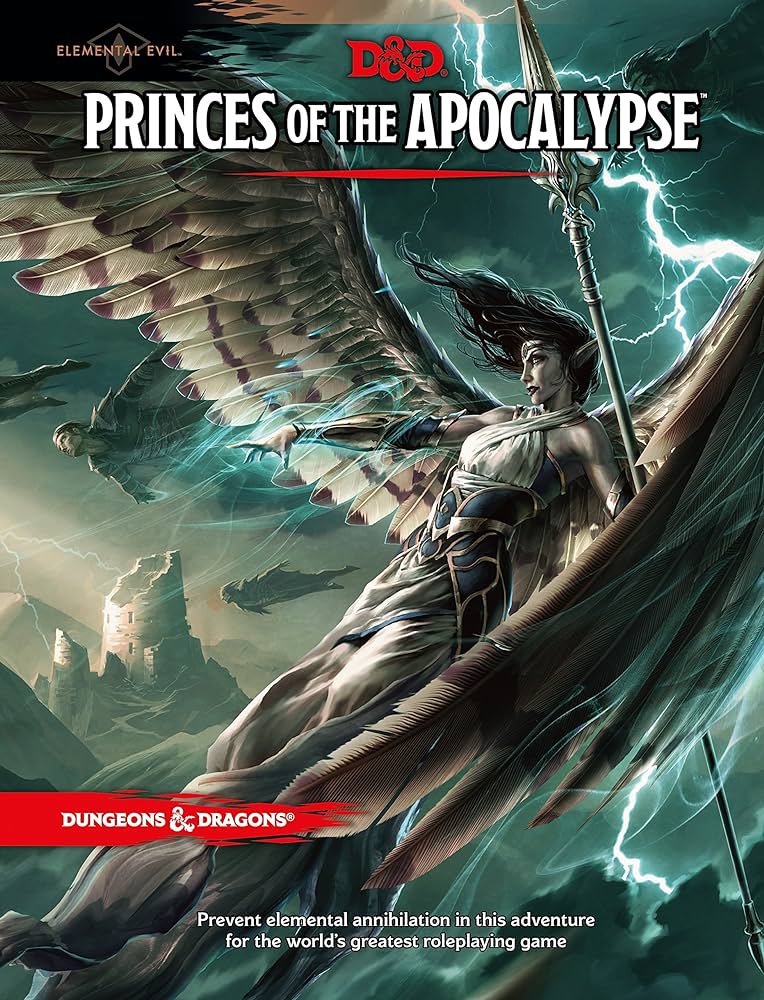
dnd 5.5/2024Create Bonfire appears to have been introduced in the Princes of the Apocalypse module, and was later picked up in Xanathar’s Guide to Everything.  Notably, it does not show up in the 5.5e (2024) Player’s Handbook.

So, is it still a legit spell? Does it grandfather into 5.5e like anything else that isn’t specifically updated or changed? I suppose so. But since the text has not changed, all of the above still pertains.

D&D 5e/5.5e Rules – Spells: Thorn Whip!

What is it, really? How does it work? How is it even possible? It’s magic!

Know the RulesPart of an ongoing series of 5e Rules notes.

Our party’s Druid (it’s also available for Artificer) had this spell and used it pretty constantly from the time it arrived to the time the campaign ended at Level 13.

The damage from Thorn Whip is okay, maybe a bit better in the early days when damage is hard to come by, though it scales nicely (something 5e has done well with cantrips). But its true utility comes with its ability to shove people around the battlefield.

The Spell

Here is the spell description:

You create a long, vine-like whip covered in thorns that lashes out at your command toward a creature in range [30 ft]. Make a melee spell attack against the target. If the attack hits, the creature takes 1d6 piercing damage, and if the creature is Large or smaller, you pull the creature up to 10 feet closer to you.

This spell’s damage increases by 1d6 when you reach 5th level (2d6), 11th level (3d6), and 17th level (4d6).

That’s actually pretty cool. A 30-foot range magical attack (requiring an actual attack roll) that does decent damage and lets you yoink people around the game map (at least closer across the game map) by up to 10 feet.

And it’s a cantrip, so you can be playing with this every single round, if you are so inclined.

Note also that, as a (30-foot reach) melee attack (not a ranged attack), the caster takes no Disadvantage using it while standing next to an opponent. The caster is still at Disadvantage vs prone targets over 5 feet away (the rules don’t differentiate between melee and ranged attacks there). Cover effects also still apply.

Finally, in visualizing this spell, most people imagine the caster holding the whip and swing it themselves. However, there’s nothing in the spell that actually says that — it could be floating in mid-air, erupting from the ground — whatever, and because it’s a spell attack, not a weapon attack — you don’t dexterously swing it, but “command it to lash out.”  It’s magic!

Moving the target around

Those words “pull the creature up to 10 feet” are important, because they make it clear that the caster has a choice about whether to move the target at all or how much. It can be left just as a 1d6 damage attack, with the target still standing where they were, or they can be moved 5 feet or 10 feet (or whatever increments your battle grid has, within that 10 foot limit).

But what does closer mean here? Because of the limited distance being moved, I would (in lieu of a more informed reading) argue that each square needs to be toward the caster, reducing the overall distance each step.

 x  x  x  x  x
 x  x  T  x  x
 x  5  5  5  x
10 10 10 10 10
 -  -  -  -  -
 -  -  C  -  -

So, in the case above, the (C)aster could move the (T)arget into each of the numbered points at 5 feet; if moving 10 feet, they would have to got to one of the 10 foot marks. They could not shift into a different 5 foot mark, and definitely not into any of the (x) squares because the move to those is further or the same distance from the Caster.

(Note: Some of this may depend what rule you are using to judge distance on a grid.)

(Also Note: A little flexibility here from the DM can fulfill the Rule of Cool.)

Kind of a drag

A lot of questions are raised by the pulling aspect of Thorn Whip (is the victim dragged? catapulted? floated through the air? teleported? and why is there no Strength Save?), but a main use for this power is dragging someone into a hazard — off a cliff, into a Bonfire spell, into a Moonbeam spell, into a Spirit Guardians spell, into a Spike Growth spell, up to the immobilized Barbarian, etc.

Is this legit? And (when) does the victim take damage from those hazard areas? The answers are, “Yes” and “It depends.”

Let’s start off by noting that Opportunity Attacks will not be triggered by being yoinked away by a Thorn Whip. That’s pretty much straight out of the book:

You also don’t provoke an Opportunity Attack when you teleport or when someone or something moves you without using your Movement, Action, or Reaction. For example, you don’t provoke an Opportunity Attack if an explosion hurls you out of a foe’s reach or if gravity causes you to fall past an enemy.

Since being yoinked by a Thorn Whip doesn’t use your Movement, Action, or Reaction, no OA is triggered.

That said, it is considered completely legit to involuntarily move someone into a hazard (p. 19) through a spell or force like Thorn Whip:

Entering such an area of effect needn’t be voluntary, unless a spell says otherwise. You can, therefore, hurl a creature into the area with a spell like Thunderwave. We consider that clever play, not an imbalance, so hurl away!

The subject in that ruling is on spells creating …

… an area of effect that does something when a creature enters that area for the first time on a turn or when a creature starts its turn in that area.

That includes things like  Blade Barrier, Cloudkill, Spirit Guardians, and Moonbeam. While “creating an area of effect on the creature or moving it onto the creature doesn’t count,” involuntarily entering the area does.

One caveat there:

Keep in mind, however, that a creature is subjected to such an area of effect only the first time it enters the area on a turn. You can’t move a creature in and out of it to damage it over and over again on the same turn.

(Remember, too, that round in 5e consists of a sequence of each combatant taking their turn. While a round is about 6 seconds, a turn is some (overlapping) slice of that period, ordered by initiative, but not a defined period of time.)

So given a Moonbeam occupying four squares, you could not force an attack from the spell for each square you used Thorn Whip to drag the target through (i.e., if you dragged them through two squares of it, the 5 foot and 10 foot marks of the spell), just for the initial entry square on your turn.

An exception here (of course there is an exception) is something like Spike Growth. Unlike spells like Moonbeam that trigger “when a creature enters the spell’s area for the first time on a turn,” Spike Growth states:

When a creature moves into or within the area, it takes 2d4 piercing damage for every 5 feet it travels.

Within and every 5 feet it travels are the keys here. You can Thorn Whip someone through two squares (10 feet) of Spike Growth and it will take the 2d4 piercing for each of those squares.

Thorn Whip: It’s Magic!

The magical nature of the pulling done by Thorn Whip is interesting. As described:

If the creature is Large or smaller, you pull the creature up to 10 feet closer to you.

So, note first, this targets creatures. You cannot Thorn Whip over to you the idol sitting on the pedestal over there, or Thorn Whip away the sword in someone’s hand (or that they dropped on the floor).

Second, within the parameter of “Large or smaller,” the target gets no choice or control in the matter of being moved. Standing there slack-jawed or holding onto a support beam for dear life with a STRength of 20, the creature doesn’t even get a Save — they just come. It’s magic!

How does the targeted creature actually move? Fly through the air? Dragged along the ground? It’s not just a teleport because they can take damage from environmental and magical conditions each step of the way. But the spell also doesn’t tie into movement or movement obstacles — it stays nothing about being “slowed” by Difficult Terrain, for example.

I dunno. It’s magic!

Can you Thorn Whip someone through another creature’s square? If you have defeated the cover that other creature is providing, then the answer would seem to be yes, even if it’s an enemy of the target; the only things the rules don’t permit is leaving them in another creature’s square unless it fits other movement/size rules.

What about other obstacles? Assuming you can see past/around them, can you pull a Thorn Whipped person through an obstacle they couldn’t move through themselves? I’d say not, as a general rule; they’ll have to be pulled around.  (But hold this thought for a moment …)

Showing Restraint vs Thorn Whip

What if the target is restrained in some way — grappled, or Entangled, or held by Black Tentacles, or even shackled to a wall? Can Thorn Whip just pull them over regardless? Remember, the individual creature is powerless to stop themselves from being pulled by the spell. But can outside forces prevent it?

Boy, can you find a lot of online argument about that!

General conclusions I’ve drawn on these questions:

  • Thorn Whip breaks a grapple, because the grapple rules literally allow for the grapple to be broken by some outside force.
  • Against spells that Restrain, like Entangle or Black Tentacles, two alternatives are suggested and, to be honest, I vacillate between them as I reductio ad absurdem each case:
  • Against actual physical restraints (being shackled to the wall) … well, it works like the spells mentioned above:  either Thorn Whip just moves the target creature regardless of the shackles (because it’s magic!), or make the Thorn Whip save with the spell strength vs a DC 20 for the manacles.
    • In either case, no additional damage should be done to the target. It’s only a freaking cantrip, fergoshsakes.

This escalating conflict between the Thorn Whip‘s clear it’s magic! nature, which is baked into the language the spell, and the voice of reason as restraints become bigger and more powerful, can only end in things like “I try to Thorn Whip the target through the bars of the jail cell,” and what silliness that results in. At some point the DM has to step in and adjudicate something that feels right while fitting the Rule of Cool.

One final  weird factor in all of this is that the duration for Thorn Whip is “instantaneous.”

Many spells are instantaneous. The spell harms, heals, creates, or alters a creature or an object in a way that can’t be dispelled, because its magic exists only for an instant.

That is, it’s not faster than the eye (you can see the whip, you can see it strike, you can see the yank, you could theoretically Counterspell it), but it happens faster than can be addressed or exploited by, for example, a Dispel Magic (or cutting the whip with your sword, or using the whip to make a gibbet, etc.).

Bearing in mind that D&D is not a tool for modeling physics, Thorn Whip is a spell whose nature and execution does not bear too close an examination. Take it as written. It’s magic!

Is Thorn Whip a magical weapon or not?

I keep saying “it’s magic,” but when does it count as magic? This question can come up in a number of circumstances — in my game, it was when the Druid used Thorn Whip on a Gargoyle, which is “resistant to bludgeoning, piercing, and slashing from nonmagical weapons.” Does Thorn Whip qualify, or not? Is Thorn Whip a magical weapon?

As one commenter summarized the argument:

  • YES: It’s created by a spell, it uses a melee spell attack to hit, and the spell damage increases with level.
  • NO: The spell description only mentions piercing damage, from an object created by the spell, not from the spell directly.

Arguments for Yes, it’s a magic attack

  • Because it’s a melee spell attack roll, not a normal melee weapon attack roll, the resistance to weapons doesn’t apply. Melee spell attacks follow the same rules as melee attacks; in this case, a melee attack with a 30 foot range. But it uses the spell attack modifier (spellcasting ability + proficiency) to hit, so, again, it’s a spell attack and ignores the resistance. 
  • The Sage Advice Compendium notes (p. 21), in determining if something is magical, qualifying questions would include “Is it a spell? … Is it a spell attack?” This is a spell, and uses a melee spell attack.
  •  Mike Mearls (one of the 5e designers) agrees that “any piercing, bludgeoning or slashing damage from spells count as magical in nature.”
  • The Monster Manual notes “Particular creatures are even resistant or immune to damage from non-magical attacks (a magical attack is an attack delivered by a spell, a magic item, or another magical source).” This attack is delivered by a spell.
  • The whip both magically appears and disappears. That indicates it’s not some sort of physical item being created, but a magic construct (that looks like a vine-like whip in some fashion).
  • The whip not only does damage, it magically lets you pull something closer to you without any additional roll (or save). Thus the overall attack is magical.

Arguments for No, it’s a non-magical weapon attack

  • The name of it is a weapon. And the spell actually creates a whip, which is a weapon. So it’s a weapon, crafted by non-conventional means.
  • The spell itself doesn’t do the damage; the whip created by it does. Again, the spell doesn’t indicate it creates a magical whip, just a long, vine-like whip that the spell allows you to commend.
  • And it does piercing  damage, like a weapon, not magical damage (force, radiance, necrotic, etc.).
  • That the damage increases with level doesn’t mean it’s additional magical damage, but could be additionally pointy / strong non-magical thorns.

Conclusion

Net-net, I am persuaded that Thorn Whip is a magical / spell attack (i.e., textualist arguments aside, the vine-like whip is an embodied spell, following the arguments around Spiritual Weapon), so it would defeat non-magical weapon resistance or immunity.

Of course, as an extension of that, something like an Antimagic Field would affect the vine reaching a target within it (even if the caster was outside of the field). It could also be countered, as noted, by a Counterspell.

Because … it’s magic!

So what about in 5.5e?

The spell looks to be identical in the new 5.5e (2024) edition to what was in 5e. It’s still magic!
D&D 5e Rules – Spells: Stinking Cloud!

So, how does Tear Gas work in D&D?

Know the RulesPart of an ongoing series of 5e (2014) Rules notes.  See the end of the post for notes on 5.5e (2024) rules.

The first time I DMed this, I did it wrong. Which, given it was an NPC I had thought I had well in hand, is not a cool move on my part.

So here it is, done right.

Tear Gas Effects: Symptoms, Complications, Treatment & Prevention

Here’s the core of the spell’s effect:

Each creature that is completely within the cloud at the start of its turn must make a Constitution Saving Throw against Poison. On a failed save, the creature spends its Action that turn retching and reeling.

When I first played with this, I ruled that this still allowed Movement (since that isn’t mentioned), but, just as anything that takes away your Action also takes way your Bonus Action, the only thing you could do was retching and reeling.

But that’s not what it says. The Stinking Cloud doesn’t take away your Action, it dictates your Action (retching and reeling). I.e., your Action is set, but you still have your Bonus Action (and Reaction, for that matter).

Or, as the Sage Advice Compendium puts it:

The stinking cloud spell says that a creature wastes its Action on a failed Save. So can it still use a Move or a Bonus Action or a Reaction?

Correct. The gas doesn’t immobilize a creature or prevent it from acting altogether, but the effect of the spell does limit what it can accomplish while the cloud lingers.

Movement is a bit problematic, of course. The area covered by Stinking Cloud  is Heavily Obscured.

heavily obscured area–such as darkness, opaque fog, or dense foliage–blocks vision entirely. A creature effectively suffers from the blinded condition when trying to see something in that area.

Or, presumably, out of that area. Blinded, in turn:

A blinded creature can’t see and automatically fails any Ability check that requires sight.

Attack rolls against the creature have Advantage, and the creature’s attack rolls have Disadvantage.

Note the offsetting penalties — trying to Attack someone inside the cloud has to deal with Heavily Obscured conditions, and so is at Disadvantage (as though Blinded). But the target is, themselves, Blind to the attack, putting them at a Disadvantage. That makes, even without all the loud retching sounds, attacks on a figure within a Stinking Cloud even money. (A figure inside the cloud can’t Attack if they fail their Save, except through a Bonus Action, but with that Bonus Action, or if they make the Save, theoretically, they are also a wash to attack a target outside the cloud, unless that target is using Stealth or a Dodge or something of that sort.)

I might House Rule that, combined with the Retching and Reeling, being Blinded in such a circumstance would lead to disorientation — perhaps another Save (Intelligence?) to move in a desired direction?

As a final note, the rules say “completely within the cloud” for the nausea effect. So if you are playing on a grid, and are using a true circle for your template (physically or on a VTT), any one in a partially covered circle isn’t affected. Which is why I prefer to have a template that fills in complete boxes on the grid, to avoid the ambiguity.

dnd 5.5/2024Any changes here in 5.5e?

The rules in 5.5e (2024) contain several changes to Stinking Cloud:

You create a 20-foot-radius Sphere of yellow, nauseating gas centered on a point within range. The cloud is Heavily Obscured. The cloud lingers in the air for the duration or until a strong wind (such as the one created by Gust of Wind) disperses it.

Two changes here: first, there’s no mention of the cloud spreading around corners (though that seems like something still to naturally consider; a cloud of gas doesn’t respect cover). Second, only a “strong wind” now disperses it, but apparently that’s instantly, not after a number of rounds.

Each creature that starts its turn in the Sphere must succeed on a Constitution Saving Throw or have the Poisoned condition until the end of the current turn. While Poisoned in this way, the creature can’t take an Action or a Bonus Action.

The requirement to be completely within the cloud to be affected is gone, which increases the radius a bit and also helps with Large creatures. The “retching and reeling” color text is, alas, gone, but we now have the Poisoned condition explicitly called out and Bonus Actions have now been sealed off, too.

Also, there’s no mention of the 5e “creatures that don’t need to breathe or are immune to poison” auto-saving. The latter would still (kind of by definition) be immune (suffering only from the Heavy Obscurement and effective Blindness), but the former are, like tear gas victims, deemed Poisoned (if they fail their Save) by contact with the gas, not just inhalation.

Overall, an increase in impact for using the spell.

D&D 5e Rules – Spells: Spiritual Weapon!

It’s a spirit! It’s a weapon! It’s a dessert topping! It’s … kind of a messy spell that people make bad assumptions about.

Know the RulesPart of an ongoing series of 5e Rules notes.

Since I’ve had players pick this, because it sounds very cool (and it can be), I had to do some digging into some of the aspects of Spiritual Weapon that are not completely obvious.

Spiritual Weapon is weird

No, seriously. But that’s because people see “weapon” and try to (incorrectly) apply all sorts of melee combat weapon rules and assumptions to it. It’s not:

Spiritual Weapon is a multi-round melee attack spell
that looks like a weapon because that’s really cool. 

If you just keep that in mind, you can ignore the whole rest of this post.

The Nuts and Bolts

Base spell:

Casting Time: 1 Bonus Action
Range: 60 feet

Spiritual Weapon token

You create a floating, spectral weapon within range that lasts for the Duration or until you cast this spell again. When you cast the spell, you can make a melee spell attack⁠⁠ against a creature within 5 feet of the weapon. On a hit, the target takes force damage equal to 1d8 + your Spellcasting Ability modifier.

As a Bonus Action on your turn⁠, you can move the weapon up to 20 feet and repeat the attack⁠ against a creature within 5 feet of it.

The first confusion comes when wondering whether on Round 1 you simply cast it as your BA, and then need to take a regular Attack action to wield it, or not. The consensus wisdom out there is “or not”:  the attack is also part of the Bonus Action (as it is in subsequent rounds), which  means the following “what can you do with it when?”:

Round 1: As a Bonus Action: cast up to 60 feet away + attack.

Rounds 2ff: As a Bonus Action: move it up to 20 feet + attack.

And that lasts either until you dispel it or 1 minute (10 rounds).

These Are Not the Weapons You’re Looking For

“But! But!” people sputter, “It’s a weapon attacking! That has to happen during a normal Action as an attack! You can’t have a spell doing a weapon attack and then do a different weapon attack or even a spell-cast, on the same turn!”

Yes. Yes you can. Because what you see isn’t what’s really happening. It’s not actually a weapon, not matter what it says in the name.

these are not the weapons you are looking for

Think of the Spiritual Weapon as a deconstructed magical attack spell. Nobody would question the ability to manifest a magical zap spell and attack with it that very same Bonus Action. Which is what you’re actually doing with Spiritual Weapon, but the magical zap spell looks and moves like a weapon, which confuses the heck out of people, because they want to treat it as a glowing animated physical weapon that does physical damage.

But it’s not. It is, quite literally “a floating, spectral weapon” that does “force damage” — and the likelihood of hitting with it has nothing to do with your physical melee abilities (Strength and Dexterity), but your melee spell abilities.

So while you’re doing Spiritual Weapon, what else can you do?

Well, on the round you cast it, that only burns your Bonus Action. So you have your full normal Movement and an Action to work with.

Except, regarding casting multiple spells in a turn, remember …

If you want to Cast a Spell that has a casting time of 1 Bonus Action, remember that you can’t cast any other Spells before or after it on the same turn, except for Cantrips with a Casting Time of 1 Action.

So on that initial round when you cast the Spiritual Weapon, you can’t do any other spells except a 1-Action casting time Cantrip. You can still move around, shoot your bow, swing your sword, Hide, etc.

On subsequent rounds, though, you can be casting spells during your normal Action, because the move-and-attack of the Spiritual Weapon is not a casting of a spell. As noted in the Sage Advice  Compendium (p. 12)

Until Spiritual Weapon ends, it gives you the option of controlling its  spectral weapon as a Bonus Action. That Bonus Action does not involve casting a spell, despite the fact that it’s granted by a spell, so you can control the weapon and cast whatever spell you like on the same turn.

In that same context, also note that Spiritual Weapon is not a Concentration spell. So even if the caster is attacked or otherwise distracted, that does not affect the spell, and casting the Spiritual Weapon does not interfere with other Concentration spells you already have up. (One could even argue that, should the caster go unconscious, the Spiritual Weapon would simply remain there, floating — it can’t attack without command — until the caster was revived if within the 1 minute spell duration.)

There Are No Stupid Questions About Spiritual Weapon

Well, maybe a few.

Does moving away from a Spiritual Weapon trigger an Opportunity Attack?

No. The Spiritual Weapon is not a creature of itself (it has no volition or reaction).  And it only attacks during a Bonus Action: Opportunity Attacks are a Reaction.

Is this a magical weapon I see before me?

No, because it’s not a physical object, thus not actually a weapon.

Again, from the spell text:

Clerics of deities who are associated with a particular weapon (as St. Cuthbert is known for his mace and Thor for his hammer) make this spell’s effect resemble that weapon.

Spiritual Weapon token
Another Spiritual Weapon token

“Effect resemble.” The shape and appearance of the SW is a “spell effect,” not actual substance.

Also, it’s an Evocation spell, one to “manipulate magical energy to produce a desired effect”; it is not a Conjuration which “involve the transportation of objects” or a Transmutation which can “change the properties of a … object.” Again, no object, just effect.

Remember that deconstruction mantra? If this was summoning a magical zap bolt that flitted about the field of combat, it would clearly not be thought of as a magical weapon. That’s basically what Spiritual Weapon is, a spell that resembles an actual weapon because that’s cool.

Can someone hold onto the Spiritual Weapon as it’s moved and essentially fly like Thor?

(People have actually asked this question.)

No. As just noted, the SW is a spectral weapon. It has no substance to grasp or hold onto. It invokes Force damage, but you can’t grab onto that.

Can a person move through the square occupied by a Spiritual Weapon?

Yes. The rules about moving through squares occupied by other creatures only apply to creatures. The Spiritual Weapon is not a creature. It has no substance to block someone, only doing Force damage when it attacks (which, to make it worse, it can’t do during the part of a round when someone would be moving through its square).

Now, that said, a lot of people would be naturally hesitant to do such a thing, even if they knew the spell. So there’s some role-playing involved here, and I’d suggest the average peasant / Kobold / etc. would just sort of naturally avoid running through a square occupied by a mystical floating weapon (or a spectral appearance of same) unless they had no other choice.

For that matter, there’s nothing to stop a person (friend or enemy) from ending or pausing movement in the same square as the weapon, nor from the caster from moving it into an occupied square (again, either by a friend or an enemy). It would not make attacks by the Spiritual Weapon any more likely or powerful, though it might be kind of distracting.

D&D 5e/5.5e Rules – Spells: Spirit Guardians!

Also known as the “Faerie Buzz Saw of Death.”

Know the RulesPart of an ongoing series of 5e (2014) Rules notes.  See the end of the post for notes on 5.5e (2024) rules.

This was another player favorite in my Princes of the Apocalypse campaign, for very good reasons: it’s pretty damned deadly.

So what does it do?

The spell says:

You call forth spirits to protect you. They flit around you to a distance of 15 feet for the duration. If you are good or neutral, their spectral form appears angelic or fey (your choice). If you are evil, they appear fiendish.

Okay, that’s nice color text. I also played with it a bit in the campaign: when the player of the cleric started being affected by a magic item she was carrying, it had an impact on the appearance of her spectral spirits.

When you cast this spell, you can designate any number of creatures you can see to be unaffected by it. An affected creature’s speed is halved in the area, and when the creature enters the area for the first time on a turn or starts its turn there, it must make a Wisdom Saving Throw.

On a failed Save, the creature takes 3d8 Radiant damage (if you are good or neutral) or 3d8 Necrotic damage (if you are evil).

So when does it actually do damage?

One question that immediately comes up about SG is when it actually attacks. It’s easy to mistakenly assume the answer is “right away,” but … nope.

The trigger is the potential target either

  • entering into the AoE (voluntarily or involuntarily), or
  • being within the AoE when their turn starts.

This is similar to Moonbeam, along with a number of other spells.

You don’t take immediately damage if the spell is cast on you (i.e., with you in the area of its casting) or if it is moved over you (if the spellcaster runs up to you).  As Crawford says, “creating an area of effect on a creature’s space isn’t the same as the creature entering it.”

But you do take damage if you enter the spell while it is in place, or are inside of it when your turn starts. And “entering the spell” does not have to be voluntary — a Shove or a Thunderwave can push you into the zone, and that’s considered not only legal, but, “We consider that clever play, not an imbalance, so hurl away!” Indeed, such a maneuver would lead to the target being hit twice by Spirit Guardians: once when pushed in, then again when their turn starts (unless someone yoinks them out again in the interim).

What about Line of Sight?

Spirit Guardians respects Line-of-Sight and Total Cover rule. I.e., if the circle extends through a wall, or any other cover, it is blocked.

Unlike Fireball or Stinking Cloud, which specifically call it out, Spirit Guardians will not go around a corner: they are not actual creatures flying around (which is why they can’t be attacked), but a magical effect emanating from a point (one of the corners the caster chooses). Anything not visible from that point is protected. If a potential target has only partial cover, though, they are affected (and the cover does not improve the saving throw).

Reference: dnd 5e – Can Spirit Guardians affect enemies through walls? – Role-playing Games Stack Exchange

Any changes here in 5.5e?

dnd 5.5/2024There are some revisions, akin to Moonbeam, in this spell in 5.5e (2024).

Protective spirits flit around you in a 15-foot Emanation for the duration. If you are good or neutral, their spectral form appears angelic or fey (your choice). If you are evil, they appear fiendish.

This is pretty much the same, though using the new Emanation terminology.

When you cast this spell, you can designate creatures to be unaffected by it. Any other creature’s Speed is halved in the Emanation, and whenever the Emanation enters a creature’s space and whenever a creature enters the Emanation or ends its turn there, the creature must make a Wisdom Saving Throw. On a failed Save, the creature takes 3d8 Radiant damage (if you are good or neutral) or 3d8 Necrotic damage (if you are evil). On a successful Save, the creature takes half as much damage. A creature makes this Save only once per turn.

So some changes here:

First, designating unaffected creatures no longer has the restriction of being able to see them. If you fire this spell off inside a room before all of your team has entered, you can now exempt them. That’s helpful.

Second and more important, the trigger for a Save (and therefore damage) has changed. Before it was (1) entering the area or (2) starting a turn in the area. Now it’s (1) entering the area, (2) ending a turn in the area, or (3) being in a space where the area enters.

This is a major change, as it means the caster can simply run through the field doing damage to everyone they get within 15 feet of (and if they keep their distance, there’s no Opportunity of Attack worries) in addition to any other spells or attacks they want to make. True, targets only Save / take the damage once per turn (but, with Shove and Thorn Whips and the like, they could be moved into, out of, and back into the area on different characters’ turns during a round), but the number of targets has just climbed substantially.

So, overall, this spell, like Moonbeam,has gotten significantly more powerful. DMs beware!

D&D 5e/5.5e Rules – Spells: Moonbeam!

A pale-glowing cylinder of DOOM!

Know the RulesPart of an ongoing series of 5e (2014) Rules notes.  See the end of the post for notes on 5.5e (2024) rules.

In my most recent campaign, the Druid’s Moonbeam was colloquially known (well, at least by me) as the Orbital Death Laser of Doom.

It’s really not an exaggeration.

orbital death laser

Let’s talk about Moonbeam

This is another one that has had some revising done on it since the original 5e release — so if you’re looking up material about it, make sure it’s referring to the “same” spell.

Here’s the official description for this Level 2 spell.

A silvery beam of pale light shines down in a 5-foot-radius, 40-foot-high Cylinder centered on a point within range [120 feet]. Until the spell ends, dim light fills the cylinder.

When a creature enters the spell’s area for the first time on a turn or starts its turn there, it is engulfed in ghostly flames that cause searing pain, and it must make a Constitution Saving Throw. It takes 2d10 radiant damage on a failed save, or half as much damage on a successful one.

A Shapechanger makes its Saving Throw with Disadvantage. If it fails, it also instantly reverts to its original form and can’t assume a different form until it leaves the spell’s light.

On each of your turns after you cast this spell, you can use an action to move the beam up to 60 feet in any direction.

Moonbeam, like Lightning

This one has some similarities to Call Lightning, but some significant differences.

Moonbeam (5' radius) AoE token
Moonbeam (5′ radius) AoE token for grid combat.

Like CL, the effect is a 5-foot radius centered on a grid intersection (i.e., 4 squares). The cylinder involved is 40 feet high, but there’s no verbiage (as in CL) to indicate that if you are not in a 40-foot tall room, you can’t cast it; the height seems primarily oriented toward cases of dealing with flying creatures.

While CL allows the target radius to be moved anywhere under the cloud on the caster’s turn, Moonbeam‘s cylinder can be moved by the caster (as an Action) in any direction 60 feet, as long as it remains within the 120 foot range from the caster on that turn. So while someone can run out from under CL‘s cloud (which is immobile), the Moonbeam caster could run after someone who was trying to get outside of that 120 range and move the beam on top of them again.

Moonbeam and damage

This is a little more difficult to glean from the spell description, and had to be more fully explained in an official Sage Advice CompendiumDamage is done to victims within the radius on their turn, not on the spell-caster’s turn, i.e.:

  • When a target begins their turn inside the cylinder.
  • When a target enters the cylinder during their turn (if they did not already start there).

But targets do not take damage when:

  • The cylinder is cast or moved onto the area where a target is standing.
  • The spell is moved across a target on its way to a different location.

Looked at another way, you’d generally see Moonbeam’s use as such:

  1. The caster drops the Moonbeam on an opponent. The opponent takes no damage at that time.
  2. The opponent’s next turn begins … and they take their 2d10 radiant damage (or Save). They presumably move away …
  3. The caster’s next turn starts — and they move the Moonbeam atop the same target. Who doesn’t take damage right then, but …

Laser, move, repeat.

Note that targets can be involuntarily moved into the cylinder by some effect (a shove, a Thunderous Blast), and this does actually count as “enters the spell’s area for the first time on a turn.”.

Entering such an area of effect needn’t be voluntary, unless a spell says otherwise.

This same arrangement holds true for a number of other AoE hazards, e.g., Blade Barrier. If it moves onto you, you don’t take immediate damage. If you move into it (even against your will), you do. And, in such a case, you’ll end up taking damage twice — when shoved in, and then at the beginning of your turn.

Note that this, too, is a Concentration spell. Between that and having to use your Action to move the Moonbeam, use of this spell is pretty much a full-time job. But the orbital death laser’s damage potential, especially against mooks, or round-over-round against bigger targets, makes all that worth it.

dnd 5.5/2024Any changes in 5.5e?

This spell has some significant differences in 5.5e (2024), though in principle it is much the same.

A silvery beam of pale light shines down in a 5-foot-radius, 40-foot-high Cylinder centered on a point within range. Until the spell ends, Dim Light fills the Cylinder, and you can take a Magic action on later turns to move the Cylinder up to 60 feet.

So this part is much the same, just edited a bit and with the Magic action used for the targeting movement.

When the Cylinder appears, each creature in it makes a Constitution Saving Throw. On a failed Save, a creature takes 2d10 Radiant damage, and if the creature is shape-shifted (as a result of the Polymorph spell, for example), it reverts to its true form and can’t shape-shift until it leaves the Cylinder. On a successful Save, a creature takes half as much damage only. A creature also makes this Save when the spell’s area moves into its space and when it enters the spell’s area or ends its turn there. A creature makes this Save only once per turn.

So there are some significant differences here:

  1. As you would intuitively assume (but was not the case in 5e), Save and damage rolls take place when the spell is first cast.
  2. It also seems you can drag this spell across bad guys (“when the spell’s area moves into its space”), which is pretty nasty.  You can only do it once (per turn), though, as damage is only taken when the Save is rolled, and the Save is only rolled once per turn. (A target could still be damaged multiple times a round if shoved into and out of the beam by different people on their turns.)
  3. People in the beam take damage if they end their turn there (not start it).
  4. Any sort of shape-shifted creature, is affected, though there is no mention of Disadvantage on the Save.

So before, Moonbeam lagged on causing damage until the start of a target’s turn. Now in 5.5e, it causes damage as soon as they enter the beam or the beam is cast/moved onto them, and if they remain standing in the beam, they take damage at the end of their turn.

This would seem to make Moonbeam a bit more powerful than in 5e, and the ability to march the Moonbeam down a row of bad guys on a turn potentially makes it much more powerful. 

D&D 5e Rules – Spells: Call Lightning!

Summoning lightning sounds really cool. And it is. Under the right circumstances.

Know the RulesPart of an ongoing series of 5e (2014) Rules notes.  See the end of the post for notes on 5.5e (2024) rules.

I won’t say that Call Lightning is an overrated spell, but it’s a spell that sounds a lot more cool and flexible and awe-inspiring than it actually turns out to be when you try to play with it (properly). It comes across as an alternative to Fireball for Druids, also a 3rd Level Conjuration, but it most certainly is not.

Let’s start with the description.

Range: 120 feet

A storm cloud appears in the shape of a Cylinder that is 10 feet tall with a 60-foot radius, centered on a point you can see within range directly above you. The spell fails if you can’t see a point in the air where the storm cloud could appear (for example, if you are in a room that can’t accommodate the cloud).

When you cast the spell, choose a point you can see under the cloud. A bolt of lightning flashes down from the cloud to that point. Each creature within 5 feet of that point must make a Dexterity saving throw. A creature takes 3d10 lightning damage on a failed save, or half as much damage on a successful one. On each of your turns until the spell ends, you can use your action to call down lightning in this way again, targeting the same point or a different one.

If you are outdoors in stormy conditions when you cast this spell, the spell gives you control over the existing storm instead of creating a new one. Under such Conditions, the spell’s damage increases by 1d10.

This one is a bit more complex than it seems, and it “suffers” by having had its text significantly updated some time into the 5e era; a lot of websites discussing the spell (from when 5e first launched) do not have the spell described correctly . The original text got confusing about the height of the cloud.

So, you need to be in a room or area that has at least ten feet of clearance (to accommodate the height of the cloud). As an example, my kitchen/family room ceiling is only 8 feet high. So this will be most useful out of doors, in tall caverns, or in Intentionally Impressive Rooms (throne rooms, cathedrals, etc.).

(I have seen suggests that if the room is only 10 feet high then the area concerned is all in cloud and thus can’t be seen into. That effect is not explicitly called out, and, frankly, gets into complications I’d rather avoid. If I were to do it, rather than blocking vision I’d make the area into a Dim situation, impacting Perception checks in and out, but not much more).

You don’t need quite this much space, but almost.

The rules indicate the room/space must accommodate the cloud. That means an interior room has to be not just tall enough, but wide enough to accommodate a 60-foot radius, i.e., 120 feet wide.

The cloud gets centered on a point no more than 120 feet away (a grid intersection, not a square, if you are playing on a grid), and as noted, has a radius of 60 feet.

Impress your friends!

On each turn, the caster can choose a point (again, a grid intersection, not a square), and everyone in a 5-foot radius of that point (i.e., the four squares around that intersection) get zorched. The point can be anywhere under that 60-foot radius cloud, and can be moved around (as an Action) each turn. (I would rule that any area to be zorched must be under the cloud.)

It’s a Concentration spell, so you can keep it going for up to 10 minutes, or until someone figures out you’re the one doing it and starts trying to break your concentration.

Call Lightning vs. Fireball

I mean, this doesn’t have to be a competition … but, frankly, the subject is going to come up.

Advantages of Call Lightning
  • Lasts for 10 minutes (of Concentration)
  • You can hit the same target every. single. round. That’s a lot of 3d10s over 10 minutes.
  • Works anywhere under a 60 foot radius
  • Range is only 120 feet, but with a 60 foot radius from that point.
  • Lightning damage is less resisted than fire.
Advantages of Fireball
  • 8d6 beats 3d10 (the first time).
  • Can be cast anywhere, not just in a space that will fit a cloud 10 feet high and 120 feet across.
  • Hits its entire area upon casting.
  • Range is 150 feet (but only a 20 foot radius from that point).
  • LoS not necessary for effect; can affect targets around a corner.
  • Can set stuff on fire.

Call it anecdata, but during a 2½ year weekly campaign, our Druid had an opportunity to cast Call Lightning maybe … twice? Whereas our Sorcerer let loose with a Fireball at least every second or third session.

That said, if the opportunity does arise, and if it’s thematically proper to the character, Call Lightning can be a ton of fun to cast.

Any changes in 5.5e?

dnd 5.5/2024Maybe.

The basic language of the spell is fairly similar in 5.5e (2024):

The storm cloud:

A storm cloud appears at a point within range that you can see above yourself. It takes the shape of a Cylinder that is 10 feet tall with a 60-foot radius.

Here’s the main difference: there’s no longer any language about the spell failing if the room is not large enough to accommodate such a cylinder. Does it? Better ask your DM first to make a ruling before you assume it does (or doesn’t). If the limitation has actually been eliminated, this is a much more useful spell.

The zorching:

When you cast the spell, choose a point you can see under the cloud. A lightning bolt shoots from the cloud to that point. Each creature within 5 feet of that point makes a Dexterity saving throw, taking 3d10 Lightning damage on a failed save or half as much damage on a successful one.

Until the spell ends, you can take a Magic action to call down lightning in that way again, targeting the same point or a different one.

While edited a bit from the 5e text (and calling in the new Magic action), everything else here is the same. The spell also has the added language for using a natural storm out of doors.

So, is there a change? There’s probably someplace in the 5.5e rules I haven’t run across about how AoEs that don’t fit in the space work. Barring that (and not seeing any commentary online), I would, again, discuss it with your DM about whether they want to allow you to blanket any 60-foot radius area with four-squares-at-a-time lightning bolts for ten minutes. As far as I can tell, 

D&D 5e Rules – Spells: Fireball!

“Ka-boom?”
“Yes, Rico. Ka-boom.”

Know the RulesPart of an ongoing series of 5e (2014) Rules notes.  See the end of the post for notes on 5.5e (2024) rules.

It’s a classic, so much so that it’s inspired a dozen memes. It’s every magic-user’s favorite 3rd Level spell: Fireball!

So, what does that bad boy look like?

A bright streak flashes from your pointing finger to a point you choose within range and then blossoms with a low roar into an explosion of flame.

Each creature in a 20-foot-radius sphere centered on that point must make a Dexterity saving throw. A target takes 8d6 fire damage on a failed save, or half as much damage on a successful one.

The fire spreads around corners.

It ignites flammable objects in the area that aren’t being worn or carried.

Fire Ball Gif GIFs | TenorFrom PHB 241.

What’s not to like? Hitting everyone in a large radius with 8d6 of fire damage?  It is Teh Awesome.

Of course, Fire is one of the most commonly resisted damage types (largely “thanks” to Fireball), and the save is on DEXterity, which is something a lot of bad guys have in abundance.

But, still, it’s pretty damned amazing. No wonder all the spellcasters cannot wait to get it, and then to use it.

So let’s talk about the rules.

The Rules of Fireball

Fireball has, traditionally in D&D, been a debate about physics, calculating the volume of the fireball, then the volume of the room, then figuring out the blowback if the latter is smaller than the former, etc.

5e has simplified this. Though the spell talks about an “explosion of flame,” the consensus is that, RAW, it acts more like a volume that is suddenly filled with roiling flame, as long as there is an open channel within range.

There’s no ka-boom that roars down the hallway like in Backdraft. 

Walls and doors, etc., block the effect.

All this does mean that Fireball can affect folk out of line of sight. The following picture (source unknown) illustrates:

The magic user on the steps casts Fireball in the middle of the corridor ahead. (Properly speaking, spells should anchor on an intersection, not in the middle of a square or an edge. But I digress.)

The lady around the corner gets hit, even though she’s out of Line of Sight from both the caster and the center of the spell, because the fireball spreads around the corner — within the 20 foot radius.

The figure in the room, though, is not hit because the doors are all closed. If the upper door by the lady was open, though, that figure would get hit, even if it’s a lot longer to walk from the center of the spell to that figure than 20 feet.

AoE 20ft radius orange
Fireball AoE template

(I’ve seen some suggestion that the line-of-explosion has to go through full squares; that seems to be a DM call, though. Under that suggestion, the figure in the room would not get hit if the upper door was open, because the effect has to go through half-squares. This gets solved, though, by using a squares template, especially on a VTT, rather than drawing a circle.)

(And, no, we’re not going to worry, for purpose of area of effect, whether the doors catch on fire and burn through.)

fireball meme

References: 1 2 3 4 5 6

dnd 5.5/2024So how about in 5.5e?

There’s been a significant change in how Fireball works in 5.5e (2024).  Fireball now respects cover.  

Here’s the write-up:

A bright streak flashes from you to a point you choose within range and then blossoms with a low roar into a fiery explosion. Each creature in a 20-foot-radius Sphere centered on that point makes a Dexterity saving throw, taking 8d6 Fire damage on a failed save or half as much damage on a successful one.

Flammable objects in the area that aren’t being worn or carried start burning.

This is almost precisely the language 5e uses, but leaving out the very significant “the fire spreads around corners” verbiage. The implication is that total cover from the point of the explosion (not the PoV of the caster) shields the target. It’s no longer an instantly roiling sphere of flames; it’s an explosion (as the text has always implied).

Fireball remains a very nifty spell, don’t get me wrong. But 5.5e gives it a small nerf for cover.


D&D 5e/5.5e Rules – Spells: Augury!

It’s the Poor Man’s Prophecy … but that doesn’t make it easy to adjudicate.

Know the RulesPart of an ongoing series of 5e Rules notes.

As a DM, I really dislike prophecy / fortune-telling / prognostication spells. Letting the players know something about what’s coming, when something is coming, feels like a horrible idea. And if I have to decided on the fly if something is going to be coming … then it’s even worse.

River Song - spoilers
… sweetie.

Don’t make me Augury. You wouldn’t like me when I’m Augury.

In the case of my most recent campaign, it was about our druid and his Augury spell (PHB 215-16):

By casting […]  you receive an omen from an otherworldly entity about the results of a specific course of action that you plan to take within the next 30 minutes. The DM chooses from the following possible omens:

  • Weal, for good results
  • Woe, for bad results
  • Weal and woe, for both good and bad results
  • Nothing, for results that aren’t especially good or bad

The spell doesn’t take into account any possible circumstances that might change the outcome, such as the casting of additional Spells or the loss or gain of a companion.

We dithered a bit over whether this spell was focused on actions taken in the near term (or started in the near term?), the results in the near term, or both. A lot of people also have this problem, because it’s, honestly, a poorly worded spell.

Other groups have had questions come up around, say, results for whom (the caster? the party? an identified individual?). If going down this path is going to help the caster get their reward from the sheriff, but also lead to another party member’s arch-nemesis getting a shot at them, what should the results be?

Or results from the perspective of whom (the caster? the spell’s otherworldly entity?). If the party is thinking of attacking the, oh, let’s say a lich, a goal a LG deity might wholly support, even if it’s certain death for the players … how should Augury turn out?

There’s a lot of interesting meta discussion out there about Augury (for those who find such things interesting), but here’s where I fall:

Timing

The spell is about “the results of a specific course of action that you plan to take within the next 30 minutes“.

While some interpret this as “only things you are doing and have results in the next 30 minutes,” I think there is room there for not just actions, but a course of actions which is initiated within that 30 minutes. The course may not be completed in 30 minutes. The results may not be achieved or clear in the next 30 minutes. But Augury can, with increasing vagueness, deal with things beyond a half hour.

An (ironic) look to the past

Some folk note that the 3.5 rules were a lot more clear on this:

The augury can see into the future only about half an hour, so anything that might happen after that does not affect the result. Thus, the result might not take into account the long-term consequences of a contemplated action.

The rules lawyers then argue whether (a) that should help inform how to treat the 5e rules, or (b) the lack of such language in 5e means this restriction is no longer true. I would probably lean into the latter interpretation, as the rules are evolutionary, not de novo each edition. I think it also makes better story sense.

Some hypotheticals

For the otherworldly being (i.e., the DM), the more specific and bounded the course of action and timeframe are, the clearer the results. So, “Should we go through these doors and into the dungeon beyond?” is kind of open-ended … and the augury will be more approximate.

Dungeon Door
Dungeon Door

On consideration, the DM (the otherworldly entity) knows that

  • The dungeon is likely to take several hours.
  • The first room, even the first 30 minutes of rooms, are easy-peasy.
  • The dragon at the end will be hard, even dangerous, but the treasure is pretty awesome.

The Augury would probably show Weal, for that treasure that lies at the foreseeable end of the course of action you are beginning in the next thirty minutes, even if the road may be bumpy to get there.

But … if the dragon was knowably (by the otherworldly being) of a CR that would quite likely lead to a partial or total party kill, then even if the path to it was some hours long, an Augury should show Woe.

In other words, it’s not just a “am I safe for the next 30 minutes?” spell, but “are my plans being initiated right now leading to significant benefit or harm going forward.” The further forward, the more hazy. And it’s not open-ended: “Yes, if you set off on this quest in the next 30 minutes then, at the end of your life in fifty years, you will look back on this day in pride, and your deity will reward you in the afterlife” is beyond the spell’s scope.

So let me frame the generic question this way: “Will this specific course of action I am taking lead most proximately to my being benefited or harmed?” That proximity may be beyond the thirty minutes. And the coupling of the dragon and the treasure she sits on may lead to a Weal and Woe answer. But it won’t be a “Yes, you will get through rooms 1-5 of the dungeon and find 50gp there, so definitely Weal, but, whoa, room 6 is gonna be a hot mess for you, but that’s more than 30 minutes out, so further deponent sayeth not!”

ThiefAnother example: “Should I pick up this idol?” The idol is secretly cursed to draw attacking undead to you at the next New Moon, which is a week away. What should the Augury say?

I’d have it say Woe, even if the results aren’t within the next 30 minutes. On the other hand, if the idol was necessary to get into the Castle Arrgh, the next big step on the quest, then I’d give a Weal and Woe result; I might even do that if the curse drew attackers right now, because the proximate Woe is balanced by a greater later Weal. (I might also phrase it as “Woe and Weal,” to give some sense of the sequence.)

D20What about results that depend on die rolls? That one gets (ha!) dicier. Some folk argue that the spell assumes success (“We are going to sneak past the guards and find the plans in the leader’s tent — Weal or Woe?”), but if the DM thinks that highly unlikely due to the factors unknown to the players (a guard with a really high Perception), what to do?

In that case the DM should press to frame this into the specific questions, either (a) “We are going to sneak past the guards” → Woe) or (b) “We are going to look for the plans in the leader’s tent” → Weal.

In some cases, where everything hinges on a particular die roll (specifics good!), I might let the player make that roll in advance and so determine Weal or Woe. But in general, the spell itself demurs from “possible circumstances that might change the outcome”. The DM usually has to go with the probability curves. And if the players question it later when the Weal result turns pear-shaped?  Well, even an otherworldly entity isn’t omniscient.

Lord Of The Rings Gandalf GIF - Lord Of The Rings Gandalf Indeed GIFs

Maybe a metaphor will help

Here’s a final metaphor: Weal or Woe is like an elevation rise on a road. “Will this road climb higher?”

The clearest answer is how the roadway is right now (you’re on a flat patch, on an upslope, on a downslope) … but there might be a hill in the near distance that’s visible, or a vale … and a taller mountain, seen hazily, beyond that.

The more explicit the question, the closer the proximity, the clearer the answer; the further away, the hazier the answer, so that specifics become generalities, and the chance of Weal and Woe (“you will go uphill, and you will also go downhill”) becomes greater.

So whose Augury is it, anyway?

Is the Augury from the perspective of the caster, the party, the otherworldly entity (patron? deity?) of the caster, or what? What determines a “good” vs “bad” result?

It seems to me that it’s from the perspective of the person casting the Augury. And it’s how they will feel about it at the time of the result, not some sort of objective measure (HP left, gold pieces in pocket, etc.). Maybe Weal means the player losing at a gambling bet, but learning that the loss goes to feed some orphans, evocative of the player’s origin story. Or maybe Weal means returning the artifact to their deity’s temple, even if they lost one of the party members along the way. Or Woe means losing that party member only to gain a treasure, and contemplating on the meaninglessness of gold against their value of friendship. (Or maybe those are a blend of Weal and Woe.)

Those are complex activities to fit in the scope of an Augury, but they are offered as edge cases.

That all requires a bit of understanding about the character. Do they value their deity’s goals above their own comfort, or even survival? How do they feel about loyalty to the party, vs personal gain? Ultimately, it’s about what they value.

So, yes, it’s more difficult than a simple XP/HP vs GP comparison, but that’s also life.

A couple more hypotheticals

Example. “Should we camp here where it’s safe, rather than keep going?”

Effects: The party is saved from a dangerous encounter down the road with orcs, but without the party’s intervention, the orcs kill their hostages, whose bodies will be found on the road the next day by the party.

Augury result: I would argue Weal and Woe … probably. If it’s an easy encounter, then it would be just Woe (the character was never in real danger, and something they would value, innocent lives, was lost). If it was a convention of liches, not orcs, and the hostages were dead regardless, it would be Weal (you’re alive, buddy, and can potentially do something about the bad guys later). A particularly Good-aligned caster might get results leaning to Woe (personal survival is less important than saving lives), while Neutral or Evil one might be focused on Weal.

Example: “Should the Rogue go into town to find out whether the caravan has come through?”

Effects: The Rogue is likely to be arrested upon setting foot in town for shenanigans the last time there, and be thrown into the clink overnight. The caster has previously opined that the Rogue needs a comeuppance. Also, in jail, the Rogue will find out about the caravan, before being released the next day.

Augury resultWeal. Yeah, the Rogue is going to be pissed at the outcome (“Even the bedbugs had bedbugs!”), but the caster is happy about both the poetic justice and the intel being gathered.

Does any of this become clearer in 5.5e?

No, not really. The language of the spell is pretty much the same in 5.5e (2024) as in 5e.


D&D 5e/5.5e Rules – Spells – Spellcasting per Turn!

So how many spells can you actually cast in a turn, or a round?

Know the RulesPart of an ongoing series of 5e (2014) Rules notes.  See the end of the post for notes on 5.5e (2024) rules.

So how many spells can you cast in a turn?

The answer? Everyone say it together: It depends!

But first, a minor digression (that isn’t)

Terminology:

Round:  A cycle round the table, ordered by Initiative, during which each PC/NPC takes a turn.

Turn: A PC/NPC’s spot, ordered by Initiative, when the PC/NPC can move and take actions. Each PC/NPC gets one turn per round.

So, each round, your character gets to take their turn. There are parts of the round that are not your turn (but during which you may React).

This is important in understanding the below.

Okay, let’s answer the question

Let’s start with the Sage Advice Compendium:

Is there a limit on the number of spells you can cast on your turn? There’s no rule that says you can cast only X number of spells on your turn, but there are some practical limits. The main limiting factor is your Action. Most spells require an Action to cast, and unless you use a feature like the Fighter’s Action Surge, you have only one action on your turn.

By default, you can, pragmatically, cast one normal spell per turn, using the Cast a Spell Action. Most spells have a casting time of 1 Action. Easy peasy, right?

But what about spells that you can cast as a Bonus Action? There aren’t many, but they say it right in the spell timing. (It’s worth noting “Action” and “Bonus Action” are not interchangeable; if something is one, it cannot be done as the other.) So if you cast a Bonus Action spell, can you then cast a regular Action spell?

Yyyyeah, but it creates some limitations:

Bonus Action
A spell cast with a Bonus Action is especially swift. You must use a Bonus Action on your turn to cast the spell, provided that you haven’t already taken a Bonus Action this turn. You can’t cast another spell during the same turn, except for a cantrip with a casting time of 1 Action.

and

If you want to Cast a Spell that has a casting time of 1 Bonus Action, remember that you can’t cast any other spells before or after it on the same turn, except for cantrips with a casting time of 1 Action.

So, if you cast a spell, such as Healing Word, with a Bonus Action timing, you can cast another spell with your Action, but that other spell must be a cantrip, not a levelled spell.

But what about Sorcerers?

Sorcerers have a metamagic tool, though, called Quickened Spell

Quickened Spell
When you Cast a Spell that has a casting time of 1 Action, you can spend 2 Sorcery Points to change the casting time to 1 Bonus Action for this casting.

So that lets you cast a levelled spell of 1 Action casting as a Bonus Action instead. But that doesn’t get rid of the limitation above: “If you want to Cast a Spell that has a casting time of 1 Bonus Action, remember that you can’t cast any other Spells before or after it on the same turn, except for cantrips with a casting time of 1 action.”

Again, this is confirmed in the most recent Sage Advice Compendium:

Does Quickened Spell allow a sorcerer to cast two spells a round of 1st level or higher?
No, the sorcerer must follow the rule for casting a spell as a Bonus Action and casting another spell on the same turn; the other spell must be a cantrip with a casting time of 1 Action.

Along this line, there is an Epic Boon that allows a spell you know to be turned into a Bonus Action spell permanently. But we needn’t delve into that right now …

To sum up …

So, what are valid combos?

  • YES: Cantrip @ 1 Action + Spell @ 1 Bonus Action
  • YES: Cantrip @ 1 Action + Cantrip @ 1 Bonus Action
  • NO: Spell @ 1 Action + Spell @ 1 Bonus Action
  • NO: Spell @ 1 Action + Cantrip @ 1 Bonus Action

Unless noted otherwise, the Bonus Action can go before or after the Action, but remember that you can only cast something as a Bonus Action if that’s its timing in the spell book, or if you use Quickened Spell to cast it.

But what about spells that give Bonus Actions?

If a spell gives you a Bonus Action, using that Bonus Action does not trigger this limitation effect (because you aren’t casting the spell in the Bonus Action). For example.

The rule on casting a spell as a Bonus Action (see PH, 202) applies only on the turn you cast the spell. For example, Spiritual Weapon can be cast as a Bonus Action, and it lasts for 1 minute. On the turn you cast it, you can’t cast another spell before or after it, unless that spell is a cantrip with a casting time of 1 Action.

Until Spiritual Weapon ends, it gives you the option of controlling its spectral weapon as a Bonus Action. That Bonus Action does not involve casting a spell, despite the fact that it’s granted by a spell, so you can control the weapon and cast whatever spell you like on the same turn.

But what about Action Surge?

One further edge exception to this is if you are a spellcaster who’s taken a couple of levels of Fighter (or are doing the Eldritch Knight fighter subclass).

Action Surge
Starting at 2nd Level, you can push yourself beyond your normal limits for a moment. On your turn, you can take one additional Action.

As noted by the Sage Advice column, using Action Surge would give you two Actions on that turn, and both of them could be Cast a Spell. And that wouldn’t be limited to cantrips:

If you cast a second spell using Action Surge, you aren’t limited to casting a cantrip with it.

If you also cast a Bonus Action spell of some sort, though, those regular Action spells would be limited to cantrips (both of them). Because, again,

If you want to Cast a Spell that has a casting time of 1 Bonus Action, remember that you can’t cast any other spells before or after it on the same turn, except for cantrips with a casting time of 1 Action.

Well, then, what about Reaction Spells?

The rules about spellcasting actions also get bumped about by Reaction spells. Some spells (such as Shield) can be cast as a Reaction. You only get one Reaction per round, and Reactions (to others’ actions) usually take place outside of your turn. But … not always.

Reaction Timing
Certain game features let you take a special action, called a Reaction, in response to some event. Making Opportunity Attacks and casting the Shield spell are two typical uses of Reactions. If you’re unsure when a Reaction occurs in relation to its trigger, here’s the rule: the Reaction happens after its trigger completes, unless the description of the Reaction explicitly says otherwise.

Once you take a Reaction, you can’t take another one until the start of your next turn.

and

Reactions
Some spells can be cast as Reactions. These spells take a fraction of a second to bring about and are cast in response to some event. If a spell can be cast as a Reaction, the spell description tells you exactly when you can do so.

There are some weird edge cases where you might end up using a Reaction spell on your own turn. E.g., on my turn …

  1. I Cast a Spell Fireball at the orcs.
  2. I take a step forward, coming into range of the enemy wizard.
  3. The enemy wizard fires off his Readied action of “Cast a Spell Magic Missile If I Step Within Range.”
  4. I React with a Shield spell.

I react on my own turn, and that’s fine. And there’s no problem with effectively my casting two spells (my Action and my Reaction) because there’s no limitation on that; none of the conditions discussed above come into play because this doesn’t involve a Bonus Action.

But consider this case:

  1. I use a Bonus Action to cast a Shillelagh cantrip.
  2. I Cast a Spell Flame Bolt cantrip at the orcs (since I have already cast as a Bonus Action, I can only do a cantrip as my Cast a Spell action).
  3. I take a step forward, coming into range of that enemy wizard.
  4. The enemy wizard fires off his Readied action of “Cast Magic Missile If I Step Within Range.”
  5. I React with a Shield spell … but I can’t.

Because Shield is not a cantrip and because I cast a Bonus Action spell and I can’t cast another leveled spell on my turn once I’ve done that. Again, as the rules say, once you’ve cast a spell as your Bonus Action, “You can’t cast another spell during the same turn, except for a cantrip with a casting time of 1 action.” That includes Reactions on my turn, just like it includes the second Action in an Action Surge.

If the enemy wizard acted right after my turn and fired the Magic Missile, then the Shield could be cast as a Reaction just fine, because I would not be Reacting on the same turn as when I cast a Bonus Action spell. Zany, but true.

As a further note, I am not sure if there are any Reaction Cantrips. As of 2014, at least, Jeremy Crawford was able to say:

Casting a Bonus Action spell does preclude casting a Reaction spell on the same turn.

In short …

So the answer to “How many spells can I cast on a turn?” seems to be:

  • Three levelled spells (Cast a Spell, Action Surge+Cast a Spell, Reaction) or
  • Three spells (Cast a Spell cantrip, Action Surge+Cast a Spell cantrip, Bonus Action)

If you don’t want to get into Action Surge, it looks like the number is two.

Bonus Action spells are really powerful in the flexibility they provide (more than one spell in a turn!), but they also gum up what else you can do, spellcasting-wise. Caveat incantor.

Any changes in this with 5.5e?

dnd 5.5/2024In theory, 5.5e (2024) has the same basic restrictions. In actuality, some wording alterations may (or may not) fundamentally changed things.  (Remember, when in doubt, The Rule of Cool as well as The DM can dictate how they want rules to work.)

One terminology change:  there is now a Magic Action for players to use, which combines casting spells with using magical items. Such things usually will note that they require a Magic Action.

One other terminology change. Instead of referring to “levelled spells” (for any spells with a level number, or over a Cantrip), 5.5e works off of “spell slots” or refers to spells that require a spell slot to use. That sounds similar, but there’s one key difference.

In the 5.5e PHB (p. 236) the rules note:

One spell with a Spell Slot per Turn
On a turn, you can expend only one spell slot to cast a spell. This rule means you can’t, for example, cast a spell with a spell slot using the Magic action and another one using a Bonus Action on the same turn.

Which sounds like the 5e rules, except that it doesn’t take into account spellcasting that doesn’t use spell slots, like using magic items, including scrolls, or species magic features or class magic features. All of those are tracked and expended in a different way (e.g., species X can cast spell Y once per day).  But they still don’t use spell slots — so are they legal to be stacked as a Bonus Action with a spell-slotted spell in the Magic action?  Or to use as a Magic action spell alongside a Bonus Action slotted spell?

More importantly, was this change intentional, or an inadvertent result of the terminology change?

For the moment, consult with your DM.

Note that 5.5e’s Sage Advice Compendium includes the following:

Is there a limit on the number of spells you can cast on your turn?

There’s no rule that states you can cast only X number of spells on your turn, but there are some practical limitations. The main limiting factor is your action. Many spells require an Action to cast, and unless a feature says otherwise, you only have one Action on your turn. You also must abide by the rule of only expending one spell slot to cast a spell on your turn.

So, for example, if you take your Bonus Action to cast Healing Word using a spell slot, you can also take the Magic action to cast Vicious Mockery—a cantrip which doesn’t require a spell slot.

D&D 5e/5.5e Rules – Spell Scrolls!

Spells Scrolls aren’t spells, but they aren’t magic items, but they are actually both, which, yes, is sometimes confusing.

Know the RulesPart of an ongoing series of 5e (2014) Rules notes.  See the end of the post for notes on 5.5e (2024) rules.

The basic rule: you can only use a spell scroll if you are in a class that has the spell on its spell list.

Things seem pretty simple if you just look at the DMG’s description of Magic Items: Scrolls (DMG 139):

The most prevalent type of scroll is the spell scroll, a spell stored in written form …. A scroll is a consumable magic item. Unleashing the magic in a scroll requires the user to read the scroll. When its magic has been invoked, the scroll can’t be used again. Its words fade, or it crumbles into dust.

Unless the scroll’s description says otherwise, any creature that can understand a written language can read the arcane script on a scroll and attempt to activate it.

However, under Spell Scroll (DMG 200), the process is much more elaborate and restrictive (and in D&D, specific beats general):

spell scroll bears the words of a single spell, written in a mystical cipher.

If the spell is on your class’s spell list, you can read the scroll and cast its spell without providing any material components. Otherwise, the scroll is unintelligible.

Casting the spell by reading the scroll requires the spell’s normal casting time. Once the spell is cast, the words on the scroll fade, and it crumbles to dust. If the casting is interrupted, the scroll is not lost.

If the spell is on your class’s spell list but of a higher level than you can normally cast, you must make an ability check using your spellcasting ability to determine whether you cast it successfully. The DC equals 10 + the spell’s level. On a failed check, the spell disappears from the scroll with no other effect.

That page also includes a table for determining the saving throw DC and attack bonus:

Spell Level Rarity Save DC Attack Bonus
Cantrip Common 13 +5
1st Common 13 +5
2nd Uncommon 13 +5
3rd Uncommon 15 +7
4th Rare 15 +7
5th Rare 17 +9
6th Very rare 17 +9
7th Very rare 18 +10
8th Very rare 18 +10
9th Legendary 19 +11

Spell scrolls can also serve as fodder for a spell book.

A wizard spell on a spell scroll can be copied just as spells in spellbooks can be copied. When a spell is copied from a spell scroll, the copier must succeed on an Intelligence (Arcana) check with a DC equal to 10 + the spell’s level. If the check succeeds, the spell is successfully copied. Whether the check succeeds or fails, the spell scroll is destroyed.

If you want to read a discussion of whether Spell Scrolls need to actually be scrolls, check here.

What if I just want to know what is on the scroll, just not cast it (yet)?

Since we don’t have Read Magic any more in D&D, how do we know what is on a scroll? That’s actually … a question without a very clear answer.

The Identify spell will do it. But short of that, the answer is, “It depends.”

If the spell scroll is just a recipe for the spell, then the normal rules of (1) reading scrolls and (2) identifying what it does apply:

  • you need to be able to read
  • you need to be able to cast the spell in order to read it (i.e., it has to be in your class spell list)
  • and you need to spend a Short Rest trying to puzzle it out, just like any other magic item.

A beneficent, organized, communicative spellcaster, in forming the scroll, might have put a label on it (“Spell of Fireball” in plaintext). In which case you’d have a pretty big clue as to what it is and does, assuming you could find a beneficent, organized, communicative spellcaster’s works. And that you could actually trust that was what it does.

In theory, you could just cast the spell by reading it for the first time, without actually knowing what it does until the very end. A charitable GM might even let you make some sort of roll (e.g., Intelligence (Arcana) vs 10 + spell level) if, as you realize at the last moment what it does, you wanted to abort casting it. (It would still suck up a turn’s Action, though, as a minimum cost.)

I would also be willing to entertain the idea that, if you simply spend a Short Rest focusing on a scroll, you should be able to get an impression of what it does even if you could not use it and/or read it. A sense of the type of magic (necromantic, evocation), aspects of it (heat, cold, water, steel), colors, a usable class (choirs singing, the smell of damp earth), that sort of thing.

Or maybe not. Since you cannot actually read the scroll without being able to cast it, it sort of plays like “language” (“Crap, this thing is in German. Anyone know German?”) … but it’s definitely not a language. I mean, it’s possible to have a scroll that is usable (intelligible) to a druid and a sorcerer,  and second one to a sorcerer and a wizard, and a third to a wizard and a druid, and language simply doesn’t work like that. Instead, it’s as though the words and formulae tie into some sort of internal mindframe, some perception of reality, that is shared within some magic-using classes in some ways, but not non-magic-using classes (except, sorta, Rogues).

So more like, “Crap, this one is giving me a migraine looking at it, someone else want to give it a go?” Which might be the quickest way to deal with spell scrolls when found during an adventure, just having the various magic-users in the party pass each of them around until someone can read it. That is, you can quickly (if maybe painfully) tell if your class can use the spell, though you’ll need to spend that Short Rest to determine what precisely it is.

(Some interesting discussion here about this whole sub-question.)

What about Thieves?

Thieves are (in some cases) a weird exception to the above. At 13th level, Thief Rogues get “Use Magic Device” ability (PHB 97), giving them access to magical devices they would not be able to otherwise access.

By 13th level, you have learned enough about the workings of magic that you can improvise the use of items even when they are not intended for you. You ignore all class, race, and level requirements on the use of Magic Items.

This includes spell scrolls, per the Sage Advice Compendium:

Does the Thief’s Use Magic Device feature allow them to use spell scrolls? Yes. The intent is that a Thief can use spell scrolls with Use Magic Device

The thief would still have to make the ability check to actually cast the spell successfully, with the spellcasting ability = 0 (vs a DC of 10 + spell level), and without any proficiency bonus added in (basically a straight d20). If the spell requires a further spell attack roll, again the spellcasting ability is 0, but proficiency bonus does apply.

Do I have to Concentrate if I use a Spell Scroll to cast a spell that requires Concentration?

Yes. As the basic rules say (emphasis mine):

Some magic items [such as spell scrolls] allow the user to cast a spell from the item. The spell is cast at the lowest possible spell level, doesn’t expend any of the user’s spell slots, and requires no components, unless the item’s description says otherwise. The spell uses its normal casting time, range, and duration, and the user of the item must concentrate if the spell requires Concentration. Many items, such as potions, bypass the casting of a spell and confer the spell’s effects, with their usual duration. Certain items make exceptions to these rules, changing the casting time, duration, or other parts of a spell.

So scrolls give you the advantage of no components and no spell slots required. But you still have to concentrate/control the spells they cast.

Does any of this change in 5.5e?

dnd 5.5/2024The 5.5e (2024) edition rules do change some of the above.

Scrolls are now cast using the Magic Action in combat (which lets you cast a spell, or use a feature or magic item that requires a Magic action to activate).

The DMG (216) defines magical scrolls (beyond their physical description) as:

The most prevalent scroll is the Spell Scroll, a spell stored in written form. However, some scrolls, like the Scroll of Protection, bear an incantation that isn’t a spell. 

Great.

Just like in 5e, when reading the scroll to unleash its power, the scroll itself (or the writing on it) is destroyed.  The section concludes (on DMG 217; emphasis mine):

Any creature that can understand a written language can read a scroll and attempt to activate it unless its description says otherwise.

That sounds like the wide-open-reading clause in the 5e DMG.  However, if you look up Spell Scroll in the 5.5e PHB under (ch. 6) Equipment > Adventuring Gear, you find …

If the spell is on your class’s spell list, you can read the scroll and cast the scroll using its normal casting time and without providing any Material components. If the spell requires a saving throw or attack roll, the spell save DC is 13, and the attack bonus is +5.

There’s nothing about spell scrolls in the Magic Items section of the PHB (p. 233), but in the Crafting rules right afterwards, it does talk about creating spell scrolls, much more clearly than 5e did. 

  • A table is provided showing the time and cost of doing so (based on the spell level).
  • The scribe has to have Proficiency in Intelligence (Arcana) or in Calligrapher’s Tools, and must prep the spell each day while they are writing the scroll. 
  • Any material items are consumed when the scroll is completed.
  • For leveled spells, the Scroll’s spell uses Spell Save DC and Spell Attack Bonus of the scribe. For cantrips, the Scroll’s spell works as though the caster were the scribe’s level.

Spell Scrolls also come up in the Wizard class description [PHB 167], talking about expanding a Wizard’s Spellbook:

You could discover a Wizard spell on a Spell Scroll, for example, and then copy it into your spellbook. […]  When you find a level 1+ Wizard spell, you can copy it into your spellbook if it’s of a level you can prepare and if you have time to copy it. For each level of the spell, the transcription takes 2 hours and costs 50 GP. Afterward you can prepare the spell like the other spells in your spellbook.

Unlike in 5e, so far as I can tell, no Arcana roll is needed, nor is the Spell Scroll destroyed by doing so.

Thief and Use Magic Device

For this completely reworked Level 13 subclass feature, it notes (among other things):

You can use any Spell Scroll, using Intelligence as your spellcasting ability for the spell. If the spell is a cantrip or Level 1 spell, you can cast it reliably. If the scroll contains a higher-level spell, you must first succeed on an Intelligence (Arcana) check (DC 10 plus the spell’s level). On a successful check, you cast the spell from the scroll. On a failed check, the scroll disintegrates.

D&D 5e/5.5e Rules – Swimming! And Drowning! And Water Combat!

Sooner or later, you end up fighting in the water. Or swimming. Or being held under the surface. So how does that work in 5e?

Know the RulesPart of an ongoing series of 5e (2014) Rules notes.  See the end of the post for notes on 5.5e (2024) rules.

5e has very much simplified (perhaps oversimplified, some argue) the issue of dealing with water as an obstacle, a location for fighting, and a danger. Always remember, D&D is not a physics simulator (or, as some have countered, it is a horrendously and hilariously bad physics simulator).

Note that there are a lot of exceptions below for creatures that have a Swimming speed in their stat block.

Movement in the Water

Water is basically considered Difficult terrain if you don’t have a native Swimming speed. That is, each foot moved costs two feet of movement. If the terrain within the swim is itself Difficult (e.g., a strong current, a kelp bed, etc.), this might increase to each foot moved costs three feet of movement.

You can, however, use any other movement speed (e.g., walking, flying) to swim with.

If the water is “rough,” making any progress swimming might require a Strength (Athletics) check.

There is (remarkably) no distinction in speed between swimming underwater or swimming on the surface.

Don’t forget the Dash action, if you are doing nothing but movement.

Long-Distance Movement in the Water

swimming
Long-distance swimming

If you have a Swimming speed, you can swim all day without penalty; use Forced March rules from the PHB.

Otherwise (per DMG 116), you need to roll a CON Save vs DC 10 for each hour swimming. Failure means +1 level of Exhaustion. Beyond that, there is a cap on 8 hours of swimming per day.

Deep Water

The pressures and temperatures of deep water take their toll. Per DMG 116, for creatures lacking a Swimming speed:

  • if swimming over 100 feet deep, makes every hour count as two for Exhaustion checks and limits.
  • if swimming over 200 feet deep, makes every hour count as four for Exhaustion checks and limits.

Vision in the Water

  • Clear water, bright light — 60 foot visibility to notice an encounter
  • Clear water, dim light — 30 foot visibility to notice an encounter (Disadvantage to Perception).
  • Murky water / no light — 10 foot visibility to notice an encounter (Disadvantage to Perception).

The above presume light sources or Darkvision.

Doing Stuff in the Water

By which we mean, of course, combat and magic.

Combat in the Water

Underwater Knight
Note: breathing gear is cheating.

When fighting underwater, again unless you have a native Swimming speed:

  • Melee weapon attacks are at a Disadvantage (as you and/or your weapons are slowed by the drag of the water) …
    • … except for a thrusting/piercing weapon like a dagger, javelin, shortsword, spear, or trident.

This melee weapon restriction Rule-As-Written would seem to apply to fighting while on the surface (swimming), or even while partially immersed (imagine fighting in waist-deep water); I’m not sure that last makes sense, and an appeal to the DM might be possible. (I can see any sort of melee weapon attack being at Disadvantage when standing in, but not under, water, as you are partially Restrained.)

  • Ranged weapon attacks are possible underwater, but they are at a Disadvantage …
    • except when using a crossbow, net, or a weapon thrown like a javelin, spear, trident, or dart.
    • They are an automatic miss if beyond normal range.

Magic in the Water

Back to the Future - Enchantment under the Sea
Also known as …

You can cast spells underwater.

  • But if they have a Verbal componentyou have stopped holding your breath and have gone into step 2 of Drowning (below).
  • Material components may be difficult to manipulate while swimming or immersed in water. Arcane/Spiritual Foci are your friends!
  • Somatic components aren’t a problem, as only a single hand is needed for them.

Spells that require a to-hit roll do so at a Disadvantage (if above water, because of aiming while trying to stay afloat; if underwater, because of the murk and visual distortion underwater, and drag on your body).

True Lies swimming under water fire
Great way to resist Fire damage, Harry!

When you are fully immersed in water, you have Resistance to Fire damage.

But aside from that, spells don’t do anything tricky. For example, lightning does not electrify the whole area. (Remember (a) Bad Physics Simulator, and (b) it’s not actual lightning, it’s magic acting like lightning (handwaves)).

Going “Prone” underwater

If something should knock you Prone while in the water, you are instead tumbling/floundering … but suffering the same status effects as being Prone condition (including slowed movement, Disadvantage to attack, Advantage to adjacent attackers) until you “stand up” / regain control with half your movement. (References 123).

Drowning

DrowningThe rules here are essentially the same as suffocation rules:

  1. You can hold your breath for (CON mod + 1) minutes (with a minimum of 30 seconds or five rounds).
  2. After that you survive (CON mod) rounds (minimum of 1) without needing more air.
  3. After that, you are at 0 hp and are unconscious and dying. You can’t stabilize or heal until you can breathe — even if you make your three successful Death Saves, you only erase any unsuccessful ones and start the process over. You can be magically healed, but that can only get you back up to Step 2 unless you are out of the water by then.

Example: A creature with CON = 14 (CON mod = 2) can hold their breath for 3 minutes (30 rounds). After that, they start drowning/suffocating, and have 2 rounds (12 seconds) to reach air before dropping to 0 hp.

Note that 3 minutes (or even 1 minute) is a ridiculous amount of time in the game. People tend to be terrified of their character running out of air … the first time they get into underwater combat.  (It’s still a real danger, but not a present one.)

Workarounds

  • Various races can either breathe underwater, or (such as Lizardfolk and Tortles) can hold their breath for longer, as defined in their stat blocks.
  • Wild Shape and Polymorph can change folk into creatures that can swim or breathe in water.
  • Anything that magically gives you a Swimming speed will be useful in the above.
  • Water Breathing is a spell that literally lets you breathe underwater for 8 hours. It’s a 3rd level for Druids, Rangers, Sorcerers, and Wizards, can affect up to ten people, doesn’t require concentration, and can be done as a ritual. Alternately, Water Walk (same parameters) lets you walk on water and not worry about having to breathe it.

Wait, that’s it?

But aren’t there some classic tropes that these rule ignore?

Yes.

Drowning in armor
“A Drowning Viking, possibly Olav Trygvason (968-1000) of Norway at the Battle of Svold on 9th September 1000”
  1. There’s no provision for heavy armor or a full backpack dragging you to the bottom, etc.; if you are strong enough to wear it, you are strong enough to swim in it (handwaves) … which is good, because it takes 5 minutes to remove heavy armor.
  2. There are no provisions for using up breath faster if you are (slowly) flailing about with your greatsword instead sitting still and preserving oxygen.

Again, largely this is because D&D is a crappy physics (and biology) simulator, and intentionally so. The game design thought seems to be “Does this complication take away from the fun? Does it mean extra calculations, rolls, and otherwise bogging-down of the game? Then simplify or eliminate it.”

(Note to self: if I ever decide this is too simplified, this site has some interesting homebrewed additions.)

Any changes here with 5.5e?

dnd 5.5/2024The rules in 5.5e (2024) for swimming (and drowning) aren’t changed too much from 5e (2014).

One place there is more clarification seems to be with when these swimming rules come into play for movement and combat.  The Difficult Terrain definition notes it applies in water between shin-deep and waist-deep. Water any deeper than that you are arguably either swimming (feet off the bottom) or most of your body is underwater and your movement (for moves and combat) are hampered enough that the swimming rules start to apply.

Swimming is defined in 5.5e:

While you’re swimming, each foot of movement costs 1 extra foot (2 extra feet in Difficult Terrain). You ignore this extra cost if you have a Swim Speed and use it to swim. At the DM’s option, moving any distance in rough water might require a successful DC 15 STRength (Athletics) check.

That’s pretty close to 5e, if a bit more simplified. 

The drowning rules are a little different (though, as before, they come up under Suffocation as a Hazard): 

A creature can hold its breath for a number of minutes equal to 1 plus its CONstitution modifier (minimum of 30 seconds) before suffocation begins.

So far, so same.

When a creature runs out of breath or is choking, it gains 1 Exhaustion level at the end of each of its turns. When a creature can breathe again, it removes all levels of Exhaustion it gained from suffocating.

Here’s where things get interesting (and simpler in a useful way) in 5.5e. Rather than have a final CON-based seconds to get to air and then dropping to 0 hp, you “simply” start accruing Exhaustion each round, i.e.,

  • Your D20 Test rolls are reduced by (2 x Exhaustion level)
  • Your Speed is reduced by (5′ x Exhaustion level)

This is fully reversable, instantly, upon being able to breathe again. 

But, if it goes on 6 rounds (6 levels of Exhaustion), you are dead. Not dying. Dead. No Death Saves or Stabilizing. 

Simpler. Not necessarily more or less dangerous.

The rules on combat underwater remain the same as far as disadvantages and weapon / range limitations if you don’t have a Swim Speed. I could not find any commentary on spellcasting underwater, but presumably it is much the same.

There is still no distinction made for hauling around massive weight or armor  and how well you can swim (or sink). There is also still no modification in the drowning rules for minimizing activity.

Deep Water swimming has been modified (DMG 68). Only a 100 foot level is specified; after swimming an hour at that depth or below, creatures without a Swim speed need to succeed on a DC 10 CONstitution Save or take a level of Exhaustion.

If water is particularly “frigid” (DMG 68), then creatures can be immersed in it up to CON minutes; after that, each minute requires a DC 10 CONstitution Save or take a level of Exhaustion.


D&D 5e Rules – Skills – Group Checks!

Everyone wants to roll their own Skill check. Sometimes, that’s not the best idea.

Know the RulesPart of an ongoing series of 5e (2014) Rules notes.  See the end of the post for notes on 5.5e (2024) rules.

This is actually an interesting and (at my table) rarely used game mechanic: dealing with skill checks as a group, rather than as individuals. It not only can save time, but it can get around some of the problematic aspects of Skill checks.

Group Skill Checks

The rock chimney needs to be ascended — not by an individual, but by the whole party.

The goblin encampment needs to be snuck past — not just by the rogue, but by that jingling oaf of a fighter, too.

The suspicious guard is eyeballing everyone who passes — and the whole party has cultist robes, hoping they can slip by.

5e includes a method for groups, as a whole, to make an Ability or Skill check.  As laid out in PHB 175:

To make a group Ability Check, everyone in the group makes the Ability Check. If at least half the group succeeds, the whole group succeeds. Otherwise, the group fails.

The idea here is that more experienced or skillful players are helping the less experienced or skillful ones to succeed.

“Put your feet right where I put mine … there you go, that’s it, great!”

“Watch out for that stick there — don’t step in it because it will snap and make a loud nose and ruin our chance to sneak by.”

“I wish you peace, diligent guardian of the temple, as do all my friends, riiiiiight?”

Group checks are useful where all the characters are

doing the same thing,
against
a challenge with a single DC value
and will
succeed or fail as a group.

Some examples:

  • Does the group get through a swamp without running into quicksand or a similar hazard?  Roll as a group on Wisdom (Survival) vs a DC.
  • Does the group sneak by the observation post without being heard?  Roll as a group on Dexterity (Stealth) vs a standard passive Perception value.

This mechanic works less well when there are multiple values in the challenge/opposition, and where an individual can potentially shine.

As well, the mechanic’s applicability is limited. You could use it, in theory, for spotting traps, for example, but it makes a lot more sense that the rogue is looking for traps and that their Perception is what makes or breaks the deal, rather than have them succeed personally, but then have the group fail as a whole because presumably a bunch of people did poorly and distracted the rogue from a trap they should have found.

Helping someone else

This is related, but similar. Note that someone can do a Help action in combat to give a person making the Skill or Ability Check do so with Advantage (if the helper can explain how it is they are helping, of course).  That’s how this all functions tactically in a battle.

The Ranger’s background gives her a lockpicking ability to Help with — not as good as the Rogue’s, who’s frantically working with his tools against the lock, while the other party members fend off the guards, but good enough to offer useful advice, hand the correct next pick to the Rogue, and overall give the Rogue an Advantage in trying to get the door open.

In theory, it works that way for other activities. So, under the rules for Working Together:

Sometimes two or more characters team up to attempt a task. The character who’s leading the effort—or the one with the highest Ability Modifier—can make an Ability Check with Advantage, reflecting the help provided by the other characters. In combat, this requires the Help action (see chapter 9).

A character can only provide help if the task is one that he or she could attempt alone. For example, trying to open a lock requires proficiency with thieves’ tools, so a character who lacks that proficiency can’t help another character in that task.

Moreover, a character can help only when two or more individuals working together would actually be productive. Some tasks, such as threading a needle, are no easier with help.

So, for example, when searching the room for something, a pair is actually better off with the best-Perception person doing the search, and someone else assisting them (for Advantage) than both people doing the search roll (because rolling with the highest Skill twice gives you a better chance than rolling once with a high Skill and once with a lower one).

Notes:

So does any of this change under 5.5e?

dnd 5.5/2024Not really. The new half-edition, 5.5e (2024) still has the Group Check mechanism, but it’s in the DMG (p. 28), and more examples are given for its use.

One note: the everyone-sneaking-past-the-guard scenario I suggested above is explicitly called out as not a good time to be using this mechanic.

Group checks aren’t appropriate when one character’s failure would spell disaster for the whole group.

So, it notes, one character being noisy would get the guard’s attention, no matter what the sneakier people in the group did.

It also notes that  when a single check is sufficient (e.g., finding a hidden compartment with a WISdom (Perception) check; only one person needs to be successful, not everyone.

Other examples given (my titles):

Group Research:  Everyone does an INTelligence (Investgation) roll in the library to see if everyone fanning out and skimming through books (once the Wizard has told them what to look for) successfully finds the information being sought.

Mountain Climbing:  The group is roped together climbing a dangerous mountain. One person failing a STRength (Athletics) check is okay — they have other team members to brace themselves as the rope draws taut. But if over half the party slips …

The Big Party:  Someone in the group insulted a noble as a big to-do, and he’s demanding the whole party gets kicked out. Doing a group CHArisma (Persuasion) check might make more sense than just relying on the Bard.

Helping Someone Else

This is talked about more in the Help article, but not much has changed in 5.5e, except that helping (in or out of combat) requires some sort of applicable Proficiency, not just arguable backstory as to how you are helping.

(By implication, if you are using the Help Action in combat, you must be using a skill or ability or tool/weapon that you have Proficiency in, like, say, a weapon.  Just shouting and waving your arms doesn’t do anything to distract if you don’t have Intimidation or Performance or something.)

D&D 5e/5.5e Rules – Skills – Abilities, and Mixing and Matching!

Understanding how Abilities connect to Skills is important. Understanding how you can change that connection is priceless.

Know the RulesPart of an ongoing series of 5e (2014) Rules notes.  See the end of the post for notes on 5.5e (2024) rules.

5e has a system that interestingly modular, providing for a lot of flexibility, and occasional confusion.

5e has also given terminology a big stir, so sometimes folk (especially those coming from earlier editions, homebrews, or variant systems) get a little mixed up as to what’s being referred to as what. So forgive me if I digress a bit first …

Everything starts with Abilities

Abilities from a character sheet

Abilities are your five primary statistics (and some people still refer to them as your stats):

  • STRength, measuring physical power
  • DEXterity, measuring agility
  • CONstitution, measuring endurance
  • INTelligence, measuring reasoning and memory
  • WISdom, measuring perception and insight
  • CHArisma, measuring force of personality

Everything you as a character can do stems from or is primarily influenced by these stats. (And, just to start there, I remember back in the good old days when they were a bit more nonsensically ordered STR, INT, WIS, DEX, CON, and CHA — so D&D has shown a bit of rational evolution there.)

Your level as a Player Character in each of these Abilities is from 3-20, though, depending on how you build them at character creation, it’s rare you’ll start off above 18.

(And, yes, I am also old enough to remember when stats capped at 18 — or, rather, went to 18 plus a fraction. Strange days.)

Based on the level of the Ability, you get an Ability Modifier:

Score Modifier
1 -5
2-3 -4
4-5 -3
6-7 -2
8-9 -1
10-11 +0
12-13 +1
14-15 +2
16-17 +3
18-19 +4
20-21 +5

In many ways, the actual Ability Score is meaningless; it’s the resulting Modifier that ultimately impacts the game mechanics, as modifying D20 die rolls associated with that Ability. Indeed, many character sheets emphasize the Modifier vs the Score (which begs the issue of why, aside from legacy / nostalgia reasons, we still need the Ability Score itself any more … but that’s a change for the next edition).

You could (and some systems can) run quite neatly with just these Abilities dividing up all your capability into six buckets. But since the golden days of D&D, people have wanted a bit more.

Skills!

Skills from a Character Sheet

Those Abilities are a bit broad for the level of tactical and adventuring crunchiness that D&D players consider the sweet spot.  So long ago, lists of skills were developed that people could specialize in through some mechanic, influenced primarily by the Ability they are associated with.

So, for example, Sleight of Hand is a very different skill than, say, Acrobatics. Both are clearly associated with the Dexterity (“measuring agility”), but you can easily think of someone who would be mediocre at one but dazzling in the other.

The normal 5e Skill list is alphabetical, but you can also break it out by the Abilities they traditionally align with:

Strength
  • Athletics
Dexterity
  • Acrobatics
  • Sleight of Hand
  • Stealth
Intelligence
  • Arcana
  • History
  • Investigation
  • Nature
  • Religion
Wisdom
  • Animal Handling
  • Insight
  • Medicine
  • Perception
  • Survival
Charisma
  • Deception
  • Intimidation
  • Performance
  • Persuasion

(There are no Skills based on CONstitution.)

The modifier on the D20 roll for any given skill starts with the modifier for the Ability it’s associated with. You can also have special Proficiency in a given skill (usually from your Class, or from a Feat, or even from a Race), which means you add your Proficiency Bonus in.

So with the character in question, when they make an Acrobatics roll, they roll a D20, add in their DEXterity Ability Modify (+1), and then (because it’s checked off as a Proficiency), their Proficiency Bonus (+2) — 1d20+3.

Mixing and Matching Abilities and Skills

You will almost never see a Skill written in official material like this:

Athletics

Instead, it will be written as

Strength (Athletics)

But why? Doesn’t Athletics imply Strength?

Not necessarily.

There are a couple of ways of looking at this. You are actually always rolling these checks on an Ability — this is a STRength check, this is a CONstitution check, this is an INTelligence check, etc. The Skills listed are only to help you narrow down which Ability you are rolling (“Oh, I’m trying Sleight of Hand, so this is going to be a DEX-based roll) or to indicate a specific proficiency in the technical aspects of what is essentially a Sub-ability, a Skill.

swimming
What is the pertinent Ability here?

But sometimes that technical training and experience of a Skill can be applied to different Ability at its base. Let’s say you have been thrown overboard from a ship by pirates, and you need to swim to an island you can barely see in the distance.

Okay, well, clearly, Athletics is going to be the technical Skill set. But what the Ability is is what actually matters. This isn’t a race across the pool where STRength is the deciding factor. This is going to be all about endurance … so you’re going to be using CONstitution as the active Ability.

So, yes, you will be rolling Constitution (Athletics). 

To use the character sheet bits above, you’ll make a roll of 1d20 + 3 (CON modifier) + 2 (Proficiency Bonus for Athletics), for a 1d20 + 5.

(Yes, yes, the character in question has the same STRength and CONstitution, which means the die roll is the same in this one particular case, but I hope you see the point.)

So, yeah, sure, STRength normally powers Athletics, and WISdom makes sense with Perception … but it doesn’t have to be that way. The rules treat those as the default. If you can make a cogent argument for it to the DM, you can use any ability to power a skill, such that the skill roll becomes:

1d20 + (the chosen Ability modifier) + (your Skill Proficiency Bonus)

(If you are not using a VTT like Roll20, you’ll have to calculate this manually, but it’s pretty easy.)

This is both good story-tellilng — using the appropriate Ability for a given test — but it’s also something the the Players can use to their advantage (leaning into their stronger Abilities) or the DM can use to mix things up a bit.

Tear phone book in half
Using Strength for Intimidation

As another example, from the PHB, you usually use CHArisma as the basis for your Intimidation rolls — bringing your force of personality to play in beating down their resistance. But if you’re some savagely-strong looking barbarian, maybe you just show your target how you can snap them in half as easily as this thick log waiting to go into the fireplace, with a Strength (Intimidation) roll.

Your intent here is still to intimidate, but rather through word and body language (CHArisma), you’re using force of sinew (STRength). But Intimidation as a skill has its own goals and techniques; if you have proficiency in them, you should be able to use them different ways.

Indeed, I can easily imagine other types of intimidation —

  • Intelligence (Intimidation): showing off your vast knowledge to cow a sage
  • Constitution (Intimidation): demonstrating how nonchalant you are standing in a bed of coals to make your torturers quail
  • Dexterity (Intimidation): plucking flies out of the air to daunt some fellow thieves

Yes, you could argue in that last case what you are really doing is Dexterity (Sleight of Hand) — but it’s not, because your purpose in the scene is not actually to catch flies, but to completely unnerve the person you are engaged with, to break their will and intent: thus Intimidation.

This Reddit thread has some other fun examples. If you’ve got a high CONstitution, you could argue for using it with a variety of non-CON-associated Skills:

  • Constitution (Deception): You jump into near-freezing water, but want to convince the others to Come on in, it’s fine, no, no, not cold at all, do you see me shivering?
  • Constitution (Sleight of Hand): You have the duke’s large signet ring hidden in your mouth, but the guards are checking everyone. Can you swallow it without anyone noticing?
  • Constitution (Animal Handling): Wrangling … that damned … cat … who is very liberal … with use of … teeth and claws …

Not all combinations are easy to think of examples for (Strength (History) … maybe something about how you were the only person back at the monastery strong enough to get Abbot Shang’s Book of Exceedingly Great Dimensions down from the shelf to study from it). But figuring out a way to lean a higher Ability into a Skill roll can give you a real boost … if you can talk the DM into it.

So does 5.5e change any of this?

The new 5.5e (2024) release includes some changes, but they are mostly cosmetic.

dnd 5.5/2024Unlike 5e, the default 5.5e character sheet [PHB 34] now lists skills under the abilities they are usually associated with. I think that’s a nice improvement.

In combat, the skills associated with some of the abilities get their own named Action types:

  • Search – for usually WISdom-based skills
  • Study – for usually INTelligence-based skills
  • Influence – for usually CHArisma-based skills (plus WISdom (Animal Handling).)

Mixing and matching Abilities and Skills is still included in the rules, in a sidebar on PHB 14

Each skill proficiency is associated with an ability check. For example, the Intimidation skill is associated with Charisma. In some situations, the DM might allow you to apply your skill proficiency to a different ability check. For example, if a character tries to intimidate someone through a show of physical strength, the DM might ask for a Strength (Intimidation) check rather than a Charisma (Intimidation) check. That character would make a Strength check and add their Proficiency Bonus if they have Intimidation proficiency.

One thing that strikes me is that, in a lot of areas, 5.5e has pivoted from rolling against Ability (Skill) to just rolling Ability checks, while at the same time really focusing on Proficiency as what reflects greater skills (this was mechanically true in 5e, as well, but not quite as prominently). 

It’s also moved from a lot of contests (a character and opponent both roll their skill, the one with the highest final number wins) to checks of Skills and Abilities against a fixed DC. If that seems weird, though, consider that that is exactly what normal combat is (rolling a check of your weapon skill against a fixed AC, rather than a contest where the defending character gets to roll to dodge or deflect the blow).

D&D 5e Rules – Skills – Retrying!

If at first you don’t succeed … can you try, try again?

Know the RulesPart of an ongoing series of 5e Rules notes.

Rolling skills to get something done can be a tense moment. The whole campaign might depend on how well you can sneak, or spot someone sneaking, or open that lock, or disarm that trap.

And, since a D20 provides a linear distribution of results, it’s quite possible to fail that roll.

Then what?

How to Succeed at Skill Rolls while Trying A Whole Bunch

So, what is a Skill (Ability) Check? Well, per PHB 174:

To make an Ability Check, roll a d20 and add the relevant Ability modifier. As with other d20 rolls, apply bonuses and penalties, and compare the total to the DC. If the total equals or exceeds the DC, the ability check is a success — the creature overcomes the challenge at hand. Otherwise, it’s a failure, which means the character or monster makes no progress toward the objective or makes progress combined with a setback determined by the GM..

What happens when you fail a Skill / Ability roll? Can you try again? How many times?

Can you try, try again?

Interestingly enough, there’s no easy answer there. I’ve read DMs assert that they only let a single roll happen; if you fail, that shows it’s just not doable (by you, at least). I’ve read others say you can only retry if the circumstances or your approach explicitly changes.

(I’ve also seen guidance that rolls should only be asked for if the results of failure are significant or interesting. So there’s that, too.)

To my mind, a lot depends on what it is you are trying to do (duh). As much as D&D tries to make all skills identical in their structure and use, they really aren’t. Some skills, in their application or in the circumstances at hand, lend themselves more or less to retries.

  • “I search the room.” Okay, you blew your Perception roll. Can you search it again, search it harder, search it in a way you didn’t before?  Sure. Tell me what you’re doing differently.
  • “I try to convince the guard to let us pass.” Okay, you blew your Persuasion roll. Can you try again? Well, certainly not the same way or with the same line of argument. I mean, if she didn’t believe the Captain sent you when you said it once, she’s not going to believe it a second time.
  • “I try to remember my History to see if I know of the dread Egnarts.” If you fail, chances are you’re not going to succeed in “remembering” again, without explaining a very different approach.

In some cases, letting an attempt be retried is just fine. In other cases, retrying at a Disadvantage seems to make sense (“Oh, did I say the Captain? I meant the Duke, my uncle …”).

What does “failure” mean?

We tend to think of “failure” as “What I asked for didn’t happen.”

  • The lock didn’t pop open.
  • The guard wasn’t convinced.
  • The mule refuses to move.

But look at that definition of an Ability Check again, particularly on the “failure” part:

Otherwise, it’s a failure which means the character or monster makes no progress toward the objective …

Okay, that’s what we usually think of failure like.

… or makes progress combined with a setback determined by the DM.

Which is very modern “failing forward” game design for something like D&D, and, frankly, is something I never thought of for this system — and it’s something that makes sense, esp. if (a) the DM wants to move things along, and/or (b) you just barely missed your roll.

  • You hear a couple of tumblers in the lock move, but it doesn’t open; your next attempt will be at Advantage … but that will take more time.
  • You got the lock open … and the door opens wide, to reveal the room full of guards.
  • You got the lock open, but broke your favorite lockpick, putting you at Disadvantage in picking locks until you can get it replaced.
  • The guard grudgingly lets you pass, but sends a runner to check with the Captain, just in case. 
  • The mule moves, but quite intentionally steps on your foot in doing so. 

Those are all legitimate things for me as the DM to do (or you as the player to suggest).

Can’t I just “Take 10” or “Take 20”?

So those are D&D 3.5e rules, but 5.0 kinda-sorta has them. Kinda-sorta.

Taking 10 in 3.5e usually just meant “Act like I rolled a 10” so as to avoid the chance of a low roll (when a high roll wouldn’t really be needed).

This is mathematically the equivalent of using a Passive Skill in 5e.  Which seems a little weird (“I’m searching the room … passively”).

Taking 20 was the interesting one in 3.5e:

When you have plenty of time (generally 2 minutes for a skill that can normally be checked in 1 round, one full-round action, or one standard action), you are faced with no threats or distractions, and the skill being attempted carries no penalties for failure, you can take 20. In other words, eventually you will get a 20 on 1d20 if you roll enough times. Instead of rolling 1d20 for the skill check, just calculate your result as if you had rolled a 20.

Taking 20 means you are trying until you get it right, and it assumes that you fail many times before succeeding. Taking 20 takes twenty times as long as making a single check would take.

Since taking 20 assumes that the character will fail many times before succeeding, if you did attempt to take 20 on a skill that carries penalties for failure, your character would automatically incur those penalties before he or she could complete the task. Common “take 20” skills include Escape Artist, Open Lock, and Search.

5e doesn’t have this … precisely. But on DMG 237, “Multiple Ability Checks,” there’s a “Take 20”-like mechanism:

Sometimes a character fails an ability check and wants to try again. In some cases, a character is free to do so; the only real cost is the time it takes. With enough attempts and enough time, a character should eventually succeed at the task. To speed things up, assume that a character spending ten times the normal amount of time needed to complete a task automatically succeeds at that task. However, no amount of repeating the check allows a character to turn an impossible task into a successful one.

So in cases where failure doesn’t incur a penalty (except burning time), you can spend ten times the normal amount of time (ask your DM for a SWAG) and just assume a success if the task is possible (which I read to mean, if rolling a 20 on the skill would allow it to succeed). This is a bit looser and more cinematic than 3.5’s rule, but there you go.

It does mean that, if the party is willing to take the time, the DM can dispense with Perception rolls in each room and just say, “After about an hour, you find the hidden compartment under the book case. And, no, that doesn’t count as a Short Rest.”

Is that a good thing? That’s up to you to decide.

Is there any change or clarification in 5.5e?

dnd 5.5/2024A bit. The intent is still there, it’s just made a little looser.

On DMG 28, “Trying Again” 

Sometimes a character fails an Ability check and wants to try again. In many cases, failing an Ability check makes it impossible to attempt the same thing again. For some tasks, however, the only consequence of failure is the time it takes to attempt the task again. For example, failing a Dexterity check to pick a lock on a treasure chest doesn’t mean the character can’t try again, but each attempt might take a minute.

If failure has no consequences and a character can try and try again, you can skip the Ability check and just tell the player how long the task takes. Alternatively, you can call for a single Ability check and use the result to determine how long it takes for the character to complete the task.

The language is similar; the biggest difference (besides leaning on how it might not work) is that in 5e you could just assume “ten times the normal amount of time” would succeed, and in 5.5e, the DM gets to make the duration up.

D&D 5e Rules – Size!

Size matters! Though … maybe not as much as it once did.

Know the RulesPart of an ongoing series of 5e (2014) Rules notes.  See the end of the post for notes on 5.5e (2024) rules.

If we all remember the Golden Rule of D&D Rules —  This Is Not A Physics Simulator — then the weirdities of how 5e runs “Size” will … be a little less weird.

Let’s Start with a Table!

Size Space Example HD
Tiny 2.5 x 2.5 feet
(4/sq)
Imp, Sprite d4
Small 5 x 5 feet
(1 sq)
Giant Rat, Goblin, Halfling, Gnome d6
Medium 5 x 5 feet
(1 sq)
Orc, Werewolf, Human, Elf, Dwarf, Dragonborn d8
Large 10 x 10 feet
(2×2 sq)
Hippogriff, Ogre d10
Huge 15 x 15 feet
(3×3 sq)
Fire Giant, Treant d12
Gargantuan 20 x 20 feet
(4×4 sq)
or larger
Kraken, Purple Worm d20

So that shows all the size categories, the space they take up on a (square) battle map grid, and some examples … as well as what, in general, their Hit Dice look like.

Most Player Characters are Medium in size — though some races drop down to Small, and a couple of outliers are Large.

How About Some Pictures?

D&D Size Comparison
D&D Size Comparison

Yes, that’s straight out of the book, but it is so pretty. I will take it down if Hasbro asks me to.

Size and Space

The space described in the table above is that personally controlled by the creature. A human is not actually 5×5 feet, but effectively occupies that space, and rules on passing into or through space apply to all squares so controlled.

Guys in a couple of five foot squares

You can pass through an enemy creature’s occupied space (ducking past them, under their legs, etc.) if you are 2+ sizes smaller than them. Note that it’s still considered Difficult terrain (double cost), and if you continue on past their reach they will get an Opportunity Attack. So Halflings can duck past an Ogre this way, while Humans could dodge around a Fire Giant’s legs.

(See also: D&D 5e Rules – Moving Through a Hostile Creature’s Space! – Blog of Heroes)

Note also that some creatures (typically those larger than Medium) may have physical melee attack reach of more than the normal five feet.

Surrounded!

Spaces taken by creatures cannot overlap. That means, for example, if you as a Medium humanoid are surrounded by enemies, how many enemies that is depends on their size. You could be surrounded by eight Medium enemies, but only four Large enemies could surround you.  Similarly while you and your Medium friends could surround a Medium Orc with only eight of you, that Large Ogre would need to be surrounded by twelve Medium opponents.

Grappling and Shoving

You only grapple something no more than 1 size larger than you. When grappling, your speed is halved unless the grappled creature is 2+ sizes smaller than you.

Thus, as a Medium Human, you could grapple an Ogre, but not a Treant.  Similarly, an Ogre could grapple a Halfling and move off with them at full speed.

You can also only try to Shove something no more than 1 size larger than you.

Getting Small

A creature can squeeze into a space one size category smaller.  So a Large creature could squeeze through a 5 ft square opening or 5 ft wide corridor.

When doing so, it counts as Difficult terrain (double movement cost), and the squeezing-through creature has Disadvantage for attacks and Dex saving throws, and attackers have Advantage on attacking them.

What Else Does Size Do?

Not a whole heck of a lot. In 3.5e, small creatures got an AC boost, larger creatures an AC deficit, but this no longer exists in 5e.

Size does have an impact on the Encumbrance load that can be carried, but I try to avoid Encumbrance rules.

How about with 5.5e?

dnd 5.5/2024Not a lot of differences here.  The lovely size comparison drawings are lost, alas, though the table of what sizes mean still remains.

Movement

There is a note that “A creature’s space is the area that it effectively controls in combat and the area it needs to fight effectively,” which is useful clarification.

Cover

The squares with the diagrams are also missing on 5.5e (which seems to not like visual rules).  Instead, we have a table to define it:

Half – Offered by another creature or an object that covers at least half of the target.
Three-Quarters – Offered by an object that covers at least three-quarters of the target.

One could argue that’s the same as obscuring 1-2 (half) of the square corners of the target, or 3 (three-quarters_ of the corners, but it’s still a bit loosey-goosier. (I will probably continue to use the corners picture).

Grappling and shoving

Grappling remains only possible if the target is no more than one size larger than the grappler. The same is true for Shoving.

Getting Small

While moving through a space “sized for a creature one size smaller than you” remains Difficult Terrain, there is no mention made of combat Advantage or Disadvantage around it.  This might be because the rule was moved into the Glossary for “Difficult Terrain,” but it seems an odd change. It might be implied by Size language around the space needed to combat effectively.


D&D 5e/5.5e Rules – Rolls, High and Low!

Yay! I rolled a 20! That means I win everything, right? Right?

Know the RulesPart of an ongoing series of 5e (2014) Rules notes.  See the end of the post for notes on 5.5e (2024) rules.

This is another thing that can engender confusion until it gets spelled out plainly, especially since it’s about something that has changed over various D&D editions, varies with other D20-based games, and has been house-ruled for eons.

What happens when you roll a natural (that’s the face showing on the die) 20 on a d20? What happens when you roll a natural 1?

You rolled a Nat 20 on your skill check

When is a die roll a different die roll?

There are, in 5e, three types of d20 rolls:

  • Attack rolls — rolls you make to successfully hit with an attack (against a given Armor Class (AC)).
  • Ability Checks — rolls you make to check against an ability or skill to see if you succeed in your attempt (against a given Difficulty Class (DC)).
  • Saving Throws — rolls you make to avoid or minimize the effect of a spell or other environmental hazard (against a given DC).

These are all done with a d20, but, despite that, each is treated independently in the rules.

For example, the Rogue’s Reliable Talent class ability (PHB 96) says “Whenever you make an ability check that lets you add your proficiency bonus, you can treat a d20 roll of 9 or lower as a 10.” That applies only to Ability Checks, not Saves or Attacks.

When is a crit not a crit?

This has a more global aspect. On Attacks (only!),

  • a naturally rolled 20 is always a hit (and a critical hit, at that), regardless of modifiers or the target’s Armor Class.
  • a naturally rolled is always a miss, regardless of modifiers or the target’s Armor Class. (5e does not have a “fumble” rule.)

This auto-hit or auto-miss rule, though, does not apply to Saves or Ability Checks.  For example, a natural 20 on a Saving Throw does not guarantee success. In fact, it just means that you have met or beat any DC of 20 or below. If the DC is 25, it doesn’t, Rules-As-Written, mean a thing other than you did not save.

That said …

Most DMs will do something to recognize a natural 20 (especially if it’s called to their attention), and sometimes a natural 1 as well, on a Save or Ability Check, even if the RAW doesn’t call for it.

This might be as simple as something narrated, calling out (without game effect) the natural beauty of the thing you did that you rolled a nat 20 on … or the gob-smacking ineptitude of the thing you did that you rolled a nat 1 on.

You dive for cover from the dragon’s breath, but mis-judge and fly through its center instead. You take [the standard] damage, but you can hear the dragon actually laughing at you.

Sometimes they may even given you a partial success for that nat 20.

You don’t manage a clean landing — but you’re on your feet, even if you’re going to be at half-speed next round.

or

Your valiant effort doesn’t succeed, but it came closer than you thought it would — take an Inspiration.

But don’t count on that, unless the DM is house-ruling something of that sort as a normal case.

What about in 5.5e (2024)?

dnd 5.5/2024Not a lot has changed in 5.5e, besides some nomenclature.

Ability checks, attack rolls, or saving throws, all of which involve rolling a D20, are now called “D20 Tests.” Certain spells and circumstances are called out in the rules for affecting D20 Tests, and thus they affect those three different types of rolls.

That said, crits still only happen with a nat 20 on an attack roll, and a nat 1 on an attack roll is still always a miss. Rolling a nat 1 or nat 20, as with 5e, has no rules-based effect if you are rolling for ability checks or saves.

Princes of the Apocalypse, Session 15: “Delving Deeply”

Wherein the party concludes its clearing of the main floor of the Monastery, and we talk of Keys.

Princes of the ApocalypseThis is part of a series about my DMing Princes of the Apocalypse, a D&D 5e adventure by and copyright Wizards of the Coast.

Table of Contents. The Party.

There will be SPOILERS. If you are playing in a PotA game, please don’t read this. If you are DMing a PotA game, or are a DM who wants to see what the ride was like … read on!


GM Recap

Session 15 (Day 21)

  1. A Map of Sacred Stone Monastery
  2. The party took a Short Rest in the Kitchen, while evaluating Spell Scrolls you found, the Necklace of Hellenrae, sifting through more Marlos Urnrayle info, and testing the local liquor.
  3. The party invaded the central temple of the monastery, fighting two Black Earth guards and Qarbo, the Black Earth priest.
  4. The party took a Long Rest in (they presumed) Hellenrae‘s quarters, sussing out the additional magic items in their pockets (including Spell Scrolls you found).
  5. They began their descent into the space under the monastery, down past well buckets to look into a well chamber with a handful of figures in it, one of them particularly large …
  6. Meanwhile Aldrik came up with a quick costume switch …

Player Recap

Better take the bread out of the oven

After the fight in the kitchen, Moony spikes the doors, William jumps in a washtub, and people (short) rest and recover. The magic users take a look at the scrolls while the other check out the other loot [noted with class that can use it].

In the locked chest:

  1. D/S: Earthbind
  2. S: Maximilian’s Earthen Grasp
  3. C: Speak with Dead
  4. D: Transmute Rock

In the Scriptorium:

  1. D/S: Dust Devil
  2. D/S

Other swag:

  • Moony: The Necklace of Hellenrae: It is magical. It is … disturbing. It is a key. But it is incomplete.
  • Aldrik: Leather pouch: a scrap of parchment, folded and refolded. “forgiven if only” and “please come home”
  • Nala: The papers/scroll about Marlos Urnrayle: He is the self-described “Prophet of Earth” He was drawn to a place he calls “the Fane of the Eye” by powerful visions and promises of power. One of the things he found in the Fane was “Ironfang, the Holy Implement of Earth Power,” which he took as his own.
  • Aldrik/Nala: The booze from the distillery: Rough, not well distilled or flavored. Nala trusts Aldrik’s assessment and declines to try it.

Once rested, the group debate their next move. It is decided that Moony should sneak into the main temple room and determine the threat level. As the group stands in the entrance room, Moony steps forward and sees two guards and a person behind the altar. Entering in further, Moony does a double take as the rock priest at the altar looks a lot like Larrakh. Moony motions the rest of the party into the room.

After Moony sneak attack shoots the Earth Priest, Qarbo (surprising both groups) the fight ensues. The party moves into the room. Qarbo opens the attack from Team Evil with a large damaging effect against a cluster of heroes near the door. After that the fight goes downhill for the earth priest and his guards.

William finds a lever in the northwest wall. Aldrik and Faith determines that the temple was once dedicated to Moradin, the all-father Lawful Good god of the dwarves.  Moony calls out that he is going to test the lever. The group scatters and the stairs down from the middle of the room turn into a slope. Pulling the lever back up, the stairs return. Moony removes the lever to disable the device. The party gathers the items from the alter and from Qarbo and head to Hellenrae’s room for a long rest.

Watch order

  1. William & Nala
  2. Moony
  3. Theren & Aldrik
  4. Faith

After (long) resting for 8 hours, undisturbed, they decide to take on the basement. It is night and the monastery is dark. Using the stairs that lead down to the well, they head underground. It’s dark, so they light up in their various ways. Moony opens the door …

Game Notes

A Key Innovation

As mentioned previously, one of the criticisms of The Sandbox That Is PotA is that it is waaaaay too easy for people to wander from their nice, safe, 4th level shenanigans into a 12th level hellhole — which they may not realize until it is too late.

In theory, players will spot such things and back out, but I didn’t trust myself not to inadvertently bring down a TPK.

So I stole and expanded on the “keys” idea from Sly Flourish. Basically, each Keep has a passage down to Tyar-Besil and that element’s “Temple” (portion of the city). Since we know the cults are all in a Cold War with each other, they wouldn’t want their opposition to have an easy back door (even if the security at the Temple level between the cults, let alone the joint stewardship of the Fane, make this slightly less plausible — but, then, I hadn’t read that far in full detail yet).  At any rate, each passage from a Keep to its Temple has a mystical mojo barrier, passable only in the willing presence of someone who has sold their soul to their elemental Prince (figuratively, or perhaps literally, speaking). Anyone else — from another cult, or just a wandering adventurer, is locked out …

Except that each of the keep holders has a portion of a “Fifth Key,” crafted by the fiends who set this all up. These look like their elemental symbol from the symbol of Elemental Evil (something which the party had only glimpsed in the Necromancer’s lair, and not yet had an opportunity to figure out). Join the four pieces, and the resulting magical item could let someone open up all the mystical barriers. A nifty weapon for any of the Keep Lieutenants. A nice way to keep the party out of trouble and, eventually, wanting to hit up all four keeps.

Elemental Evil Black Earth Key
The Necklace of Hellenrae

I cobbled together some imagery for the necklaces to serve as a handout. Because named items should have handouts. So we started with the “Necklace of Hellenrae” and went from there, adding some weird “attunement” effects that gave the indication that it was definitely a key to … something … but incomplete.

(I made it a mystical mojo barrier rather than an Iron Door because any barrier that could conceivably be penetrated will have breach attempts made on it for hours by my players.)

Elemental Evil
The Elemental Evil symbols

The overall effect image is trying to create a metal framework around the symbol as it appears in the full-out Elemental Evil thingummy that they briefly glimpsed in Oreioth’s stronghold. I was particularly pleased with threading it around a necklace image.

I’m the Map!

So along with game logs, and now that we were in dungeon territory, I started crafting maps for the players to review between sessions or even during the session (rather than zooming out in Roll20), stored in the public  journal entry for “Sacred Stone Monastery.” Unexplored areas were blacked out. E.g.,

Sacred Stone Monastery (as of end of session 14)

For this session, I included it in the episode recap.

In these early days, I filled in the names of some of the areas (“Crispy Monks” being where they had popped the door and Fireballed the barracks). But the idea was to make up for the players not actually being there and having a sense of what the place looked like (and what areas were as yet unexplored). By the end of this episode, then, the two main areas left (on the ground floor) were a back room of Renwick’s (which nobody was interested in) and the main temple.

A lot of decision-making was done going over those maps, so it was worth the time (after each session) it took me to craft them.

Around this time, I think, I began having two journal entries in Roll20 for every dungeon (keep, temple, etc.):  the main one that came with the game (which I renamed, e.g., “Sacred Stone Monastery (GM)”), holding all the room contents and dungeon notes (as updated and modified by me), and a new public one for what the party knew about the place, what they had discovered, links to people they and met and (often) killed, etc. (named, e.g., “Sacred Stone Monastery”).

The Campaign Logo

So for various idiosyncratic reasons, I wasn’t thrilled by either the name “Princes of the Apocalypse” nor with cover art of Aerisi. It just didn’t do it for me.

So, for hopefully obvious reasons, I redubbed the campaign “Elementary,” and went with something intentionally cute.

Shmeckerels Elementals
Shmeckerel Elementals

That’s from u/shmeckerel on Reddit, link here.

It was going to be obvious quickly that elemental powers were involved in the campaign, so coming up with something preemptively cute felt like a fun move.

As time passed, and more elemental symbols were resolved, I did a bit of modification …

Elementary Splash all symbols
Elementals, with symbols

That made it a bit less cute.

I had this on the campaign landing page, and, by the end of the game, I had put (a la the meme), “Is this a material plane?” next to the butterfly.

Bits and Bobs

Although Qarbo was, I believe, pretty much the same level bad guy as Larrakh, the fact that the players were now 4th level rather than 2nd made the battle in the temple pretty anticlimactic, although lengthy enough to take up much of the session.

Of course, Qarbo isn’t actually the Keep holder. That would be Hellenrae … whom the party had dispatched previously, because they snuck in through the back door. Sigh.

While the party was murderhoboing, kinda-sorta, I wanted to emphasize that there were implications of same — not just Renwick registering a mild (if pointed) complaint about the noise, but the idea that not every cultist was a slavering mad dog hell-bent on destroying the world for their elemental master.  Thus the leather pouch that one of the monks carried, with a fragment of a letter they had gotten from their family —  a scrap of parchment, folded and refolded. “forgiven if only” and “please come home.” And while he clearly hadn’t gone home … he’d kept the note, or that fragment of it.  Yeah, that’s the dude you just killed before he could get out of bed — sweet dreams!

It was around this time that I realized the party was beginning to pick up magic stuff they needed to keep track of for purposes of investigation and attunement . So I created a Roll20 Journal Entry called Spell Scrolls you found, which later turned into Magic Stuff you found that I could pull up or point people to when Short or Long Rests occurred (with the notes about what each of the items did hidden in the GM section).

The party had to figure out a new watch order, now that they had (and, mostly, trusted) Aldrik, the 6th member. I eventually realized that both Marching Order and Watch Order were perfect for a Roll20 Journal Entry that anyone (including the DM) could reference.

The logical path forward / downward for the party was the large ramp opened up in the temple. So, of course, the party took the stairwell by the kitchen.


<< Session 14 | Session 16 >>

Princes of the Apocalypse, Session 14: “Dirt Nap”

Wherein our heroes stop running and start murderhoboing (kinda-sorta)

Princes of the ApocalypseThis is part of a series about my DMing Princes of the Apocalypse, a D&D 5e adventure by and copyright Wizards of the Coast.

Table of Contents. The Party.

There will be SPOILERS. If you are playing in a PotA game, please don’t read this. If you are DMing a PotA game, or are a DM who wants to see what the ride was like … read on!


GM Recap

Session 14 (Day 21) 

  1. After a brief chat with Renwick the Lich, the team looted the bodies, hid the bodies, then briefly holed up in the nearby bedroom (though not before lifting some booze bottles from the distillery).
  2. A disguised (and invisible!) Moony scouted out the narrow internal courtyard, and determined that there was at least one gargoyle there with very good hearing.
  3. The team raided the Scriptorium, killing the monks there and those who came in from the foyer. They also took out a room of sleeping monks, found a chest full of nice stuff in another room, and dealt with a room full of Duergar. They also killed a bunch of cooks in the kitchen, which is where they decided to hole up for a short rest and debate over whether they are murder hoboes.
  4. Things of interest picked up included:
    • Spell Scrolls you found in the Scriptorium and the locked chest
    • Some other papers from the Scriptorium talking about a Marlos Urnrayle (“The Prophet of the Earth”)
    • Some bottles of booze from the Distillery
    • A small leather pouch one of the monks had.
    • The mysterious Necklace of Hellenrae.

Player Recap

A looting we will go … “but they were all bad”

Helenrae has a cord with some keys around her neck and a steel chain with a dark Earth symbol. Most of the monks did not have anything of interest. One has a pouch at his waist. Moony also grabs a mask and a monk’s robe.

Renwick comes through a door to investigate. He asks if the group is done causing a ruckus. He spies the body and Hellenrae and comments that her death will complicate his life. He also muses that it probably couldn’t be helped.

Pile the dead in the dojo and retreat to the room with the treasure chest. The keys do not fit the room or chest.  Theren turns Moony invisible and he scouts ahead, discovering gargoyle(s?) in an open courtyard.

The groups first stop is the library with four monks. An invisible Moony back-stabs the first unsuspecting Black Earth monk. The monks are taken by surprise and go down quickly, as does the two additional monks in the adjoining foyer.

The group returns to the library to search the scrolls. Most are about Marlos Urnrayle the Prophet of Earth. Faith finds a number of scrolls on Marlos Urnrayle that the monks were copying. She also grabbed a scroll that mentions Ogrémoch. Theren finds some magical scrolls off to one side. There are also some large tomes that are probably valuable. The group grabs 15 of them and puts them in their packs.

Next up a room, full of uncomfortable straw bunks with monks sleeping – On Fire

A locked room is next to the monks’ barracks. The lock opens to Moony’s delicate touch. There are six more comfortable bunks. Three are made up with sheets and pillows. Most of the trunks are unlocked. The occupied beds have miscellaneous personal items. One is locked. It contains gold gems and fine priestly vestments.

Down at the corner of the hall. a door opens into the barracks of a group of armed dwarves. The room is dim and very hot. There are blankets over the windows. Faith steps in and asks if the Dwarves are here against their will. A dwarf replies “No one can keep us if we didn’t want it” Faith casts a Thunderwave, damaging the four caught in the blast and pushing several dwarves back. She pulls back and Aldrik rushes in calling out Dwarvish insults. Two swings with the Devilwood Grandstaff and the first Duergar goes down. The rest of the party moves into the room and joins the fray. Theren snipes from outside the door. The Duergars in the back of the room one by one grow to large size. Their armor increases with them. But when they die they resume their original size. Aldrik decided that he can alter the scale armor enough to not be noticeably Duergar.

From the Duergar barracks the group moves onto the refectory. It is a large room with several tables. Several doors lead out of the rectory. Moony chooses the door that leads to the kitchen. Moony enters in his monk robes and mask the dwarves in the room barely give him a second glance. Aldrik walks in and the dwarf at the stove does a double take and finally demands “What are you doing here?” Aldrik doesn’t have a witty come-back, so Moony attacks. The cooks don’t have much of a chance against the professional adventurers. When the dust settles and the fires go out, the group tosses the dead bodies out the back door. The other door from the kitchen leads to the bathhouse/laundry.

The session ends there with the party taking a short rest.

Game Notes

Welcome the Jungle

So Sacred Stone Monastery was really the first “dungeon” the party had gone through, at least since Red Larch. As such, there was much reestablishment of how the party functioned in such an environment, with Moony the Tabaxi Rogue taking point most of the time.

Once again, the party proved schizophrenic, going from “We need to be careful, quiet, and not approach every encounter as a bloodfest” to “Murderhobos, Assemble!” In fairly quick order, they cleared most of the entire ground floor — though, after Renwick ghostily chided them, they took extra care to not let too much noise carry over to his side of the monastery.

Oh, about that Lich …

Renwick
Renwick

On an inquiry about liches from a player noting that (a) liches were like Level 15 back in the olden editions, wielding Finger of Death, and (b) they might be someone famous we would know about.:

It is not metagaming that you folk would know that liches are a thing of legend (or at least lots of fairy tales that usually end with either “And then he feasted on their souls for ever” or “and the entire kingdom breathed a sigh of relief, and built statues to the heroes so that their brave sacrifice would never be forgotten”). They are wizards of very high level who have cheated death, keeping their souls locked away someplace safe and separate. As such, they may have had renown in some circles, though not necessarily any that folk here would know, esp. if we’re possibly talking centuries ago or more.

At any rate, they are usually considered pretty tough characters, and are generally considered evil (because that’s kind of how necromancy rolls). I would be happy to answer more on some Arcana or History rolls.

Which is not to say that there isn’t some grand, epic thing that couldn’t happen, or that Faith isn’t completely legit in wanting to smite this fell creature, or that you don’t have a Scroll of Lich Annihilation in Theren’s bag, unread. But it might be a worthwhile topic of conversation to have whilst you’re taking a (short?) rest in the kitchen.

I didn’t really want them to fight Renwick (seriously), but I was happy to let them worry about fighting Renwick.

Bits and Bobs

Aldrik was remembering only bare glimpses of any of this. Which was disturbing. I was still toying around with who or what Aldrik really was.

You would think that Invisibility and the Rogue would be a natural match, but this is one of the few times I can ever think that someone used it on him. In part it was because, in this scene, the actual gargoyle(s) in the courtyard heard him (everyone gets a bad stealth roll now and again) and, I think, tainted the whole idea.

Black Earth token
Black Earth token

The party had already encountered the Black Earth symbol, back with Larrakh and his pet cult in Red Larch. I kept things faithfully recorded in journal entries which some players used to start piecing things together (which always warms the cockles of a DM’s heart).

Though the party very rarely tried to sneak or bluff their way along, Moony the Tabaxi Rogue always made a point of grabbing cultist gear — and did, occasionally, use them (though, as a Tabaxi, it was tough for him to “blend in”). That said, it worked this time.

Speaking of which, it took a bit of nudging to get the players to actually look at the contents of the scriptorium — which I wanted because there was tonne of lore and backstory and discussions about Marlos Urnrayle, and I wanted that foundation laid as they went along, since it’s kind of critical to understanding about the prophets and all that.

(It also gave me a chance, through some writings, to RP the fabulous Marlos Urnrayle, in a way that would never come up later in the game.)

Duergar
Duergar

The Duergar were interesting. I’d never heard of them before, and I didn’t read up on them until way too close to encountering them, and their biggest advantage — being able to go from Dwarf-size to Large — really didn’t work well in their cramped little quarters.

It did give Aldrik some RP time, though, given the animosity between their races. And, as I recall, he spent a while agonizing over taking armor and weapons from them, so that he wasn’t wandering around with a loincloth and club (Barbarian or not).

Camping in the kitchen was slightly dodgy, because while they had systematically killed almost everyone in the monastery, that didn’t count whomever was in the main temple, or anyone downstairs who might come up.  Fortunately, the DM didn’t want to deal with those implications or more piecemeal out-of-context battle, so they got away with it. This time.


<< Session 13 | Session 15 >>

Roll20 – Area of Effect templates

A home-made game aid for Roll20 that makes life (for me, at least) a lot easier.

For my Princes of the Apocalypse game (which we ran on Roll20 with a standard 5-foot grid), I built some Roll20 AoE templates for spells, to make it easier to see and use the AoE and to provide a longer lasting way to show a still-active area spell.

So why is this needed?

There are ways to show the area of a spell. At a minimum, you can draw something on the screen — but that gets messy and not always easily movable. It’s also hard to draw some shapes, like cones.

Also, even if you draw something with the circle tool, you have two problems — precisely knowing the center point to anchor it on, and, more importantly, clarity on what squares are affected by the spell or not. Yes, you can interpolate (“I think that’s less than half the square”), but that’s just argument fodder.

Roll20 and various adjuncts to it provide area tools for AoEs (Roll20’s native tools have improved dramatically of late), but they still have a couple of problems. First, again, they are actual geometric figures (e.g., circles), so interpolation is still needed. Second, they are non-persistent — you can set them to Linger, but a player can only have one up at a time (I’m not sure if two players can have theirs up simultaneously); you can maybe eke by for that initial Fireball, but if you have a Spike Growth that stays up for a long time, you’re back to drawing a circle on the map.

What I wanted was a way that players could express a proper spell area (cones, squares, circles, even rectangles) in full squares, that they could move as needed for placement, and that would let me (as the DM) resolve the effects on those within the area, whatever the shape, and that could be left on the map for non-instant duration spells.

The answer: AoE templates.

Now coming to a marketplace near you

You can buy spell templates in the Roll20 marketplace. In fact, I did.

Unfortunately, the ones I bought turned out to be one or more of:

  1. Obtrusive (covering up too much of the underlying terrain).
  2. Ugly (a judgment call on my part, to be sure)
  3. Wrong (there are different ways of calculating a 15-foot or 20-foot radius circle on a grid, partly based on whether you are centering on a square middle or on a square corner. Who knew?) (And D&D 5e renders cones differently from other editions or systems.

I wanted something that would be:

  1. Largely transparent — clear enough to be visible, but not blocking the map people were on.
  2. Reasonably attractive
  3. Correct, based on my reading of how (especially) cones and circles/spheres work, including anchoring on a grid vertex (corner), not (except in rare, specified occurrences) on the centers of grid squares.

So, after a couple of failed tries, I decided to roll my own.

Rolling my own

I used a drawing program I have to basically build up a sample AoE as a drawing, trimmed to the edges, with transparency on anything outside of the borders. There would be a grid within the AoE, with solid borders along the grid, and the squares inside tinted but mostly transparent, with a slightly thicker border around the edges to make its boundary clear. I sized it to fit a 70 pixel cell grid.

For a given shape (a 20-foot radius circle, for example), I usually started with something gray. I could then use the color select / color dump functions to remake it into different colors based on the type of spell — orange for a Fireball, green for a Spike Growth, etc.

Once I had a drawing how I wanted it, I uploaded it to my Art Library in Roll20. Then I created an NPC character named, for example, “Fireball (20r)”. I assigned the drawing to it as its image and as its token.

I dragged out a token, sized it to the grid properly, made it into a drawing, and then reassigned that as the token. Lastly, I assigned that character to be seen and controlled by the mage who could throw fireballs.

AoE 20ft radius orange
20-foot radius orange circle

Now when that mage wants to throw a fireball, they can see in an “AoE” folder in their Journal “Fireball (20r)”.  They can then drag that out onto the map, move it to where they want their fireball to off, and say, “Hey, DM, your orcs are on fire.”  I can easily see the orcs in question, push the fireball token to the “bottom” of the token layer (something which Roll20 does not allow players to do, for some reason) so that I can click on each of those orcs, and start rolling saves …

And, once the excitement is over, I or the mage can easily delete the AoE.  Or, if it were a more persistent spell, leave it there for people to see.

Embellishments and Edge Cases

Moonbeam (5' radius) AoE token
Moonbeam (5 foot radius) AoE token

For some spells, I felt the need to decorate. So, for example, my Moonbeam template has a little Crescent moon in it. And, yes, I did it as a circle, rather than filling up the squares, largely because it’s a small template, and there’s no question which four squares are encompassed by it.

Similarly, for the Dust Devil’s radius of effect, I included a little Dust Devil icon in the center.

AoE 10ft radius Dust Devil
Dust Devil (10ft radius) AoE token

The biggest hassle are cones, both because of 5e’s rules, and because the vary in shape depending on the direction they are cast. Which left me, for example, with these two templates for a 15 foot cone.

Diagonal 30-foot cone
Orthogonal 30-foot cone

Yes, this is all about the confusion of trying to fit a cone cross-section onto a square grid.

Both of these can be rotated, by the player or DM, in increments of 90 degrees and still line up

The orthogonal one includes a bunch of question marks because of 5e’s cone rules. The basic rule there is that the cone is as wide at a given point as it is long. That means at ten feet away, it’s ten feet wide, etc. But you have to then ask “is that ten feet leaning to the left or to the right?” because, for symmetry, at ten feet away orthogonally, it’s actually a potential range across fifteen feet. So for the diagonals, the player has to say “This cone includes the questionable squares on the left, not on the right” or vice-versa. The alternative is to have two orthogonal templates, and that would be kinda crazy.

The diagonal one doesn’t suffer from that, though it does dredge up the concerns about how diagonals are counted distance-wise on a grid in D&D. In 5e, the basic rule is that a diagonal is as long as an orthogonal — vertical or horizontal — distance, which is nonsense, but quite easy to work with, and the rule we use at my table. Other folk use the older 3.x rule (given as an option in the DMG) that the first diagonal is five feet, the second is ten feet, then five, then ten; under that rule, my diagonal template would need to be changed.

Lastly, cones don’t need to be shot as a straight orthogonal or diagonal — they can be further canted. Fine, whatevs. Since I don’t want to force the players to pick from dozens of templates, they can just rotate one of these partially and we’ll interpolate. The “it’s as wide as it is long” rule makes that a bit easier.

In conclusion

Anyway, this works for my virtual table, and it’s pretty easily extensible as people level up and get new AoE spells of different shades and shapes.

I’ve made a bunch of the ones I crafted early days available here, for you to copy, recolor, and have fun with. Some of them are a bit rough, but that’s what you get for free, and, honestly, the roughness is very rarely visible one the Roll20 desktop.