https://buy-zithromax.online buy kamagra usa https://antibiotics.top buy stromectol online https://deutschland-doxycycline.com https://ivermectin-apotheke.com kaufen cialis https://2-pharmaceuticals.com buy antibiotics online Online Pharmacy vermectin apotheke buy stromectol europe buy zithromax online https://kaufen-cialis.com levitra usa https://stromectol-apotheke.com buy doxycycline online https://buy-ivermectin.online https://stromectol-europe.com stromectol apotheke https://buyamoxil24x7.online deutschland doxycycline https://buy-stromectol.online https://doxycycline365.online https://levitra-usa.com buy ivermectin online buy amoxil online https://buykamagrausa.net

Don’t know much about history …

Sweet — a compilation of timelines for various creative works — movies, TV, comics, book series. Want to know about Wolverine’s history (what’s known from the eleventy-dozen different cryptic references)?…

Sweet — a compilation of timelines for various creative works — movies, TV, comics, book series. Want to know about Wolverine’s history (what’s known from the eleventy-dozen different cryptic references)? How about the history of Duncan MacLeod? Godzilla? Zorro? It’s all here.

Sweet.

(via Uncle Bear)

Reading list

One of the small advantages of sitting in a surgical waiting room for an extended period is that, if you can concentrate on it, you can get a lot of…

One of the small advantages of sitting in a surgical waiting room for an extended period is that, if you can concentrate on it, you can get a lot of reading done.

A Caress of Twilight, by Laurell K. Hamilton

  • Summary: Yellow Light! Most sequels — especially movies, but book series as well — fall apart because success breeds imitation. If the original had one car chase, then having two car chases will make it twice as popular. Two steamy sex scenes? Let’s make it four!

    Of course, that gets boring, so the second reason they tend to fall apart is that they keep upping the ante for the same game. If in the original the problem was a threat to the entire city, have the sequel be about a threat to the entire world. If the protagonist struggled with one problem/weakness/responsibility of type X, have the sequel be about a similar problem, only with type X+5.

    Laurell K. Hamilton has been guilty of that with her Anita Blake novels, which have gone from detective procedurals with a large element of horror to gothic soap operas and a Strange New Power That Anita Must Learn To Use To Face A Threat Even More Horrific Than The One Last Book. Oh, and lots of sex, too.

    She’s broken that trend, sort of, with the second Meredith Gentry novel, Caress of Twilight, but … well, not in a good way. The original, A Kiss of Shadows, dealt heavily with faerie politics, kinky sex, kinky faerie sexual politics, and how poor half-sidhe princess Meredith manages to survive the murderous machinations of her cousin Cel and the sadistic powerplays of her aunt, Queen Andais, mistress of the Unseelie Court. It was all rushed, and over the top, and at times seemingly just an excuse to write a bodice-ripper about rough sex.

    Caress makes Kiss look like the most solidly structured and plotted book ever written. Unseelie threats have died down, but the Seelie court seems to have a renewed interest in Meredith, especially its king, her uncle, Taranis (get it? Taranis? Tyrannis?). Of course, Meredith, and her coterie of bodyguards/lovers now knows a secret about Taranis from a long-time sidhe exile (and current movie star). But, wait, there’s also a mysterious set of murders going on. But, wait, there’s also on the loose some strange critter called the Nameless, the sum total of all the most powerful and godlike faerie magic that the sidhe divested themselves of in ages past, in order to live with humans.

    Some of these plots get — well, settled is too organized a word — dealt with or dismissed by the end of the book. Others are allowed to hang out there. But you don’t get the sense that this is merely setting the background for later conflicts, so much as that Hamilton reached the end of her contractual pages and brought everything to a screaming conclusion, regardless of what it did to the story. We go from endless plotting and diplomatic exchanges (most of them, not coincidentally, in the bedroom) to wham! a major battle against a terrible foe, followed by bam! a denouement where the aftermath is told to us, not actually shown. Abrupt doesn’t begin to describe it.

    Not that this will stop me from picking up the next one when it comes out. Though I will certainly be waiting on the mass market paperback, and might even look for a used copy. I’m sure there will be some …

  • Entertainment: Yellow Light! Hamilton continues to toss up nuggets about how Faerie and the world of humans works in this setting, but they seem sometimes thrown out just to either complicate or resolve a given problem. Her battle scenes are few and mediocre (compared to the Anita Blake series), and the sex scenes are, frankly, much the same.

  • Profundity: Red Light! Beauty and ugliness can hide both good and evil. Those who are openly evil are perhaps less of a threat than those who are hypocritically of the light. Etc.

  • Re-readability: Red Light! Definitely not coming back off the bookshelf unless the series picks up and I feel the need to reread the whole thing.

Job: A Comedy of Justice, by Robert A. Heinlein

Tuesday

It’s This-or-That Tuesday….

It’s This-or-That Tuesday.

Continue reading “Tuesday”

Mixed media

Over the course of my time away the last few days, I managed to sock away four books and one movie. Some quick reviews: The Last Legion, by Chris Bunch…

Over the course of my time away the last few days, I managed to sock away four books and one movie. Some quick reviews:

Borrow it The Last Legion, by Chris Bunch (1999)
Bunch was one of the writing pair (with Alan Cole) who wrote the Sten series. Reading this book, the first of a series, gives me a good idea of who was responsible for what: Bunch handled the battle scenes, the tech, and the sex; Cole wrote the actual story.

The title refers to a Confederation military unit, posted to a distant world, and having to deal (very rapidly) with both the Confederation collapsing behind it, and threats from local insurrections, alien warriors, and a neighboring warlord. Bunch trots out bits of ancient Rome and recent Guatemala and Columbia, but it’s Viet Nam that takes center stage, as the (sometimes inept, but ultimately heroic) Confederation (Americans) helps defend the (corrupt) rulers of the Cumbre System (South Viet Nam) from the local insurgents (the Viet Cong, with a bit of Islamist fanaticism thrown in).

When Bunch is writing military scenes, it works pretty well. But the apparent main protagonists — some not-so-raw recruits who find themselves on the last ship to Cumbre — never really stand out, especially amidst a cast of zillions, many of whom tended to blur together before they were wiped out at the climax. And outside of battle, things turn into stereotypes of hard-boozing, sex-starved soldiery all too quickly, and unsatisfyingly.

This book was Sten without the main players on stage, and without much of the fun, or imagination. If you’re a fan of the space war genre, it’s just tolerable. Otherwise, borrow it or skip it.

Buy it Friday, by Robert Heinlein (1983)
One of Heinlein’s later, less known books, it’s one of my favorites. While Friday’s easy to dismiss as simply another Heinlein Trademark Highly Competent and Highly Sexed Woman, her inadvertent quest to find meaning and value in her own existence and nature is meaningful and well-executed. Unlike most of Heinlein’s later works, the setting borrows very little from earlier canon (indeed, only a trivia expert would spot any cross-over), and sports a setting that lets the author play with his various social and political prejudices ni an entertaining fashion. Friday is comfortable fun, and an annual re-read for me. If you haven’t read it, get it.

Borrow it Widow’s Walk, by Robert Parker (2002)
The latest Spenser mystery to hit paperback. While at times the story wanders a bit, there’s still some honest-to-gosh whodunnit going on here, as Spenser tries to figure out whether a wealthy banker was actually killed by his dumber-than-dirt younger wife. Everyone has a secret or three, and it’s not until the end that things actually click together.

In the meantime, of course, we get the normal byplay between Spenser and Susan, between Spenser and Hawk, and between Spenser and the local police. It all fits like a well-worn loafer, and is often just as exciting.

One interesting sidelight is how Parker is dealing with time passage in the Spenser series. He acknowledges it in some ways — Spenser mentions a couple of times that he and Susan have been “going steady” for about 25 years now, and Pearl the Wonder Dog is not, I fear, long for this world, grey and deaf and already being mourned by Spenser and Susan. On the other hand, Spenser himself (let alone Susan and Hawk) seems little aged by time, and he engages the same sort of brawling and action that he always has — a bit less, perhaps, and it feels at times even a bit gratuitous, as if we haven’t had our obligatory shoot-out in the rain yet. Spenser doesn’t mention fighting in Korea any more, but there’s still an odd sense of time standing still for him, even as it progresses around him.

The most dismaying part of the book was that in the endless “this book is great” pages at the beginning, one of the reviewers mentions, it’s a great book for a weekend. I managed to plow through it (thanks to a shopping trip by Margie) in about three-and-a-half hours, which makes it a pretty short weekend, and (given the price of paperbacks these days), not-inexpensive entertainment. Borrow it, unless you’re a Spenser completist.

Bag it Death in Paradise, by Robert Parker (2001)
Coincidentally, one of Parker’s other series, the Jesse Stone/Paradise one, also has a new installment in paperback. If Spenser’s tale seems laid-back, this one is positively moribund, as small-town police chief Stone deals with the death of a local girl. Even moving half the “action” down to Boston, and encountering there some familiar Spenser bad guys, does almost nothing to keep this one afloat. Jesse deals lackadaisically with his various romances and his love of baseball, but also (and it’s only here that any real tension surfaces) his drinking.

If Parker were really trying, or had an editor willing to lengthen his production cycle, this one could be boiled down into about three or four chapters of a real novel. Borrow it only if you’re a completist in this series, too. Another one like this, though, and I won’t be.

Borrow it Chicago (2003)
Everyone’s ranting about it! Everyone’s raving about it! Everyone’s showering it with awards!

Well, I guess so. I mean, the music was fun, the staging was great, the whole thing was sultry and exciting and a heck of a production.

But … I kept finding myself being distracted by wondering what cynical point they were going to wrap up with. Would everyone get screwed by the system, or just some folks — and would they be the most deserving ones? Living happily ever after seemed out of the question, of course, especially if it were actual, justified happiness. That clearly wasn’t the message of the story, which seemed to be that everyone takes advantage of everyone else, or at least should — and that, of course, the public loves it.

Yeah, that really makes it the Feel-Good Movie of the Year.

Still, good music, good dance, and some very tricks to convert a stage musical into something that plays well on the screen. I don’t expect I’ll go and see it again, or even get the video, but I’m glad I (finally) saw it, so I know what folks are talking about all the time.

Requiem

Virginia Heinlein, wife of Robert and inspiration for a multiverse of strong-willed, omni-competent redheads, has passed away at the age of 86. Here’s hoping that the two of them are…

Virginia Heinlein, wife of Robert and inspiration for a multiverse of strong-willed, omni-competent redheads, has passed away at the age of 86.

Here’s hoping that the two of them are now off together on yet a new Tramp Royale.

Missing the point

David Brin, whose works have never sounded all that interesting to me in the first place, sounds off against Tolkien, and his Lord of the Rings, as Romantic, racist, Naziesque,…

David Brin, whose works have never sounded all that interesting to me in the first place, sounds off against Tolkien, and his Lord of the Rings, as Romantic, racist, Naziesque, anti-Enlightenment fables.

Continue reading “Missing the point”

The Well-Read Jarhead

The Marine Corps maintains a Professional Reading Program list, basically a required reading list broken out by rank. Lots of interesting books there, and the ones I recognize I can…

The Marine Corps maintains a Professional Reading Program list, basically a required reading list broken out by rank.

Lots of interesting books there, and the ones I recognize I can certainly recognize.

I think it is surpassingly cool that Heinlein’s Starship Troopers is on the list.

(via BoingBoing)

The Problem with Potter

Harry Potter’s main claim to fame is not so much for what he’s done, but having been a kid who survived. So why is Harry a celebrity among wizard-folk? SIMPLE:…

Harry Potter’s main claim to fame is not so much for what he’s done, but having been a kid who survived. So why is Harry a celebrity among wizard-folk?

SIMPLE: HE’S A glory hog who unfairly receives credit for the accomplishments of others and who skates through school by taking advantage of his inherited wealth and his establishment connections. Harry Potter is no braver than his best friend, Ron Weasley, just richer and better-connected. Harry’s other good friend, Hermione Granger, is smarter and a better student. The one thing Harry excels at is the sport of Quidditch, and his pampered-jock status allows him to slide in his studies, as long as he brings the school glory on the playing field. But as Charles Barkley long ago noted, being a good athlete doesn’t make you a role model.

Sort of amusing tongue-in-cheek indictment of the whole Rowlings wizard world.

(via Randy)

A Classic

Andre Norton (Alice Marie Norton) is one of the grandmasters (grandmistresses?) of sci-fi and fantasy. She wrote dozens of books that I read and reread voraciously as a kid and…

Andre Norton (Alice Marie Norton) is one of the grandmasters (grandmistresses?) of sci-fi and fantasy. She wrote dozens of books that I read and reread voraciously as a kid and teen, and still reread today. The Zero Stone, Moon of Three Rings, Year of the Unicorn, The Crystal Gryphon — the Witch World series, and her shared-universe SF tales (blasters! stunners! hyperspace! the Patrol! the Traders Guild!) — my view of what fantasy and sf should be was shaped by her probably more than by any other author, Asimov and Heinlein notwithstanding.

According to the Mercedes Lackey newsletter:

After being sworn to secrecy, I have just been permitted to release this information. One of the seminal authors of our field, Andre Norton, is gravely ill. She was admitted to the hospital last Monday for surgery, and is still there. More to the point, her spirits have sunk to a life-threatening low. She needs to know just how highly regarded she is in our community, and she needs to know now.

… Please send cards and letters to:

Andre Norton
114 Eventide Drive
Murfreesboro TN 37130

If you wish to send flowers, you may also send them to this address, but direct the florist to leave them on the porch if no one is home. Andre’s two friends who are caring for her will make sure they are brought to her, but they are spending most of the time at the hospital, and so may not be there. (If this gets to be a problem, arrangements will be made for frequent pick-up!) Please do not send food, as she is on a liquids-only diet.

You may send e-cards to:

Andre Norton
E-mail Address(es): highhallack@mindspring.com

Again, her friends will make sure she gets to see them.

So often we only hear about these sorts of things after one of these figures passes away. Here’s an opportunity to actually let someone know how their work affected you before that happens. If Andre Norton is someone whose work you’ve enjoyed, drop her a line.

Rucka rocks

I first encountered Greg Rucka in the pages of his Oni Press graphic novel White Out, a tale of a US Marshal dealing with murder in the Antarctic. Fell in…

I first encountered Greg Rucka in the pages of his Oni Press graphic novel White Out, a tale of a US Marshal dealing with murder in the Antarctic.

Fell in love.

I’ve kept my eyes open since then, and found Rucka running the core of DC’s Batman books. And he’s done a great noir/crime/detective bit there. Not perfect, but while he deals with personalities, mysteries, and crime (and stays away from super-power stuff) he does great.

I became aware a few months back that he’s actually written “real” books, too. I picked up the first one of his Atticus Kodiak series, Keeper, a week or so back.

Good, good stuff.

I became a fan of Robert Parker and his Spenser series quite some time ago. Keeper and Kodiak remind me of Spenser in the Good Ol’ Days, before Parker became comfortable with his formula (which formula is good enough, mind you, to keep me reading each new installment, not to mention his other two series). In some ways, Rucka outdoes Parker. His Kodiak is less philosophical, and doesn’t spend as much time in the kitchen, but Rucka does his research, and when he talks “body guard” talk, it feels authentic. It may or may not be, but it feels that way.

In Keeper, Kodiak, a professional bodyguard, gets a job protecting a prominent doctor who is the target of anti-abortion activists. Things get deadly very quickly, and Kodiak and his team have their work cut out for them keeping the activists — and others — at bay … not always successfully.

Like Spenser, Kodiak is the archetypical tough guy (though he doesn’t discuss it nearly as much). Both men are strong on the outside, passionate and oddly vulnerable on the inside. I think the two of them would end up either as fast friends or in a macho fist fight within minutes. I suspect Kodiak would think Spenser a bit pretentious, and Spenser think Kodiak decent but dull.

Rucka handles the abortion issue with decent balance. Anti-abortion folks range from lunatics to demogogues to folks who simply feel it’s wrong. Pro-choice folks don’t get quite the range, but Kodiak, dealing with his own issues here, gets to express some of the sad ambivalence of many folks on the pro-choice side of the debate. Given that much of the book centers around an upcoming conference trying to find a non-violent way to deal with the debate, Rucka does a reasonable job of being balanced while not being blandly neutral on the subject.

If there’s any flaw in this 1996 book, it’s that Rucka isn’t content to give Kodiak some down time. Instead, he moves him (and his team) through increasing threats and dangers, not to mention personal emotional turmoil. There’s almost a Saturday Serial feel to it, as though whatever disaster Kodiak has just been through, Rucka feels compelled to trump it a chapter or two later. Kodiak doesn’t actually act so much as react to the various things that happen. We feel for him enough that we forgive him this, but I’ll be curious to see how or if it changes in future books.

Because there are future books. Rucka’s written four or five since then. And I’m confident enough in what I’ve read that I’ve already purchased all the ones that have made it into paperback, as well as a couple other works of his.

If you enjoy Spenser, or the whole Chandler/Runyon tough-PI-with-a-heart-of-gold-and-feet-of-clay genre, you’ll enjoy Keeper.

Just wild about Harry

DRENCHED by a mysterious rain, Harry Potter is transformed into a fat, hairy dwarf and stripped of his magic powers as he battles the forces of evil in the shape…

DRENCHED by a mysterious rain, Harry Potter is transformed into a fat, hairy dwarf and stripped of his magic powers as he battles the forces of evil in the shape of a dragon.

It’s the new Harry Potter book, Harry Potter and Leopard Walk Up to Dragon!

Well, no, but the folks in Beijing may not know that, as an “official” fanfic fake is being published and sold there, with J.K. Rowling’s name on the cover.

“Harry doesn’t know how long it will take to wash the sticky cream cake off his face,” the book begins. “For a civilised young man it is disgusting to have dirt on any part of his body. He lies in the high-quality china bathtub, keeps wiping his face, and thinks about Dali’s face, which is as fat as the bottom of Aunt Penny.”

At least … I hope it’s a fake …

(Via BoingBoing)

The Name’s the Thing

I wasn’t going to blog about the death of Mildred Wirt Benson, since I was more of a Hardy Boys kind of youth, but I had to at least mention…

I wasn’t going to blog about the death of Mildred Wirt Benson, since I was more of a Hardy Boys kind of youth, but I had to at least mention the headline at Boing Boing:

Nancy Drew and the Mystery of the Great Beyond

There’s a reason they were classics

The Loeb Classical Library has been restoring the naughty bits in a wide variety of classic Greek and Roman texts. As things loosened in the 1960’s, the Loeb began updating…

The Loeb Classical Library has been restoring the naughty bits in a wide variety of classic Greek and Roman texts.

As things loosened in the 1960’s, the Loeb began updating its collection. George P. Goold, an Englishman who became editor in 1973, was determined to use more accurate language, as with this old passage from Catullus: “Tis you I fear, you and your passions, so fatal to the young, both good and bad alike.” In Mr. Goold’s translation, it became: “Tis you I fear, you and your penis, so ready to molest good boys and bad alike.”

Tom-Swifties

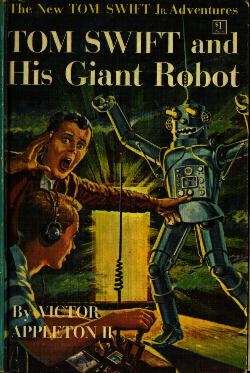
When I was a wee lad, I “inherited” a set of Tom Swift, Jr., hardcover books. (I believe they actually came via my Nona, who did catering and housekeeping, and…

When I was a wee lad, I “inherited” a set of Tom Swift, Jr., hardcover books. (I believe they actually came via my Nona, who did catering and housekeeping, and got them from one of the families she did work for, after their own son outgrew them.)

Tom Swift, Jr., was a bit more hi-tech than this.Now *this* is hi-tech!These books were great. Think “The Hardy Boys,” only featuring 1960s hi-tech gadgetry. The original “Tom Swift” books dealt with airships and electric rifles and photo telephones and other such whiz-bang widgets. Tom Swift, Jr., got jetmarines and ultrasonic cycloplanes and polar-ray dynaspheres. Yowzers. They were the gateway drugs to sci-fi, and I loved them.

I was reminded of them a month or two back when I ran across them in the basement while cleaning them out. I nobly did not sit down and read them all at that time.

So imagine my joy when Boing Boing points to a site that has all sort of info about the books.

And imagine my irritation when I discover that enough zillions of folks followed the same link to exceed the limits that Yahoo/GeoCities has on traffic.

Bleah. I’ll have to remember to go back in a few days. In the meantime, check out this site for some other warm remembrances.

Blogger Insider — to me

Hey, it’s (finally!) Blogger Insider time again. My partner is Lee Anders, a quite charming lady with a nice site to visit. Here are her questions for me … see…

Hey, it’s (finally!) Blogger Insider time again. My partner is Lee Anders, a quite charming lady with a nice site to visit. Here are her questions for me … see the next post for the special bonus of my questions for her.

Question 1: If you were forced to sell your entire comic book collection save one, which one would you keep? And why?

Yeesh. “If you were forced to cut off all your fingers and toes save one, which one would you keep?” That sort of question, only multiplied by some several hundred. That being said …

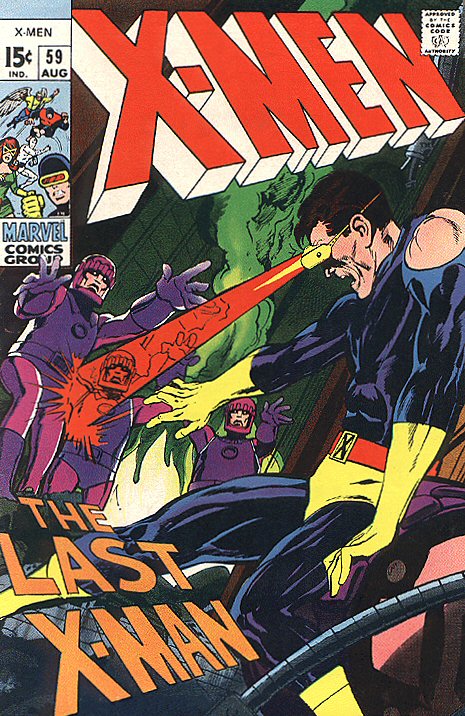
uxmen059.jpg… I really have no idea. I don’t think I have anything that isn’t replaceable. Probably, if push came to shove, an old Neal Adams X-Men I have, oh, around #59 or so, “The Last X-Man.” Fabulous art, really left a lasting impression on me. Got it as a kid, and it defined a lot of the wonder and love of comics that led me back to collecting in high school.

Question 2: Of all comic creators and artists, living or dead, who would you most like to meet? And why?

Well, I’ve actually gotten to meet a number of them at the half dozen or so San Diego Comic Cons I’ve been to (which was a heck of a lot easier when I lived in California, though we may make it back there this summmer). In terms of meeting more than “Hey, I love your stuff, can you sign this for me?” sort of things, and more along the lines of, “Who would you like to have dinner with?” I’d probably say Peter David (whose writing I am a serious fan of), though I’d be intrigued by Terry Moore as a close second (I’d love to learn more about the genesis of Strangers in Paradise. Phil Foglio would be entertaining, and Stan Sakai is a neat guy, and would be fun to spend more time with.

Question 3: You began reading at an early age, and you even recall the first book you ever read … Was there any one book that you (as a child) loved above all others?

Somebody’s been looking at my web pages … 🙂

That’s a tough one, though. I’ve been reliving some of the early stuff in buying books for Katherine. Probably Yertle the Turtle, for early stuff. Bambi and Bambi’s Children later on — and I never saw the Disney version until I was an adult. And later on after that, A Wrinkle in Time.

Question 4: Out of all the books you’ve read (as child and/or adult), which one would you most like for your daughter to someday read?

All of them. No, seriously, I can’t think of many I wouldn’t want her to read. The ones I mentioned above. The Lord of the Rings (I’ll cheat and call that one book). The Bible. The Lion, the Witch and the Wardrobe. Zelazny’s Amber. David and the Phoenix. Eleventy-dozen others. I get no greater joy than someone else enjoying a book I’ve read.

Question 5: You have an amazing collection of quotes you share with the public (WIST). Who, or what, inspired you to start the collection?

I’ve always enjoyed a good turn of phrase. When I was in high school, I started scribbling quotes down in a little 3×5 spiral binder. That grew into a Tolkien “blank pages” journal while in college. At some point, my (first) wife and I decided to put them together as a Christmas gift (a cheap one at that) for folks. And it grew from there.

Question 6: Do you remember the first quote you saved?

There was a lot of Tolkien in that first binder. One of the oldest I can think of, though, was:

No man, for any considerable period, can wear one face to himself, and another to the multitude, without finally getting bewildered as to which may be the true.
    — Nathaniel Hawthorne (1804-1864), The Scarlet Letter

Question 7: It is obvious you are a devoted family man, but what one thing about you do you believe will most stick out in your daughter’s mind when she is an adult?

My sense of humor and the absurd, I think. Or the constant litter of books around me. Or, hopefully, my love for her.

Question 8: What quality of yours would your wife say is your best?

Heh. She reads my blog, you know …

I’d probably guess it would be my devotion. I have a sense of duty Above and Beyond, I am told by her.

Question 9: And your worst?

She probably wouldn’t say what my worst quality is. I’d say it’s being too adverse to confrontation when it’s needful.

Question 10: Your job forces you to travel quite a bit, and most people in your position would consider a vacation being able to stay at home. How about you?

Oh, I can stay home and veg and surf the net and watch TV and sleep in and read for a long time before I get bored, especially these days. That hasn’t removed my desire to travel and see neat things, though. Katherine has made it a bit more difficult, both in terms of logistics, and in terms our our regularly spending our vacation time (and travel dollars) going back to see our families in California, rather than touring the highways and byways of the world.

Question 11: What about blogging most appeals to you, as a reader and/or a writer?

As a writer, I enjoy sharing with folks things that I find interesting — whether it’s bits of my own life, or links, or humor or deep socio-political insights (heh). As a reader, it’s finding folks who have similar interests or opinions to my own (which isn’t to say I don’t like being challenged, but it’s kind of neat to find out that your own tastes and sensibilities aren’t utterly unique).

Question 12: You can only recommend three links to your readers (blog and non-blog), which do you choose? And why?

Hey, I think *I* asked that question. Hmmmmm …

Well, one’s got to be Google, the sine qua non of using the web these days.

James Lilek’s Bleat is always entertaining, and frequently thought-provoking. And he has a little girl just younger than Katherine.

And Amazon.com. Because, damn, I could only have dreamed about such a wonderland as a child.

Question 13: Are you familiar with Random Ruminations?

No, but I am now. 🙂 He goes onto the Likely List o’ Links — blogs I like well enough to read through them once, and then put them in my Favorites. If, when I spend some Friday night sifting through that list a second time, I again like what I read, then I’ll make them a part of the ever-burgeoning Link List o’ How Dave Spends Too Much Time Blogging.

(Lee mentioned, re the last question, that “I like to use this opportunity to promote lesser known blogs, and I always try to match my interview partner to someone whose blog I think they would like.” A neat idea I’ll have to swipe.)

Why I wasn’t a lit major

Book Magazine has issued the results of a readers poll of the 100 best fictional characters since 1900. I have read … 6 – Sherlock Holmes, The Hound of the…

Book Magazine has issued the results of a readers poll of the 100 best fictional characters since 1900.

I have read …

  • 6 – Sherlock Holmes, The Hound of the Baskervilles, Sir Arthur Conan Doyle, 1902
  • 25 – Philip Marlowe, The Big Sleep, Raymond Chandler, 1939
  • 29 – Winnie the Pooh, Winnie the Pooh, A.A. Milne, 1926
  • 35 – Jeeves, My Man Jeeves, P.G. Wodehouse, 1919
  • 39 – The Cat in the Hat, Dr. Seuss, 1955
  • 42 – Sam Spade, The Maltese Falcon, Dashiell Hammett, 1930
  • 59 – Big Brother, 1984, George Orwell, 1949
  • 63 – Charlotte, Charlotte’s Web, E.B. White, 1952
  • 65 – Nick and Nora Charles, The Thin Man, Dashiell Hammett, 1934
  • 66 – James Bond, Casino Royale, Ian Fleming, 1953
  • 79 – Tarzan, Tarzan of the Apes, Edgar Rice Burroughs, 1914
  • 85 – Harry Potter, Harry Potter and the Sorcerer’s Stone, J.K. Rowling, 1998
  • 96 – Eeyore, Winnie the Pooh, A.A. Milne, 1926

I ought to have read #1, Jay Gatsby, but I managed to Cliff Notes and Fast Talk my way around that one in English class (sorry, Mrs. Zastrow).

I find it interesting that Milne’s book was the only one mentioned twice, I believe, on the list.

Anyway, I suspect you can tell something about me based on the choices. Maybe someone should put together a personality test from that.

(Via WMT)

Wyatt for Hire

Gunman’s Rhapsody, by Robert B. Parker Summary: [2] Parker, best known for his Spenser detective novels, writes about the Earp family — both well-known and non- — and the Gunfight…

Gunman’s Rhapsody, by Robert B. Parker

Gunman's Rhapsody

  • Summary: [2] Parker, best known for his Spenser detective novels, writes about the Earp family — both well-known and non- — and the Gunfight at OK Corral, and a time when men were men, women were women, and, not to belabor the point, men were men. Spenser (and most other Parker heroes) would fit in just fine here, as we see the Earp brothers banded together in Tombstone, dealing with their own quiet passions and the vanity and violence of the world around them. Strong, silent types, the Earps, especially Wyatt (who is sort of the main protagonist, though the PoV sometimes dizzyingly shifts) would get along well with Spenser and the rest of Parker’s contemporary fold. The most basic critique I have is how fast it read — I managed to polish it off in the time frame around a 3 hour air flight. And, delving deeper into that critique, I think it would have been worth Parker’s time to give the book a serious re-editing, tightening some of those PoV shifts, among other things. The book feels oddly episodic — and the episodes are not always what one would consider the high points of the story. Indeed, though the story extends beyond the fabled Gunfight, as it proceeds the reader begins to feel more and more removed from the action, as if we’re seeing a kaleidoscopic compression of events, with all but a few, choice episodes put into detail, the rest simply elided between chapters. This is definitely a book more for Spenser (or, more generally, Parker) fans than afficionados of the Old West, or the events portrayed.
  • Entertainment: [2] It’s not clear how much of this is sheer invention and how much is based on the historic record (though there are some marvelous excerpts from contemporary newspaper stories of national and world events). Certainly the characters here come off as far different from the classic OK Corral portrayals — whether the black-and-white classics such as My Darling Clementine, the surrealistically cheesy Star Trek TOS episode “Spectre of the Gun,” or the more recent renditions such as Tombstone. Certainly if you like Parker’s other writing, this will be a mildly disjointed but still entertaining read.
  • Profundity: [2] Men are strong, silent, band-of-brothers types. Or should be. Lots of quotable quotes — but Spenser said them all, first, and more effectively.
  • Re-readability: [2] Parker’s books are quite rereadable, sort of like grabbing for a bag of chips from the shelf. I’d not grab this one first, but I can easily imagine myself reading it again.

(Rankings are all on a scale of 1 (worst) to 3 (best).)

What we’re reading …

I picked up both these books while on my trip to Oak Ridge last week. Rankings (new as of this book review) are from 1 (bleah) to 3 (yeah!). A…

I picked up both these books while on my trip to Oak Ridge last week.

Rankings (new as of this book review) are from 1 (bleah) to 3 (yeah!).

A Kiss of ShadowsA Kiss of Shadows, by Laurell K. Hamilton

  • Summary: [2] LKH starts a new series, seemingly because she couldn’t portray enough rough sex in her Anita Blake books. This new set of tales, of a mortal faerie princess, fleeing the dangers of the Unseelie Court only to have them catch up with her, could have used a prequel novel — “Here’s how Meredith’s life is like before it gets completely changed.” Instead, we have to settle for a few chapters of that before things get turned completely upside down. LKH, as in the Blake novels, does an interesting job of crafting an intersection between the Real World and the Fantastic (what the world would be like if the fay and the sidhe were real). But more than once I got the impression it was all in the service of writing a rough sex bodice-ripper, albeit one that could make the NYT Bestseller List. This book just came out in paperback; there are one (or is it two?) later volumes in hardback. I’ll probably continue to read it — but I’d rather read the metaphysical soap opera of Anita Blake than the B/D adventures of Meredith Gentry.
  • Entertainment: [2] The introduction of Faerie into the Real World is reasonably handled, although there are times when LKH seems to pull “gotchas” out of a hat. The sex scenes are pretty good, if you like a little pain with your pleasure.
  • Profundity: [1] Life’s a bitch, and so’s your aunt, but you can always screw your way out of a problem.
  • Re-readability: [1] I just don’t see picking this one up again soon. I may feel better once there are some others in the series.

Being HumanBeing Human, by Peter David

  • Summary: [2] The latest in PAD’s Star Trek: New Frontiers series carries on the various plot lines of the past dozen-plus volumes. Humor, TOS continuity, in-jokes, and drama are tossed about with PAD’s usual aplomb. the enigmatic McHenry finally gets his story told — which, like most long-standing mysteries, is less entertaining than the enigma, but still worth the price of admission. PAD does the usual deft juggling of different places, in this case splitting the action between two starships (as his cast of characters continues to grow).
  • Entertainment: [3] My only complaint is that these books can be polished off in a long evening.
  • Profundity: [2] What does it mean to be human? Or, from the B-plot, when is it worth making a deal with the devil?
  • Re-readability: [2] I’ve actually just started rereading the series. Their shortness, though, makes it difficult to take them on vacation.

Reading Room

I was really all askew with my reading materials this past trip. I brought too few books by far. Fortunately, I found a couple I’ve been looking for, and those…

I was really all askew with my reading materials this past trip. I brought too few books by far. Fortunately, I found a couple I’ve been looking for, and those are off in the media links to the left.

Which Lie Did I Tell?Meantime, I finished two others I’d been working on. First was William Goldsmith’s Which Lie Did I Tell? This is a continuation of his writing (see Adventures in the Screen Trade) about his screenwriting career, and serves as combination autobiography, kiss-n-tell, background exploration of the movies he’s written, and a genuinely interesting and educational discussion of the screenwriting trade, from how to write a script for sale to how to write one for the screen (two very different things).

Goldsmith was the writer for Oscar-winners such as All the President’s Men and Butch Cassidy and the Sundance Kid, as well as The Princess Bride, Maverick, Misery, and Absolute Power. He knows whereof he speaks, both in how to tell a good story (whether adapted or created yourself) and how to work it through the Hollywood process.

A great read, one that can be easily set down and picked back up again (it was my “Walking to Lunch Reading” book), both informative and entertaining. Recommended.

Man's Search for MeaningThe second book, and pretty out-of-the-ordinary for me, was Viktor Frankl’s Man’s Search for Meaning. I’m not usually one to do a lot of “serious” reading, and this is about as serious as it gets. The first half is Frankl’s autobiography of his time in various German concentration camps, including Auschwitz and Dachau, and what he observed about human behavior there (including his own). The second half is an introduction to his own brand of psychiatry, logotherapy, which takes as its basis that most emotional and mental problems stem from a person’s search for meaning in their life — in what they do, who they love, or even how they suffer and die.

It’s fascinating reading, and Frankl earns at least a hearing from his own experiences. Though the latter half occasionally descends into psychobabbly bits, his work, even taken as philosophy vs psychiatry, is worth reading. Recommended.

Blogger Insider

Woo-hoo! These weren’t due until the end of next week, but since Kara (of Sanity Denied) and I exchanged questions (and answers) so soon, I might as well post these….

Woo-hoo! These weren’t due until the end of next week, but since Kara (of Sanity Denied) and I exchanged questions (and answers) so soon, I might as well post these. Besides, Blogger Insider took a break last fortnight.

Here are Kara’s questions and my answers. Hit her site for the reverse.

1. I went back and read your archives. I was really enthralled by the way you seemed to post and update exactly how you felt at each moment durind the terror of 9/11. I think a lot of people’s blogs from that day stand as an incredible monument to their feelings and the powerful emotions of that day. Do you ever reread that section of your archives, and if you do, what are your feelings?

I’ve been intentionally not going back and rereading things until I get to some major anniversaries. The 24th of this month, for example, is six months since I began blogging, and I’ll probably do something then. And when we get around to 11 March, I’ll probably go back and reread them.

Well, that’s not 100% true. I had cause to go back and take a quick look, and it was interesting watching my emotions bob up and down that day, and the few days following — lots of anger, but also lots of trying to intellectualize the whole thing.

All I know is that I’m glad I have the blog, because, frankly, I don’t remember much of those couple of days.

2. How is your New Year’s resolution coming along?

Heh. Well, my pants have been feeling a little loose. I’ll know tomorrow, because a few days after New Years I was in at the doctors and was Officially Weighted at 248 … and I’m going in tomorrow and we’ll see what they say.

I was just noticing that, in trying to keep Katherine from ruining her appetite for dinner, and so not giving in to her desire for snacks, I’m also perforce not snacking, which is probably a Good Thing. Scratch that — I know it’s a Good Thing.

3. What is the most unexpected or suprising experience you have had as a
parent?

As a global thing, just the incredible time sink it’s been. I look back on those feckless days of, “Sigh, here we are in the afternoon on a weekend with just nothing to do. Let’s hop in the car and drive someplace,” and marvel.

As a specific thing, it was probably the first time Katherine climbed out of her crib (during an afternoon nap), toddled downstairs, past where I was sitting at the breakfast table (within eyeshot, if I’d turned my head), went out to the living room, got a knick-knack, and walked back to me and … I finally spotted her. “Gah!” (That was me, not Katherine.)

4. What was your first meeting with Margie like? There has to be a good
story behind all that love!

Actually, Margie and I met in college, introduced by a friend of ours who was running a D&D game and invited us both to it. We were friends then, good friends, and stayed in touch through the various intervening years (and a marriage on my part, where Margie was one of the bridesmaids, as she was also a friend with my now-ex).

So I don’t remember much of that first meeting. Certainly it was not memorable in terms of anything interesting happening, but it was memorable in that we met playing That Evil Demonic Game (which, in fact, is where I’ve met probably 90% of my friends).

Now, asking her out for our first date … there’s an interesting story. But that’s not what you asked. 🙂

5.Tell me more about NaNoWriMo, and how you conquered it.

National Novel Writing Month, a/k/a “Take November, Wad It Up Into A Little Ball, And Throw Any Non-Writing Activities You Had Planned Then Into The Trash.” I conquered it by (a) being someone who writes a lot as part of his job, (b) deciding I would do something fun, not profound, (c) deciding I would not go back and revise lest I never get past the first chapter, and (d) having a wonderful wife who let me sequester myself upstairs for a couple of all-day catch-up fests. Having a friend who was also doing it helped, too, since that made it a bit of a competition.

6. Name your top five places to visit on the web (not weblogs).

In terms of frequency of visits? Amazon, Google … er, SpamCop … um, RefDesk, … damn, I really don’t go that many other places these days, besides blogs. The Rocky Mountain News, the Christian Science Monitor, Yahoo News, and the Wall Street Journal as news fodder for my blog.

7. Do people “in real life” know about your weblog, for instance, people
from work or extended family members? Have they ever reacted negatively to
anything you’ve blogged about? If so, how did you deal with it?

My folks know about it, and read it — my mom does, at least. I’ve mentioned it to my in-laws, but they’re not much into Web stuff. Most of my local friends know about it. I don’t know that anyone at work knows — but I assume that they can find it, so I’m always very discreet about work-related stuff (especially anything involving managing or HR or stuff like that).

So far I’ve not had any negative reactions from anyone from those arenas — but I endeavor at all time to be inoffensive, so …

8. Do you consider yourself an “artist” or a “scientist”?

Tough one. I’d probably say artist, if pressed — but I try to apply logic and reason to the things I do, esp. at work, as well as creativity.

9. Favorite book?

Urg. I hate this question, if only because I read voraciously, and I only tend to read what I enjoy (reading is entertainment for me, not education). So I’m drawing a blank here. I can tell you what I’m presently reading, which is Which Lie Did I Tell? by William Goldman, one of his books detailing his career as a screenwriter. Vastly entertaining and an interesting introduction to the screenwriting trade.

10. The answer is… 16. What is the question?

“When did you learn to drive?” “What’s four squared?” “What base is hexidecimal?” “How many comic books are in the bag you just picked up from the comic book store?” And we’ll leave it at that.